Baptist Militia A library & museum of the Whole Armour of God Visit
Find

Hall III · The Timeline

The Nineteenth Century

“But the word of the Lord endureth for ever. And this is the word which by the gospel is preached unto you.”1 Peter 1:25, KJV

How the Scriptures were received, carried into the English tongue, and confessed by the Baptist churches. Each date is linked to its source, so that you may test every word.

  • Scripture & Canon (6)
  • Baptist Witness (886)
  • Missions (1)
  • The English Bible (2)
  1. The Nineteenth Century1800-1899

    Scripture & Canon The Age of Missions

    Mary Jones walks to Bala for a Welsh Bible of her own
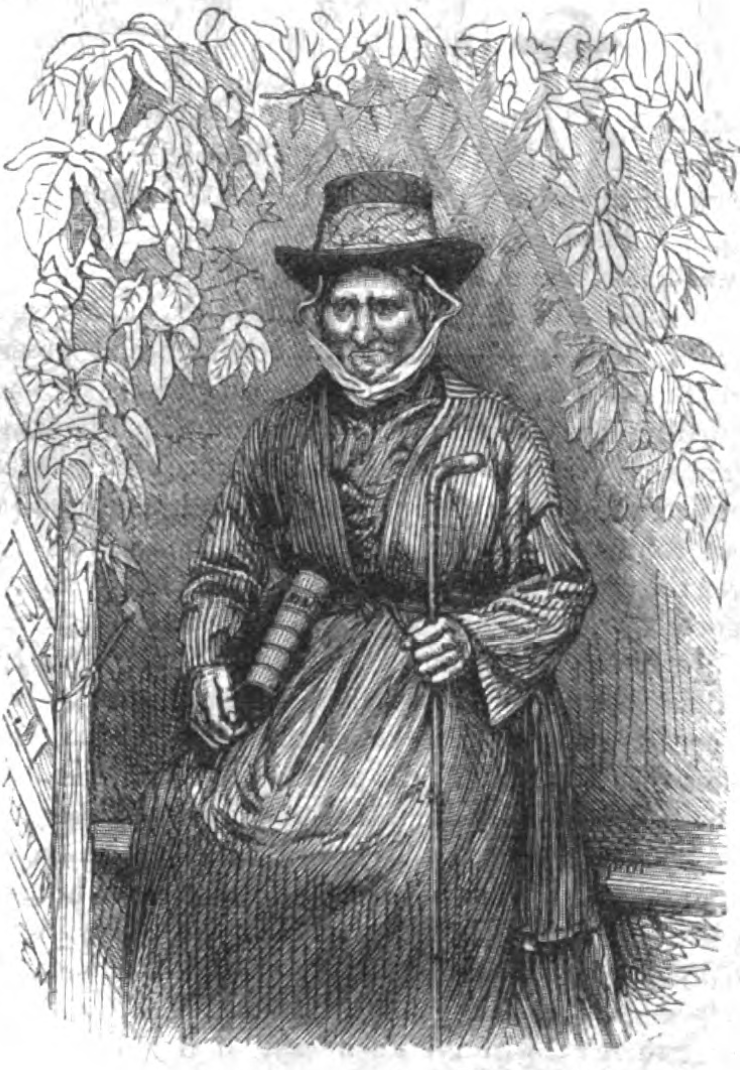
    Mary Jones in old age with her Bible, engraving from The Sunday at Home, no. 1284 (London, 1878)
    Mary Jones in old age with her Bible, engraving from The Sunday at Home, no. 1284 (London, 1878). Via Wikimedia Commons · Public domain

    Mary Jones (1784-1864) was the daughter of a weaver at Llanfihangel-y-Pennant, at the foot of Cader Idris in Wales. She learned to read in the circulating schools organised by Thomas Charles of Bala, and she longed for a Bible of her own; the nearest copy was at a farm two miles away. For six years she saved her money. Then, in the spring of 1800, at fifteen, she walked some twenty-six miles over the mountains, barefoot as she usually went, to buy a Welsh Bible from Charles, the only person in the district with Bibles for sale. Welsh Bibles were scarce. The story is told in two ways: in one, Charles gave her a copy already promised to another; in the other, she waited two days for a supply to arrive. By tradition, her visit moved Charles to ask for a society to supply Wales with Bibles, which led to the British and Foreign Bible Society in 1804 (next on this timeline). Honesty: her family were Calvinistic Methodists, not Baptists, and the details of the story come to us through later retelling. The plate is an engraving of Mary Jones in old age, holding her Bible, published in 1878. “The law of thy mouth is better unto me than thousands of gold and silver” (Psalm 119:72, KJV).

    Source en.wikipedia.org: Wikipedia, “Mary Jones and her Bible” (1784-1864; weaver’s daughter, Llanfihangel-y-Pennant; Charles’s circulating schools; saved six years; spring 1800, 26 miles barefoot to Bala; two versions of the outcome; tradition that her visit moved Charles; Calvinistic Methodist parents). Plate: The Sunday at Home, 7 Dec 1878. Ps 119:72 KJV verified.

  2. Baptist Witness

    William Gadsby Is Ordained at Desford, 1800

    “I am crucified with Christ: nevertheless I live; yet not I, but Christ liveth in me: and the life which I now live in the flesh I live by the faith of the Son of God, who loved me, and gave himself for me.” (Gal. 2:20). Cathcart’s Encyclopedia says that William Gadsby “was born in Attleborough, England, in January, 1773”, and that he “was baptized at Coventry in 1793.” It records that he “was ordained at Desford, July 30, 1800”, and that “His first settlement was at Hinckley, where he remained till 1808, when he removed to Manchester.” The Encyclopedia calls him “one of the most remarkable preachers of the first half of the nineteenth century”, says that he told a Pedobaptist congregation “he was a Baptist to the backbone, and backbone and all”, and describes him in these words: “He was bold as a lion, and he was meek as a little child.” It gives the date of his death as “Jan. 27, 1844.”

    Source archive.org: William Cathcart, ed., The Baptist Encyclopedia (Philadelphia: Everts, 1881), vol. 1, s.v. “Gadsby, Rev. William” (public domain; Internet Archive scan). Quotations verbatim, contiguous fragments only (line-end hyphens rejoined). Nothing beyond the entry is asserted. KJV: Gal. 2:20.

  3. Baptist Witness

    Joseph Dimock Helps Form the Baptist Association in Nova Scotia, 1800

    “I have fought a good fight, I have finished my course, I have kept the faith” (2 Timothy 4:7). Cathcart’s Encyclopedia calls Joseph Dimock “prominent among the pioneers and founders of the Baptist denomination in Nova Scotia,” and says he was “born in Newport, Nova Scotia, Dec. 11, 1768.” It records that he was “ordained pastor at Chester, Sept. 10, 1793, and so continued till his death, June 29, 1846,” and “was active in forming the Baptist Association, June 23, 1800.” It adds that he “evangelized and baptized in Cape Breton Island in 1825, 1826, and 1838, with gracious results.” Of the man it says, “eminently gentle and kind; sound in doctrine, strong in faith, and profound in Christian experience, Mr. Dimock’s ministry was one of goodness and great spiritual results.”

    Source archive.org: William Cathcart, ed., The Baptist Encyclopedia (Philadelphia: Everts, 1881), vol. 1, s.v. “Dimock, Rev. Joseph” (public domain; Internet Archive scan). Quotations verbatim, contiguous fragments only, machine-matched against the scan’s text (OCR typography normalised). KJV: 2 Timothy 4:7.

  4. Baptist Witness

    Ezra Butler Is Ordained Pastor at Waterbury, Vermont, 1800

    “When the righteous are in authority, the people rejoice: but when the wicked beareth rule, the people mourn.” (Proverbs 29:2). Ezra Butler, born in Lancaster, Massachusetts, in 1763, cleared a farm in the Vermont wilderness at Waterbury and was converted at twenty-seven. Cathcart’s Encyclopedia records that “towards the end of the year 1800 there were a sufficient number of persons holding Baptist sentiments to lead to the formation of a Baptist church, and Mr. Butler was chosen and ordained its pastor, which office he held over thirty years.” He also served in public life: “From 1813 to 1815 he was a member of Congress, and for two years he was governor of the State.” The Encyclopedia quotes an earlier account that his administration was “distinguished chiefly by a vigorous and successful effort for the suppression of lotteries,” and says that through it all “he never lost sight of the higher office which he held as an ambassador of Christ.” He died July 12, 1838.

    Source archive.org: William Cathcart (ed.), The Baptist Encyclopedia (Philadelphia: Everts, 1881), vol. 1, s.v. “Butler, Gov. Ezra” (public domain; Internet Archive scan). Quotations verbatim, contiguous fragments only, machine-matched against the scan’s text (OCR line-end hyphenation normalised). KJV: Proverbs 29:2.

  5. Baptist Witness

    Elijah Huntington Ordained at Braintree, Vermont, 1800

    “do the work of an evangelist, make full proof of thy ministry” (2 Timothy 4:5). Elijah Huntington, born at Mansfield, Conn., in 1763, “was a soldier of the Revolutionary army” and afterward taught school in Vermont. Converted at about twenty-seven, he joined the Baptist church at Royalton. Cathcart writes: “In June, 1800, he was ordained in Braintree, Vt., as an evangelist. Immediately he became pastor of the Baptist church in that town, and he held this office till his death, June 24, 1828.” His Congregational neighbor, Rev. A. Nichols, said of him: “I do not know of a man I should be willing to exchange for Mr. Huntington.”

    Source archive.org: William Cathcart (ed.), The Baptist Encyclopedia (Philadelphia: Everts, 1881), vol. 1, s.v. “Huntington, Elijah” (public domain; Internet Archive scan). Quotations verbatim, contiguous fragments only, machine-matched against the scan’s text (OCR line-end hyphenation normalised). KJV: 2 Timothy 4:5.

  6. Baptist Witness

    Elisha Hutchinson, Congregational Pastor, Becomes a Baptist, 1800

    “They went down both into the water, both Philip and the eunuch; and he baptized him” (Acts 8:38). Elisha Hutchinson, born in Sharon, Conn., in 1749, was in the first class to graduate from Dartmouth College, in 1775. He was ordained in 1778 over the Congregational church at Westford, Conn., and in 1785 went to the Congregational church at Pomfret, Vt. Cathcart writes: “In 1800 he changed his views on the mode and subjects of Christian baptism, and became a decided Baptist.” In 1814 he took the Baptist church at Newport, N. H., where four years later came a revival, and “in about ten months 110 united with the church”. He died there in 1833.

    Source archive.org: William Cathcart (ed.), The Baptist Encyclopedia (Philadelphia: Everts, 1881), vol. 1, s.v. “Hutchinson, Elisha” (public domain; Internet Archive scan). Quotations verbatim, contiguous fragments only, machine-matched against the scan’s text (OCR line-end hyphenation normalised). KJV: Acts 8:38.

  7. Baptist Witness

    The Great Revival in Kentucky Begins, 1800

    “O LORD, revive thy work in the midst of the years” (Habakkuk 3:2). Cathcart’s Encyclopedia, in its article on the Baptists of Kentucky, says that after 1793 “till 1799 religion was at a low ebb, and open infidelity much abounded.” It dates the awakening “known as” the Great Revival in Kentucky to 1800: it “began, and continued three years. In this period the number of Baptists in the State was more than doubled.” The next year, it records, the Regular and Separate Baptists “formed a union, and all assumed the name of United Baptists.”

    Source archive.org: William Cathcart (ed.), The Baptist Encyclopedia (Philadelphia: Everts, 1881), vol. 1, s.v. “Kentucky Baptists” (public domain; Internet Archive scan). Quotations verbatim, contiguous fragments only, machine-matched against the scan’s text (OCR line-end hyphenation normalised; OCR misreadings corrected only outside quotation marks). KJV: Habakkuk 3:2.

  8. Baptist Witness The Age of Missions

    Krishna Pal Baptized in the Ganges, 1800

    “Search the scriptures” (John 5:39). Cathcart’s Encyclopedia says Krishna Pal, a carpenter, was “born about 1764, at Chandernagore, Bengal.” Hearing a discourse on the folly of idolatry, he “became deeply affected and shed tears.” When he sat down at the missionaries’ table before their Hindu servants he renounced caste, and “soon Krishna was besieged by a mob of 2000 persons”; the magistrate released him and set a Sepoy to guard his house. “The immersion occurred in the Ganges, on the 28th of December, 1800.” William Ward preached in English from John 5:39, Carey spoke in Bengali, and then Carey “baptized Felix Carey and Krishna amid profound silence and deep solemnity.” Krishna “was the first baptized convert after seven years of labor,” and “For more than twenty years Krishna Pal preached the blessed gospel to his countrymen with great success and ability.”

    Source archive.org: William Cathcart (ed.), The Baptist Encyclopedia (Philadelphia: Everts, 1881), vols. 1 and 2, s.v. “Krishna Pal” (the entry runs across the two volumes) (public domain; Internet Archive scan). Quotations verbatim, contiguous fragments only, machine-matched against the scan’s text (OCR line-end hyphenation normalised; OCR misreadings corrected only outside quotation marks). KJV: John 5:39.

  9. Baptist Witness The Age of Missions

    Mary Webb and the Boston Female Society for Missionary Purposes

    Mary Webb was born in Boston in 1779. An illness at the age of five left her in a wheelchair for the rest of her life. In 1800, when she was twenty-one, she gathered a group of thirteen women who formed the Boston Female Society for Missionary Purposes on 9 November 1800. It was the first women’s missionary society in America. She served as its secretary and treasurer for fifty-six years. She was a Baptist, but she worked across denominational lines for the spread of the gospel. She encouraged women to give two dollars a year to missionary societies at home and abroad and to the translation and publication of the Scriptures. She later helped begin a Female Cent Society and a Children’s Cent Society, and she promoted cooperation among more than two hundred women’s missionary societies. She kept out of public notice all her life, and she died in 1861. The women’s missionary organisations that grew up in her wake went on to found schools and training centres, and to recruit and train women missionaries.

    Source bu.edu: J. R. Duffy, “Webb, Mary,” in G. H. Anderson, ed., Biographical Dictionary of Christian Missions (1998), 720, reprinted by the BU School of Theology History of Missiology. The date 9 November 1800 and the later women’s societies are from the American Baptist Historical Society, “First Women’s Missionary Society Formed” (2018). The Cent Societies are from summaries of Vail, Mary Webb and the Mother Society (1914), which were not read in full, so no dates are given for them.

  10. Baptist Witness The Age of Missions

    Henry Holcombe and the First Baptist Church of Savannah, 1800

    “A little one shall become a thousand, and a small one a strong nation: I the LORD will hasten it in his time” (Isaiah 60:22). J. H. Campbell’s Georgia Baptists (1874) says Henry Holcombe “was born in Prince Edward county, Virginia, September 22, 1762.” Moved by Scripture to doubt infant baptism and church government by any but its members, he wrote that “to follow the dictates of my conscience I must be a Baptist.” After pastorates in South Carolina he came to Savannah, where, Campbell writes, “On the 11th September following, he buried with Christ in baptism the first white person who had ever received that holy rite in Savannah, and on the 26th of November of the same year, they were regularly constituted into a church, of which Dr. Holcombe was chosen pastor.” Of his pastoral labours Campbell records: “In 1801, the ‘Savannah Female Asylum,’ (a society for supporting and educating helpless female orphans,) was formed in his parlor.” He urged believers to take up their duty as citizens: “At all elections, let every one qualified to vote attend and do his duty, as in the presence of God.” He took part in the ministers’ conference that founded Mount Enon Academy, and on missions he wrote: “Let us, therefore, send the Word of Life, on the wings of our bounty, in all directions.” Called to the First Baptist Church of Philadelphia, “he arrived among his new charge the 1st January, 1812.” Campbell adds that “Though in early life a soldier and an officer, he became an advocate of peace principles.” He died, says Campbell, “On the 22d of May, 1824, after an illness of only one week.”

    Source baptisthistoryhomepage.com: J. H. Campbell, Georgia Baptists: Historical and Biographical (1874; PD), pp. 184-193, “Henry Holcombe, D. D.” (baptisthistoryhomepage.com). All quotations verbatim. Dates are Campbell’s; church constitution date (26 Nov 1800) as he gives it. KJV: Isaiah 60:22.

  11. Scripture & Canon The Age of Missions

    Serampore: William Carey’s Bengali New Testament

    Title page of Carey’s Bengali New Testament, Serampore Mission Press. King’s College London Special Collections copy, via Wikimedia Commons
    Title page of Carey’s Bengali New Testament, Serampore Mission Press. King’s College London Special Collections copy, via Wikimedia Commons · Public domain

    William Carey (1761-1834) reached Bengal in 1793 and at first managed an indigo factory while he learned Bengali and Hindi. In 1799, joined by two more Baptist missionaries, he moved to the Danish settlement of Serampore, where the mission was freer to work than in the lands of the East India Company. There they set up a printing press, and the next year they baptized their first Hindu convert, Krishna Pal. A Bengali Gospel of Matthew was printed in 1800 in 500 copies. In 1801 the whole New Testament followed in an edition of 2,000 copies, the first New Testament printed in a language of northern India. The Old Testament followed in 1809. By Carey’s death the Bible, whole or in part, had been translated into thirty-four Asian languages and dialects, and some 200,000 copies of Scripture had come from the Serampore Mission Press.

    Source kingscollections.org: King’s College London Special Collections, “The first Bengali New Testament” (exhibition: The Bible), describing the King’s copy of the 1801 edition. Carey’s part in the 1792 Baptist Missionary Society is told in the 1792 entry.

  12. Baptist Witness

    Edmond Waller Is Ordained at Salt River, Kentucky, 1801

    “But none of these things move me, neither count I my life dear unto myself, so that I might finish my course with joy, and the ministry, which I have received of the Lord Jesus, to testify the gospel of the grace of God.” (Acts 20:24). Cathcart’s Encyclopedia says that Edmond Waller was “born in Spottsylvania Co., Va., Jan. 11, 1775”, and that he “removed with his parents to Kentucky about 1781”. It records that “in 1801 he removed to Anderson County, and was ordained to the ministry at Salt River church.” The Encyclopedia says that he “traveled and preached in the new settlements for some years”, and calls him “one of the most popular and useful ministers of his generation in that part of Kentucky.” It gives the year of his death as 1842: “He died in 1842.”

    Source archive.org: William Cathcart, ed., The Baptist Encyclopedia (Philadelphia: Everts, 1881), vol. 2, s.v. “Waller, Rev. Edmond” (public domain; Internet Archive scan). Quotations verbatim, contiguous fragments only (line-end hyphens rejoined; one OCR run-together “partof” read as “part of”). Nothing beyond the entry is asserted. KJV: Acts 20:24.

  13. Baptist Witness

    Daniel Dodge Is Ordained in Maryland, 1801

    “In the morning sow thy seed, and in the evening withhold not thine hand: for thou knowest not whether shall prosper, either this or that, or whether they both shall be alike good.” (Ecclesiastes 11:6). Cathcart’s Encyclopedia records that Daniel Dodge “was born in Nova Scotia in 1775”, and that “In 1801 he was ordained to the gospel ministry in Maryland.” It tells how his sense of duty led him “to journey on horseback, preaching the gospel wherever he found an opening, in cities and villages, and in country barns.” Of his pastorate at Wilmington it says: “In Wilmington, where Mr. Dodge was settled for some years, he baptized 259 persons.” The entry adds that “He removed to Piscataway, N. J., in 1818.”

    Source archive.org: William Cathcart, ed., The Baptist Encyclopedia (Philadelphia: Everts, 1881), vol. 1, s.v. “Dodge, Rev. Daniel” (public domain; Internet Archive scan). Quotations verbatim, contiguous fragments only (line-end hyphens rejoined). Nothing beyond the entry is asserted. KJV: Ecclesiastes 11:6.

  14. Baptist Witness

    Elisha Perryman, Georgia Evangelist, Baptized and Joined to Kiokee Church, 1801

    “How beautiful upon the mountains are the feet of him that bringeth good tidings, that publisheth peace; that bringeth good tidings of good, that publisheth salvation; that saith unto Zion, Thy God reigneth!” (Isaiah 52:7). Cathcart’s Encyclopedia calls Elisha Perryman “one of the most useful pioneer preachers of the Georgia Baptists,” who “was born in Halifax Co., Va., Feb. 6, 1769, of Welsh ancestors.” After much mental distress he “was gloriously converted in May, 1799.” “On the third Sabbath in August, 1801, he was baptized by Abraham Marshall, and joined Kiokee church.” “Gradually the conviction that it was his duty to preach grew upon him. He studied by firelight at night.” He “gave himself entirely to the work of an evangelist,” “going wherever destitution abounded.” Though he “died Dec. 1, 1857, in his eighty-ninth year,” he “continued to preach with vivacity and vigor to the last, calling upon sinners to flee from the wrath to come.”

    Source archive.org: William Cathcart, ed., The Baptist Encyclopedia (Philadelphia: Everts, 1881), vol. 2, s.v. “Perryman, Rev. Elisha” (public domain; Internet Archive scan). Quotations verbatim, contiguous fragments only, machine-matched against the scan’s text (OCR typography and line-break hyphenation normalised); period wording is the encyclopedist’s. KJV: Isaiah 52:7.

  15. Baptist Witness

    Asahel Morse Ordained, 1801: A Typical Baptist of Connecticut

    “I have fought a good fight, I have finished my course, I have kept the faith.” (2 Timothy 4:7). Cathcart’s Encyclopedia says that Rev. Asahel Morse “was converted in 1798,” was “licensed to preach in the spring of 1799,” and was “ordained in May, 1801.” He “settled with the Baptist church in Stratfield, Conn., in 1803,” “preaching most of the time six sermons a week,” and “in 1812 settled in Suffield, Conn.” In 1818, as a member of the State convention, he “penned for it the article on religious liberty,—a marked event in the State’s history.” It calls him “a typical Baptist,” records that he died “June 10, 1838, in his sixty-seventh year,” and concludes: “His was a noble life.”

    Source archive.org: William Cathcart, ed., The Baptist Encyclopedia (Philadelphia: Everts, 1881), vol. 2, s.v. “Morse, Rev. Asahel” (public domain; Internet Archive scan). Quotations verbatim, contiguous fragments only, machine-matched against the scan’s text (OCR typography normalised). KJV: 2 Timothy 4:7.

  16. Baptist Witness

    Thomas John Chilton Writes the Terms of General Union for Kentucky Baptists, 1801

    “Endeavouring to keep the unity of the Spirit in the bond of peace.” (Ephesians 4:3). Cathcart’s Encyclopedia calls Thomas John Chilton “a pioneer preacher among the Separate Baptists of Kentucky.” It says “At the age of about twenty years he professed conversion, and united with a Separate Baptist church in Lincoln County, and soon afterwards was set apart to the ministry.” In 1801, Cathcart writes, he drew up the Terms of General Union, “upon which all the Baptists of Kentucky were united under the name of United Baptists.” The union did not hold for him: in 1803 he went with “a faction drawn off from the General Union by John Bailey,” and for years was its principal leader. Yet late in life, after 1835, “he moved to Christian County, and joined the United Baptists. He died an able and honored minister of Christ in 1840.”

    Source archive.org: William Cathcart (ed.), The Baptist Encyclopedia (Philadelphia: Everts, 1881), vol. 1, s.v. “Chilton, Rev. Thomas John” (public domain; Internet Archive scan). Quotations verbatim, contiguous fragments only, machine-matched against the scan’s text (OCR line-end hyphenation normalised). KJV: Ephesians 4:3.

  17. Baptist Witness

    John Kerr Baptized in North Carolina, 1801, and Sent Out Preaching

    “Repent, and be baptized every one of you” (Acts 2:38). Cathcart’s Encyclopedia says John Kerr “was born in Caswell Co., N. C., Aug. 4, 1782.” He was converted under the preaching of William Paisley, a Presbyterian clergyman, “and was baptized Aug. 12, 1801”. Shortly afterwards he was licensed to preach, “and was everywhere listened to with the most earnest attention”. He gave up teaching and “gave himself wholly to the ministry”, touring into South Carolina and Georgia and “preaching to large assemblies of people”.

    Source archive.org: William Cathcart (ed.), The Baptist Encyclopedia (Philadelphia: Everts, 1881), vol. 1, s.v. “Kerr, Rev. John” (public domain; Internet Archive scan). Quotations verbatim, contiguous fragments only, machine-matched against the scan’s text (OCR line-end hyphenation normalised; OCR misreadings corrected only outside quotation marks). KJV: Acts 2:38.

  18. Baptist Witness

    Nathaniel Macon of North Carolina Becomes Speaker of the House, 1801

    “The integrity of the upright shall guide them” (Proverbs 11:3). Cathcart’s Encyclopedia counts Nathaniel Macon of Warren County, N. C., as one who “was a great reader of the Bible and a staunch Baptist,” and says John Randolph called him “the wisest man I ever knew,” while Jefferson called him “the last of the Romans.” In the Revolution, “Refusing a commission, he served as a private,” and he “refused all pay during his service and a pension after the war.” He entered Congress in 1791 and was Speaker “from 1801 to 1806.” Cathcart says he “steadily declined cabinet positions,” twice turning down Jefferson’s offer to make him postmaster-general.

    Source archive.org: William Cathcart (ed.), The Baptist Encyclopedia (Philadelphia: Everts, 1881), vol. 2, s.v. “Macon, Hon. Nathaniel” (public domain; Internet Archive scan). Quotations verbatim, contiguous fragments only, machine-matched against the scan’s text (OCR line-end hyphenation normalised; OCR misreadings corrected only outside quotation marks). KJV: Proverbs 11:3.

  19. Baptist Witness

    David Cooper, Minister and Physician, Labours Among the Mississippi Baptists, 1802-1830

    “Study to shew thyself approved unto God, a workman that needeth not to be ashamed, rightly dividing the word of truth” (2 Timothy 2:15). Cathcart’s Encyclopedia calls Rev. David Cooper “a distinguished pioneer Baptist in Southwest Mississippi.” It says, “He came to the State in 1802,” and that “from this time until his death, in 1830, he was assiduous in his labors.” It adds, “he was a vigorous advocate of ministerial education,” “an active promoter of missions,” and “long moderator of the Mississippi Association.”

    Source archive.org: William Cathcart, ed., The Baptist Encyclopedia (Philadelphia: Everts, 1881), vol. 1, s.v. “Cooper, Rev. David, M.D.” (public domain; Internet Archive scan). Quotations verbatim, contiguous fragments only, machine-matched against the scan’s text. KJV: 2 Timothy 2:15.

  20. Baptist Witness

    Ezra Fountain Is Ordained in Westchester County, New York, 1802, and Plants the Church at Yorktown

    “Spare not, lengthen thy cords, and strengthen thy stakes” (Isaiah 54:2). Cathcart’s Encyclopedia says Ezra Fountain “was born in Bedford, Westchester Co., N. Y.” and “mingled in the scenes of the Revolution”. He “was converted in early manhood; ordained in 1802” and became pastor of the Bedford Baptist church. He “was instrumental in organizing the Baptist church at Yorktown, and fostered it till his death”. The Encyclopedia sums him up: he “did very much pioneer work; strong, energetic, and devoted”. He died of injuries after being thrown from a wagon.

    Source archive.org: William Cathcart (ed.), The Baptist Encyclopedia (Philadelphia: Everts, 1881), vol. 1, s.v. “Fountain, Rev. Ezra” (public domain; Internet Archive scan). Quotations verbatim, contiguous fragments only, machine-matched against the scan’s text (OCR line-end hyphenation normalised). KJV: Isaiah 54:2.

  21. Baptist Witness

    Over 3,000 Converts Added to the Georgia Baptist Associations, 1802

    “And the Lord added to the church daily such as should be saved” (Acts 2:47). Cathcart’s Encyclopedia says Georgia’s early Baptist ministers “went everywhere proclaiming the Word, and the Lord blessed their work greatly.” Again and again, he writes, “great and general revivals of religion swept over the State in consequence of their faithful preaching.” The largest early harvest came at the turn of the century: “In 1802 not less than 3345 new converts were added to the four Baptist Associations of the State.”

    Source archive.org: William Cathcart (ed.), The Baptist Encyclopedia (Philadelphia: Everts, 1881), vol. 1, s.v. “Georgia Baptists, History of” (public domain; Internet Archive scan). Quotations verbatim, contiguous fragments only, machine-matched against the scan’s text (OCR line-end hyphenation normalised). KJV: Acts 2:47.

  22. Baptist Witness

    Henry Holcombe Begins the Analytical Repository, 1802

    “The Lord gave the word: great was the company of those that published it” (Psalm 68:11). Cathcart’s Encyclopedia records that Henry Holcombe, born in Prince Edward County, Virginia, “was a captain of cavalry in the Revolutionary war” and, converted while in command, began preaching at once, “making his first address on horseback, at the head of his command”. After pastorates in South Carolina he gathered the First Baptist church of Savannah in 1800. There he “published the first religious periodical in the Southern States, and one among the first in the United States”, “a magazine called the Analytical Repository”, and Cathcart adds that “it was begun in May, 1802”. He was called to Philadelphia in 1811 and served the First Baptist church there until his death in 1824.

    Source archive.org: William Cathcart (ed.), The Baptist Encyclopedia (Philadelphia: Everts, 1881), vol. 1, s.v. “Holcombe, Henry, D.D.” (public domain; Internet Archive scan). Quotations verbatim, contiguous fragments only, machine-matched against the scan’s text (OCR line-end hyphenation normalised). KJV: Psalm 68:11.

  23. Baptist Witness The Age of Missions

    The Massachusetts Domestic Missionary Society Is Founded, 1802

    “Go ye into all the world, and preach the gospel to every creature” (Mark 16:15). Cathcart’s Encyclopedia notes that in the early days “most of our pastors were home missionaries,” preaching “in barns, private houses, school-rooms, or public halls.” After the Boston Female Society of 1800, “Two years later the Massachusetts Domestic Missionary Society was founded.” “Among its first officers were Dr. Thomas Baldwin, Dr. Daniel Sharp, and Heman Lincoln.” “Its field included Massachusetts, Maine, Western and Southern New York, Pennsylvania, Virginia, Missouri, Ohio, and Lower Canada,” and “Among the numerous missionaries of this society were John M. Peck, James E. Welch, and Nathaniel Kendrick.”

    Source archive.org: William Cathcart (ed.), The Baptist Encyclopedia (Philadelphia: Everts, 1881), vol. 1, s.v. “Home Mission Society, The American Baptist, and other Home Missions” (public domain; Internet Archive scan). Quotations verbatim, contiguous fragments only, machine-matched against the scan’s text (OCR line-end hyphenation normalised). KJV: Mark 16:15. Year as Cathcart gives it: two years after the Boston Female Society of 1800.

  24. Baptist Witness

    Clark Kendrick Ordained at Poultney, Vermont, 1802

    “Go ye into all the world, and preach the gospel to every creature.” (Mark 16:15). Cathcart’s Encyclopedia says Clark Kendrick, born in Hanover, New Hampshire, in 1775 and converted in 1797, “was ordained April 20, 1802, at Poultney, Vt.” “Revivals of religion followed his preaching,” and one in 1816 “resulted in an addition of more than 100 persons to his church.” “He made tours to different sections of Vermont, the northern parts of New York and Canada,” carrying the gospel to people who had almost no church. He helped form the Vermont Baptist Education Society and raised money for the new school at Hamilton, New York, now Madison University; Cathcart says “to him the infant seminary owed a debt of gratitude larger than it could ever repay.” He died February 29, 1824.

    Source archive.org: William Cathcart (ed.), The Baptist Encyclopedia (Philadelphia: Everts, 1881), vol. 1, s.v. “Kendrick, Rev. Clark” (public domain; Internet Archive scan). Quotations verbatim, contiguous fragments only, machine-matched against the scan’s text (OCR line-end hyphenation normalised; OCR misreadings corrected only outside quotation marks). KJV: Mark 16:15.

  25. Baptist Witness

    William G. Jones Is Baptized in the Brandywine by Daniel Dodge, April 3, 1803

    “They went down both into the water, both Philip and the eunuch; and he baptized him” (Acts 8:38). Cathcart’s Encyclopedia says William G. Jones was born in Wilmington, Del., September 3, 1784, and was baptized April 3, 1803, “upon profession of his faith, in the Brandywine”, by Daniel Dodge, pastor of the First Baptist church. “He was the first person baptized in Wilmington by Mr. Dodge”. Later a deacon of the Marcus Hook church, “For years he walked to and from” the Hook, “a distance of twenty miles, to attend the services on the Sabbath.” From 1843 he was a deacon of the Second church, Wilmington, until his death, January 26, 1873. “His house was a home for ministers”, among them John Leland, Staughton, Luther Rice and J. L. Dagg, and “His fidelity to truth was unswerving”.

    Source archive.org: William Cathcart (ed.), The Baptist Encyclopedia (Philadelphia: Everts, 1881), vol. 1, s.v. “Jones, William G.” (public domain; Internet Archive scan). Quotations verbatim, contiguous fragments only, machine-matched against the scan’s text (OCR line-end hyphenation normalised; OCR misreadings corrected only outside quotation marks). KJV: Acts 8:38.

  26. Baptist Witness

    Jacob Locke Becomes Pastor of Mount Tabor, Barren County, Ky., 1803

    Paul wrote, “I have planted, Apollos watered; but God gave the increase” (1 Cor. 3:6). Cathcart’s Encyclopedia calls Jacob Locke “an able and useful preacher of the Old Green River Association in Kentucky.” Born in Berkeley County, Va., about 1768, he moved to Mercer County, Ky., in 1789 and to Barren County about 1799. “Here he was ordained to the ministry in 1801, and became pastor of the Mount Tabor Baptist church in 1803, besides supplying several other churches.” Cathcart writes that he “was the leading man in planting and establishing the young churches and guiding their associational councils.” He was moderator of the Green River Association “for more than twenty years,” then of the Liberty Association until his death on Jan. 18, 1845.

    Source archive.org: William Cathcart (ed.), The Baptist Encyclopedia (Philadelphia: Everts, 1881), vol. 2, s.v. “Locke, Rev. Jacob” (public domain; Internet Archive scan). Quotations verbatim, contiguous fragments only, machine-matched against the scan’s text (OCR line-end hyphenation normalised; OCR misreadings corrected only outside quotation marks). KJV: 1 Cor. 3:6.

  27. Baptist Witness

    James Estep Licensed to Preach, 1804: Half a Century of Ministry in Western Pennsylvania

    “But his delight is in the law of the LORD; and in his law doth he meditate day and night.” (Psalm 1:2). Cathcart’s Encyclopedia says of Rev. James Estep, “born in Washington Co., Pa., Oct. 9, 1782,” that “for more than half a century this distinguished minister labored in Western Pennsylvania.” He was “baptized into the fellowship of the Mount Moriah Baptist church in April, 1802,” and “licensed to preach two years after his baptism.” While studying medicine, “a sermon preached by the Rev. Morgan J. Rhees, then prothonotary of Somerset Co., Pa., led him to deep reflection as to personal duty, and in twenty days after he was found preaching.” The Encyclopedia notes that “from the first day of his conversion he was engaged in reading, meditation, and prayer,” and calls him “a warm friend of an educated ministry, and one of the most useful of Pennsylvania Baptist ministers.” He died “July 26, 1861.”

    Source archive.org: William Cathcart, ed., The Baptist Encyclopedia (Philadelphia: Everts, 1881), vol. 1, s.v. “Estep, Rev. James” (public domain; Internet Archive scan). Quotations verbatim, contiguous fragments only, machine-matched against the scan’s text (OCR typography normalised). KJV: Psalm 1:2.

  28. Baptist Witness

    Joseph Willis Preaches in Louisiana, 1804: The Apostle of the Attakapas

    “Enlarge the place of thy tent, and let them stretch forth the curtains of thine habitations: spare not, lengthen thy cords, and strengthen thy stakes;” (Isaiah 54:2). Cathcart’s Encyclopedia calls Rev. Joseph Willis “the apostle of the Attakapas (Louisiana),” and records that “in 1804 preached at Vermilion and at Plaquemine Brulé.” It says that “For eight years, amid trials and persecutions, he preached the gospel in the Opelousas country, alone and unremunerated.” Then “he organized a church at Bayou Chicot, the first west of the Mississippi,” and “in 1818 the Louisiana Association was organized, of which he was moderator many years.” Of his end it records: “He died in 1854.”

    Source archive.org: William Cathcart, ed., The Baptist Encyclopedia (Philadelphia: Everts, 1881), vol. 2, s.v. “Willis, Rev. Joseph” (public domain; Internet Archive scan). Quotations verbatim, contiguous fragments only, machine-matched against the scan’s text (OCR typography normalised). KJV: Isaiah 54:2.

  29. Baptist Witness

    Deacon Nehemiah Boynton Serves the Missionary Union, 1855

    “For they that have used the office of a deacon well purchase to themselves a good degree, and great boldness in the faith which is in Christ Jesus” (1 Timothy 3:13). Cathcart’s Encyclopedia tells that Nehemiah Boynton, born in what is now Rockport, Massachusetts, on 2 December 1804, lived in Chelsea, “a member and an officer in the First Baptist church,” where “he gave himself with great devotion to the service of his Lord and Master.” The entry says he filled “another post, which to him was one of higher honor and more sacred trust than either of the other two”: appointed to the Executive Committee of the Missionary Union in 1853, he was in 1855 “chosen treasurer of the Union, and held the office for nine years in succession.” A friend wrote that he had “a faith in God, and in the loyalty of his redeemed people, that made him confident, where to human sense there seemed more ground for despondency,” and that the question “What does Deacon Boynton think of it?” was almost enough to conclude any matter of weight. Deacon Boynton died on 22 November 1868.

    Source archive.org: William Cathcart (ed.), The Baptist Encyclopedia (Philadelphia: Everts, 1881), vol. 1, s.v. “Boynton, Hon. Nehemiah” (public domain; Internet Archive scan). Quotations verbatim, contiguous fragments only, machine-matched against the scan’s text; birth, dates and offices are paraphrased from the same article; business and political details are omitted. KJV: 1 Timothy 3:13.

  30. Baptist Witness

    Silas Hough, Physician, Ordained Pastor of the Montgomery Church, Pennsylvania, 1804

    “Pure religion and undefiled before God and the Father is this, To visit the fatherless and widows in their affliction” (James 1:27). Silas Hough, a physician of Bucks County, Pennsylvania, was “thirty years of age before he exercised saving faith,” and was baptized into the Montgomery church in 1796, and “in June, 1804, he was ordained as pastor of the Montgomery church,” which he served until December 1821. He “left $1000 to the Philadelphia Association,” the interest to go “to the support of the widows of Baptist ministers”; Cathcart says he was “the first man to start this fund.”

    Source archive.org: William Cathcart (ed.), The Baptist Encyclopedia (Philadelphia: Everts, 1881), vol. 1, s.v. “Hough, Rev. Silas, M.D.” (public domain; Internet Archive scan). Quotations verbatim, contiguous fragments only, machine-matched against the scan’s text (OCR line-end hyphenation normalised). KJV: James 1:27 (clause).

  31. Baptist Witness The Age of Missions

    The British and Foreign Bible Society is formed, with a Baptist minister as one of its first secretaries

    Rev. Joseph Hughes, A.M., late Secretary to the British and Foreign Bible Society, drawn and engraved by J. Andrews (London: Ward & Co., 1835). National Library of Wales, via Wikimedia Commons
    Rev. Joseph Hughes, A.M., late Secretary to the British and Foreign Bible Society, drawn and engraved by J. Andrews (London: Ward & Co., 1835). National Library of Wales, via Wikimedia Commons · Public domain

    On 7 March 1804 the British and Foreign Bible Society was formed in London to encourage the wider circulation and use of the Scriptures. It grew from the need for affordable Welsh Bibles that Thomas Charles of Bala had laid before friends of the Religious Tract Society. Among its founders was Joseph Hughes (1769-1833), minister of the Baptist church at Battersea, who had been baptised by Samuel Stennett and had taught at the Bristol Baptist Academy (already on this timeline). Hughes had argued the case in print in 1803 in The Excellence of the Holy Scriptures, and he is quoted as saying, “If Wales, why not the world?” When the Society was formed he became one of its three secretaries, alongside the Anglican John Owen and the foreign secretary C. F. Steinkopff. Its first translation project, the same year, was the Gospel of John in Mohawk; by 1909 it had issued 215 million copies. Honesty: the Society was deliberately non-denominational, and disputes over the Apocrypha (1825-26) and over Unitarians in office (1831) led some to leave it, forming what became the Scottish Bible Society and the Trinitarian Bible Society (already on this timeline). The plate is a portrait of Hughes engraved in 1835. “Declare his glory among the heathen, his wonders among all people” (Psalm 96:3, KJV).

    Source en.wikipedia.org: Wikipedia, “Joseph Hughes (Baptist)” (1769-1833; baptised by Stennett; Bristol Academy tutor; Battersea; 1803 Excellence of the Holy Scriptures; “If Wales, why not the world?”; one of three secretaries with Owen and Steinkopff) + “British and Foreign Bible Society” (7 Mar 1804; Mohawk John; 1825-26 and 1831 controversies; 215m by 1909). Ps 96:3 KJV verified.

  32. Baptist Witness

    Lucius Bolles Is Ordained Pastor at Salem, Massachusetts, 1805

    “For David, after he had served his own generation by the will of God” (Acts 13:36). Cathcart’s Encyclopedia says that Lucius Bolles “was ordained on the 9th of January, 1805” as pastor of the First Baptist church in Salem, Mass., and that “There were 512 added to the church during the first twenty years of his ministry.” In 1812, it records, “a society had been formed for the purpose of aiding in the translation of the Holy Scriptures into the Eastern languages, under the supervision of Dr. Carey,” called the “Salem Bible Translation and Foreign Missionary Society.” “He received his appointment to that office in 1826,” the corresponding secretaryship of the foreign mission society, and held it “for more than sixteen years.” It closes: “Having most faithfully served his generation by the will of God, the good man fell asleep in Jesus. His death occurred Jan. 5, 1844.”

    Source archive.org: William Cathcart, ed., The Baptist Encyclopedia (Philadelphia: Everts, 1881), vol. 1, s.v. “Bolles, Lucius, D.D.” (public domain; Internet Archive scan). Quotations verbatim, contiguous fragments only (line-end hyphens rejoined, page running heads removed). Nothing beyond the entry is asserted. KJV: Acts 13:36.

  33. Baptist Witness

    Isaac Hodgen Is Ordained at Mount Gilead, Kentucky, 1805

    “Therefore they that were scattered abroad went every where preaching the word” (Acts 8:4). Cathcart’s Encyclopedia calls Isaac Hodgen “in some respects one of the most brilliant preachers of Kentucky,” “the son of Robert Hodgen, a distinguished citizen and a leading Baptist among the first settlers of Kentucky.” It says, “He was born in La Rue County about 1780, became a member of Severn’s Valley church in 1802, and was licensed to preach at Nolin church in 1804.” Then: “In 1805 he removed to Green County and united with Mount Gilead church, where he received ordination the same year.” “He devoted most of the energies of his life to the work of an evangelist.” Of a tour in 1817 it records: “In 1817, accompanied by William Warder, he made a tour as far as Philadelphia, returning through Virginia,” and quotes the estimate that “over 600 were baptized who were awakened under their preaching in Virginia.”

    Source archive.org: William Cathcart, ed., The Baptist Encyclopedia (Philadelphia: Everts, 1881), vol. 1, s.v. “Hodgen, Rev. Isaac” (public domain; Internet Archive scan). Quotations verbatim, contiguous fragments only, machine-matched against the scan’s text. KJV: Acts 8:4.

  34. Baptist Witness

    Thomas Paul Ordained, 1805: Pastor of the African Baptist Church, Boston

    “Princes shall come out of Egypt; Ethiopia shall soon stretch out her hands unto God.” (Psalm 68:31). Cathcart’s Encyclopedia records that Rev. Thomas Paul was “born in Exeter, N. H., Sept. 3, 1773,” and was “ordained at Nottingham West, N. H., May 1, 1805, and soon after became the pastor of the African Baptist church in Boston, where he remained for more than twenty years.” It adds: “Genuine revivals of religion occurred under his ministry, and he was highly respected and beloved wherever he went.” In 1823, it says, “he offered himself to the Massachusetts Baptist Missionary Society as a missionary to the people of that island” of Hayti, but “his ignorance of the French language made it impossible for him to reach the people,” and he returned to preach at home. Of his end it records: “Mr. Paul died April 14, 1831.”

    Source archive.org: William Cathcart, ed., The Baptist Encyclopedia (Philadelphia: Everts, 1881), vol. 2, s.v. “Paul, Rev. Thomas” (public domain; Internet Archive scan). Quotations verbatim, contiguous fragments only, machine-matched against the scan’s text (OCR typography and line-end hyphenation normalised). KJV: Psalm 68:31.

  35. Baptist Witness

    Joseph Ivimey Ordained Pastor of the Eagle Street Church, London, 1805

    “Believe on the Lord Jesus Christ, and thou shalt be saved, and thy house” (Acts 16:31). Joseph Ivimey, born at Ringwood in Hampshire, “was baptized Sept. 16, 1790.” “He was ordained pastor of the Eagle Street church, Red Lion Square, London, Jan. 16, 1805.” Cathcart writes that “He had the happiness of baptizing his own father and mother,” his father being “seventy years of age at the time of his immersion.” Ivimey went on to write a life of Bunyan and “A History of the English Baptists,” in four volumes, and died on 8 February 1834.

    Source archive.org: William Cathcart (ed.), The Baptist Encyclopedia (Philadelphia: Everts, 1881), vol. 1, s.v. “Ivimey, Rev. Joseph” (public domain; Internet Archive scan). Quotations verbatim, contiguous fragments only, machine-matched against the scan’s text (OCR line-end hyphenation normalised). KJV: Acts 16:31.

  36. Baptist Witness The Age of Missions

    The Serampore Form of Agreement: prayer at the root

    On Monday, 7 October 1805, the missionary brethren at Serampore, near Calcutta, agreed a written “Form of Agreement respecting the Great Principles upon which the Brethren of the Mission at Serampore think it their duty to act in the work of instructing the Heathen.” It was printed at Serampore the same year and has been reprinted ever since. It opens its first article with the conviction that “it is absolutely necessary that we set an infinite value upon immortal souls,” and the same sense of worth lies behind the Lord’s question: “For what is a man profited, if he shall gain the whole world, and lose his own soul? or what shall a man give in exchange for his soul?” (Matthew 16:26). Its tenth article names the secret of the whole labour: “Prayer, secret, fervent, believing prayer, lies at the root of all personal godliness.” It bids the missionaries, “Let us often look at Brainerd, in the woods of America, pouring out his very soul before God for the perishing heathen,” and to be “united in prayer at stated seasons, whatever distance may separate us.” The document’s phrasing is of its age; the reader should take it as the missionaries’ own words, not ours. Both reprints give the same title, place and date. No licence-verified plate has yet been found, so none is shown.

    Source abwe.org: Form of Agreement (Serampore, 7 Oct 1805), full text at abwe.org (modified from the digital copy of George Smith, The Life of William Carey, 1885, appendix; reprinted 1874); title, date, art. 1 and art. 10 quoted and matched; cross-checked against reformedbaptistnetwork.com/william-carey-serampore-form-of-agreement/; KJV Matt 16:26 (bible-api.com).

  37. Baptist Witness

    Joseph Mathias Ordained; Pastor at Hilltown, Pennsylvania, for Over Forty-Six Years

    “Therefore, my beloved brethren, be ye stedfast, unmovable, always abounding in the work of the Lord, forasmuch as ye know that your labour is not in vain in the Lord” (1 Corinthians 15:58). Cathcart’s Encyclopedia records that Joseph Mathias of Hilltown, Bucks Co., Pa., “was born May 8, 1778,” and that “He was baptized on a profession of his faith in his twenty-second year.” It states: “He was ordained to preach the gospel July 22, 1806, and he continued in the work of the ministry for more than forty-six years as pastor of the same church.” The Encyclopedia describes “a vigorous intellect, a spirit of stern loyalty to Jesus, and a heart overflowing with love to the Redeemer,” and says that “He preached three times on the Lord’s day, and several times during the week,” making a yearly tour in which he would “preach every night at the place where he stopped.”

    Source archive.org: William Cathcart, ed., The Baptist Encyclopedia (Philadelphia: Everts, 1881), vol. 2, s.v. “Mathias, Rev. Joseph” (public domain; Internet Archive scan). Quotations verbatim, contiguous fragments only, machine-matched against the scan’s text (OCR typography normalised). KJV: 1 Corinthians 15:58.

  38. Baptist Witness

    Rev. William H. Bayliss: A Lawyer Converted at Hernando, Who “Immediately Commenced Preaching”

    “He that winneth souls is wise” (Proverbs 11:30). Cathcart’s Encyclopedia says Rev. William H. Bayliss “was born near Augusta, Ga., in 1806; educated at the University of Georgia, Athens.” He “practiced law many years in Georgia and Mississippi; was converted at Hernando, Miss., and immediately commenced preaching.” He “was pastor of First Baptist church, Nashville, Tenn.,” and “in all served twelve churches.” Cathcart adds that “He was president of the Bible Board, Southern Baptist Convention at Nashville, and also of Louisiana Baptist Convention,” and that “He was a man of noble presence, and possessed oratorical gifts of the highest order.” Of his labors in Mississippi, Tennessee, Louisiana, and Texas it concludes that they “were productive of great good in bringing souls to Christ.”

    Source archive.org: William Cathcart, ed., The Baptist Encyclopedia (Philadelphia: Everts, 1881), vol. 1, s.v. “Bayliss, Rev. William H.” (public domain; Internet Archive scan). Quotations verbatim, contiguous fragments only, machine-matched against the scan’s text (OCR typography and line-end hyphenation normalised). KJV: Proverbs 11:30.

  39. Baptist Witness

    David Green Organizes Bethel Church in Missouri, 1806

    “Yea, so have I strived to preach the gospel, not where Christ was named” (Romans 15:20). Cathcart’s Encyclopedia records that David Green, a Virginian, “was converted in youth, and gave himself soon after to the work of the ministry.” He labored first in the Carolinas and then moved to Kentucky. “In 1805 he visited Missouri, and in 1806 settled in it, and in the month of June of that year he organized Bethel church, the first in Missouri.” He “served this church as pastor till 1809, when he ceased from his labors, and entered upon his eternal reward.” The claim that Bethel was the first Baptist church in Missouri is Cathcart’s.

    Source archive.org: William Cathcart (ed.), The Baptist Encyclopedia (Philadelphia: Everts, 1881), vol. 1, s.v. “Green, Rev. David” (public domain; Internet Archive scan). Quotations verbatim, contiguous fragments only, machine-matched against the scan’s text (OCR line-end hyphenation normalised). KJV: Romans 15:20.

  40. Baptist Witness

    Roswell Burrows Is Ordained at Groton and Rides for Missions, 1806

    “And how shall they preach, except they be sent? as it is written, How beautiful are the feet of them that preach the gospel of peace, and bring glad tidings of good things!” (Romans 10:15). Cathcart’s Encyclopedia says Roswell Burrows, son of Silas Burrows, “was born in Groton, Sept. 2, 1768.” Converted while a merchant’s clerk, he prospered in trade at Hopkinton, Rhode Island, then came home to Groton, where he “received ordination in August, 1806, as associate pastor of the Second Baptist church in Groton, with his honored and aged father, whose place he filled after 1818.” After his ordination he “spent several months in a missionary tour, riding more than 1300 miles, and preaching once or twice daily, giving a great impulse to the cause of missions in the churches.” The Encyclopedia adds: “Through his instrumentality a church was organized in Preston, Conn., in 1812.” At home, “he baptized 635 persons, and preached 2886 times.” “He died May 28, 1837, in his sixty-ninth year.”

    Source archive.org: William Cathcart (ed.), The Baptist Encyclopedia (Philadelphia: Everts, 1881), vol. 1, s.v. “Burrows, Rev. Roswell” (public domain; Internet Archive scan). Quotations verbatim, contiguous fragments only, machine-matched against the scan’s text (OCR line-end hyphenation normalised). KJV: Romans 10:15.

  41. Baptist Witness The Age of Missions

    Lott Cary: from a Richmond Warehouse to the Mission in Africa, 1807-1828

    “For God so loved the world, that he gave his only begotten Son, that whosoever believeth in him should not perish, but have everlasting life” (John 3:16). Lott Cary “was born a slave, about the year 1780, in Charles City County, Va.” In Richmond he “was baptized, in 1807, by Elder John Courtney, and united with the First Baptist Church”; he was then “extremely ignorant, not knowing even the Alphabet.” Hearing his pastor preach on “the conversation between our Lord and Nicodemus, as recorded in the third chapter of John”, he “determined to learn to read it for himself”, and learned from a New Testament. In 1813 he “was able to purchase his own freedom and that of his two children”. About 1815 he helped form the “Richmond African Missionary Society”. He and Colin Teague, appointed by the Baptist General Convention, “were ordained to the ministry and to the missionary work” in January 1821, and “sailed on the 23d of January” for Sierra Leone; in 1822 he moved to Cape Montserado, the beginning of the Liberian colony. Of his calling he said, “I wish to go to a country where I shall be estimated by my merits, not by my complexion; and I feel bound to labour for my suffering race.” He wrote of baptizing nine converts, and that “on the 18th of April, 1825, we established a missionary school for native children. We began with twenty-one, and have increased since up to the number of thirty-two.” He died on 10 November 1828 after an accidental explosion at the colony’s agency house. The account is Sprague’s 1860 Annals; his later civil duties and the colony’s conflicts are not treated here, and the American Colonization Society’s scheme is named only as the means of his passage.

    Source baptisthistoryhomepage.com: William Crane, “Lott Cary”, in William B. Sprague, Annals of the American Pulpit, vol. VI (Baptists), 1860 (PD), pp. 578-583 (baptisthistoryhomepage.com). Quotations verbatim. KJV: John 3:16.

  42. Baptist Witness

    Alfred Bennett Is Ordained Pastor at Homer, New York, 1807

    “For I determined not to know any thing among you, save Jesus Christ, and him crucified” (1 Corinthians 2:2). Cathcart’s Encyclopedia records that Alfred Bennett, born in Mansfield, Conn., Sept. 26, 1780, “was drawn to Jesus by the Spirit of God” in a revival, “was baptized in February, 1800, and united with the Baptist church in Hampton,” and “was ordained pastor of the little church of Homer, June 18, 1807.” The revivals there were “of no imported human agency, but of the special power of the divine Spirit upon the prayers and labors of pastor and people.” He was “one of the most indefatigable and successful workers that ever toiled for Jesus in the Empire State”; “In 1832 he resigned his pastorate to accept an agency from the Executive Board of Foreign Missions,” and he “died May 10, 1851.” Of him the Encyclopedia says: “he was a holy man; the Crucified was everything in his heart and in his ministry.”

    Source archive.org: William Cathcart, ed., The Baptist Encyclopedia (Philadelphia: Everts, 1881), vol. 1, s.v. “Bennett, Rev. Alfred” (public domain; Internet Archive scan). Quotations verbatim, contiguous fragments only, machine-matched against the scan’s text (OCR typography and line-end hyphenation normalised). KJV: 1 Corinthians 2:2.

  43. Baptist Witness

    William Bentley Is Ordained at Salem, Massachusetts, 1807

    “I have fought a good fight, I have finished my course, I have kept the faith” (2 Timothy 4:7). Cathcart’s Encyclopedia records that William Bentley, born in Newport, R. I., March 3, 1775, “joined the First Baptist church, under Dr. Samuel Stillman, June 5, 1791,” then “transferred his membership to the Second Baptist church, under Dr. Thomas Baldwin; was induced to give himself to the ministry; commenced preaching in 1806; ordained at Salem, Mass., Oct. 9, 1807.” He served at Tiverton, R. I., and Worcester, Mass., and “in 1815 settled as pastor in Wethersfield, Conn.,” and “afterwards labored with marked efficiency and power as an itinerant and missionary in different parts of Connecticut.” The Encyclopedia says he “was distinguished for tenderness, devotion, purity; boldness, energy, and faithfulness; died Dec. 24, 1855, greatly beloved and lamented.”

    Source archive.org: William Cathcart, ed., The Baptist Encyclopedia (Philadelphia: Everts, 1881), vol. 1, s.v. “Bentley, Rev. William” (public domain; Internet Archive scan). Quotations verbatim, contiguous fragments only, machine-matched against the scan’s text (OCR typography and line-end hyphenation normalised). KJV: 2 Timothy 4:7.

  44. Baptist Witness

    Obadiah B. Brown, Pastor of the First Baptist Church of Washington, 1807

    “I exhort therefore, that, first of all, supplications, prayers, intercessions, and giving of thanks, be made for all men” (1 Timothy 2:1). Cathcart’s Encyclopedia says Obadiah B. Brown “was born in Newark, N. J., July 20, 1779.” Raised a Presbyterian, he “espoused the views of Baptists” and was baptized at about twenty-four. In 1807 he moved to Washington and became pastor of the First Baptist church there, a charge Cathcart counts at upwards of forty years, until 1850. “He was chosen repeatedly chaplain to Congress.” He was for a long time “a most efficient member of the board of trustees of the Columbian College,” and with Luther Rice and others he “promoted the organization of the Baptist General Convention for missionary purposes.” “He died May 2, 1852.”

    Source archive.org: William Cathcart (ed.), The Baptist Encyclopedia (Philadelphia: Everts, 1881), vol. 1, s.v. “Brown, Obadiah B., D.D.” (public domain; Internet Archive scan). Quotations verbatim, contiguous fragments only, machine-matched against the scan’s text (OCR line-end hyphenation normalised). The length of the pastorate is given in our words because the scan’s text is damaged at that line. KJV: 1 Timothy 2:1.

  45. Baptist Witness

    Ezra Ferris Preaches the First Baptist Sermon at Lawrenceburg, Indiana, 1807

    “how shall they hear without a preacher?” (Romans 10:14). Cathcart’s Encyclopedia records that Ezra Ferris was born in Stanwich, Connecticut, April 26, 1783, came with his father to Ohio in 1789, and joined the Baptist church at Columbia in 1801. “He came to Lawrenceburg, Ind., in 1807, and preached the first sermon ever heard from a Baptist in the county.” A few years later he organized the Lawrenceburg Baptist church “and was its pastor for more than thirty years.” He was prominent in organizing the Laughery Association in 1816, practised for many years as a physician, sat in the first constitutional convention of Indiana, and died at Lawrenceburg, April 19, 1857.

    Source archive.org: William Cathcart (ed.), The Baptist Encyclopedia (Philadelphia: Everts, 1881), vol. 1, s.v. “Ferris, Rev. Ezra, M.D.” (public domain; Internet Archive scan). Quotations verbatim, contiguous fragments only, machine-matched against the scan’s text (OCR line-end hyphenation normalised). KJV: Romans 10:14.

  46. Baptist Witness The Age of Missions

    The Lake Missionary Society Is Organized at Pompey, New York, 1807

    “How shall they hear without a preacher?” (Romans 10:14). Cathcart’s Encyclopedia records: “In 1807 the Lake Missionary Society was organized in Pompey, Onondaga Co., N. Y.” “Its proposed field was the region of country adjacent to the lakes.” “Ashbel Hosmer was its first president and Elisha Payne its secretary.” “Among its early missionaries were John Peck and Alfred Bennett,” whom Cathcart calls “men whose names are still held in reverence for the divine power that attended their ministrations.”

    Source archive.org: William Cathcart (ed.), The Baptist Encyclopedia (Philadelphia: Everts, 1881), vol. 1, s.v. “Home Mission Society, The American Baptist, and other Home Missions” (public domain; Internet Archive scan). Quotations verbatim, contiguous fragments only, machine-matched against the scan’s text (OCR line-end hyphenation normalised). KJV: Romans 10:14.

  47. Baptist Witness

    Judge Joseph Clay Leaves the Federal Bench to Preach, Boston, 1807

    “But what things were gain to me, those I counted loss for Christ.” (Philippians 3:7). Cathcart’s Encyclopedia says Joseph Clay “was born in Savannah, Aug. 16, 1764,” and “graduated at Princeton, with the highest honors of his class, in 1784.” In 1796 he was named “United States judge for the district of Georgia, by President George Washington.” Then “In 1803 the Spirit of God led him to see his sinfulness, and to trust the precious Saviour for salvation”; raised among Pedobaptists, “he united with the Baptists, and soon after he was ordained to the ministry, and became assistant pastor of the First Baptist church of Savannah.” Cathcart adds: “He was for a time associate pastor with Dr. Samuel Stillman in the First Baptist church of Boston, and in August, 1807, he became his successor.” He was, the entry says, “fully prepared to renounce the honors and emoluments of a distinguished lawyer,” “that he might preach Jesus to the perishing.”

    Source archive.org: William Cathcart (ed.), The Baptist Encyclopedia (Philadelphia: Everts, 1881), vol. 1, s.v. “Clay, Judge Joseph” (public domain; Internet Archive scan). Quotations verbatim, contiguous fragments only, machine-matched against the scan’s text (OCR line-end hyphenation normalised). KJV: Philippians 3:7.

  48. Baptist Witness

    Samuel Francis Smith, Hymn-Writer of the Missionary Hymn, Born 1808

    “Declare his glory among the heathen, his wonders among all people” (Psalm 96:3). Cathcart’s Encyclopedia says Samuel Francis Smith “was born in Boston, Oct. 21, 1808,” and “graduated at Harvard College in the class of 1829.” It records that he was “the editor of the Baptist Missionary Magazine,” and that “Dr. Smith was the author of the national hymn ‘My Country, ’tis of Thee,’ and of the missionary hymn ‘The Morning Light is Breaking,’ and of many other familiar hymns.” Of his hymn-book it says he compiled the “Psalmist,” “which for many years was a standard hymn-book in the denomination throughout the country.”

    Source archive.org: William Cathcart, ed., The Baptist Encyclopedia (Philadelphia: Everts, 1881), vol. 2, s.v. “Smith, Samuel Francis, D.D.” (public domain; Internet Archive scan). Quotations verbatim, contiguous fragments only, machine-matched against the scan’s text (OCR typography normalised). KJV: Psalm 96:3.

  49. Baptist Witness

    William Colgate Asks for a “Thus Saith the Lord”: Baptized in New York, 1808

    “To the law and to the testimony: if they speak not according to this word, it is because there is no light in them” (Isaiah 8:20). Cathcart’s Encyclopedia records that William Colgate “was born in the parish of Hollingbourn, County of Kent, England, on the 25th of January, 1783.” It adds that he “came to New York City in 1804.” Purposing to join the Presbyterians, he wrote to his father “the chief points of his religious belief, quoting a “thus saith the Lord” for each.” His father replied, “asking for a “thus saith the Lord” in proof of sprinkling as Christian baptism.” The Encyclopedia continues: “He was baptized in February, 1808, by the Rev. William Parkinson, pastor of the First Baptist church in New York.” Of his giving it says he “took upon himself the entire support of a foreign missionary,” and “was one of thirteen ministers and laymen who organized the American Bible Union in 1850.”

    Source archive.org: William Cathcart, ed., The Baptist Encyclopedia (Philadelphia: Everts, 1881), vol. 1, s.v. “Colgate, William” (public domain; Internet Archive scan). Quotations verbatim, contiguous fragments only, machine-matched against the scan’s text (OCR typography and line-end hyphenation normalised). KJV: Isaiah 8:20.

  50. Baptist Witness

    Thomas Brown Takes Charge of the Scotch Plains Church, New Jersey, 1808

    “Take heed therefore unto yourselves, and to all the flock, over the which the Holy Ghost hath made you overseers, to feed the church of God, which he hath purchased with his own blood.” (Acts 20:28). Cathcart’s Encyclopedia says Thomas Brown, born at Newark, New Jersey, in 1779, “was converted at sixteen” and soon after turning twenty-one left the Presbyterians for the Baptists. “In 1806 he was ordained as pastor of Salem Baptist church, N. J. In 1808 he took charge of the Scotch Plains church, over which he presided for twenty years, and in which the richest blessings of heaven rested upon his efforts.” He “removed to the Great Valley church, Pa., in 1828,” and died there in January 1831. “He was a good man, a faithful minister, and a happy Christian.”

    Source archive.org: William Cathcart (ed.), The Baptist Encyclopedia (Philadelphia: Everts, 1881), vol. 1, s.v. “Brown, Rev. Thomas” (public domain; Internet Archive scan). Quotations verbatim, contiguous fragments only, machine-matched against the scan’s text (OCR line-end hyphenation normalised). KJV: Acts 20:28.

  51. Baptist Witness

    Horatio Gates Jones Baptizes in a Dam He Built on Mill Creek; the Lower Merion Church Is Organized, 1808

    “They went down both into the water” (Acts 8:38). Cathcart’s Encyclopedia says Horatio Gates Jones, son of Rev. David Jones of the Great Valley church, was ordained at Salem, N. J., in 1802 and, his health failing, removed to a farm in Roxborough, Philadelphia. He preached in a meeting-house in Lower Merion owned by Charles Thomson, “first secretary of the Continental Congress”, and “for a period of three years he continued his labors without any signs of success.” “But in May, 1808, he was privileged to baptize the first convert in a small dam on Mill Creek, which he erected the previous day with his own hands.” On “Sept. 11, 1808, the Lower Merion Baptist church was organized with 19 members, with Mr. Jones as pastor.” Thomson, “although a Presbyterian, ever continued to attend the Merion church, until over ninety years of age”. Cathcart calls it the church “of which he was the first pastor”; he served it forty-five years, until his death in 1853.

    Source archive.org: William Cathcart (ed.), The Baptist Encyclopedia (Philadelphia: Everts, 1881), vol. 1, s.v. “Jones, Horatio Gates, D.D.” (public domain; Internet Archive scan). Quotations verbatim, contiguous fragments only, machine-matched against the scan’s text (OCR line-end hyphenation normalised). KJV: Acts 8:38.

  52. Baptist Witness

    John Lumpkin Joins County-Line Church and Is Ordained, Georgia, 1808

    “When thou passest through the waters, I will be with thee” (Isa. 43:2). Cathcart’s Encyclopedia describes John Lumpkin as “the third of eight brothers, all of whom attained prominent positions.” Born in Pittsylvania County, Virginia, in 1785 and brought to Georgia in infancy, he “united with County-Line church, Morgan Co., in 1808, and was ordained the same year, and immediately was called to the care of churches.” During his ministry “he constituted the churches at Antioch and Salem, in Oglethorpe County, and Sardis, in Wilkes County.” Cathcart says he “labored diligently and persistently to win souls for Christ.” At his death in 1839 an aged minister asked how he found the Jordan, and he answered, “The deeper I wade the firmer the bottom.”

    Source archive.org: William Cathcart (ed.), The Baptist Encyclopedia (Philadelphia: Everts, 1881), vol. 2, s.v. “Lumpkin, Rev. John” (public domain; Internet Archive scan). Quotations verbatim, contiguous fragments only, machine-matched against the scan’s text (OCR line-end hyphenation normalised; OCR misreadings corrected only outside quotation marks). KJV: Isa. 43:2.

  53. Baptist Witness

    Edward Manning Becomes Pastor at Cornwallis, Nova Scotia, 27 January 1808

    “Take heed therefore unto yourselves, and to all the flock, over the which the Holy Ghost hath made you overseers, to feed the church of God, which he hath purchased with his own blood” (Acts 20:28). Cathcart’s Encyclopedia names Edward Manning among “the founders of the Baptist denomination in the Maritime Provinces, was born in 1766, in Ireland.” It records that he “became pastor of the Regular Baptist church, Cornwallis, Nova Scotia, Jan. 27, 1808, and continued in it till his death, Jan. 12, 1851.” It adds that he “was a firm friend of Horton Academy and Acadia College” and “was a profound theologian and a very useful minister of Christ.”

    Source archive.org: William Cathcart, ed., The Baptist Encyclopedia (Philadelphia: Everts, 1881), vol. 2, s.v. “Manning, Rev. Edward” (public domain; Internet Archive scan). Quotations verbatim, contiguous fragments only, machine-matched against the scan’s text (OCR typography and line-break hyphens normalised). KJV: Acts 20:28.

  54. Baptist Witness The Age of Missions

    The Bible Society of Philadelphia: the first in America

    On 10 November 1808 Robert Ralston, a Philadelphia merchant, wrote to his friend Josiah Roberts, one of the first managers of the British and Foreign Bible Society (formed 1804, and told on this timeline), that he was working “to promote a similar establishment in this country”. On 12 December 1808 a meeting at Ralston’s house formed the Bible Society of Philadelphia. Bishop William White was chosen president and Dr Benjamin Rush vice-president. Its first twenty-four managers came from many churches. Among them was William Staughton (1770-1829), pastor of the First Baptist Church in Philadelphia, who served as a manager until 1824. Of the local Bible societies that sprang up in American towns, the Baptist historian Thomas Armitage wrote: “So far as is known, the first of these was formed in Philadelphia, in December, 1808, primarily under the wisdom and zeal of Dr. Staughton, who was its first recording secretary and wrote its appeals for aid.” (The Society’s own roll names Benjamin B. Hopkins as recording secretary.) Using funds raised at home and from the British society, it imported stereotype plates from Britain, and Congress remitted the duty on them. By the Society’s count, 17,375 Bibles and Testaments were printed from them. Other local societies soon followed, and in 1816 their delegates formed the American Bible Society (told under that year). In 1840 the Philadelphia society became the Pennsylvania Bible Society. “So shall my word be that goeth forth out of my mouth: it shall not return unto me void, but it shall accomplish that which I please, and it shall prosper in the thing whereto I sent it.” (Isaiah 55:11, KJV).

    Source pabible.org: Pennsylvania Bible Society, “Our History” (Ralston letter 10 Nov 1808 to Josiah Roberts, quoted; first meeting 12 Dec 1808; White and Rush; the 24 managers incl. Staughton 1808-24 and Hopkins as recording secretary; stereotype plates, duty relief, 17,375 copies; renamed 1840). T. Armitage, A History of the Baptists (1887, PD), ch. 17 (Staughton, quoted). Isa 55:11 KJV verified.

  55. Baptist Witness

    Zabdiel Bradford Called to Pine Street Church, Providence, 1844

    “Be thou faithful unto death, and I will give thee a crown of life” (Revelation 2:10). Cathcart’s Encyclopedia tells that Zabdiel Bradford, born at Plympton, Massachusetts, on 13 August 1809, “became a subject of God’s converting grace” before his eighteenth year. In 1830 he “became a member of Waterville College, with the intention of fitting himself for the Christian ministry.” He accepted a call to the Baptist church in what is now Yarmouth, Maine, and the entry says his ministry there, “extending over a period of eight years, was one of great spiritual prosperity.” After one revival he “baptized nearly 100 persons.” When the sea-coast climate proved too hard for his health he accepted a call to the Pine Street church, now Central Baptist, in Providence, and “was recognized as pastor in November, 1844.” The entry closes: “He died May 16, 1849, at the comparatively early age of forty years.”

    Source archive.org: William Cathcart (ed.), The Baptist Encyclopedia (Philadelphia: Everts, 1881), vol. 1, s.v. “Bradford, Rev. Zabdiel” (public domain; Internet Archive scan). Quotations verbatim, contiguous fragments only, machine-matched against the scan’s text; birth date and church names are paraphrased from the same article; OCR-damaged passage and ancestry remarks are not quoted. KJV: Revelation 2:10.

  56. Baptist Witness

    Joseph Elliott Ordained to a Forty-Five-Year Ministry, c. 1809

    “For though I preach the gospel, I have nothing to glory of: for necessity is laid upon me; yea, woe is unto me, if I preach not the gospel!” (1 Corinthians 9:16). Cathcart’s Encyclopedia records that Joseph Elliott was born at Mason, New Hampshire, in 1789. “His father was a Baptist minister.” Converted at thirteen, he soon felt called to preach, but “Striving against such convictions he began the study of medicine”. He gave it up and “became a preacher at the age of nineteen”. The source gives no exact date for his ordination, only that it came in his twentieth year, about 1809: “At twenty he was ordained, and during forty-five years, in New England, New York, Ohio, and Illinois, exercised his ministry.” Cathcart adds: “With preaching he frequently associated the work of teaching, and in this was highly successful.” He died at Monmouth, Illinois, on August 17, 1858.

    Source archive.org: William Cathcart (ed.), The Baptist Encyclopedia (Philadelphia: Everts, 1881), vol. 1, s.v. “Elliott, Rev. Joseph” (public domain; Internet Archive scan). Quotations verbatim, contiguous fragments only, machine-matched against the scan’s text (OCR line-end hyphenation normalised). KJV: 1 Corinthians 9:16.

  57. Baptist Witness

    Jonas Galusha, Bennington Militia Captain and Baptist in Sentiment, Becomes Governor of Vermont, 1809

    “As for me and my house, we will serve the LORD” (Joshua 24:15). Cathcart’s Encyclopedia records that Jonas Galusha “was born in Norwalk, Conn., Feb. 11, 1753, and came to Shaftsbury, Vt., in 1775.” A militia captain from 1777 to 1780, “In the famous battle of Bennington he led two companies.” Later “He was governor of Vermont from 1809 to 1813, and again from 1815 until 1820.” Cathcart is careful to say that Galusha, “although not a member of the church, was a Baptist in sentiment,” and that he “maintained family worship in all its forms.” Late in life he resolved to make a public profession of faith but was stopped by a stroke. “His children were well trained, and all of them who survived childhood became professors of religion.” He died at Shaftsbury on September 24, 1834.

    Source archive.org: William Cathcart (ed.), The Baptist Encyclopedia (Philadelphia: Everts, 1881), vol. 1, s.v. “Galusha, Gov. Jonas” (public domain; Internet Archive scan). Quotations verbatim, contiguous fragments only, machine-matched against the scan’s text (OCR line-end hyphenation normalised). KJV: Joshua 24:15 (last clause).

  58. Baptist Witness

    William Gammell, Converted from a Unitarian Congregation, Ordained Pastor at Bellingham, 1809

    “Therefore if any man be in Christ, he is a new creature: old things are passed away; behold, all things are become new” (2 Corinthians 5:17). Cathcart’s Encyclopedia records that William Gammell, born in Boston in 1786, had “early religious associations” with “the Federal Street Unitarian church.” Then, “Having experienced conversion, in the evangelical sense of that word, he was baptized in 1805 by Rev. Dr. Stillman, and united with the First Baptist church in Boston.” Called by the church at Bellingham, Mass., “he was ordained as pastor in 1809. In 1810 he removed to Medfield, Mass.” A flourishing church grew there under his ministry for thirteen years before he took the Second Baptist church of Newport, R.I. He died there on May 30, 1827. His son remembered him as “a highly acceptable preacher, and an earnest friend of every object connected with the extension of Christianity.”

    Source archive.org: William Cathcart (ed.), The Baptist Encyclopedia (Philadelphia: Everts, 1881), vol. 1, s.v. “Gammell, Rev. William” (public domain; Internet Archive scan). Quotations verbatim, contiguous fragments only, machine-matched against the scan’s text (OCR line-end hyphenation normalised). KJV: 2 Corinthians 5:17.

  59. Baptist Witness

    Wingate Jackson Comes to Missouri, about 1809

    “Holding fast the faithful word as he hath been taught” (Titus 1:9). Wingate Jackson “was born in 1776 in Virginia,” and in Kentucky he “reached eminence as a preacher.” Cathcart records that “He came to Missouri about 1809, and labored in and around Cape Girardeau and Jackson.” He belonged to Bethel Association, and “great success attended his ministry.” He was “clear in doctrine, eloquent in speech, wise in counsel, and untiring in labor.” He died in 1835, and “His opinions for years after his death were quoted to settle controversies.”

    Source archive.org: William Cathcart (ed.), The Baptist Encyclopedia (Philadelphia: Everts, 1881), vol. 1, s.v. “Jackson, Rev. Wingate” (public domain; Internet Archive scan). Quotations verbatim, contiguous fragments only, machine-matched against the scan’s text (OCR line-end hyphenation normalised). KJV: Titus 1:9.

  60. Baptist Witness

    Richard Knight, Six-Principle Historian, Ordained at Scituate, R. I., 1809

    “Remember the days of old, consider the years of many generations” (Deut. 32:7). Cathcart’s Encyclopedia says Richard Knight, son of Deacon Stephen Knight, was born in Cranston, R. I., in 1771 and “united with the Six-Principle Baptists in 1804”. He was “ordained pastor of the church in Scituate, R. I., Oct. 19, 1809”, and served that church until his death, “favored with powerful revivals”, until “his church finally numbered over 400 members”. In 1827 he published his two-part history of the General and Six-Principle Baptists in England and America, and he “occupied his pulpit for fifty-three years”. He died in Cranston in 1863, “in his ninety-second year”.

    Source archive.org: William Cathcart (ed.), The Baptist Encyclopedia (Philadelphia: Everts, 1881), vol. 1, s.v. “Knight, Rev. Richard” (public domain; Internet Archive scan). Quotations verbatim, contiguous fragments only, machine-matched against the scan’s text (OCR line-end hyphenation normalised; OCR misreadings corrected only outside quotation marks). KJV: Deut. 32:7.

  61. Baptist Witness

    The Baptist Magazine Founded in England, 1809

    “Then they that feared the LORD spake often one to another” (Malachi 3:16). Before 1809 the English Baptists shared in The Evangelical Magazine, whose profits were divided among the widows of Congregational and Baptist ministers. Cathcart’s Encyclopedia says they also “felt a crying need for a magazine to spread the tidings of their missions fully before their churches, and to discuss many denominational questions.” So they began their own. “The Baptist Magazine was established in 1809, and it has rendered immense service to our British brethren and to the cause of truth.”

    Source archive.org: William Cathcart (ed.), The Baptist Encyclopedia (Philadelphia: Everts, 1881), vol. 2, s.v. “Magazine, The Baptist” (public domain; Internet Archive scan). Quotations verbatim, contiguous fragments only, machine-matched against the scan’s text (OCR line-end hyphenation normalised; OCR misreadings corrected only outside quotation marks). KJV: Malachi 3:16.

  62. Baptist Witness The Age of Missions

    Jeremiah Vardeman, Kentucky Evangelist, 1775-1842

    “But unto you that fear my name shall the Sun of righteousness arise with healing in his wings; and ye shall go forth, and grow up as calves of the stall” (Malachi 4:2). J. H. Spencer’s A History of Kentucky Baptists (1885) writes that Jeremiah Vardeman “was probably the most effective pulpit orator, and the most successful preacher that ever lived in Kentucky.” He “was born in Wythe county, Virginia, July 8, 1775”, and after a time of backsliding, “He obtained some relief in reading and meditating on Malachi 4:2”, and vowed to preach the gospel. “In February, 1810, he was called to the oversight of David’s Fork church in Fayette county”, where “within six months one hundred and seventy souls were added to the church.” “In the fall of 1830, he resigned the charge of all his churches and moved to Ralls county, Missouri.” There, “In 1834, he presided in a meeting, convened for the purpose of organizing a system of domestic missions in the State. This organization grew into the General Association of Missouri Baptists.” Spencer reports that he died “on Saturday morning, May 28, 1842”, and “gently fell asleep in Jesus”. Of his doctrine Spencer says only: “In doctrine he agreed with Andrew Fuller.” Spencer cites John Mason Peck’s estimate that he baptized “probably not less than eight thousand converts”; Spencer adds that Vardeman “kept no register”, so the number cannot be known.

    Source baptisthistoryhomepage.com: J. H. Spencer, A History of Kentucky Baptists, vol. I (1885; PD), pp. 232-240, “Jeremiah Vardeman” (baptisthistoryhomepage.com). Quotations verbatim; the baptism estimate is Peck’s, as reported by Spencer. KJV: Malachi 4:2.

  63. Baptist Witness Baptists in America

    Robert B. Semple Publishes His History of Virginia Baptists, 1810

    “One generation shall praise thy works to another, and shall declare thy mighty acts.” (Psalm 145:4). Cathcart’s Encyclopedia says that Robert B. Semple “was born at Rose Mount, King and Queen Co., Va., Jan. 20, 1769”, that he “was baptized in December, 1789”, and that “in 1790, the Bruington church was constituted”, when “Mr. Semple became its pastor, having been ordained Sept. 26, 1790.” It adds, “This church he served until his death, a period of forty years.” Of his writing it says, “In 1810 his “History of Virginia Baptists” was published”, and calls it “an invaluable volume.” It records that “He died Dec. 25, 1831.”

    Source archive.org: William Cathcart, ed., The Baptist Encyclopedia (Philadelphia: Everts, 1881), vol. 2, s.v. “Semple, Robert B., D.D.” (public domain; Internet Archive scan). Quotations verbatim, contiguous fragments only (column-set OCR; hyphenated line-breaks rejoined; a page break falls inside the 1810 sentence). Nothing beyond the entry is asserted. KJV: Psalm 145:4.

  64. Baptist Witness

    Thomas Ainslie Becomes Pastor at Upper Granville, Nova Scotia, 1810

    “Go ye into all the world, and preach the gospel to every creature” (Mark 16:15). Cathcart’s Encyclopedia records that Thomas Ainslie was “born in 1769; converted and baptized at Sussex, New Brunswick, in 1802.” It says, “He soon commenced preaching, and traveled as an evangelist for about four years,” and “He was ordained in 1806, in the United States, and resumed his work in New Brunswick.” Of 1810 it says, “In 1810 he became pastor of the Baptist church at Upper Granville, Nova Scotia, and so continued to the end,” and that he “was, in 1828, the means of a powerful revival at Aylesford.” It adds, “He died at St. Andrew’s, New Brunswick, Dec. 7, 1831,” “especially owned and blessed of heaven.”

    Source archive.org: William Cathcart, ed., The Baptist Encyclopedia (Philadelphia: Everts, 1881), vol. 1, s.v. “Ainslie, Rev. Thomas” (public domain; Internet Archive scan). Quotations verbatim, contiguous fragments only, machine-matched against the scan’s text (OCR typography normalised). KJV: Mark 16:15.

  65. Baptist Witness

    Theodorick Boulware Is Ordained, 1810, and Preaches Seventeen Years in Kentucky

    “Preach the word; be instant in season, out of season;” (2 Timothy 4:2). Cathcart’s Encyclopedia records that Theodorick Boulware, born in Virginia on 13 November 1780, “was converted at the age of ten years.” “He was ordained in 1810. He spent seventeen years preaching in Kentucky. He removed to Missouri in 1827, and lived in Callaway County.” Of his gifts the Encyclopedia says, “He was a man of a high order of talent, well educated, energetic, and an impressive preacher, and he stood in the front rank as a defender of the faith.”

    Source archive.org: William Cathcart, ed., The Baptist Encyclopedia (Philadelphia: Everts, 1881), vol. 1, s.v. “Boulware, Rev. Theodorick” (public domain; Internet Archive scan). Quotations verbatim, contiguous fragments only, machine-matched against the scan’s text (OCR typography and line-end hyphenation normalised). Birth date paraphrased; a sentence on a denominational controversy and his death date omitted. KJV: 2 Timothy 4:2.

  66. Baptist Witness

    W. C. Barrett: Laying Foundations in Virginia and Missouri

    “I have laid the foundation, and another buildeth thereon.” (1 Corinthians 3:10). Cathcart’s Encyclopedia records that Rev. W. C. Barrett “was born in Wood Co., W. Va., July 8, 1810,” and was “ordained Aug. 16, 1845.” He “was missionary of the General Association of Virginia seven years; organized and built up many churches in the counties of Wood, Wirt, Jackson, and Pleasant.” He “moved to Missouri in 1856” and was “appointed agent and missionary of the General Association in the same year.” The Encyclopedia judges him “one of the most laborious and successful of all” the old ministers “who have laid the foundations upon which the younger generation are now building.”

    Source archive.org: William Cathcart, ed., The Baptist Encyclopedia (Philadelphia: Everts, 1881), vol. 1, s.v. “Barrett, Rev. W. C.” (public domain; Internet Archive scan). Quotations verbatim, contiguous fragments only, machine-matched against the scan’s text (OCR typography and line-end hyphenation normalised). KJV: 1 Corinthians 3:10.

  67. Baptist Witness

    Rev. Levi G. Beck: “One of the Purest and Most Devoted Men”

    “And let us not be weary in well doing: for in due season we shall reap, if we faint not” (Galatians 6:9). Cathcart’s Encyclopedia says Rev. Levi G. Beck “was born in Philadelphia, Aug. 20, 1810,” was “baptized into the fellowship of the Fourth Baptist church of that city in September, 1830,” and was “ordained in January, 1835.” He “labored two years as a missionary in Montgomery Co., Pa.,” and afterward served churches in Pennsylvania and New Jersey. Cathcart records: “In 1866 he became secretary of the Pennsylvania Baptist General Association, and held the office for fourteen years.” The Encyclopedia concludes: “Mr. Beck succeeded in every place where he labored, and he is one of the purest and most devoted men known to the writer.”

    Source archive.org: William Cathcart, ed., The Baptist Encyclopedia (Philadelphia: Everts, 1881), vol. 1, s.v. “Beck, Rev. Levi G.” (public domain; Internet Archive scan). Quotations verbatim, contiguous fragments only, machine-matched against the scan’s text (OCR typography and line-end hyphenation normalised). KJV: Galatians 6:9.

  68. Baptist Witness

    Churches South of the Oconee Form the Ocmulgee Association, Georgia, 1810

    “And so were the churches established in the faith, and increased in number daily” (Acts 16:5). Cathcart’s Encyclopedia records that after the Hephzibah and Sarepta Associations had been drawn off, “the Georgia Association still contained 52 churches in 1810, when all south of the Oconee petitioned to be dismissed.” Those churches became the Ocmulgee Association, “the third formed directly from the Georgia.” He adds: “The Savannah River Association had been organized in 1803; there were now five Associations in the State.”

    Source archive.org: William Cathcart (ed.), The Baptist Encyclopedia (Philadelphia: Everts, 1881), vol. 1, s.v. “Georgia Baptists, History of” (public domain; Internet Archive scan). Quotations verbatim, contiguous fragments only, machine-matched against the scan’s text (OCR line-end hyphenation normalised). KJV: Acts 16:5.

  69. Baptist Witness

    Joseph Lemen Ordained in Illinois, 1810

    “Go ye into all the world, and preach the gospel to every creature” (Mark 16:15). Cathcart’s Encyclopedia says Joseph Lemen, second son of James Lemen, Sr., was born near Harper’s Ferry, Virginia, on September 8, 1785, and was “only nine months old when his parents removed to Illinois.” He was converted at a camp-meeting near Edwardsville, Illinois, conducted by the Methodist bishop McKendree and by two Baptist ministers, “Father Clark” and his own father. He “was ordained Feb. 4, 1810, and was an active and useful minister for fifty-one years.” He died on June 28, 1861, at the age of seventy-five.

    Source archive.org: William Cathcart (ed.), The Baptist Encyclopedia (Philadelphia: Everts, 1881), vol. 2, s.v. “Lemen, Rev. Joseph” (public domain; Internet Archive scan). Quotations verbatim, contiguous fragments only, machine-matched against the scan’s text (OCR line-end hyphenation normalised; OCR misreadings corrected only outside quotation marks). KJV: Mark 16:15.

  70. Baptist Witness The Age of Missions

    William T. Brantly: a pastor of four great churches, 1811-1845

    “Christ is all, and in all.” (Colossians 3:11). William T. Brantly, born in Chatham County, North Carolina, on 23 January 1787, “was converted to God in his fifteenth year,” graduated from South Carolina College in 1808, and in 1811 became pastor at Beaufort, South Carolina, where the pastor “was regarded as one of the most eloquent preachers in the South.” In 1819 he went to Augusta, Georgia; Cathcart’s Encyclopedia records that “there was no Baptist church in Augusta. His talents soon drew throngs, a church was organized, and in two years a meeting-house was built and paid for.” In 1826 he removed to the First Baptist Church of Philadelphia, where “in eleven years he baptized 600 persons into the fellowship of the First church.” Failing health sent him south again, and in 1837 he became pastor of the First Church, Charleston, South Carolina, where he died in March 1845. The Encyclopedia’s summing-up is the reason he stands here: “Christ was everything in his heart and in his sermons.”

    Source archive.org: William Cathcart, ed., The Baptist Encyclopedia (Philadelphia: Everts, 1881), vol. 1, s.v. “Brantly, William T., Sr.” (public domain; Internet Archive scan). Quotations verbatim; OCR line-hyphens joined. KJV: Colossians 3:11.

  71. Baptist Witness

    Francis Augustus Cox Settles at Hackney, London, October 1811

    “And say to Archippus, Take heed to the ministry which thou hast received in the Lord, that thou fulfil it.” (Colossians 4:17). Cathcart’s Encyclopedia records that Francis Augustus Cox was “born at Leighton Buzzard, Bedfordshire, England, in 1793,” and that he “accepted an invitation to settle at Hackney, London, in October, 1811.” Of the congregation it says: “a new meeting-house was erected in Mare Street, and opened in the following year.” It adds: “With this charge he continued the remainder of his life, a period of nearly forty-two years.” Of his wider labours it says he “took a lively interest in the foreign mission; promoted the formation of the Baptist Irish Society,” and that his pen produced the “well-known ‘History of the Baptist Missionary Society.’”

    Source archive.org: William Cathcart, ed., The Baptist Encyclopedia (Philadelphia: Everts, 1881), vol. 1, s.v. “Cox, Francis Augustus, D.D., LL.D.” (public domain; Internet Archive scan). Quotations verbatim, contiguous fragments only (line-end hyphens rejoined). Nothing beyond the entry is asserted. KJV: Colossians 4:17.

  72. Baptist Witness

    James Barnaby Ordained, 1811: Sixty-Seven Years a Minister of the Gospel

    “Preach the word; be instant in season, out of season.” (2 Timothy 4:2). Cathcart’s Encyclopedia says that Rev. James Barnaby was “born at Freetown, Mass., June 25, 1787,” and “graduated at Brown University in the class of 1809.” He “was ordained in July, 1811, and at once accepted a call to the pastorate of the Baptist church in Harwick, Mass.” It records: “For sixty-seven years he was a minister of the gospel, thirty-nine of which were spent with the Harwick church.” “Twenty-eight hundred persons received the ordinance of baptism at his hands,” and it quotes his own remark that “he did not fail to preach the gospel on a Sunday for more than forty years.” He “died at Harwick, Dec. 10, 1877, aged ninety years and nearly six months.”

    Source archive.org: William Cathcart, ed., The Baptist Encyclopedia (Philadelphia: Everts, 1881), vol. 1, s.v. “Barnaby, Rev. James” (public domain; Internet Archive scan). Quotations verbatim, contiguous fragments only, machine-matched against the scan’s text (OCR typography normalised; “Harwick” is Cathcart’s spelling). KJV: 2 Timothy 4:2.

  73. Baptist Witness

    N. M. Crawford, Searching the Scriptures on Infant Baptism, Becomes a Baptist

    “These were more noble than those in Thessalonica, in that they received the word with all readiness of mind, and searched the scriptures daily, whether those things were so.” (Acts 17:11). Cathcart’s Encyclopedia calls Dr. N. M. Crawford, born in Oglethorpe County, Georgia, in 1811, “for years the ablest Baptist scholar in Georgia, and one of the best preachers in the State.” He was first a Presbyterian and a professor at Oglethorpe College; “it was while seeking Scripture authority for infant baptism, after the birth of his first child,” that he “became convinced of the correctness of Baptist views.” “Soon afterwards he was baptized,” and he became pastor of the Baptist church at Washington, Georgia, and then of the First Baptist church, Charleston, South Carolina. He later served Mercer University as professor and president, and Georgetown College, Kentucky, as president, and died on 27 October 1871. Cathcart judged him “perhaps the most learned man the State of Georgia has ever produced.”

    Source archive.org: William Cathcart (ed.), The Baptist Encyclopedia (Philadelphia: Everts, 1881), vol. 1, s.v. “Crawford, N. M., D.D.” (public domain; Internet Archive scan). Quotations verbatim, contiguous fragments only, machine-matched against the scan’s text; birth year, offices and death date are paraphrased from the same article; other details are omitted. KJV: Acts 17:11.

  74. Baptist Witness

    Friend Humphrey, Constituent Member of the First Baptist Church, Albany, 1811

    “A good name is rather to be chosen than great riches” (Proverbs 22:1). Friend Humphrey, born at Simsbury, Conn., in 1787, was converted and baptized at nineteen; Cathcart writes that “in 1810 he removed to Albany, N. Y., and commenced business for himself”. In 1811 he was one of the constituent members of the First Baptist church of Albany, and “in 1834 he was one of the constituent members of the Pearl Street church.” “He was several terms mayor of Albany.” Cathcart calls him “a man of great courage in times of pestilence, and as unselfish as he was brave.” When he died in 1854, “The stores of the city were closed during the services at his funeral”.

    Source archive.org: William Cathcart (ed.), The Baptist Encyclopedia (Philadelphia: Everts, 1881), vol. 1, s.v. “Humphrey, Hon. Friend” (public domain; Internet Archive scan). Quotations verbatim, contiguous fragments only, machine-matched against the scan’s text (OCR line-end hyphenation normalised). KJV: Proverbs 22:1.

  75. Baptist Witness The Age of Missions

    Adoniram and Ann Judson: to Burma, and the Bible in Burmese

    Adoniram Judson, oil on canvas by George P. A. Healy, 1846
    Adoniram Judson, oil on canvas by George P. A. Healy, 1846. Via Wikimedia Commons · Public domain

    Sailing to India in 1812 as Congregational missionaries, Adoniram Judson and his wife Ann studied baptism on the voyage and came to the Baptist position. They were baptized by immersion at Calcutta, and their change led to a new American Baptist mission board in 1814. The Judsons moved to Rangoon in 1813. Judson was imprisoned during the First Anglo-Burmese War (1824-26), and Ann died soon after his release. In 1834 he completed his translation of the Bible into Burmese.

    Source britannica.com: Encyclopaedia Britannica, “Adoniram Judson.” Calcutta baptism (6 Sept 1812, by William Ward) per Southern Baptist Historical Library & Archives.

  76. Baptist Witness The Age of Missions

    Luther Rice: from Calcutta to the Baptist Cause in America, 1812-1836

    “The harvest truly is plenteous, but the labourers are few; Pray ye therefore the Lord of the harvest, that he will send forth labourers into his harvest” (Matthew 9:37-38). Luther Rice was born on 25 March 1783 at Northborough, Massachusetts. As a young man at Williams College he joined the group of aspiring missionaries called “the Brethren.” In February 1812 he sailed for Calcutta with Adoniram Judson as a Congregationalist missionary; there, meeting the English Baptist missionary William Carey, both he and Judson became Baptists. Rice returned to America in 1813 to raise support for Judson from the Baptists, and he laboured to unite them in one body for foreign missions, which became the General Missionary Convention (the Triennial Convention) in 1814. He spent the rest of his life travelling to raise funds for missions and was a founder of Columbian College at Washington (1821), serving as its treasurer from 1826. He died in September 1836 while travelling in South Carolina; the sources consulted differ on the day (25 or 27 September) and the place (Saluda or Edgefield), so neither is asserted here. This entry rests on secondary summaries only: the primary nineteenth-century biographies could not be reached when it was written, and it will be strengthened when they can.

    Source en.wikipedia.org: Wikipedia, “Luther Rice” (read in full); cross-checked against the Reformed Reader biographical summary (reformedreader.org/rice.htm; facts only, nothing quoted). Death date and place differ between them. KJV: Matthew 9:37-38.

  77. Baptist Witness

    Asa S. Mercer Begins to Preach in Mississippi, 1812

    “And he said unto them, Go ye into all the world, and preach the gospel to every creature” (Mark 16:15). Cathcart’s Encyclopedia says that Rev. Asa S. Mercer “was born in Georgia in 1790; began to preach in Mississippi in 1812; removed to Louisiana in 1823, and settled on the Ouachita.” It adds: “He long exercised a wide influence, and held many prominent positions. He died in Texas in 1850.”

    Source archive.org: William Cathcart, ed., The Baptist Encyclopedia (Philadelphia: Everts, 1881), vol. 2, s.v. “Mercer, Rev. Asa S.” (public domain; Internet Archive scan). Quotations verbatim, contiguous fragments only (line-end hyphens rejoined). Nothing beyond the entry is asserted. KJV: Mark 16:15.

  78. Baptist Witness

    Abner W. Clopton Is Baptized, 1812, and Spreads the Tract Cause in Virginia

    “The entrance of thy words giveth light; it giveth understanding unto the simple” (Psalm 119:130). Cathcart’s Encyclopedia says Abner W. Clopton “was born in Pittsylvania Co., Va., March 24, 1784,” and that after a severe illness he “was baptized in August, 1812, and joined the Shockoe church.” Receiving “an invitation to become the pastor of several churches in Charlotte Co., Va., he settled there.” It records that “more than 100 societies auxiliary to the Baptist General Tract Society were formed by him during his journeyings in Virginia,” that “he was also instrumental in bringing many excellent books into circulation among the churches,” and that in 1831 “he accepted a temporary agency in behalf of the Columbian College.”

    Source archive.org: William Cathcart, ed., The Baptist Encyclopedia (Philadelphia: Everts, 1881), vol. 1, s.v. “Clopton, Rev. Abner W.” (public domain; Internet Archive scan). Quotations verbatim, contiguous fragments only, machine-matched against the scan’s text (line-end hyphenation joined; first letters of “More” and “He” lower-cased in running prose). KJV: Psalm 119:130.

  79. Baptist Witness

    Robert Ellis, Welsh Baptist Pastor, Bard and Commentator, Born 1812

    “My heart is inditing a good matter: I speak of the things which I have made touching the king: my tongue is the pen of a ready writer.” (Psalm 45:1). Cathcart’s Encyclopedia records that Robert Ellis was born in Wales on February 3, 1812. “In his twentieth year he connected himself with the Baptist Church.” He studied under the Rev. I. Williams, later of Newtown, a noted Greek scholar and Bible expositor, and served several churches, the last of them Carnarvon, where Christmas Evans had ministered. “It was, however, as a bard and writer that Robert Ellis excelled.” “He published a commentary on the New Testament in three volumes”, along with lectures and pamphlets, and gave much attention to Welsh literature. Cathcart wrote that while the Welsh language is spoken “his name and memory will be held in veneration.”

    Source archive.org: William Cathcart (ed.), The Baptist Encyclopedia (Philadelphia: Everts, 1881), vol. 1, s.v. “Ellis, Rev. Robert” (public domain; Internet Archive scan). Quotations verbatim, contiguous fragments only, machine-matched against the scan’s text (OCR line-end hyphenation normalised). KJV: Psalm 45:1.

  80. Baptist Witness

    Over 1,200 Baptized in the Sarepta Association, Georgia, 1812-13

    “I have planted, Apollos watered; but God gave the increase” (1 Corinthians 3:6). Cathcart’s Encyclopedia records that in 1798 churches of the Georgia Association “obtained letters of dismissal, and formed, in 1799, the Sarepta Association.” Little more than a decade later the young association saw one of the State’s great revivals: “In 1812-13 over 1200 were baptized in the Sarepta Association alone, and a great blessing descended upon the entire State.”

    Source archive.org: William Cathcart (ed.), The Baptist Encyclopedia (Philadelphia: Everts, 1881), vol. 1, s.v. “Georgia Baptists, History of” (public domain; Internet Archive scan). Quotations verbatim, contiguous fragments only, machine-matched against the scan’s text (OCR line-end hyphenation normalised). KJV: 1 Corinthians 3:6.

  81. Baptist Witness

    Absalom Graves Ordained in Boone County, Kentucky, 1812

    “Let the word of Christ dwell in you richly in all wisdom; teaching and admonishing one another in psalms and hymns and spiritual songs” (Colossians 3:16). Cathcart’s Encyclopedia records that Absalom Graves, born in Culpeper County, Virginia, in 1768, joined the Baptist church at the Rapidan meeting-house in his twentieth year and in 1797 moved to Boone County, Kentucky, where he joined Bullittsburg church. “He was licensed to preach in 1810, ordained in 1812, and became the stated preacher at Bullittsburg and some other churches, laboring extensively as an evangelist.” Cathcart writes that “He was among the first in Kentucky to espouse the cause of foreign missions, and was a zealous co-laborer of Luther Rice in this work.” He also compiled a hymn-book that became popular as Graves’s Hymns. He died in 1826.

    Source archive.org: William Cathcart (ed.), The Baptist Encyclopedia (Philadelphia: Everts, 1881), vol. 1, s.v. “Graves, Rev. Absalom” (public domain; Internet Archive scan). Quotations verbatim, contiguous fragments only, machine-matched against the scan’s text (OCR line-end hyphenation normalised). KJV: Colossians 3:16.

  82. Baptist Witness

    William Kellar, Pioneer Kentucky Pastor, Raises a Company of Volunteers, 1812

    “Thou therefore endure hardness, as a good soldier of Jesus Christ” (2 Timothy 2:3). Cathcart’s Encyclopedia calls William Kellar, born in Shenandoah County, Virginia, in 1768, “an eminent pioneer Baptist minister, of German extraction”. He was “instrumental in forming Harrod’s Creek church in 1797,” Eighteen-Mile church in 1800 and Lick Branch (now Lagrange) church in 1802, and was chosen moderator of the Long Run Association when it was constituted in 1803. “In 1812 he raised a company of volunteers, of which he was commissioned captain.” “At the close of the war he resumed his pastorates, and labored diligently in his profession.” The Encyclopedia says he “led many souls to Christ.” He died October 6, 1817.

    Source archive.org: William Cathcart (ed.), The Baptist Encyclopedia (Philadelphia: Everts, 1881), vol. 1, s.v. “Kellar, Rev. William” (public domain; Internet Archive scan). Quotations verbatim, contiguous fragments only, machine-matched against the scan’s text (OCR line-end hyphenation normalised; OCR misreadings corrected only outside quotation marks). KJV: 2 Timothy 2:3.

  83. Baptist Witness

    Charles Levering, a Major, Enlists as a Private, War of 1812

    “Be strong and of a good courage” (Josh. 1:9). Cathcart’s Encyclopedia says Charles Levering was born in Roxborough township, Philadelphia County, on December 8, 1782, a descendant of Wigard Levering, who came from Germany in 1685. “In 1805 he indulged a hope in Christ, and was baptized into the fellowship of the Roxborough Baptist church,” where he was later chosen deacon. “Mr. Levering was a patriot,” and in the war of 1812, “although he was major of a regiment, yet when he found his command was not to be ordered into active service until after six months, he enlisted as a private in the Roxborough Volunteers, of which company he subsequently became captain.” In 1835 he removed to Allen, now Auglaize County, Ohio, became associate judge of the Circuit Court there, and served as deacon of the Wapaukoneta church until his death on March 14, 1860.

    Source archive.org: William Cathcart (ed.), The Baptist Encyclopedia (Philadelphia: Everts, 1881), vol. 2, s.v. “Levering, Judge Charles” (public domain; Internet Archive scan). Quotations verbatim, contiguous fragments only, machine-matched against the scan’s text (OCR line-end hyphenation normalised; OCR misreadings corrected only outside quotation marks). KJV: Josh. 1:9.

  84. Baptist Witness The Age of Missions

    The Baptist Union of Great Britain

    In 1813, through the efforts of John Rippon and Joseph Ivimey, forty-five Particular Baptist churches in London formally established the Baptist Union. It was reorganized in 1832 to take in the New Connexion of General Baptists as a partner, and in 1891 the General Baptist and Particular Baptist work was united in the Baptist Union of Great Britain. It was the Union that in October 1904 resolved to invite Baptists from around the world to meet in London the next summer.

    Source en.wikipedia.org: Wikipedia, “Baptists Together” (citing W. H. Brackney, Historical Dictionary of the Baptists, 2009, pp. 76-77; S. R. Holmes, Baptist Theology, 2012, p. 51; R. E. Johnson, A Global Introduction to Baptist Churches, 2010, p. 104). The 1904 invitation per the Baptist World Alliance, “History” (baptistworld.org/history). See E. A. Payne, The Baptist Union: A Short History (1959).

  85. Baptist Witness Baptists in America

    David Benedict Gathers the History of the Baptists, 1813

    “We will not hide them from their children, shewing to the generation to come the praises of the LORD, and his strength, and his wonderful works that he hath done.” (Psalm 78:4). Cathcart’s Encyclopedia says of David Benedict that he “was born in Norwalk, Conn., Oct. 10, 1779”, and that “At twenty he made a profession of his faith in Christ.” It records: “He entered Brown University, where he graduated in 1806.” Of his ministry it says he was “ordained as pastor of the Baptist church in Pawtucket, R. I., where he remained twenty-five years.” During those years, it says, “he had been busy in gathering, from every part of the country, the materials out of which to form a comprehensive history of the Baptist denomination”. Among his published writings the Encyclopedia lists “History of the Baptists,” 1813; “History of the Baptists Continued,” 1848; and “Fifty Years among the Baptists,” 1860.

    Source archive.org: William Cathcart, ed., The Baptist Encyclopedia (Philadelphia: Everts, 1881), vol. 1, s.v. “Benedict, David, D.D.” (public domain; Internet Archive scan). Quotations verbatim, contiguous fragments only (column-set OCR; hyphenated line-breaks rejoined; the OCR “Ilistory” read as “History”). Nothing beyond the entry is asserted. KJV: Psalm 78:4.

  86. Baptist Witness

    Josiah Crudup Is Ordained in North Carolina, 1813

    “No man that warreth entangleth himself with the affairs of this life; that he may please him who hath chosen him to be a soldier.” (2 Timothy 2:4). Cathcart’s Encyclopedia says that Josiah Crudup “was born in Wake Co., N. C.” in 1791, and that “He was ordained in August, 1813, Revs. John Purefoy, William Lancaster, and Robert T. Daniel forming the Presbytery.” It relates that, having been elected to the State Legislature by his county, he was “refused a seat in that body because he was a pastor”, and that he later served in Congress in the session of 1821-23. The Encyclopedia records that he served as pastor of Hepzibah, Perry’s Chapel and other churches, “preaching the gospel for fifty years”, calls him “a cultivated Christian gentleman”, and gives his death: “He died May 20, 1872.”

    Source archive.org: William Cathcart, ed., The Baptist Encyclopedia (Philadelphia: Everts, 1881), vol. 1, s.v. “Crudup, Rev. Josiah” (public domain; Internet Archive scan). Quotations verbatim, contiguous fragments only. Birth year 1791 and the 1821-23 congressional term are stated in the entry (OCR date “Jan. 5.1791” read as 5 Jan. 1791; only the year is used). Nothing beyond the entry is asserted. KJV: 2 Timothy 2:4.

  87. Baptist Witness

    Daniel Hascall Becomes Pastor at Hamilton, N.Y., 1813, and Trains Young Ministers

    “And the things that thou hast heard of me among many witnesses, the same commit thou to faithful men, who shall be able to teach others also” (2 Timothy 2:2). Cathcart’s Encyclopedia records of Daniel Hascall: “In 1813 he settled as pastor of the First Baptist church, Hamilton, N. Y.” It continues: “Feeling very deeply the need of an educated ministry for the Baptist denomination, he began to receive pious young men into his family about 1815, and through his efforts, in 1817, the Baptist Education Society of the State of New York was formed, which resulted in the establishment of the Hamilton Literary and Theological Institution, now Madison University.” Of his later years there it says only: “Until 1828 he continued as pastor and teacher.”

    Source archive.org: William Cathcart, ed., The Baptist Encyclopedia (Philadelphia: Everts, 1881), s.v. “Hascall, Rev. Daniel, A.M.” (public domain; Internet Archive scan). Quotations verbatim, contiguous fragments only (line-end hyphens rejoined; page headers removed). Nothing beyond the entry is asserted. KJV: 2 Timothy 2:2.

  88. Baptist Witness

    John Stanford Is Appointed Chaplain to the Almshouse, Hospital and Prison of New York, 1813

    “I was sick, and ye visited me: I was in prison, and ye came unto me” (Matthew 25:36). Cathcart’s Encyclopedia records of John Stanford (born “Oct. 20, 1754, in Wandsworth, Surrey, England”) that “In 1813 he was appointed chaplain of the almshouse and city hospital and of the State prison.” Of his unpaid preaching it says he “felt a peculiar call to preach for nothing.” The encyclopedist adds that “along with these institutions he regularly ministered at the orphan asylum, the penitentiary, lunatic asylum, debtors’ prison, and the house of refuge,” and that he “was justly regarded as ‘one of the most practical and distinguished philanthropists of modern times.’” He died, in the encyclopedist’s words, on “Jan. 14, 1834.”

    Source archive.org: William Cathcart, ed., The Baptist Encyclopedia (Philadelphia: Everts, 1881), vol. 2, s.v. “Stanford, John, D.D.” (public domain; Internet Archive scan). Quotations verbatim, contiguous fragments only, machine-matched against the scan’s text (OCR typography and line-break hyphenation normalised); period wording is the encyclopedist’s. KJV: Matthew 25:36.

  89. Baptist Witness

    Rev. William A. Baynham, M.D.: A Physician Who “Was Then Ordained to the Ministry”

    “Feed the flock of God which is among you” (1 Peter 5:2). Cathcart’s Encyclopedia says Rev. William A. Baynham, M.D., “was born in Essex Co., Va., Oct. 19, 1813,” and that “he professed a hope in Christ” while studying medicine. He “was baptized by the Rev. A. D. Gillette, D.D., into the fellowship of the Sansom Street Baptist church, Philadelphia, in February, 1836.” Cathcart records: “He practiced medicine for one year only; was then ordained to the ministry, and in 1842 was invited to the pastorate of the Enon church, which he accepted, and which he has faithfully served to the present time.” He also “has been for some years a trustee of Richmond College.”

    Source archive.org: William Cathcart, ed., The Baptist Encyclopedia (Philadelphia: Everts, 1881), vol. 1, s.v. “Baynham, Rev. William A., M.D.” (public domain; Internet Archive scan). Quotations verbatim, contiguous fragments only, machine-matched against the scan’s text (OCR typography and line-end hyphenation normalised). KJV: 1 Peter 5:2.

  90. Baptist Witness

    Shadrach S. Bradford, Ordained Pastor at Pawtucket, 1841

    “Not slothful in business; fervent in spirit; serving the Lord” (Romans 12:11). Cathcart’s Encyclopedia tells that Shadrach S. Bradford was born at Plympton, Massachusetts, on 24 May 1813, graduated at Columbian College, Washington, in 1837 (“the class of 1837”), and finished his theological studies at Newton in 1840. He was ordained pastor of the church at Pawtucket, Rhode Island, on 8 June 1841, and “remained in this position for ten years, resigning in 1851,” when the state of his health obliged him to leave the ministry. He afterwards engaged in business at Providence, and “was elected a trustee of Brown University in 1863, and a Fellow in 1865.”

    Source archive.org: William Cathcart (ed.), The Baptist Encyclopedia (Philadelphia: Everts, 1881), vol. 1, s.v. “Bradford, Rev. Shadrach S.” (public domain; Internet Archive scan). Quotations verbatim, contiguous fragments only, machine-matched against the scan’s text; dates and places are paraphrased from the same article (the ordination date sits in an OCR-damaged line and is read from the scan). KJV: Romans 12:11.

  91. Baptist Witness

    Thomas Jackson, One of Marion’s Men, and the Hepzibah Church in East Feliciana, 1813

    “Stand fast therefore in the liberty wherewith Christ hath made us free” (Galatians 5:1). Thomas Jackson, “a prominent Baptist layman in Eastern Louisiana,” served with Francis Marion through the Revolution. Cathcart credits him with preparing the dinner of roasted sweet potatoes for the British officers who visited Marion’s camp “under a flag of truce,” the officers reporting that it was “impossible to conquer men who fought for liberty and lived upon roots.” He settled in East Feliciana Parish in 1806, and Cathcart is careful to say that he either helped organize the Hepzibah church in 1813 or joined it soon after. He died in 1844, and “Several of his descendants have been prominent Baptists in the State.”

    Source archive.org: William Cathcart (ed.), The Baptist Encyclopedia (Philadelphia: Everts, 1881), vol. 1, s.v. “Jackson, Thomas” (public domain; Internet Archive scan). Quotations verbatim, contiguous fragments only, machine-matched against the scan’s text (OCR line-end hyphenation normalised). KJV: Galatians 5:1.

  92. Baptist Witness The Age of Missions

    The Maine Literary and Theological Institution: the Baptist school that became Colby

    Wikipedia records that on 27 February 1813 the Commonwealth of Massachusetts, led by Baptists, granted a charter for the Maine Literary and Theological Institution (the Colby historian Ernest Marriner calls it the “Institute”). Marriner, in a talk preserved by Colby College Special Collections, writes that the school “was unable to start classes until the summer of 1818, when Rev. Jeremiah Chaplin arrived, bringing with him seven theological students whom he had been teaching in his parsonage in Danvers, Mass.” It began with theological studies only, in a rented farmhouse at Waterville; a professor of languages did not begin until the spring of 1820. Wikipedia notes that when Maine became a state in 1820 its legislature confirmed the charter but barred any religious test for admission or for trustees. The school was renamed Waterville College in 1821, and on 15 May 1822 the trustees recorded that “Jeremiah Chaplin was unanimously elected President of Waterville College.” Wikipedia adds that the theological department was discontinued four years after the renaming, and that the college took the name of the Baptist benefactor Gardner Colby after his gift of 1865 (Colby University, 1867; Colby College, 1899). No licensed plate has been verified, so none is shown.

    Source web.colby.edu: Colby College Special Collections, E. C. Marriner, “Little Talks on Common Things” #1164, 7 May 1978 (Chaplin 1818; farmhouse; 1820 professor; 15 May 1822 vote, quoted); Wikipedia, “Colby College” (27 Feb 1813 charter; 1820 Maine charter terms; 1821 name; theology dropped; Colby names).

  93. Baptist Witness The Age of Missions

    The Triennial Convention: American Baptists unite for missions

    Sent to India in 1812 by a Congregationalist board, Adoniram and Ann Hasseltine Judson and Luther Rice became Baptists after they arrived, and American Baptists were rallied to support the Judsons’ mission. From 18 to 25 May 1814 Baptists met at Philadelphia and formed the General Missionary Convention of the Baptist Denomination in the United States of America for Foreign Missions, called the Triennial Convention because it met every three years. Richard Furman was elected its president, and the Convention gathered funds from Baptist churches and individuals to support foreign missions. Not all Baptists agreed: some opposed mission boards as unbiblical, and they became known as “anti-mission” or Primitive Baptists.

    Source en.wikipedia.org: Wikipedia, “Triennial Convention” (formal name; the Judsons and Rice become Baptists; first assembly 18-25 May 1814; Furman president; funds for foreign missions; anti-mission Baptists). Wikipedia, “Southern Baptist Convention” (Luther Rice helped Baptists unify nationally).

  94. Baptist Witness The Age of Missions

    Eustace Carey: from Olney and Bristol to Calcutta, and Home Again for the Mission

    Eustace Carey, the nephew of William Carey, was born on 22 March 1791 at Paulerspury in Northamptonshire, his uncle’s own village. The Dictionary of National Biography records that he “began his preparatory studies for the baptist ministry under the Rev. Mr. Sutcliff at Olney, and in 1812 went to Bristol College”. Early in 1814 he set out as a missionary to India, arriving at Serampore on 1 August. His appointed field was Calcutta, where in 1817 he founded a new missionary establishment. Failing health forced him to leave India; he reached England in September 1825, and the following year he “began to advocate the claims of missions throughout the home counties, subsequently extending his visits to Scotland and Ireland.” He wrote in defence of his brethren, the Vindication of the Calcutta Baptist Missionaries (1828) with a Supplement (1831), and in 1831 published the Memoir of his uncle, William Carey, D.D. The DNB adds that he took a prominent part in the agitation against slavery in Jamaica, and in 1840 was appointed a delegate to the churches there. He died on 19 July 1855. His life joined both ends of the missionary work, the going and the sending: “And how shall they preach, except they be sent? as it is written, How beautiful are the feet of them that preach the gospel of peace, and bring glad tidings of good things!” (Romans 10:15, KJV).

    Source en.wikisource.org: “Carey, Eustace”, DNB vol. 9 (1887, PD), Wikisource; quoted phrases verbatim. Cross-checked: whowaswho-indology.info “CAREY, Eustace”. DNB’s own source: Eustace Carey, the Missionary in India, memoir by Mrs. Eustace Carey (1857). KJV: Romans 10:15.

  95. Baptist Witness The Age of Missions

    James Manning Winchell: pastor of First Baptist, Boston, and compiler of a hymnal

    “Let the word of Christ dwell in you richly in all wisdom; teaching and admonishing one another in psalms and hymns and spiritual songs, singing with grace in your hearts to the Lord.” (Colossians 3:16). Cathcart’s Encyclopedia introduces James Manning Winchell as “so well known, especially in New England,” as the compiler of “Watts’s Psalms and Hymns, with a Supplement,” which it describes as “in general use in the Baptist churches before the introduction of the” Psalmist. It says he “was born at North East, Dutchess Co., N. Y., Sept. 8, 1791,” and “graduated from Brown University in 1812.” He was called to Boston’s First Baptist church, “installed March 30, 1814,” and was “its pastor for six years.” Quoting Dr. Neale, the Encyclopedia describes his ministry as one in which he “never sought to create an artificial excitement,” but showed “a steady and continuous advance in religious knowledge and spiritual life.” It records that “His death took place Feb. 22, 1820,” and that “Dying at the early age of twenty-nine, he left behind him a memory full of the sweetest fragrance.”

    Source archive.org: William Cathcart, ed., The Baptist Encyclopedia (Philadelphia: Everts, 1881), vol. 2, s.v. “Winchell, Rev. James Manning” (public domain; Internet Archive scan). Quotations verbatim, contiguous fragments only (column-set OCR; hyphenated line-breaks rejoined). The Neale remarks are quoted as the Encyclopedia reports them. The hymnal’s date of publication is not stated in the entry and is not given here. KJV: Colossians 3:16.

  96. Baptist Witness The Age of Missions

    Richard Furman, Charleston Pastor, Chosen First President of the Triennial Convention, 1814

    “And that from a child thou hast known the holy scriptures, which are able to make thee wise unto salvation through faith which is in Christ Jesus.” (2 Timothy 3:15). Cathcart’s Encyclopedia says Richard Furman, Sr., “was born in New York in 1755”, and tells that “Before he could hold the family Bible he would lay it on a stool and ask to be taught to read it, and as soon as he acquired the art, reading it was his chief delight.” It records that “He was baptized in his sixteenth year”, and that “He was unanimously elected the first president of the Triennial Convention in 1814.” At that meeting, it says, “he earnestly advocated the formation of an institution at Washington to educate young men for the ministry”, and it credits him with giving “a powerful impulse to the convictions from which have sprung Furman University, in South Carolina, Mercer, in Georgia, Hamilton, in New York, and finally the Southern Baptist Theological Seminary.” Of his influence it concludes: “Probably no minister of any denomination has ever exerted a wider, more varied, or more beneficent influence.”

    Source archive.org: William Cathcart, ed., The Baptist Encyclopedia (Philadelphia: Everts, 1881), vol. 1, s.v. “Furman, Richard, Sr., D.D.” (public domain; Internet Archive scan). Quotations verbatim, contiguous fragments only (column-set OCR; hyphenated line-breaks rejoined). Nothing beyond the entry is asserted. KJV: 2 Timothy 3:15.

  97. Baptist Witness The Age of Missions

    Spencer Houghton Cone, Brought to the Bible and Baptized, 1814

    “By this shall all men know that ye are my disciples, if ye have love one to another.” (John 13:35). Cathcart’s Encyclopedia says of Spencer Houghton Cone, born at Princeton in 1785: “In November of the same year he was converted to God.” It tells how he “sat down to the study of the Bible. Weeks passed in darkness, which was finally dispelled by reading John xiii.” It records: “On Feb. 4, 1814, he was baptized by Mr. Richards.” Afterwards “His popularity was at once recognized by the House of Representatives, who appointed him their chaplain in 1815-16.” Of his long ministry it says he “was the most active Baptist minister in the United States, and the most popular clergyman in America”, and that “He entered the heavenly rest Aug. 28, 1855.”

    Source archive.org: William Cathcart, ed., The Baptist Encyclopedia (Philadelphia: Everts, 1881), vol. 1, s.v. “Cone, Spencer Houghton, D.D.” (public domain; Internet Archive scan). Quotations verbatim, contiguous fragments only (column-set OCR; hyphenated line-breaks rejoined; “in the same year” refers to 1813 in the entry). Nothing beyond the entry is asserted. KJV: John 13:35.

  98. Baptist Witness

    Abiel Fisher Is Ordained an Evangelist at Brandon, Vermont, 1815; Pastor in Massachusetts

    “And he gave some, apostles; and some, prophets; and some, evangelists; and some, pastors and teachers;” (Ephesians 4:11). Cathcart’s Encyclopedia says of Abiel Fisher, D.D.: “was born in Putney, Vt., June 19, 1787.” It records: “He was baptized into the fellowship of the church in Daville, Vt., Dec. 5, 1806.” and that he “was ordained as an evangelist in Brandon, Vt., June 15, 1815.” Of his ministry it says: “In January, 1816, he entered upon the duties of the pastorate of the church in Bellingham, Mass., where he remained twelve years.” Later he had charge of “the oldest Baptist church in the State.” The entry gives his death: “removed to West Boylston, where he died in the summer of 1862.” Its estimate: “There was no good cause in which he did not take an interest.”

    Source archive.org: William Cathcart, ed., The Baptist Encyclopedia (Philadelphia: Everts, 1881), vol. 1, s.v. “Fisher, Abiel, D.D.” (public domain; Internet Archive scan). Quotations verbatim, contiguous fragments only. Nothing beyond the entry is asserted. KJV: Ephesians 4:11.

  99. Baptist Witness

    John S. Higgins Ordained in Lincoln County, Kentucky, 1815

    “Ordain elders in every city” (Titus 1:5). Cathcart’s Encyclopedia records that John S. Higgins, born in New Jersey in 1789, spent his early life in Ohio and Woodford County, Kentucky, before he was converted and joined a Baptist church. “In 1815 he removed to Lincoln Co., Ky., where he was ordained to the ministry,” and became the stated preacher of three churches: “McCormack’s, Hanging Fork, and Forks of Dix River.” He “assisted in forming the Baptist church in Danville, Ky.,” and was for a time its pastor. Cathcart calls him “eminently successful as a minister.” He died in 1872.

    Source archive.org: William Cathcart (ed.), The Baptist Encyclopedia (Philadelphia: Everts, 1881), vol. 1, s.v. “Higgins, Rev. John S.” (public domain; Internet Archive scan). Quotations verbatim, contiguous fragments only, machine-matched against the scan’s text (OCR line-end hyphenation normalised). KJV: Titus 1:5.

  100. Baptist Witness

    Deacon Joseph Keen Opens the First Baptist Sunday-School Session in Philadelphia With Prayer, 1815

    “Suffer little children, and forbid them not, to come unto me” (Matthew 19:14). Cathcart’s Encyclopedia says Joseph Keen, born in 1762 and a tanner and currier by trade, related his Christian experience before the First Baptist church, Philadelphia, in 1790 and “was unanimously elected a deacon” in 1799. When Baptist Sunday-school work began in the city it was “approved by some,” and the pastor gave it only mild support, but Deacon Keen backed it with his whole heart. When, in October, 1815, the first session was held, he “opened the school with the first public prayer connected with the Baptist Sunday-school enterprise in this city.” He served as deacon “for nearly twenty-two years until his death” in 1821.

    Source archive.org: William Cathcart (ed.), The Baptist Encyclopedia (Philadelphia: Everts, 1881), vol. 1, s.v. “Keen, Joseph” (public domain; Internet Archive scan). Quotations verbatim, contiguous fragments only, machine-matched against the scan’s text (OCR line-end hyphenation normalised; OCR misreadings corrected only outside quotation marks). KJV: Matthew 19:14.

  101. Baptist Witness

    Samuel Spry Law Converted in His Forty-First Year, Sunbury, Ga., 1815

    Jesus said “the poor have the gospel preached to them” (Matthew 11:5). Cathcart’s Encyclopedia says Samuel Spry Law, born in Liberty County, Ga., in 1774, came of a cultivated and wealthy family. “For forty years he lived a worldly-minded man and a moralist, but was converted in his forty-first year, and joined the Sunbury Baptist church on the 30th of April, 1815.” He was ordained in December 1827, at fifty-three, and briefly followed Dr. C. O. Screven at Sunbury; then “he devoted his whole time to the colored people, and to the poor white churches of Liberty County.” He died on February 4, 1837. Cathcart writes that he “was well acquainted with the Scriptures, and was much gifted in prayer.” His son Josiah S. Law later served the Sunbury church for twenty years.

    Source archive.org: William Cathcart (ed.), The Baptist Encyclopedia (Philadelphia: Everts, 1881), vol. 2, s.v. “Law, Rev. Samuel Spry” (public domain; Internet Archive scan). Quotations verbatim, contiguous fragments only, machine-matched against the scan’s text (OCR line-end hyphenation normalised; OCR misreadings corrected only outside quotation marks). KJV: Matt. 11:5.

  102. Baptist Witness

    Esek Brown Is Ordained Pastor at Dudley, Massachusetts, 1815

    “And he said unto them, Go ye into all the world, and preach the gospel to every creature” (Mark 16:15). Cathcart’s Encyclopedia records that Esek Brown was born at “Warren, R. I., Sept. 17, 1787,” was “baptized by Rev. Ebenezer Burt in Hardwick, Mass., in 1809,” and was “ordained pastor of the church in Dudley, Mass., June 15, 1815.” He “commenced his labors in Lebanon, Conn., Sept. 18, 1818; here remained till his death.” The Encyclopedia calls him “a man of remarkable readiness; modest in deportment, untiring in zeal,” and notes that he “died at Lebanon, after a pastorate of fifteen years, Sept. 11, 1833.”

    Source archive.org: William Cathcart, ed., The Baptist Encyclopedia (Philadelphia: Everts, 1881), vol. 1, s.v. “Brown, Rev. Esek” (public domain; Internet Archive scan). Quotations verbatim, contiguous fragments only, machine-matched against the scan’s text (OCR typography and line-break hyphens normalised). KJV: Mark 16:15.

  103. Baptist Witness

    James Munro Is Ordained in 1816 and Serves Onslow, Nova Scotia, 1819-1838

    “How beautiful upon the mountains are the feet of him that bringeth good tidings, that publisheth peace; that bringeth good tidings of good, that publisheth salvation; that saith unto Zion, Thy God reigneth!” (Isaiah 52:7). Cathcart’s Encyclopedia says James Munro “was born in Scotland in 1784,” was converted in Nova Scotia and baptized in New York, and returned to preach in Halifax. He “evangelized with Rev. Joseph Crandall, in 1815, to the east of Halifax; ordained in 1816,” he travelled the eastern shores of New Brunswick and, in 1818, up the St. John River. He “became pastor at Onslow in 1819, and continued in this relation until his death, July 3, 1838.” The Encyclopedia’s verdict: “Possessing a keen, logical mind, sterling integrity, fervent piety, and sound theology, Mr. Munro’s ministry was highly useful.”

    Source archive.org: William Cathcart, ed., The Baptist Encyclopedia (Philadelphia: Everts, 1881), vol. 2, s.v. “Munro, Rev. James” (public domain; Internet Archive scan). Quotations verbatim, contiguous fragments only, machine-matched against the scan’s text (OCR typography and line-end hyphenation normalised; conversion, baptism and journeys paraphrased). KJV: Isaiah 52:7.

  104. Baptist Witness

    Howard Malcom Joins the Sansom Street Church, Philadelphia, 1816

    “It is good for me that I have been afflicted; that I might learn thy statutes” (Psalm 119:71). In 1815 young Howard Malcom was in a Philadelphia counting-house, aiming to be a merchant, when a hurt knee kept him in his room for three weeks. He wrote, “This was one of the most merciful providences of God to me,” and “I learnt more about the Bible than I knew before altogether.” Cathcart records, “On January 1, 1816, he related his experience before the Sansom Street Baptist church.” Within weeks he wrote that he “must shortly quit the counting-house and prepare to go out and proclaim the glad tidings.” He was licensed to preach in 1818.

    Source archive.org: William Cathcart (ed.), The Baptist Encyclopedia (Philadelphia: Everts, 1881), vol. 2, s.v. “Malcom, Howard” (public domain; Internet Archive scan). Quotations verbatim, contiguous fragments only, machine-matched against the scan’s text (OCR line-end hyphenation normalised; OCR misreadings corrected only outside quotation marks). KJV: Psalm 119:71.

  105. Scripture & Canon The Age of Missions

    The American Bible Society: “without note or comment”

    Elias Boudinot, first president of the American Bible Society; oil portrait by Charles Willson Peale, c. 1784 (Museum of the American Revolution)
    Elias Boudinot, first president of the American Bible Society; oil portrait by Charles Willson Peale, c. 1784 (Museum of the American Revolution). Via Wikimedia Commons · Public domain

    On 8 May 1816 delegates of Bible societies from New England to Kentucky and North Carolina met in the Garden Street Dutch Reformed Church in New York. They were ministers and laymen: Presbyterians, Congregationalists, Methodists, Episcopalians, Baptists, Quakers and Dutch Reformed. That afternoon, without a dissenting vote, they resolved to form a national Bible society. Its purpose, in the words Thomas Armitage quotes, was “The dissemination of the Scriptures in the received versions where they exist, and in the most faithful where they may be required.” Its managers could circulate only copies “without note or comment”, and in English only the version in common use, the King James Bible. On 11 May the first officers were elected. The president was Elias Boudinot (1740-1821), a former President of the Continental Congress. As head of the New Jersey Bible Society he had pressed longest for a national society, but illness kept him from the meeting. John Jay succeeded him in 1821. The Society’s first translation, in 1818, was the Gospel of John in the Delaware (Lenape) language. Baptists, Armitage wrote, “became at once its earnest and liberal supporters”; how that partnership broke over the translating of one Greek word is told under 1836. “The Lord gave the word: great was the company of those that published it.” (Psalm 68:11, KJV).

    Source ebsco.com: G. L. Swygart, “American Bible Society Is Founded”, EBSCO Research Starters (2023): 8 May meeting, place, denominations, unanimous vote, Boudinot’s role and illness, officers 11 May, Delaware John. Wikipedia, “American Bible Society” (used the KJV; Jay 1821; Lenape 1818). T. Armitage, A History of the Baptists (1887, PD), ch. 17 (purpose and “without note or comment”, quoted). Ps 68:11 KJV verified.

  106. Baptist Witness

    Stephen Davis Ordained for the Baptist Irish Society, July 11, 1816

    “But watch thou in all things, endure afflictions, do the work of an evangelist, make full proof of thy ministry.” (2 Timothy 4:5). Cathcart’s Encyclopedia says Stephen Davis was born at Andover, England, October 30, 1783; he “was converted under Dr. Rippon’s ministry, and was baptized in 1802.” The church at Devonshire Square recognized his gifts, and “he was ordained July 11, 1816.” “His first labors were given to the Baptist Irish Society, then recently formed to aid in reviving the ancient Baptist churches in Ireland, and to diffuse a knowledge of the gospel among the people.” After preaching some months in Dublin he went on to Clonmel, and “during seven years evangelized in the county of Tipperary with apostolic zeal.” “In the years 1832-33 he visited the United States”, raising support for the Irish work, and “In 1837 he became the traveling agent of the society”, which he served the rest of his life. “He fell asleep in Jesus Feb. 3, 1856, aged seventy-two.”

    Source archive.org: William Cathcart (ed.), The Baptist Encyclopedia (Philadelphia: Everts, 1881), vol. 1, s.v. “Davis, Rev. Stephen” (public domain; Internet Archive scan). Quotations verbatim, contiguous fragments only, machine-matched against the scan’s text (OCR line-end hyphenation normalised). KJV: 2 Timothy 4:5.

  107. Baptist Witness The Age of Missions

    John Mason Peck and the covered-wagon journey to St. Louis, 1817

    “Go ye into all the world, and preach the gospel to every creature.” (Mark 16:15). Cathcart’s Encyclopedia says John Mason Peck, D.D., “was born in the parish of Litchfield, South Farms, Conn., Oct. 31, 1789,” and that “he was baptized, Sept. 14, 1811.” It records: “On the next day, by invitation of the church, he preached his first sermon.” He was “appointed a missionary of the board of the Triennial Convention, to labor in St. Louis and vicinity.” The entry continues: “July 25, 1817, he set out, with his wife and three children, in a covered wagon, upon the long journey of 1200 miles to his field of labor, and on the 1st of December reached St. Louis.” At Rock Spring he “established a seminary for general and theological education.” Of the man it says he was “a born missionary, and a thorough-going Western man.” It gives his death as “He died at Rock Spring, March 24, 1857.”

    Source archive.org: William Cathcart, ed., The Baptist Encyclopedia (Philadelphia: Everts, 1881), vol. 2, s.v. “Peck, John Mason, D.D.” (public domain; Internet Archive scan). Quotations verbatim, contiguous fragments only (column-set OCR; hyphenated line-breaks rejoined). Nothing beyond the entry is asserted. KJV: Mark 16:15.

  108. Baptist Witness The Age of Missions

    Isaac McCoy Appointed Missionary to the Indians of Indiana and Illinois, 1817

    “But ye shall receive power, after that the Holy Ghost is come upon you: and ye shall be witnesses unto me both in Jerusalem, and in all Judaea, and in Samaria, and unto the uttermost part of the earth.” (Acts 1:8). Cathcart’s Encyclopedia calls Isaac McCoy “the great apostle to the American Indians”, and says he was “born in Fayette Co., Pa.,” on “June 13, 1784”. It records that he was “converted and joined the Buck Creek Baptist church”, was “licensed to preach by the mother of all Indiana Baptist churches,—Silver Creek”, and was “ordained by the Maria Creek church” in 1810. In 1817, it says, he “received an appointment as missionary to the Indians of Indiana and Illinois”. Of his labours it states that “Mr. McCoy rode hundreds of miles through the wilderness” and that he “went on horseback to Washington several times to interest Congress”; and it adds: “Many conversions occurred at the Carey mission.”

    Source archive.org: William Cathcart, ed., The Baptist Encyclopedia (Philadelphia: Everts, 1881), vol. 2, s.v. “McCoy, Rev. Isaac” (public domain; Internet Archive scan). Quotations verbatim, contiguous fragments only (column-set OCR; hyphenated line-breaks rejoined). Nothing beyond the entry is asserted. KJV: Acts 1:8.

  109. Baptist Witness

    Thomas Mercer Is Sent to the Creek Indians, 1817

    “How then shall they call on him in whom they have not believed? and how shall they believe in him of whom they have not heard? and how shall they hear without a preacher?” (Romans 10:14). Cathcart’s Encyclopedia describes Thomas Mercer as “an able and zealous Baptist minister” who “was an early laborer in spreading Baptist sentiments,” and says that “he compiled a collection of excellent hymns.” It records that “He aided in the formation of the Mississippi Association in 1806.” Then: “In 1817, Thomas Mercer and Benjamin Davis were requested by the Association to visit the Creek Indians and inquire what could be done towards the establishment of schools and the introduction of the gospel among them.” The Encyclopedia ends the entry plainly: “Upon this journey Mercer died, and was buried among strangers.”

    Source archive.org: William Cathcart, ed., The Baptist Encyclopedia (Philadelphia: Everts, 1881), vol. 2, s.v. “Mercer, Rev. Thomas” (public domain; Internet Archive scan). Quotations verbatim, contiguous fragments only, machine-matched against the scan’s text. Nothing beyond the entry is asserted. KJV: Romans 10:14.

  110. Baptist Witness

    George Angell: A Church Gathered at Smithbridge

    “Stand fast therefore in the liberty wherewith Christ hath made us free, and be not entangled again with the yoke of bondage.” (Galatians 5:1). Cathcart’s Encyclopedia records that Rev. George Angell “was born in Smithfield, R. I., March 24, 1786,” and “joined the First Baptist church in Providence in May, 1809.” He “was ordained as pastor of the Second Baptist church in Woodstock, Conn., Aug. 28, 1813,” and in 1816 removed to Smithbridge, Mass., where he “became pastor of a church which was gathered by his efforts and constituted in February, 1817,” with “the church growing from year to year in spiritual strength and numbers.” The entry closes: “Mr. Angell died Feb. 14, 1827.”

    Source archive.org: William Cathcart, ed., The Baptist Encyclopedia (Philadelphia: Everts, 1881), vol. 1, s.v. “Angell, Rev. George” (public domain; Internet Archive scan). Quotations verbatim, contiguous fragments only, machine-matched against the scan’s text (OCR typography and line-end hyphenation normalised). KJV: Galatians 5:1.

  111. Baptist Witness

    Caleb Evans Birt gives up the bar for conscience’ sake and is ordained at Derby (1817)

    Scripture records the apostles’ answer: “We ought to obey God rather than men” (Acts 5:29). Cathcart’s Encyclopedia tells that Caleb Evans Birt “was born at Devonport, England, on March 11, 1795,” and entered Cambridge University “with a view of studying for the bar.” Then “His conscience was aroused and agitated by the prospective necessity of signing the articles of the Church of England.” The entry says the conflict of mind “ended in his abandonment of the plan of life he had cherished,” and that “he determined to devote himself to the ministry of the gospel among his own people, the Baptists.” After his studies, “in 1816, he was invited to become pastor of a church in Derby, and was ordained in the following year.” He laboured later at Portsea, Bristol and Wantage, and died “Dec. 13, 1854, aged sixty years.”

    Source archive.org: William Cathcart (ed.), The Baptist Encyclopedia (Philadelphia: Everts, 1881), vol. 1, s.v. “Birt, Caleb Evans” (public domain; Internet Archive scan). Quotations verbatim, contiguous fragments only, machine-matched against the scan’s text (OCR typography and line-end hyphenation normalised). KJV: Acts 5:29.

  112. Baptist Witness

    Ferdinand Ellis, Pastor at Exeter, New Hampshire, from 1817

    “Preach the word; be instant in season, out of season; reprove, rebuke, exhort with all longsuffering and doctrine.” (2 Timothy 4:2). Cathcart’s Encyclopedia records that Ferdinand Ellis “was born in Medway, Mass., in 1780, and graduated at Brown University in the class of 1802.” For three years after college he was a tutor in the university, and then “he was ordained as a Baptist minister, and for a time was a colleague with Rev. Dr. Stillman, pastor of the First Baptist church in Boston.” After a time at Marblehead he moved “in 1817 to Exeter, N. H., where he was the pastor of the Baptist church for fifteen years.” He later preached for a short time in several New Hampshire towns and in Freeport, Maine, and returned to Exeter, where he died on February 20, 1858. Several of his sermons were published, and Cathcart closes with a plain verdict: he was a very useful minister of the Saviour.

    Source archive.org: William Cathcart (ed.), The Baptist Encyclopedia (Philadelphia: Everts, 1881), vol. 1, s.v. “Ellis, Rev. Ferdinand” (public domain; Internet Archive scan). Quotations verbatim, contiguous fragments only, machine-matched against the scan’s text (OCR line-end hyphenation normalised). KJV: 2 Timothy 4:2.

  113. Baptist Witness

    Leland Howard Is Ordained Pastor at Windsor, Vermont, 1817

    “Feed the flock of God which is among you” (1 Peter 5:2). Leland Howard “was born in Jamaica, Vt., Oct. 13, 1793,” and was “baptized when about seventeen years of age, by Rev. Isaiah Madison.” In 1814 Gen. Abner Forbes, “a wealthy citizen of Windsor, Vt.,” invited him there to study, “his board and tuition bills being paid by his kind friend.” He “was ordained pastor of the church in Windsor, Vt., in November, 1817,” and served Troy, Brooklyn, Newport and other churches before Rutland, Vt., “where his pastorate closed in 1852.” Cathcart writes that few men “have left a better record in the places where he labored as a minister of the gospel.”

    Source archive.org: William Cathcart (ed.), The Baptist Encyclopedia (Philadelphia: Everts, 1881), vol. 1, s.v. “Howard, Rev. Leland” (public domain; Internet Archive scan). Quotations verbatim, contiguous fragments only, machine-matched against the scan’s text (OCR line-end hyphenation normalised). KJV: 1 Peter 5:2 (clause).

  114. Baptist Witness The Age of Missions

    Thirteen men at Hamilton: the Baptist Education Society that became Colgate

    Colgate University’s bicentennial history records that Daniel Hascall, the Baptist pastor at Hamilton, New York, “dreamt of creating a seminary in the ‘West’ to prepare young men for the ministry.” With his friend Nathaniel Kendrick he gathered clergy and laymen, and on 24 September 1817, in the parlour of Jonathan Olmstead’s home, thirteen men (“six clergy and seven laymen”) prayed together, adopted the constitution of the Baptist Education Society of the State of New York, and each paid a membership fee of one dollar. The university says they “are said to have backed up their experiment in education with 13 dollars and 13 prayers.” Its first student, Jonathan Wade, studied Latin with Hascall in 1818 and, the university records, “went to Burma to become a missionary,” where he spent nearly fifty years; the official founding date is 5 March 1819, when the act of incorporation passed the New York legislature. Until 1839 the school was open, with a brief exception, only to students for the ministry. Its collegiate department was chartered as Madison University in 1846, and on 26 May 1890 it became Colgate University, honouring the New York soap-maker William Colgate, its “preeminent patron” from 1823 until his death in 1857, and his family; its theological seminary moved to Rochester in 1928. No licensed plate has been verified, so none is shown.

    Source 200.colgate.edu: Colgate at 200 Years, J. Leach, “What’s in a Name? Colgate’s Origins and Evolution,” citing H. D. Williams, A History of Colgate University 1819-1969 (1969): Hascall, 24 Sept 1817 meeting, 5 Mar 1819, 1839, 1846, 26 May 1890, 1928. Colgate University, History page (“13 dollars and 13 prayers”); Docter, “Jonathan Wade and Eugenio Kincaid” (Wade).

  115. Baptist Witness

    Jesse Babcock Worden Ordained, 1818: “A Very Faithful Pastor”

    “Moreover it is required in stewards, that a man be found faithful.” (1 Corinthians 4:2). Cathcart’s Encyclopedia says that Rev. Jesse Babcock Worden was “born in Washington Co., R. I., July 18, 1787.” It records: “He was converted and baptized in 1816 in North Woodstock, N. Y., and in 1818 he was ordained.” He “became co-pastor with the Rev. Davis Dimock in Montrose, Pa., in 1835,” and was “sole pastor of the church from 1838 until 1844.” Of his ministry it says: “Mr. Worden was an instructive preacher and a very faithful pastor,” and “his precepts and example made an indelible impression upon many in Northern Pennsylvania.” He “labored after 1844 in Susquehanna County, where he died Aug. 6, 1855.”

    Source archive.org: William Cathcart, ed., The Baptist Encyclopedia (Philadelphia: Everts, 1881), vol. 2, s.v. “Worden, Rev. Jesse Babcock” (public domain; Internet Archive scan). Quotations verbatim, contiguous fragments only, machine-matched against the scan’s text (OCR typography normalised). KJV: 1 Corinthians 4:2.

  116. Baptist Witness

    B. C. Grafton Ordained at Providence, 1818

    “Preach the word; be instant in season, out of season; reprove, rebuke, exhort with all longsuffering and doctrine” (2 Timothy 4:2). Cathcart’s Encyclopedia records that B. C. Grafton, born at Newport, Rhode Island, in 1785, was from his conversion “a cheerful, earnest Christian.” As a young man in business at Providence he befriended Dr. Gano, and “was wont to accompany that good man in his missionary tours,” helping with a prayer or a word of exhortation. He studied with Dr. Chapin and Dr. Benedict and “was ordained in Providence in August, 1818.” He served West Cambridge, then Plymouth, where he was pastor “in this old Pilgrim town for six and a half years,” and several more New England churches before his death at Cambridgeport in 1858. Cathcart calls him “a useful, happy Christian minister”.

    Source archive.org: William Cathcart (ed.), The Baptist Encyclopedia (Philadelphia: Everts, 1881), vol. 1, s.v. “Grafton, Rev. B. C.” (public domain; Internet Archive scan). Quotations verbatim, contiguous fragments only, machine-matched against the scan’s text (OCR line-end hyphenation normalised). KJV: 2 Timothy 4:2.

  117. Baptist Witness

    Nancy Hanks Lincoln, Abraham Lincoln’s Baptist Mother, Dies, 1818

    Of the virtuous woman Scripture says, “Her children arise up, and call her blessed” (Prov. 31:28). Cathcart’s Encyclopedia says Nancy Hanks Lincoln “was born in Virginia,” moved young to Kentucky, and “In 1806 she married Thomas Lincoln, of Hodgenville, Hardin Co., Ky.” Quoting a biographer, it describes the founders of that neighbourhood as “consistent and zealous members of the Baptist church,” and says that “In this Baptist settlement Abraham Lincoln, afterwards President of the United States, was born, Feb. 12, 1809.” She “died in 1818, when her son was only nine years old.” Cathcart records the President saying to Rev. Dr. A. D. Gillette of Washington, “All that I am on earth,” and, “I owe to my Baptist mother.” The saying is given here as Cathcart reports it.

    Source archive.org: William Cathcart (ed.), The Baptist Encyclopedia (Philadelphia: Everts, 1881), vol. 2, s.v. “Lincoln, Mrs. Nancy Hanks” (public domain; Internet Archive scan). Quotations verbatim, contiguous fragments only, machine-matched against the scan’s text (OCR line-end hyphenation normalised; OCR misreadings corrected only outside quotation marks). KJV: Prov. 31:28.

  118. Baptist Witness

    Six Churches Organize the Louisiana Baptist Association at Cheneyville, 1818

    “And so were the churches established in the faith, and increased in number daily” (Acts 16:5). Cathcart’s Encyclopedia says that west of the Mississippi “Joseph Willis continued for several years to labor alone, and organized churches at Cheneyville, Vermillion, Plaquemine Brulé, and Hickory Flat.” In 1816 Ezekiel O’Quinn and Isham Nettles joined him. Then: “On the 31st day of October, 1818, six churches met by delegates at Cheneyville, and organized the Louisiana Baptist Association, of which Joseph Willis was elected moderator.” Cathcart adds that other ministers were ordained and churches increased, “mainly through the zealous labors of Mr. Willis,” the licensed preacher who had first crossed the river to preach in 1804.

    Source archive.org: William Cathcart (ed.), The Baptist Encyclopedia (Philadelphia: Everts, 1881), vol. 2, s.v. “Louisiana” (public domain; Internet Archive scan). Quotations verbatim, contiguous fragments only, machine-matched against the scan’s text (OCR line-end hyphenation normalised; OCR misreadings corrected only outside quotation marks). KJV: Acts 16:5.

  119. Baptist Witness The Age of Missions

    Serampore College: the Brotherhood publish their plan, 15 July 1818

    “And the things that thou hast heard of me among many witnesses, the same commit thou to faithful men, who shall be able to teach others also” (2 Timothy 2:2). George Smith, in his Life of William Carey, records “the prospectus of their ‘College for the Instruction of Asiatic, Christian, and Other Youth in Eastern Literature and European Science,’ which they published on the 15th July 1818.” Crowning the plan, he says, was “a theological institute to equip the Eurasian and native Christian students, by a quite unsectarian course of study, in apologetics, exegetics, and the Bible languages, to be missionaries to the Brahmanical classes.” Of its opening he writes: “The Serampore College began with thirty-seven students, of whom nineteen were native Christians and the rest Hindoos.” The museum sets Paul’s charge to Timothy beside the college as its own thematic pairing; Smith does not cite it here.

    Source reformedreader.org: George Smith, Life of William Carey, Shoemaker & Missionary (this edition 1909; PD), ch. 14, “Carey as an Educator—The First Christian College in the East”; web text, reformedreader.org. KJV: 2 Tim 2:2. The pairing of 2 Tim 2:2 is the museum’s, not Smith’s.

  120. Scripture & Canon The Age of Missions

    Ann Hasseltine Judson: the first Scripture in Siamese

    Ann Hasseltine Judson. Engraving by Richard Woodman, c. 1826, Welsh Portrait Collection, National Library of Wales, via Wikimedia Commons
    Ann Hasseltine Judson. Engraving by Richard Woodman, c. 1826, Welsh Portrait Collection, National Library of Wales, via Wikimedia Commons · Public domain

    Ann Hasseltine was born at Bradford, Massachusetts, on 22 December 1789. She studied at Bradford Academy and taught school. In 1812 she married Adoniram Judson, and two weeks later they sailed for India as missionaries of the Congregational American Board. On the voyage they became convinced from Scripture of believer’s baptism, and they were baptised after reaching India. Barred from working there, they went on to Burma, and in 1814 American Baptists adopted them as their first foreign missionaries. Ann learned Burmese, taught children, took in orphan girls and wrote a Burmese catechism. She translated the books of Daniel and Jonah into Burmese, and in 1819 she translated the Gospel of Matthew into Siamese (Thai), the first part of the Bible ever put into that language. Home in 1822-23 to recover her health, she wrote A Particular Relation of the American Baptist Mission to the Burman Empire (1823), one of the earliest histories of an American mission. When war broke out in 1824 and Adoniram was imprisoned for seventeen months, she lived in a shack outside the prison, brought food to the prisoners and pressed the officials for their release. She died at Amherst, Burma, on 24 October 1826, aged thirty-six, soon after his release, and her last words were in Burmese. Her letters and the many biographies written of her kept the cause of missions alive among American Baptists.

    Source bu.edu: D. L. Robert, “Judson, Ann (‘Nancy’) (Hasseltine),” in G. H. Anderson, ed., Biographical Dictionary of Christian Missions (1998), 346, reprinted by the BU School of Theology History of Missiology. Birth, Bradford Academy, the seventeen months and the date of death per Wikipedia, “Ann Hasseltine Judson.” Sources differ on the cause of her death, so none is given.

  121. Baptist Witness

    John Blain: Evangelist of New York and New England

    “Therefore said he unto them, The harvest truly is great, but the labourers are few: pray ye therefore the Lord of the harvest, that he would send forth labourers into his harvest.” (Luke 10:2). Cathcart’s Encyclopedia records that Rev. John Blain “was born in Fishkill, N. Y., Feb. 14, 1795; converted at the age of fifteen,” “began preaching in 1819,” and “labored as an evangelist in New York, Connecticut, Rhode Island, and Massachusetts; was blessed with powerful revivals.” It adds that he “left his property to missions,” that he “died in Mansfield, Dec. 26, 1879, in his eighty-fifth year,” and calls him “a man of great spiritual might.”

    Source archive.org: William Cathcart, ed., The Baptist Encyclopedia (Philadelphia: Everts, 1881), vol. 1, s.v. “Blain, Rev. John” (public domain; Internet Archive scan). Quotations verbatim, contiguous fragments only, machine-matched against the scan’s text (OCR typography and line-end hyphenation normalised). KJV: Luke 10:2.

  122. Baptist Witness

    Zelotes Grenell Is Ordained Pastor of the Second Wantage Church, New Jersey, 1819

    “Preach the word; be instant in season, out of season” (2 Timothy 4:2). Cathcart’s Encyclopedia records that Zelotes Grenell, born in Kortright, New York, in 1796, “was converted and baptized when fourteen; was ordained August, 1819, as pastor of the Second Wantage church, N. J.” He went on to serve churches in New York State, New York City and New Jersey. “He has preached over 12,000 sermons, and delivered many temperance addresses.” When Cathcart wrote, he was pastor of the Third church, Paterson, and “the oldest Baptist pastor in the State in actual service.” His brethren liked to test him by suggesting a text, and Cathcart says it readily “falls into analytical order”. Two of his sons entered the ministry.

    Source archive.org: William Cathcart (ed.), The Baptist Encyclopedia (Philadelphia: Everts, 1881), vol. 1, s.v. “Grenell, Rev. Zelotes” (public domain; Internet Archive scan). Quotations verbatim, contiguous fragments only, machine-matched against the scan’s text (OCR line-end hyphenation normalised). KJV: 2 Timothy 4:2.

  123. Baptist Witness

    Adoniram Judson Baptizes Moung Nau at Rangoon, June 27, 1819, the First Convert of the Burman Mission

    “Go ye therefore, and teach all nations, baptizing them in the name of the Father, and of the Son, and of the Holy Ghost” (Matthew 28:19). Cathcart’s Encyclopedia says Judson reached Rangoon on July 14, 1813, “and began at once the study of the language.” Near the end of his first five years there a zayat, a public hall for teaching, was built, and “Inquirers began to visit him, and he had the satisfaction of baptizing the first convert to the Christian faith, Moung Nau, on the 27th of June, 1819.” Cathcart adds: “No sooner, however, did there appear some signs of success than a spirit of opposition began to be awakened.”

    Source archive.org: William Cathcart (ed.), The Baptist Encyclopedia (Philadelphia: Everts, 1881), vol. 1, s.v. “Judson, Adoniram, D.D.” (public domain; Internet Archive scan). Quotations verbatim, contiguous fragments only, machine-matched against the scan’s text (OCR line-end hyphenation normalised; OCR misreadings corrected only outside quotation marks). KJV: Matthew 28:19.

  124. Baptist Witness

    Joshua Callaway Is Ordained, Moderator of the Flint River Association, Georgia, 1820

    “But the path of the just is as the shining light, that shineth more and more unto the perfect day.” (Proverbs 4:18). Cathcart’s Encyclopedia records that Joshua Callaway “was born in Wilkes Co., Ga., May 30, 1789,” and was “baptized by Jesse Mercer, Sept. 23, 1809.” The church at Sardis in Jones County “called to ordination in 1820.” “Under his leadership the Flint River Association took decided missionary grounds,” and he was “moderator of that Association for about fifteen years.” He was “strongly Calvinistic in faith, and very clear and scriptural in his preaching.” “He baptized many hundreds of converts during his ministry,” and “maintained an unblemished reputation.” “He died at Jonesborough in the year 1854.”

    Source archive.org: William Cathcart, ed., The Baptist Encyclopedia (Philadelphia: Everts, 1881), vol. 1, s.v. “Callaway, Rev. Joshua” (public domain; Internet Archive scan). Quotations verbatim, contiguous fragments only, machine-matched against the scan’s text (OCR typography normalised; the middle initial, garbled in the OCR, is omitted). KJV: Proverbs 4:18.

  125. Baptist Witness

    Rev. David Biggs carries the gospel to Pike County, Missouri (1820)

    Scripture counsels, “Remember them which have the rule over you, who have spoken unto you the word of God: whose faith follow, considering the end of their conversation” (Heb. 13:7). Cathcart’s Encyclopedia records that David Biggs “was born in Camden Co., N. C., in 1763. He commenced preaching when thirty years of age.” He “was pastor eighteen years of the Baptist church at Portsmouth”; “In 1810 he removed to Kentucky.” Then: “In 1820 he came to Missouri, and settled in Pike County, and preached to Mount Pleasant, Ramsey Creek, and Bethlehem churches, and organized the Noix Creek church. He labored with marked success for fifty years, and the prosperity of the denomination in Northeast Missouri is largely due to his ministry.”

    Source archive.org: William Cathcart (ed.), The Baptist Encyclopedia (Philadelphia: Everts, 1881), vol. 1, s.v. “Biggs, Rev. David” (public domain; Internet Archive scan). Quotations verbatim, contiguous fragments only, machine-matched against the scan’s text (OCR typography and line-end hyphenation normalised). KJV: Heb. 13:7.

  126. Baptist Witness The Age of Missions

    Lott Cary sails for Africa

    Lott Cary (c. 1780-1828), from Carter G. Woodson, The History of the Negro Church (1921), p. 122, via Wikimedia Commons
    Lott Cary (c. 1780-1828), from Carter G. Woodson, The History of the Negro Church (1921), p. 122, via Wikimedia Commons · Public domain

    Lott Cary was born into slavery about 1780 in Charles City County, Virginia. From 1804 he was hired out to a tobacco warehouse in Richmond, and in 1807 he joined the First Baptist Church of Richmond, a congregation of white and Black members, and was baptised by its pastor, John Courtney. He learned to read from the Bible and studied at an evening school for enslaved men taught by Deacon William Crane. In 1813 he bought his freedom and that of his two children for $850, and that year he became a Baptist minister. In 1815 he and Colin Teage formed the African Baptist Missionary Society in Richmond. The American Colonization Society had founded the colony of Liberia in 1819, drawing support from people with very different aims: some wanted to free the enslaved, while slaveholders wanted free Black people removed from the South. Cary chose to go as a missionary. In 1821 he gave up his property and a good income and sailed with his family, supported by the First Baptist Church of Richmond, the Baptist foreign mission board and his own society. He founded Liberia’s first Baptist church in 1822, now the Providence Baptist Church of Monrovia, and started schools. He served the colony as pastor and physician and, from August 1828, as acting colonial agent. He died in November 1828. He is remembered as the first American Baptist missionary to Africa, and the Lott Carey Foreign Mission Convention bears his name.

    Source en.wikipedia.org: Wikipedia, “Lott Cary” (citing the NRHP nomination “Lott Cary Birth Site,” Virginia Historic Landmarks Commission, 1980; W. J. Simmons, Men of Mark, 1887; J. B. Taylor, Biography of Elder Lott Cary, 1837; International Ministries, “Lott Carey,” 2022).

  127. Baptist Witness The Age of Missions

    William Staughton, Preacher and Educator, Elected President of Columbian College, 1821

    “Preach the word; be instant in season, out of season; reprove, rebuke, exhort with all longsuffering and doctrine.” (2 Timothy 4:2). Cathcart’s Encyclopedia calls William Staughton “one of the first of American preachers and educators”, “born at Coventry, England”, and “baptized at the age of seventeen by Rev. Samuel Pearce, of Birmingham”. It says that in 1805 “he became pastor of the First church, Philadelphia, Pa.”, and that in 1823 he removed to Washington “to assume the presidency of Columbian College”, to which, it states, he had been elected in 1821. Of his work it records: “He was the first corresponding secretary of the American Baptist Board of Foreign Missions”, and “the father of the Philadelphia Bible Society, the first female Bible society in the world”. It describes him as “a man of wonderful eloquence” and says he “died Dec. 12, 1829, in the sixtieth year of his age”.

    Source archive.org: William Cathcart, ed., The Baptist Encyclopedia (Philadelphia: Everts, 1881), vol. 2, s.v. “Staughton, Wm., D.D.” (public domain; Internet Archive scan). Quotations verbatim, contiguous fragments only (column-set OCR; hyphenated line-breaks rejoined). Nothing beyond the entry is asserted. KJV: 2 Timothy 4:2.

  128. Baptist Witness

    Nathaniel Kendrick Is Elected Professor of Systematic and Pastoral Theology at Hamilton, 1821

    “These were more noble than those in Thessalonica, in that they received the word with all readiness of mind, and searched the scriptures daily, whether those things were so” (Acts 17:11). Cathcart’s Encyclopedia records that Nathaniel Kendrick, born in Hanover, N. H., in 1777, “resolved to examine the New Testament,” and, after nine months of study, became satisfied that the “Baptists were derived from and supported by the New Testament, and he was immersed in April, 1798.” It adds that “In 1821 he was elected Professor of Systematic and Pastoral Theology” at the Hamilton Literary and Theological Institution, and that he “died Feb. 11, 1848.” Of his character it says, “In his manners he was a dignified Christian gentleman,” “His theology belonged to the Edwards form of Calvinism,” and “As a counselor he was wise and safe.”

    Source archive.org: William Cathcart, ed., The Baptist Encyclopedia (Philadelphia: Everts, 1881), vol. 1, s.v. “Kendrick, Nathaniel, D.D.” (public domain; Internet Archive scan). Quotations verbatim, contiguous fragments only (line-end hyphens rejoined). KJV: Acts 17:11.

  129. Baptist Witness

    Jesse Hartwell Is Ordained, 1821; Pastor and Teacher in South Carolina and Alabama

    “And he said unto them, Go ye into all the world, and preach the gospel to every creature.” (Mark 16:15). Cathcart’s Encyclopedia says of Jesse Hartwell, D.D.: “was born in Massachusetts in 1795; graduated at Brown University in 1816; ordained in 1821”. It continues: “supplied Second church, Providence, one year.” Of his removal south it records: “He then removed to South Carolina; became pastor at High Hills and Sumterville, and a Professor in Furman Theological Institute.” It adds: “In 1836 he went to Alabama”. The entry closes: “He passed away Sept. 16, 1859.”

    Source archive.org: William Cathcart, ed., The Baptist Encyclopedia (Philadelphia: Everts, 1881), vol. 1, s.v. “Hartwell, Jesse, D.D.” (public domain; Internet Archive scan). Quotations verbatim, contiguous fragments only. Nothing beyond the entry is asserted. KJV: Mark 16:15.

  130. Baptist Witness

    Evan Jones Is Appointed Missionary to the Cherokees, 1821

    “And how shall they preach, except they be sent?” (Romans 10:15). Cathcart’s Encyclopedia says Evan Jones “was born at Brecknockshire, Wales, in May, 1789,” and that “He was appointed by the board of the Baptist Triennial Convention, July 24, 1821, a missionary among the Cherokee Indians.” Of his labour it says he worked “establishing churches and schools,” and it remembers him as “a man of quiet home virtues, of unostentatious life.” It records that “He died at Tahlequah, Aug. 18, 1873.”

    Source archive.org: William Cathcart, ed., The Baptist Encyclopedia (Philadelphia: Everts, 1881), vol. 1, s.v. “Jones, Rev. Evan” (public domain; Internet Archive scan). Quotations verbatim, contiguous fragments only, machine-matched against the scan’s text (OCR typography normalised); period wording is the encyclopedist’s. KJV: Romans 10:15.

  131. Baptist Witness

    Amherst Lamb Ordained, 1821: Pastor at Guilford and Whitingham

    “And let us not be weary in well doing: for in due season we shall reap, if we faint not.” (Galatians 6:9). Cathcart’s Encyclopedia says that Rev. Amherst Lamb “was born in Phillipston, Mass., July 28, 1796.” He “was ordained in December, 1821, as pastor of the church at Guilford, Vt.” Later he “became pastor of the church in Whitingham, September, 1827,” and after nine years at Charlemont, “Recalled to the church in Whitingham in 1845, he gave it twelve years of additional service.” Of his end it records: “He died at Whitingham, May 29, 1870.”

    Source archive.org: William Cathcart, ed., The Baptist Encyclopedia (Philadelphia: Everts, 1881), vol. 2, s.v. “Lamb, Rev. Amherst” (public domain; Internet Archive scan). Quotations verbatim, contiguous fragments only, machine-matched against the scan’s text (OCR typography normalised). KJV: Galatians 6:9.

  132. Baptist Witness

    William Martin Brown Joins Bacon Creek Church, Kentucky, 1821

    “Feed the flock of God which is among you, taking the oversight thereof, not by constraint, but willingly; not for filthy lucre, but of a ready mind;” (1 Peter 5:2). Cathcart’s Encyclopedia calls William Martin Brown, born in Halifax County, Virginia, in 1794, “a prominent Baptist minister” and tells his Kentucky ministry: “He united with Bacon Creek church in 1821, and five years afterwards became its pastor, and served in that capacity thirty-two years.” He was also pastor of the Knox’s Creek and South Fork churches, and “Under his ministry two of these churches became the largest in Lynn Association.” He “traveled and preached extensively in that region of the State, and formed several churches” and died June 3, 1861. “Two of his sons, James H. and D. J., became useful Baptist preachers.”

    Source archive.org: William Cathcart (ed.), The Baptist Encyclopedia (Philadelphia: Everts, 1881), vol. 1, s.v. “Brown, Rev. William Martin” (public domain; Internet Archive scan). Quotations verbatim, contiguous fragments only, machine-matched against the scan’s text (OCR line-end hyphenation normalised). KJV: 1 Peter 5:2.

  133. Baptist Witness

    Ebenezer Loomis, the Evangelist Who Always Traveled on Foot, First Preaches at Tolland, Conn., 1821

    Isaiah wrote: “How beautiful upon the mountains are the feet of him that bringeth good tidings” (Isa. 52:7). Cathcart’s Encyclopedia says Ebenezer Loomis was born in 1794 and “baptized in 1809,” and that he first preached at the Tolland Court-House, Connecticut, in 1821. Ordained in New London, he “labored as pastor, exploring agent, and evangelist” in a long line of places across New York, New Jersey, Michigan, Ohio, Connecticut and at last Pennsylvania. Cathcart calls him “gifted, scholarly, amiable, devoted,” and says he “gave thousands of dollars to churches, to Connecticut Literary Institution, and to the missionary press in Burmah.” He “always traveled on foot.” He died in Bradford County, Pa., in 1872, “in his seventy-ninth year.”

    Source archive.org: William Cathcart (ed.), The Baptist Encyclopedia (Philadelphia: Everts, 1881), vol. 2, s.v. “Loomis, Rev. Ebenezer” (public domain; Internet Archive scan). Quotations verbatim, contiguous fragments only, machine-matched against the scan’s text (OCR line-end hyphenation normalised; OCR misreadings corrected only outside quotation marks). KJV: Isa. 52:7.

  134. Baptist Witness

    James Brinson Organizes a Baptist Church at Pine Hills, Louisiana, 1821

    “Enlarge the place of thy tent” (Isa. 54:2). Cathcart’s Encyclopedia, in its article on Louisiana, records that “In 1820, Rev. James Brinson, with a number of other Baptists, settled at Pine Hills, not far from the present town of Vienna, and organized a church in 1821.” There “they were joined by John Impson.” The two men carried the work westward and “gathered a church about four miles east of Mount Lebanon, called Providence,” which was later moved to Athens. Near the present town of Minden “they found a few Baptists, whom they gathered into a church called Black Lake.”

    Source archive.org: William Cathcart (ed.), The Baptist Encyclopedia (Philadelphia: Everts, 1881), vol. 2, s.v. “Louisiana” (public domain; Internet Archive scan). Quotations verbatim, contiguous fragments only, machine-matched against the scan’s text (OCR line-end hyphenation normalised; OCR misreadings corrected only outside quotation marks). KJV: Isa. 54:2.

  135. Baptist Witness The Age of Missions

    Columbian College is chartered at Washington

    The Columbian College building on College Hill, engraved as “The Columbian University,” late 19th century. GWU Special Collections Research Center, via Wikimedia Commons
    The Columbian College building on College Hill, engraved as “The Columbian University,” late 19th century. GWU Special Collections Research Center, via Wikimedia Commons · Public domain

    Luther Rice had come home from India to rally American Baptists behind Adoniram Judson’s mission, and he gave the rest of his life to raising support for Baptist work. With the Baptist ministers Obadiah B. Brown, Spencer H. Cone and Enoch Reynolds, he petitioned Congress for two years for a college in the national capital. On 9 February 1821 President James Monroe signed the Act of Congress chartering Columbian College in the District of Columbia. The charter placed it “under the management, direction, and government of a number of trustees,” for the purpose of “educating youth in the English, learned, and foreign languages, the liberal arts, sciences, and literature.” Rice raised funds for the college and served as its treasurer from 1826. In 1836 he died in South Carolina, still travelling to raise money for the missions and schools he had helped to begin. The college was renamed Columbian University in 1873, and in 1904 Congress renamed it the George Washington University. The Baptist college that Rice’s labours planted is its original college.

    Source gwtoday.gwu.edu: GW Today (George Washington University), “This Date in History: The Founding of Columbian College” (9 Feb 2015), for the petition, the charter and its wording, and the 1873 and 1904 renamings. Rice’s role, his treasurership from 1826, and his death in 1836 are from Wikipedia, “Luther Rice,” citing the GWU Gelman Library Guide to the Luther Rice Papers. Wikipedia gives 25 and 27 September 1836 for his death, so no day is given.

  136. Baptist Witness The Age of Missions

    Richard Furman and the South Carolina Baptist State Convention

    Richard Furman (1755-1825), portrait by an unknown artist, before 1825. Furman University Special Collections, via Wikimedia Commons
    Richard Furman (1755-1825), portrait by an unknown artist, before 1825. Furman University Special Collections, via Wikimedia Commons · Public domain

    Richard Furman (1755-1825), converted in 1771 under Separate Baptist preaching at the High Hills of Santee, was pastor at High Hills and then of the Charleston Baptist Church from 1787 to 1825. He championed religious liberty, meeting with fellow dissenters in 1776 in the deliberations that helped prepare the disestablishment of the Church of England in South Carolina. He was twice president of the Triennial Convention and pressed for an educated ministry. In 1821 he led in founding the South Carolina Baptist State Convention at First Baptist Church, Columbia. It was the first statewide Baptist organization in America and became the pattern for state conventions across the South. In 1826, the year after his death, the South’s first Baptist college was founded and named in his honour: Furman University, now in Greenville. The South Carolina Encyclopedia records plainly that Furman, once opposed to slavery, became a slaveholder and in 1822 wrote an Exposition defending it, arguments that Southern churchmen would use for decades.

    Source scencyclopedia.org: A. Scott Henderson, “Furman, Richard,” South Carolina Encyclopedia (USC Institute for Southern Studies, 2016); H. L. Turner, “South Carolina Baptist State Convention,” ibid. Furman University 1826 per the Charleston Baptist Association’s history (charlestonbaptist.net/history); see J. A. Rogers, Richard Furman: Life and Legacy (1985).

  137. Baptist Witness The Age of Missions

    Georgia Baptists Form Their General Association at Powelton, 1822

    “Endeavouring to keep the unity of the Spirit in the bond of peace” (Ephesians 4:3). Cathcart’s Encyclopedia traces the Georgia Baptist Convention to a General Committee chosen at Powelton in 1803 and to an 1820 resolution by Adiel Sherwood in the Sarepta Association. “Delegates appointed by the Georgia and Ocmulgee Associations met at Powelton, Hancock Co., and on the 27th of June, 1822, adopted a constitution drafted and supported by Wm. T. Brantly, the elder.” So was formed the General Baptist Association of Georgia, renamed in 1828 the Baptist Convention of the State of Georgia. Its first object was “to unite the influence and pious intelligence of Georgia Baptists.” For years “the opposition to it was exceedingly bitter, but it gradually gained strength,” and by 1881 it embraced thirty-seven Associations.

    Source archive.org: William Cathcart (ed.), The Baptist Encyclopedia (Philadelphia: Everts, 1881), vol. 1, s.v. “Georgia Baptist Convention, History of” (public domain; Internet Archive scan). Quotations verbatim, contiguous fragments only, machine-matched against the scan’s text (OCR line-end hyphenation normalised). KJV: Ephesians 4:3.

  138. Baptist Witness

    Radford Gunn Ordained in Georgia, 1822

    “So, as much as in me is, I am ready to preach the gospel to you that are at Rome also” (Rom. 1:15), the text of his first sermon. Cathcart’s Encyclopedia records that Radford Gunn, born in Virginia in 1797 and raised in Oglethorpe County, Georgia, was converted in 1820 and “joined County Line church, in Oglethorpe County.” His conversion was “like a blaze of sunshine at midnight,” and he went among his neighbors “telling them what great things God had done for him.” Cathcart wrote: “He was ordained in 1822, and for forty years afterwards was an active, earnest, laborious preacher”. In 1862 and 1863 he served “in the Virginia army, in evangelistic and charitable labors,” and “He died at his residence in Warren Co., Ga., June 15, 1866.”

    Source archive.org: William Cathcart (ed.), The Baptist Encyclopedia (Philadelphia: Everts, 1881), vol. 1, s.v. “Gunn, Rev. Radford” (public domain; Internet Archive scan). Quotations verbatim, contiguous fragments only, machine-matched against the scan’s text (OCR line-end hyphenation normalised). KJV: Romans 1:15.

  139. Baptist Witness The Age of Missions

    The Baptist Missionary Convention of the State of New York Is Formed, 1822

    “Behold, how good and how pleasant it is for brethren to dwell together in unity!” (Psalm 133:1). Cathcart’s Encyclopedia records: “In 1822 the Baptist Missionary Convention of the State of New York was formed, and in 1825 the two New York organizations united,” and “in a few years the society had an income of $17,000, and missionaries in the Middle States, in some of the Western States, and in Canada.”

    Source archive.org: William Cathcart (ed.), The Baptist Encyclopedia (Philadelphia: Everts, 1881), vol. 1, s.v. “Home Mission Society, The American Baptist, and other Home Missions” (public domain; Internet Archive scan). Quotations verbatim, contiguous fragments only, machine-matched against the scan’s text (OCR line-end hyphenation normalised). KJV: Psalm 133:1.

  140. Baptist Witness The Age of Missions

    Isaac McCoy Opens the Carey Mission on the St. Joseph River, 1822

    “Go ye therefore, and teach all nations” (Matthew 28:19). Cathcart’s article on Indian missions records that the first man given wholly to the work was Isaac McCoy, stationed at Fort Wayne by 1818, where he gathered “a school of 48 pupils.” “In 1822 a new station was established on the banks of the St. Joseph’s River.” Named for William Carey, it “was a hundred miles from the nearest settlement of white men,” and before long there was “a church at Carey of 30 or 40 members, many of whom were Indians.” When “the station at Carey was partially abandoned” in 1829, the missionaries moved to the Thomas station on the Grand River among the Ottawas. In 1832 several were baptized, and “One of the principal chiefs of the Ottawas, Noonday, was among the number”.

    Source archive.org: William Cathcart (ed.), The Baptist Encyclopedia (Philadelphia: Everts, 1881), vol. 1, s.v. “Indian Missions” (public domain; Internet Archive scan). Quotations verbatim, contiguous fragments only, machine-matched against the scan’s text (OCR line-end hyphenation normalised). KJV: Matthew 28:19.

  141. Baptist Witness

    The First Baptist Church of Indianapolis Is Constituted with Seventeen Members, 1822

    “there am I in the midst of them” (Matthew 18:20). Cathcart records of the young capital of Indiana that “The First Baptist church was constituted Sept. 28, 1822, with 17 members.” Among the pastors who followed was H. Day, “who was pastor for fifteen years and built the present house of worship.” By the time Cathcart wrote, “The church at present numbers 515,” and “The church has planted three other churches in the city.” South Street was organized in 1869, North Street in 1871, and the Garden church in 1872.

    Source archive.org: William Cathcart (ed.), The Baptist Encyclopedia (Philadelphia: Everts, 1881), vol. 1, s.v. “Indianapolis, Ind., Baptists of” (public domain; Internet Archive scan). Quotations verbatim, contiguous fragments only, machine-matched against the scan’s text (OCR line-end hyphenation normalised). KJV: Matthew 18:20.

  142. Baptist Witness

    Henry Jackson Ordained Pastor of the Baptist Church in Charlestown, Massachusetts, 1822

    “Preach the word; be instant in season, out of season” (2 Timothy 4:2). Henry Jackson, born in Providence, entered Brown University in 1813, and “During his second year in college he was baptized, and became a member of the First Baptist church in Providence.” After the full course at Andover, “He was ordained as pastor of the Baptist church in Charlestown, Mass., Nov. 27, 1822.” Cathcart writes that “For fourteen years he labored with great zeal,” and that “It was largely owing to his influence and practical aid that the Charlestown Female Seminary was founded.” His Charlestown ministry closed on 19 October 1836.

    Source archive.org: William Cathcart (ed.), The Baptist Encyclopedia (Philadelphia: Everts, 1881), vol. 1, s.v. “Jackson, Henry, D.D.” (public domain; Internet Archive scan). Quotations verbatim, contiguous fragments only, machine-matched against the scan’s text (OCR line-end hyphenation normalised). KJV: 2 Timothy 4:2.

  143. Baptist Witness

    Moses and Josiah Lemen Ordained Together in Illinois, 1822

    “Behold, how good and how pleasant it is for brethren to dwell together in unity!” (Ps. 133:1). Cathcart’s Encyclopedia records two sons of James Lemen, the first man baptized in Illinois, entering the ministry side by side. Josiah, born at New Design on August 15, 1794, “was baptized May 2, 1819, by Rev. John Clark,” and joined the Canton church, later Bethel. Of Moses, born September 3, 1797, Cathcart says: “He and his brother Josiah were both baptized and ordained at the same time, their ordination occurring March 24, 1822.” Moses Lemen, “during thirty-six years, was one of the most laborious and useful ministers in Illinois,” and died March 5, 1859. Josiah died July 11, 1862. Their brothers Joseph and James were preachers too.

    Source archive.org: William Cathcart (ed.), The Baptist Encyclopedia (Philadelphia: Everts, 1881), vol. 2, s.v. “Lemen, Rev. Moses” (public domain; Internet Archive scan). Quotations verbatim, contiguous fragments only, machine-matched against the scan’s text (OCR line-end hyphenation normalised; OCR misreadings corrected only outside quotation marks). KJV: Ps. 133:1.

  144. Baptist Witness

    Jirah D. Cole and the Hamilton Missionary Society, 1822

    “Also I heard the voice of the Lord, saying, Whom shall I send, and who will go for us? Then said I, Here am I; send me.” (Isaiah 6:8). Cathcart’s Encyclopedia says Jirah D. Cole “was born in Catskill, N.Y., Jan. 14, 1802,” and “On Sabbath, 4th March, 1821, he was baptized at Catskill, in company with his father and others.” On August 23, 1822 he entered the Literary and Theological Institution at Hamilton, where “Jonathan Wade and Eugenio Kincaid had just graduated in the first class sent out. A lively missionary spirit had been aroused, and a missionary society formed, of which Mr. Cole was chosen corresponding secretary.” The entry adds that “there were only two such societies in the country, one at Andover, the other at Auburn.” His ordination “took place at Ogden, Sept. 12, 1827,” and “In 1850 he was offered the Northwestern agency for foreign missions, his location to be at Chicago.” In 1881 he was still pastoring in Illinois, “in spite of his advancing years and infirmity of health.”

    Source archive.org: William Cathcart (ed.), The Baptist Encyclopedia (Philadelphia: Everts, 1881), vol. 1, s.v. “Cole, Jirah D., D.D.” (public domain; Internet Archive scan). Quotations verbatim, contiguous fragments only, machine-matched against the scan’s text (OCR line-end hyphenation normalised). KJV: Isaiah 6:8.

  145. Baptist Witness

    David Logan Mansfield Is Ordained in Kentucky, November 1823

    “he that winneth souls is wise.” (Proverbs 11:30). Cathcart’s Encyclopedia says that David Logan Mansfield “was born in Logan Co., Ky., June 8, 1797,” and that he “was ordained to the ministry in November, 1823,” after which he “became pastor of Providence church, in Warren County.” It adds that he “was very successful in leading sinners to Christ” and that “In the winter of 1832-33 he baptized over 300 persons.”

    Source archive.org: William Cathcart, ed., The Baptist Encyclopedia (Philadelphia: Everts, 1881), vol. 2, s.v. “Mansfield, Rev. David Logan” (public domain; Internet Archive scan). Quotations verbatim, contiguous fragments only (line-end hyphens rejoined). Nothing beyond the entry is asserted. KJV: Proverbs 11:30.

  146. Baptist Witness

    Joseph F. Winks Baptized, 29 September 1823; Later Editor and Publisher at Leicester

    “Put them in mind to be subject to principalities and powers, to obey magistrates, to be ready to every good work” (Titus 3:1). Cathcart’s Encyclopedia says Joseph F. Winks “was born at Gainsborough, Lincolnshire, England, on Dec. 12, 1792.” In his family Bible he recorded: “Begotten again unto a lively hope through the resurrection of Jesus Christ from the dead about 1812, but not baptized until Sept. 29, 1823.” He was “called to the pastorate of the small General Baptist church at Killingholme,” and afterward laboured at Melbourne, Loughborough, and Leicester. The entry states that “The establishment and promotion of denominational periodicals and of cheap evangelical literature engrossed his energies for nearly forty years,” and that he “was emphatically ‘ready to every good work.’” It records: “He died May 28, 1866, aged seventy-three.”

    Source archive.org: William Cathcart, ed., The Baptist Encyclopedia (Philadelphia: Everts, 1881), vol. 2, s.v. “Winks, Joseph F.” (public domain; Internet Archive scan). Quotations verbatim, contiguous fragments only, machine-matched against the scan’s text (OCR typography and line-break hyphens normalised). KJV: Titus 3:1.

  147. Baptist Witness

    Eli Ball Becomes Pastor at Lynchburg, 1823

    “And let us not be weary in well doing: for in due season we shall reap, if we faint not.” (Galatians 6:9). Cathcart’s Encyclopedia says that Rev. Eli Ball “preached his first sermon in that city in December, 1807, and was licensed in the following July.” It records: “In June, 1823, he visited Virginia, and in July became pastor of the church in Lynchburg.” In Henrico County he labored “preaching day and night, conducting Bible-classes, and instituting prayer-meetings, so that many were hopefully converted and added to the churches through his instrumentality.” It adds that “up to 1849 he had baptized 914 persons,” that he “died in Richmond, July 21, 1853,” and that “Few men have been more diligent and active in Christian labors than Mr. Ball.”

    Source archive.org: William Cathcart, ed., The Baptist Encyclopedia (Philadelphia: Everts, 1881), vol. 1, s.v. “Ball, Rev. Eli” (public domain; Internet Archive scan). Quotations verbatim, contiguous fragments only, machine-matched against the scan’s text (OCR typography normalised). KJV: Galatians 6:9.

  148. Baptist Witness

    Jonathan Wade Sails for Burma, 1823: A Karen Dictionary and the Word in Their Tongue

    “And how shall they preach, except they be sent? as it is written, How beautiful are the feet of them that preach the gospel of peace, and bring glad tidings of good things!” (Romans 10:15). Cathcart’s Encyclopedia records that Jonathan Wade was “born in Otsego, N. Y., Dec. 10, 1798,” that “He was the first Hamilton student,” and that “He graduated in 1822. He sailed for Burmah from Boston in June, 1823.” Of his labours it says “he has prepared a Karen dictionary; he has aided in the translation of the Scriptures into the language of the Karens,” and that “he lives near to God, and he preaches with power.” It adds that “He has been a missionary fifty-seven years. He is held in honor by every Christian in Burmah, and by all the friends of missions in America.”

    Source archive.org: William Cathcart, ed., The Baptist Encyclopedia (Philadelphia: Everts, 1881), vol. 2, s.v. “Wade, Jonathan, D.D.” (public domain; Internet Archive scan). Quotations verbatim, contiguous fragments only, machine-matched against the scan’s text (OCR typography and a column break normalised). KJV: Romans 10:15.

  149. Baptist Witness

    James Frey Sr. Is Baptized in Ohio in 1823

    “Strengthen ye the weak hands, and confirm the feeble knees” (Isaiah 35:3). Cathcart’s Encyclopedia records that James Frey Sr. “was born in Mifflin Co., Pa., Jan. 10, 1793. In 1822 he removed to Ohio. He was baptized in May, 1823.” He was ordained by the Beulah church in Muskingum County, Ohio, and his field of labor until 1863 “was in Central Ohio, doing principally pioneer work and preaching to feeble churches.” “In 1863 he removed to Iowa, and settled near Sigourney, where he spent his declining years, preaching, as opportunity opened, until the close of his life. He died Jan. 3, 1880.”

    Source archive.org: William Cathcart (ed.), The Baptist Encyclopedia (Philadelphia: Everts, 1881), vol. 1, s.v. “Frey, Rev. James, Sr.” (public domain; Internet Archive scan). Quotations verbatim, contiguous fragments only, machine-matched against the scan’s text (OCR line-end hyphenation normalised). KJV: Isaiah 35:3.

  150. Baptist Witness

    Thomas J. Kitts Takes the Second Baptist Church, Philadelphia, 1823

    “Pray without ceasing” (1 Thess. 5:17). Cathcart’s Encyclopedia says Thomas J. Kitts, born in 1789, “was licensed to preach by the First Baptist church of Wilmington, Del.” and was first pastor at Canton, N. J. “In 1823 he took charge of the Second Baptist church of Philadelphia.” He held that office “for nearly sixteen years, till death summoned him to the skies.” Cathcart writes that “His preaching was able and his ministry successful. He was a man of prayer; he was thoroughly conversant with the Word of God”. He died Jan. 26, 1838, “in the forty-ninth year of his age.”

    Source archive.org: William Cathcart (ed.), The Baptist Encyclopedia (Philadelphia: Everts, 1881), vol. 1, s.v. “Kitts, Rev. Thomas J.” (public domain; Internet Archive scan). Quotations verbatim, contiguous fragments only, machine-matched against the scan’s text (OCR line-end hyphenation normalised; OCR misreadings corrected only outside quotation marks). KJV: 1 Thess. 5:17.

  151. Baptist Witness

    Colmore Lovelace Ordained in Kentucky, 1823

    Solomon wrote: “he that winneth souls is wise” (Prov. 11:30). Cathcart’s Encyclopedia says Colmore Lovelace “was born in Maryland, Nov. 26, 1795”, and that his parents moved to Kentucky when he was five. “He was licensed to preach at Severn’s Valley church, in Hardin County, in 1822, and ordained in 1823.” He was pastor of several churches in Salem Association and “devoted much time to the work of a missionary.” Cathcart writes: “Few men were more devotedly loved or more extensively blessed. He baptized more than 1200 persons.” He died in Hardin County, Ky., in 1864.

    Source archive.org: William Cathcart (ed.), The Baptist Encyclopedia (Philadelphia: Everts, 1881), vol. 2, s.v. “Lovelace, Rev. Colmore” (public domain; Internet Archive scan). Quotations verbatim, contiguous fragments only, machine-matched against the scan’s text (OCR line-end hyphenation normalised; OCR misreadings corrected only outside quotation marks). KJV: Prov. 11:30.

  152. Baptist Witness The Age of Missions

    Francis Wayland: “The Moral Dignity of the Missionary Enterprise”

    Francis Wayland, frontispiece of A Memoir of the Life and Labors of Francis Wayland, by his sons Francis and H. L. Wayland (New York: Sheldon and Company, 1867)
    Francis Wayland, frontispiece of A Memoir of the Life and Labors of Francis Wayland, by his sons Francis and H. L. Wayland (New York: Sheldon and Company, 1867). Via Wikimedia Commons · Public domain

    Francis Wayland (1796-1865) was born in New York City on 11 March 1796. His father, “an Englishman of the same name,” “was a Baptist pastor.” The son graduated at Union College in 1813 and studied medicine, “but in 1816 entered Andover Theological Seminary.” He “was too poor to conclude his course in theology,” and he served as a tutor at Union College from 1817 to 1821. He then spent five years as pastor of the First Baptist Church of Boston. There, in the autumn of 1823, he preached the sermon that first made his name. Its title page reads: “The Moral Dignity of the Missionary Enterprise. A Sermon delivered before the Boston Baptist Foreign Mission Society on the Evening of October 26, and before the Salem Bible Translation Society on the Evening of November 4, 1823. By F. Wayland, Jun. Pastor of the First Baptist Church in Boston.” A “Third Edition” was printed at Boston in 1824. Its text is Matthew 13:38, “The field is the world.” In 1827 he became president of Brown University, the Rhode Island College of 1764. The Encyclopædia Britannica (1911) says that in the twenty-eight years of his administration “he gradually built up the college, improving academic discipline, formed a library and gave scientific studies a more prominent place.” It also calls him “an early advocate of the temperance and antislavery causes.” In 1845, the year the Southern Baptist Convention was formed, he published a correspondence with a fellow Baptist minister, the Rev. Richard Fuller of Beaufort, South Carolina, under the title Domestic Slavery Considered as a Scriptural Institution. In his introduction Wayland explains that Fuller had written “presenting in brief his reasons for believing that Domestic Slavery is sanctioned by the Scriptures, and is therefore not always a sin,” and that he himself “commenced a series of letters” in answer. Of holding a man in slavery, Wayland wrote: “Now I believe directly the reverse of this. I believe it to be wrong, utterly and absolutely at variance with the relations which God has established between his moral and intelligent creatures.” His later books included a Memoir of the life and labors of Adoniram Judson (1853), the missionary to Burma, and Notes on the Principles and Practices of Baptist Churches (1857). “He resigned the presidency of Brown in 1855, and in 1857–1858 was pastor of the First Baptist Church of Providence.” He died on 30 September 1865. “The field is the world; the good seed are the children of the kingdom” (Matthew 13:38).

    Source en.wikisource.org: EB1911 vol. 28, “Wayland, Francis” (Wikisource; US PD), quoted verbatim. Title page of The Moral Dignity of the Missionary Enterprise, 3rd ed. (Boston: James Loring, 1824), read from the IA page image. Wayland quoted from Domestic Slavery Considered as a Scriptural Institution (New York: Lewis Colby, 1845), intro and pp. 25-26 (IA). Matt 13:38 KJV verified (bible-api × getBible).

  153. Baptist Witness

    William F. Broaddus Is Ordained, Middleburg, Virginia, 1824

    “But speak thou the things which become sound doctrine.” (Titus 2:1). Cathcart’s Encyclopedia records that William F. Broaddus “was born in Culpeper Co., Va., April 30, 1801”, and that “In April, 1824, he was ordained to the work of the gospel ministry.” He settled in Middleburg, Loudoun County, where, the entry says, he served the churches “in some cases without compensation, and in others for merely a nominal salary”, and “labored most successfully for sixteen years.” Of his field it observes: “Antinomianism at that period held sway over this entire region”, and tells of the fruit of his plain preaching in “driving out a ‘dead orthodoxy,’ and planting in its stead a vital, active Christian life.”

    Source archive.org: William Cathcart, ed., The Baptist Encyclopedia (Philadelphia: Everts, 1881), vol. 1, s.v. “Broaddus, Wm. F., D.D.” (public domain; Internet Archive scan). Quotations verbatim, contiguous fragments only (line-end hyphens rejoined). Nothing beyond the entry is asserted. KJV: Titus 2:1.

  154. Baptist Witness

    Jeremiah Bell Jeter Is Ordained at High Hills Church, Virginia, 1824

    “And how shall they preach, except they be sent?” (Romans 10:15). Cathcart’s Encyclopedia records that Jeremiah Bell Jeter “was born in Bedford Co., Va., July 18, 1802.” Of his early service it says: “He was present at the organization of the Baptist General Association of Virginia in 1823, was the first missionary appointed by that body, and the last survivor of the men who formed it.” It continues: “On the 4th of May, 1824, he was ordained to the work of the ministry at High Hills church, Sussex Co., by the Revs. N. Chambliss and J.D. Williams.” His “first pastorate was with Hills Creek and Union Hill churches, Campbell Co.” In the Northern Neck of Virginia his ministry “was eminently successful in this field of labor,” and he “baptized over one thousand persons in about nine years.” In the latter part of 1835, the entry says, “he became pastor of the First Baptist church, Richmond, Va.”

    Source archive.org: William Cathcart, ed., The Baptist Encyclopedia (Philadelphia: Everts, 1881), s.v. “Jeter, Jeremiah Bell, D.D.” (public domain; Internet Archive scan). Quotations verbatim, contiguous fragments only (line-end hyphens rejoined; the entry’s date for his first sermon is internally inconsistent and is not repeated). KJV: Romans 10:15.

  155. Baptist Witness

    Elkanah Comstock Settles at Pontiac, 1824, the First Baptist Minister Ordained to Labor in Michigan

    “Study to shew thyself approved unto God, a workman that needeth not to be ashamed, rightly dividing the word of truth” (2 Timothy 2:15). Cathcart’s Encyclopedia records that Rev. Elkanah Comstock “was the first Baptist minister ordained to labor in Michigan,” and that he “settled at Pontiac” in 1824. It says “He commenced preaching in 1800,” and of his frontier service, “His qualifications as an organizer and leader on the frontier were excellent.” The entry describes him as “a workman that needed not to be ashamed,” and adds that “his home was a model of well-ordered Christian life.”

    Source archive.org: William Cathcart, ed., The Baptist Encyclopedia (Philadelphia: Everts, 1881), vol. 1, s.v. “Comstock, Rev. Elkanah” (public domain; Internet Archive scan). Quotations verbatim, contiguous fragments only (line-end hyphens rejoined). KJV: 2 Timothy 2:15.

  156. Baptist Witness

    Phineas Howe Ordained to the Marlborough and Newfane Church, Vermont, 1824

    “Therefore, my beloved brethren, be ye stedfast, unmoveable, always abounding in the work of the Lord, forasmuch as ye know that your labour is not in vain in the Lord” (1 Corinthians 15:58). Cathcart’s Encyclopedia says Phineas Howe “was converted at the age of twenty-eight” and “studied with Rev. J. M. Graves, and was ordained in 1824 to the pastorate of the Marlborough and Newfane, Vt., church, where he remained for seven years.” It adds that “he returned, in 1834, to the church which he had first served,” and concludes: “During the nearly twenty-five years of his active ministry he baptized 308 persons, and was otherwise very useful.”

    Source archive.org: William Cathcart, ed., The Baptist Encyclopedia (Philadelphia: Everts, 1881), vol. 1, s.v. “Howe, Rev. Phineas” (public domain; Internet Archive scan). Quotations verbatim, contiguous fragments only, machine-matched against the scan’s text. KJV: 1 Corinthians 15:58.

  157. Baptist Witness

    Noah Davis and the Baptist General Tract Society, Washington, 1824

    “The entrance of thy words giveth light; it giveth understanding unto the simple” (Psalm 119:130). Cathcart’s Encyclopedia says of the young Baptist minister Noah Davis (1802-1830) that “It was owing to Mr. Davis’s suggestions that the Baptist General Tract Society was organized.” “A meeting was called to consider the subject, and a tract society formed in Washington, D. C., Feb. 25, 1824.” The society “was soon removed to Philadelphia, and Mr. Davis was invited to accept its management.” He had also, while at Norfolk, “formed a society to benefit” sailors, and “compiled an excellent selection of hymns for their use.” He “died July 15, 1830, when not quite twenty-eight years of age”; his prayer had been, “Anywhere, or anyhow, only let me serve my generation according to thy will.”

    Source archive.org: William Cathcart, ed., The Baptist Encyclopedia (Philadelphia: Everts, 1881), vol. 1, s.v. “Davis, Rev. Noah” (public domain; Internet Archive scan). Quotations verbatim, contiguous fragments only, machine-matched against the scan’s text (OCR typography and line-break hyphenation normalised); period wording is the encyclopedist’s. KJV: Psalm 119:130.

  158. Baptist Witness

    Samuel Adlam Is Ordained at West Dedham, Mass., 1824, and Studies Four Years at Newton

    “Study to shew thyself approved unto God, a workman that needeth not to be ashamed, rightly dividing the word of truth.” (2 Timothy 2:15). Cathcart’s Encyclopedia records that Samuel Adlam, an Englishman born at Bristol, “was ordained at West Dedham, Mass., Nov. 3, 1824.” Some years into the ministry he “felt the need of a more extended course of study” and “went to Newton, where he remained for four years, from 1834 to 1838.”

    Source archive.org: William Cathcart, ed., The Baptist Encyclopedia (Philadelphia: Everts, 1881), vol. 1, s.v. “Adlam, Rev. Samuel” (public domain; Internet Archive scan). Quotations verbatim, contiguous fragments only, machine-matched against the scan’s text (OCR typography and line-end hyphenation normalised). Birth and later pastorates paraphrased or omitted. KJV: 2 Timothy 2:15.

  159. Baptist Witness

    Daniel Bryant Is Ordained by the Mill Creek Church, Ohio, 1824

    “Preach the word; be instant in season, out of season; reprove, rebuke, exhort with all longsuffering and doctrine.” (2 Timothy 4:2). Cathcart’s Encyclopedia calls Daniel Bryant “one of the pioneers among Ohio Baptists.” Born in New Jersey in 1800 and converted at twenty-one, “In the year 1824, having removed to Ohio, he was ordained by the Mill Creek church. For more than fifty years he devoted himself to the building up of the cause of Christ in Southern Ohio.” The Encyclopedia notes that “In the face of great opposition he was the friend of missions and ministerial education,” and that when the old Miami Association excluded four churches in 1836 for sympathy with missions, “Father Bryant went cheerfully with the minority.” He died in 1875, “having been stricken down in the pulpit while preaching, only a few hours before he passed away.”

    Source archive.org: William Cathcart (ed.), The Baptist Encyclopedia (Philadelphia: Everts, 1881), vol. 1, s.v. “Bryant, Rev. Daniel” (public domain; Internet Archive scan). Quotations verbatim, contiguous fragments only, machine-matched against the scan’s text (OCR line-end hyphenation normalised). KJV: 2 Timothy 4:2.

  160. Baptist Witness

    Ryland T. Dillard Ordained to the East Hickman Church, Kentucky, 1824

    “Praising God, and having favour with all the people. And the Lord added to the church daily such as should be saved.” (Acts 2:47). Cathcart’s Encyclopedia says Ryland Thompson Dillard was born in Caroline Co., Va., in November, 1797, and “he was a soldier in the war of 1812-15.” He moved to Kentucky, studied law, and practiced at Winchester. Raised in the Episcopal Church, he became convinced that a man must be born again. “He united with the Baptist church at Bryants,” and was baptized by Ambrose Dudley in September, 1823. Ordained in 1824, he took the pastorate of East Hickman church and later also of David’s Fork, preaching to the first forty-seven years and to the second more than thirty. “During most of his ministry these two churches aggregated over 1000 members.” From 1842 he served six years as Kentucky’s Superintendent of Public Instruction, helped originate the General Association of Kentucky, and often preached to the destitute in the mountains of eastern Kentucky. “During his ministry he baptized over 4000 people, and married 873 couples.” He died November 26, 1878.

    Source archive.org: William Cathcart (ed.), The Baptist Encyclopedia (Philadelphia: Everts, 1881), vol. 1, s.v. “Dillard, Ryland Thompson, D.D.” (public domain; Internet Archive scan). Quotations verbatim, contiguous fragments only, machine-matched against the scan’s text (OCR line-end hyphenation normalised). KJV: Acts 2:47.

  161. Baptist Witness

    John I. Fulton Is Ordained Pastor at Sherburne, New York, 1824

    “And I will give you pastors according to mine heart, which shall feed you with knowledge and understanding” (Jeremiah 3:15). Cathcart’s Encyclopedia records that John I. Fulton “was born in Nova Scotia, Sept. 23, 1798; came to New York in 1802; was converted early in life and joined the church of North-East, Dutchess Co.” He “entered Hamilton in 1822; in 1824 was ordained pastor of Sherburne.” He later served churches in Vernon, Mendon and Stillwater, New York, and in several places in Michigan, and “died in Tecumseh, Mich., Nov. 10, 1867.” Cathcart calls him “an able preacher and an exemplary Christian.” His son Justin D. Fulton was born at Sherburne in 1828.

    Source archive.org: William Cathcart (ed.), The Baptist Encyclopedia (Philadelphia: Everts, 1881), vol. 1, s.v. “Fulton, Rev. John I.” (public domain; Internet Archive scan). Quotations verbatim, contiguous fragments only, machine-matched against the scan’s text (OCR line-end hyphenation normalised). KJV: Jeremiah 3:15.

  162. Baptist Witness

    Cyrus W. Hodges Ordained at Chester, New York, 1824

    “See, here is water; what doth hinder me to be baptized?” (Acts 8:36). Cathcart’s Encyclopedia records that Cyrus Whitman Hodges “was born in Leicester, Vt., July 9, 1802”, and in July 1821 joined the Congregational church in Salisbury, Vermont. “Within a few months, finding his views more in harmony with those of the Baptists, he joined the Baptist church in Brandon”, which licensed him to preach in 1822. “He was ordained at Chester, N. Y., in 1824, and remained there three years”. He went on to pastorates at Arlington, Shaftsbury and Springfield, Vermont, Westport, New York, Bennington, and finally Bristol, Vermont, and Cathcart says that “In each of these places he rendered good service to the cause of his Master”. He died April 4, 1851.

    Source archive.org: William Cathcart (ed.), The Baptist Encyclopedia (Philadelphia: Everts, 1881), vol. 1, s.v. “Hodges, Rev. Cyrus Whitman” (public domain; Internet Archive scan). Quotations verbatim, contiguous fragments only, machine-matched against the scan’s text (OCR line-end hyphenation normalised). KJV: Acts 8:36.

  163. Baptist Witness

    Charles J. Hopkins, Son of Quaker Parents, Is Ordained at Camden, 1824

    “Wine is a mocker, strong drink is raging” (Proverbs 20:1). Cathcart’s Encyclopedia says Charles J. Hopkins “was the child of Quaker parents,” born in Philadelphia in 1800. He was “baptized by Rev. Dr. Holcombe, and received into the First church, Philadelphia, in October, 1818.” He “was ordained at the First church, Camden, N.J., in 1824,” then served the churches at Salem, N.J., and Bridgeton, and later Bethesda church in New York City. He was “an ardent temperance man, and was in great demand as a speaker upon that subject.” He died at Salem on July 14, 1863.

    Source archive.org: William Cathcart (ed.), The Baptist Encyclopedia (Philadelphia: Everts, 1881), vol. 1, s.v. “Hopkins, Rev. Charles J.” (public domain; Internet Archive scan). Quotations verbatim, contiguous fragments only, machine-matched against the scan’s text (OCR line-end hyphenation normalised). KJV: Proverbs 20:1.

  164. Baptist Witness

    O’Bryan Jordan, Clerk of the Concord Association, Reads a Circular Letter on the Support of the Ministry, Missouri, 1824

    “Even so hath the Lord ordained that they which preach the gospel should live of the gospel” (1 Corinthians 9:14). Cathcart’s Encyclopedia says O’Bryan Jordan was “an active member of the Concord Association formed in 1823 at Mount Nebo church, in Cooper Co., Mo.”, and was “appointed clerk of the Association at its organization.” A member of the Mount Nebo church, “in 1824 he read a circular letter” that he had prepared “upon the Scriptural argument for the support of the ministry. The reasons were clear and convincing.” Cathcart calls him “a layman of remarkable devotion and purity of life.” He served for years in the Legislature from Cooper County, “and he came out unstained by the corruptions of politics.”

    Source archive.org: William Cathcart (ed.), The Baptist Encyclopedia (Philadelphia: Everts, 1881), vol. 1, s.v. “Jordan, Hon. O’Bryan” (public domain; Internet Archive scan). Quotations verbatim, contiguous fragments only, machine-matched against the scan’s text (OCR line-end hyphenation normalised; OCR misreadings corrected only outside quotation marks). KJV: 1 Corinthians 9:14.

  165. Baptist Witness

    William Hull Jordan Is Baptized by Reuben Lawrence, January 25, 1824, a Month After His First Sermon

    “Arise, and be baptized” (Acts 22:16). Cathcart’s Encyclopedia says William Hull Jordan was born in Bertie County, N.C., August 15, 1803, and was educated at Chapel Hill. He “professed a hope in Christ on the 9th of December, 1823,” preached his first sermon on Christmas Day that same year, “and was baptized by Rev. Reuben Lawrence, Jan. 25, 1824.” Pressed by his brethren to preach before he was baptized, Cathcart says, “This has always been a source of sincere sorrow to him,” though a revival followed his preaching, “resulting in the conversion of 2000 souls.” He was pastor at Raleigh, Wilmington, Petersburg, Norristown and Sumter among other places, and served Wake Forest College as agent and trustee. His mother later became the mother of Dr. A. M. Poindexter.

    Source archive.org: William Cathcart (ed.), The Baptist Encyclopedia (Philadelphia: Everts, 1881), vol. 1, s.v. “Jordan, Rev. William Hull” (public domain; Internet Archive scan). Quotations verbatim, contiguous fragments only, machine-matched against the scan’s text (OCR line-end hyphenation normalised; OCR misreadings corrected only outside quotation marks). KJV: Acts 22:16.

  166. Baptist Witness

    Deacon Heman Lincoln Chosen Treasurer of the Baptist General Convention, 1824

    Paul wrote, “it is required in stewards, that a man be found faithful” (1 Cor. 4:2). Cathcart’s Encyclopedia says Heman Lincoln “was born in Hingham, Mass., Jan. 7, 1779,” and at fourteen “was apprenticed to a carpenter in Boston.” He “was baptized by Dr. Baldwin, May 19, 1799,” served in the Massachusetts legislature, and at the convention to revise the state constitution “made an earnest plea in behalf of religious liberty and the rights of conscience.” “In 1824 he was chosen treasurer of the Baptist General Convention, and he held the office twenty-two years.” “So deep was his interest in the cause that he gave up his regular business, and spent his time at the mission rooms in Boston.” Missionaries waiting to sail “found in his hospitable dwelling a happy home.” He died Aug. 11, 1869.

    Source archive.org: William Cathcart (ed.), The Baptist Encyclopedia (Philadelphia: Everts, 1881), vol. 2, s.v. “Lincoln, Hon. Heman” (public domain; Internet Archive scan). Quotations verbatim, contiguous fragments only, machine-matched against the scan’s text (OCR line-end hyphenation normalised; OCR misreadings corrected only outside quotation marks). KJV: 1 Cor. 4:2.

  167. Baptist Witness

    The Maine Baptist Convention Formed, 1824

    “Upon this rock I will build my church; and the gates of hell shall not prevail against it” (Matthew 16:18). Baptist beginnings in Maine were hard. At Kittery, under William Screven, “A church was formed in 1682, but in less than a year it was broken up and its members scattered.” Eighty-five years passed. “In 1768 a church was formed in Berwick from persons converted under the preaching of Rev. Dr. Hezekiah Smith,” and “That church lived through all the fiery trials of persecution.” Churches multiplied, and “The Maine Baptist Convention was formed in 1824.” By Cathcart’s day the state counted 13 associations, 261 churches and nearly 21,000 members.

    Source archive.org: William Cathcart (ed.), The Baptist Encyclopedia (Philadelphia: Everts, 1881), vol. 2, s.v. “Maine Baptists” (public domain; Internet Archive scan). Quotations verbatim, contiguous fragments only, machine-matched against the scan’s text (OCR line-end hyphenation normalised; OCR misreadings corrected only outside quotation marks). KJV: Matthew 16:18.

  168. Baptist Witness

    Charles D. Mallary Ordained at Columbia, South Carolina, 1824

    “For I determined not to know any thing among you, save Jesus Christ, and him crucified” (1 Corinthians 2:2). Charles Dutton Mallary of Vermont “graduated with the first honor at Middlebury College,” was baptized in 1822, and that same year moved south. Cathcart records that he “moved to South Carolina, where he was ordained in 1824, at Columbia.” He went on to Augusta and Milledgeville and labored for Mercer University. Cathcart wrote that “His chief joy was in the worship of God,” and that “He maintained always a close walk with God.”

    Source archive.org: William Cathcart (ed.), The Baptist Encyclopedia (Philadelphia: Everts, 1881), vol. 2, s.v. “Mallary, Charles Dutton, D.D.” (public domain; Internet Archive scan). Quotations verbatim, contiguous fragments only, machine-matched against the scan’s text (OCR line-end hyphenation normalised; OCR misreadings corrected only outside quotation marks). KJV: 1 Corinthians 2:2.

  169. Baptist Witness Baptists in America

    W. B. Johnson Is Chosen President of the South Carolina Baptist Convention, 1825

    “Study to shew thyself approved unto God, a workman that needeth not to be ashamed, rightly dividing the word of truth.” (2 Timothy 2:15). Cathcart’s Encyclopedia calls W. B. Johnson, D.D., “one of the most active and useful ministers that ever labored in South Carolina.” Of the State Convention founded in 1821 it says, “He was one of a committee of three who drafted its constitution,” and that “in 1825 he was chosen president on the death of the honored Dr. Richard Furman.” Later, it adds, he was “the first president of the Southern Baptist Convention.” It describes him as “a solid and impressive preacher, deeply versed in the sacred writings,” and says “his life was blameless.” Of his death it says: “He died at Greenville, S. C., in 1862, when he was about eighty years of age.”

    Source archive.org: William Cathcart, ed., The Baptist Encyclopedia (Philadelphia: Everts, 1881), vol. 1, s.v. “Johnson, W. B., D.D.” (public domain; Internet Archive scan). Quotations verbatim, contiguous fragments only (column-set OCR). Nothing beyond the entry is asserted. KJV: 2 Timothy 2:15.

  170. Baptist Witness

    William C. Ligon Is Ordained in Virginia, 1825, and Labours in Missouri

    “Then saith he unto his disciples, The harvest truly is plenteous, but the labourers are few;” (Matthew 9:37). Cathcart’s Encyclopedia says William Claiborne Ligon “was born in Prince Edward Co., Va., Dec. 18, 1796,” and that he “was converted at eighteen years, and ordained in 1825 by Elders P. P. Smith and Clapton.” It continues, “He came to Missouri in 1841, and settled near Carrollton. For thirty years he labored in that part of the State; was pastor at Lexington, Dover, Liberty, Richmond, and Carrollton.” He “gave much time and effort to the establishment of William Jewell College,” and “was successful as an evangelist, in Clay, Ray, Lafayette, and Saline Counties.” The entry closes, “He died in Dover, April 13, 1877.”

    Source archive.org: William Cathcart, ed., The Baptist Encyclopedia (Philadelphia: Everts, 1881), vol. 2, s.v. “Ligon, William Claiborne” (public domain; Internet Archive scan). Quotations verbatim, contiguous fragments only (line-end hyphens rejoined). Nothing beyond the entry is asserted. KJV: Matthew 9:37.

  171. Baptist Witness

    Jacob Knapp Is Ordained, 1825, and Takes Up the Work of an Evangelist

    “But watch thou in all things, endure afflictions, do the work of an evangelist, make full proof of thy ministry” (2 Timothy 4:5). Cathcart’s Encyclopedia says of Jacob Knapp: “He studied at Hamilton in 1821-25, and was ordained August 23 in the year last named.” After pastorates at Springfield and Watertown, New York, he entered “upon the work of an ‘evangelist,’” and “continued in that service during the remaining forty-two years of his public ministry.” The Encyclopedia reports the words of Prof. Spear of Madison University: “He preached about 16,000 sermons … led about 200 young men to preach the gospel, and baptized 4000.” It adds that “the fruits of his long toil in his chosen sphere, while not always genuine, were believed in many cases to be so, and always abundant.”

    Source archive.org: William Cathcart, ed., The Baptist Encyclopedia (Philadelphia: Everts, 1881), s.v. “Knapp, Rev. Jacob” (public domain; Internet Archive scan). Quotations verbatim, contiguous fragments only (line-end hyphens rejoined; OCR stray marks normalised; an ellipsis marks the words omitted between Prof. Spear’s clauses). Nothing beyond the entry is asserted. KJV: 2 Timothy 4:5.

  172. Baptist Witness

    John Berry Meachum Is Ordained, and Pastors the First African Church of St. Louis, 1825-1864

    “Wherefore take unto you the whole armour of God, that ye may be able to withstand in the evil day, and having done all, to stand” (Ephesians 6:13). Cathcart’s Encyclopedia says that Rev. John Berry Meachum “was born May 3, 1789; died Feb. 19, 1864.” It records: “He was pastor of the First African Baptist church of St. Louis.” The entry says he “took charge of the First Colored church in 1828; was twenty-five years its pastor.” Of his earlier life it says: “He was born a slave; bought his own freedom, then his father’s, a Baptist minister in Virginia.” It adds that “He worked at the carpenter’s trade, and purchased the freedom of his wife and children.” On his ministry it records: “He was ordained in 1825, gathered a large church and Sabbath-school, and a deep religious and missionary spirit pervaded his church.” The entry closes: “He died in his pulpit, with armor on.”

    Source archive.org: William Cathcart, ed., The Baptist Encyclopedia (Philadelphia: Everts, 1881), vol. 2, s.v. “Meachum, Rev. John Berry” (public domain; Internet Archive scan). Quotations verbatim, contiguous fragments only (line-end hyphens rejoined). KJV: Ephesians 6:13.

  173. Baptist Witness

    James Davis Knowles Ordained Pastor of the Second Baptist Church, Boston, 1825

    “Take heed unto thyself, and unto the doctrine; continue in them: for in doing this thou shalt both save thyself, and them that hear thee” (1 Timothy 4:16). Cathcart’s Encyclopedia records of James Davis Knowles that he received “a call to become the pastor of the Second Baptist church in Boston, as the successor of the venerated Dr. Baldwin,” and states, “He was ordained Dec. 28, 1825.” It adds that he was later “appointed Professor of Pastoral Duties and Sacred Rhetoric in the Newton Theological Institution.”

    Source archive.org: William Cathcart, ed., The Baptist Encyclopedia (Philadelphia: Everts, 1881), vol. 1, s.v. “Knowles, Prof. James Davis” (public domain; Internet Archive scan). Quotations verbatim, contiguous fragments only (line-end hyphens rejoined). Nothing beyond the entry is asserted. KJV: 1 Timothy 4:16.

  174. Baptist Witness

    Pharcellus Church Is Ordained at Poultney, Vermont, 1825

    “O God, thou hast taught me from my youth: and hitherto have I declared thy wondrous works.” (Psalm 71:17). Cathcart’s Encyclopedia says that Pharcellus Church “was born Sept. 11, 1801,” and that, reading the Divine Word at his mother’s counsel, “he was deeply affected by portions of the Gospel of John.” It records that “in June, 1816, he was immersed upon profession of his faith,” and that “at the age of seventeen he felt called to the Christian ministry.” After a classical and theological course at Hamilton, N. Y., he was “first settled as pastor at Poultney, Vt., where he was ordained in June, 1825.” The Encyclopedia names later service at Providence, Rochester and Boston, and says that “In 1855 he became editor of the New York Chronicle.” It also notes his book “Philosophy of Benevolence.”

    Source archive.org: William Cathcart, ed., The Baptist Encyclopedia (Philadelphia: Everts, 1881), vol. 1, s.v. “Church, Pharcellus, D.D.” (public domain; Internet Archive scan). Quotations verbatim, contiguous fragments only, machine-matched against the scan’s text. Nothing beyond the entry is asserted. KJV: Psalm 71:17.

  175. Baptist Witness

    Irah Chase Begins His Work at Newton, 1825

    “Study to shew thyself approved unto God, a workman that needeth not to be ashamed, rightly dividing the word of truth” (2 Timothy 2:15). Cathcart’s Encyclopedia says Irah Chase “was born in Stratton, Vt., Oct. 5, 1793,” and that at Newton “he began his work Nov. 28, 1825.” Of his aim it says, “The strong, long-cherished desire of Prof. Chase was to be a teacher of strictly Biblical theology.” It adds, “Twenty years of his life were spent at Newton,” and, “The denomination owes to him a debt which it can never pay.”

    Source archive.org: William Cathcart, ed., The Baptist Encyclopedia (Philadelphia: Everts, 1881), vol. 1, s.v. “Chase, Irah, D.D.” (public domain; Internet Archive scan). Quotations verbatim, contiguous fragments only, machine-matched against the scan’s text. KJV: 2 Timothy 2:15.

  176. Baptist Witness

    Alexander M. Beebee: From the Bar to the Editor’s Desk of the Baptist Register

    “As cold waters to a thirsty soul, so is good news from a far country.” (Proverbs 25:25). Cathcart’s Encyclopedia records that Alexander M. Beebee, LL.D., was “born in Newark, N.J., Sept. 29, 1783.” He “practiced law in New York” and later at Skaneateles, but “the legal profession had lost its attractions.” Cathcart notes that “In 1824 there was no Baptist newspaper in the State of New York.” Then “In 1825, Mr. Beebee accepted the editorship of a very small sheet called the Baptist Register,” and it “became a great blessing to the rapidly-growing Baptist denomination in Central New York.” He “conducted the Register until a short period before his death, in November, 1856,” and is remembered as “one of the noblest and gentlest of men.”

    Source archive.org: William Cathcart, ed., The Baptist Encyclopedia (Philadelphia: Everts, 1881), vol. 1, s.v. “Beebee, Alexander M., LL.D.” (public domain; Internet Archive scan). Quotations verbatim, contiguous fragments only, machine-matched against the scan’s text (OCR typography and line-end hyphenation normalised). Friendship and tribute passages omitted. KJV: Proverbs 25:25.

  177. Baptist Witness

    Joel R. Branham, Teacher and President of Brownsville Baptist Female College, 1868

    “The same commit thou to faithful men, who shall be able to teach others also” (2 Timothy 2:2). Cathcart’s Encyclopedia tells that Joel R. Branham, D.D., “was born in Eatonton, Putnam Co., Ga., Dec. 23, 1825.” He “was ordained in 1866, in Madison, Ga.,” and was called to the charge of that church. “From 1868 to 1874 was president of Brownsville Baptist Female College, the leading Baptist institution of West Tennessee at that period.” Compelled by ill health to return to Georgia in 1874, “he was called to the pastorate of the church in Marietta.” The Encyclopedia sums up his life: “Many of the years of his life have been spent in imparting instruction, generally as the president of a college for young ladies, and he is a teacher of rare ability.”

    Source archive.org: William Cathcart (ed.), The Baptist Encyclopedia (Philadelphia: Everts, 1881), vol. 1, s.v. “Branham, Joel R., D.D.” (public domain; Internet Archive scan). Quotations verbatim, contiguous fragments only, machine-matched against the scan’s text (the entry crosses a page break and is joined there); the 1874 return to Georgia is paraphrased from the same article. KJV: 2 Timothy 2:2.

  178. Baptist Witness

    Benjamin Evans of Scarborough, Champion of Religious Freedom, from 1825

    “Stand fast therefore in the liberty wherewith Christ hath made us free, and be not entangled again with the yoke of bondage.” (Galatians 5:1). Cathcart’s Encyclopedia records that Benjamin Evans was born at Bilston, England, on May 13, 1803, and “in 1822 was received as a student for the ministry at Horton College, Bradford.” Called to the church at Scarborough, he settled there in 1825, and “For thirty-eight years he labored in this charge with great acceptance and usefulness”. Cathcart writes: “He was for years the foremost champion of religious freedom in Scarborough, and was one of the first promoters of the anti-state-church movement.” He took the chair of the Baptist Union in 1858, and his books on popery and the early English Baptists had a large circulation. When he retired in 1862, the mayor and leading citizens signed a testimonial, and “Dr. Evans was able to note the fact that among the signers there were some who thirty years before would have rejoiced to banish him from the place on account of his principles as a Dissenter and a Baptist.”

    Source archive.org: William Cathcart (ed.), The Baptist Encyclopedia (Philadelphia: Everts, 1881), vol. 1, s.v. “Evans, Benjamin, D.D.” (public domain; Internet Archive scan). Quotations verbatim, contiguous fragments only, machine-matched against the scan’s text (OCR line-end hyphenation normalised). KJV: Galatians 5:1.

  179. Baptist Witness

    Kedor Hawthorne Baptized in Conecuh County, Alabama, 1825

    “He that goeth forth and weepeth, bearing precious seed, shall doubtless come again with rejoicing, bringing his sheaves with him” (Ps. 126:6). Cathcart’s Encyclopedia records that Kedor Hawthorne, born in North Carolina in 1797, “moved to Alabama in 1817 and settled in Conecuh County,” and “was baptized by the Rev. Alex. Travis in 1825, and began to preach two or three years afterwards.” In about fifty years of ministry he “planted many churches in South Alabama and West Florida, baptized about 4500 believers in Christ, and died in peace the latter part of August, 1877.” Cathcart called him “a pure man and an able minister of the New Testament.”

    Source archive.org: William Cathcart (ed.), The Baptist Encyclopedia (Philadelphia: Everts, 1881), vol. 1, s.v. “Hawthorne, Rev. Kedor” (public domain; Internet Archive scan). Quotations verbatim, contiguous fragments only, machine-matched against the scan’s text (OCR line-end hyphenation normalised). KJV: Psalm 126:6.

  180. Baptist Witness

    Thomas Hill of Southern Indiana Ordained, 1825

    “How beautiful are the feet of them that preach the gospel of peace” (Romans 10:15). Cathcart’s Encyclopedia records that Thomas Hill, born in 1797, “was converted in 1822, and was ordained in 1825.” He “was the first missionary for Southern Indiana appointed by the American Baptist Home Mission Society,” and served the Society and the Indiana State Convention thirteen years. He was pastor of the Coffee Creek church thirty years and moderator of the Coffee Creek Association thirty-nine years. “Hundreds have been led to Christ by his ministry.” He died March 27, 1876.

    Source archive.org: William Cathcart (ed.), The Baptist Encyclopedia (Philadelphia: Everts, 1881), vol. 1, s.v. “Hill, Rev. Thomas” (public domain; Internet Archive scan). Quotations verbatim, contiguous fragments only, machine-matched against the scan’s text (OCR line-end hyphenation normalised). KJV: Romans 10:15.

  181. Baptist Witness

    Moses Brown Ives Becomes Treasurer of Brown University and Serves Thirty-Two Years Without Pay, 1825

    “it is required in stewards, that a man be found faithful” (1 Corinthians 4:2). Moses Brown Ives, Providence merchant of Brown & Ives, joined the university’s trustees in 1822, and “in 1825 he was chosen its treasurer, and without compensation, and as a labor of love to his alma mater,” kept its accounts “for the long period of thirty-two years.” Cathcart is plain that Ives, like his uncle Nicholas Brown, was “not a member of the church,” but “an habitual worshiper in the venerable meeting-house of the First Baptist church.” Near death he sent a friend this message: “Look unto Jesus.”

    Source archive.org: William Cathcart (ed.), The Baptist Encyclopedia (Philadelphia: Everts, 1881), vol. 1, s.v. “Ives, Moses Brown” (public domain; Internet Archive scan). Quotations verbatim, contiguous fragments only, machine-matched against the scan’s text (OCR line-end hyphenation normalised). KJV: 1 Corinthians 4:2.

  182. Baptist Witness

    John Kerr Takes the First Baptist Church, Richmond, 1825: Nearly a Thousand Baptized

    “So mightily grew the word of God and prevailed” (Acts 19:20). John Kerr of North Carolina served in Congress during the war of 1812, and Cathcart’s Encyclopedia says he “always regarded this step as a grievous error”. Then: “In March of 1825 he removed to Richmond, Va., and took charge of the First Baptist church in that city. During the six years he spent as pastor of this church, nearly a thousand persons were baptized by him, so powerfully did the Word of God prevail.” For many years he presided over the General Association of Virginia and the Dover Association, and in 1832 he resigned at Richmond “to devote himself more especially to evangelistic labors”.

    Source archive.org: William Cathcart (ed.), The Baptist Encyclopedia (Philadelphia: Everts, 1881), vol. 1, s.v. “Kerr, Rev. John” (public domain; Internet Archive scan). Quotations verbatim, contiguous fragments only, machine-matched against the scan’s text (OCR line-end hyphenation normalised; OCR misreadings corrected only outside quotation marks). KJV: Acts 19:20.

  183. Baptist Witness The Age of Missions

    The Newton Theological Institution, 1825

    “And the things that thou hast heard of me among many witnesses, the same commit thou to faithful men, who shall be able to teach others also” (2 Tim. 2:2). Thomas Armitage, in his History of the Baptists (1887), writes that “the Newton Theological Institution has a most interesting history. At a large meeting of ministers and laymen held in Boston, May 25th, 1825, it was resolved that a Baptist Theological Institution in the vicinity of Boston was a necessity, and the Massachusetts Baptist Educational Society was requested to take steps in that direction.” Its executive committee, he continues, “fixed upon Newton Center for a location, and selected Rev. Irah Chase to begin instruction. The foundations of the school were laid with great difficulty and in much faith and prayer.” Armitage records that “Dr. Chase commenced his work in the autumn of 1825, and in the next year Prof. Henry J. Ripley was added,” and that “Dr. Chase gave twenty years of his valuable life to the enterprise with an unselfishness that has laid the Baptists of New England under a debt which they will never be able to discharge.” The museum sets Paul’s charge to Timothy beside the school as its own thematic pairing; Armitage does not cite it here.

    Source reformedreader.org: Thomas Armitage, A History of the Baptists (New York: Bryan, Taylor & Co., 1887; PD), ch. XVI, “Theological Seminaries—Literature—Revivals,” the paragraph on the Newton Theological Institution; web text, reformedreader.org. KJV: 2 Tim 2:2. The pairing of 2 Tim 2:2 is the museum’s, not Armitage’s.

  184. Baptist Witness The Age of Missions

    Furman Academy and Theological Institution, and the move to Greenville

    Furman University, old campus, Greenville, S.C. Postcard published by Paul C. Koeber, 1908, via Wikimedia Commons
    Furman University, old campus, Greenville, S.C. Postcard published by Paul C. Koeber, 1908, via Wikimedia Commons · Public domain

    In 1825 the South Carolina Baptist State Convention, founded four years earlier under Richard Furman, resolved that the school it had planned for training ministers should be “located in the immediate vicinity of Edgefield Court House.” The Furman Academy and Theological Institution was founded in 1826 and named for Richard Furman, who had died the year before. Its first classes met at Edgefield in January 1827. The school moved to the High Hills of Santee in 1829 and later to Fairfield District, near Winnsboro. Its theological institution began its work in Greenville on the first Monday of February 1851, on a hill south of the town, on land bought from Vardry McBee. That campus remained its home until the university moved to its present site north of the city. Furman University’s own history states plainly that Richard Furman was a slaveholder who publicly defended slavery, and that James C. Furman, the first president, did the same. Its Task Force on Slavery and Justice has renamed buildings and raised memorials, including to Joseph Vaughn, who desegregated the undergraduate college on 29 January 1965. The university was governed by the South Carolina Baptist Convention for more than 160 years, and in 1992 the convention severed all ties.

    Source furman.edu: Furman University, “Our History” (founding year, the moves, Richard and James C. Furman, the Task Force, Vaughn, and the 1992 separation; the SC Encyclopedia gives 1990). The 1825 resolution, High Hills, Winnsboro, February 1851 and the McBee purchase are from Furman Special Collections, “Furman University Historical Timeline” (libguides.furman.edu). The January 1827 opening is from Wikipedia, “South Carolina Baptist Convention.”

  185. Baptist Witness The Age of Missions

    Basil Manly: pastor of Charleston, “so loved by all”, 1826

    “Lord, now lettest thou thy servant depart in peace, according to thy word: For mine eyes have seen thy salvation” (Luke 2:29-30). Basil Manly, “born in Chatham Co., N. C., Jan. 25, 1798,” was ordained in 1822; his first settled pastorate was at Edgefield Court-House, South Carolina, “where the savor of his influence is yet felt.” “In March, 1826, he became pastor of the First Baptist church in Charleston. Seldom has a pastor been so loved by all, saint and sinner, old and young.” After about ten years there he became president of the State University of Alabama, of which Cathcart’s Encyclopedia says, “He was the controlling spirit of the university.” “In 1855 he returned to Charleston” as pastor, and after four years was recalled to Alabama “as State evangelist.” The Encyclopedia closes his entry with Simeon’s words, and with this: “It was a great pleasure to him to see the institution in successful operation for which he had so long labored and prayed”, his son’s Southern Baptist Theological Seminary.

    Source archive.org: William Cathcart, ed., The Baptist Encyclopedia (Philadelphia: Everts, 1881), vol. 2, s.v. “Manly, Basil, D.D.” (public domain; Internet Archive scan). Quotations verbatim; OCR line-hyphens joined. KJV: Luke 2:29-30.

  186. Baptist Witness

    William T. Brantly Removes to the First Baptist Church of Philadelphia, 1826

    “For I determined not to know any thing among you, save Jesus Christ, and him crucified.” (1 Corinthians 2:2). Cathcart’s Encyclopedia says that Dr. Holcombe, “pastor of the First Baptist church of Philadelphia, on his death-bed, recommended Dr. Brantly as his successor,” and that William T. Brantly, born in Chatham Co., N. C., in 1787, “removed to Philadelphia in the spring of 1826.” Of his work there it says: “in eleven years he baptized 600 persons into the fellowship of the First church.” Of his preaching it testifies, “Christ was everything in his heart and in his sermons, and his ministry was a blessing to the North and to the South of untold value.” The entry records, “He died in March, 1845.”

    Source archive.org: William Cathcart, ed., The Baptist Encyclopedia (Philadelphia: Everts, 1881), vol. 1, s.v. “Brantly, William T., Sr., D.D.” (public domain; Internet Archive scan). Quotations verbatim, contiguous fragments only (line-end hyphens rejoined). Nothing beyond the entry is asserted. KJV: 1 Corinthians 2:2.

  187. Baptist Witness

    Rufus Babcock Begins His Ministry at Salem, Massachusetts, 1826

    “And I heard a voice from heaven saying unto me, Write, Blessed are the dead which die in the Lord from henceforth: Yea, saith the Spirit, that they may rest from their labours; and their works do follow them.” (Revelation 14:13). Cathcart’s Encyclopedia says that Rufus Babcock, D.D., “was born in Colebrook, Conn., Sept. 18, 1798,” and that at Salem, Mass., “There he had a most happy and successful ministry from 1826 to 1833.” Of his wider service it records: “He was president of the American Baptist Publication Society, the corresponding secretary of the American and Foreign Bible Society.” It testifies, “He devoted himself with ceaseless diligence to the work to which he consecrated the dew of his youth and the energies of his riper years.” The entry closes: “The event occurred May 4, 1875.”

    Source archive.org: William Cathcart, ed., The Baptist Encyclopedia (Philadelphia: Everts, 1881), vol. 1, s.v. “Babcock, Rufus, D.D.” (public domain; Internet Archive scan). Quotations verbatim, contiguous fragments only (line-end hyphens rejoined). Nothing beyond the entry is asserted. KJV: Revelation 14:13.

  188. Baptist Witness

    John Pollard Sr. Is Baptized at Lower King and Queen, Virginia, 1826

    “For they that have used the office of a deacon well purchase to themselves a good degree, and great boldness in the faith which is in Christ Jesus.” (1 Timothy 3:13). Cathcart’s Encyclopedia records that John Pollard Sr. “was born in Goochland Co., Va., July 14, 1803.” Of his conversion it says, “In 1826 he was baptized into the fellowship of the Lower King and Queen church by Rev. Wm. Todd.” It adds that he continued a member of the Mattapony church until his death, “having been thirty-five years one of its deacons, and thirty-four years the superintendent of its Sunday-school.” He was, the entry says, “noted for his hospitality, especially to Baptist ministers.” He “died Sept. 13, 1877,” and the Encyclopedia notes that “of his seven children and twenty-eight grandchildren surviving him, all that have attained the age of twelve years are useful members of Baptist churches.”

    Source archive.org: William Cathcart, ed., The Baptist Encyclopedia (Philadelphia: Everts, 1881), vol. 2, s.v. “Pollard, John, Sr.” (public domain; Internet Archive scan). Quotations verbatim, contiguous fragments only (line-end hyphens rejoined). Nothing beyond the entry is asserted. KJV: 1 Timothy 3:13.

  189. Baptist Witness

    Archibald J. Battle: A Workman That Needeth Not to Be Ashamed

    “Study to shew thyself approved unto God, a workman that needeth not to be ashamed, rightly dividing the word of truth” (2 Timothy 2:15). Cathcart’s Encyclopedia records that Rev. Archibald J. Battle, D.D., was born at Powelton, “Hancock Co., Ga., Sept. 10, 1826,” and that in Alabama he was baptized “in 1839, and where he graduated at the University of Alabama in 1846.” It says that “the following year he was ordained to the ministry by the Tuskegee Baptist church,” and that “In 1855 he assumed the pastorate of the Tuscaloosa Baptist church.” Of his pulpit the Encyclopedia says: “His pastorates have been signally blessed by revivals, which brought large and valuable accessions to the church.” It describes him as “a favorite with all denominations, owing to his excellent spirit and sound evangelical views,” adding that “his preaching is pointed, clear, evangelical in doctrine, and practical in teaching.” In 1872 he “accepted the presidency of Mercer University, at Macon, Ga.”

    Source archive.org: William Cathcart, ed., The Baptist Encyclopedia (Philadelphia: Everts, 1881), vol. 1, s.v. “Battle, Rev. Archibald J., D.D.” (public domain; Internet Archive scan). Quotations verbatim, contiguous fragments only, machine-matched against the scan’s text (OCR typography and line-end hyphenation normalised). KJV: 2 Timothy 2:15.

  190. Baptist Witness

    Joseph Freeman Is Ordained at Ludlow, Vermont, in 1826

    “Feed the flock of God which is among you” (1 Peter 5:2). Cathcart’s Encyclopedia records that Joseph Freeman, born in Colerain, Massachusetts, on September 1, 1802, studied at Bethany College and one year at Newton, and “was ordained at Ludlow, Vt., June 11, 1826, where he was pastor for some time, as also in Concord, N. H.” He was pastor four years at Cavendish, Vermont, four at Saxton’s River and three at Newport, New Hampshire, with later settlements at New Hampton, Ballston Spa and Vergennes. “His labors were owned of God to the joy of many souls.”

    Source archive.org: William Cathcart (ed.), The Baptist Encyclopedia (Philadelphia: Everts, 1881), vol. 1, s.v. “Freeman, Joseph, D.D.” (public domain; Internet Archive scan). Quotations verbatim, contiguous fragments only, machine-matched against the scan’s text (OCR line-end hyphenation normalised). KJV: 1 Peter 5:2 (first clause).

  191. Baptist Witness

    Henry Humble Gathers the First Church on the Ouachita, 1826

    “And the Lord added to the church daily such as should be saved” (Acts 2:47). Cathcart calls Henry Humble “a pioneer preacher in Louisiana.” Born in South Carolina in 1765, he “settled in Catahoula Parish, La., 1822, and in 1826 gathered the First church on the Ouachita.” He “was moderator of the Louisiana Association in 1828, and the following year died while attending the Association.” The next article names a Thomas J. Humble, born in Caldwell Parish in 1829, as “the leading minister of the Ouachita Baptist Association in Louisiana”; Cathcart does not say how the two were related.

    Source archive.org: William Cathcart (ed.), The Baptist Encyclopedia (Philadelphia: Everts, 1881), vol. 1, s.v. “Humble, Rev. Henry” (public domain; Internet Archive scan). Quotations verbatim, contiguous fragments only, machine-matched against the scan’s text (OCR line-end hyphenation normalised). KJV: Acts 2:47.

  192. Baptist Witness

    John Hull Ordained at Wilmot, Nova Scotia, 1826

    “How beautiful upon the mountains are the feet of him that bringeth good tidings” (Isaiah 52:7). John Hull, born in Manchester, Nova Scotia, in Cathcart’s words “was converted there in 1819; engaged in missionary labor in Cape Breton in 1821, where spirituality in religion was very little known or recognized.” Cathcart records: “He was baptized by Rev. Joseph Dimock in 1825, and ordained at Wilmot, Nova Scotia, June 28, 1826.” He died at Sydney, Cape Breton, in 1829.

    Source archive.org: William Cathcart (ed.), The Baptist Encyclopedia (Philadelphia: Everts, 1881), vol. 1, s.v. “Hull, Rev. John” (public domain; Internet Archive scan). Quotations verbatim, contiguous fragments only, machine-matched against the scan’s text (OCR line-end hyphenation normalised). KJV: Isaiah 52:7.

  193. Baptist Witness

    Henry V. Jones Is Baptized at Dean Street, London, and Disowned by His Uncle, 1826

    “And a man’s foes shall be they of his own household” (Matthew 10:36). Cathcart’s Encyclopedia says Henry V. Jones was born in North Wales in 1808, “Left an orphan when four years old,” and was raised by an uncle in London. “He was converted and baptized in August, 1826, into the fellowship of the Dean Street church, London, and was disowned by his uncle (an Episcopalian) the next day.” He came to America in 1831 and “was ordained in New York State, April 8, 1835.” At the First church in Newark, where “the cause was very low”, union was secured under his preaching and a colony went out to a new South church: “This was the beginning of church extension in Newark”. He preached his last sermon at the old Piscataway church on June 16, 1878, and died the next evening.

    Source archive.org: William Cathcart (ed.), The Baptist Encyclopedia (Philadelphia: Everts, 1881), vol. 1, s.v. “Jones, Rev. Henry V.” (public domain; Internet Archive scan). Quotations verbatim, contiguous fragments only, machine-matched against the scan’s text (OCR line-end hyphenation normalised). KJV: Matthew 10:36.

  194. Baptist Witness

    Alonzo King Ordained at North Yarmouth, Maine, 1826

    “The memory of the just is blessed…” (Proverbs 10:7). Cathcart’s Encyclopedia says Alonzo King, born at Wilbraham, Massachusetts, in 1796, graduated from Waterville College, now Colby, in 1825 and was at once invited to the vacant pulpit at North Yarmouth, Maine. “He was ordained Jan. 24, 1826, and was eminently successful in his ministry till failing health forced him to resign, in the spring of 1831.” He later served the church at Northborough, Massachusetts, and turned down calls to larger churches out of “his modest estimate of his abilities.” He died at Westborough on November 29, 1835. He is remembered as the author of the “Memoir of George Dana Boardman,” and Baron Stow wrote that “his name is fragrant.”

    Source archive.org: William Cathcart (ed.), The Baptist Encyclopedia (Philadelphia: Everts, 1881), vol. 1, s.v. “King, Rev. Alonzo” (public domain; Internet Archive scan). Quotations verbatim, contiguous fragments only, machine-matched against the scan’s text (OCR line-end hyphenation normalised; OCR misreadings corrected only outside quotation marks). KJV: Proverbs 10:7.

  195. Baptist Witness

    Robert Kirtley Succeeds Absalom Graves as Pastor of Bullittsburg Church, Kentucky, 1826

    “Feed the flock of God which is among you, taking the oversight thereof, not by constraint, but willingly” (1 Peter 5:2). Cathcart’s Encyclopedia says Robert Kirtley, born in Culpeper County, Virginia, in 1786, moved as a boy with his parents to Boone County, Kentucky. “He professed religion and united with the Baptist church at Bullittsburg in 1811. In 1812 he entered the army as a lieutenant”. “He was licensed to preach in 1819, ordained in 1822, and in 1826 he succeeded the beloved Absalom Graves in the pastoral care of Bullittsburg church.” He was “the leading preacher for years in North Bend Association, of which he was moderator thirty-one years”, and died April 9, 1872.

    Source archive.org: William Cathcart (ed.), The Baptist Encyclopedia (Philadelphia: Everts, 1881), vol. 1, s.v. “Kirtley, Rev. Robert” (public domain; Internet Archive scan). Quotations verbatim, contiguous fragments only, machine-matched against the scan’s text (OCR line-end hyphenation normalised; OCR misreadings corrected only outside quotation marks). KJV: 1 Peter 5:2.

  196. Baptist Witness

    Jacob Lawler, Judge and Legislator, Ordained to Preach in Alabama, 1826

    “Not slothful in business; fervent in spirit; serving the Lord” (Rom. 12:11). Cathcart’s Encyclopedia says Jacob Lawler, born in North Carolina in 1796, settled in Shelby County, Ala., about 1820, served as a county judge and in both houses of the Alabama Legislature, and was twice elected to Congress. In 1826 he “united with the Baptist church, and in a short time was ordained to the ministry.” Cathcart records that “From the time of his ordination to his election to Congress he filled the office of pastor,” and that “The Talladega (now Alpine) and the Talladega town churches were originated by his ministry, and he was their pastor.” It was his way “not to allow his secular duties to interfere with his religious obligations when it could be avoided.” He died in Washington on May 8, 1838, while Congress was in session.

    Source archive.org: William Cathcart (ed.), The Baptist Encyclopedia (Philadelphia: Everts, 1881), vol. 2, s.v. “Lawler, Judge Jacob” (public domain; Internet Archive scan). Quotations verbatim, contiguous fragments only, machine-matched against the scan’s text (OCR line-end hyphenation normalised; OCR misreadings corrected only outside quotation marks). KJV: Rom. 12:11.

  197. Baptist Witness

    Beriah N. Leach Ordained Pastor at Cornwall, Vermont, 1826

    “Therefore, my beloved brethren, be ye stedfast, unmovable, always abounding in the work of the Lord” (1 Corinthians 15:58). Cathcart’s Encyclopedia says Beriah N. Leach, born in Middletown, Vt., April 28, 1801, was converted at fourteen and was ordained pastor at Cornwall, Vt., in October 1826. He went on to serve at Middlebury, Fredonia, Wyoming, Hamilton and Brooklyn, N. Y., and at Middletown, Conn., and received the degree of Doctor of Divinity from Madison University in 1859. He died Jan. 23, 1869, “strong in his Redeemer’s supporting grace.” Cathcart writes that he “was full of labors and of love for the Redeemer, and the favor of heaven rested upon his toils for Jesus as well as upon his own soul.”

    Source archive.org: William Cathcart (ed.), The Baptist Encyclopedia (Philadelphia: Everts, 1881), vol. 2, s.v. “Leach, Beriah N., D.D.” (public domain; Internet Archive scan). Quotations verbatim, contiguous fragments only, machine-matched against the scan’s text (OCR line-end hyphenation normalised; OCR misreadings corrected only outside quotation marks). KJV: 1 Cor. 15:58.

  198. Baptist Witness The Age of Missions

    Hampstead Academy becomes Mississippi College, Clinton, Mississippi

    Britannica records that the school was “founded as Hampstead Academy in 1826, it was renamed Mississippi Academy in 1827 and became a college in 1830.” Wikipedia gives its charter from Governor David Holmes as 24 January 1826. It began without a church affiliation, and Wikipedia states that “since 1850” it has been affiliated with the Mississippi Baptist Convention, which took it under Baptist ownership. Britannica and the Mississippi Baptist Historical Commission marker describe it as the second oldest Baptist college in the United States and the oldest institution of higher learning in Mississippi. The marker also notes its alumni have included six presidents of the Southern Baptist Convention. Wikipedia reports that in 1831 it awarded degrees to two women, Alice Robinson and Catherine Hall, and the marker calls it the first coeducational institution to do so; it merged with Hillman College in 1942 and Clarke College in 1980. Sources differ on the school’s current name: Wikipedia reports a 2026 change to Mississippi Christian University, while Britannica still lists Mississippi College; the historical name is used here. No licensed plate has been verified, so none is shown.

    Source britannica.com: Britannica, “Mississippi College” (1826 Hampstead Academy; 1827; 1830; Clinton; SBC affiliation; second oldest Baptist college); Wikipedia, “Mississippi College” (charter 24 Jan 1826; Baptist Convention since 1850; 1831 degrees; 2026 name change); Mississippi Baptist Historical Commission marker via HMdb no. 105973 (oldest in Mississippi; 1942 and 1980 mergers; six SBC presidents).

  199. Baptist Witness Baptists in America

    Adiel Sherwood at Eatonton: A Georgia Revival Begins, 1827

    “And the Lord added to the church daily such as should be saved.” (Acts 2:47). Cathcart’s Encyclopedia records of Adiel Sherwood that “In 1827 he took charge of the academy in Eatonton, Ga., becoming pastor of the Baptist church also”, and that “in that year a most memorable revival commenced at Eatonton, spread all over the State, and resulted in the conversion and baptism of many thousands, during the two years it lasted.” It adds, from his own records, that “16,000 persons were baptized in three Associations only”, and of his labours that “he preached, during 1828, 333 sermons, in as many as forty counties.” The same entry says he had been ordained “in March, 1820, at Bethesda”.

    Source archive.org: William Cathcart, ed., The Baptist Encyclopedia (Philadelphia: Everts, 1881), vol. 2, s.v. “Sherwood, Adiel, D.D.” (public domain; Internet Archive scan). Quotations verbatim, contiguous fragments only (line-end hyphens rejoined). The figures are the Encyclopedia’s report of Sherwood’s own records; nothing beyond the entry is asserted. KJV: Acts 2:47.

  200. Baptist Witness

    Baron Stow Is Ordained Pastor at Portsmouth, New Hampshire, 1827

    “For though I preach the gospel, I have nothing to glory of: for necessity is laid upon me; yea, woe is unto me, if I preach not the gospel!” (1 Corinthians 9:16). Cathcart’s Encyclopedia describes Baron Stow as “one of the most eloquent and successful ministers of the denomination,” who “was born in Croydon, N. H., June 16, 1801.” After he “received a call to become the pastor of the Baptist church in Portsmouth, N. H.,” he “was ordained Oct. 24, 1827.” The Encyclopedia says, “His ministry in Portsmouth was from the outset eminently successful. The church grew in numbers and strength,” and that, although invitations came to move to other fields, “he declined all such overtures.” He was “installed as pastor Nov. 15, 1832” of the Baldwin Place church in Boston.

    Source archive.org: William Cathcart, ed., The Baptist Encyclopedia (Philadelphia: Everts, 1881), vol. 2, s.v. “Stow, Baron” (public domain; Internet Archive scan). Quotations verbatim, contiguous fragments only. Nothing beyond the entry is asserted. KJV: 1 Corinthians 9:16.

  201. Baptist Witness

    Howard Malcom Becomes Pastor of Federal Street Church, Boston, 1827

    “Preach the word; be instant in season, out of season; reprove, rebuke, exhort with all longsuffering and doctrine.” (2 Timothy 4:2). Cathcart’s Encyclopedia says Howard Malcom was “born in Philadelphia, Pa., Jan. 19, 1799,” that he “was ordained in April, 1820,” and that he then became “pastor of the Baptist church at Hudson, N. Y.” The Encyclopedia records, “In November, 1827, Mr. Malcom became pastor of Federal Street church in Boston. His success with this church was very great.” It adds that his “Bible Dictionary” was “immensely popular, reaching a circulation of over 200,000 copies,” and that, “Under these labors his health gave way”; “In 1835, Mr. Malcom was obliged to resign his pastorate because his voice failed him.”

    Source archive.org: William Cathcart, ed., The Baptist Encyclopedia (Philadelphia: Everts, 1881), vol. 2, s.v. “Malcom, Howard” (public domain; Internet Archive scan). Quotations verbatim, contiguous fragments only. Nothing beyond the entry is asserted. KJV: 2 Timothy 4:2.

  202. Baptist Witness

    George F. Adams Is Ordained at the Navy-Yard Church, Washington, 1827; Pastor and State Missionary

    “And when they had fasted and prayed, and laid their hands on them, they sent them away.” (Acts 13:3). Cathcart’s Encyclopedia says of George F. Adams, D.D.: “was born in Dorchester, Mass., Oct. 3, 1802”. It records: “He was licensed to preach in 1822.” and “He was ordained at the Navy-Yard Baptist church, Washington, April 22, 1827.” Of his Baltimore years it says: “In January, 1836, he became pastor of the Calvert Street Baptist church, Baltimore, where he was useful and successful.” It adds: “In 1842 he became general missionary for the State of Maryland, visiting and stimulating all the churches.” The entry gives his death as “April 16, 1877”.

    Source archive.org: William Cathcart, ed., The Baptist Encyclopedia (Philadelphia: Everts, 1881), vol. 1, s.v. “Adams, George F., D.D.” (public domain; Internet Archive scan). Quotations verbatim, contiguous fragments only. Nothing beyond the entry is asserted. KJV: Acts 13:3.

  203. Baptist Witness

    James Philippo Mursell Succeeds Robert Hall as Pastor at Leicester, 1827

    “Feed the flock of God which is among you, taking the oversight thereof, not by constraint, but willingly; not for filthy lucre, but of a ready mind.” (1 Peter 5:2). Cathcart’s Encyclopedia records that James Philippo Mursell “was born at Lymington, England, in 1800,” and “was entered at Bristol College in 1822.” “In 1825 he commenced his stated ministry as pastor of the church at Wells, Somersetshire.” Then, “on the removal of Robert Hall from Leicester to Bristol,” the church at Leicester turned to him, and “in the following year he entered upon his ministry as Mr. Hall’s successor in the pastorate.” The Encyclopedia adds: “For nearly fifty years Mr. Mursell continued to minister to the same church,” and “He occupied the chair of the Baptist Union in 1864.”

    Source archive.org: William Cathcart, ed., The Baptist Encyclopedia (Philadelphia: Everts, 1881), vol. 2, s.v. “Mursell, Rev. James Philippo” (public domain; Internet Archive scan). Quotations verbatim, contiguous fragments only, machine-matched against the scan’s text (OCR typography normalised). KJV: 1 Peter 5:2.

  204. Baptist Witness

    Silas Mercer Noel Becomes Pastor at Great Crossing, Kentucky, 1827; 359 Baptized the Next Year

    “The fruit of the righteous is a tree of life; and he that winneth souls is wise.” (Proverbs 11:30). Cathcart’s Encyclopedia tells of Silas Mercer Noel, born near Richmond, Virginia, 13 August 1783, who left a law practice at Frankfort, Kentucky, for the ministry and “was ordained pastor of the Big Spring Baptist church in Woodford County.” “He traveled and preached extensively,” and his success was said to be so great that “he baptized more people than any other preacher in Kentucky.” “In 1827 he became pastor of Great Crossing church in Scott County, and during the following year baptized into its fellowship 359 persons.” In 1836 he was called to the First Baptist church in Lexington; Cathcart gives his death as 5 May 1839.

    Source archive.org: William Cathcart, ed., The Baptist Encyclopedia (Philadelphia: Everts, 1881), vol. 2, s.v. “Noel, Silas Mercer, D.D.” (public domain; Internet Archive scan). Quotations verbatim, contiguous fragments only, machine-matched against the scan’s text (OCR typography and line-end hyphenation normalised). The claim of most baptisms in Kentucky is Cathcart’s report of what “was said,” not an independent count. Birth, law career and Lexington call paraphrased from the same entry. KJV: Proverbs 11:30.

  205. Baptist Witness

    Isaiah T. Irwin, Legislator and Creek War Major, Converted in Answer to His Wife’s Prayers, 1827

    “they also may without the word be won by the conversation of the wives” (1 Peter 3:1). Isaiah Tucker Irwin of Wilkes County, Georgia, “represented his county in the Legislature for many years, and served in the Creek war, rising to the rank of major.” Cathcart writes: “In 1827 the prayers of his pious wife were answered, and he was converted and united with the church of which he was afterwards an active, liberal, and useful member.” He became a deacon of the Sardis church; “at his mills the widows’ sacks were always filled,” and at his funeral in 1856 the poor said, “We have lost our best friend.”

    Source archive.org: William Cathcart (ed.), The Baptist Encyclopedia (Philadelphia: Everts, 1881), vol. 1, s.v. “Irwin, Isaiah Tucker” (public domain; Internet Archive scan). Quotations verbatim, contiguous fragments only, machine-matched against the scan’s text (OCR line-end hyphenation normalised). KJV: 1 Peter 3:1.

  206. Baptist Witness

    William Boyd Kinnear, Later a Judge, Baptized at Halifax, 1827

    “He hath shewed thee, O man, what is good; and what doth the LORD require of thee, but to do justly, and to love mercy, and to walk humbly with thy God?” (Micah 6:8). Cathcart’s Encyclopedia says William Boyd Kinnear “was born in St. John, New Brunswick, Oct. 12, 1796”; he was converted in that city “and baptized in Halifax, Nova Scotia, in 1827”. He “was one of the founders of the Baptist seminary at Fredericton”, sat in the Provincial Parliament from 1832 and the Legislative Council from 1838, served many years as judge of probate in St. John, and “was deacon of Brussels Baptist church”. Cathcart credits him with “deep Christian experience, zeal for education and other denominational enterprises, and the strictest integrity”.

    Source archive.org: William Cathcart (ed.), The Baptist Encyclopedia (Philadelphia: Everts, 1881), vol. 1, s.v. “Kinnear, Judge William Boyd” (public domain; Internet Archive scan). Quotations verbatim, contiguous fragments only, machine-matched against the scan’s text (OCR line-end hyphenation normalised; OCR misreadings corrected only outside quotation marks). KJV: Micah 6:8.

  207. Baptist Witness The Age of Missions

    R. B. C. Howell, Nashville and The Deaconship, 1827-1868

    “For they that have used the office of a deacon well purchase to themselves a good degree, and great boldness in the faith which is in Christ Jesus” (1 Timothy 3:13). The Baptist Encyclopedia (1881) says R. B. C. Howell, D.D., “was born in Wayne Co., N.C., on the 10th of March, 1801, and died in Nashville, Tenn., on Sunday, April 5, 1868.” He “commenced preaching about 1825, and was ordained, in 1827, in Cumberland Street church, Norfolk, Va.,” where he labored until 1834, “after which he came to Nashville.” There he “built for the First Baptist church of Nashville a fine house of worship, and gathered a membership of over 500.” He served the Second Baptist church of Richmond from 1850 to 1857 and then returned to Nashville. “In 1846 he published a work entitled “The Deaconship: its Nature, Qualifications, Relations, and Duties,” which was issued by the American Baptist Publication Society, and ran rapidly through six editions.” At the request of the Tennessee Baptist Convention he wrote, in 1854, a work on the “Terms of Christian Communion.” The entry calls him “one of the ablest and most learned men in the South,” says that “His life was unspotted,” and that he “was for many years president of the Southern Baptist Convention.” It records that he “administered the ordinance of baptism to an immense number of people” and that, as he lay dying, “He knew all that was said around him”; asked if he saw Jesus, “he answered by pointing first to his heart and then to heaven.” This is a denominational tribute from 1881, and its dates are given here exactly as it gives them.

    Source baptisthistoryhomepage.com: William Cathcart, ed., The Baptist Encyclopedia (Philadelphia, 1881; PD), p. 551, R. B. C. Howell entry (transcription at baptisthistoryhomepage.com). Quotations verbatim. KJV: 1 Timothy 3:13.

  208. Baptist Witness

    John Mason Peck and the Rock Spring Seminary, Illinois, 1827

    “And he began to speak boldly in the synagogue: whom when Aquila and Priscilla had heard, they took him unto them, and expounded unto him the way of God more perfectly” (Acts 18:26). The Memoir of John Mason Peck, edited by Rufus Babcock, records that he “was born at South Farms, October 31, 1789,” and that “in the end of the month of April, 1822, he removed to Rock Spring,” in Illinois, which “henceforth became his family residence.” There he held that “one prime essential for the religious welfare of the West was the establishment of a seminary of a comprehensive and somewhat unique character,” open to “ministers of the gospel, whether young, or farther advanced in years.” He abode “by the old-fashioned Baptist doctrine that the churches were to be the judges in every case whether any of their members were called of the Lord to preach the gospel,” and he looked to such as Apollos, who “would still need to have some experienced disciples, like Aquila and Priscilla, take them in hand, and teach them the way of the Lord more perfectly.” Of the work the Memoir says: “1st November, 1827, a seminary was opened for the admission of pupils. The venerable Father JOSHUA BRADLEY was made principal, Mr. Peck Professor of Theology.” It reminded the biographer “vividly of Nehemiah’s repairing the wall of Jerusalem with the weapons of defence in one hand, while vigorously building up with the other.”

    Source archive.org: Rufus Babcock, ed., Forty Years of Pioneer Life: Memoir of John Mason Peck, D.D. (Philadelphia, 1864; PD), archive.org full text. Quotations verbatim (OCR line-end hyphens joined). KJV: Acts 18:26.

  209. Baptist Witness The Age of Missions

    Deacon Josiah Penfield Offers a Fund for Educating Young Ministers, Georgia, 1828

    “Every man according as he purposeth in his heart, so let him give; not grudgingly, or of necessity: for God loveth a cheerful giver.” (2 Corinthians 9:7). Cathcart’s Encyclopedia, in its article on Mercer University, records that the Georgia Baptist Convention was organized “to afford an opportunity to those who may conscientiously think it their duty to form a fund for the education of pious young men.” It then states: “In 1828, Josiah Penfield, a devout deacon of the Savannah Baptist church, offered to give $2500 towards a fund for the education of young ministers, provided the Convention would contribute an equal amount.” The sum “was subscribed by the delegates at the Convention, in Milledgeville, in March, 1829,” and the Convention “resolved, in 1831, to establish a classical and theological school.” Of the village that grew up around that school, Cathcart adds that “the site was named Penfield, in memory of Deacon Penfield.”

    Source archive.org: William Cathcart, ed., The Baptist Encyclopedia (Philadelphia: Everts, 1881), vol. 2, s.v. “Mercer University.” (public domain; Internet Archive scan). Quotations verbatim, contiguous fragments only. Nothing beyond the entry is asserted. KJV: 2 Corinthians 9:7.

  210. Baptist Witness

    James C. Furman Baptized, 1828, and Given to the Ministry of the Word

    “For though I preach the gospel, I have nothing to glory of: for necessity is laid upon me; yea, woe is unto me, if I preach not the gospel!” (1 Corinthians 9:16). Cathcart’s Encyclopedia says J. C. Furman “was born in Charleston, S. C., Dec. 5, 1809,” and “was educated at the Charleston College.” “In 1828 he was baptized by Dr. Manly. He then renounced the study of medicine for the ministry of the Word.” He “rendered efficient service in the great revivals in Edgefield, Beaufort, and Robertsville,” and “for several years he was pastor at Society Hill.” “In 1843 he entered upon a professorship in Furman Theological Institution.”

    Source archive.org: William Cathcart, ed., The Baptist Encyclopedia (Philadelphia: Everts, 1881), vol. 1, s.v. “Furman, J. C., D.D.” (public domain; Internet Archive scan). Quotations verbatim, contiguous fragments only, machine-matched against the scan’s text (OCR typography and line-break hyphens normalised). KJV: 1 Cor 9:16.

  211. Baptist Witness

    Rev. Abel Bingham is sent to establish a mission at Sault Ste. Marie (1828)

    Scripture exhorts, “And let us not be weary in well doing: for in due season we shall reap, if we faint not” (Gal. 6:9). Cathcart’s Encyclopedia records that Abel Bingham, “having been a preacher among the Tonawanda Indians, was sent from Western New York to establish a mission among the Indians at Sault Ste. Marie” in 1828. “At this post he labored steadily for twenty-five years.” The entry adds, “Amid many discouragements his patient continuance stood him in good stead,” and that he “passed to his rest in 1865.”

    Source archive.org: William Cathcart (ed.), The Baptist Encyclopedia (Philadelphia: Everts, 1881), vol. 1, s.v. “Bingham, Rev. Abel” (public domain; Internet Archive scan). Quotations verbatim, contiguous fragments only, machine-matched against the scan’s text (OCR typography and line-end hyphenation normalised). KJV: Gal. 6:9.

  212. Baptist Witness

    Jacob H. Brouner Becomes Pastor of the North Baptist Church, New York, 1828

    “Preach the word; be instant in season, out of season; reprove, rebuke, exhort with all longsuffering and doctrine.” (2 Timothy 4:2). Cathcart’s Encyclopedia says Jacob H. Brouner was born in the city of New York on 1 January 1791. “In the fifteenth year of his age he was baptized into the fellowship of the First Baptist church by the pastor, Rev. William Parkinson.” While still young he worked with his friend C. G. Sommers as a missionary among the destitute, and he “was ordained in the Tabernacle church by Rev. Archibald Maclay, D.D., and others, in 1812.” His first pastorate, at Sing Sing, New York, lasted fourteen years. “In 1828 he accepted the pastorate of the North Baptist church, New York, which terminated only with his death, after twenty years of successful labor.” “During the time a commodious house of worship was built, and 330 converts were baptized.” His son John J. Brouner later filled the same pulpit.

    Source archive.org: William Cathcart (ed.), The Baptist Encyclopedia (Philadelphia: Everts, 1881), vol. 1, s.v. “Brouner, Rev. Jacob H.” (public domain; Internet Archive scan). Quotations verbatim, contiguous fragments only, machine-matched against the scan’s text (OCR line-end hyphenation normalised). KJV: 2 Timothy 4:2.

  213. Baptist Witness

    J. H. T. Kilpatrick’s “A Plain Dialogue on Missions” Turns the Hephzibah Association, Georgia, c. 1828

    “And how shall they preach, except they be sent?” (Romans 10:15). Cathcart’s Encyclopedia says J. H. T. Kilpatrick was born in Iredell County, North Carolina, in 1793, fought at the battle of New Orleans in 1815, and was converted in 1817. In Georgia “His field of labor lay within the Hephzibah Association, which, when he first became connected with it, was violently anti-missionary.” “With great zeal and prudence he promulgated missionary sentiments, and after the lapse of thirteen years had the pleasure of seeing it entirely revolutionized on the subject of missions.” His tract of 1827 or 1828, “A Plain Dialogue on Missions,” “was prepared specially for the Hephzibah Association, and had a most salutary influence.” He died on January 9, 1869, and his last words were “Precious Jesus”.

    Source archive.org: William Cathcart (ed.), The Baptist Encyclopedia (Philadelphia: Everts, 1881), vol. 1, s.v. “Kilpatrick, Rev. J. H. T.” (public domain; Internet Archive scan). Quotations verbatim, contiguous fragments only, machine-matched against the scan’s text (OCR line-end hyphenation normalised; OCR misreadings corrected only outside quotation marks). KJV: Romans 10:15.

  214. Baptist Witness

    Levi Kneeland Ordained at Packerville, Conn., 1828

    “I must work the works of him that sent me, while it is day: the night cometh, when no man can work” (John 9:4). Cathcart’s Encyclopedia says Levi Kneeland, born in Masonville, N. Y., in 1803, was licensed at twenty and studied four years at the Hamilton Literary and Theological Institution. He was ordained at Packerville, Conn., on Oct. 8, 1828, “with church just formed”. He “held meetings in remote neighborhoods” and “established branch church at Voluntown”. Cathcart calls him “bold, aggressive, mighty in prayer, powerful in exhortation”, and says that “in the six years of his ministry baptized more than 300”. He died at Packerville in 1834, aged thirty-one.

    Source archive.org: William Cathcart (ed.), The Baptist Encyclopedia (Philadelphia: Everts, 1881), vol. 1, s.v. “Kneeland, Rev. Levi” (public domain; Internet Archive scan). Quotations verbatim, contiguous fragments only, machine-matched against the scan’s text (OCR line-end hyphenation normalised; OCR misreadings corrected only outside quotation marks). KJV: John 9:4.

  215. Baptist Witness

    Howard Malcom Publishes His Bible Dictionary, 1828

    “Thy word is a lamp unto my feet, and a light unto my path” (Psalm 119:105). A year after taking the Federal Street pulpit in Boston, Howard Malcom put a Bible dictionary into the hands of ordinary readers. Cathcart says that “He was the author, in 1828,” of the Bible Dictionary, “which was immensely popular, reaching a circulation of over 200,000 copies, and it is still sold.” He went on to write on the extent of the atonement and on Christian marriage, “both of which had a large sale.”

    Source archive.org: William Cathcart (ed.), The Baptist Encyclopedia (Philadelphia: Everts, 1881), vol. 2, s.v. “Malcom, Howard” (public domain; Internet Archive scan). Quotations verbatim, contiguous fragments only, machine-matched against the scan’s text (OCR line-end hyphenation normalised; OCR misreadings corrected only outside quotation marks). KJV: Psalm 119:105.

  216. Baptist Witness The Age of Missions

    Ko Thah-byu: the first Karen believer baptised at Tavoy

    Ko Thah-byu (c. 1778-9 September 1840) was a Karen, born at a village north of Bassein in Burma. By his own confession he had been a robber and a man of blood in his youth, and he struggled long with a violent temper. In Rangoon a Burmese Christian paid a debt he owed, and he passed into the household of the missionary Adoniram Judson (told under 1812), where he heard the gospel. Judson described him as “a Karen by nation, imperfectly acquainted with the Burman language, and possessed of very ordinary abilities.” He asked to be baptised, but the little Burmese church waited until it could see the change in him. In April 1828 the young missionary George Dana Boardman (1801-1831) opened a station at Tavoy, and Thah-byu went with him. Boardman’s journal for 16 May 1828 reads: “Repaired early in the morning to a neighboring tank, and administered Christian baptism to Ko Thah-byu, the Karen Christian who accompanied us from Maulmain.” Three Karen visitors looked on and urged him to come and teach their people. “He has concluded to go,” Boardman wrote. “Perhaps God has a work for him to do among his countrymen.” He was the first of the Karen to be baptised. For twelve years he went from village to village preaching, and in that time 1,270 Karen were baptised. He died at Sandoway on 9 September 1840. His biographer Francis Mason wrote: “From the day of his baptism to his death, he never intermitted his labors in preaching Christ, where the Saviour had not so much as been named”. Mason added that his life showed what “very ordinary abilities,” when wholly consecrated to God, may accomplish. “But God hath chosen the foolish things of the world to confound the wise; and God hath chosen the weak things of the world to confound the things which are mighty;” (1 Corinthians 1:27, KJV).

    Source archive.org: F. Mason, The Karen Apostle (Boston, 1843; PD), Internet Archive full text (Judson, Boardman’s journal and Mason quoted). Christian History Institute, “He couldn’t write, but Tha Byu could win souls” (debt; delayed baptism; three visitors; death at Sandoway). Wikipedia, “Tha Byu” (1,270 baptised) and “George Boardman (missionary)” (Tavoy, April 1828). No plate: the engraving offered online as his portrait is captioned “Ko Thah-a”, another convert. 1 Cor 1:27 KJV verified.

  217. Baptist Witness

    William Hague Is Ordained Pastor at Utica, 1829

    “Study to shew thyself approved unto God, a workman that needeth not to be ashamed, rightly dividing the word of truth” (2 Timothy 2:15). Cathcart’s Encyclopedia says of William Hague, D.D., that he “was ordained Oct. 20, 1829, as pastor of the Second Baptist church in Utica, N. Y.” It records that “His installation took place Feb. 3, 1831” at the First church in Boston, and that, at the First church in Providence, “he preached an historical discourse on the occasion, which was published” when the church marked the second centenary of its foundation. Its verdict: “Dr. Hague is justly regarded as one of the ablest and most scholarly ministers of his denomination.”

    Source archive.org: William Cathcart, ed., The Baptist Encyclopedia (Philadelphia: Everts, 1881), vol. 1, s.v. “Hague, William, D.D.” (public domain; Internet Archive scan). Quotations verbatim, contiguous fragments only, machine-matched against the scan’s text. KJV: 2 Timothy 2:15.

  218. Baptist Witness

    Henry Adams Becomes Pastor of the First Colored Baptist Church, Louisville, 1829

    “His lord said unto him, Well done, thou good and faithful servant: thou hast been faithful over a few things, I will make thee ruler over many things: enter thou into the joy of thy lord” (Matthew 25:21). Cathcart’s Encyclopedia describes Henry Adams as “a distinguished colored minister,” born in Franklin County, Georgia, on 17 December 1802. It says that “In 1823 his license was extended without limits, and in 1825 he was ordained,” and that he was “settled as pastor of the First Colored Baptist church in Louisville in 1829.” The church, it says, “was the only colored Baptist church in the city.” Of its growth: “At his death it numbered over 1000 members, and was the parent of six other churches, with a total membership of 4000.” The Encyclopedia adds that he had “a good knowledge of several of the ancient languages,” and that after emancipation he was “especially solicitous” for a school in Louisville “for the training of colored ministers.” It records that he died in Louisville on 3 November 1872.

    Source archive.org: William Cathcart, ed., The Baptist Encyclopedia (Philadelphia: Everts, 1881), vol. 1, s.v. “Adams, Rev. Henry” (public domain; Internet Archive scan). Quotations verbatim, contiguous fragments only, machine-matched against the scan’s text. KJV: Matthew 25:21.

  219. Baptist Witness

    Samuel Boykin Edits the Christian Index and Kind Words for the Young

    “…shewing to the generation to come the praises of the LORD, and his strength, and his wonderful works that he hath done.” (Psalm 78:4). Cathcart’s Encyclopedia tells that Samuel Boykin, born at Milledgeville, Georgia, on 24 November 1829, made a profession of religion and joined the Baptist church while at the State University. “He was licensed to preach in 1852, and ordained Sept. 16, 1861.” “In 1859 he became the editor of the Christian Index,” the Georgia Baptist paper, and later published a children’s paper, the Child’s Index. “In 1873, Mr. Boykin was elected editor of Kind Words,” the Southern Baptist Convention’s paper for the young. Cathcart judged editing to be the work “for which he is peculiarly fitted,” and notes him as “wielding a large influence over the young of the denomination” through the Sunday-school lessons he expounded.

    Source archive.org: William Cathcart (ed.), The Baptist Encyclopedia (Philadelphia: Everts, 1881), vol. 1, s.v. “Boykin, Rev. Samuel” (public domain; Internet Archive scan). Quotations verbatim, contiguous fragments only, machine-matched against the scan’s text; birth date, places and the Child’s Index are paraphrased from the same article; family background and other details are omitted. KJV: Psalm 78:4.

  220. Baptist Witness

    Elliot Estes Begins His Ministry in South Carolina, c. 1829

    “Therefore, my beloved brethren, be ye stedfast, unmovable, always abounding in the work of the Lord, forasmuch as ye know that your labour is not in vain in the Lord.” (1 Corinthians 15:58). Cathcart’s Encyclopedia records that Elliot Estes was born in Caroline County, Virginia, on July 23, 1795. “At fifteen he was baptized by Rev. Andrew Broadus, under whose direction he pursued his studies.” The source dates his move only approximately: “About 1829 he came to South Carolina, and entered upon the work of the ministry with the Euham and Coosamhatchie churches.” “He was remarkable for the firmness with which he held the leading doctrines of his denomination.” “No one in his section stood higher, intellectually or religiously.” He died on June 9, 1849; his son, the Rev. Andrew Broadus Estes, was still preaching near the old homestead when Cathcart wrote.

    Source archive.org: William Cathcart (ed.), The Baptist Encyclopedia (Philadelphia: Everts, 1881), vol. 1, s.v. “Estes, Rev. Elliot” (public domain; Internet Archive scan). Quotations verbatim, contiguous fragments only, machine-matched against the scan’s text (OCR line-end hyphenation normalised). KJV: 1 Corinthians 15:58.

  221. Baptist Witness

    George Higgins Ordained at Reading, Pennsylvania, 1829

    “So have I strived to preach the gospel, not where Christ was named” (Romans 15:20). Cathcart’s Encyclopedia records that George Higgins, baptized in the Spruce Street church, Philadelphia, in 1817, was “ordained in Reading, February, 1829.” He was “among the first missionaries in the service of the State Convention, now called the General Association,” working the Schuylkill Valley and then the West Branch of the Susquehanna. In ten years there “he baptized nearly 500 converts, mostly gathered from regions where Baptist sentiments were unknown and opposition was strong.” Though often drawn into argument, Cathcart says, “he never lost control of his temper.” He died March 9, 1869, having baptized nearly 1500 persons in his ministry.

    Source archive.org: William Cathcart (ed.), The Baptist Encyclopedia (Philadelphia: Everts, 1881), vol. 1, s.v. “Higgins, Rev. George” (public domain; Internet Archive scan). Quotations verbatim, contiguous fragments only, machine-matched against the scan’s text (OCR line-end hyphenation normalised). KJV: Romans 15:20.

  222. Baptist Witness

    Jonathan Huff Elected Moderator of the Hephzibah Association, 1829

    “Always abounding in the work of the Lord” (1 Corinthians 15:58). Jonathan Huff, “a useful minister of the Hephzibah Association,” was born in Warren County, Georgia, in 1789. Cathcart writes: “Licensed by Little Brier Creek church, he was ordained in 1823. In 1829 he was elected moderator of the Hephzibah Association, in which capacity he served for thirteen years consecutively.” He was pastor of Ways church for thirty-one years, and “of Reedy Creek church he was pastor thirty-seven years consecutively.” “He was usually slow of speech, yet few men have accomplished more good or exerted a wider influence.” He was “an ardent and intelligent supporter of the missionary and temperance causes,” and died near his birthplace in November 1872, “at the age of eighty-three.”

    Source archive.org: William Cathcart (ed.), The Baptist Encyclopedia (Philadelphia: Everts, 1881), vol. 1, s.v. “Huff, Rev. Jonathan” (public domain; Internet Archive scan). Quotations verbatim, contiguous fragments only, machine-matched against the scan’s text (OCR line-end hyphenation normalised). KJV: 1 Corinthians 15:58.

  223. Baptist Witness The Age of Missions

    Georgetown College, the First Baptist College West of the Alleghenies

    In January 1829 the Kentucky legislature chartered “The Trustees of the Kentucky Baptist Education Society,” and the school that became Georgetown College followed. Kentucky’s own historical marker calls it the “First Baptist College west of the Alleghenies”; the site of Rittenhouse Academy in Georgetown was chosen in July 1829. Frank M. Masters’s history of Kentucky Baptists names Silas M. Noel, the Frankfort pastor, as a leader of the effort and Issachar Pawling as its chief early benefactor. Dr. William Staughton was elected first president but died on 12 December 1829 before taking office; classes began on 11 January 1830 in the old Rittenhouse buildings, and Joel S. Bacon was elected the first president to serve on 21 June 1830. Wikipedia adds that Howard Malcom (spelled Malcolm there), the president through the 1840s, resigned in 1849 after an anti-slavery vote at Kentucky’s constitutional convention brought criticism from slavery’s defenders. The college and the Kentucky Baptist Convention agreed a separation plan in 2005, and the partnership ended in 2013. No licensed plate has been verified, so none is shown.

    Source hmdb.org: Kentucky Historical Society/Highways marker 1487, “Georgetown College” (1974); F. M. Masters, History of Baptists in Kentucky, ch. 16 (baptisthistoryhomepage.com); Wikipedia, “Georgetown College” (Malcom 1849; separation 2005, ended 2013).

  224. Baptist Witness The Age of Missions

    Samuel Wait and the North Carolina Baptist State Convention, 1830

    “Wisdom is the principal thing; therefore get wisdom: and with all thy getting get understanding.” (Proverbs 4:7). Cathcart’s Encyclopedia says that Samuel Wait, D.D., “was born in Washington Co., N. Y., Dec. 19, 1789; was baptized in Vermont, March 12, 1809; ordained at Sharon, Norfolk Co., Mass., June 3, 1818.” He “first came to North Carolina in February, 1827,” and “he settled as their pastor in November, 1827.” Of the State Convention it says: “The Convention he was permitted to see formed, in March, 1830, in Greenville, Pitt Co., and he was not only present at its organization but became its first corresponding secretary.” He is called “the founder of Wake Forest College,” and the entry adds: “From this time till June, 1846, a period of fourteen years, Dr. Wait was the president of this institution.” It gives his death as “He died July 28, 1867.”

    Source archive.org: William Cathcart, ed., The Baptist Encyclopedia (Philadelphia: Everts, 1881), vol. 2, s.v. “Wait, Samuel, D.D.” (public domain; Internet Archive scan). Quotations verbatim, contiguous fragments only (column-set OCR; hyphenated line-breaks rejoined). Nothing beyond the entry is asserted. KJV: Proverbs 4:7.

  225. Baptist Witness The Age of Missions

    Charles D. Mallary Takes Charge of the Augusta Baptist Church, Georgia, 1830

    “Blessed are the peacemakers: for they shall be called the children of God.” (Matthew 5:9). Cathcart’s Encyclopedia records that Charles Dutton Mallary “was born in West Poultney, Vt., Jan. 23, 1801, and died July 31, 1864,” that he “was baptized and joined the church in 1822,” and that he was ordained “in 1824, at Columbia” in South Carolina. It continues: “In 1830 he removed to Augusta, Ga., and took charge of the Augusta Baptist church. Four years afterwards he became pastor of the church at Milledgeville, but resigned to become the agent for Mercer University, in 1837.” Cathcart judged that “Dr. Mallary was a man of most uncommon piety,” that “his profound spirituality shone conspicuously as the distinguishing feature of his character,” and that “He was distinguished for his controlling and peaceful influence in our denominational councils.” Of his temper it adds: “He never entered the arena of strife, but would pour oil on the troubled waters.” Among the written memorials he left, the Encyclopedia names “his memoirs of Mercer and Botsford” and the book “Soul Prosperity.” In later years he “retired to his farm, near Albany.”

    Source archive.org: William Cathcart, ed., The Baptist Encyclopedia (Philadelphia: Everts, 1881), vol. 2, s.v. “Mallary, Charles Dutton, D.D.” (public domain; Internet Archive scan). Quotations verbatim, contiguous fragments only. Nothing beyond the entry is asserted. KJV: Matthew 5:9.

  226. Baptist Witness

    William Bacon: A Physician Ordained an Evangelist, and Eleven Years a Pastor at Dividing Creek, New Jersey

    “And they went forth, and preached every where, the Lord working with them, and confirming the word with signs following. Amen.” (Mark 16:20). Cathcart’s Encyclopedia tells of Rev. William Bacon, M.D., who, born at Greenwich, N. J., June 30, 1802, studied medicine and was “brought into the liberty of the children of God” under the ministry of Rev. Joseph Sheppard, “by whom he was baptized.” “Ordained as an evangelist, he went everywhere preaching the Word, the Lord working with him and crowning his labors with great success.” Cathcart records: “In 1830 he became pastor of the church at Pittsgrove, in 1833 of the church at Woodstown, and in 1838 of the church at Dividing Creek.” “His pastorate at the latter place lasted eleven years, and appears to have been one of unusual prosperity.”

    Source archive.org: William Cathcart, ed., The Baptist Encyclopedia (Philadelphia: Everts, 1881), vol. 1, s.v. “Bacon, Rev. William, M.D.” (public domain; Internet Archive scan). Quotations verbatim, contiguous fragments only, machine-matched against the scan’s text (OCR typography and line-end hyphenation normalised). Birth date and Sheppard’s role summarised from the same entry. KJV: Mark 16:20.

  227. Baptist Witness

    Henry Havelock Baptized at Serampore, 1830

    “Thou therefore endure hardness, as a good soldier of Jesus Christ.” (2 Tim. 2:3). Cathcart’s Encyclopedia records that Henry Havelock, an English army officer, sailing to India in 1823 “first found peace with God through the blood of the Lamb.” In the first Burmese war, at Rangoon, “Havelock selected this room for the prayer-meeting of his pious soldiers,” a chamber of the great pagoda. “He was married Feb. 9, 1829, to Hannah, the third daughter of Dr. Marshman,” Carey’s colleague. “He was baptized April 4, 1830, at Serampore,” and “was ever after identified with the Baptists.” In the Mutiny he fought his way into Lucknow to shield its besieged garrison, and “passed away Nov. 22, 1859.” “A statue by public subscription has been erected to his memory in Trafalgar Square.”

    Source archive.org: William Cathcart (ed.), The Baptist Encyclopedia (Philadelphia: Everts, 1881), vol. 1, s.v. “Havelock, Maj.-Gen. Sir Henry, K.C.B.” (public domain; Internet Archive scan). Quotations verbatim, contiguous fragments only, machine-matched against the scan’s text (OCR line-end hyphenation normalised). KJV: 2 Timothy 2:3.

  228. Baptist Witness

    John G. Landrum, the Boy Preacher, Takes Mount Zion and Bethlehem, Spartanburg County, 1830

    “Say not, I am a child: for thou shalt go to all that I shall send thee” (Jer. 1:7). Cathcart’s Encyclopedia says John G. Landrum, born in Tennessee in 1810, moved to Union County, S. C., at eighteen and began to preach the next year. “His slender form made him look much younger than he was, and for some years he was called the boy preacher.” He became pastor of the Mount Zion and Bethlehem churches in Spartanburg County “in 1830, and still serves them,” had charge of the New Prospect church from 1835, and the Baptist church at Spartanburg Court-house was organized under his ministry. “He has baptized about 5000 persons in fifty years.”

    Source archive.org: William Cathcart (ed.), The Baptist Encyclopedia (Philadelphia: Everts, 1881), vol. 2, s.v. “Landrum, Rev. John G.” (public domain; Internet Archive scan). Quotations verbatim, contiguous fragments only, machine-matched against the scan’s text (OCR line-end hyphenation normalised; OCR misreadings corrected only outside quotation marks). KJV: Jer. 1:7.

  229. Baptist Witness

    George Leonard Begins at the First Baptist Church, Portland, Maine, 1830

    “My grace is sufficient for thee: for my strength is made perfect in weakness” (2 Cor. 12:9). Cathcart’s Encyclopedia says George Leonard, born at Raynham, Massachusetts, in 1802, graduated from Brown University in 1824 and went on to Newton, where he “was one of the first students who graduated from that seat of sacred learning.” Ordained pastor of the Second Baptist church in Salem, Massachusetts, in August 1826, he labored there “until compelled to resign on account of ill health.” Then, “On the 4th of July, 1830, he began his ministry as pastor of the First Baptist church in Portland, Me.” His health failed again, and he died at Worcester on August 11, 1831. Cathcart adds: “Both the churches he served revere his memory.”

    Source archive.org: William Cathcart (ed.), The Baptist Encyclopedia (Philadelphia: Everts, 1881), vol. 2, s.v. “Leonard, Rev. George” (public domain; Internet Archive scan). Quotations verbatim, contiguous fragments only, machine-matched against the scan’s text (OCR line-end hyphenation normalised; OCR misreadings corrected only outside quotation marks). KJV: 2 Cor. 12:9.

  230. Baptist Witness

    W. B. Lloyd, Later the Oldest Baptist Minister in Mississippi, Settles in Noxube County, 1830

    Luke wrote of Pentecost: “Then they that gladly received his word were baptized” (Acts 2:41). Cathcart’s Encyclopedia calls W. B. Lloyd “the oldest Baptist minister in Mississippi.” Born in Georgia in 1809, he “became a Baptist in 1825, and at once began to preach” and was ordained the following year. “He settled in Noxube Co., Miss., in 1830, where he engaged actively in the ministry.” Cathcart says he “was an able preacher and a successful revivalist, having baptized about 3000 persons during the fifty-five years of his ministry.”

    Source archive.org: William Cathcart (ed.), The Baptist Encyclopedia (Philadelphia: Everts, 1881), vol. 2, s.v. “Lloyd, Rev. W. B.” (public domain; Internet Archive scan). Quotations verbatim, contiguous fragments only, machine-matched against the scan’s text (OCR line-end hyphenation normalised; OCR misreadings corrected only outside quotation marks). KJV: Acts 2:41.

  231. Baptist Witness

    Edward Seagrave Is Ordained at Scituate, Massachusetts, 1830

    “Therefore, my beloved brethren, be ye stedfast, unmovable, always abounding in the work of the Lord, forasmuch as ye know that your labour is not in vain in the Lord” (1 Corinthians 15:58). Cathcart’s Encyclopedia records that Edward Seagrave was “born in Chester, Vt., July 15, 1797,” was “a graduate of Brown University of the class of 1822,” and was “ordained at Scituate, Mass., March 30, 1830.” He “performed missionary labors in Kansas,” and in Pawtucket, R.I., he “greatly endeared himself to his brethren by his unaffected Christian humility and his readiness to perform such service as he could render to the cause of Christ.” He “departed with the respect and love of all who knew him”: “His death occurred in Pawtucket, Aug. 18, 1877.”

    Source archive.org: William Cathcart, ed., The Baptist Encyclopedia (Philadelphia: Everts, 1881), vol. 2, s.v. “Seagrave, Rev. Edward” (public domain; Internet Archive scan). Quotations verbatim, contiguous fragments only, machine-matched against the scan’s text (OCR typography and line-break hyphens normalised). KJV: 1 Corinthians 15:58.

  232. Baptist Witness The Age of Missions

    Eugenio Kincaid Sails for Burma, 1830

    “Also I heard the voice of the Lord, saying, Whom shall I send, and who will go for us? Then said I, Here am I; send me.” (Isaiah 6:8). Cathcart’s Encyclopedia says that Eugenio Kincaid “was one of five students who formed the first class in Madison University, Hamilton, N. Y.,” and that he “determined to become a missionary.” With the way to Burma closed for a time, it tells how “he commenced work at Milton, where at that time there was but one Baptist, and she a poor widow with six children.” He “preached in court-rooms, school-houses, and occasionally in groves, for four years.” Then came the call of the Missionary Union: “In the spring of 1830 he sailed from Boston, and towards the close of the year he reached Maulmain.” Of his labour on the Irrawaddy the Encyclopedia records that he “at the end of fifteen months had baptized eleven converts and organized them into a church.” It names him “the hero missionary.”

    Source archive.org: William Cathcart, ed., The Baptist Encyclopedia (Philadelphia: Everts, 1881), vol. 1, s.v. “Kincaid, Eugenio, D.D.” (public domain; Internet Archive scan). Quotations verbatim, contiguous fragments only. Nothing beyond the entry is asserted. KJV: Isaiah 6:8.

  233. Baptist Witness The Age of Missions

    Francis Mason Sails for Burma, 1830

    “And he said unto them, Go ye into all the world, and preach the gospel to every creature.” (Mark 16:15). Cathcart’s Encyclopedia records that Francis Mason “was born in York, England, April 2, 1799,” and “came to this country in 1818.” After his conversion, it says, “He wanted to do noble things for his Master.” He was “licensed to preach Oct. 1, 1827, and became a member of the Newton Theological Seminary in November following.” Then: “Two years afterwards he received an appointment from the executive board of the Missionary Union, and sailed May 26, 1830, in company with Rev. E. Kincaid and wife, for Calcutta, and arrived in Maulmain in November.” Of his labours the Encyclopedia says, “He translated the Scriptures into the Sgau Karen and Pwo Karen languages,” and that he “proceeded to Toungoo to commence a mission in that place, where he arrived Oct. 22, 1833.” When he returned there some years later, “there were 2600 baptized Christians and 35 churches connected with the mission.” It gives “his death, which occurred March 3, 1874.”

    Source archive.org: William Cathcart, ed., The Baptist Encyclopedia (Philadelphia: Everts, 1881), vol. 2, s.v. “Mason, Francis, D.D.” (public domain; Internet Archive scan). Quotations verbatim, contiguous fragments only. Nothing beyond the entry is asserted. KJV: Mark 16:15.

  234. Baptist Witness The Age of Missions

    The Virginia Baptist Education Society and Richmond College

    At the June 1830 annual meeting of the Baptist General Association of Virginia, the ministers James B. Taylor and Jeremiah Bell Jeter organized the Virginia Baptist Education Society, resolving “that the Baptists of this State form an education society for the improvement of the ministry.” Its first home was temporary: the Rev. Edward Baptist took ministerial students at his Dunlora plantation in Powhatan County, between nine and fourteen a year. In 1832 the Society bought Spring Farm, 241 acres in Henrico County, and opened the Virginia Baptist Seminary under Robert Ryland, a 27-year-old graduate of Columbian College, teaching ministerial “beneficiaries” alongside tuition-paying students in the liberal arts. The school moved into Richmond in 1835, was granted a charter as Richmond College on 4 March 1840, and opened under that name on 2 January 1843; it became the University of Richmond in 1920. The university’s own history states plainly that from the beginning the school relied on enslaved labour, including a child whom Ryland leased to it, and that this continued until the Civil War closed the college. No licensed plate has been verified, so none is shown.

    Source unfoldinghistory.richmond.edu: University of Richmond, “An Unfolding History: Formation & Early Years” (1830 Society, Dunlora, 1832 Spring Farm, Ryland, 1835 move, 1840 charter, enslaved labour); Wikipedia, “University of Richmond” (8 June 1830 resolution; 4 March 1840 charter; 2 Jan 1843 opening; 1920 renaming).

  235. Baptist Witness The Age of Missions

    George Dana Boardman Baptizes the Karens, and Departs in Peace, 1831

    “Go ye therefore, and teach all nations, baptizing them in the name of the Father, and of the Son, and of the Holy Ghost.” (Matthew 28:19). Cathcart’s Encyclopedia records that George Dana Boardman, born at Livermore, Maine, on 8 February 1801 and ordained at North Yarmouth on 16 February 1825, sailed for Calcutta that July and in April 1828 began missionary work at Tavoy in Burma, where, it says, he began “with apostolic zeal.” Though his health was failing, he was carried on a cot to a zayat among the Karen villages, where he witnessed “the first baptism which that ancient mountain-stream had ever beheld”; in the words Cathcart quotes from Professor Gammell, “he was ready to depart in peace.” The Encyclopedia gives the date of his death as 11 February 1831 and calls him “so pure, so holy, so thoroughly consecrated a pioneer in the early missions among the Burmese and the Karens.”

    Source archive.org: William Cathcart, ed., The Baptist Encyclopedia (Philadelphia: Everts, 1881), vol. 1, s.v. “Boardman, Rev. George Dana, Sr.” (public domain; Internet Archive scan). Quotations verbatim, contiguous fragments only; “he was ready to depart in peace” is Cathcart quoting Prof. Gammell. Nothing beyond the entry is asserted. KJV: Matthew 28:19.

  236. Baptist Witness

    Alvin Bailey Is Ordained at Coventry, Vermont, 1831, and Goes West to Illinois

    “And the things that thou hast heard of me among many witnesses, the same commit thou to faithful men, who shall be able to teach others also.” (2 Timothy 2:2). Cathcart’s Encyclopedia says that Alvin Bailey “was born at Westminster, Vt., Dec. 9, 1802,” that “He studied for the ministry at Hamilton, graduating in 1831,” and that “In the same year,” with his classmate Gardner Bartlett, “he was ordained at Coventry, Vt.” Removing to Illinois, it says, “he opened a school at Upper Alton, which may perhaps be regarded as a first step towards the foundation of the college now there.” He died “at Etna, Tompkins Co., May 9, 1867.” The Encyclopedia reports the judgment of Dr. J. D. Cole that he was “one of the best ministers that ever labored in the Prairie State.”

    Source archive.org: William Cathcart, ed., The Baptist Encyclopedia (Philadelphia: Everts, 1881), vol. 1, s.v. “Bailey, Rev. Alvin” (public domain; Internet Archive scan). Quotations verbatim, contiguous fragments only, machine-matched against the scan’s text; the judgment quoted is Dr. J. D. Cole’s as reported by Cathcart. Nothing beyond the entry is asserted. KJV: 2 Timothy 2:2.

  237. Baptist Witness

    Samuel Bancroft: A Ministry of Goodness in Nova Scotia and New Brunswick

    “How God anointed Jesus of Nazareth with the Holy Ghost and with power: who went about doing good, and healing all that were oppressed of the devil; for God was with him.” (Acts 10:38). Cathcart’s Encyclopedia records that Rev. Samuel Bancroft “was born in 1789 in Annapolis Co., Nova Scotia.” “He was converted when young, and baptized by Rev. Thomas Ainslie.” He was “ordained in 1828, at Westport, Nova Scotia, and removed to New Brunswick in 1831, where his pastoral and missionary labors were very successful.” The Encyclopedia sums him up in one line: “His life was a ministry of goodness.” “He died Jan. 1, 1876.”

    Source archive.org: William Cathcart, ed., The Baptist Encyclopedia (Philadelphia: Everts, 1881), vol. 1, s.v. “Bancroft, Rev. Samuel” (public domain; Internet Archive scan). Quotations verbatim, contiguous fragments only, machine-matched against the scan’s text (OCR typography and line-end hyphenation normalised). KJV: Acts 10:38.

  238. Baptist Witness

    Comfort Edwin Barrows: Speaking the Truth in Love at Newport

    “But speaking the truth in love” (Ephesians 4:15). Cathcart’s Encyclopedia records that Rev. Comfort Edwin Barrows “was born in Attleborough, Mass., Dec. 11, 1831,” was “a graduate of Brown University in the class of 1858,” studied at “Newton Theological Institution in the class of 1861,” and was “ordained Dec. 25, 1861, as pastor” at South Danvers, Massachusetts. He began his labors at “the First Baptist church in Newport” in 1865. Among his writings the Encyclopedia lists an historical discourse, “The Development of Baptist Principles in Rhode Island,” “preached May 12, 1875,” for “the semi-centennial anniversary of the Rhode Island Baptist State Convention.” It calls him “a manly Baptist who courageously asserts the truth, and always presents it in a loving spirit.”

    Source archive.org: William Cathcart, ed., The Baptist Encyclopedia (Philadelphia: Everts, 1881), vol. 1, s.v. “Barrows, Rev. Comfort Edwin” (public domain; Internet Archive scan). Quotations verbatim, contiguous fragments only, machine-matched against the scan’s text (OCR typography and line-end hyphenation normalised). KJV: Ephesians 4:15.

  239. Baptist Witness

    Jabez S. Boyden Is Baptized in 1850 and Pastors Without a Day’s Intermission

    “…make full proof of thy ministry.” (2 Timothy 4:5). Cathcart’s Encyclopedia tells that Jabez S. Boyden, born in Essex County, New York, in 1831 and brought to Michigan as an infant, was “baptized in Mooreville, in June, 1850,” and “educated for the ministry at Kalamazoo College, from which he graduated in 1856.” He settled as pastor at Novi and was ordained in November of that year; his later pastorates lay at Flint, Howell, Franklin, Indiana, and Ypsilanti. Cathcart records that “During all this time he was continuously in the pastorate without the intermission of a single day,” and counts the baptisms: “At Novi he baptized 117; in Flint, 63; in Howell, 163.”

    Source archive.org: William Cathcart (ed.), The Baptist Encyclopedia (Philadelphia: Everts, 1881), vol. 1, s.v. “Boyden, Rev. Jabez S.” (public domain; Internet Archive scan). Quotations verbatim, contiguous fragments only, machine-matched against the scan’s text; birth place, ordination and the list of pastorates are paraphrased from the same article; military-chaplaincy and later college-fundraising details are omitted. KJV: 2 Timothy 4:5.

  240. Baptist Witness

    Rev. Benjamin Brierly, Early Baptist Preacher of California

    “And how shall they preach, except they be sent? as it is written, How beautiful are the feet of them that preach the gospel of peace, and bring glad tidings of good things!” (Romans 10:15). Cathcart’s Encyclopedia calls Rev. Benjamin Brierly “one of the most distinguished, eloquent, and influential of the early preachers in California.” “Born in York, England, Nov. 24, 1811, he came with his parents to America in 1821, and during the great revival in Massachusetts in 1831, he was baptized at Cunningham.” He was ordained at Dover, N. H., in 1835, and for the sake of his health sailed round Cape Horn, “arriving there in August, 1849.” He “was chaplain of the first Legislature held in that State,” and was “pastor of the First church, San Francisco, six years; at San José two years; and three years at Nevada City, where he died July 21, 1863.” His “address in 1847 before the American Baptist Home Mission Society, giving his reasons for becoming a Baptist, was published by vote of the society, and had a wide circulation.”

    Source archive.org: William Cathcart (ed.), The Baptist Encyclopedia (Philadelphia: Everts, 1881), vol. 1, s.v. “Brierly, Rev. Benjamin” (public domain; Internet Archive scan). Quotations verbatim, contiguous fragments only, machine-matched against the scan’s text; the ordination date and place (1835, Dover, N. H.) are given in our words because the scan text is marred there. KJV: Romans 10:15.

  241. Baptist Witness

    Col. Alexander Fleet Joins Bruington Church, 1831; Deacon More Than Forty Years

    “Who comforteth us in all our tribulation, that we may be able to comfort them which are in any trouble” (2 Corinthians 1:4). Cathcart’s Encyclopedia records that Alexander Fleet “was born on the 26th of April, 1798, at Rural Felicity, King and Queen Co., Va.” He “received instruction from Rev. R. B. Semple, D.D., and was graduated at William and Mary College.” “In 1831 he joined the Bruington church, of which he remained a member during his long life, and which he served as deacon more than forty years.” “He was one of the founders of its Sunday-school”. After the war he “taught a small white school at his own house, and subsequently a colored free school.” “He published no literary works, but many a troubled heart was made glad by the reception of letters of condolence and Christian sympathy from him.” He served “as magistrate and as representative in the Legislature of his State.” “This excellent man died on the 27th of September, 1877.”

    Source archive.org: William Cathcart (ed.), The Baptist Encyclopedia (Philadelphia: Everts, 1881), vol. 1, s.v. “Fleet, Col. Alexander” (public domain; Internet Archive scan). Quotations verbatim, contiguous fragments only, machine-matched against the scan’s text (OCR line-end hyphenation normalised). KJV: 2 Corinthians 1:4.

  242. Baptist Witness

    Alfred Gates Ordained at Willimantic, Connecticut, 1831

    “Do the work of an evangelist, make full proof of thy ministry” (2 Timothy 4:5). Cathcart’s Encyclopedia records that Alfred Gates, born in Granville, New York, in 1803, was a teacher before he studied for the ministry at the Hamilton Literary and Theological Institution. He was ordained at Willimantic, Connecticut, in 1831 and served the Baptist church in Preston and other churches “always with favor and success.” Cathcart calls him “something of an evangelist” and an “ardent promoter of domestic, home, and foreign missions.” He died at Montville, Connecticut, on 30 January 1875, “a man very useful, and universally beloved.”

    Source archive.org: William Cathcart (ed.), The Baptist Encyclopedia (Philadelphia: Everts, 1881), vol. 1, s.v. “Gates, Rev. Alfred” (public domain; Internet Archive scan). Quotations verbatim, contiguous fragments only, machine-matched against the scan’s text (OCR line-end hyphenation normalised). KJV: 2 Timothy 4:5.

  243. Baptist Witness

    William Hooper, Episcopal Rector Turned Baptist, Is Baptized at Mount Carmel, 1831

    “For thus it becometh us to fulfil all righteousness” (Matthew 3:15). Cathcart’s Encyclopedia calls William Hooper, grandson of a signer of the Declaration of Independence, “the ripest scholar North Carolina has yet produced.” In 1818 he “entered the ministry of the Episcopal Church,” and served as rector of St. John’s in Fayetteville, “when, because of a change of views on baptism, he resigned his position as pastor.” In 1831 he was baptized by Rev. P. W. Dowd “into the fellowship of Mount Carmel church, Orange Co.” He later taught theology at Furman and became president of Wake Forest College in 1846. Cathcart doubts that any man in America “wrote better English than Dr. Hooper.” He died at Chapel Hill on August 19, 1876.

    Source archive.org: William Cathcart (ed.), The Baptist Encyclopedia (Philadelphia: Everts, 1881), vol. 1, s.v. “Hooper, Wm., D.D., LL.D.” (public domain; Internet Archive scan). Quotations verbatim, contiguous fragments only, machine-matched against the scan’s text (OCR line-end hyphenation normalised). KJV: Matthew 3:15. Baptism year printed as "]831" in the scan OCR; read as 1831 (between 1829 and 1838 in the same article).

  244. Baptist Witness

    William Hurley Takes Charge of the Fee Fee Baptist Church, Missouri, 1831

    “he that winneth souls is wise” (Proverbs 11:30). William Hurley, born in Warwickshire, England, in 1795, was ordained in 1822 and preached ten years in England. Cathcart writes: “In 1828 he came to America; preached a year in Providence, R. I., and afterwards came to St. Louis, Mo. In 1831 he took charge of the Fee Fee Baptist church.” He “was at the organization of the General Association of Missouri in 1835”, and Cathcart calls him “earnest, self-denying, and very successful in leading souls to Jesus.” He died at Troy, Lincoln County, Missouri, in 1856.

    Source archive.org: William Cathcart (ed.), The Baptist Encyclopedia (Philadelphia: Everts, 1881), vol. 1, s.v. “Hurley, William” (public domain; Internet Archive scan). Quotations verbatim, contiguous fragments only, machine-matched against the scan’s text (OCR line-end hyphenation normalised). KJV: Proverbs 11:30.

  245. Baptist Witness

    Welsh-Born David Jones Baptizes 65 in a Lower Dublin Revival, 1831

    “O LORD, revive thy work in the midst of the years” (Habakkuk 3:2). Cathcart’s Encyclopedia notes that this David Jones, born in Wales in 1785, “is not the heroic David Jones, the Pennsylvania chaplain in the Revolutionary war.” He “landed in Philadelphia in 1803, when the yellow fever was raging”, went to Ohio, and was baptized into the Columbia church near Cincinnati. “In January, 1814, he took pastoral charge of the church of Newark, N. J.” “In 1821 he succeeded Dr. Samuel Jones as pastor of the Lower Dublin church,” and there, in one revival “in 1831, he baptized 65 persons, though the population around was small.” He died April 9, 1833.

    Source archive.org: William Cathcart (ed.), The Baptist Encyclopedia (Philadelphia: Everts, 1881), vol. 1, s.v. “Jones, Rev. David” (public domain; Internet Archive scan). Quotations verbatim, contiguous fragments only, machine-matched against the scan’s text (OCR line-end hyphenation normalised). KJV: Habakkuk 3:2.

  246. Baptist Witness

    The Baptist Weekly Journal of the Mississippi Valley Issues Its First Number at Cincinnati, July 22, 1831

    “Write the vision, and make it plain upon tables, that he may run that readeth it” (Habakkuk 2:2). Cathcart’s Encyclopedia says “The first number of a paper called the Baptist Weekly Journal of the Mississippi Valley was issued at Cincinnati,” Ohio, on July 22, 1831, with John Stevens as editor. “It had in three years a subscription list of 1300.” After mergers and moves to Columbus and back, it took the name Journal and Messenger in 1850. By 1881 Cathcart wrote that “it ranks fourth among the Baptist papers of this country” and that “It is devoted to the advocacy of Baptist principles.”

    Source archive.org: William Cathcart (ed.), The Baptist Encyclopedia (Philadelphia: Everts, 1881), vol. 1, s.v. “Journal and Messenger” (public domain; Internet Archive scan). Quotations verbatim, contiguous fragments only, machine-matched against the scan’s text (OCR line-end hyphenation normalised; OCR misreadings corrected only outside quotation marks). KJV: Habakkuk 2:2.

  247. Baptist Witness

    William W. Keen and His Wife Are Baptized in the Delaware at Cooper’s Point, 1831

    “Therefore we are buried with him by baptism into death: that like as Christ was raised up from the dead by the glory of the Father, even so we also should walk in newness of life” (Romans 6:4). Cathcart’s Encyclopedia says William Williams Keen, son of Deacon Joseph Keen, became a member of the First Baptist church, Philadelphia, on October 24, 1831, “he and his wife being baptized with a large number of candidates, including seven married couples, by Dr. Brantly.” “As was then the custom, the whole company, in baptismal robes, attended by the members of the church, marched to Arch Street wharf, crossed to Cooper’s Point, Camden, and were there baptized in the Delaware.” He became a deacon of that church in 1838, and after moving to West Philadelphia in 1843 he gathered “a few scattered brethren” into the First Baptist church there.

    Source archive.org: William Cathcart (ed.), The Baptist Encyclopedia (Philadelphia: Everts, 1881), vol. 1, s.v. “Keen, William Williams” (public domain; Internet Archive scan). Quotations verbatim, contiguous fragments only, machine-matched against the scan’s text (OCR line-end hyphenation normalised; OCR misreadings corrected only outside quotation marks). KJV: Romans 6:4.

  248. Baptist Witness

    Josiah S. Law Begins His Ministry at Sunbury, Georgia, 1831

    “Lift up your eyes, and look on the fields; for they are white already to harvest” (John 4:35). Cathcart’s Encyclopedia says Josiah S. Law, born at Saulsbury, Ga., in 1808, was teaching in Liberty County when he was converted and joined the Baptist church at Sunbury. After a three years’ course at Newton, “In 1831 he entered upon his ministerial duties at Sunbury, and for twenty years served that church and neighborhood with great usefulness,” apart from two short calls to Macon and Savannah. Cathcart writes that “The colored people received great benefit from his preaching.” He died on October 5, 1853, and “At that time sixty colored candidates were awaiting baptism at his hands.”

    Source archive.org: William Cathcart (ed.), The Baptist Encyclopedia (Philadelphia: Everts, 1881), vol. 2, s.v. “Law, Rev. Josiah S.” (public domain; Internet Archive scan). Quotations verbatim, contiguous fragments only, machine-matched against the scan’s text (OCR line-end hyphenation normalised; OCR misreadings corrected only outside quotation marks). KJV: John 4:35.

  249. Baptist Witness

    James Harvey Linsley Ordained an Evangelist at Meriden, 1831

    The Psalmist sang, “The works of the LORD are great, sought out of all them that have pleasure therein” (Ps. 111:2). Cathcart’s Encyclopedia says James Harvey Linsley was born in North Branford, Connecticut, in 1787, was “converted in 1810,” was “baptized in 1811 in North Haven,” and “graduated from Yale College in 1817.” He taught school for years, “began to preach in 1828,” and was “ordained, in 1831, as an evangelist, at Meriden.” In 1835 he was a delegate to the Triennial Convention in Richmond. A member of the natural history societies at Yale, Hartford and Boston, he “published valuable scientific papers.” He died in 1843, “leaving a precious record as a scholar and as a Christian.”

    Source archive.org: William Cathcart (ed.), The Baptist Encyclopedia (Philadelphia: Everts, 1881), vol. 2, s.v. “Linsley, Rev. James Harvey” (public domain; Internet Archive scan). Quotations verbatim, contiguous fragments only, machine-matched against the scan’s text (OCR line-end hyphenation normalised; OCR misreadings corrected only outside quotation marks). KJV: Ps. 111:2.

  250. Baptist Witness

    Wilson Lumpkin, a Baptist by Conviction, Is Elected Governor of Georgia, 1831

    “I had rather be a doorkeeper in the house of my God, than to dwell in the tents of wickedness” (Ps. 84:10). Cathcart’s Encyclopedia says Wilson Lumpkin, born in Virginia in 1783 and raised in Georgia, came by “Personal investigation of the Scriptures” to “his adoption of Baptist views, although his parents were Methodists,” and that his parents, “affected by his baptism, became Baptists themselves, after searching the Scriptures.” He told a friend that God had made him a Baptist, and “I can never be anything else.” After years in the Legislature and in Congress, “In 1831 he was so prominent with his party” that he was nominated for governor and elected, and he was re-elected in 1833. Cathcart writes that he “never furled his religious colors” and “took his place among the humblest members of the church, ever counting it a privilege to be even a door-keeper in the house of God.”

    Source archive.org: William Cathcart (ed.), The Baptist Encyclopedia (Philadelphia: Everts, 1881), vol. 2, s.v. “Lumpkin, Ex-Gov. Wilson” (public domain; Internet Archive scan). Quotations verbatim, contiguous fragments only, machine-matched against the scan’s text (OCR line-end hyphenation normalised; OCR misreadings corrected only outside quotation marks). KJV: Ps. 84:10.

  251. Baptist Witness

    Thomas Magee Ordained in New Brunswick, 1831

    Paul told Timothy to “do the work of an evangelist, make full proof of thy ministry” (2 Timothy 4:5). Thomas Magee, born in Ireland, was “converted and baptized in the city of Cork.” Cathcart’s Encyclopedia says he was “ordained in New Brunswick, March, 1831,” and “labored as an evangelist extensively, not only in New Brunswick, but also in the State of Maine.” “He served the Baptist denomination in a faithful ministry of over twenty years.” His son John followed him into the ministry.

    Source archive.org: William Cathcart (ed.), The Baptist Encyclopedia (Philadelphia: Everts, 1881), vol. 2, s.v. “Magee, Rev. Thomas” (public domain; Internet Archive scan). Quotations verbatim, contiguous fragments only, machine-matched against the scan’s text (OCR line-end hyphenation normalised; OCR misreadings corrected only outside quotation marks). KJV: 2 Timothy 4:5.

  252. Baptist Witness The Age of Missions

    Sarah Boardman Judson: the widow who stayed

    Sarah Hall was born at Alstead, New Hampshire, on 4 November 1803, the eldest of thirteen children, and grew up in Salem, Massachusetts, where her parents could seldom spare her for school and she taught herself at home. On 4 June 1820, at sixteen, she wrote in her journal that she had that day “publicly manifested my determination to forsake the objects of earth, and live, henceforth, for Heaven.” On 4 July 1825 she married the missionary George Dana Boardman, and that same month they sailed for the East to join the American Baptist mission to Burma (told under 1812). From 1 April 1828 they laboured at Tavoy among the Burmese and the Karen people (Ko Thah-byu, the first Karen believer, is told under 1828). Early in 1831 she went with her dying husband, carried on his bed by a company of Karens, to a bamboo chapel in the Karen country, where thirty-four were baptized as he watched from the water side; he died on 11 February 1831. She had expected to go home with their one surviving child, George, but she wrote: “Oh, it is a precious privilege to tell idolaters of the Gospel … My beloved husband wore out his life in this glorious cause; and that remembrance makes me more than ever attached to the work.” She stayed at Tavoy, kept the mission schools, and travelled among the Karen villages with the boy carried beside her. In April 1834 she married Adoniram Judson at Maulmain (his first wife, Ann, is told under 1819). There she learned the Peguan (Mon) language, revised the mission tracts in it and went on to a translation of the New Testament, then gave all her papers to a newly arrived missionary. In Burmese she translated the first part of The Pilgrim’s Progress, which her husband called “one of the best pieces of composition which we have yet published”, wrote about twenty hymns for the chapel hymn book she was appointed to edit, and prepared four volumes of Scripture questions for the Sabbath schools. Gravely ill after the birth of her eighth child by Judson, she sailed for America with him and three of the children on 26 April 1845. In the port of St Helena, asked in the night whether she still loved the Saviour, she answered, “Oh yes, I ever love the Lord Jesus Christ,” and she died before dawn on 1 September 1845; she was buried on the island. Judson wrote that no portrait of her had ever been made. In her last days she had borrowed the apostle’s words, “I am in a strait betwixt two”: “For I am in a strait betwixt two, having a desire to depart, and to be with Christ; which is far better” (Philippians 1:23, KJV).

    Source archive.org: E. C. Judson, Memoir of Sarah B. Judson (NY, ©1848), Internet Archive, incl. A. Judson’s obituary notice (dates; quotes script-matched; 1849 copy cross-checked). Cross-check: The Alabama Baptist (2020); Wikipedia. Judson gives 10 Apr 1834 for the marriage; others give 4 Apr or 10 Jun, so only the month is shown. No portrait exists. Phil 1:23 KJV verified.

  253. Scripture & Canon The Age of Missions

    The Trinitarian Bible Society is founded to circulate the Scriptures without the Apocrypha

    In 1831 two controversies divided the British and Foreign Bible Society, founded in 1804: whether Bibles it circulated in Europe should include the Apocrypha, and whether a Unitarian could serve as one of its officers, alongside its refusal to open every meeting with prayer. When the annual meeting that May voted six to one to keep things as they were, those who objected withdrew. On 7 December 1831 more than two thousand people gathered at Exeter Hall in London to form the Trinitarian Bible Society, confessing the Trinity and rejecting the apocryphal books. Its stated purpose is to circulate “the Holy Scriptures, which are given by inspiration of God and are able to make men wise unto salvation through faith which is in Christ Jesus.” It still prints the King James Version, and its translations into other tongues follow the Hebrew Masoretic Text and the Received Text of the Greek New Testament as edited by F. H. A. Scrivener in 1894 (already on this timeline). Honesty: the Society says it does not believe the Authorised Version to be a perfect translation, “only that it is the best available translation in the English language.” “And that from a child thou hast known the holy scriptures, which are able to make thee wise unto salvation through faith which is in Christ Jesus” (2 Timothy 3:15, KJV).

    Source en.wikipedia.org: Wikipedia, “Trinitarian Bible Society” (founded 1831; purpose statement quoted; split from BFBS 1804 over the Apocrypha and a Unitarian officer / opening prayer; May 1831 vote six to one; 7 Dec 1831 Exeter Hall, 2,000+; Masoretic Text + Scrivener 1894 TR; sells the KJV; Society statement on the AV quoted). No licensed plate found. 2 Tim 3:15 KJV verified.

  254. Baptist Witness The Age of Missions

    The Granville Literary and Theological Institution: an Ohio Baptist school that became Denison

    Wikipedia records that on 13 December 1831 John Pratt, the first president and a graduate of Brown University, began classes at the Granville Literary and Theological Institution, and calls it “the second Baptist college west of the Allegheny mountains.” Denison University’s own history page says that, for their initial guidance, the founders “turned to graduates of Brown University in Rhode Island, which had a history of preparing clergy in the Baptist tradition for the West,” and that the school was “first called the Granville Literary and Theological Institution” before soon taking the name Granville College. Wikipedia dates the change of name to Granville College to 1845, when the school was male-only. It adds that in 1853 William S. Denison, a Muskingum County farmer, pledged $10,000 toward the endowment and that the trustees, honouring an earlier commitment, renamed the school Denison University. The university’s page says only that it was renamed “in the mid-1850s, in honor of a key benefactor,” so the exact year is given here as Wikipedia states it. No licensed plate has been verified, so none is shown.

    Source denison.edu: Denison University, “Our History” (1831 founding, Brown graduates and Baptist tradition, original name, Granville College, mid-1850s renaming); Wikipedia, “Denison University” (13 Dec 1831, John Pratt, second Baptist college west of the Alleghenies, 1845 name, 1853 pledge by William S. Denison).

  255. Baptist Witness The Age of Missions

    The American Baptist Home Mission Society

    John Mason Peck (1789-1858), signed “Yours fraternally, J. M. Peck.” Portrait uploaded to Wikimedia Commons by Richard3150
    John Mason Peck (1789-1858), signed “Yours fraternally, J. M. Peck.” Portrait uploaded to Wikimedia Commons by Richard3150 · CC BY-SA 3.0

    In late 1817 John Mason Peck and James E. Welch reached St. Louis as missionaries of the Triennial Convention to the Missouri Territory. They preached, taught school, and organised churches and Sunday schools. When the board gave up home missions in 1820 for lack of funds, Peck stayed on. He organised Bible and Sunday school societies, and anti-mission preachers on the frontier opposed him. At his urging, Jonathan Going was sent from the East in 1831 “to explore the conditions of Baptists in the West,” and for three months Peck guided him through the valley of the Mississippi. Before they parted they agreed on a new society. In 1832 the American Baptist Home Mission Society was organised in New York City, with Going as its secretary, “to preach the Gospel, establish churches and give support and ministry to the unchurched and destitute.” In 1833 it appointed ninety-one missionaries. Many were sent for only a few months to survey the fields. Among them was Allen B. Freeman, who gathered the first Baptist church in Chicago and died of exhaustion and exposure in December 1834 returning from an outpost. After the Civil War the Society helped found schools for freed men and women, among them Shaw, Morehouse and Spelman. Its work continues as the American Baptist Home Mission Societies.

    Source sbhla.org: Southern Baptist Historical Library & Archives, “John Mason Peck” (from the Encyclopedia of Southern Baptists), for Peck, Welch, the 1820 withdrawal, Going’s 1831 tour and the 1832 founding. New York City, the statement of purpose (ABHMS, “Where we come from”), the 1833 appointments, Freeman and the post-war schools per Wikipedia, “American Baptist Home Mission Society.”

  256. Baptist Witness Baptists in America

    Jonathan Going Becomes Secretary of the Home Mission Society, 1832

    “And how shall they preach, except they be sent?” (Romans 10:15). Cathcart’s Encyclopedia says that Jonathan Going “was born in Reading, Vt., March 7, 1786”, and that he became “pastor of the Baptist church at Cavendish”, and then “remained pastor of the church in that city until 1832”, that is, at Worcester, Massachusetts. Of that pastorate it says that “Sunday-schools, foreign missions, ministerial education, and reform movements had in Dr. Going a pronounced and able friend and advocate.” It adds that he was “in 1832 made corresponding secretary of the Home Mission Society, a position which he held with signal ability and unwearied industry for five years.” Of 1837 it says he “accepted the presidency of Granville College, O.” The Encyclopedia dates his death to November 1844.

    Source archive.org: William Cathcart, ed., The Baptist Encyclopedia (Philadelphia: Everts, 1881), vol. 1, s.v. “Going, Jonathan, D.D.” (public domain; Internet Archive scan). Quotations verbatim, contiguous fragments only (column-set OCR; hyphenated line-breaks rejoined). Death date paraphrased because the OCR is garbled there. Nothing beyond the entry is asserted. KJV: Romans 10:15.

  257. Baptist Witness

    Joseph G. Binney Opens a School for Karen Preachers at Maulmain, May 1845

    “Go ye therefore, and teach all nations, baptizing them in the name of the Father, and of the Son, and of the Holy Ghost.” (Matthew 28:19). Cathcart’s Encyclopedia says Joseph Getchell Binney “was ordained at West Boylston, Mass., in 1832, and settled at Savannah, Ga., where his ministry was remarkably successful.” In 1843 the acting board of the Triennial Convention asked him “to establish and conduct a school for the training of a native ministry among the Karens.” The Encyclopedia records that “A school was opened by Dr. Binney in Maulmain, May, 1845, with 13 adult pupils,” and that “At first instruction in the Bible only was given, but afterwards in arithmetic, geography, and astronomy.” After returning to America in 1853, “In 1855 he was invited to accept the presidency of the Columbian College, which he did, remaining in that position only three years.”

    Source archive.org: William Cathcart, ed., The Baptist Encyclopedia (Philadelphia: Everts, 1881), vol. 1, s.v. “Binney, Joseph Getchell, D.D.” (public domain; Internet Archive scan). Quotations verbatim, contiguous fragments only, machine-matched against the scan’s text (OCR line-end hyphenation normalised). The 1843 request, his return in 1853 and other details paraphrased. KJV: Matthew 28:19 (final colon of the verse rendered as a full stop).

  258. Baptist Witness

    William Henricks Ordained in Georgia, 1832

    “Feed the flock of God which is among you” (1 Peter 5:2). Cathcart’s Encyclopedia records that William Henricks was born in 1800 to an Austrian father who “emigrated to America to escape Romish persecution because of his conversion to Protestantism.” Converted in 1826 under the preaching of Lovick Pierce, he was baptized in 1828 by Dr. Adiel Sherwood, “after a thorough investigation of the subject of baptism.” “He was ordained in 1832.” Cathcart calls him “an able and zealous minister of the gospel, with few superiors as a revivalist.” He preached eighteen years among the churches of Greene, Morgan, Clarke, Monroe and Walton Counties, served fifteen years as moderator of the Appalachee Association, and helped organize the Oostanaula Association in 1852. He died at Rome, Georgia, June 18, 1856.

    Source archive.org: William Cathcart (ed.), The Baptist Encyclopedia (Philadelphia: Everts, 1881), vol. 1, s.v. “Henricks, Rev. William” (public domain; Internet Archive scan). Quotations verbatim, contiguous fragments only, machine-matched against the scan’s text (OCR line-end hyphenation normalised). KJV: 1 Peter 5:2.

  259. Baptist Witness

    Stephen P. Hill Ordained at Haverhill, 1832

    “Be not faithless, but believing” (John 20:27). Cathcart’s Encyclopedia records that Stephen P. Hill of Salem, Massachusetts, was raised among Unitarians. At about fourteen, casually entering a Baptist church, he heard Father Grafton preach “on the unbelief of the Apostle Thomas, which was instrumental in his conversion.” He was baptized in 1821, began preaching at seventeen, studied at Waterville, Brown, and Newton, and in 1832 “was ordained as pastor of the First Baptist church in Haverhill, Mass.” He went on to a long pastorate at the First Baptist church of Baltimore, where the membership grew “from 80 to nearly 600,” then served the First Baptist church of Washington, D.C., until 1861.

    Source archive.org: William Cathcart (ed.), The Baptist Encyclopedia (Philadelphia: Everts, 1881), vol. 1, s.v. “Hill, Stephen P., D.D.” (public domain; Internet Archive scan). Quotations verbatim, contiguous fragments only, machine-matched against the scan’s text (OCR line-end hyphenation normalised). KJV: John 20:27.

  260. Baptist Witness

    Amariah Kalloch Is Ordained at Thomaston, Maine, 1832, and Gathers the Church at Rockland

    “And the Lord added to the church daily such as should be saved” (Acts 2:47). Cathcart’s Encyclopedia says Amariah Kalloch, born at Warren, Maine, in 1808, “was one of the foremost ministers in his native State from 1830 to 1849.” “In 1832 he was ordained at Thomaston, where he organized a church at a small hamlet four miles distant, at Rockland. The church increased to 400 members under his oversight.” He settled at Augusta in 1847 and sailed for California in 1849. Still weak from a fever, he “set out upon a mission from Sacramento to Placerville, where he died in 1850.” “He was universally beloved.”

    Source archive.org: William Cathcart (ed.), The Baptist Encyclopedia (Philadelphia: Everts, 1881), vol. 1, s.v. “Kalloch, Rev. Amariah” (public domain; Internet Archive scan). Quotations verbatim, contiguous fragments only, machine-matched against the scan’s text (OCR line-end hyphenation normalised; OCR misreadings corrected only outside quotation marks). KJV: Acts 2:47.

  261. Baptist Witness

    Judge John Kerr Baptized into the Yanceyville Church, 1832

    “Nevertheless I have somewhat against thee, because thou hast left thy first love” (Revelation 2:4). Cathcart’s Encyclopedia says Judge John Kerr, son of the preacher John Kerr, “was born in Pittsylvania Co., Va., Feb. 10, 1811”. He settled in Caswell County, N. C., at twenty-one, “and was baptized in 1832 into the fellowship of the Yanceyville Baptist church by the Rev. J. J. James.” Politics drew him away for a time, but Cathcart writes that God “restored his first love”. While he sat as a judge, “it was a common thing for this magnificently endowed man” “to forsake the fashionable circles which eagerly courted his society and find his chief delight in some humble prayer-meeting.” He died at Reidsville, N. C., on Sept. 5, 1879.

    Source archive.org: William Cathcart (ed.), The Baptist Encyclopedia (Philadelphia: Everts, 1881), vol. 1, s.v. “Kerr, Judge John, LL.D.” (public domain; Internet Archive scan). Quotations verbatim, contiguous fragments only, machine-matched against the scan’s text (OCR line-end hyphenation normalised; OCR misreadings corrected only outside quotation marks). KJV: Revelation 2:4.

  262. Baptist Witness

    John W. Lewis, Greenville Physician, Ordained to Preach, 1832

    “Luke, the beloved physician” (Col. 4:14). Cathcart’s Encyclopedia says John W. Lewis was born near Spartanburg, S. C., on February 1, 1801, and “studied and practised medicine at Greenville”, becoming “a skillful and popular physician.” He “united with the Baptist church of that town”, sat in the South Carolina Legislature in 1830 and 1831, began to preach about that time, “and was ordained in 1832.” About 1839 he moved to Canton, Ga., and became pastor of churches in Cherokee County. Cathcart calls him “a strong and bold defender of the faith”, a man who “won many souls to Jesus.” He died in Cherokee County in June 1865.

    Source archive.org: William Cathcart (ed.), The Baptist Encyclopedia (Philadelphia: Everts, 1881), vol. 2, s.v. “Lewis, Rev. John W.” (public domain; Internet Archive scan). Quotations verbatim, contiguous fragments only, machine-matched against the scan’s text (OCR line-end hyphenation normalised; OCR misreadings corrected only outside quotation marks). KJV: Col. 4:14.

  263. Baptist Witness

    Ensign Lincoln, Boston Printer and Lay Preacher, Dies, 1832

    The Psalmist sang, “The Lord gave the word: great was the company of those that published it” (Ps. 68:11). Cathcart’s Encyclopedia says Ensign Lincoln “was born in Hingham, Mass., Jan. 8, 1779,” and at fourteen “was placed as an apprentice at the business of printing.” He “was baptized by Rev. Dr. Baldwin in 1799.” Cathcart says the churches at Lynn, East Cambridge, Cambridgeport, Roxbury, South Boston, and Federal Street, Boston, “owe to him a great debt of gratitude for what he did among them in the days of their early weakness.” As “the leading partner in the publishing house of Lincoln & Edmunds, he was instrumental in sending out from the press a healthful religious literature.” “His death occurred Dec. 2, 1832.” Dr. Wayland said of him, “I know of no man to fill up his place.”

    Source archive.org: William Cathcart (ed.), The Baptist Encyclopedia (Philadelphia: Everts, 1881), vol. 2, s.v. “Lincoln, Ensign” (public domain; Internet Archive scan). Quotations verbatim, contiguous fragments only, machine-matched against the scan’s text (OCR line-end hyphenation normalised; OCR misreadings corrected only outside quotation marks). KJV: Ps. 68:11.

  264. Baptist Witness

    Jas. M. Lillard Becomes the First Baptist Preacher North of Palmyra, Missouri, 1832

    Paul asked, “how shall they preach, except they be sent?” (Rom. 10:15). Cathcart’s Encyclopedia says Jas. M. Lillard “was born in Mercer Co., Ky., Sept. 27, 1806.” “He removed from Kentucky to Lewis Co., Mo., in 1832, being the first Baptist preacher north of Palmyra, Mo.” He went out “traversing large prairies in the severest weather, preaching the gospel and receiving little or no compensation.” By 1881, Cathcart writes, “though now old and much afflicted, often preaching while sitting, he travels almost continually, laboring for Christ.” He had “assisted in ordaining at least twenty-five Baptist ministers, and has baptized more than 3000 persons.”

    Source archive.org: William Cathcart (ed.), The Baptist Encyclopedia (Philadelphia: Everts, 1881), vol. 2, s.v. “Lillard, Rev. Jas. M.” (public domain; Internet Archive scan). Quotations verbatim, contiguous fragments only, machine-matched against the scan’s text (OCR line-end hyphenation normalised; OCR misreadings corrected only outside quotation marks). KJV: Rom. 10:15.

  265. Baptist Witness

    John Sharp Maginnis Ordained at Portland, Maine, 1832

    “Buy the truth, and sell it not” (Proverbs 23:23). John Sharp Maginnis, born in Butler County, Pennsylvania, in 1805, “was brought up a Presbyterian,” but was converted young and joined the Baptist church at Vernon, Ohio. Cathcart’s Encyclopedia says: “In October, 1832, he was ordained pastor of the Baptist church of Portland, Me., and soon the community had such an increase that a second church was established.” “In 1838 he accepted the professorship of Biblical Theology in the institution at Hamilton,” and later taught at Rochester. “Dr. Maginnis was a vigorous Calvinist,” the Encyclopedia says, “unbending when truth required it.” He died October 15, 1852.

    Source archive.org: William Cathcart (ed.), The Baptist Encyclopedia (Philadelphia: Everts, 1881), vol. 2, s.v. “Maginnis, John Sharp, D.D.” (public domain; Internet Archive scan). Quotations verbatim, contiguous fragments only, machine-matched against the scan’s text (OCR line-end hyphenation normalised; OCR misreadings corrected only outside quotation marks). KJV: Proverbs 23:23.

  266. Baptist Witness The Age of Missions

    Thomas Meredith and the Biblical Recorder, 1832-1834

    “And the LORD answered me, and said, Write the vision, and make it plain upon tables, that he may run that readeth it” (Habakkuk 2:2). The Baptist Encyclopedia (1881) calls Thomas Meredith “beyond question the ablest man who has yet appeared among the Baptists of North Carolina,” and says that, “as the founder, and for nineteen years the editor, of the Biblical Recorder,” he “probably did more to develop the denomination than any man who has ever lived in the State.” Its entry records that he was “born in Pennsylvania in 1797; came to North Carolina as pastor of the Newbern church in 1820; removed to Georgia in 1822; settled as pastor in Edenton, N. C., in 1825; originated the Baptist Interpreter in 1832, which was changed to the Biblical Recorder in 1834.” He was “the author of the constitution of the North Carolina Baptist State Convention, and of the masterly address of that body when organized in 1830,” and “was elected a Professor of Mathematics in Wake Forest College in 1835, but did not accept the position.” He removed to Newbern in 1835, “was pastor as well as editor till 1838,” then went to Raleigh, “and taught a female school in connection with editorial labors.” He “died in Raleigh in 1851.” The entry is a short denominational tribute from 1881, and its dates are given here exactly as it gives them.

    Source baptisthistoryhomepage.com: William Cathcart, ed., The Baptist Encyclopedia (Philadelphia, 1881; PD), p. 785, Thomas Meredith entry (transcription at baptisthistoryhomepage.com). Quotations verbatim. KJV: Habakkuk 2:2.

  267. Baptist Witness

    E. E. Cummings Begins Thirty-Two Years of Baptist Ministry in Concord, N. H., 1832

    “Therefore, my beloved brethren, be ye stedfast, unmovable, always abounding in the work of the Lord, forasmuch as ye know that your labour is not in vain in the Lord.” (1 Corinthians 15:58). Cathcart’s Encyclopedia says E. E. Cummings “was born in Claremont, N. H., Nov. 9, 1800,” joined the Baptist church there in 1821, graduated from Waterville in 1828, and “was ordained pastor of the Baptist church in Salisbury, Sept. 17, 1828.” Called to the First Baptist church in Concord, N. H., he “commenced his labors March 2, 1832, and continued them until Jan. 11, 1854, when he became pastor of the Pleasant Street church in Concord,” where he stayed ten more years. Cathcart counts thirty-two years of his Baptist ministry in that one town, and notes he was writing a history of the Baptist ministry of New Hampshire modeled on Sprague’s Annals.

    Source archive.org: William Cathcart (ed.), The Baptist Encyclopedia (Philadelphia: Everts, 1881), vol. 1, s.v. “Cummings, E. E., D.D.” (public domain; Internet Archive scan). Quotations verbatim, contiguous fragments only, machine-matched against the scan’s text (OCR line-end hyphenation normalised). KJV: 1 Corinthians 15:58.

  268. Baptist Witness The Age of Missions

    The New Hampshire Confession of Faith

    About 1833 the Rev. John Newton Brown (1803-1868) of New Hampshire drew up a short confession in eighteen articles, and the New Hampshire Baptist Convention adopted it. Baptists, especially in the Northern and Western States, took it up widely as a clear and concise statement of their faith, in harmony with the older confessions but in a milder form. Its first article became the most widely repeated Baptist statement on the Bible: “We believe that the Holy Bible was written by men divinely inspired, and is a perfect treasure of heavenly instruction; that it has God for its author, salvation for its end, and truth without any mixture of error for its matter.” It goes on to call the Bible “the supreme standard by which all human conduct, creeds, and opinions should be tried.” In 1925 the Southern Baptist Convention built its own statement on this confession.

    Source biblehub.com: P. Schaff, The Creeds of Christendom, vol. 3: The Creeds of the Evangelical Protestant Churches (1877), “The New Hampshire Baptist Confession, A.D. 1833” (text from the Baptist Church Manual, American Baptist Publication Society), via Bible Hub. See also Wikipedia, “New Hampshire Confession of Faith.” Text public domain.

  269. Baptist Witness Baptists in America

    James Madison Pendleton, Author of “Three Reasons Why I Am a Baptist,” Is Ordained, 1833

    “One Lord, one faith, one baptism,” (Ephesians 4:5). Cathcart’s Encyclopedia records of James Madison Pendleton, born in Virginia in 1811 and raised in Christian County, Kentucky, that he was “baptized by Rev. John S. Wilson, April 14, 1829.” It adds: “In February, 1831, he was licensed to preach,” and that “At the former church he was ordained” in 1833, the church being Hopkinsville. It states that he “accepted the call of the church in Bowling Green,” a pastorate of twenty years, and was later elected “Professor of Theology in Union University.” Among his published works the Encyclopedia names “Three Reasons why I am a Baptist,” “Church Manual,” “Treatise on the Atonement,” and “Christian Doctrines, a Compendium of Theology.”

    Source archive.org: William Cathcart, ed., The Baptist Encyclopedia (Philadelphia: Everts, 1881), vol. 2, s.v. “Pendleton, James Madison, D.D.” (public domain; Internet Archive scan). Quotations verbatim, contiguous fragments only (column-set OCR; hyphenated line-breaks rejoined). Nothing beyond the entry is asserted. KJV: Ephesians 4:5.

  270. Baptist Witness

    James Bleakney Is Ordained in New Brunswick, 1833

    “Then saith he unto his disciples, The harvest truly is plenteous, but the labourers are few;” (Matthew 9:37). Cathcart’s Encyclopedia records that Rev. James Bleakney “was born in New Brunswick, and ordained in 1833. He was pastor at Norton, Upham, Little River, and Gondolon Point churches.” It adds that “His labors as missionary in the northern counties and other parts of New Brunswick were highly useful,” and that “He died Dec. 14, 1861.”

    Source archive.org: William Cathcart, ed., The Baptist Encyclopedia (Philadelphia: Everts, 1881), vol. 1, s.v. “Bleakney, Rev. James” (public domain; Internet Archive scan). Quotations verbatim, contiguous fragments only (line-end hyphens rejoined, page running heads removed). Nothing beyond the entry is asserted. KJV: Matthew 9:37.

  271. Baptist Witness

    Jeremiah Chaplin, First President of Waterville College, Resigns, 1833

    “Wisdom is the principal thing; therefore get wisdom: and with all thy getting get understanding” (Proverbs 4:7). Cathcart’s Encyclopedia says that Jeremiah Chaplin “was born in Rowley, Mass., Jan. 2, 1776,” and that “At the age of nineteen he entered Brown University, and was graduated as the first scholar in his class in 1799.” It records that “when, in 1807, it was proposed to open in Waterville, Me., a school for theological instruction” the friends of the enterprise turned to him, and that “Waterville College, now Colby University, commenced its existence, with Dr. Chaplin as its first president, which relation he sustained for thirteen years.” It continues, “Dr. Chaplin resigned the presidency of the college in 1833,” and “He died at Hamilton, N. Y., May 7, 1841.” (Cathcart’s dates for the school’s charter differ from the college’s own records; see the entry on the Maine Literary and Theological Institution, 1813.)

    Source archive.org: William Cathcart, ed., The Baptist Encyclopedia (Philadelphia: Everts, 1881), vol. 1, s.v. “Chaplin, Jeremiah, D.D.” (public domain; Internet Archive scan). Quotations verbatim, contiguous fragments only, machine-matched against the scan’s text. KJV: Proverbs 4:7.

  272. Baptist Witness

    William Brock Begins His Ministry at Norwich, 1833

    “For though I preach the gospel, I have nothing to glory of: for necessity is laid upon me; yea, woe is unto me, if I preach not the gospel!” (1 Corinthians 9:16). Cathcart’s Encyclopedia says William Brock “was born Feb. 14, 1807, at Honiton, in Devonshire, England,” and records of his first pastorate: “Dr. Brock began his ministry in Norwich, May 10, 1833.” Of his move to the capital it says, “in December he commenced his London ministry. It was a great venture, but it was a great success from the first,” and that he “contributed to establish some of the modes of evangelism now common, such as special services in theatres and public halls.”

    Source archive.org: William Cathcart, ed., The Baptist Encyclopedia (Philadelphia: Everts, 1881), vol. 1, s.v. “Brock, William, D.D.” (public domain; Internet Archive scan). Quotations verbatim, contiguous fragments only, machine-matched against the scan’s text (OCR typography normalised). KJV: 1 Corinthians 9:16.

  273. Baptist Witness

    William C. Blanton Ordained, 1833: “Many Were Led to the Saviour”

    “And they that be wise shall shine as the brightness of the firmament; and they that turn many to righteousness as the stars for ever and ever.” (Daniel 12:3). Cathcart’s Encyclopedia says that Rev. William C. Blanton was “born in Franklin Co., Ky., Feb. 3, 1803,” and “baptized into the fellowship of the Forks of Elkhorn church in 1827, and ordained to the ministry in 1833.” He “accepted a call to the pastoral care of Lebanon and North Benson churches.” Of his preaching it records that “His great zeal, unaffected piety, and the “sweet simplicity” of his preaching won the hearts of the multitudes, and by him many were led to the Saviour.” He “died at his home in his native county, Aug. 21, 1845.”

    Source archive.org: William Cathcart, ed., The Baptist Encyclopedia (Philadelphia: Everts, 1881), vol. 1, s.v. “Blanton, Rev. William C.” (public domain; Internet Archive scan). Quotations verbatim, contiguous fragments only, machine-matched against the scan’s text (OCR typography normalised). KJV: Daniel 12:3.

  274. Baptist Witness

    Barnas Sears in Germany, 1833: The Baptizing of Oncken

    “Go ye therefore, and teach all nations, baptizing them in the name of the Father, and of the Son, and of the Holy Ghost:” (Matthew 28:19). Cathcart’s Encyclopedia records that Barnas Sears “was born in Sandisfield, Mass., Nov. 19, 1802,” and “graduated with the highest honors of the class in 1825.” In 1829 he accepted a professorship at Hamilton “where he remained until 1833, when he went to Germany for the purpose of prosecuting his studies.” Of that stay the Encyclopedia says: “While there he baptized the Rev. Mr. Oncken, whose zealous and self-denying labors have been so abundantly blessed in the spread of a pure Christianity, and in the gathering together of so large a Baptist membership.” It adds that “In August of 1855 he was elected president of Brown University,” and that he held his later post “until his death in 1880.”

    Source archive.org: William Cathcart, ed., The Baptist Encyclopedia (Philadelphia: Everts, 1881), vol. 2, s.v. “Sears, Barnas, D.D., LL.D.” (public domain; Internet Archive scan). Quotations verbatim, contiguous fragments only, machine-matched against the scan’s text (OCR typography, line-end hyphenation and page furniture normalised). KJV: Matthew 28:19.

  275. Baptist Witness

    John Bates: Seventeen Years a Missionary of the Baptist Irish Society, then Pastor in Iowa and Canada

    “How beautiful upon the mountains are the feet of him that bringeth good tidings, that publisheth peace; that bringeth good tidings of good, that publisheth salvation; that saith unto Zion, Thy God reigneth!” (Isaiah 52:7). Cathcart’s Encyclopedia tells of Rev. John Bates, born at Bugbrook, Northamptonshire, England, Jan. 26, 1805, and baptized Dec. 25, 1829. “He decided to enter the service of the Baptist Irish Society” and “accepted an appointment from that body in January, 1833.” He “again took up his abode in Ballina, where he continued for nine years, during which time he baptized 60 persons, the fruits of missionary toil,” “making the whole period of his service in the employ of the Baptist Irish Society seventeen years.” “Mr. Bates came to America in the spring of 1850,” and served as pastor at Cascade, Iowa, and later at Dundas and Woodstock in Canada. Cathcart concludes: “Mr. Bates was a man of great power and of ardent piety.”

    Source archive.org: William Cathcart, ed., The Baptist Encyclopedia (Philadelphia: Everts, 1881), vol. 1, s.v. “Bates, Rev. John” (public domain; Internet Archive scan). Quotations verbatim, contiguous fragments only, machine-matched against the scan’s text (OCR typography and line-end hyphenation normalised). Birth and baptism dates and the Iowa and Canadian pastorates summarised from the same entry. KJV: Isaiah 52:7.

  276. Baptist Witness

    Calvin A. Bateman: Not Where Christ Was Named

    “Yea, so have I strived to preach the gospel, not where Christ was named, lest I should build upon another man’s foundation” (Romans 15:20). Cathcart’s Encyclopedia records that Rev. Calvin A. Bateman “was born at Groveland, N. Y., April 18, 1833.” Of his conversion it says: “At the age of fifteen he was converted and baptized by Rev. Edgar Smith at Milan.” He “was licensed in 1860 by the Iowa Point church, and in 1863 was ordained at Atchison, Kansas.” The Encyclopedia says: “His life has been given largely to pioneer mission work in Missouri, Kansas, Nebraska, Dakota, Colorado, Cherokee Nation, Nevada, and California.” It adds that “He has aided in organizing over 60 new churches, conducted hundreds of revivals, baptized over 1900 converts.” Of his California years: “In 1875 he settled permanently in California as general State missionary,” where he “preached more than 1300 sermons, and baptized nearly 400 converts.”

    Source archive.org: William Cathcart, ed., The Baptist Encyclopedia (Philadelphia: Everts, 1881), vol. 1, s.v. “Bateman, Rev. Calvin A.” (public domain; Internet Archive scan). Quotations verbatim, contiguous fragments only, machine-matched against the scan’s text (OCR typography and line-end hyphenation normalised). KJV: Romans 15:20.

  277. Baptist Witness

    Rev. Thomas J. Beck, Sr.: Converted 1833, Ordained 1835, Pastor in Georgia

    “For he was a good man, and full of the Holy Ghost and of faith: and much people was added unto the Lord” (Acts 11:24). Cathcart’s Encyclopedia says Rev. Thomas J. Beck, Sr., “was born in Buncombe Co., N. C., Dec. 2, 1805, of pious parents,” and moved to Georgia, “where he was converted and baptized in 1833, joining the Rehoboth church.” “He was ordained at New Providence church, in Warren County, in 1835,” and “preached to various churches in Warren, McDuffie, Columbia, Taliaferro, Greene, and Wilkes Counties.” Of his character: “Utterly free from envy, he praised the worthy deeds and superior talents of others.” He was “very successful in winning souls to Jesus and in building up and strengthening the churches he served,” and “always left his churches in a better condition than they were when he took charge of them.” At home, “before his death had the pleasure of baptizing all but one” of his children. “Mr. Beck always appeared before his people as if he had just come out from the presence of God.” He died in Warren County, Georgia, in 1862, aged fifty-six.

    Source archive.org: William Cathcart, ed., The Baptist Encyclopedia (Philadelphia: Everts, 1881), vol. 1, s.v. “Beck, Rev. Thomas J., Sr.” (public domain; Internet Archive scan). Quotations verbatim, contiguous fragments only, machine-matched against the scan’s text (OCR typography and line-end hyphenation normalised). KJV: Acts 11:24.

  278. Baptist Witness

    James C. Bernard, Deacon and Sabbath-School Superintendent at Quincy, Illinois

    “Not slothful in business; fervent in spirit; serving the Lord” (Romans 12:11). Cathcart’s Encyclopedia records that James C. Bernard, born in Logan Co., Ky., in 1807, “was converted in 1833, and baptized by Rev. Robert Anderson.” After settling at Quincy, Ill., he “served the First church for a number of years as deacon, and also as superintendent of the Sabbath-school.” When the Vermont Street church was organized, “his time, energy, and means were bestowed without stint in sustaining that new interest,” and there too he was chosen deacon and superintendent. Struck down by paralysis at a prayer-meeting in 1871, “He lingered for two years, a helpless invalid, before the release of death came.”

    Source archive.org: William Cathcart, ed., The Baptist Encyclopedia (Philadelphia: Everts, 1881), vol. 1, s.v. “Bernard, James C.” (public domain; Internet Archive scan). Quotations verbatim, contiguous fragments only, machine-matched against the scan’s text (OCR typography and line-end hyphenation normalised). KJV: Romans 12:11.

  279. Baptist Witness

    Thomas Jefferson Fisher Is Ordained in Kentucky, 1833, and Gives His Life to Evangelism

    “For I am not ashamed of the gospel of Christ: for it is the power of God unto salvation to every one that believeth” (Romans 1:16). Cathcart’s Encyclopedia calls Thomas Jefferson Fisher “a strangely gifted orator” who “was born in Mount Sterling, Ky., April 9, 1812.” Drawn to the question of baptism, he joined “Davids Fork Baptist church, in Fayette County, where he was baptized in 1829, and in a short time licensed to preach”. “In 1833 he returned to Kentucky, and was ordained to the ministry, entering the pastoral office at Lawrenceburg. This was soon abandoned for the work of an evangelist, to which he devoted most of the remainder of his life.” “Vast crowds thronged to hear him, and it is estimated that 12,000 persons professed conversion under his ministry.” Struck down on a Louisville street on the evening of January 8, 1866, he “died three days afterwards.” “His biography was written and published by J. H. Spencer, D.D.”

    Source archive.org: William Cathcart (ed.), The Baptist Encyclopedia (Philadelphia: Everts, 1881), vol. 1, s.v. “Fisher, Rev. Thomas Jefferson” (public domain; Internet Archive scan). Quotations verbatim, contiguous fragments only, machine-matched against the scan’s text (OCR line-end hyphenation normalised). KJV: Romans 1:16.

  280. Baptist Witness

    R. Fryer, Who Fled the Call to Preach, Is Ordained in the Territory of Florida, 1833

    Jonah “rose up to flee unto Tarshish from the presence of the LORD” (Jonah 1:3). Cathcart’s Encyclopedia records that R. Fryer, born in Bulloch County, Georgia, in 1800 and baptized in 1824, “was at once impressed that he should preach, but he rebelled, and moved away to South Georgia to avoid it.” On arriving, “the report had gone before him that he was a minister,” and he went on to the Territory of Florida, settling in what is now Hamilton County, where he “commenced preaching, and was ordained in 1833.” In the controversy between missionary and anti-missionary Baptists of that day “he was excluded for his missionary sentiments.” Cathcart writes that “his mind was strong, his life blameless, and his heart large.”

    Source archive.org: William Cathcart (ed.), The Baptist Encyclopedia (Philadelphia: Everts, 1881), vol. 1, s.v. “Fryer, Rev. R.” (public domain; Internet Archive scan). Quotations verbatim, contiguous fragments only, machine-matched against the scan’s text (OCR line-end hyphenation normalised). KJV: Jonah 1:3 (first clause).

  281. Baptist Witness

    Barnet Grimsley Ordained at Cedar Creek, Virginia, 1833

    “Unto me, who am less than the least of all saints, is this grace given, that I should preach among the Gentiles the unsearchable riches of Christ” (Eph. 3:8). Cathcart’s Encyclopedia records that Barnet Grimsley, born in Culpeper County, Virginia, in 1807, chose milling as a young man and “was soon at the very head of that business.” Baptized by Wm. F. Broaddus in November 1831 and licensed in 1832, he was sent by the General Association in June 1833 “to labor in the valley of Virginia.” There he “soon gathered a small band of believers, organized a church at Cedar Creek, and on Nov. 25, 1833, was ordained to the ministry and became their pastor.” Cathcart adds that when Antinomianism “rested like a blight over the valley of Virginia,” Grimsley “lent the strong powers of his mind, heart, and body to the destruction of the heresy.” In old age, Cathcart writes, he still “preaches the unsearchable riches of Christ with much of the vigor, impressiveness, and eloquence of his earlier days.”

    Source archive.org: William Cathcart (ed.), The Baptist Encyclopedia (Philadelphia: Everts, 1881), vol. 1, s.v. “Grimsley, Rev. Barnet” (public domain; Internet Archive scan). Quotations verbatim, contiguous fragments only, machine-matched against the scan’s text (OCR line-end hyphenation normalised). KJV: Ephesians 3:8.

  282. Baptist Witness

    George F. Heard Leaves Princeton for the Baptists, 1833

    “We ought to obey God rather than men” (Acts 5:29). Cathcart’s Encyclopedia records that George Felix Heard, a Georgia graduate who had joined the Presbyterians and studied at Princeton and Andover, stayed at Princeton “till May, 1833, when, convinced that the views of the Baptists could be sustained by the Scriptures, he was constrained to change his ecclesiastical relations and cast in his lot with the Baptists.” He “left the Princeton Seminary, joined the First Baptist church in Philadelphia,” then served Black Swamp church in South Carolina and Mobile, Alabama, before carrying the work to Harrison County, Texas, in 1841. He died in 1844. Cathcart: “He was an admirable public speaker.”

    Source archive.org: William Cathcart (ed.), The Baptist Encyclopedia (Philadelphia: Everts, 1881), vol. 1, s.v. “Heard, Rev. George Felix” (public domain; Internet Archive scan). Quotations verbatim, contiguous fragments only, machine-matched against the scan’s text (OCR line-end hyphenation normalised). KJV: Acts 5:29.

  283. Baptist Witness

    Palmer C. Himes Ordained at Enosburg, Vermont, 1833

    “And they that be wise shall shine as the brightness of the firmament; and they that turn many to righteousness as the stars for ever and ever” (Daniel 12:3). Cathcart’s Encyclopedia records that Palmer C. Himes, born in Clarendon, Vermont, in 1804, was baptized in December 1824 and joined the Berkshire, Vt., Baptist church. After study at the Madison Theological Institution he “was ordained at Enosburg in March, 1833.” He “labored as a minister of the gospel for forty-two years, in Vermont, New Hampshire, and Maine,” and “It has been estimated that not far from one thousand persons were converted under his ministry.” He died at Enosburg on March 5, 1871.

    Source archive.org: William Cathcart (ed.), The Baptist Encyclopedia (Philadelphia: Everts, 1881), vol. 1, s.v. “Himes, Rev. Palmer C.” (public domain; Internet Archive scan). Quotations verbatim, contiguous fragments only, machine-matched against the scan’s text (OCR line-end hyphenation normalised). KJV: Daniel 12:3.

  284. Baptist Witness

    Indiana Baptist State Convention Organized at Brandywine, 1833

    “Not forsaking the assembling of ourselves together” (Hebrews 10:25). Cathcart records that the Indiana Baptist State Convention “was organized at a church called Brandywine, in Shelby County, in April, 1833.” Samuel Harding was elected president, Jesse L. Holman recording secretary, and Ezra Fisher, the corresponding secretary, preached the annual sermon. “There were present 37 delegates, and the treasurer’s receipts were $17.00.” Its first plan was “that each minister should spend several weeks in traveling, holding a series of meetings in destitute places,” and “These brethren received very little compensation, in some cases none.” By Cathcart’s day the board aided no place without hope of becoming self-supporting, and “The past year 260 churches contributed to State missions”.

    Source archive.org: William Cathcart (ed.), The Baptist Encyclopedia (Philadelphia: Everts, 1881), vol. 1, s.v. “Indiana Baptist State Convention, The” (public domain; Internet Archive scan). Quotations verbatim, contiguous fragments only, machine-matched against the scan’s text (OCR line-end hyphenation normalised). KJV: Hebrews 10:25.

  285. Baptist Witness

    David Lee Ordained, Pastor of Hopewell Church at Mount Willing, Alabama, 1833

    “Let the elders that rule well be counted worthy of double honour” (1 Timothy 5:17). Cathcart’s Encyclopedia says David Lee, born in Johnston Co., N. C., Feb. 4, 1805, settled with his father’s family in Conecuh County, Alabama, in 1817. Baptized in November 1827 by Alex. Travis, he “the next year began to exhort sinners to repentance,” and he was ordained in 1833 by David Peebles and Alexander Watson. He “Has been pastor of Hopewell church, at Mount Willing, ever since he entered the ministry,” attended “every meeting, save one,” of the Alabama Association from 1833, and served as its moderator “for about thirty-five years, and is one of the best presiding officers in the State.”

    Source archive.org: William Cathcart (ed.), The Baptist Encyclopedia (Philadelphia: Everts, 1881), vol. 2, s.v. “Lee, Rev. David” (public domain; Internet Archive scan). Quotations verbatim, contiguous fragments only, machine-matched against the scan’s text (OCR line-end hyphenation normalised; OCR misreadings corrected only outside quotation marks). KJV: 1 Tim. 5:17.

  286. Baptist Witness The Age of Missions

    Mercer Institute opens at Penfield, Georgia

    Jesse Mercer (1769-1841), engraving from Charles D. Mallary, Memoirs of Elder Jesse Mercer (New York: J. Gray, 1844)
    Jesse Mercer (1769-1841), engraving from Charles D. Mallary, Memoirs of Elder Jesse Mercer (New York: J. Gray, 1844). Via Wikimedia Commons · Public domain

    On 14 January 1833 Mercer Institute opened at Penfield, Georgia, with thirty-nine students, as a manual-labor school. The Georgia Historical Society’s marker calls Mercer University “the ‘oldest child’ of the Georgia Baptist Convention”, which has “been the chief source of Baptist ministerial and lay leaders through the years”, and names three founders: Josiah Penfield, whose legacy launched the movement; Jesse Mercer, who nurtured and supported the project; and Billington M. Sanders. Mercer (1769-1841), the Convention’s first president in 1822, served as first president of the board of trustees, personally gave one-third of the endowment by 1840, and left most of his estate to the school. It was not at first meant to be a college; the Institute became Mercer University when the legislature amended its charter in December 1837, and the Georgia Baptist Convention voted in 1871 to move it to Macon. The story is not told whole without the rest: Mercer University’s own King Center records that “the holding of enslaved persons built much of the wealth of Mercer’s founders and benefactors” and that “Financial records document that the College rented enslaved people who lived and worked on the campus at Penfield.”

    Source georgiahistory.com: Georgia Historical Society marker “Mercer University” (1959); New Georgia Encyclopedia, “Mercer University” and “Jesse Mercer (1769–1841)”; Mercer University, Spencer B. King Jr. Center for Southern Studies, “Universities Studying Slavery” (kingcenter.mercer.edu/universities-studying-slavery/).

  287. Baptist Witness The Age of Missions

    The Michigan and Huron Institute: Michigan Baptists found the school that became Kalamazoo College

    Kalamazoo College’s own history tells how Thomas Merrill “arrived in Michigan with $7.00 and a plan to establish a Baptist college,” and how, in 1833, “with the ambitious assistance of Judge Caleb Eldred, Merrill’s dream became a reality” as the Michigan and Huron Institute. Wikipedia records that its charter was granted on 22 April 1833, “the first school chartered by the Legislative Council of the Territory of Michigan,” and states that it was “founded in 1833 by Baptist ministers” and is “the oldest private college in Michigan.” Its name became the Kalamazoo Literary Institute in 1837, and in 1855, the college says, it “earned the ability to grant degrees” and took the name Kalamazoo College. James Andrus Blinn Stone (named so on the college’s page) served as its first president, 1842-1863 (Wikipedia). The college states that it “has always been a co-educational institution,” though its Female Department first operated separately; Wikipedia records that its first degree to a woman, Catherine V. Eldred, was granted in 1870. No licensed plate has been verified, so none is shown.

    Source kzoo.edu: Kalamazoo College, “College History” (Merrill, $7.00 and a Baptist college plan; Caleb Eldred; 1833; 1855 name and degree-granting; always co-educational; Female Department); Wikipedia, “Kalamazoo College” (founded 1833 by Baptist ministers; oldest private college in Michigan; 1837 Kalamazoo Literary Institute; Stone 1842-63; first degree to a woman 1870).

  288. Baptist Witness The Age of Missions

    J. G. Oncken is baptized in the Elbe: Baptist witness comes to continental Europe

    Bildnis von Johann Gerhard Oncken (Falck). Staats- und Universitätsbibliothek Hamburg, via Wikimedia Commons
    Bildnis von Johann Gerhard Oncken (Falck). Staats- und Universitätsbibliothek Hamburg, via Wikimedia Commons · Public domain

    Johann Gerhard Oncken (1800-1884), born at Varel in Oldenburg, was converted in London in 1820 and returned to Germany as a distributor of Bibles and tracts. Through his own study of Scripture he came to believe in the baptism of believers only. On the night of 22 April 1834 the American Baptist Barnas Sears baptized Oncken, his wife and five others in the Elbe, and the next day the first Baptist church in Hamburg was formed. It had 68 members by 1836, and then persecution by the civil authorities checked its growth for a time; from 1837 Oncken baptized openly. Oncken is called the “Father of Continental Baptists”: he constituted some 280 churches, carried the work into Scandinavia and the Slavic lands, and estimated that he had given out two million Bibles.

    Source britannica.com: Encyclopaedia Britannica, “Johann Gerhardt Oncken” (from the article “Baptist”). Date, persecution and figures per Wikipedia, “Johann Gerhard Oncken” (citing W. H. Brackney, Historical Dictionary of the Baptists, 2009; J. H. Cooke, J. G. Oncken, 1908).

  289. Baptist Witness The Age of Missions

    The Bible in Burmese: Adoniram Judson at Maulmain, 1834

    “Thy word is a lamp unto my feet, and a light unto my path” (Psalm 119:105). The Baptist missionary Adoniram Judson “removed to Maulmain, November 14, 1827, and continued his missionary labors. Here, on the last day of January, 1834, he completed his translation of the Bible into the Burmese language.” So Henry S. Burrage wrote in 1888. Judson did not count the work finished: later accounts record that he went on revising it, with the Old Testament revised by 26 September 1835, the New Testament by 22 March 1837, and a quarto edition of the whole Bible by 24 October 1840 (dates from the modern Wikipedia survey of Burmese Bible translations, which cites Francis Wayland’s 1853 Memoir; the earlier book of Burrage gives only the 1834 completion). The entry records the completion of the translation itself, as Burrage states it, and does not date the first printing.

    Source wholesomewords.org: Henry S. Burrage, Baptist Hymn Writers and Their Hymns (Portland, Maine: Brown Thurston & Co., 1888; PD), on Adoniram Judson, text via wholesomewords.org; quotation verbatim. Revision dates: Wikipedia, “Bible translations into Burmese” (secondary; cites Wayland, Memoir, 1853), https://en.wikipedia.org/wiki/Bible_translations_into_Burmese. KJV: Psalm 119:105.

  290. Baptist Witness Baptists in America

    Abram Maer Poindexter Is Ordained to the Gospel Ministry, 1834

    “Preach the word; be instant in season, out of season; reprove, rebuke, exhort with all longsuffering and doctrine.” (2 Timothy 4:2). Cathcart’s Encyclopedia says that Abram Maer Poindexter “was born in Bertie Co., N. C., Sept. 22, 1809”, and that “In 1831 he made a profession of religion; in 1832 he was licensed to preach, and in 1834 he was ordained to the work of the gospel ministry.” Of his gifts it says he was “esteemed the most promising young minister of his time”, and that as a preacher he “was deservedly held in very high regard, especially with large out-door assemblies”. It notes his independence of mind: “He called no man master, excepting always the great Teacher.” Of his labours for missions and education it says that, as secretary of the Southern Baptist Publication Society and as co-secretary of the Foreign Mission Board of the Southern Baptist Convention, “he won a noble reputation for energy and executive ability.” The Encyclopedia dates his death to May 7, 1872.

    Source archive.org: William Cathcart, ed., The Baptist Encyclopedia (Philadelphia: Everts, 1881), vol. 2, s.v. “Poindexter, Abram Maer, D.D.” (public domain; Internet Archive scan). Quotations verbatim, contiguous fragments only (spacing before punctuation normalised; line-end hyphens rejoined). Nothing beyond the entry is asserted. KJV: 2 Timothy 4:2.

  291. Baptist Witness

    Justus H. Vinton Sails for Burma, 1834: Preaching to the Karens

    “And he said unto them, Go ye into all the world, and preach the gospel to every creature.” (Mark 16:15). Cathcart’s Encyclopedia says that Justus H. Vinton “was born in Willington, Conn., Feb. 17, 1806.” Of his sailing it records: “In July, 1834, Mr. and Mrs. Vinton sailed for Burmah in the “Cashmere,” and landed in Maulmain in December of that year.” Having learned Karen from a native at Hamilton, N. Y., “the missionary and his wife left for the jungle a week after they landed.” Of his labours in Rangoon it says “in twenty months he baptized 441 converts,” and it names him “one of the most successful missionaries that ever led souls to Jesus.” It adds that “He died in Burmah” in 1858.

    Source archive.org: William Cathcart, ed., The Baptist Encyclopedia (Philadelphia: Everts, 1881), vol. 2, s.v. “Vinton, Justus H.” (public domain; Internet Archive scan). Quotations verbatim, contiguous fragments only, machine-matched against the scan’s text (OCR typography normalised). KJV: Mark 16:15.

  292. Baptist Witness

    William T. Brantly, Jr., Baptized in the Delaware River, Pastor at Augusta, 1840

    “Preach the word; be instant in season, out of season; reprove, rebuke, exhort with all longsuffering and doctrine” (2 Timothy 4:2). Cathcart’s Encyclopedia tells that William T. Brantly, Jr., D.D., “was born in Beaufort, S.C.” and went as a boy to Philadelphia, where his father became pastor of the First Baptist church. In 1834 he was baptized “into the fellowship of the First church of Philadelphia, the baptism being in the Delaware River”; “in 1838 he was licensed by the same” church to preach. Having entered Brown University, “he graduated with distinction in 1840.” The same year he was called to “the pastorate of the First Baptist church of Augusta, Ga., which position he accepted and held with marked success for eight years, during which time the membership was doubled.” In 1848 “he was elected Professor of Belles-Lettres and Evidences of Christianity and History” at the University of Georgia. The Encyclopedia says of his preaching: “earnest, graceful, and instructive.”

    Source archive.org: William Cathcart (ed.), The Baptist Encyclopedia (Philadelphia: Everts, 1881), vol. 1, s.v. “Brantly, William T., Jr., D.D.” (public domain; Internet Archive scan). Quotations verbatim, contiguous fragments only, machine-matched against the scan’s text; boyhood move, University post and later pastorates paraphrased or omitted from the same article. KJV: 2 Timothy 4:2.

  293. Baptist Witness

    Judge Jesse L. Holman Is Ordained to Preach, Indiana, 1834

    “to do justly, and to love mercy, and to walk humbly with thy God” (Micah 6:8). Cathcart’s Encyclopedia records that Jesse L. Holman, born in Kentucky in 1783, “like his father, was an emancipationist” and in 1811 crossed the Ohio to settle at Verdestan, Indiana. “In December, 1816, he was appointed judge of the Supreme Court of the State”, and later served as federal district judge for Indiana. “In 1834 he was ordained, and thus entered upon a work that his soul longed to engage in.” “So unsullied was his public as well as his private life that men were always glad to hear” him preach, and on the judicial circuit he spoke on “Bible operations, missions, Sabbath-schools, general education, and temperance.” He died March 28, 1842.

    Source archive.org: William Cathcart (ed.), The Baptist Encyclopedia (Philadelphia: Everts, 1881), vol. 1, s.v. “Holman, Judge Jesse L.” (public domain; Internet Archive scan). Quotations verbatim, contiguous fragments only, machine-matched against the scan’s text (OCR line-end hyphenation normalised). KJV: Micah 6:8.

  294. Baptist Witness

    Elijah Hutchinson Ordained Pastor at Windsor, Vt., 1834

    “Take heed therefore unto yourselves, and to all the flock” (Acts 20:28). Elijah Hutchinson, born in Marion, N. Y., in 1810, grew up at Newport, N. H., studied at New Hampton and at Portsmouth under Baron Stow, and took the full course at Newton. Cathcart writes: “In the autumn of 1834 he was ordained pastor of the church at Windsor, Vt., and continued in office for twenty years.” After a two-year pause he returned to the same people for five more. Cathcart calls it a “ministry of twenty-five years with one church, his only charge,” and notes that “the feeble churches in his neighborhood enjoyed the benefit of his instructions.” He died at Windsor in 1872.

    Source archive.org: William Cathcart (ed.), The Baptist Encyclopedia (Philadelphia: Everts, 1881), vol. 1, s.v. “Hutchinson, Elijah” (public domain; Internet Archive scan). Quotations verbatim, contiguous fragments only, machine-matched against the scan’s text (OCR line-end hyphenation normalised). KJV: Acts 20:28.

  295. Baptist Witness

    Illinois Baptist State Convention Organized at Whitehall, 1834

    “Pray ye therefore the Lord of the harvest, that he will send forth labourers into his harvest” (Matthew 9:38). Organized Baptist mission work in Illinois began in 1831, when a meeting at Edwardsville appointed a committee to arrange “a system of traveling preaching to promote the interests of religion within the limits of Illinois,” with J. M. Peck as its missionary, supported from the East through the Massachusetts Baptist Missionary Society. In October 1834 “the Illinois Baptist State Convention was organized at Whitehall,” Greene County. “Three Associations and two churches were represented in its formation.” By its third anniversary at Peoria in 1837, eight Associations and ten churches took part.

    Source archive.org: William Cathcart (ed.), The Baptist Encyclopedia (Philadelphia: Everts, 1881), vol. 1, s.v. “Illinois, Missionary Organizations” (public domain; Internet Archive scan). Quotations verbatim, contiguous fragments only, machine-matched against the scan’s text (OCR line-end hyphenation normalised). KJV: Matthew 9:38.

  296. Baptist Witness

    Long Creek, the First Baptist Church in Iowa, Is Constituted after a Sermon in a Log Cabin, 1834

    “How beautiful upon the mountains are the feet of him that bringeth good tidings” (Isaiah 52:7). Cathcart writes that “The Danville, or, as originally called, the Long Creek, church, was the first Baptist church in Iowa.” A Baptist couple, “Brother and Sister Manly came from Kentucky, bringing with them the Articles of Faith adopted by the Bush Creek Baptist church.” With a few Baptists from Illinois they sent for two Illinois preachers, and “Elder Logan preached in a log cabin the evening of Oct. 19, 1834, probably the first sermon by an evangelical minister in this part of the Territory.” “The next day the church was constituted and named” “The Regular Baptist Church at Long Creek.” Cathcart drew these facts largely from an unpublished history by J. F. Childs.

    Source archive.org: William Cathcart (ed.), The Baptist Encyclopedia (Philadelphia: Everts, 1881), vol. 1, s.v. “Iowa Baptists, History of” (public domain; Internet Archive scan). Quotations verbatim, contiguous fragments only, machine-matched against the scan’s text (OCR line-end hyphenation normalised). KJV: Isaiah 52:7.

  297. Baptist Witness

    Robert G. Kay Helps Constitute the Payson Baptist Church, Illinois, 1834

    “For they that have used the office of a deacon well purchase to themselves a good degree” (1 Timothy 3:13). Cathcart’s Encyclopedia says Robert G. Kay, born in Culpeper County, Virginia, in 1804 and converted about 1825, in October, 1833, “removed with his family to Illinois and settled at Payson, where he resided for more than forty years upon the same homestead.” “He was one of the constituent members of the Payson Baptist church at its organization, in 1834; was chosen to the deaconship in 1836, and continued in that office until his death.” When the church’s Sabbath-school was organized in 1840, “he was its first superintendent.” One of his eleven children, Mrs. E. P. Scott, served with her husband as a missionary in Assam. He died at Payson in 1877.

    Source archive.org: William Cathcart (ed.), The Baptist Encyclopedia (Philadelphia: Everts, 1881), vol. 1, s.v. “Kay, Robert G.” (public domain; Internet Archive scan). Quotations verbatim, contiguous fragments only, machine-matched against the scan’s text (OCR line-end hyphenation normalised; OCR misreadings corrected only outside quotation marks). KJV: 1 Timothy 3:13.

  298. Baptist Witness

    Rowley Kilborne Chosen Deacon at Beamsville, Ontario, 1834

    “For they that have used the office of a deacon well purchase to themselves a good degree” (1 Timothy 3:13). Cathcart’s Encyclopedia says Rowley Kilborne was born at Bristol, Addison County, Vermont, in 1780, and “removed to Canada in 1820.” “Converted with his wife in the winter of 1827-28, he joined the Baptist church in the township of Lobo.” “In 1832 he removed to Beamsville, and two years after was chosen deacon of the church there, in which office he continued to the day of his death,” on October 17, 1880. “He was the first president of the Baptist Missionary Convention of the Province of Ontario.” Cathcart adds: “For forty years he was a magistrate.”

    Source archive.org: William Cathcart (ed.), The Baptist Encyclopedia (Philadelphia: Everts, 1881), vol. 1, s.v. “Kilborne, Rowley” (public domain; Internet Archive scan). Quotations verbatim, contiguous fragments only, machine-matched against the scan’s text (OCR line-end hyphenation normalised; OCR misreadings corrected only outside quotation marks). KJV: 1 Timothy 3:13.

  299. Baptist Witness

    Henry Reynolds Knapp Ordained at Greenport, L. I., 1834

    “For who hath despised the day of small things?” (Zech. 4:10). Cathcart’s Encyclopedia says Henry Reynolds Knapp, born in New York in 1800, was converted at twenty-four and, with his half-brother William, “organized a Sunday-school and preaching service in the basement of his father’s house, out of which grew the Sixteenth Street Baptist church”. Licensed by the McDougal Street church in 1832, he was “ordained pastor of Greenport church, L. I., Oct. 8, 1834”. He went on to churches at Essex, New London, Groton, Rondout, Noank and Hastings, a “clear and forcible preacher; sound in doctrine and devoted in labors”, his ministry “crowned with many and happy revivals”. He died in 1862; his son Halsey W. Knapp also entered the ministry.

    Source archive.org: William Cathcart (ed.), The Baptist Encyclopedia (Philadelphia: Everts, 1881), vol. 1, s.v. “Knapp, Rev. Henry Reynolds” (public domain; Internet Archive scan). Quotations verbatim, contiguous fragments only, machine-matched against the scan’s text (OCR line-end hyphenation normalised; OCR misreadings corrected only outside quotation marks). KJV: Zech. 4:10.

  300. Baptist Witness

    Samuel S. Lattimore Joins the Baptists in Mississippi, 1834

    “Be ready always to give an answer to every man that asketh you a reason of the hope that is in you” (1 Peter 3:15). Cathcart’s Encyclopedia says Samuel S. Lattimore, born in Rutherford County, N. C., in 1811, worked his own way through the school at South Hanover, Ind., and there “became a member of the Presbyterian church.” After he moved to Mississippi, “In 1834 he joined the Baptist church. In 1835 he was ordained to the gospel ministry, and became general agent for the Mississippi Baptist State Convention.” He later served the Macon church in Noxubee County and the Aberdeen church, and from 1849 to 1854 he was president of that convention. Cathcart adds that he “had various controversies on the principles and practices of the Baptists, and endured no little persecution.”

    Source archive.org: William Cathcart (ed.), The Baptist Encyclopedia (Philadelphia: Everts, 1881), vol. 2, s.v. “Lattimore, Rev. Samuel S.” (public domain; Internet Archive scan). Quotations verbatim, contiguous fragments only, machine-matched against the scan’s text (OCR line-end hyphenation normalised; OCR misreadings corrected only outside quotation marks). KJV: 1 Pet. 3:15.

  301. Baptist Witness

    N. G. Lovell Ordained Pastor at Princeton, Massachusetts, 1834

    “Repent ye therefore, and be converted, that your sins may be blotted out, when the times of refreshing shall come from the presence of the Lord” (Acts 3:19). Cathcart’s Encyclopedia says N. G. Lovell was born in Rowley, now Georgetown, Mass., in 1806, graduated at Brown University in 1833, and that October entered Newton Theological Institution. “He was ordained pastor of the Baptist church in Princeton, Mass., in July, 1834.” He went on to Amherst, Bellingham and North Attleborough, and “Seventeen years of his life were thus devoted to the ministry.” Cathcart writes that “His labors were blessed in all his pastorates, especially in that of Bellingham, where there was an interesting revival of religion, followed by large additions to his church.” He died at Valley Falls, R. I., on November 15, 1851.

    Source archive.org: William Cathcart (ed.), The Baptist Encyclopedia (Philadelphia: Everts, 1881), vol. 2, s.v. “Lovell, Rev. N. G.” (public domain; Internet Archive scan). Quotations verbatim, contiguous fragments only, machine-matched against the scan’s text (OCR line-end hyphenation normalised; OCR misreadings corrected only outside quotation marks). KJV: Acts 3:19.

  302. Baptist Witness The Age of Missions

    Wake Forest Institute, the North Carolina Baptists’ School

    On 3 February 1834 Wake Forest Institute opened with sixteen students; by year’s end there were seventy-two. The Baptist State Convention of North Carolina had bought the plantation of Dr. Calvin Jones at Wake Forest for the school, and Samuel Wait, a Baptist minister, was its first head, living in the original building while he taught in it. The state’s own historical office records that the founders used Dr. Jones’s house for classes and offices, turned the carriage house into a chapel, and adapted seven former slave cabins as dormitories. Wikipedia adds that it began as a Manual Labor Institute and became Wake Forest College in 1838, when the manual-labor requirement ended; the campus moved to Winston-Salem in 1956. In 2020 the university formally apologised for having benefited from enslaved labour. Later the Baptist State Convention voted by more than ninety percent to class Wake Forest as a “historical” rather than affiliated institution, which its committee chairman called the last direct link. No licensed plate has been verified, so none is shown.

    Source dncr.nc.gov: NC Dept. of Natural and Cultural Resources, “Wake Forest Institute opens”; Wikipedia, “Wake Forest University” (1838 rename; 1956 move; 2020 apology); Baptist Press, BSC vote to reclassify Wake Forest as “historical.”

  303. Baptist Witness

    Orrin Dodge Ordained at Sand Lake, May 1834

    “Every man according as he purposeth in his heart, so let him give; not grudgingly, or of necessity: for God loveth a cheerful giver.” (2 Corinthians 9:7). Cathcart’s Encyclopedia says Orrin Dodge was born in Litchfield County, Connecticut, in 1803, raised in the Episcopal Church, and spent his young years as a teacher and then in business. “He was converted in 1831”, and the West Troy church licensed him to preach in 1833. “In May, 1834, he was ordained at Sand Lake Baptist church, east of Troy, where he served as pastor for three years.” Pastorates at Maysville, West Troy and Ballston followed. “In the year 1848 he was appointed collecting secretary for missions for the New York State Convention.” Cathcart writes that “He developed rare qualities for such a service”, and within a year the American Baptist Missionary Union made him its agent for raising foreign-missions funds in New York, work he carried on “with uncommon zeal, ability, and success” and “his absorbing sympathy with the missionaries”.

    Source archive.org: William Cathcart (ed.), The Baptist Encyclopedia (Philadelphia: Everts, 1881), vol. 1, s.v. “Dodge, Orrin, D.D.” (public domain; Internet Archive scan). Quotations verbatim, contiguous fragments only, machine-matched against the scan’s text (OCR line-end hyphenation normalised). KJV: 2 Corinthians 9:7.

  304. Baptist Witness The Age of Missions

    The Indiana Baptist Manual Labor Institute: Indiana Baptists found the school that became Franklin College

    Franklin College’s own history records that on 5 June 1834 it was founded, “originally known as the Indiana Baptist Manual Labor Institute,” as “an educational society by Baptist ministers and laymen.” The Encyclopedia of Indianapolis adds that the school “opened its doors in 1837 after difficulties in hiring both a superintendent and a suitable teacher,” served about forty students a year in its early years, and struggled to raise funds after the Panic of 1837. In 1842, the college says, it admitted 28 women to a Women’s Department, making it the first coeducational college in Indiana; Wikipedia calls it the seventh in the nation. In December 1844 the Indiana General Assembly changed the name to Franklin College, “leaving other aspects of its charter intact.” Its first graduate, John Wesley Dame, finished in 1847. No licensed plate has been verified, so none is shown.

    Source franklincollege.edu: Franklin College, “A Brief History of Franklin College” (5 June 1834, original name, Baptist ministers and laymen, 1842 Women’s Department, 1847 first graduate); Encyclopedia of Indianapolis, “Franklin College” (S. S. Snideman, 2021: opened 1837, ~40 students, Panic of 1837, Dec 1844 renaming); Wikipedia (seventh coeducational in the nation).

  305. Baptist Witness The Age of Missions

    J. Lewis and Henrietta Shuck: the first American Baptist missionaries to China, 1835-1836

    “Then said I, Here am I; send me” (Isaiah 6:8). At the 1835 meeting of the Baptist Triennial Convention, as an offering for foreign missions was received, J. Lewis Shuck “put into the offering plate of a slip of paper on which he had written, ‘I give myself.’” (The source’s own wording is kept.) He married Henrietta Hall the same year, and the Convention appointed them for missionary service in China; they “arrived in Macao in 1836.” After they moved to Hong Kong, they “a year later organized the first Baptist church there.” Alan Neely adds that while her husband “was involved in evangelization and publishing, Henrietta opened a school for Chinese children and began taking Chinese orphans into her home,” and that in Hong Kong “the number grew to thirty-two children whom the Shucks fed, clothed, and nurtured.” He calls her “the first American female missionary to China.” After her death in 1844 Shuck joined the newly formed Southern Baptist Convention’s Foreign Mission Board and returned to China, settling at Shanghai; Neely says he “had begun three churches, built four chapels and a school, baptized at least forty Chinese converts, and written and published thirteen works in Chinese languages.” Back in America he “organized in San Francisco a Chinese-speaking Baptist church, the first in the United States” in 1855.

    Source bu.edu: Alan Neely, “Shuck, J(ehu) Lewis and Henrietta (Hall),” Biographical Dictionary of Christian Missions (Macmillan, 1998), p. 619, reprinted at Boston University’s History of Missiology. Quotations verbatim; c. 1843 is inferred from “a year later”. The husband’s birth year is printed inconsistently (1812/1814), so none is given. KJV: Isaiah 6:8.

  306. Baptist Witness The Age of Missions

    Jeremiah Bell Jeter, Pastor in Virginia, 1835

    “The fruit of the righteous is a tree of life; and he that winneth souls is wise.” (Proverbs 11:30). Cathcart’s Encyclopedia says that Jeremiah Bell Jeter, D.D., “was born in Bedford Co., Va., July 18, 1802.” It records that he was “baptized on the first Sunday in December, 1821, by the Rev. Wm. Harris, in the North Fork of the Otter River,” and that he “was the first missionary appointed by that body” (the Baptist General Association of Virginia). Of his Northern Neck ministry it says he was “baptized over one thousand persons in about nine years.” Then: “In the latter part of 1835 he became pastor of the First Baptist church, Richmond, Va., and was for nearly fourteen years its faithful and successful leader.” It adds that he “became the senior editor of the Religious Herald, and continued until his death, Feb. 18, 1880.”

    Source archive.org: William Cathcart, ed., The Baptist Encyclopedia (Philadelphia: Everts, 1881), vol. 1, s.v. “Jeter, Jeremiah Bell, D.D.” (public domain; Internet Archive scan). Quotations verbatim, contiguous fragments only (column-set OCR; hyphenated line-breaks rejoined). Nothing beyond the entry is asserted. KJV: Proverbs 11:30.

  307. Baptist Witness Baptists in America

    Isaac Taylor Hinton Takes Charge of the First Baptist Church of Chicago, 1835

    “For the earth bringeth forth fruit of herself; first the blade, then the ear, after that the full corn in the ear.” (Mark 4:28). Cathcart’s Encyclopedia says of Isaac Taylor Hinton that he “was born in Oxford, England”, that “In 1821 he was baptized by his father”, and that he “sailed from London for Philadelphia, April 9, 1832.” It records that “In June, 1833, he took the oversight of the First Baptist church of Richmond, Va.” and that “In 1835 he took charge of the First Baptist church of Chicago, then in its infancy.” It adds that he later served at St. Louis and New Orleans, and that he “died of yellow fever on the 28th of August, 1847.” The Encyclopedia says that “Mr. Hinton was the author of a” “History of Baptism”.

    Source archive.org: William Cathcart, ed., The Baptist Encyclopedia (Philadelphia: Everts, 1881), vol. 1, s.v. “Hinton, Rev. Isaac Taylor” (public domain; Internet Archive scan). Quotations verbatim, contiguous fragments only (column-set OCR; hyphenated line-breaks rejoined). Nothing beyond the entry is asserted. KJV: Mark 4:28.

  308. Baptist Witness

    Matthew Hillsman Is Ordained in Tennessee, 1835

    “And when they had ordained them elders in every church, and had prayed with fasting, they commended them to the Lord, on whom they believed.” (Acts 14:23). Cathcart’s Encyclopedia says of Matthew Hillsman, D.D.: “was born in Tennessee, near the town of Knoxville, Aug. 7, 1814.” It records that he “was converted at the age of nineteen, and was ordained in 1835.” Of his ministry it says: “For many years he supplied Baptist pulpits in a number of cities and towns in Tennessee.” He was “for years corresponding secretary of the Bible Board of the Southern Baptist Convention,” and “In 1862 he became pastor of the church at Trenton, Tenn.” The entry adds that, “A trustee of the Southern Baptist Theological Seminary, he was one of the committee who selected Louisville as its location.”

    Source archive.org: William Cathcart, ed., The Baptist Encyclopedia (Philadelphia: Everts, 1881), vol. 1, s.v. “Hillsman, Matthew, D.D.” (public domain; Internet Archive scan). Quotations verbatim, contiguous fragments only. Nothing beyond the entry is asserted. KJV: Acts 14:23.

  309. Baptist Witness

    Horatio B. Hackett Is Baptized, 1835

    “And he commanded the chariot to stand still: and they went down both into the water, both Philip and the eunuch; and he baptized him.” (Acts 8:38). Cathcart’s Encyclopedia says of Horatio Balch Hackett that he “was born in Salisbury, Mass., Dec. 27, 1808,” and that “It was while a student that he became a Christian.” Of the step that made him a Baptist it says: “In the summer of 1835 he was baptized, and united with the First Baptist church of Baltimore, a step resulting from investigations about the proper subjects of baptism.” It records that “In September, 1835, he became a professor in Brown University, Providence, R. I.,” and that on “Aug. 5, 1839, he was chosen Professor of Biblical Literature and Interpretation in Newton Theological Institution.”

    Source archive.org: William Cathcart, ed., The Baptist Encyclopedia (Philadelphia: Everts, 1881), vol. 1, s.v. “Hackett, Prof. H. B., D.D., LL.D.” (public domain; Internet Archive scan). Quotations verbatim, contiguous fragments only. Nothing beyond the entry is asserted. KJV: Acts 8:38.

  310. Baptist Witness

    Howard Malcom Is Sent to Visit the Missionary Stations of Burmah, 1835

    “Declare his glory among the heathen, his wonders among all people” (Psalm 96:3). Cathcart’s Encyclopedia records that in 1835 Howard Malcom “was obliged to resign his pastorate because his voice failed him, and in September, having been chosen to visit foreign missionary stations by the Triennial Convention in Boston, he sailed for Burmah, remaining two and a half years.” It judges that “The issue of this important journey was in the missionary field a cementing and unifying of the labors of our missionaries,” and tells of “the publication of ‘Malcom’s Travels,’ a work of 600 pages, which at once became a standard both in this country and Great Britain.”

    Source archive.org: William Cathcart, ed., The Baptist Encyclopedia (Philadelphia: Everts, 1881), vol. 2, s.v. “Malcom, Howard, D.D.” (public domain; Internet Archive scan). Quotations verbatim, contiguous fragments only, machine-matched against the scan’s text. KJV: Psalm 96:3.

  311. Baptist Witness

    Joseph Banvard, D.D., Graduates from Newton and Is Ordained at Salem, 1835

    “Preach the word; be instant in season, out of season; reprove, rebuke, exhort with all longsuffering and doctrine” (2 Timothy 4:2). Cathcart’s Encyclopedia says of Joseph Banvard, “He graduated from Newton in the class of 1835, and a few days after was ordained pastor of the Second, now the Central Baptist, church in Salem, Mass.” It adds, “He remained in Salem eleven years, 1835–46.” It records that he was later “chosen president of the National Theological Institute, District of Columbia, for the education of colored teachers and preachers,” and that “Among the productions of his pen are several series of Sunday-school question books, a series of eight volumes on natural history, five volumes on American history.”

    Source archive.org: William Cathcart, ed., The Baptist Encyclopedia (Philadelphia: Everts, 1881), vol. 1, s.v. “Banvard, Joseph, D.D.” (public domain; Internet Archive scan). Quotations verbatim, contiguous fragments only, machine-matched against the scan’s text. KJV: 2 Timothy 4:2.

  312. Missions

    Baptist Missionaries Establish a Gospel Mission at Bassa Cove, Liberia, 1835-36

    “Princes shall come out of Egypt; Ethiopia shall soon stretch out her hands unto God.” (Psalm 68:31). Cathcart’s Encyclopedia records that two brethren, Rev. W. G. Crocker and Rev. W. Mylne, “were appointed early in 1835,” and “were instructed to preach among the native tribes.” It was decided “to establish a mission at Bassa Cove,” and “schools were at once commenced at Bassa Cove, Edina, and other places.” “A house of worship was dedicated at Bassa Cove in 1836.” Cathcart adds that Mr. Crocker “directed his attention to the work of translation, in which he was especially successful.” The cost was heavy: the entry records that sickness repeatedly broke the health of those who laboured on that coast.

    Source archive.org: William Cathcart, ed., The Baptist Encyclopedia (Philadelphia: Everts, 1881), vol. 1, s.v. “Africa, Mission to” (public domain; Internet Archive scan). Quotations verbatim, contiguous fragments only, machine-matched against the scan’s text (OCR typography and line-end hyphenation normalised). Remaining statements paraphrased from the same entry. KJV: Psalm 68:31.

  313. Baptist Witness

    Deacon Stanton Belden Founds the Fruit Hill Classical Institute, 1835

    “Wisdom is the principal thing; therefore get wisdom: and with all thy getting get understanding” (Proverbs 4:7). Cathcart’s Encyclopedia records that Stanton Belden “was born in Sandisfield, Mass., Jan. 15, 1808,” and “united with the Baptist church in Colebrook, Conn.,” in 1822. He “graduated at Yale College in 1833” and “founded the Fruit Hill Classical Institute, in North Providence, R. I., in 1835.” With the exception of four years, he “remained the honored and successful principal till 1861, receiving students from all parts of the world except Asia.” The Encyclopedia adds that he “was ordained deacon of the Fruit Hill Baptist church.”

    Source archive.org: William Cathcart, ed., The Baptist Encyclopedia (Philadelphia: Everts, 1881), vol. 1, s.v. “Belden, Deacon Stanton” (public domain; Internet Archive scan). Quotations verbatim, contiguous fragments only, machine-matched against the scan’s text (OCR typography and line-end hyphenation normalised). KJV: Proverbs 4:7.

  314. Baptist Witness

    Samuel Stearns Day Ordained for the Telugu Mission, 1835

    “Lift up your eyes, and look on the fields; for they are white already to harvest.” (John 4:35). Cathcart’s Encyclopedia says Samuel Stearns Day “was born in Leeds County, Upper Canada, in 1808,” and “was ordained at Cortland, N. Y., Aug. 3, 1835,” as a missionary; “on the 20th of the next month” he “sailed from Boston to Calcutta.” He later “took up his residence in Nellore in 1840.” Failing health brought him home, and the Encyclopedia records that “he departed this life in 1871.” Of his work it says he “will always fill a conspicuous place in the history of Baptist missions,” and of him and his wife, “They laid foundations upon which others have erected the structure which now is so rapidly going up.”

    Source archive.org: William Cathcart, ed., The Baptist Encyclopedia (Philadelphia: Everts, 1881), vol. 1, s.v. “Day, Rev. Samuel Stearns” (public domain; Internet Archive scan). Quotations verbatim, contiguous fragments only, machine-matched against the scan’s text (OCR line-end hyphenation normalised; student years and health history paraphrased). KJV: John 4:35.

  315. Baptist Witness

    John Lamb Prichard Comes to Wake Forest with His Carpenter’s Tools (1835) and Pastors at Wilmington (1856-1862)

    The Lord promised: “be thou faithful unto death, and I will give thee a crown of life” (Revelation 2:10). Cathcart’s Encyclopedia says that “Prof. John Armstrong found him, at the age of twenty-three, a carpenter, and awakened in him a thirst for knowledge.” In 1835 he “presented himself at Wake Forest Institute” “with his kit of tools on his shoulder, and asked the privilege of working for an education.” “In 1840 he graduated with honor,” and as pastor of the Danville, Virginia, church “Here he remained ten years.” After a pastorate at Lynchburg, “In 1856 he became pastor of the First Baptist church of Wilmington, N. C.,” and set about building a new house of worship, which would give “the Baptists of Wilmington the handsomest church structure in the State.” He did not live to finish it: the Encyclopedia records that in 1862 yellow fever came to Wilmington and that he was “among its last and noblest victims.”

    Source archive.org: William Cathcart, ed., The Baptist Encyclopedia (Philadelphia: Everts, 1881), vol. 2, s.v. “Prichard, Rev. John Lamb” (public domain; Internet Archive scan). Quotations verbatim, contiguous fragments only, machine-matched against the scan’s text (OCR typography and line-end hyphenation normalised; career details paraphrased). KJV: Revelation 2:10.

  316. Baptist Witness

    Jeremiah B. Everts Ordained Pastor at Spafford, New York, 1835

    “Precious in the sight of the LORD is the death of his saints.” (Psalm 116:15). Cathcart’s Encyclopedia records that Jeremiah B. Everts was born in Granville, Washington County, New York, in 1807, trusted Christ in 1829, and after examining the Scriptures about baptism he “was immersed, and united with the Baptist Church.” He “was ordained pastor of the church of Spafford, N. Y., in April, 1835.” In Delphi, in Elbridge, and at the New Market Street church in Philadelphia he saw revivals, and in 1843 he went to Hartford, New York. After a long illness that followed a painful accident, “he entered the heavenly rest Aug. 26, 1846.” Cathcart adds: “His death was full of peace.”

    Source archive.org: William Cathcart (ed.), The Baptist Encyclopedia (Philadelphia: Everts, 1881), vol. 1, s.v. “Everts, Rev. Jeremiah B.” (public domain; Internet Archive scan). Quotations verbatim, contiguous fragments only, machine-matched against the scan’s text (OCR line-end hyphenation normalised). KJV: Psalm 116:15.

  317. Baptist Witness

    Josiah John Finch Takes the Edenton Pastorate, 1835; Seven Years at Newbern

    “By faith Abel offered unto God a more excellent sacrifice than Cain, by which he obtained witness that he was righteous, God testifying of his gifts: and by it he being dead yet speaketh.” (Hebrews 11:4). Cathcart’s Encyclopedia opens its entry: “This excellent man” was born in Franklin County, North Carolina, February 3, 1814, and spent two sessions at Wake Forest College. He “became pastor of the Edenton Baptist church in 1835”, and in 1838 moved to Newbern, where for “seven years he was the honored pastor of the leading Baptist church of the State”. Called to Raleigh in 1845, alongside his pastoral work “he aided his wife in conducting a prosperous female seminary”. “He died of consumption Jan. 21, 1850.” A volume of his sermons, published after his death by his brother, Rev. G. M. L. Finch, “shows that he was a preacher of more than ordinary merit”.

    Source archive.org: William Cathcart (ed.), The Baptist Encyclopedia (Philadelphia: Everts, 1881), vol. 1, s.v. “Finch, Rev. Josiah John” (public domain; Internet Archive scan). Quotations verbatim, contiguous fragments only, machine-matched against the scan’s text (OCR line-end hyphenation normalised). KJV: Hebrews 11:4.

  318. Baptist Witness

    James French Goes West in 1835 and Becomes a Baptist from Conviction

    “And how shall they preach, except they be sent?” (Romans 10:15). Cathcart’s Encyclopedia records that James French “was born April 1, 1815, at North Hampton, N. H.” “He went West as a teacher in 1835, became a Baptist from conviction while preparing for the ministry in the Presbyterian Church,” and was “ordained at Lima, O.” He “labored as missionary of the American Baptist Home Mission Society in Ohio and Indiana,” then was pastor “at Exeter, N. H., and afterwards at Holyoke, Mass., in which last-mentioned place the first Baptist house of worship was built during his pastorate.” In later years “he has labored more as superintendent of our Baptist missions on the frontier,” and from the “Potter legacy” near Denver he realized, “for both our Foreign and Home Mission Societies, some $45,000.” In August 1880 he “entered upon his new missionary work in Philadelphia” with the Philadelphia Baptist City Mission.

    Source archive.org: William Cathcart (ed.), The Baptist Encyclopedia (Philadelphia: Everts, 1881), vol. 1, s.v. “French, Rev. James” (public domain; Internet Archive scan). Quotations verbatim, contiguous fragments only, machine-matched against the scan’s text (OCR line-end hyphenation normalised). KJV: Romans 10:15 (first clause).

  319. Baptist Witness

    William Gammell Chosen Professor at Brown University, 1835

    “A wise man will hear, and will increase learning” (Proverbs 1:5). Cathcart’s Encyclopedia records that William Gammell “was born in Medfield (where his father was the pastor of the Baptist church), Feb. 10, 1812.” He graduated from Brown University in 1831, and “In 1835 he was chosen Professor of Rhetoric and English Literature, and held the office for fifteen years, when he was transferred to the chair of History and Political Economy.” Over thirty-three years at Brown he left “the impress of his fine taste and rare skill in the elegant use of the English language on hundreds of young men.” He wrote a history of Baptist missions which Cathcart calls “a standard authority in matters of which it treats to this day.” He resigned in 1864.

    Source archive.org: William Cathcart (ed.), The Baptist Encyclopedia (Philadelphia: Everts, 1881), vol. 1, s.v. “Gammell, William, LL.D.” (public domain; Internet Archive scan). Quotations verbatim, contiguous fragments only, machine-matched against the scan’s text (OCR line-end hyphenation normalised). KJV: Proverbs 1:5 (first clause).

  320. Baptist Witness

    John B. Hague Ordained at Eastport, Maine, 1835

    “That our daughters may be as corner stones, polished after the similitude of a palace” (Ps. 144:12). Cathcart’s Encyclopedia records that John B. Hague “was born in New Rochelle, N. Y., in 1813, and was a graduate of Hamilton College in the class of 1832.” “He pursued his theological studies at Newton, graduating in 1835.” He was ordained that year at Eastport, Maine, “where he continued as pastor for ten years.” Cathcart wrote: “Mr. Hague has devoted the larger part of his life to teaching young ladies.” He kept schools at Jamaica Plain, Newton Centre, and Hudson, N.Y., and at “Hackensack, N. J., where he removed in 1870.”

    Source archive.org: William Cathcart (ed.), The Baptist Encyclopedia (Philadelphia: Everts, 1881), vol. 1, s.v. “Hague, Rev. John B.” (public domain; Internet Archive scan). Quotations verbatim, contiguous fragments only, machine-matched against the scan’s text (OCR line-end hyphenation normalised). KJV: Psalm 144:12.

  321. Baptist Witness

    Levi Haile Becomes a Judge of the Supreme Court of Rhode Island, 1835

    “What doth the LORD require of thee, but to do justly, and to love mercy, and to walk humbly with thy God?” (Micah 6:8). Cathcart’s Encyclopedia records that Levi Haile, a native of Warren, Rhode Island, “graduated at Brown University in the class of 1821.” “Having studied law, he practised his profession in his native town.” “From 1835 to the close of his life he was one of the judges of the Supreme Court of Rhode Island.” Cathcart adds: “For many years Judge Haile was a prominent member of the Baptist church in Warren.” “He died July 14, 1854.”

    Source archive.org: William Cathcart (ed.), The Baptist Encyclopedia (Philadelphia: Everts, 1881), vol. 1, s.v. “Haile, Judge Levi” (public domain; Internet Archive scan). Quotations verbatim, contiguous fragments only, machine-matched against the scan’s text (OCR line-end hyphenation normalised). KJV: Micah 6:8.

  322. Baptist Witness

    William Hale Comes to Mississippi, 1835

    “For other foundation can no man lay than that is laid, which is Jesus Christ.” (1 Cor. 3:11). Cathcart’s Encyclopedia calls William Hale “an early minister in Mississippi, whose labors laid the foundation of many of the churches in the northern part of the State.” He “was born in Tennessee in 1801, and began to preach in his nineteenth year” and “came to Mississippi in 1835.” “He was a man of strong native abilities,” and with his fellow laborer Martin Bull he gave himself to evangelistic work. He helped organize the Chickasaw Association, which in Cathcart’s day had grown into four large associations: Aberdeen, Judson, Tippah, and Tishamingo. “He died Sept. 21, 1855.”

    Source archive.org: William Cathcart (ed.), The Baptist Encyclopedia (Philadelphia: Everts, 1881), vol. 1, s.v. “Hale, Rev. William” (public domain; Internet Archive scan). Quotations verbatim, contiguous fragments only, machine-matched against the scan’s text (OCR line-end hyphenation normalised). KJV: 1 Corinthians 3:11.

  323. Baptist Witness

    James M. Haswell Sails for Burma, 1835

    “How then shall they call on him in whom they have not believed? and how shall they believe in him of whom they have not heard? and how shall they hear without a preacher?” (Rom. 10:14). Cathcart’s Encyclopedia records that James M. Haswell, born at Bennington, Vt., Feb. 4, 1810, graduated at the Hamilton Literary and Theological Institution in 1835. He “received his appointment from the Executive Board of the Missionary Union, Aug. 3, 1835,” and sailed from Boston September 22, “arriving at Maulmain in February, 1836.” He turned to “the evangelization of the Peguans, or, as they are more generally called, the Talaings,” and “Into the language of this people he translated the New Testament.” Haswell died Sept. 13, 1876, after more than forty years of missionary labor. The Executive Board called him “an able minister of the new covenant, and a devoted servant of Christ.”

    Source archive.org: William Cathcart (ed.), The Baptist Encyclopedia (Philadelphia: Everts, 1881), vol. 1, s.v. “Haswell, James M., D.D.” (public domain; Internet Archive scan). Quotations verbatim, contiguous fragments only, machine-matched against the scan’s text (OCR line-end hyphenation normalised). KJV: Romans 10:14.

  324. Baptist Witness

    William Heath Ordained as an Evangelist, 1835

    “Do the work of an evangelist” (2 Timothy 4:5). Cathcart’s Encyclopedia records that William Heath of Newport, N.H., graduated at Dartmouth in 1826 (“Among his classmates was the late Chief-Justice Chase”), finished at the Newton Theological Institution in 1832, and became principal of the South Reading Academy. “He was ordained as an evangelist July 1, 1835.” His pastorates “were with the churches in Shelburne Falls and North Reading, Mass.” For several years he had “charge of the Baptist Sabbath-School Depository in Boston.” He died at Wakefield, Mass., in 1869.

    Source archive.org: William Cathcart (ed.), The Baptist Encyclopedia (Philadelphia: Everts, 1881), vol. 1, s.v. “Heath, Rev. William” (public domain; Internet Archive scan). Quotations verbatim, contiguous fragments only, machine-matched against the scan’s text (OCR line-end hyphenation normalised). KJV: 2 Timothy 4:5.

  325. Baptist Witness

    James L. Hodge Ordained at Suffield, Connecticut, 1835

    “They that go down to the sea in ships, that do business in great waters” (Psalm 107:23). Cathcart’s Encyclopedia records that James L. Hodge was born “in Aberdeen, Scotland, in 1812” and came to America with his parents at twelve. “In 1831 he became a member of the First Baptist church of Hartford”. “In 1835, after graduating at the Literary Institution, Suffield, he was ordained pastor of the First Baptist church of that town”. A long pastorate at the First Baptist church in Brooklyn followed, then a new church on Washington Avenue and a settlement in Newark. “In 1864, after an absence of eight years, he was called to his present highly successful pastorate with the Mariners’ church, New York”, where Cathcart calls him “an eloquent champion of Scriptural truth”.

    Source archive.org: William Cathcart (ed.), The Baptist Encyclopedia (Philadelphia: Everts, 1881), vol. 1, s.v. “Hodge, James L., D.D.” (public domain; Internet Archive scan). Quotations verbatim, contiguous fragments only, machine-matched against the scan’s text (OCR line-end hyphenation normalised). KJV: Psalm 107:23.

  326. Baptist Witness

    Thomas Z. R. Jones Takes Up His Work in Michigan Territory, 1835, and Plants Churches from the St. Clair to Grand Rapids

    “The wilderness and the solitary place shall be glad for them” (Isaiah 35:1). Cathcart’s Encyclopedia says Thomas Z. R. Jones was born in the parsonage of the Great Valley church, Pa., on July 23, 1803, the son of Rev. Richard Jones, a native of Wales. “In 1835, Brother Jones came to Michigan Territory to take up his work.” Up and down the St. Clair and back into the woods “he preached in the wilderness and sought the sheep.” There he nursed his sick and buried members of his young family, and the China church was a visible result. Spring Arbor, Concord, Albion, Marengo and Marshall “in turn responded to his work”, and at Grand Rapids he “was one of the first and best master-builders on the Baptist foundation there.” From his home at Kalamazoo he travelled as an agent for missions and education, and he died there on July 2, 1876. Cathcart: “He gave forty-one years of good and faithful work to Michigan.”

    Source archive.org: William Cathcart (ed.), The Baptist Encyclopedia (Philadelphia: Everts, 1881), vol. 1, s.v. “Jones, Rev. Thomas Z. R.” (public domain; Internet Archive scan). Quotations verbatim, contiguous fragments only, machine-matched against the scan’s text (OCR line-end hyphenation normalised; OCR misreadings corrected only outside quotation marks). KJV: Isaiah 35:1.

  327. Baptist Witness

    T. B. Justice of Henderson County, North Carolina, Is Baptized by Benjamin King, August 1835

    “How beautiful are the feet of them that preach the gospel of peace” (Romans 10:15). Cathcart’s Encyclopedia calls T. B. Justice “A great friend to missions,” and says he “was born in Henderson Co., N. C., July 27, 1813; was baptized by Rev. Benjamin King in August, 1835; ordained in 1842.” He “has frequently been moderator of the Green River and other Associations.” Cathcart sums him up in one line: “A man of faith and fervor, and greatly beloved.”

    Source archive.org: William Cathcart (ed.), The Baptist Encyclopedia (Philadelphia: Everts, 1881), vol. 1, s.v. “Justice, Rev. T. B.” (public domain; Internet Archive scan). Quotations verbatim, contiguous fragments only, machine-matched against the scan’s text (OCR line-end hyphenation normalised; OCR misreadings corrected only outside quotation marks). KJV: Romans 10:15.

  328. Baptist Witness

    Bradley Kimbrough Leaves the Law and Politics, Ordained at Madisonville, Tennessee, 1835

    “No man that warreth entangleth himself with the affairs of this life; that he may please him who hath chosen him to be a soldier” (2 Timothy 2:4). Cathcart’s Encyclopedia says Bradley Kimbrough, son of Rev. Duke Kimbrough, was born in Jefferson County, Tennessee, in 1799. He “studied and practised law for a time, and was regarded as one of the first lawyers of the State.” “In 1834 he was a leading member of the convention which revised the constitution of the State of Tennessee.” Then “He afterwards refused political preferment and became a minister of the gospel, and was ordained by the Madisonville Baptist church in the year 1835.” In 1845 “he was chosen agent to endow Union University,” and he “completed the work in 1847.” He died on June 30, 1874.

    Source archive.org: William Cathcart (ed.), The Baptist Encyclopedia (Philadelphia: Everts, 1881), vol. 1, s.v. “Kimbrough, Rev. Bradley” (public domain; Internet Archive scan). Quotations verbatim, contiguous fragments only, machine-matched against the scan’s text (OCR line-end hyphenation normalised; OCR misreadings corrected only outside quotation marks). KJV: 2 Timothy 2:4.

  329. Baptist Witness

    Hubbell Loomis’s Upper Alton Seminary Incorporated as Shurtleff College, 1835

    The Bereans “searched the scriptures daily, whether those things were so” (Acts 17:11). Cathcart’s Encyclopedia says Hubbell Loomis was born at Colchester, Conn., in 1775 and was licensed as a Congregationalist minister in 1801. His first pastorate was at Willington, Conn., “where he continued twenty-four years”. In its later years, “as a result of earnest study of the Scriptures with reference to questions of denominational difference, he became a Baptist,” a step Cathcart says was “necessitating great self-denial in other respects.” In 1829 he moved to Illinois and settled in Upper Alton, “and then founded the seminary which in 1835 became incorporated as Shurtleff College. His name stands first on the list in the college charter of incorporation.” He died at Upper Alton in 1872, in his ninety-eighth year.

    Source archive.org: William Cathcart (ed.), The Baptist Encyclopedia (Philadelphia: Everts, 1881), vol. 2, s.v. “Loomis, Rev. Hubbell” (public domain; Internet Archive scan). Quotations verbatim, contiguous fragments only, machine-matched against the scan’s text (OCR line-end hyphenation normalised; OCR misreadings corrected only outside quotation marks). KJV: Acts 17:11.

  330. Baptist Witness The Age of Missions

    William Dean Preaches in Chinese at Bangkok, August 1835

    “And he said unto them, Go ye into all the world, and preach the gospel to every creature.” (Mark 16:15). Cathcart’s Encyclopedia says William Dean was born in Morrisville, N. Y., June 21, 1807, graduated from the Hamilton Literary and Theological Institution, and “was ordained in his native town, Morrisville, in June, 1834.” He sailed from Boston, July 3, 1834, for Siam, “to be associated with Rev. J. T. Jones in Bangkok, and to direct his special attention to the Chinese in that city.” He learned the Tie Chin dialect so well that “he was able to preach in Chinese the last Sabbath in August, 1835, to a congregation of 30 persons.” He later labored at Hong-Kong from October, 1842, and took up the work in Bangkok again in 1865. Cathcart records that by the report of 1876 his work showed “six Chinese churches gathered”, four Chinese chapels built under his oversight, three Chinese pastors ordained, and “the baptism of 339 Chinese disciples, twelve of whom became preachers of the gospel.”

    Source archive.org: William Cathcart (ed.), The Baptist Encyclopedia (Philadelphia: Everts, 1881), vol. 1, s.v. “Dean, William, D.D.” (public domain; Internet Archive scan). Quotations verbatim, contiguous fragments only, machine-matched against the scan’s text (OCR line-end hyphenation normalised). KJV: Mark 16:15.

  331. Baptist Witness

    Supply Chase, a Militia Colonel, Is Ordained to Preach, 1835

    “Thou therefore endure hardness, as a good soldier of Jesus Christ.” (2 Timothy 2:3). Cathcart’s Encyclopedia says Supply Chase, born in Guilford, Vermont, in 1800, “had a special fondness for military life. At the age of thirty-one he was colonel of the 62d Regiment of New York State troops.” He was baptized at Tully in 1831, and though called at once to preach, “he disregarded the call for several years.” Then “He preached for the first time March 1, 1835, and was ordained Nov. 10, 1835.” The following February the American Baptist Home Mission Society sent him to Pontiac, Michigan, but “reaching that place in May he found another man engaged as pastor, and therefore he turned to Mount Clemens.” Pastorates across Michigan followed, the last at the Second church, Detroit, and Cathcart counts him among the original members of the Baptist Convention of the State of Michigan.

    Source archive.org: William Cathcart (ed.), The Baptist Encyclopedia (Philadelphia: Everts, 1881), vol. 1, s.v. “Chase, Rev. Supply” (public domain; Internet Archive scan). Quotations verbatim, contiguous fragments only, machine-matched against the scan’s text (OCR line-end hyphenation normalised). KJV: 2 Timothy 2:3.

  332. Baptist Witness

    J. O. B. Dargan Becomes Pastor of Black Creek Church, South Carolina, 1836

    “Remember now thy Creator in the days of thy youth, while the evil days come not, nor the years draw nigh, when thou shalt say, I have no pleasure in them;” (Ecclesiastes 12:1). Cathcart’s Encyclopedia says of J. O. B. Dargan, D.D., of South Carolina: “He was baptized in his seventeenth year, and at once became an active worker in the Master’s vineyard.” It continues: “Having been licensed to preach, he entered Furman Institution in 1833, and spent two years in preparing for his life-work.” Of his pastorate it records: “In 1836 he became pastor of the Black Creek church”. It adds: “He has always been an active friend of missions, Sunday-schools, and of every good work.”

    Source archive.org: William Cathcart, ed., The Baptist Encyclopedia (Philadelphia: Everts, 1881), vol. 1, s.v. “Dargan, J. O. B., D.D.” (public domain; Internet Archive scan). Quotations verbatim, contiguous fragments only. Nothing beyond the entry is asserted. KJV: Ecclesiastes 12:1.

  333. Baptist Witness

    Robert E. Pattison Becomes President of Waterville College, 1836

    “His lord said unto him, Well done, thou good and faithful servant: thou hast been faithful over a few things, I will make thee ruler over many things: enter thou into the joy of thy lord” (Matthew 25:21). Cathcart’s Encyclopedia says Robert E. Pattison “was born in Benson, Vt., Aug. 19, 1800,” that “he became president of Waterville College,” and that in 1842 “he became secretary of the home department of the American Baptist Missionary Union.” It records that he accepted, “in 1845, the presidency of the Western Baptist Theological Institute, at Lexington, Ky.” Of his writing it says, “Dr. Pattison left as his only literary monument a ‘Commentary on the Epistle to the Ephesians,’” and it closes: “His powers of persuasion were remarkable, and his life was one of great usefulness and of devoted piety.”

    Source archive.org: William Cathcart, ed., The Baptist Encyclopedia (Philadelphia: Everts, 1881), vol. 2, s.v. “Pattison, Robert E., D.D.” (public domain; Internet Archive scan). Quotations verbatim, contiguous fragments only, machine-matched against the scan’s text. KJV: Matthew 25:21.

  334. Baptist Witness

    Thomas Cooper Boykin Gives Himself to the Sunday Schools of Georgia, 1874

    “…thou shalt teach them diligently unto thy children…” (Deuteronomy 6:7). Cathcart’s Encyclopedia tells that Thomas Cooper Boykin, born near Milledgeville, Georgia, on 1 January 1836, was “Converted under the ministry of John E. Dawson” and joined the Columbus church in 1851. Called to ordination in 1865 by the Mount Lebanon church in Russell County, Alabama, he there “developed a strong passion for the Sunday-school work,” and in 1872 the Alabama Convention “placed him at the head of their State Sunday-school efforts.” Georgia called him home in September 1874, and Cathcart reports that under the State Convention he “began a work in the Sunday-school cause” that, by 1880, had seen “26 Sunday-school conventions” put in operation and “500 schools” established, so that “a healthy and enthusiastic Sunday-school spirit has been aroused in the denomination.” Of his gift he adds: “He has the happy faculty of making himself interesting and instructive to all, especially to the young.”

    Source archive.org: William Cathcart (ed.), The Baptist Encyclopedia (Philadelphia: Everts, 1881), vol. 1, s.v. “Boykin, Rev. Thomas Cooper” (public domain; Internet Archive scan). Quotations verbatim, contiguous fragments only, machine-matched against the scan’s text; birth place, dates, ordination and the 1874 removal to Georgia are paraphrased from the same article; planter and educational details are omitted. KJV: Deuteronomy 6:7.

  335. Baptist Witness

    William Calmes Buck Forms the East Church, Louisville, 1836

    “I have planted, Apollos watered; but God gave the increase.” (1 Corinthians 3:6). William Calmes Buck, born in Shenandoah County, Virginia, in 1790 and ordained in 1812, spent his early ministry in “most laborious missionary work” in Kentucky. Cathcart’s Encyclopedia records that he “Moved to Louisville in 1836 and assumed the pastorate of the First church; he soon resigned the care of it, and, with a few others, formed the East church, to which he furnished a house and preached until it was able to sustain itself.” He “Was editor of the Baptist Banner and Western Pioneer during most of his residence in Louisville” and was later secretary of the Bible Board of the Southern Baptist Convention. He died at Waco, Texas, May 18, 1872, remembered as “an earnest worker in all enterprises of the denomination.”

    Source archive.org: William Cathcart (ed.), The Baptist Encyclopedia (Philadelphia: Everts, 1881), vol. 1, s.v. “Buck, Rev. William Calmes” (public domain; Internet Archive scan). Quotations verbatim, contiguous fragments only, machine-matched against the scan’s text (OCR line-end hyphenation normalised). KJV: 1 Corinthians 3:6.

  336. Baptist Witness

    The First Baptist Missionaries Sail for Greece, 1836

    “These were more noble than those in Thessalonica, in that they received the word with all readiness of mind, and searched the scriptures daily” (Acts 17:11). Cathcart’s Encyclopedia records that “The first Baptist missionaries sent to Greece were” H. T. Love and C. Pasco, with their wives, who “sailed from this country Oct. 24, 1836, and commenced their labors at Patras, where a school was opened in 1837, and the Scriptures and religious tracts were freely distributed among the people.” “Some opposition was manifested by the Holy Synod of the Greek Church, but this only stimulated the curiosity of the people to read the forbidden books.” Stations followed at Zante, Corfu and, from 1851, Athens. Cathcart is candid about the result: the missionaries “performed the duties which they have assumed, but the progress of evangelical religion in Greece has been slow.”

    Source archive.org: William Cathcart (ed.), The Baptist Encyclopedia (Philadelphia: Everts, 1881), vol. 1, s.v. “Greece, Mission to” (public domain; Internet Archive scan). Quotations verbatim, contiguous fragments only, machine-matched against the scan’s text (OCR line-end hyphenation normalised). KJV: Acts 17:11.

  337. Baptist Witness

    Richard Griffin Goes to Wisconsin Territory as a Home Missionary, 1836

    “The wilderness and the solitary place shall be glad for them” (Isaiah 35:1). Cathcart’s Encyclopedia records that Richard Griffin, a native of Clinton, Connecticut, had his first pastorate at Granville, Massachusetts. “In 1836 he was sent by the American Baptist Home Mission Society as a missionary to Wisconsin.” “The Territory was then a wilderness, and Milwaukee a small village.” Cathcart credits him with the state’s first Baptist church: “He formed the first Baptist church in the State.” He “devoted the best part of his life to organizing churches and preaching the gospel in the early history of the State.” His last years brought great suffering, and he died, Cathcart says, “in the peace and triumph of that gospel which he had so long preached.”

    Source archive.org: William Cathcart (ed.), The Baptist Encyclopedia (Philadelphia: Everts, 1881), vol. 1, s.v. “Griffin, Rev. Richard” (public domain; Internet Archive scan). Quotations verbatim, contiguous fragments only, machine-matched against the scan’s text (OCR line-end hyphenation normalised). KJV: Isaiah 35:1.

  338. Baptist Witness

    James S. Lester Signs the Texas Declaration of Independence, March 2, 1836

    “Stand fast therefore in the liberty wherewith Christ hath made us free” (Gal. 5:1). Cathcart’s Encyclopedia says James S. Lester, born in Virginia, was “a member of the convention and signed the declaration of independence of Texas, March 2, 1836”. It adds that he “has been a consistent Baptist all his life”, that he joined the Baptist church in Texas at an early age, and that he was “a trustee of and liberal contributor to the endowment of Baylor University”. Writing in 1881, when Lester was over eighty and living among his old friends, Cathcart called him “one of the remarkable men of Texas.”

    Source archive.org: William Cathcart (ed.), The Baptist Encyclopedia (Philadelphia: Everts, 1881), vol. 2, s.v. “Lester, James S.” (public domain; Internet Archive scan). Quotations verbatim, contiguous fragments only, machine-matched against the scan’s text (OCR line-end hyphenation normalised; OCR misreadings corrected only outside quotation marks). KJV: Gal. 5:1.

  339. Baptist Witness

    Washington Leverett Takes the Chair of Mathematics at Shurtleff College, 1836

    “Study to shew thyself approved unto God” (2 Tim. 2:15). Cathcart’s Encyclopedia says Washington Leverett and his twin brother Warren, born December 19, 1805, to William and Lydia (Fuller) Leverett of Brookline, Massachusetts, were converted while living on a farm at Rutland, Vermont, joined the Baptist church in Cambridgeport, and graduated together from Brown University in 1832. After teaching at Brown and at Columbian College, Washington graduated at Newton in 1836. “Receiving at that time a call to the chair of Mathematics and Natural Philosophy in Shurtleff College, he accepted it, and removing to Illinois entered at once upon his duties.” He filled the post “for thirty-two years, resigning it in 1868”, and stayed on as trustee, librarian and treasurer of the college. It was written of him that “as a teacher he was eminently successful”.

    Source archive.org: William Cathcart (ed.), The Baptist Encyclopedia (Philadelphia: Everts, 1881), vol. 2, s.v. “Leverett, Washington, LL.D.” (public domain; Internet Archive scan). Quotations verbatim, contiguous fragments only, machine-matched against the scan’s text (OCR line-end hyphenation normalised; OCR misreadings corrected only outside quotation marks). KJV: 2 Tim. 2:15.

  340. Baptist Witness

    Nathaniel Macon: “I Think Better of the People,” 1836

    “A good name is rather to be chosen than great riches” (Proverbs 22:1). In 1835 Nathaniel Macon presided at the convention that revised North Carolina’s constitution, and Cathcart’s Encyclopedia says that as a Christian believer “he opposed all religious tests from official candidates.” His last public post was Presidential elector in 1836. To a friend who blamed his independent course he wrote from Warren County on Oct. 6, 1836: “I think better of the people than most men. I have tried them in every way, and never found them wanting.” Cathcart adds that “He had ordered a plain wooden coffin,” with only loose stones to mark his grave. “He died June 29, 1837.”

    Source archive.org: William Cathcart (ed.), The Baptist Encyclopedia (Philadelphia: Everts, 1881), vol. 2, s.v. “Macon, Hon. Nathaniel” (public domain; Internet Archive scan). Quotations verbatim, contiguous fragments only, machine-matched against the scan’s text (OCR line-end hyphenation normalised; OCR misreadings corrected only outside quotation marks). KJV: Proverbs 22:1.

  341. Baptist Witness The Age of Missions

    The American and Foreign Bible Society: Baptists and the faithful translating of the Word

    From 1830 the American Bible Society helped pay for Adoniram Judson’s Burmese Bible, knowing that he had rendered the Greek baptizo and its kindred words by words meaning immerse and immersion; by 1835 it had granted $18,500 for the work. In 1833 the Baptist mission board had told its translators “to transfer no words which are capable of being literally translated.” In 1835 the Society was asked to help print the Bengali New Testament of the Baptist missionary William Yates, made on the same principle. Its managers, wanting every denomination in the Society to be able to use the versions it funded, resolved in 1835-36 to encourage only versions that conformed in their principle of translation to the common English version, so that all of them “can consistently use and circulate said versions in their several schools and communities.” In practice this meant carrying baptizo over untranslated, as the English Bible does with “baptize”. The Baptist board declined the $5,000 offered on those terms. When the Society’s annual meeting upheld the policy on 12 May 1836, about 120 Baptists met the next day in the Oliver Street meeting-house in New York and provisionally formed the American and Foreign Bible Society, “to promote a wider circulation of the Holy Scriptures, in the most faithful versions that can be procured.” On 26 April 1837 a convention of 390 members from twenty-three states and the District of Columbia met at the First Baptist Church of Philadelphia, confirmed the Society, and elected Spencer H. Cone, pastor of the First Baptist Church in New York, its president. In 1838 it resolved that in English it would “use the commonly received version until otherwise directed by the Society.” “The entrance of thy words giveth light; it giveth understanding unto the simple.” (Psalm 119:130, KJV).

    Source reformedreader.org: T. Armitage, A History of the Baptists (1887, PD), ch. 17: Judson grants 1830-35; 1833 instruction; Pearce and Yates 1835; managers’ resolution (quoted); 12-13 May 1836; Philadelphia 26 Apr 1837, 390 members; Cone; 1838 resolution (quoted). Cedarville University, An Outline of Baptist History, p. 21 (Yates; $5,000 declined; resolution wording; Philadelphia 1837). Ps 119:130 KJV verified.

  342. Baptist Witness

    The American and Foreign Bible Society Is Organized, 1837

    “The grass withereth, the flower fadeth: but the word of our God shall stand for ever” (Isaiah 40:8). Cathcart’s Encyclopedia says of the American and Foreign Bible Society that “This society was organized in 1837,” and that “The occasion of its organization was the refusal of the American Bible Society to appropriate funds for the printing and circulation of the translations made by the Baptist missionaries in India.” It records that “Its first annual meeting was held in Oliver Street Baptist church. There were delegates from fifteen States, and much enthusiasm prevailed.” At the annual meeting in May, 1850, it says, “a majority of the Board of Managers recommended the society to engage in the revision of the English Scriptures. The recommendation of the Board was rejected, and the action resulted in the organization of the American Bible Union.” The Encyclopedia adds that “Up to this time it had received and disbursed upwards of $411,000.”

    Source archive.org: William Cathcart, ed., The Baptist Encyclopedia (Philadelphia: Everts, 1881), vol. 1, s.v. “American and Foreign Bible Society” (public domain; Internet Archive scan). Quotations verbatim, contiguous fragments only, machine-matched against the scan’s text. KJV: Isaiah 40:8.

  343. Baptist Witness

    Dudley C. Haynes Ordained at Marblehead, 1837

    “No man, having put his hand to the plough, and looking back, is fit for the kingdom of God” (Luke 9:62). Cathcart’s Encyclopedia records that Dudley C. Haynes, born at Portland, Maine, in 1809 and converted in the winter of 1831, graduated from Newton in 1837. “He became pastor of the Baptist church at Marblehead, Mass., by which he was ordained immediately on leaving the seminary.” Through “these forty-four years of uninterrupted labor” he served churches from Maine to Pennsylvania, wrote “The Baptist Denomination,” and during the war was “general agent of the American Freedmen’s Relief Association.” Cathcart: “Few men have done so much hard work and enjoyed such remarkable health.”

    Source archive.org: William Cathcart (ed.), The Baptist Encyclopedia (Philadelphia: Everts, 1881), vol. 1, s.v. “Haynes, Rev. Dudley C.” (public domain; Internet Archive scan). Quotations verbatim, contiguous fragments only, machine-matched against the scan’s text (OCR line-end hyphenation normalised). KJV: Luke 9:62.

  344. Baptist Witness

    Thaddeus Herndon Called to Antioch and North Fork Churches, Virginia, 1837

    “Be thou faithful unto death” (Revelation 2:10). Cathcart’s Encyclopedia records that Thaddeus Herndon, born in Fauquier County, Virginia, May 9, 1807, was “the eldest of four brothers, all of whom were ministers of the gospel.” Baptized by W. F. Broaddus in 1828, he joined the Long Branch church, was licensed to preach in 1833, and rode large districts as a missionary of the Salem Union Association. “In 1837 he was called to the pastorate of Antioch church, Prince William Co.,” and about the same time to North Fork church in Loudoun County, “both of which he faithfully served” for about forty years. Though he worked a farm and kept a large family, he rarely missed an appointment, “riding on horseback through the storms of winter.” He died June 2, 1878.

    Source archive.org: William Cathcart (ed.), The Baptist Encyclopedia (Philadelphia: Everts, 1881), vol. 1, s.v. “Herndon, Rev. Thaddeus” (public domain; Internet Archive scan). Quotations verbatim, contiguous fragments only, machine-matched against the scan’s text (OCR line-end hyphenation normalised). KJV: Revelation 2:10.

  345. Baptist Witness

    Abel R. Hinckley Removes to Franklin, Indiana, 1837

    “Except the LORD build the house, they labour in vain that build it” (Psalm 127:1). Cathcart’s Encyclopedia records that Abel R. Hinckley, born in Livermore, Maine, in 1809, was converted in 1831. In 1834 he “was ordained by the Swanzey church, N. H., during the session of the Dublin Association,” and soon moved to Lawrenceburg, Indiana. Drawn by his interest in the Manual Labor Institute, he accepted a call to Franklin and “removed to Franklin in November, 1837. The church had no house of worship. Under his leadership it built a large, commodious edifice, and the membership rapidly increased.” A hemorrhage of the lungs ended his public labor in July 1842, and he died that September.

    Source archive.org: William Cathcart (ed.), The Baptist Encyclopedia (Philadelphia: Everts, 1881), vol. 1, s.v. “Hinckley, Rev. Abel R.” (public domain; Internet Archive scan). Quotations verbatim, contiguous fragments only, machine-matched against the scan’s text (OCR line-end hyphenation normalised). KJV: Psalm 127:1.

  346. Baptist Witness

    John Howard Hinton Takes the Devonshire Square Pastorate, London, 1837

    “Continuing instant in prayer” (Romans 12:12). Cathcart’s Encyclopedia records that John Howard Hinton, son of the Oxford pastor James Hinton, studied at Bristol College and Edinburgh University and served at Haverford-West and Reading. “In 1837 he entered upon the pastorate of the ancient church in Devonshire Square, Bishopsgate Street, in the very heart of London.” For many years he was “the indefatigable secretary” of the Baptist Union, which Cathcart says “would have miserably perished but for his persistence”. He backed William Knibb’s effort to make the Jamaica Baptist churches self-supporting and wrote Knibb’s life. He retired from the London pastorate in 1863 and died on December 22, 1873, aged eighty-two.

    Source archive.org: William Cathcart (ed.), The Baptist Encyclopedia (Philadelphia: Everts, 1881), vol. 1, s.v. “Hinton, Rev. John Howard, M.A.” (public domain; Internet Archive scan). Quotations verbatim, contiguous fragments only, machine-matched against the scan’s text (OCR line-end hyphenation normalised). KJV: Romans 12:12.

  347. Baptist Witness

    Enoch Hutchinson Ordained at Boston, 1837

    “Wisdom is the principal thing; therefore get wisdom” (Proverbs 4:7). Enoch Hutchinson, born in Marion, N. Y., in 1810, graduated from Waterville College in 1834 and from the Newton Theological Institution in 1837. He was ordained in Boston on November 26, 1837. He served the church at Framingham, Mass., for a year, taught theology for a year at the Maine Baptist Theological Institute at Thomaston, and edited the Baptist Memorial from 1846 to 1851. Cathcart adds: “The results of his Oriental studies are embodied in his” Syriac Grammar, and he also wrote Music of the Bible.

    Source archive.org: William Cathcart (ed.), The Baptist Encyclopedia (Philadelphia: Everts, 1881), vol. 1, s.v. “Hutchinson, Enoch” (public domain; Internet Archive scan). Quotations verbatim, contiguous fragments only, machine-matched against the scan’s text (OCR line-end hyphenation normalised). KJV: Proverbs 4:7.

  348. Baptist Witness

    The General Association of Baptists in Kentucky Is Organized at Louisville, 1837

    “Go out into the highways and hedges, and compel them to come in, that my house may be filled.” (Luke 14:23). Cathcart’s Encyclopedia says Kentucky’s first general body, “The Kentucky Baptist Convention”, was formed at Bardstown in 1832 and dissolved after about four years. In 1837 the General Association of Baptists in Kentucky was organized in Louisville. “Its leading objects were to promote preaching among the destitute within its bounds, to encourage literary and theological education, and to foster foreign missions.” Some churches watched it with doubt, “But immediately after its organization an extensive revival swept over the whole State, and the General Association grew rapidly in favor.” Cathcart estimates that its missionaries and those of its auxiliary societies “have averaged at least a thousand baptisms a year, from its organization until the present time.”

    Source archive.org: William Cathcart (ed.), The Baptist Encyclopedia (Philadelphia: Everts, 1881), vol. 1, s.v. “Kentucky, General Association of” (public domain; Internet Archive scan). Quotations verbatim, contiguous fragments only, machine-matched against the scan’s text (OCR line-end hyphenation normalised; OCR misreadings corrected only outside quotation marks). KJV: Luke 14:23.

  349. Baptist Witness

    Henry Adams Becomes Pastor of the New Church at Mount Lebanon, Louisiana, 1837

    “Moreover he must have a good report of them which are without” (1 Tim. 3:7). Cathcart’s Encyclopedia, in its article on Louisiana, records that “In 1837 a colony, most of whom were Baptists, removed from South Carolina and settled at Mount Lebanon, in Bienville Parish.” In the company was “Henry Adams, a colored man, who was an ordained Baptist preacher.” A church was organized, “and Mr. Adams became pastor.” Cathcart writes that “He was a man of some education, and was very much respected by the” community, and that the church became one of the most active and influential in the State.

    Source archive.org: William Cathcart (ed.), The Baptist Encyclopedia (Philadelphia: Everts, 1881), vol. 2, s.v. “Louisiana” (public domain; Internet Archive scan). Quotations verbatim, contiguous fragments only, machine-matched against the scan’s text (OCR line-end hyphenation normalised; OCR misreadings corrected only outside quotation marks). KJV: 1 Tim. 3:7.

  350. Baptist Witness

    Archibald Maclay Leaves the Tabernacle Pulpit to Carry the Bible Society Across the Country, 1837

    “Thy word is a lamp unto my feet, and a light unto my path” (Psalm 119:105). Cathcart’s Encyclopedia says Archibald Maclay was born at Killearn, Scotland, in 1778, and that Robert Haldane paid for his education. “In 1802 he commenced preaching as a Congregationalist at Kirkcaldy, in Fifeshire.” On Haldane’s advice he sailed for New York and gathered a Congregational church in Rose Street. “Three years later his investigations and convictions led him to unite with the Baptists, and the majority of his church in Rose Street followed him.” That church became the Tabernacle church, “of which he remained pastor until 1837,” when he resigned to become general agent of the American and Foreign Bible Society. “He labored with great success in this work for thirteen years, traveling over all parts of the United States and the British provinces.”

    Source archive.org: William Cathcart (ed.), The Baptist Encyclopedia (Philadelphia: Everts, 1881), vol. 2, s.v. “Maclay, Rev. Archibald, D.D.” (public domain; Internet Archive scan). Quotations verbatim, contiguous fragments only, machine-matched against the scan’s text (OCR line-end hyphenation normalised; OCR misreadings corrected only outside quotation marks). KJV: Psalm 119:105.

  351. Baptist Witness

    Isaac Butterfield Is Ordained Pastor at Cicero, New York, 1837

    “Blessed are the peacemakers: for they shall be called the children of God.” (Matthew 5:9). Cathcart’s Encyclopedia says Isaac Butterfield was “born in Andover, Vt., Oct. 16, 1812” and that “He was licensed to preach in the spring of 1836, and was ordained in January, 1837, as pastor of the church in Cicero, N. Y.” Ten years in the Onondaga Association followed, then nearly ten years in Oswego, “part as pastor of the First church, and then he went out with a colony which formed the West church.” After pastorates in Davenport, Iowa, and several other towns, he returned to the West church, and “In 1875 he yielded to an urgent appeal from the First church in Jackson to come to them in a time of special exigency.” Cathcart sums him up: “His influence has been that of a peace-maker, and his churches have been greatly attached to him.”

    Source archive.org: William Cathcart (ed.), The Baptist Encyclopedia (Philadelphia: Everts, 1881), vol. 1, s.v. “Butterfield, Rev. Isaac” (public domain; Internet Archive scan). Quotations verbatim, contiguous fragments only, machine-matched against the scan’s text (OCR line-end hyphenation normalised). KJV: Matthew 5:9.

  352. Baptist Witness The Age of Missions

    Queen’s College: Nova Scotia Baptists found the school that became Acadia University

    The Dictionary of Canadian Biography records that in June 1828 Edmund Crawley and his associates “presented resolutions to the meeting of the Nova Scotia Baptist Association urging the establishment of Horton Academy at Wolfville, N.S.”; the Nova Scotia Baptist Education Society was formed to found it. (Wikipedia gives the academy’s opening as 1829.) Wikipedia states that “in 1838, the Nova Scotia Baptist Education Society founded Queen’s College (named for Queen Victoria),” and the Dictionary adds that “by early 1839 Queen’s College (renamed Acadia College in 1841) was operating with Crawley and Pryor sharing the teaching and administrative duties.” Wikipedia records that Acadia College awarded its first degrees in 1843 and became Acadia University in 1891. No licensed plate has been verified, so none is shown.

    Source biographi.ca: Dictionary of Canadian Biography, “Crawley, Edmund Albern” (June 1828 resolutions for Horton Academy; Baptist Education Society; Queen’s College operating by early 1839, renamed Acadia College 1841); Wikipedia, “Acadia University” (1838 founding by the Society; first degrees 1843; university 1891) and “Horton Academy” (began operating 1829).

  353. Baptist Witness

    Noah Flood Is Ordained, 1838, and Plants Six Churches in Callaway County, Missouri

    “And so were the churches established in the faith, and increased in number daily” (Acts 16:5). Cathcart’s Encyclopedia records that Noah Flood “was born in Shelby Co., Ky., June 14, 1809.” “He was converted in 1824. In 1828 he united with the Baptist church at Christiansburg, Shelby Co., Ky. In 1829 he came to Missouri.” “He was licensed in 1832 by Little Union church, near Palmyra, Mo.” “He was ordained in 1838. In 1839 he settled in Callaway Co., Mo. He organized Richland, Grand Prairie, Unity, Union Hill, Mount Horeb, and Dry Fork churches.” “The war gave him trouble, but all parties respected him and became his friends before his death.” “Twice he was moderator of the General Association.” He died at Columbia, Missouri, on August 11, 1873, and “Noah Flood died in the enjoyment of perfect peace.”

    Source archive.org: William Cathcart (ed.), The Baptist Encyclopedia (Philadelphia: Everts, 1881), vol. 1, s.v. “Flood, Rev. Noah” (public domain; Internet Archive scan). Quotations verbatim, contiguous fragments only, machine-matched against the scan’s text (OCR line-end hyphenation normalised). KJV: Acts 16:5.

  354. Baptist Witness

    James Madison Frost Returns to Kentucky and Takes the Mount Vernon Church, 1838

    “Study to shew thyself approved unto God, a workman that needeth not to be ashamed” (2 Timothy 2:15). Cathcart’s Encyclopedia calls James Madison Frost “a devoted and learned minister of Jesus,” born in Jessamine County, Kentucky, in 1813 and raised in Washington County, Missouri, where he was licensed in 1832 and ordained in 1833. “Feeling the insufficiency of his education, he entered Shurtleff College in 1834.” After serving the Potosi church, “In September, 1838, he returned to Kentucky, where he took charge of Mount Vernon church, in Woodford County.” He later served Frankfort, Georgetown, Covington and other Kentucky churches. “He died in Lexington, Ky., May 24, 1876. Few men were ever more sincerely lamented.”

    Source archive.org: William Cathcart (ed.), The Baptist Encyclopedia (Philadelphia: Everts, 1881), vol. 1, s.v. “Frost, Rev. James Madison” (public domain; Internet Archive scan). Quotations verbatim, contiguous fragments only, machine-matched against the scan’s text (OCR line-end hyphenation normalised). KJV: 2 Timothy 2:15 (first clause).

  355. Baptist Witness

    Rockwood Giddings, President of Georgetown College, Kentucky, 1838

    “Therefore, my beloved brethren, be ye stedfast, unmovable, always abounding in the work of the Lord, forasmuch as ye know that your labour is not in vain in the Lord” (1 Corinthians 15:58). Cathcart’s Encyclopedia records that Rockwood Giddings “was born in New Hampshire, Aug. 8, 1812,” graduated from Waterville College in 1833, and finished medical studies in Kentucky before he “was impressed with a desire to preach the gospel.” Ordained in 1835, he became pastor at Shelbyville, Kentucky, where “His success was almost marvelous.” “In the fall of 1838 he was made president of Georgetown College, which at that time was without a faculty or an endowment.” In eight months “he secured $80,000 in unconditional notes,” then traveled and preached to raise cash, until “while preaching, he sank down in the pulpit.” He died at Shelbyville on October 29, 1839.

    Source archive.org: William Cathcart (ed.), The Baptist Encyclopedia (Philadelphia: Everts, 1881), vol. 1, s.v. “Giddings, Rev. Rockwood” (public domain; Internet Archive scan). Quotations verbatim, contiguous fragments only, machine-matched against the scan’s text (OCR line-end hyphenation normalised). KJV: 1 Corinthians 15:58.

  356. Baptist Witness

    William Groser Becomes Editor of the Baptist Magazine, London, 1838

    “The preacher sought to find out acceptable words: and that which was written was upright, even words of truth” (Eccl. 12:10). Cathcart’s Encyclopedia records that William Groser, born in London in 1791, “began to preach in 1811,” served at Princes Risborough, Battle and Maidstone, and was “editor of the English Baptist Magazine from 1838 to 1856”. In 1848 he took the Chelsea church, and in 1851 he became “secretary of the Irish Society”. Cathcart wrote that “His painstaking discharge of editorial duties spoke for itself, whilst his gentleness of spirit, Christian courtesy, and many personal excellencies endeared him to a very wide circle of friends.” He died August 6, 1856.

    Source archive.org: William Cathcart (ed.), The Baptist Encyclopedia (Philadelphia: Everts, 1881), vol. 1, s.v. “Groser, Rev. William” (public domain; Internet Archive scan). Quotations verbatim, contiguous fragments only, machine-matched against the scan’s text (OCR line-end hyphenation normalised). KJV: Ecclesiastes 12:10.

  357. Baptist Witness

    Lucian Hayden Ordained at Dover, N.H., 1838

    “Feed the flock of God which is among you” (1 Peter 5:2). Cathcart’s Encyclopedia records that Lucian Hayden, born at Winsted, Connecticut, in 1808 and baptized in Pennsylvania in 1830, was “ordained in Dover, N. H., in June, 1838.” He went on to pastorates in New Hampshire and Vermont, and for a time he “had charge of Theological Institute for Freedmen at Augusta, Ga., for a few months.” He was “elected a member of New Hampshire Legislature from New London in 1865.” Cathcart calls him “an excellent pastor and preacher, distinguished for piety and practical wisdom.”

    Source archive.org: William Cathcart (ed.), The Baptist Encyclopedia (Philadelphia: Everts, 1881), vol. 1, s.v. “Hayden, Lucian, D.D.” (public domain; Internet Archive scan). Quotations verbatim, contiguous fragments only, machine-matched against the scan’s text (OCR line-end hyphenation normalised). KJV: 1 Pet 5:2.

  358. Baptist Witness

    Traverse D. Herndon Graduates from Columbian College and Is Ordained, 1838

    “Christ Jesus came into the world to save sinners” (1 Timothy 1:15). Cathcart’s Encyclopedia records that Traverse D. Herndon, born March 11, 1810, son of the Rev. John C. Herndon of Fauquier County, Virginia, was baptized by W. F. Broaddus and joined the Long Branch church. He gave up a place in business at Alexandria and entered the Columbian College, “graduating in 1838, the year of his ordination.” His first charge was the Falmouth church; after nearly two years too ill to preach, he served country churches and at last Middleburg, Long Branch and Ketocton until his death on Sept. 10, 1854. Cathcart says his sermons were “plain, practical, and saturated with earnest descriptions of the love of Christ for sinners,” and “More than three hundred were baptized by him during his ministry.”

    Source archive.org: William Cathcart (ed.), The Baptist Encyclopedia (Philadelphia: Everts, 1881), vol. 1, s.v. “Herndon, Rev. Traverse D.” (public domain; Internet Archive scan). Quotations verbatim, contiguous fragments only, machine-matched against the scan’s text (OCR line-end hyphenation normalised). KJV: 1 Timothy 1:15.

  359. Baptist Witness

    Thomas Thornton Johnson, Contending for Missions in Missouri, Helps Form a Missionary Society, 1838

    “Go ye into all the world, and preach the gospel to every creature” (Mark 16:15). Cathcart’s Encyclopedia records that Thomas Thornton Johnson was born in Fauquier County, Virginia, in 1803. “He was converted at the age of thirteen years” and was baptized in Kentucky. “He removed to Missouri in 1828.” There “He contended for missionary principles against bitter opposition.” Cathcart continues: “Helped to form a missionary society in 1838.” “He was remarkably effective in exhortations,” and “He aided in the formation of many churches in Ralls, Pike, Lincoln, and Montgomery Counties.” He died at Truxton, Missouri, on February 25, 1877.

    Source archive.org: William Cathcart (ed.), The Baptist Encyclopedia (Philadelphia: Everts, 1881), vol. 1, s.v. “Johnson, Rev. Thomas Thornton” (public domain; Internet Archive scan). Quotations verbatim, contiguous fragments only, machine-matched against the scan’s text (OCR line-end hyphenation normalised). KJV: Mark 16:15.

  360. Baptist Witness

    Joseph H. Kennard Leads a Colony to Form the Tenth Baptist Church, Philadelphia, 1838

    “he that winneth souls is wise.” (Proverbs 11:30). Joseph Hugg Kennard, born in Haddonfield, New Jersey, in 1798, began preaching as a teenager. Cathcart’s Encyclopedia says that “In 1832 took charge of the New Market Street church, Philadelphia, Pa., where he remained six years.” In 1838 he “went with a colony from the New Market Street church to form the Tenth church, and remained pastor of it until his death, June 24, 1866”: “a period of twenty-eight years.” Over his ministry “he was the means of the conversion of over 3000 people, 2500 of whom he himself baptized.” “In the great noonday prayer-meetings of 1857 he was a most conspicuous leader.” “A number of the Baptist churches of Philadelphia owe their origin to him.”

    Source archive.org: William Cathcart (ed.), The Baptist Encyclopedia (Philadelphia: Everts, 1881), vol. 1, s.v. “Kennard, Joseph Hugg, D.D.” (public domain; Internet Archive scan). Quotations verbatim, contiguous fragments only, machine-matched against the scan’s text (OCR line-end hyphenation normalised; OCR misreadings corrected only outside quotation marks). KJV: Proverbs 11:30.

  361. Baptist Witness The Age of Missions

    William Knibb of Falmouth, Jamaica, and the birth of freedom

    William Knibb, lithograph by Smith Bell, 1845, signed “Yours very truly William Knibb”. National Library of Wales, Welsh Portrait Collection
    William Knibb, lithograph by Smith Bell, 1845, signed “Yours very truly William Knibb”. National Library of Wales, Welsh Portrait Collection. Via Wikimedia Commons · Public domain

    William Knibb (1803-1845) was born at Kettering on 7 September 1803. Baptised by Dr. John Ryland, he was “admitted member of the Broadmead Chapel on 7 March 1822.” His elder brother Thomas had gone to Jamaica for the Baptist Missionary Society as master of the free school in Kingston; when Thomas died in April 1823, William sailed “on 5 Nov. 1824 for Jamaica to fill the post,” taking “his young wife, Mary Watkins of Bristol.” In 1830 he settled at Falmouth, and he was its pastor until his death. When the enslaved rose in the insurrection of 1831-32, later called the Baptist War, Knibb “was arrested on a charge of aiding, and his chapel, like many others in the island, was destroyed. But the case against him fell through,” and the missionaries sent him to plead their cause in England. Arriving to find the Reform Bill passed, “his first exclamation was ‘Now I’ll have slavery down.’” He “was examined before select committees of both houses of parliament.” The Act abolishing slavery passed in 1833; the apprenticeship system that followed was cut short, and full freedom came on 1 August 1838. In his Falmouth chapel a figure of Justice was erected “to commemorate the birth of freedom on 1 Aug. 1838,” with a medallion of Knibb at its base. In June 1845 he told a meeting at Norwich that “thirty-five chapels, sixteen schoolrooms, and twenty-four mission-houses had been built.” Stricken with fever, he died on 15 November 1845 at Kettering in Jamaica, “one of his seven stations.” In 1988 Jamaica posthumously awarded him its Order of Merit. “Is not this the fast that I have chosen? to loose the bands of wickedness, to undo the heavy burdens, and to let the oppressed go free, and that ye break every yoke?” (Isaiah 58:6).

    Source en.wikisource.org: DNB, 1901 supplement, Knibb, William, by Charlotte Fell Smith (Wikisource), citing Hinton, Life (1847); Wikipedia, “William Knibb” (1838 date of full freedom; Order of Merit, 1988) and “Baptist War”. Not claimed: “The monster is dead”; a Creole Bible. Isa 58:6 KJV verified.

  362. Baptist Witness

    Elias Dodson Ordained at Richmond, September 1838

    “I beseech you therefore, brethren, by the mercies of God, that ye present your bodies a living sacrifice, holy, acceptable unto God, which is your reasonable service.” (Romans 12:1). “No man is better known in North Carolina than Elias Dodson”, Cathcart’s Encyclopedia begins. Born in Halifax County, Virginia, October 27, 1807, he was baptized May 3, 1832, and he “graduated at William and Mary College, July 4, 1838, and was ordained in” the Third church of Richmond that September. “Most of his life has been spent in North Carolina, in the work of an agent for some good cause, or as a missionary.” Cathcart grants that he had “many peculiarities, but perhaps the greatest of these is his special consecration to the cause of his Master.” He closes: “Not many better men live than Elias Dodson.”

    Source archive.org: William Cathcart (ed.), The Baptist Encyclopedia (Philadelphia: Everts, 1881), vol. 1, s.v. “Dodson, Rev. Elias” (public domain; Internet Archive scan). Quotations verbatim, contiguous fragments only, machine-matched against the scan’s text (OCR line-end hyphenation normalised). KJV: Romans 12:1.

  363. Baptist Witness The Age of Missions

    Nathaniel Colver Is Called to Boston, and the Tremont Temple Church Is Organized, 1839

    “Thou therefore endure hardness, as a good soldier of Jesus Christ.” (2 Timothy 2:3). Cathcart’s Encyclopedia says that “Nathaniel Colver was born at Orwell, Vt., May 10, 1794.” It records that “In 1839 he was called to Boston, and, in association with Timothy Gilbert and others like-minded, organized the church which then and since became famous as the Tremont Temple church.” It adds that “During the years 1867-70, Dr. Colver was at Richmond, Va., as president of the Freedmen’s Institute there”, and that “he returned to Chicago, where he died on Sabbath morning, Dec. 25, 1870.” The Encyclopedia counts him “one of the foremost in the anti-slavery ranks”.

    Source archive.org: William Cathcart, ed., The Baptist Encyclopedia (Philadelphia: Everts, 1881), vol. 1, s.v. “Colver, Nathaniel, D.D.” (public domain; Internet Archive scan). Quotations verbatim, contiguous fragments only (column-set OCR; hyphenated line-breaks rejoined). Nothing beyond the entry is asserted. KJV: 2 Timothy 2:3.

  364. Baptist Witness

    P. W. Lake Comes to Wisconsin, 1839

    “According to the grace of God which is given unto me, as a wise masterbuilder, I have laid the foundation, and another buildeth thereon” (1 Corinthians 3:10). Cathcart’s Encyclopedia says that Rev. P. W. Lake “came to Wisconsin in 1839, and settled in Walworth County, and performed much foundation work in the early history of the State.” It adds: “He was an interesting preacher. Earnestness and spirituality were distinguished characteristics in his ministry. He died many years ago, but his name and labors are held in remembrance in many of the churches of Walworth County.”

    Source archive.org: William Cathcart, ed., The Baptist Encyclopedia (Philadelphia: Everts, 1881), vol. 2, s.v. “Lake, Rev. P. W.” (public domain; Internet Archive scan). Quotations verbatim, contiguous fragments only (line-end hyphens rejoined). Nothing beyond the entry is asserted. KJV: 1 Corinthians 3:10.

  365. Baptist Witness

    A. D. Gillette Founds the Eleventh Baptist Church of Philadelphia, 1839

    “Praising God, and having favour with all the people. And the Lord added to the church daily such as should be saved.” (Acts 2:47). Cathcart’s Encyclopedia records that A. D. Gillette, D.D., was “pastor of the Sansom Street church (Dr. Staughton’s), Philadelphia, for four years,” and then “founded the Eleventh Baptist church in the same city in 1839, and, under God, made it a large and prosperous community.” Of his labors for the churches’ memory it says: “He edited the ‘Minutes of the Philadelphia Association from 1707 to 1807,’ a work of great labor and of unusual value.” It adds: “He has baptized about 2000 persons.”

    Source archive.org: William Cathcart, ed., The Baptist Encyclopedia (Philadelphia: Everts, 1881), vol. 1, s.v. “Gillette, A. D., D.D.” (public domain; Internet Archive scan). Quotations verbatim, contiguous fragments only (line-end hyphens rejoined). Nothing beyond the entry is asserted. KJV: Acts 2:47.

  366. Baptist Witness

    Kinsey Chambers Is Ordained in Georgia, 1839, and Carries His Ministry to Florida

    “Thou therefore endure hardness, as a good soldier of Jesus Christ” (2 Timothy 2:3). Cathcart’s Encyclopedia says of Rev. K. Chambers, “He was ordained in 1839 by J. P. Leverett, J. J. Salmon, and Wiley M. Pope.” It records, “He removed to Florida in 1854, and settled in Columbia County,” and that “At his suggestion, and through his influence in part, the Santa Fé River Association was organized.” It adds, “More than 500 persons have been baptized by him in Florida.”

    Source archive.org: William Cathcart, ed., The Baptist Encyclopedia (Philadelphia: Everts, 1881), vol. 1, s.v. “Chambers, Rev. K.” (public domain; Internet Archive scan). Quotations verbatim, contiguous fragments only, machine-matched against the scan’s text. KJV: 2 Timothy 2:3.

  367. Baptist Witness

    Conrad Anton Fleischmann Baptizes the First German Converts at Newark, 1839

    “For I am not ashamed of the gospel of Christ: for it is the power of God unto salvation to every one that believeth; to the Jew first, and also to the Greek.” (Romans 1:16). Cathcart’s Encyclopedia calls Conrad Anton Fleischmann “the first German Baptist missionary in this country.” Born in Nuremberg in 1812, he came in 1838, “at the invitation of the well-known George Mueller,” to Bristol, England, and in 1839 left for America “for the purpose of preaching the gospel to his countrymen.” At Newark, N. J., “in October, 1839, the first German converts were baptized.” Of the Philadelphia work it records: “In 1842, Mr. Fleischmann removed to Philadelphia, where a church was soon formed, which entered into fellowship with the Philadelphia Association in 1848.” He died “Oct. 15, 1867.”

    Source archive.org: William Cathcart, ed., The Baptist Encyclopedia (Philadelphia: Everts, 1881), vol. 1, s.v. “Fleischmann, Rev. Conrad Anton” and “German Baptists in America” (public domain; Internet Archive scan). Quotations verbatim, contiguous fragments only, machine-matched against the scan’s text (OCR typography, line-end hyphenation and page furniture normalised). KJV: Romans 1:16.

  368. Baptist Witness

    Elias Lyman Magoon Is Ordained, 1839, and Settles at Richmond, Virginia

    “Whatsoever thy hand findeth to do, do it with thy might;” (Ecclesiastes 9:10). Cathcart’s Encyclopedia records that Elias Lyman Magoon, born at Lebanon, New Hampshire, 20 October 1810, “was apprenticed to the bricklayer’s trade,” and “supported himself through ten years of preparatory studies at New Hampton Academy, Waterville College, and Newton Theological Institution.” “He was ordained the night after graduating, in 1839, and he immediately settled at Richmond, Va., as pastor of the Second Baptist church, where he remained six years.” After Cincinnati, “in 1849 removed to New York, as pastor of the Oliver Street Baptist church.” Of his later ministry the Encyclopedia says, “His ministry has been greatly blessed.”

    Source archive.org: William Cathcart, ed., The Baptist Encyclopedia (Philadelphia: Everts, 1881), vol. 2, s.v. “Magoon, Elias Lyman, D.D.” (public domain; Internet Archive scan). Quotations verbatim, contiguous fragments only, machine-matched against the scan’s text (OCR typography and line-end hyphenation normalised). Birth date and the Cincinnati pastorate paraphrased; a clause on the denominational division of the 1840s omitted. KJV: Ecclesiastes 9:10.

  369. Baptist Witness

    Cyrus Barker: A Missionary Sent to Assam

    “And he said unto them, Go ye into all the world, and preach the gospel to every creature.” (Mark 16:15). Cathcart’s Encyclopedia records that Rev. Cyrus Barker “was born at Portsmouth, R. I., March 27, 1807.” He “pursued his studies at the Hamilton Literary and Theological Institution, and was ordained in Newport, R. I., September, 1839, having previously received an appointment as a missionary to the foreign field.” “He sailed from Boston, Oct. 22, 1839,” and in 1841 went “to Sibsager, another flourishing post of the East India Company” in Assam. “He labored for several years in this city” and “was subsequently stationed at Gowahati.” When his health failed he left the field; he was “buried in the Mozambique Channel, Jan. 31, 1850.”

    Source archive.org: William Cathcart, ed., The Baptist Encyclopedia (Philadelphia: Everts, 1881), vol. 1, s.v. “Barker, Rev. Cyrus” (public domain; Internet Archive scan). Quotations verbatim, contiguous fragments only, machine-matched against the scan’s text (OCR typography and line-end hyphenation normalised). KJV: Mark 16:15.

  370. Baptist Witness

    Joseph Luke Blitch, Converted at Fifteen, Baptized at Seventeen, Ordained 1860

    “Behold the Lamb of God, which taketh away the sin of the world.” (John 1:29). Cathcart’s Encyclopedia records that Joseph Luke Blitch “was born March 3, 1839, in Duval Co., Fla.,” and “was converted at fifteen.” “He began talking for Jesus as soon as converted,” and two years later he was baptized. The Sunday after his baptism the preacher at a great gathering failed, “and young Brother Blitch took charge of the meeting, and almost unconsciously began preaching from the words, ‘Behold the Lamb of God!’” He “graduated at Mercer University in 1863, the only graduate that year,” “having been ordained by the Macedonia church in 1860.” The Encyclopedia reports that “About 2000 have been converted under his ministry, of whom he has baptized 1636.”

    Source archive.org: William Cathcart (ed.), The Baptist Encyclopedia (Philadelphia: Everts, 1881), vol. 1, s.v. “Blitch, Joseph Luke, D.D.” (public domain; Internet Archive scan). Quotations verbatim, contiguous fragments only, machine-matched against the scan’s text (OCR line-end hyphenation normalised); the baptism two years after conversion is paraphrased; other details are omitted. KJV: John 1:29.

  371. Baptist Witness

    Edgar Harkness Gray Ordained at Freeport, Maine, 1839, Later Chaplain of the Senate

    “I exhort therefore, that, first of all, supplications, prayers, intercessions, and giving of thanks, be made for all men; For kings, and for all that are in authority” (1 Timothy 2:1-2). Cathcart’s Encyclopedia says Edgar Harkness Gray was born in Bridport, Vermont, in 1815, lost his father at nine, and was apprenticed to a printer at fourteen. “In 1834 he entered Waterville College” in Maine. His “first settlement in the ministry was at Freeport, Me., where he was ordained in 1839”. Pastorates followed at Shelburne Falls, Massachusetts, Bath, Maine, and the E Street church in Washington. “At the commencement of the Thirty-ninth Congress, Dr. Gray was elected chaplain of the U. S. Senate, and continued in that position four years.” Cathcart adds that he “was one of the four clergymen who officiated at the funeral of President Lincoln”.

    Source archive.org: William Cathcart (ed.), The Baptist Encyclopedia (Philadelphia: Everts, 1881), vol. 1, s.v. “Gray, Edgar Harkness, D.D.” (public domain; Internet Archive scan). Quotations verbatim, contiguous fragments only, machine-matched against the scan’s text (OCR line-end hyphenation normalised). KJV: 1 Timothy 2:1-2.

  372. Baptist Witness

    Judge T. B. Hadley Joins the Baptist Church at Jackson, Mississippi, 1839

    “When the righteous are in authority, the people rejoice” (Prov. 29:2). Cathcart’s Encyclopedia records that T. B. Hadley, born in Beaufort District, S.C., in 1801, was raised at Woodville, Miss., admitted to the bar, and in 1838 was State senator from Hinds County. There he won praise for “procuring a law for the” “Protection of the Marital Rights of Women,” long known as “Hadley’s Law.” “He joined the Baptist church at Jackson, Miss., in 1839.” Moving to Houston, Texas, in 1844, he “served as clerk and deacon of the Houston church.” He died Sept. 25, 1869.

    Source archive.org: William Cathcart (ed.), The Baptist Encyclopedia (Philadelphia: Everts, 1881), vol. 1, s.v. “Hadley, Judge T. B..” (public domain; Internet Archive scan). Quotations verbatim, contiguous fragments only, machine-matched against the scan’s text (OCR line-end hyphenation normalised). KJV: Proverbs 29:2.

  373. Baptist Witness

    Richard Ingham, Author of a Handbook on Baptism, Ordained Pastor at Bradford, 1839

    “One Lord, one faith, one baptism” (Ephesians 4:5). Cathcart records that Richard Ingham “was born at Halifax, Yorkshire, England, in 1810.” Baptized in November 1829, he “received authority to preach from the General Baptist church at Slack, Yorkshire, in 1833.” He later gave up his business to study for the ministry under J. Jarrow of Wisbeach, “and was ordained pastor at Bradford in 1839.” He served at Louth, Halifax, Vale and Bradford, and “died June 1, 1873.” He wrote the “Hand-book on Christian Baptism” and “Christian Baptism, its Subjects and Mode.” Of the first, Cathcart says it “is allowed to be a work of great value, carefully and thoroughly executed.”

    Source archive.org: William Cathcart (ed.), The Baptist Encyclopedia (Philadelphia: Everts, 1881), vol. 1, s.v. “Ingham, Richard, D.D.” (public domain; Internet Archive scan). Quotations verbatim, contiguous fragments only, machine-matched against the scan’s text (OCR line-end hyphenation normalised). KJV: Ephesians 4:5.

  374. Baptist Witness

    The First Baptist Association in Iowa Is Formed by Ten Delegates Seated on a Log, 1839

    “For who hath despised the day of small things?” (Zechariah 4:10). Cathcart records that “In 1839 three churches, Long Creek, Union, and Pisgah, were organized into an Association, the first Baptist Association in the Territory.” “The meeting was held in a grove, west of what is now Danville Centre.” “The membership of the three churches was less than 90, and the number of delegates in attendance was 10.” All the business was done “while 9 of the delegates were seated in a row on a log and the moderator standing before them, supported by the back of a chair.” The body took the name “The Iowa Baptist Association,” and in 1843 it was renamed the “Des Moines Association.” By 1880 Iowa counted “24 Baptist Associations, 410 churches, having a membership of 24,700.”

    Source archive.org: William Cathcart (ed.), The Baptist Encyclopedia (Philadelphia: Everts, 1881), vol. 1, s.v. “Iowa Baptists, History of” (public domain; Internet Archive scan). Quotations verbatim, contiguous fragments only, machine-matched against the scan’s text (OCR line-end hyphenation normalised). KJV: Zechariah 4:10.

  375. Baptist Witness

    Dwight Ives Begins Thirty-Five Years at the Second Baptist Church of Suffield, 1839

    “Then they that gladly received his word were baptized” (Acts 2:41). Dwight Ives, a Brown graduate of 1835 ordained at the First Baptist church in Springfield, Massachusetts, came back east from Alton, Illinois, in poor health and “settled with the Second Baptist church in Suffield,” beside the Connecticut Literary Institution. He “labored in this important field from 1839 to 1874 with most remarkable success, baptizing more than 1200 persons.” He died at Conway, Massachusetts, on 22 December 1875, “one of New England’s noblest men and most effective preachers.”

    Source archive.org: William Cathcart (ed.), The Baptist Encyclopedia (Philadelphia: Everts, 1881), vol. 1, s.v. “Ives, Dwight, D.D.” (public domain; Internet Archive scan). Quotations verbatim, contiguous fragments only, machine-matched against the scan’s text (OCR line-end hyphenation normalised). KJV: Acts 2:41.

  376. Baptist Witness

    Burdette Kemper Becomes Pastor of Forks of Dix River Church, Kentucky, 1839

    “I have planted, Apollos watered; but God gave the increase.” (1 Corinthians 3:6). Cathcart’s Encyclopedia calls Burdette Kemper, born in Garrard County, Kentucky, in 1788, “a popular and useful minister of Garrard Co., Ky.” He “became a member of Forks of Dix River church in 1830, and at the age of forty-five was ordained to the ministry.” He served beside John S. Higgins, and when Higgins resigned in 1839 Kemper became the pastor, and “under his ministry the church greatly prospered and increased in numbers, until it embraced a membership of more than 500.” He also preached to other churches of the South District Association, “of which he was moderator twenty-five years.” He died March 18, 1876.

    Source archive.org: William Cathcart (ed.), The Baptist Encyclopedia (Philadelphia: Everts, 1881), vol. 1, s.v. “Kemper, Rev. Burdette” (public domain; Internet Archive scan). Quotations verbatim, contiguous fragments only, machine-matched against the scan’s text (OCR line-end hyphenation normalised; OCR misreadings corrected only outside quotation marks). KJV: 1 Corinthians 3:6.

  377. Baptist Witness

    Thomas Jefferson Lane Set Apart by the Bent Creek Church, East Tennessee, 1839

    “Your labour is not in vain in the Lord” (1 Cor. 15:58). Cathcart’s Encyclopedia calls Thomas Jefferson Lane “one of Tennessee’s veteran Baptist ministers,” born in East Tennessee in 1804. He “professed religion in 1834, and was baptized by Andrew Coffman,” and was set apart to the ministry “on the second Saturday in October, 1839, by the Bent Creek Baptist church, Elders Joseph Manning and Hugh Woodson acting as the Presbytery.” From then on he served “in the same section of country.” Cathcart closes: “Eternity alone will reveal the good he has accomplished for the cause of Christ and the salvation of sinners.”

    Source archive.org: William Cathcart (ed.), The Baptist Encyclopedia (Philadelphia: Everts, 1881), vol. 2, s.v. “Lane, Rev. Thomas Jefferson” (public domain; Internet Archive scan). Quotations verbatim, contiguous fragments only, machine-matched against the scan’s text (OCR line-end hyphenation normalised; OCR misreadings corrected only outside quotation marks). KJV: 1 Cor. 15:58.

  378. Baptist Witness The Age of Missions

    Judson Female Institute (Judson College), Marion, Alabama

    The Encyclopedia of Alabama records that “on January 7, 1839, Judson Female Institute opened its doors for the first session” at Marion, Alabama. It was named in honor of Ann Hasseltine Judson, the Baptist missionary wife of Adoniram Judson, and was founded through the efforts of Baptist laymen and ministers including Edwin King, Julia Tarrant Barron, James H. DeVotie and its first principal, Milo Parker Jewett. Its incorporation was approved on 9 January 1841, and in 1843 it became part of the Alabama Baptist Convention; in 1903 the legislature amended the charter, creating Judson College. Wikipedia gives the founding year as 1838; the opening date here follows the Encyclopedia of Alabama. A missionary society named for Ann Judson was formed among its students. Facing mounting debt and falling enrollment, the college closed after the spring term of 2021. No licensed plate has been verified, so none is shown.

    Source encyclopediaofalabama.org: Encyclopedia of Alabama, “Judson College” (opening 7 Jan 1839; naming; founders; incorporation 9 Jan 1841; Alabama Baptist Convention 1843; 1903 charter; 2021 closure); Wikipedia, “Judson College (Alabama)” (1838 founding year; Siloam Baptist Church; Baptist affiliation; closure 2021).

  379. Baptist Witness

    William L. Brown Is Ordained, 14 February 1839

    “But watch thou in all things, endure afflictions, do the work of an evangelist, make full proof of thy ministry.” (2 Timothy 4:5). Cathcart’s Encyclopedia says William L. Brown “was born in Providence, R. I., January, 1813, and graduated at Brown University in the class of 1836.” After two years of theological study at Newton, “He was ordained Feb. 14, 1839.” His pastorates ran from Ann Arbor, Michigan, and Bristol, Rhode Island, through West Springfield, Westborough and Watertown in Massachusetts and Mount Pleasant and Ottumwa in Iowa, to “North Reading, Mass., where he is at the present time (1880) in active service.”

    Source archive.org: William Cathcart (ed.), The Baptist Encyclopedia (Philadelphia: Everts, 1881), vol. 1, s.v. “Brown, Rev. William L.” (public domain; Internet Archive scan). Quotations verbatim, contiguous fragments only, machine-matched against the scan’s text (OCR line-end hyphenation normalised). KJV: 2 Timothy 4:5.

  380. Baptist Witness

    Jeremiah S. Eaton Ordained Pastor at Hartford’s First Baptist Church, 1839

    “And I will give you pastors according to mine heart, which shall feed you with knowledge and understanding.” (Jeremiah 3:15). Cathcart’s Encyclopedia says Jeremiah S. Eaton was born in Weare, New Hampshire, in June 1810. “He was a graduate of Union College in the class of 1835. He took the full course of study at Newton, graduating in 1839.” He was ordained pastor of the First Baptist church in Hartford, Connecticut, on November 13, 1839. “He remained in Hartford five years, and then accepted a call to the Free Street church, in Portland, Me., which connection he held for ten years.” Ill health compelled him to resign in 1854, and he died at Portland on September 27, 1856.

    Source archive.org: William Cathcart (ed.), The Baptist Encyclopedia (Philadelphia: Everts, 1881), vol. 1, s.v. “Eaton, Rev. Jeremiah S.” (public domain; Internet Archive scan). Quotations verbatim, contiguous fragments only, machine-matched against the scan’s text (OCR line-end hyphenation normalised). KJV: Jeremiah 3:15.

  381. Baptist Witness

    Freeman G. Brown Ordained, 1840: Pastor at Portsmouth and Agent of the Bible Society

    “And take the helmet of salvation, and the sword of the Spirit, which is the word of God:” (Ephesians 6:17). Cathcart’s Encyclopedia says that Rev. Freeman G. Brown “was born in Cambridge, Mass., January, 1813,” and “graduated in 1839” from Newton Theological Institution. He “was ordained pastor of the Baptist church in Portsmouth, N. H., Feb. 5, 1840.” Later he “was the agent of the American and Foreign Bible Society from 1853 to 1856,” and “was pastor in Hamilton, Canada West, from 1861 to 1863.”

    Source archive.org: William Cathcart, ed., The Baptist Encyclopedia (Philadelphia: Everts, 1881), vol. 1, s.v. “Brown, Rev. Freeman G.” (public domain; Internet Archive scan). Quotations verbatim, contiguous fragments only, machine-matched against the scan’s text (OCR typography normalised). KJV: Ephesians 6:17.

  382. Baptist Witness

    Josiah Goddard Reaches the Chinese of Bangkok, 1840

    “How then shall they call on him in whom they have not believed? and how shall they believe in him of whom they have not heard? and how shall they hear without a preacher?” (Romans 10:14). Cathcart’s Encyclopedia records that Josiah Goddard, born at Wendell, Massachusetts, in 1813, “landed at Singapore in June, 1839,” and reached Bangkok, Siam, on “Oct. 16, 1840.” “He was to direct his special attention to the Chinese of that city, of whom there were many thousands.” By 1842 he was able to “take the pastoral charge of the church which had been gathered by Dr. Dean.” He “finished the translation of the Gospel of John, and it was printed.” After “a severe attack of bleeding at the lungs” in 1848 he moved to Ningpo, where he had “to learn an entirely new dialect of the Chinese language.” “His work and life came to an end Sept. 4, 1854.”

    Source archive.org: William Cathcart (ed.), The Baptist Encyclopedia (Philadelphia: Everts, 1881), vol. 1, s.v. “Goddard, Rev. Josiah” (public domain; Internet Archive scan). Quotations verbatim, contiguous fragments only, machine-matched against the scan’s text (OCR line-end hyphenation normalised). KJV: Romans 10:14.

  383. Baptist Witness

    Benjamin H. Hill Chosen Secretary of the American Baptist Home Mission Society, 1840

    “How shall they hear without a preacher?” (Romans 10:14). Cathcart’s Encyclopedia records that Benjamin H. Hill, born at Newport, Rhode Island, in 1793, was converted and baptized in Thompson, Connecticut, in 1812 and held pastorates at Stafford, at the First Baptist church in New Haven, and at the First Baptist church in Troy. Then, “in 1840 was chosen secretary of the American Baptist Home Mission Society,” and he “served with remarkable success till 1862.” Cathcart remembered him as “wise in judgment and in speech; a true man in the faith.”

    Source archive.org: William Cathcart (ed.), The Baptist Encyclopedia (Philadelphia: Everts, 1881), vol. 1, s.v. “Hill, Benjamin H., D.D.” (public domain; Internet Archive scan). Quotations verbatim, contiguous fragments only, machine-matched against the scan’s text (OCR line-end hyphenation normalised). KJV: Romans 10:14.

  384. Baptist Witness

    S. G. Jenkins Settles in Talladega County, Alabama, and Plants Churches, 1840

    “do the work of an evangelist, make full proof of thy ministry” (2 Timothy 4:5). Cathcart’s Encyclopedia records that S. G. Jenkins, a Georgian, served churches in Mississippi from 1832. “In 1840 he came to Alabama and settled on the picturesque spot where he now resides, in Talladega County. Soon he planted a number of churches.” He was pastor of the Antioch and Cold Water churches for thirty-nine years and “has baptized 1006 members at these two churches, many of them from other denominations.” He “has baptized 13 households and 22 men who entered the ministry.” At about seventy, Cathcart says, he “now often rides forty miles in a day, and preaches three sermons.”

    Source archive.org: William Cathcart (ed.), The Baptist Encyclopedia (Philadelphia: Everts, 1881), vol. 1, s.v. “Jenkins, Rev. S. G.” (public domain; Internet Archive scan). Quotations verbatim, contiguous fragments only, machine-matched against the scan’s text (OCR line-end hyphenation normalised). KJV: 2 Timothy 4:5.

  385. Baptist Witness

    Lester Lewis Ordained Pastor at Agawam, Massachusetts, 1840

    “The effectual fervent prayer of a righteous man availeth much” (James 5:16). Cathcart’s Encyclopedia says Lester Lewis was born in Suffield, Conn., on October 15, 1817, and united with First Baptist church in Hartford on February 11, 1838. After study at the Connecticut Literary Institution he was “ordained pastor of the church in Agawam, Mass., Oct. 7, 1840”. He later labored for the Connecticut Baptist State Convention, settled at Bristol, and in 1853 “became pastor of the church in Middletown”, where he died on February 7, 1858. Cathcart remembers him as “a clear and forcible preacher, fervent in prayer, and beloved by all who knew him.”

    Source archive.org: William Cathcart (ed.), The Baptist Encyclopedia (Philadelphia: Everts, 1881), vol. 2, s.v. “Lewis, Rev. Lester” (public domain; Internet Archive scan). Quotations verbatim, contiguous fragments only, machine-matched against the scan’s text (OCR line-end hyphenation normalised; OCR misreadings corrected only outside quotation marks). KJV: James 5:16.

  386. Baptist Witness

    Alexander Maclaren Is Baptized at Hope Street, Glasgow, 1840

    “See, here is water; what doth hinder me to be baptized?” (Acts 8:36). Cathcart’s Encyclopedia says Alexander Maclaren was born in Glasgow in 1825, son of a pastor of the Scotch Baptist church there. When his father removed to Australia, he sat under Dr. James Paterson of the Hope Street Baptist church, and “was baptized on May 7, 1840.” Soon after he entered Stepney College, London. His first charge, Portland chapel, Southampton, began small and some thought him unsound, but “Mr. Maclaren lived down all suspicion of heterodoxy.” In 1858 he went to Manchester, and Cathcart writes that “his fame as a preacher and writer has steadily risen,” the theological world esteeming him “one of the foremost preachers of the age.” He chaired the Baptist Union in 1875.

    Source archive.org: William Cathcart (ed.), The Baptist Encyclopedia (Philadelphia: Everts, 1881), vol. 2, s.v. “Maclaren, Alexander, D.D.” (public domain; Internet Archive scan). Quotations verbatim, contiguous fragments only, machine-matched against the scan’s text (OCR line-end hyphenation normalised; OCR misreadings corrected only outside quotation marks). KJV: Acts 8:36.

  387. Baptist Witness

    John Magee Ordained Pastor in New Brunswick, 1840

    “Be ye stedfast, unmovable, always abounding in the work of the Lord” (1 Corinthians 15:58). John Magee, son of the evangelist Thomas Magee, was born in Cork, Ireland, but was “converted and baptized in St. Stephen, New Brunswick.” He “studied at the Baptist Seminary, Fredericton,” and in 1840 was ordained pastor of the Baptist church at Maugerville. Cathcart’s Encyclopedia says he “was pastor at Macknaquack and Nashwaak, and performed much missionary work.” He died December 23, 1861, “after a useful ministry of twenty years.”

    Source archive.org: William Cathcart (ed.), The Baptist Encyclopedia (Philadelphia: Everts, 1881), vol. 2, s.v. “Magee, Rev. John” (public domain; Internet Archive scan). Quotations verbatim, contiguous fragments only, machine-matched against the scan’s text (OCR line-end hyphenation normalised; OCR misreadings corrected only outside quotation marks). KJV: 1 Corinthians 15:58. The scan prints the first charge as “Mangerville”; given here as Maugerville, New Brunswick.

  388. Baptist Witness

    Howard Malcom Becomes President of Georgetown College, 1840

    “Wisdom is the principal thing; therefore get wisdom: and with all thy getting get understanding” (Proverbs 4:7). His voice gone and his pulpit given up after the journey to Burmah, Howard Malcom was asked to lead two colleges at once in 1840, Shurtleff in Illinois and Georgetown in Kentucky. Cathcart writes, “He accepted the latter early in 1840. Under his fostering care and indomitable industry the institution received a great impulse.” He resigned in 1849, and later led the university at Lewisburg.

    Source archive.org: William Cathcart (ed.), The Baptist Encyclopedia (Philadelphia: Everts, 1881), vol. 2, s.v. “Malcom, Howard” (public domain; Internet Archive scan). Quotations verbatim, contiguous fragments only, machine-matched against the scan’s text (OCR line-end hyphenation normalised; OCR misreadings corrected only outside quotation marks). KJV: Proverbs 4:7.

  389. Baptist Witness Baptists in America

    Hosea Holcombe, Pastor and Founder of Alabama Baptists, Dies 1841

    “Holding fast the faithful word as he hath been taught, that he may be able by sound doctrine both to exhort and to convince the gainsayers,” (Titus 1:9). Cathcart’s Encyclopedia says that Hosea Holcombe, “a native of North Carolina, was born about the year 1780,” and that he “settled in Jefferson Co., Ala., early in the history of the State.” It records that he “was six years president of the State Convention” and that “more than any other man in the State he withstood the anti-missionaries.” It calls him “an able minister of the New Testament,” “mighty in the Scriptures,” and says that he “compiled a hymn-book.” Of his death it says: “He died in 1841 at his home, and was buried on his farm, near Jonesborough.”

    Source archive.org: William Cathcart, ed., The Baptist Encyclopedia (Philadelphia: Everts, 1881), vol. 1, s.v. “Holcombe, Rev. Hosea” (public domain; Internet Archive scan). Quotations verbatim, contiguous fragments only (column-set OCR). Nothing beyond the entry is asserted. KJV: Titus 1:9.

  390. Baptist Witness

    Albert L. Post Is Ordained at Montrose, Pennsylvania, 1841

    “Open thy mouth for the dumb in the cause of all such as are appointed to destruction.” (Proverbs 31:8). Cathcart’s Encyclopedia records of Albert L. Post that he “was born in 1809, at Montrose, Pa.,” and “was educated at Union College, Schenectady, N. Y.; was admitted to the bar, and soon after became prosecuting attorney for Susquehanna County.” It says that “In 1836 he started The Spectator, a paper devoted to the freedom of the colored race,” and that “In 1841 he was ordained to the ministry at Montrose, which has still continued to be his residence.” He “was president for many years of ‘The American Baptist Free Mission Society,’ in whose interests he visited England.” Of his character it concludes: “Pennsylvania never had a purer Baptist.”

    Source archive.org: William Cathcart, ed., The Baptist Encyclopedia (Philadelphia: Everts, 1881), vol. 2, s.v. “Post, Rev. Albert L.” (public domain; Internet Archive scan). Quotations verbatim, contiguous fragments only, machine-matched against the scan’s text (OCR typography, line-end hyphenation and page furniture normalised). KJV: Proverbs 31:8.

  391. Baptist Witness

    Henry L. Grose Ordained at West Danby, New York, 1841

    “Epaphras our dear fellowservant, who is for you a faithful minister of Christ” (Col. 1:7). Cathcart’s Encyclopedia records that Henry L. Grose, born at Minden, New York, in 1816, began at seventeen “the study of medicine while editing a newspaper.” Converted and baptized at Owego, he “was ordained at West Danby, N. Y., Jan. 7, 1841,” and held pastorates across the state until his health failed in 1860, when he bought the Ballston Journal and kept preaching as a supply. He later served six years at Hydeville, Vermont, and from 1878 the old Stone church at Milton. Cathcart summed it up: “Thus for forty years has Mr. Grose been a faithful minister of Christ”.

    Source archive.org: William Cathcart (ed.), The Baptist Encyclopedia (Philadelphia: Everts, 1881), vol. 1, s.v. “Grose, Rev. Henry L.” (public domain; Internet Archive scan). Quotations verbatim, contiguous fragments only, machine-matched against the scan’s text (OCR line-end hyphenation normalised). KJV: Colossians 1:7.

  392. Baptist Witness

    Col. H. H. Hickman Baptized at Augusta, Georgia, 1841

    “For they that have used the office of a deacon well purchase to themselves a good degree” (1 Timothy 3:13). Cathcart’s Encyclopedia records that H. H. Hickman, born in Elbert County, Georgia, in 1818, moved to Augusta at nineteen and “was baptized in 1841, after a profession of faith, by Dr. William T. Brantly, Jr., then pastor of the church.” A partner in the firm of Cress & Hickman, he was badly hurt financially by the war, but afterward “his sagacity, his integrity, and his energy soon restored all that was lost,” and he became president of the Graniteville Manufacturing Company and of the Bank of Augusta. A deacon of the Augusta (Greene Street) church for more than twenty years, he served, Cathcart says, “with great fidelity,” aiding the church “by his prayers, his counsels, and his substance.”

    Source archive.org: William Cathcart (ed.), The Baptist Encyclopedia (Philadelphia: Everts, 1881), vol. 1, s.v. “Hickman, Col. H. H.” (public domain; Internet Archive scan). Quotations verbatim, contiguous fragments only, machine-matched against the scan’s text (OCR line-end hyphenation normalised). KJV: 1 Timothy 3:13.

  393. Baptist Witness

    I. N. Hobart Ordained at Radnor, Pennsylvania, 1841

    “Do the work of an evangelist, make full proof of thy ministry” (2 Timothy 4:5). Cathcart’s Encyclopedia records that I. N. Hobart, born in Lyme, New Hampshire, in 1812, was converted July 4, 1831, and licensed in 1834. On August 12, 1841, “he was ordained as pastor of the church at Radnor, Pa.,” with Elon Galusha preaching the sermon. After pastorates at North Oxford, Massachusetts, Bristol, Rhode Island, and in St. Lawrence County, New York, he was appointed by the Home Mission Society in 1868 to take charge of its work in Illinois. Cathcart, writing in 1880, says he was still “conducting the Baptist missions of the State with marked self-devotion and administrative ability.”

    Source archive.org: William Cathcart (ed.), The Baptist Encyclopedia (Philadelphia: Everts, 1881), vol. 1, s.v. “Hobart, I. N., D.D.” (public domain; Internet Archive scan). Quotations verbatim, contiguous fragments only, machine-matched against the scan’s text (OCR line-end hyphenation normalised). KJV: 2 Timothy 4:5.

  394. Baptist Witness

    Washington Jones Is Baptized into the Second Baptist Church of Wilmington, Del., January 2, 1841

    “Not slothful in business; fervent in spirit; serving the Lord” (Romans 12:11). Cathcart’s Encyclopedia says Washington Jones, son of William G. Jones, was born in Wilmington, Del., January 5, 1818, and began business for himself there in 1839. “Mr. Jones was converted in 1841, and baptized into the fellowship of the Second Baptist church on the 2d of January in that year”. He became a trustee that July, “was elected a deacon in June, 1853”, and was “treasurer of the church for seventeen years, and superintendent of the Sabbath-school fifteen years.” When the church rebuilt in a new location in 1852 he chaired the building committee, and when the house was finished he “gave his individual note for part of the debt remaining upon it.” In 1868 he was elected president of the National Bank of Wilmington and Brandywine. Cathcart: “He has the respect of the whole community and the love of his brethren.”

    Source archive.org: William Cathcart (ed.), The Baptist Encyclopedia (Philadelphia: Everts, 1881), vol. 1, s.v. “Jones, Washington” (public domain; Internet Archive scan). Quotations verbatim, contiguous fragments only, machine-matched against the scan’s text (OCR line-end hyphenation normalised; OCR misreadings corrected only outside quotation marks). KJV: Romans 12:11.

  395. Baptist Witness The Age of Missions

    Howard College, the Alabama Baptists’ School

    The Alabama Baptist State Convention established Howard College in 1841, with Baptist leaders Edwin D. King, Milo P. Jewett and James H. DeVotie spearheading the effort. It was chartered in Perry County and named for John Howard, the English advocate of prison reform. The college opened at Marion, near the Judson Female Institute, in January 1842 with its first nine students; Samuel Sterling Sherman was its sole instructor and first president. The Encyclopedia of Alabama records that during a fire in 1854 a man described only as “a slave known only as Harry” died while saving others. In 1887 the college moved from Marion to East Lake near Birmingham, and in 1957 to its present site at Homewood. In 1965, on becoming a university, it took the name Samford, in honour of the family of trustee Frank Park Samford. The Convention governed it through appointed trustees until 1994, when the board was allowed to elect its own members. No licensed plate has been verified, so none is shown.

    Source encyclopediaofalabama.org: Encyclopedia of Alabama, “Samford University” (founders, 1841 charter, nine students Jan. 1842, 1854 fire, 1887/1957 moves, 1965 renaming, 1994 trustees); Samford University Special Collections timeline (chartered Perry County 1841; opened Marion 1842; S. S. Sherman first president).

  396. Baptist Witness The Age of Missions

    Patrick Hughes Mell, Scholar and Pastor of Georgia, Ordained 1842

    “Study to shew thyself approved unto God, a workman that needeth not to be ashamed, rightly dividing the word of truth.” (2 Timothy 2:15). Cathcart’s Encyclopedia says that Patrick Hughes Mell “was born in Walthourville, Liberty Co., Ga., July 19, 1814,” was “elected to the professorship of Ancient Languages in Mercer University,” and “entered upon his duties in February, 1842.” Of his spiritual life it records that he was “baptized by Rev. Samuel Law, at North Newport church, Liberty Co., Ga.,” and was “ordained by order of the Penfield church” on “Nov. 19, 1842, at Penfield.” It states that he “was pastor of the Greensborough church for ten years; of the Antioch church, in Oglethorpe County, twenty-eight years; and of the Bairdstown church” for “thirty-three years.” Of his preaching it says he “is logical and argumentative, delighting in the deep doctrinal subjects of the Bible,” and it notes his “repeated re-election to the presidency of the Southern Baptist Convention and of the Georgia Baptist Convention.”

    Source archive.org: William Cathcart, ed., The Baptist Encyclopedia (Philadelphia: Everts, 1881), vol. 2, s.v. “Mell, Patrick Hughes, D.D.” (public domain; Internet Archive scan). Quotations verbatim, contiguous fragments only (column-set OCR; hyphenated line-breaks rejoined). Nothing beyond the entry is asserted. KJV: 2 Timothy 2:15.

  397. Baptist Witness

    Walter R. Brooks Is Ordained at Ashville, New York, 1842

    “Neglect not the gift that is in thee, which was given thee by prophecy, with the laying on of the hands of the presbytery.” (1 Timothy 4:14). Cathcart’s Encyclopedia says that Walter R. Brooks “was born Aug. 3, 1821,” and was “ordained at Ashville, Chatauqua Co., N. Y., July 5, 1842.” It names his pastorates as “Media, Perry, and Hamilton; in this last place for fifteen years,” and adds: “Here his ministry was greatly blessed. Large accessions were made to the church.” Of his hearers it says they “were composed not only of residents of the village, but also of the professors and students of the university and other educational institutions in the place.” It records that “in 1859 was made secretary of the Education Board of New York.”

    Source archive.org: William Cathcart, ed., The Baptist Encyclopedia (Philadelphia: Everts, 1881), vol. 1, s.v. “Brooks, Walter R., D.D.” (public domain; Internet Archive scan). Quotations verbatim (the source’s own spelling “Chatauqua” kept; the scan’s OCR “Oo.” read as the printed “Co.”), contiguous fragments only. Nothing beyond the entry is asserted. KJV: 1 Timothy 4:14.

  398. Baptist Witness

    Richard Hugh Bagby Ordained 1842, Pastor of Bruington Church, Virginia

    “Feed the flock of God which is among you” (1 Peter 5:2). Cathcart’s Encyclopedia says Richard Hugh Bagby “was born at Stevensville, Va., June 16, 1820,” and that he “was licensed to preach in 1841 by the Mattapony church, and in 1842 ordained.” It adds, “He was immediately called to the pastorate of the Bruington church.” Of that ministry it records, “In this field he remained twenty-eight years, a laborious and eminently successful pastor, baptizing large numbers.” In 1870, it says, “he accepted, in 1870, the appointment of associate secretary of State Missions in Virginia.” Cathcart’s verdict: “As a pastor he had but few peers.”

    Source archive.org: William Cathcart, ed., The Baptist Encyclopedia (Philadelphia: Everts, 1881), vol. 1, s.v. “Bagby, Richard Hugh, D.D.” (public domain; Internet Archive scan). Quotations verbatim, contiguous fragments only, machine-matched against the scan’s text (OCR typography normalised). KJV: 1 Peter 5:2.

  399. Baptist Witness

    A. K. Bell, Baptized at Logan’s Valley, Is Ordained a Pastor, 1842

    “For a bishop must be blameless, as the steward of God” (Titus 1:7). Cathcart’s Encyclopedia records that A. K. Bell, D.D., “was born Dec. 9, 1815, in Blair Co., Pa.” and “was renewed by divine grace when he was seventeen years of age, and baptized into the fellowship of the Logan’s Valley Baptist church.” He “was ordained the same year in Pittsburgh” as his graduation in 1842. In 1854 “he accepted the office of treasurer and general agent of the university at Lewisburg,” and in 1859 “he became pastor of the Sandusky Street church, Alleghany City, one of the strongest churches in the State.” The Encyclopedia’s verdict: “He is an able preacher, a devout Christian, a blameless man, and a successful pastor.”

    Source archive.org: William Cathcart, ed., The Baptist Encyclopedia (Philadelphia: Everts, 1881), vol. 1, s.v. “Bell, A. K., D.D.” (public domain; Internet Archive scan). Quotations verbatim, contiguous fragments only, machine-matched against the scan’s text (OCR typography and line-end hyphenation normalised). KJV: Titus 1:7.

  400. Baptist Witness

    Sidney Dyer, Soldier Turned Preacher, Ordained 1842

    “The heavens declare the glory of God; and the firmament sheweth his handywork.” (Psalm 19:1). Cathcart’s Encyclopedia says Sidney Dyer was born at White Creek, New York, in 1814 and entered the army in the Black Hawk war. “He continued in military life for about ten years, and rose to a position both pleasant and lucrative.” Then “his desire to preach grew so overpowering” that he left it to study for the ministry. “He was ordained in 1842”, preached near Brownsville, “and afterward as a missionary among the Choctaws.” He served as secretary of the Indian Mission Board at Louisville; “In 1852 he became pastor of the church at Indianapolis, and in 1859 was chosen district secretary of the American Baptist Publication Society at Philadelphia.” A poet and hymn writer, he wrote books for young people that Cathcart praised for “leading the mind through a knowledge of nature to the contemplation of nature’s God.”

    Source archive.org: William Cathcart (ed.), The Baptist Encyclopedia (Philadelphia: Everts, 1881), vol. 1, s.v. “Dyer, Rev. Sidney, Ph.D.” (public domain; Internet Archive scan). Quotations verbatim, contiguous fragments only, machine-matched against the scan’s text (OCR line-end hyphenation normalised). KJV: Psalm 19:1.

  401. Baptist Witness

    W. Elliott Crosses the Mississippi to Preach in Iowa, 1842

    “Therefore they that were scattered abroad went every where preaching the word.” (Acts 8:4). Cathcart’s Encyclopedia records that W. Elliott was born in Adams County, Ohio, on March 17, 1819, to parents of the Scotch Presbyterian Church. When he was about seventeen, “in October, 1836, he walked eight miles to receive baptism.” “He removed to Iowa, crossing the Mississippi at Burlington, on May 7, 1842, and immediately began to preach.” “He was present at the formation of the Iowa Baptist Convention, when there were but 350 Baptists in the State.” He was ordained in October, 1842, and served eleven years under the American Baptist Home Mission Society. Laboring mostly as an evangelist, “he has traveled 100,000 miles, much of it on horseback, and often preaching three times a day for months in succession.” When Cathcart wrote, he had labored nearly forty years in Iowa.

    Source archive.org: William Cathcart (ed.), The Baptist Encyclopedia (Philadelphia: Everts, 1881), vol. 1, s.v. “Elliott, Rev. W.” (public domain; Internet Archive scan). Quotations verbatim, contiguous fragments only, machine-matched against the scan’s text (OCR line-end hyphenation normalised). KJV: Acts 8:4.

  402. Baptist Witness

    Hosea Garrett Settles in Washington County, Texas, 1842

    “In the multitude of counsellors there is safety” (Proverbs 11:14). Cathcart’s Encyclopedia records that Hosea Garrett was born in Laurens District, South Carolina, in 1800 and was ordained to the ministry in 1834. In February 1842 he moved to Texas and settled in Washington County, near Independence. “One of its original founders, he has been for nearly thirty-five years devoted to the maintenance of Baylor University,” serving as agent and as president of the trustees. Cathcart calls him “a remarkably sound and logical preacher” and writes, “In judgment and conservative policy he is the Nestor of Texas Baptists.”

    Source archive.org: William Cathcart (ed.), The Baptist Encyclopedia (Philadelphia: Everts, 1881), vol. 1, s.v. “Garrett, Rev. Hosea” (public domain; Internet Archive scan). Quotations verbatim, contiguous fragments only, machine-matched against the scan’s text (OCR line-end hyphenation normalised). KJV: Proverbs 11:14.

  403. Baptist Witness

    James N. Granger Called to the First Baptist Church in Providence, 1842

    “So that I might finish my course with joy, and the ministry, which I have received of the Lord Jesus” (Acts 20:24). Cathcart’s Encyclopedia records that James N. Granger, born at Canandaigua, New York, in 1814, had been appointed a cadet at West Point at seventeen, but “before entering upon the studies of his chosen profession he became a subject of the renewing grace of the Holy Spirit”. He graduated from the Hamilton Literary and Theological Institution in 1838 and was ordained at Avon, New York, in 1839. “in October, 1842, the First Baptist church in Providence called him to be their minister”, a church that “has always sustained an intimate relation to Brown University”. After ten years there, his health worn down, he was appointed to accompany Dr. Peck, the foreign secretary of the American Baptist Missionary Union, on an eighteen-month deputation to the mission stations of the East. He “returned to his church with the seeds of disease and death implanted in his system” and died January 5, 1857.

    Source archive.org: William Cathcart (ed.), The Baptist Encyclopedia (Philadelphia: Everts, 1881), vol. 1, s.v. “Granger, James N., D.D.” (public domain; Internet Archive scan). Quotations verbatim, contiguous fragments only, machine-matched against the scan’s text (OCR line-end hyphenation normalised). KJV: Acts 20:24.

  404. Baptist Witness

    Hiram A. Graves Takes Up the Christian Reflector, 1842

    “Write the vision, and make it plain upon tables, that he may run that readeth it” (Habakkuk 2:2). Cathcart’s Encyclopedia records that Hiram Atwell Graves, born in Wendell, Massachusetts, in 1813, “was a child of remarkable precocity” and had read the New Testament through by the age of four. Failing health cut short his pastorates at Springfield and Lynn, and “In 1842 he became the editor of the” Christian Reflector, a Baptist weekly in Boston, when its fortunes were at their lowest. “The moribund paper was lifted into new life.” Joined with the Christian Watchman, it became the Watchman and Reflector, the most popular Baptist paper in New England. Worn out, he sought rest in Jamaica and died at Bristol, Rhode Island, in 1850. Dr. Turnbull wrote that “he threw himself into the grand movement of the church for the salvation of the world.”

    Source archive.org: William Cathcart (ed.), The Baptist Encyclopedia (Philadelphia: Everts, 1881), vol. 1, s.v. “Graves, Rev. Hiram Atwell” (public domain; Internet Archive scan). Quotations verbatim, contiguous fragments only, machine-matched against the scan’s text (OCR line-end hyphenation normalised). KJV: Habakkuk 2:2.

  405. Baptist Witness

    N. P. Haycraft, Missionary in North Missouri, 1842

    “Always abounding in the work of the Lord, forasmuch as ye know that your labour is not in vain in the Lord” (1 Cor. 15:58). Cathcart’s Encyclopedia records that N. P. Haycraft, born at Elizabethtown, Kentucky, in 1797, was converted in May 1831 and ordained in Illinois in 1834, then moved to Lewis County, Missouri. “He cultivated his farm, and was a missionary of the Bethel Association and of the General Association in North Missouri for six years from 1842.” “He endured heat and cold, toil and self-denial, for the Saviour’s sake.” Cathcart adds that he helped “to organize thirteen churches and to ordain seventeen ministers,” and at eighty-four said, “My labors are well-nigh done.”

    Source archive.org: William Cathcart (ed.), The Baptist Encyclopedia (Philadelphia: Everts, 1881), vol. 1, s.v. “Haycraft, Rev. N. P.” (public domain; Internet Archive scan). Quotations verbatim, contiguous fragments only, machine-matched against the scan’s text (OCR line-end hyphenation normalised). KJV: 1 Corinthians 15:58.

  406. Baptist Witness

    Albert G. Haynes Removes to Texas, 1842

    “Use hospitality one to another without grudging” (1 Peter 4:9). Cathcart’s Encyclopedia records that Albert G. Haynes, a Georgia-born layman, “removed to Texas in the fall of 1842.” There he was “a prominent participator in the efforts to establish the Baptist church at Independence,” a deacon for nearly thirty years, and “a trustee and treasurer of Baylor University for many years.” He “dispensed a princely hospitality at his residence” and was, Cathcart says, “a leading man in all religious and political assemblies in Texas from 1842 to 1870.”

    Source archive.org: William Cathcart (ed.), The Baptist Encyclopedia (Philadelphia: Everts, 1881), vol. 1, s.v. “Haynes, Albert G.” (public domain; Internet Archive scan). Quotations verbatim, contiguous fragments only, machine-matched against the scan’s text (OCR line-end hyphenation normalised). KJV: 1 Pet 4:9.

  407. Baptist Witness

    Charles R. Hendrickson, a Methodist Preacher, Baptized at Philadelphia, 1842

    “Prove all things; hold fast that which is good” (1 Thessalonians 5:21). Cathcart’s Encyclopedia records that Charles R. Hendrickson, born in Gloucester County, N.J., in 1820, entered the Methodist ministry at nineteen. In Kentucky “he was called upon to defend infant baptism,” but “the result of his investigations, instead of furnishing him arguments in favor of the tenets of his own church, caused him to see the error of his position.” He left the Kentucky Conference, “returned to Philadelphia, and was baptized by Rev. Dr. J. Lansing Burrows in 1842.” Until then “he had never heard a sermon upon the subject of Scriptural baptism,” and “at his baptism he preached upon this subject.” He later served the First Baptist churches of Norfolk, Memphis and San Francisco.

    Source archive.org: William Cathcart (ed.), The Baptist Encyclopedia (Philadelphia: Everts, 1881), vol. 1, s.v. “Hendrickson, Charles R., D.D.” (public domain; Internet Archive scan). Quotations verbatim, contiguous fragments only, machine-matched against the scan’s text (OCR line-end hyphenation normalised). KJV: 1 Thessalonians 5:21.

  408. Baptist Witness

    Russell Holman Plants the Coliseum Baptist Church, New Orleans, 1842

    “Yea, so have I strived to preach the gospel, not where Christ was named, lest I should build upon another man’s foundation” (Romans 15:20). Cathcart’s Encyclopedia records that Russell Holman, a Brown graduate ordained in Kentucky in 1840, “In 1842 he went to New Orleans, and finding no Baptist church there, with great zeal, and against much opposition, he established what is now called the Coliseum Baptist church of New Orleans.” “In 1845 he was elected secretary of the Home Mission department of the Southern Baptist Convention.” After the war he was sent to gather the scattered flock, and “succeeded in re-establishing the church six months after beginning his efforts.”

    Source archive.org: William Cathcart (ed.), The Baptist Encyclopedia (Philadelphia: Everts, 1881), vol. 1, s.v. “Holman, Russell, D.D.” (public domain; Internet Archive scan). Quotations verbatim, contiguous fragments only, machine-matched against the scan’s text (OCR line-end hyphenation normalised). KJV: Romans 15:20.

  409. Baptist Witness

    Twenty-Five Delegates, Some on Foot for Seventy-Five Miles, Form the Iowa Baptist General Association at Iowa City, 1842

    “how shall they preach, except they be sent?” (Romans 10:15). At the call of the Des Moines Association, Cathcart records, “a Convention of brethren from the Baptist churches in Iowa Territory was held in Iowa City, June 3-4, 1842, to consider the expediency of forming a Territorial Association for missionary purposes.” “Twenty-five delegates were present. Some had walked seventy-five miles.” Its constitution said, “The object of this Association shall be to promote the preaching of the gospel, ministerial education, and all the general objects of benevolence throughout this Territory.” At the time “there were about 380 Baptists in the Territory, and not more than 15 Baptist churches.” “In 1851 the name was changed to” the Iowa Baptist State Convention, and “In 1856 the Rev. I. M. Seay received the first commission ever issued by this body.”

    Source archive.org: William Cathcart (ed.), The Baptist Encyclopedia (Philadelphia: Everts, 1881), vol. 1, s.v. “Iowa Baptist State Convention” (public domain; Internet Archive scan). Quotations verbatim, contiguous fragments only, machine-matched against the scan’s text (OCR line-end hyphenation normalised). KJV: Romans 10:15.

  410. Baptist Witness

    John Jennings Takes the Newly Organized Second Baptist Church, Worcester, 1842

    “Let no man despise thy youth” (1 Timothy 4:12). Cathcart’s Encyclopedia records that John Jennings of Danbury, Connecticut, “was licensed to preach when he was but seventeen years of age, June 17, 1826.” After Newton and pastorates at Beverly and Grafton, “he was called to the pastorate of the newly organized Second Baptist church in Worcester, Mass. He commenced his labors here in March, 1842, and continued in this pastorate for eight years.” Later charges followed at Fitchburg, Woonsocket and Westfield. His friend W. C. Richards wrote: “Few men have lived more respected and beloved as a Christian man and a Christian minister by all who knew his virtues and piety.”

    Source archive.org: William Cathcart (ed.), The Baptist Encyclopedia (Philadelphia: Everts, 1881), vol. 1, s.v. “Jennings, Rev. John” (public domain; Internet Archive scan). Quotations verbatim, contiguous fragments only, machine-matched against the scan’s text (OCR line-end hyphenation normalised). KJV: 1 Timothy 4:12.

  411. Baptist Witness

    J. W. P. Jenks Becomes Principal of Peirce Academy, Middleborough, 1842

    “Train up a child in the way he should go” (Proverbs 22:6). Cathcart’s Encyclopedia records that John W. P. Jenks, born in West Boylston, Massachusetts, in 1819, graduated at Brown University in 1838 and then taught four years in Georgia, for part of the time as colleague of Jesse Mercer. “In 1842 he became the principal of the Peirce Academy, in Middleborough”, and he held that post for twenty-nine years. “During his administration the academy rose to a high rank among the best institutions of its kind in New England.” In 1872 he was elected professor of Agricultural Zoology and curator of the Museum of Natural History at Brown, and Cathcart adds that “Brown University has a museum of natural history of which it may justly be proud.”

    Source archive.org: William Cathcart (ed.), The Baptist Encyclopedia (Philadelphia: Everts, 1881), vol. 1, s.v. “Jenks, Prof. John W. P.” (public domain; Internet Archive scan). Quotations verbatim, contiguous fragments only, machine-matched against the scan’s text (OCR line-end hyphenation normalised). KJV: Proverbs 22:6.

  412. Baptist Witness

    J. H. C. Jones Baptized into the Bruington Church, October 1842; Later Clerk and Moderator of the Rappahannock Association

    “Let all things be done decently and in order” (1 Corinthians 14:40). Cathcart’s Encyclopedia says J. H. C. Jones was born at Rockville, Md., in 1823, graduated at the Columbian College in 1841, and moved to King and Queen County, Va., in 1842, where he taught school before studying law. “He was baptized into the fellowship of the Bruington church in October, 1842, of which church he has been clerk since 1861.” “He was elected clerk of the Rappahannock Association in 1863, which office he held continuously until 1869, when he was elected moderator of the body”, and he was re-elected every year after. He presided over the Baptist General Association of Virginia at its sessions of 1875, 1876 and 1877, and from 1870 served as judge of the county courts of King and Queen. Cathcart closes, “Judge Jones is warmly interested in everything pertaining to the progress of the denomination.”

    Source archive.org: William Cathcart (ed.), The Baptist Encyclopedia (Philadelphia: Everts, 1881), vol. 1, s.v. “Jones, Judge J. H. C.” (public domain; Internet Archive scan). Quotations verbatim, contiguous fragments only, machine-matched against the scan’s text (OCR line-end hyphenation normalised; OCR misreadings corrected only outside quotation marks). KJV: 1 Corinthians 14:40.

  413. Baptist Witness

    James Ryland Kendrick Licensed and Ordained at Forsyth, Georgia, 1842

    “Preach the word; be instant in season, out of season” (2 Timothy 4:2). James Ryland Kendrick, youngest child of Clark Kendrick, was born in Poultney, Vermont, in 1821 and graduated from Brown University in 1840. He went south to teach school in Georgia, “having been licensed and ordained at Forsyth in the autumn of 1842.” Cathcart’s Encyclopedia says “In the spring of 1843 he entered on his first pastorate in Macon, Ga.” He was “called, in 1847, to the First Baptist church in Charleston, S. C.”, then went with a small colony that founded what became the Citadel Square church and “built what is probably the best Baptist house of worship south of the Potomac.” “The civil war having straitened his flock, he retired from this field in May, 1862”; after the war “his Union sentiments led him North” to the Tabernacle church, New York, in 1865.

    Source archive.org: William Cathcart (ed.), The Baptist Encyclopedia (Philadelphia: Everts, 1881), vol. 1, s.v. “Kendrick, James Ryland, D.D.” (public domain; Internet Archive scan). Quotations verbatim, contiguous fragments only, machine-matched against the scan’s text (OCR line-end hyphenation normalised; OCR misreadings corrected only outside quotation marks). KJV: 2 Timothy 4:2.

  414. Baptist Witness

    William B. Maclay Drafts the Law That Sets Up New York’s Public Schools, 1842

    “Train up a child in the way he should go: and when he is old, he will not depart from it” (Proverbs 22:6). William B. Maclay, son of the Baptist pastor Archibald Maclay, was born in New York in 1812 and graduated from the University of New York in 1836 with the valedictory. Cathcart’s Encyclopedia says: “He was elected to the Legislature of New York in 1840, 1841, and 1842.” Then: “In 1842 he drafted a bill, which became a law, establishing the present system of public schools of New York, of which he has the honor of being the founder.” Later “Mr. Maclay has been five times elected a representative in Congress from his city.” Cathcart adds that he was “a member and supporter of the Madison Avenue Baptist congregation.”

    Source archive.org: William Cathcart (ed.), The Baptist Encyclopedia (Philadelphia: Everts, 1881), vol. 2, s.v. “Maclay, Hon. William B.” (public domain; Internet Archive scan). Quotations verbatim, contiguous fragments only, machine-matched against the scan’s text (OCR line-end hyphenation normalised; OCR misreadings corrected only outside quotation marks). KJV: Proverbs 22:6.

  415. Baptist Witness

    Marvin Grow Hodge Is Ordained at Charleston, 1843

    “Obey them that have the rule over you, and submit yourselves: for they watch for your souls, as they that must give account” (Hebrews 13:17). Cathcart’s Encyclopedia says Marvin Grow Hodge, D.D., “was born in Hardwick, Vt., in 1822” and was “ordained at Charleston in 1843, where he began his ministry.” Of his pastorate at Janesville, Wisconsin, it says “He added not only large numbers to the church, but led the church to erect the finest Baptist meeting-house in the State.” It adds that he “excels as an expository preacher,” and calls him “a good man and a faithful herald of Jesus Christ, ‘watching for souls.’”

    Source archive.org: William Cathcart, ed., The Baptist Encyclopedia (Philadelphia: Everts, 1881), vol. 1, s.v. “Hodge, Marvin Grow, D.D.” (public domain; Internet Archive scan). Quotations verbatim, contiguous fragments only, machine-matched against the scan’s text. KJV: Hebrews 13:17.

  416. Baptist Witness

    Hon. Joel H. Berry, Deacon, Removes to Tippah County, Mississippi, 1843

    “Comfort your hearts, and stablish you in every good word and work.” (2 Thessalonians 2:17). Cathcart’s Encyclopedia describes Joel H. Berry as “an eminent Baptist deacon,” “who died at Baldwyn, Miss., in 1874,” and who “was born in South Carolina in 1808.” After service in the legislature of his native State he removed to Tippah County, Mississippi, in 1843, and served in the Mississippi legislature and State Senate. Of his Christian life the Encyclopedia says, “As a Christian he was abundant in every good word and work, giving a consistent example and active personal labors, and contributing largely but unostentatiously of his ample means to the cause of God.”

    Source archive.org: William Cathcart, ed., The Baptist Encyclopedia (Philadelphia: Everts, 1881), vol. 1, s.v. “Berry, Hon. Joel H.” (public domain; Internet Archive scan). Quotations verbatim, contiguous fragments only, machine-matched against the scan’s text (OCR line-end hyphenation normalised). Legislative service and removal date paraphrased. KJV: 2 Thessalonians 2:17.

  417. Baptist Witness

    George Ripley Bliss, Pastor at New Brunswick, 1843, and Professor of Greek at Lewisburg, 1849

    “Study to shew thyself approved unto God, a workman that needeth not to be ashamed, rightly dividing the word of truth” (2 Timothy 2:15). Cathcart’s Encyclopedia records that George Ripley Bliss “was born in Sherburne, N. Y., June 20, 1816,” and “graduated from Hamilton Theological Seminary in 1840.” “In December, 1843, he became pastor of the church at New Brunswick, N. J.,” and in May 1849 “accepted the Greek professorship in the university at Lewisburg.” In 1874 “he was called to the chair of Biblical Exegesis in the Crozer Theological Seminary.” The Encyclopedia sums him up: “Dr. Bliss is a noble specimen of intellectual and spiritual manhood.”

    Source archive.org: William Cathcart (ed.), The Baptist Encyclopedia (Philadelphia: Everts, 1881), vol. 1, s.v. “Bliss, George Ripley, D.D., LL.D.” (public domain; Internet Archive scan). Quotations verbatim, contiguous fragments only, machine-matched against the scan’s text (OCR line-end hyphenation normalised); the May 1849 date is from the same entry; other details are omitted. KJV: 2 Timothy 2:15.

  418. Baptist Witness

    Willard W. Boyd Reads Spurgeon’s Sermons to a Small Church, Studies Baptism, and Is Baptized

    “So then faith cometh by hearing, and hearing by the word of God.” (Romans 10:17). Cathcart’s Encyclopedia tells that Willard W. Boyd, born 22 November 1843 in Chemung County, New York, and converted at twelve, was managing a factory at Springville, Maine, where there was “but one church, a Baptist,” with few members. “Dr. Boyd read Spurgeon’s sermons to them,” and “a revival followed, and the converts asked for baptism.” “He being a Congregationalist, studied the question of baptism, and soon, with those who had lately found Jesus, he was baptized.” After Harvard he “accepted the pastorate of the First Baptist church in Charlestown” in 1873, and in June 1877 he was “installed as pastor of the Second Baptist church of St. Louis, Mo.” Shurtleff College conferred the Doctor of Divinity in 1878.

    Source archive.org: William Cathcart (ed.), The Baptist Encyclopedia (Philadelphia: Everts, 1881), vol. 1, s.v. “Boyd, Willard W., D.D.” (public domain; Internet Archive scan). Quotations verbatim, contiguous fragments only, machine-matched against the scan’s text; birth date, conversion age, locations and dates are paraphrased from the same article; other details are omitted. KJV: Romans 10:17.

  419. Baptist Witness

    Samuel Howard Ford Is Ordained at Bonne Femme, Missouri, 1843, and Rebuilds a Memphis Church

    “Preach the word; be instant in season, out of season” (2 Timothy 4:2). Cathcart’s Encyclopedia records that Samuel Howard Ford “was licensed in 1840, passed through the classes in the State University of Missouri, and was ordained in 1843, at Bonne Femme church, in Boone Co., Mo.” He served churches in Jefferson City, St. Louis, Cape Girardeau and Louisville. “In 1853 he was associated with Dr. John L. Waller in the editorship of the Western Recorder and Christian Repository.” After the war he took the Central Baptist church of Memphis, where “he was instrumental in building a capacious and splendid house of worship” and in “increasing the membership from 75 to 450.” “He preaches without manuscript, is earnest and eloquent, and many hundreds have been converted under his ministry. He is a firm Baptist, and he has had discussions with Alexander Campbell”. “Dr. Ford is a Hebrew and Syriac scholar”.

    Source archive.org: William Cathcart (ed.), The Baptist Encyclopedia (Philadelphia: Everts, 1881), vol. 1, s.v. “Ford, Rev. Samuel Howard, LL.D.” (public domain; Internet Archive scan). Quotations verbatim, contiguous fragments only, machine-matched against the scan’s text (OCR line-end hyphenation normalised). KJV: 2 Timothy 4:2.

  420. Baptist Witness

    Joseph C. Foster Is Ordained at Brattleborough, Vermont, in 1843

    “And let us not be weary in well doing: for in due season we shall reap, if we faint not” (Galatians 6:9). Cathcart’s Encyclopedia records that Joseph C. Foster “was born in Milford, N. H., April 16, 1818.” “Leaving a printing-office in 1835, he pursued studies preparatory to the ministry at Hamilton, N. Y., and New Hampton, N. H.” “He was ordained as pastor of the Baptist church in Brattleborough, Vt., Jan. 19, 1843.” “He was elected pastor of the First Baptist church in Beverly, Mass., Aug. 7, 1856,” and afterwards went to Randolph, Mass. “During his ministry of thirty-six years he has baptized hundreds,” while “having served on school committees nearly thirty successive years.” One of his writings, “a tract on baptism and communion, has been in great demand.”

    Source archive.org: William Cathcart (ed.), The Baptist Encyclopedia (Philadelphia: Everts, 1881), vol. 1, s.v. “Foster, Rev. Joseph C.” (public domain; Internet Archive scan). Quotations verbatim, contiguous fragments only, machine-matched against the scan’s text (OCR line-end hyphenation normalised). KJV: Galatians 6:9.

  421. Baptist Witness

    B. S. Fuller Is Licensed and Ordained in Middle Florida, 1843

    “But speaking the truth in love, may grow up into him in all things” (Ephesians 4:15). Cathcart’s Encyclopedia records that B. S. Fuller “was born at Fitchburg, Mass., Sept. 3, 1806,” worked in the South Boston Sunday-school, and, sent south by severe asthma, “came to Florida in 1837.” While Florida was still a Territory he was “licensed to preach by the Concord Baptist church, in what is now Madison County. This was done Jan. 15, 1843.” He became pastor of the Hickstown church “and was ordained the 29th of the same month he was licensed.” He served as missionary and colporteur of the Florida Association, and one who wrote of him said, “He sympathized with every laudable effort to advance the cause of Christ.” Death came “April 20, 1870, at his home in Monticello.” Cathcart closes: “by earnestly speaking the truth in love, he did a good work for Christ and his beloved denomination in what is properly termed Middle Florida.”

    Source archive.org: William Cathcart (ed.), The Baptist Encyclopedia (Philadelphia: Everts, 1881), vol. 1, s.v. “Fuller, Rev. B. S.” (public domain; Internet Archive scan). Quotations verbatim, contiguous fragments only, machine-matched against the scan’s text (OCR line-end hyphenation normalised). KJV: Ephesians 4:15 (first clause).

  422. Baptist Witness

    Cyrenus M. Fuller Enters the Service of the Home Mission Society, 1843

    “Go ye into all the world, and preach the gospel to every creature” (Mark 16:15). Cathcart’s Encyclopedia records that Cyrenus M. Fuller “was born in Grafton, Vt., March 24, 1791,” was “ordained in 1818 by the Baptist church in Dorset, Vt.,” and was pastor at Dorset, then at Elbridge and Pike, New York. In 1843 he joined the American Baptist Home Mission Society and served it until 1861. “He traveled as financial agent in twenty-six States of the Union, and extensively in the British possessions,” in all about 120,000 miles. “While a settled pastor he baptized about 1000 persons into the churches,” and Cathcart writes that “he did much in bringing the work of home missions prominently before the Baptist denomination.” He died at Darien, Wisconsin, in 1865.

    Source archive.org: William Cathcart (ed.), The Baptist Encyclopedia (Philadelphia: Everts, 1881), vol. 1, s.v. “Fuller, Rev. Cyrenus M.” (public domain; Internet Archive scan). Quotations verbatim, contiguous fragments only, machine-matched against the scan’s text (OCR line-end hyphenation normalised). KJV: Mark 16:15 (second sentence).

  423. Baptist Witness

    John Taylor Jones Completes the New Testament in Siamese, 1843

    “Every man heard them speak in his own language” (Acts 2:6). Cathcart’s Encyclopedia says John Taylor Jones, born at New Ipswich, N. H., in 1802, studied theology at Andover, “where his views underwent a change on the mode and subjects of baptism”. Sent to Burma, he went on to Bangkok, where “Providence soon pointed out to him what was to be his special mission to Siam. It was to translate the New Testament into the tongue of that country.” He “completed the work upon which he had set his heart in October, 1843.” He died in 1851. His fellow missionary Dr. Dean, quoted by Cathcart, wrote: “I would select Dr. Jones as the model missionary.”

    Source archive.org: William Cathcart (ed.), The Baptist Encyclopedia (Philadelphia: Everts, 1881), vol. 1, s.v. “Jones, John Taylor, D.D.” (public domain; Internet Archive scan). Quotations verbatim, contiguous fragments only, machine-matched against the scan’s text (OCR line-end hyphenation normalised). KJV: Acts 2:6.

  424. Baptist Witness

    William Jones, Baptist Historian, Declines a Place in the Charterhouse Rather Than Become an Episcopalian, 1843

    “We ought to obey God rather than men” (Acts 5:29). Cathcart’s Encyclopedia says William Jones was born in the county of Denbigh, Wales, June 17, 1762, and was baptized in October 1786 by Archibald McLean of Edinburgh “in the river Dee.” A bookseller in Liverpool, he began meetings in his own drawing room that grew into a church, of which he was a pastor. In London, in 1812, he began his “History of the Waldenses and Albigenses”, and from 1815 he conducted the New Evangelical Magazine for eleven years. “In 1843, when his means were very limited, the queen offered him a place in the Charterhouse, where all his wants would be cared for during the rest of his life; but, as the acceptance of it required him to become an Episcopalian, he declined the royal offer.” The queen then “ordered £60 to be paid Mr. Jones in three annual installments.” He died in January 1846.

    Source archive.org: William Cathcart (ed.), The Baptist Encyclopedia (Philadelphia: Everts, 1881), vol. 1, s.v. “Jones, Rev. William” (born Denbigh, 1762) (public domain; Internet Archive scan). Quotations verbatim, contiguous fragments only, machine-matched against the scan’s text (OCR line-end hyphenation normalised; OCR misreadings corrected only outside quotation marks). KJV: Acts 5:29.

  425. Baptist Witness

    A. G. Kirk, Quaker-Born Schoolmaster, Baptized Before His Scholars, 1843

    “Whosoever therefore shall confess me before men, him will I confess also before my Father which is in heaven” (Matthew 10:32). Cathcart’s Encyclopedia says A. G. Kirk was born in Lancaster County, Pennsylvania, in 1809 “of Quaker parentage” and taught school in Ohio. “On Jan. 15, 1843, he was baptized, and made his first public speech to a large assembly, partly composed of his scholars and of skeptical friends attracted to the solemn scene.” “He was ordained Jan. 12, 1845, at Salem, Columbiana Co., O.”, became “the first resident pastor of the church in New Castle, Lawrence Co., Pa.”, and by 1881 had “preached during thirty-three years about 5000 sermons”, “losing only eight Sabbaths by any indisposition of the body”.

    Source archive.org: William Cathcart (ed.), The Baptist Encyclopedia (Philadelphia: Everts, 1881), vol. 1, s.v. “Kirk, Rev. A. G.” (public domain; Internet Archive scan). Quotations verbatim, contiguous fragments only, machine-matched against the scan’s text (OCR line-end hyphenation normalised; OCR misreadings corrected only outside quotation marks). KJV: Matthew 10:32.

  426. Baptist Witness

    A Scottish Baptist Keeps Church in His Wisconsin Home, 1843

    Moses commanded, “thou shalt teach them diligently unto thy children” (Deut. 6:7). Cathcart’s Encyclopedia says Edmond J. Lindsay, later a Milwaukee businessman, “was born in Dundee, Scotland, in 1838.” His father, “a prominent member and officer in a Scotch Baptist church in Dundee,” brought the family to New York in 1841 and “in 1843 came to Dodge Co., Wis.” There, finding “a newly-settled country, where the institutions of religion were not yet established, he had a church in his home, teaching his children the way of God, expounding the Scriptures, and holding regular worship until churches were established.” The son “made a profession of religion when fourteen years of age,” and in time became treasurer of the Wisconsin Baptist State Convention.

    Source archive.org: William Cathcart (ed.), The Baptist Encyclopedia (Philadelphia: Everts, 1881), vol. 2, s.v. “Lindsay, Edmond J.” (public domain; Internet Archive scan). Quotations verbatim, contiguous fragments only, machine-matched against the scan’s text (OCR line-end hyphenation normalised; OCR misreadings corrected only outside quotation marks). KJV: Deut. 6:7.

  427. Baptist Witness

    Robert Lowry, Later Known for His Sacred Songs, Is Baptized in Philadelphia, 1843

    “O sing unto the LORD a new song” (Ps. 96:1). Cathcart’s Encyclopedia says Robert Lowry was born in Philadelphia on March 12, 1826, to parents who belonged to the Associate Presbyterian Church. “At the age of seventeen he became a subject of divine grace.” After reading the New Testament he “was convinced that it was his duty to follow Christ in baptism. He was immersed April 23, 1843, by Dr. George B. Ide, pastor of the First Baptist church, Philadelphia.” He graduated from the university at Lewisburg in 1854 and served pastorates at West Chester, Pa., New York City, Brooklyn, Lewisburg and Plainfield, N. J. Cathcart adds that many knew him better as a composer of sacred song than as a preacher: “His melodies are sung in every English-speaking land.”

    Source archive.org: William Cathcart (ed.), The Baptist Encyclopedia (Philadelphia: Everts, 1881), vol. 2, s.v. “Lowry, Robert, D.D.” (public domain; Internet Archive scan). Quotations verbatim, contiguous fragments only, machine-matched against the scan’s text (OCR line-end hyphenation normalised; OCR misreadings corrected only outside quotation marks). KJV: Ps. 96:1.

  428. Baptist Witness

    Samuel C. Major Joins the Fayette Baptist Church, 1843

    “For with the heart man believeth unto righteousness; and with the mouth confession is made unto salvation” (Romans 10:10). Samuel C. Major moved to Fayette County, Missouri, in 1826 and served thirteen years as a justice of the peace. Cathcart writes, “In 1843 he made a profession of faith in Christ, and united with the Fayette Baptist church.” Afterward “He was for years the efficient president of the executive board of the General Association of Missouri.” He died in 1880, and Cathcart summed up his life by its “unfeigned modesty, strict integrity, genuine friendship, and devoted piety.”

    Source archive.org: William Cathcart (ed.), The Baptist Encyclopedia (Philadelphia: Everts, 1881), vol. 2, s.v. “Major, Samuel C.” (public domain; Internet Archive scan). Quotations verbatim, contiguous fragments only, machine-matched against the scan’s text (OCR line-end hyphenation normalised; OCR misreadings corrected only outside quotation marks). KJV: Romans 10:10.

  429. Baptist Witness

    Vincent Snelling, First Baptist Minister on the Pacific Coast, Removes to Oregon, 1844

    “How beautiful upon the mountains are the feet of him that bringeth good tidings, that publisheth peace; that bringeth good tidings of good, that publisheth salvation; that saith unto Zion, Thy God reigneth!” (Isaiah 52:7). Cathcart’s Encyclopedia calls Vincent Snelling “the first Baptist minister on the Pacific coast.” It records: “In 1844 he removed to Oregon, and gave himself fully to the ministry,” and that he “organized a church at West Union,—the first Baptist church west of the Rocky Mountains.” Of 1848 it says: “he helped to organize the Willamette Association, the oldest Baptist Association on the Pacific coast.” The Association’s own record of him in 1856, as the Encyclopedia gives it, was “a pioneer in the Baptist cause in Oregon, a strong pillar, and active co-laborer in the cause of Christ.”

    Source archive.org: William Cathcart, ed., The Baptist Encyclopedia (Philadelphia: Everts, 1881), vol. 2, s.v. “Snelling, Rev. Vincent” (public domain; Internet Archive scan). Quotations verbatim, contiguous fragments only (line-end hyphens rejoined). Nothing beyond the entry is asserted. KJV: Isaiah 52:7.

  430. Baptist Witness

    John L. Dagg Becomes President of Mercer University, 1844

    “And they that be wise shall shine as the brightness of the firmament; and they that turn many to righteousness as the stars for ever and ever” (Daniel 12:3). Cathcart’s Encyclopedia records that in 1844 Dr. John L. Dagg went to Penfield, Georgia, “as president of Mercer University, where he also gave instruction in theology.” It adds, “Many of the best ministers in Georgia and other States cherish the most grateful recollections of his great worth to them while in that position,” and judges that “The twelve years of his presidency comprised perhaps the brightest period of the brilliant history of grand old Mercer University.”

    Source archive.org: William Cathcart, ed., The Baptist Encyclopedia (Philadelphia: Everts, 1881), vol. 1, s.v. “Dagg, John L., D.D.” (public domain; Internet Archive scan). Quotations verbatim, contiguous fragments only, machine-matched against the scan’s text. KJV: Daniel 12:3.

  431. Baptist Witness

    John Lansing Burrows Founds the Broad Street Church, Philadelphia, 1844

    “According to the grace of God which is given unto me, as a wise masterbuilder, I have laid the foundation, and another buildeth thereon. But let every man take heed how he buildeth thereupon.” (1 Corinthians 3:10). Born in New York in 1814, the son of a naval officer of the War of 1812, John Lansing Burrows was raised by his grandfather after his father’s death. Cathcart’s Encyclopedia says: “In 1835 he was ordained to the ministry in Poughkeepsie.” He taught and preached in Kentucky, then took the Sansom Street church in Philadelphia in 1840. “In 1844 he founded the Broad Street church, same city,” and led it for ten years. “In 1854 he accepted the pastorate of the First Baptist church in Richmond, Va., a relation which he sustained for twenty years.” He went back to Kentucky in 1874 as pastor of the Broadway Baptist church in Louisville, “where he still ministers (1880).” The Encyclopedia’s judgment: “best of all, Dr. Burrows has been one of the most useful men in the ministry of our denomination.”

    Source archive.org: William Cathcart (ed.), The Baptist Encyclopedia (Philadelphia: Everts, 1881), vol. 1, s.v. “Burrows, John Lansing, D.D.” (public domain; Internet Archive scan). Quotations verbatim, contiguous fragments only, machine-matched against the scan’s text (OCR line-end hyphenation normalised). KJV: 1 Corinthians 3:10.

  432. Baptist Witness

    Daniel Dye Sent West as a Home Missionary, 1844

    “Preach the word; be instant in season, out of season; reprove, rebuke, exhort with all longsuffering and doctrine.” (2 Timothy 4:2). Cathcart’s Encyclopedia says Daniel Dye of Johnstown, New York, “was converted in 1823, and at once began to exhort men to repentance.” Licensed in 1824 and ordained in 1831, he “devoted his life to itinerant and pioneer labor almost exclusively.” In New York “he labored at sixteen different places, either gathering churches or strengthening the feeble flock of God.” Then “In 1844 the American Baptist Home Mission Society sent him as its missionary to Davenport, Iowa, and Rock Island, Ill.” The next year he went on into Wisconsin Territory, working mostly in Walworth and Racine Counties. At eighty-one he still preached when called on; in over fifty years “he has preached 6000 times, baptized 400 persons, attended 600 funerals, and married 400 couples.”

    Source archive.org: William Cathcart (ed.), The Baptist Encyclopedia (Philadelphia: Everts, 1881), vol. 1, s.v. “Dye, Rev. Daniel” (public domain; Internet Archive scan). Quotations verbatim, contiguous fragments only, machine-matched against the scan’s text (OCR line-end hyphenation normalised). KJV: 2 Timothy 4:2.

  433. Baptist Witness

    William W. Gardner Ordained Pastor at Shelbyville, Kentucky, 1844

    “Study to shew thyself approved unto God, a workman that needeth not to be ashamed, rightly dividing the word of truth” (2 Timothy 2:15). Cathcart’s Encyclopedia records that William W. Gardner was born in Barren County, Kentucky, in 1818. “In 1838 he united with a Baptist church,” graduated from Georgetown College in 1843, and “In 1844 he was ordained to the pastorate of the Baptist church at Shelbyville, Ky.” From 1857 to 1869 he was pastor at Russellville and “Professor of Theology in Bethel College.” Cathcart says he “manifested especial excellence as a teacher of New Testament theology,” and wrote “a volume on church communion, which has met with much favor.”

    Source archive.org: William Cathcart (ed.), The Baptist Encyclopedia (Philadelphia: Everts, 1881), vol. 1, s.v. “Gardner, William W., D.D.” (public domain; Internet Archive scan). Quotations verbatim, contiguous fragments only, machine-matched against the scan’s text (OCR line-end hyphenation normalised). KJV: 2 Timothy 2:15.

  434. Baptist Witness

    Oliver H. P. Garrett Ordained Deacon of Providence Church, Texas, 1844

    “Wherefore, brethren, look ye out among you seven men of honest report” (Acts 6:3). Cathcart’s Encyclopedia records that Oliver Hazard Perry Garrett was born in Laurens District, South Carolina, in 1816 and was baptized into the Warrior Creek church in 1833. Moving to Texas, he was ordained in 1844 “a deacon of Providence Baptist church, Washington County,” with Hosea Garrett on the presbytery, and served as the church’s clerk from 1848 to 1868. He was clerk of the Union Association from 1856 and recording secretary of the Texas Baptist State Convention from 1859. Cathcart writes, “Few Baptists in Texas have been in labors so steady and abundant.”

    Source archive.org: William Cathcart (ed.), The Baptist Encyclopedia (Philadelphia: Everts, 1881), vol. 1, s.v. “Garrett, Judge Oliver Hazard Perry” (public domain; Internet Archive scan). Quotations verbatim, contiguous fragments only, machine-matched against the scan’s text (OCR line-end hyphenation normalised). KJV: Acts 6:3.

  435. Baptist Witness

    J. H. Hazen Ordained at Salem, 1844

    “Thou shalt be a good minister of Jesus Christ” (1 Timothy 4:6). Cathcart’s Encyclopedia records that J. H. Hazen, born in Pennsylvania in 1824, was “converted at twelve, and licensed to preach at seventeen, by the First church of Providence.” In the “twenty-eight years of his pastoral service” he served churches “at Salem, where he was ordained in 1844, Georgetown, and Meadville, Pa., and in Illinois at Brimfield, Peoria, and Amboy.” In the war he “served in the army both as chaplain and as surgeon, and by injuries and overwork was completely disabled.” Cathcart says that at Amboy he still “shares the sympathy and esteem of his brethren.”

    Source archive.org: William Cathcart (ed.), The Baptist Encyclopedia (Philadelphia: Everts, 1881), vol. 1, s.v. “Hazen, Rev. J. H.” (public domain; Internet Archive scan). Quotations verbatim, contiguous fragments only, machine-matched against the scan’s text (OCR line-end hyphenation normalised). KJV: 1 Timothy 4:6.

  436. Baptist Witness

    Isaac Taylor Hinton Removes to New Orleans, 1844

    “Enlarge the place of thy tent” (Isaiah 54:2). Cathcart’s Encyclopedia records that Isaac Taylor Hinton, born in Oxford, England, came to America in 1832 and served the First Baptist churches of Richmond and Chicago and the Second church in St. Louis. “In December, 1844, he received an invitation from the Baptists of New Orleans to labor in that city, and immediately removed to this new field.” He “was instrumental in building a church edifice for them, which was opened in February, 1846,” and the congregation grew until pastor and people planned a larger building for the autumn of 1847. “He died of yellow fever on the 28th of August, 1847.” Cathcart judged him “one of the purest and most learned and talented ministers in the denomination.”

    Source archive.org: William Cathcart (ed.), The Baptist Encyclopedia (Philadelphia: Everts, 1881), vol. 1, s.v. “Hinton, Rev. Isaac Taylor” (public domain; Internet Archive scan). Quotations verbatim, contiguous fragments only, machine-matched against the scan’s text (OCR line-end hyphenation normalised). KJV: Isaiah 54:2.

  437. Baptist Witness

    Edward T. Hiscox Takes the First Baptist Church of Westerly, 1844

    “Let all things be done decently and in order” (1 Corinthians 14:40). Cathcart’s Encyclopedia records that Edward T. Hiscox was born in Westerly, Rhode Island, in 1814, the son of a Seventh-Day Baptist: “One of his ancestors, Rev. William Hiscox, was the first pastor of the first Seventh-Day church in America.” He was baptized in 1834, “was graduated from Madison University in 1843, and in 1844 he accepted the pastorate of the First Baptist church of Westerly”. In his three years there “the church had a rapid growth, built a spacious house of worship, and became one of the ablest churches in the State.” He later served Norwich, Connecticut, and Stanton Street, New York, and wrote “The Baptist Church Directory,” of which Cathcart reports 30,000 copies sold.

    Source archive.org: William Cathcart (ed.), The Baptist Encyclopedia (Philadelphia: Everts, 1881), vol. 1, s.v. “Hiscox, Edward T., D.D.” (public domain; Internet Archive scan). Quotations verbatim, contiguous fragments only, machine-matched against the scan’s text (OCR line-end hyphenation normalised). KJV: 1 Corinthians 14:40.

  438. Baptist Witness

    Mark William Howard Becomes a Baptist by Studying the Bible, 1844

    “Search the scriptures” (John 5:39). Mark William Howard “was born in 1818, converted at nine, and joined his mother’s church, the Methodist.” He moved to Fort Smith, Arkansas, in 1838 and later to Southwest Missouri. “In 1844, having previously become a Baptist by studying the Bible, he was immersed and joined a Baptist church.” He went to California in 1856, “settled near Ukiah” in 1858, and “was ordained at Ukiah, Cal., in 1859.” Cathcart says “God has blessed him both in his business and in his labors in the pulpit.”

    Source archive.org: William Cathcart (ed.), The Baptist Encyclopedia (Philadelphia: Everts, 1881), vol. 1, s.v. “Howard, Rev. Mark William” (public domain; Internet Archive scan). Quotations verbatim, contiguous fragments only, machine-matched against the scan’s text (OCR line-end hyphenation normalised). KJV: John 5:39 (clause).

  439. Baptist Witness

    Illinois Baptist General Association Formed at Canton, 1844

    “Endeavouring to keep the unity of the Spirit in the bond of peace” (Ephesians 4:3). The Northwestern Baptist Convention had formed in 1841 out of dissatisfaction with the State Convention. At the State Convention’s anniversary in October 1844 a committee was named to confer with the Northwestern body on union. The two committees met at Canton on November 21, 1844, and “a new organization was made, called the Illinois Baptist General Association, covering the whole State.” By 1881, Cathcart records, about 600 missionaries had borne its commission, with baptisms “not far from 4000.”

    Source archive.org: William Cathcart (ed.), The Baptist Encyclopedia (Philadelphia: Everts, 1881), vol. 1, s.v. “Illinois, Missionary Organizations” (public domain; Internet Archive scan). Quotations verbatim, contiguous fragments only, machine-matched against the scan’s text (OCR line-end hyphenation normalised). KJV: Ephesians 4:3.

  440. Baptist Witness

    Edward Lathrop Settles at the Tabernacle Church, New York, 1844

    “Preach the word; be instant in season, out of season” (2 Tim. 4:2). Cathcart’s Encyclopedia says Edward Lathrop was born in Savannah, Ga., on March 14, 1814, was baptized into the Savannah Baptist church in June 1827, began his studies at the Furman Institution in South Carolina, graduated at Hamilton, N. Y., in 1840, and was called as assistant to Richard Fuller at Beaufort, S. C. Then, “in 1844 settled as pastor of the Tabernacle Baptist church in New York City, and labored with distinguished success for twenty-two years, until health failed.” In 1866 he “became pastor of the Baptist church in Stamford, Conn., where he still labors with great honor,” and he “has been a trustee from the beginning of Vassar College.”

    Source archive.org: William Cathcart (ed.), The Baptist Encyclopedia (Philadelphia: Everts, 1881), vol. 2, s.v. “Lathrop, Edward, D.D.” (public domain; Internet Archive scan). Quotations verbatim, contiguous fragments only, machine-matched against the scan’s text (OCR line-end hyphenation normalised; OCR misreadings corrected only outside quotation marks). KJV: 2 Tim. 4:2.

  441. Baptist Witness

    Edgar M. Levy, Raised Presbyterian, Baptized After a Year of Prayerful Study, 1844

    “searched the scriptures daily, whether those things were so” (Acts 17:11). Cathcart’s Encyclopedia says Edgar Mortimer Levy was born at St. Mary’s, Georgia, in 1822, was converted at thirteen, joined the Presbyterian Church, and studied theology under Albert Barnes. Licensed to preach in 1843, he “became deeply interested in the subject of baptism, and after a year of prayerful study, was baptized April 14, 1844, by Dr. G. B. Ide, of Philadelphia.” That autumn he was invited to supply the First West Philadelphia church “and soon after became pastor.” After fourteen years there and ten at the South church in Newark, he returned in 1868 to the Berean church in Philadelphia, “where many have been gathered into the church under his ministrations.”

    Source archive.org: William Cathcart (ed.), The Baptist Encyclopedia (Philadelphia: Everts, 1881), vol. 2, s.v. “Levy, Edgar Mortimer, D.D.” (public domain; Internet Archive scan). Quotations verbatim, contiguous fragments only, machine-matched against the scan’s text (OCR line-end hyphenation normalised; OCR misreadings corrected only outside quotation marks). KJV: Acts 17:11.

  442. Baptist Witness The Age of Missions

    The Southern Baptist Convention is formed at Augusta, and repents 150 years later

    In 1844 the Alabama Baptist State Convention resolved to demand from the national Baptist bodies “the distinct, explicit, avowal that slaveholders are eligible” for any agency, mission or other appointment. The Triennial Convention did not adopt that demand. In May 1845 Southern Baptists met at the First Baptist Church of Augusta, Georgia, and organized the Southern Baptist Convention, electing William Bullein Johnson of South Carolina as its first president. The cause must be stated plainly: the Southern churches separated to uphold the institution of slavery. At its 150th anniversary in Atlanta in 1995, the Convention adopted a resolution acknowledging “the role that slavery played in the formation of the Southern Baptist Convention.” In it the Convention denounced racism as sin, apologized to African-Americans, and asked their forgiveness.

    Source en.wikipedia.org: Wikipedia, “Southern Baptist Convention” (Augusta, May 1845; Johnson first president; separated to uphold slavery; Alabama Resolutions not adopted). 1844 resolution text: Wikipedia, “Alabama Baptist State Board of Missions”. 1995: Southern Baptist Convention, “Resolution on Racial Reconciliation on the 150th Anniversary of the Southern Baptist Convention” (sbc.net).

  443. Baptist Witness

    John J. Brantly Ordained at Fayetteville, North Carolina, 1845

    “And I will give you pastors according to mine heart, which shall feed you with knowledge and understanding” (Jeremiah 3:15). Cathcart’s Encyclopedia says John J. Brantly “was born in Augusta, Ga., Dec. 29, 1821.” Visiting his father in Charleston in the fall of 1844, “his thoughts were turned to the ministry, and he decided that his duty lay in that direction.” He was “licensed by the First church of Charleston, his father signing the license.” The entry continues: “Mr. Brantly was ordained at Fayetteville, N. C., in 1845, having accepted a call to the pastoral charge of the church in that place.” It later names him Professor of Belles-Lettres and Modern Languages in Mercer University, and judges: “Dr. J. J. Brantly is a thorough scholar.”

    Source archive.org: William Cathcart, ed., The Baptist Encyclopedia (Philadelphia: Everts, 1881), vol. 1, s.v. “Brantly, John J., D.D.” (public domain; Internet Archive scan). Quotations verbatim, contiguous fragments only, machine-matched against the scan’s text (OCR typography and line-break hyphens normalised). KJV: Jeremiah 3:15.

  444. Baptist Witness

    Martin Ball: Evangelist and Peace-Maker in North Mississippi

    “Blessed are the peacemakers: for they shall be called the children of God.” (Matthew 5:9). Cathcart’s Encyclopedia records that Rev. Martin Ball, “an early Baptist preacher in North Mississippi, was born in South Carolina in 1809.” He “came to Mississippi as a preacher in 1845,” and “until the time of his death, 1859,” he “exerted a wide influence in the northern part of the State.” Cathcart adds that “He was successful as an evangelist, as a presiding officer, and especially as a peace-maker.”

    Source archive.org: William Cathcart, ed., The Baptist Encyclopedia (Philadelphia: Everts, 1881), vol. 1, s.v. “Ball, Rev. Martin” (public domain; Internet Archive scan). Quotations verbatim, contiguous fragments only, machine-matched against the scan’s text (OCR typography and line-end hyphenation normalised). KJV: Matthew 5:9.

  445. Baptist Witness

    S. C. Boston Graduates at Columbian College and Enters the Ministry, 1845

    “For we are labourers together with God: ye are God’s husbandry, ye are God’s building” (1 Corinthians 3:9). Cathcart’s Encyclopedia records that Rev. S. C. Boston “was born near Rehoboth, Somerset Co., Md., Aug. 23, 1820,” studied at the Baptist Seminary (Richmond College), “and then entered the Columbian College, where he graduated in 1845.” “He entered at once on the work of the ministry,” laboring “as missionary under the board of the Maryland Union Association.” He “was instrumental in building several church edifices in the State.” Of his later pastorates the Encyclopedia notes that he was “greatly blessed in his labors, having baptized nearly 300 persons,” and was “deeply interested in all the educational movements of the denomination.”

    Source archive.org: William Cathcart, ed., The Baptist Encyclopedia (Philadelphia: Everts, 1881), vol. 1, s.v. “Boston, Rev. S. C.” (public domain; Internet Archive scan). Quotations verbatim, contiguous fragments only, machine-matched against the scan’s text (OCR typography and line-end hyphenation normalised). KJV: 1 Corinthians 3:9.

  446. Baptist Witness

    Richard Evans Eddy Becomes Treasurer of the American Baptist Missionary Union, 1845

    “Moreover it is required in stewards, that a man be found faithful.” (1 Corinthians 4:2). Cathcart’s Encyclopedia says Richard Evans Eddy, born in Providence, Rhode Island, on July 19, 1802, “was a graduate of Brown University in the class of 1822.” He went into business in his native city and in 1841 was appointed deputy collector of the port of Providence. “In 1845 he was elected treasurer of the American Baptist Missionary Union, and removed to Boston, where he became an active and much beloved member of Dr. Baron Stow’s church.” He held the office nine years. Cathcart writes: “His official relations to his missionary brethren were of the most tender nature”. Failing health obliged him to resign in 1854, and back in Providence, “For the last fourteen years of his life he held the office of deacon in the First Baptist church”. He died in Providence on April 29, 1870.

    Source archive.org: William Cathcart (ed.), The Baptist Encyclopedia (Philadelphia: Everts, 1881), vol. 1, s.v. “Eddy, Richard Evans” (public domain; Internet Archive scan). Quotations verbatim, contiguous fragments only, machine-matched against the scan’s text (OCR line-end hyphenation normalised). KJV: 1 Corinthians 4:2.

  447. Baptist Witness

    Samuel Elder Ordained Pastor at Fredericton, New Brunswick, 1845

    “A word fitly spoken is like apples of gold in pictures of silver.” (Proverbs 25:11). Cathcart’s Encyclopedia records that Samuel Elder was born in Halifax, Nova Scotia, converted and baptized in Cornwallis in 1839, and graduated from Acadia College in 1844. He was “ordained pastor of the Baptist church, Fredericton, New Brunswick, in November, 1845, and so continued until he died, May 23, 1852.” Cathcart says Mr. Elder “was a fine poet and an eloquent preacher, possessed an exquisite style and sound theology.”

    Source archive.org: William Cathcart (ed.), The Baptist Encyclopedia (Philadelphia: Everts, 1881), vol. 1, s.v. “Elder, Rev. Samuel, A.M.” (public domain; Internet Archive scan). Quotations verbatim, contiguous fragments only, machine-matched against the scan’s text (OCR line-end hyphenation normalised). KJV: Proverbs 25:11.

  448. Baptist Witness

    Henry Clay Fish Ordained at Somerville, 1845; Twenty-Seven Years at Newark

    “Wilt thou not revive us again: that thy people may rejoice in thee?” (Psalm 85:6). Cathcart’s Encyclopedia records that Henry Clay Fish, son of a Baptist pastor, was born in Halifax, Vermont, January 27, 1820. “He was converted at fifteen.” He “graduated from the Union Theological Seminary, New York City, June 25, 1845, and the next day he was ordained pastor of the Baptist church at Somerville, N. J.” “In January, 1851, he entered upon the pastorate of the First Baptist church at Newark.” “For more than twenty years he published an average of a volume a year.” Among his books was “The Handbook of Revivals”. “In preaching he was very earnest and pointed.” Cathcart adds: “The last year of his life was crowned with a great spiritual harvest.” “He died at his home Oct. 2, 1877, after a pastorate over the First church of twenty-seven years.”

    Source archive.org: William Cathcart (ed.), The Baptist Encyclopedia (Philadelphia: Everts, 1881), vol. 1, s.v. “Fish, Henry Clay, D.D.” (public domain; Internet Archive scan). Quotations verbatim, contiguous fragments only, machine-matched against the scan’s text (OCR line-end hyphenation normalised). KJV: Psalm 85:6.

  449. Baptist Witness

    Joel W. Fish Is Ordained in 1845 and Goes to Wisconsin as a Home Missionary

    “I was sick, and ye visited me” (Matthew 25:36). Cathcart’s Encyclopedia records that Joel W. Fish, “a native of Cheshire, Berkshire Co., Mass., was born Feb. 1, 1817.” “He was ordained in September, 1845, at Mansville, N. Y.; soon after which he came to Wisconsin as a missionary of the American Baptist Home Mission Society, and settled at Geneva, where he was pastor of the Baptist church seven years.” Pastorates at Racine, Fox Lake, Waupaca and Augusta followed. “He was general missionary of the American Baptist Home Mission Society for twelve years. During the war he was at the front in the service of the U.S. Christian Commission, caring for the sick, wounded, and dying.”

    Source archive.org: William Cathcart (ed.), The Baptist Encyclopedia (Philadelphia: Everts, 1881), vol. 1, s.v. “Fish, Rev. Joel W.” (public domain; Internet Archive scan). Quotations verbatim, contiguous fragments only, machine-matched against the scan’s text (OCR line-end hyphenation normalised). KJV: Matthew 25:36.

  450. Baptist Witness

    Hezekiah Johnson Goes to Oregon for the Home Mission Society and Forms a Church at Oregon City, 1845

    “He went out, not knowing whither he went” (Hebrews 11:8). Cathcart’s Encyclopedia records that Hezekiah Johnson, born in Maryland in 1799, was “converted and ordained in Highland Co., O., in 1824,” and labored in Iowa under the Baptist Home Mission Society “from 1839 to 1844, and organized some of the first churches and Associations in that State.” In 1845 he went with E. Fisher to Oregon as a missionary of the Home Mission Society, “and settled at Oregon City, where he formed a church.” “This was his home until his death, in August, 1866.” Cathcart calls him “one of the strong Baptist leaders in the early days of Oregon” and adds, “His faithful wife accompanied and upheld him in all his labors.” Over their graves near Oregon City a stone bears the words “Pioneer Baptist Missionaries.”

    Source archive.org: William Cathcart (ed.), The Baptist Encyclopedia (Philadelphia: Everts, 1881), vol. 1, s.v. “Johnson, Rev. Hezekiah” (public domain; Internet Archive scan). Quotations verbatim, contiguous fragments only, machine-matched against the scan’s text (OCR line-end hyphenation normalised). KJV: Hebrews 11:8.

  451. Baptist Witness

    Heman Lincoln, D.D., Ordained in Boston, 1845

    Paul charged Timothy, “Preach the word; be instant in season, out of season” (2 Tim. 4:2). Cathcart’s Encyclopedia says Heman Lincoln, D.D., “was born in Boston, Mass., April 14, 1821,” graduated at Brown University in 1840, and “graduated at the Newton Institution in the class of 1845, and was ordained immediately after his graduation, in Boston, September, 1845.” He was pastor at New Britain, Pa., at the Franklin Square church in Philadelphia, at Jamaica Plain, and at the Central Baptist church in Providence, then taught at Newton, first Ecclesiastical History and then “the chair of Homiletics and Pastoral Duties.” “For five years he was editorially connected with the Christian Chronicle,” and “for thirteen years with the Watchman and Reflector.”

    Source archive.org: William Cathcart (ed.), The Baptist Encyclopedia (Philadelphia: Everts, 1881), vol. 2, s.v. “Lincoln, Heman, D.D.” (public domain; Internet Archive scan). Quotations verbatim, contiguous fragments only, machine-matched against the scan’s text (OCR line-end hyphenation normalised; OCR misreadings corrected only outside quotation marks). KJV: 2 Tim. 4:2.

  452. Baptist Witness

    Prof. John Lincoln Made Full Professor of Latin at Brown, 1845

    Solomon wrote, “A wise man will hear, and will increase learning” (Prov. 1:5). Cathcart’s Encyclopedia says Prof. John Lincoln, “son of Ensign Lincoln,” was born in Boston in 1817 and graduated from Brown University in 1836. After Newton Theological Seminary he was “elected a tutor in Brown University,” then went abroad with Prof. H. B. Hackett to study in Germany, “studying theology with Tholuck” at Halle and church history in Berlin “under Neander.” In 1844 he came back as “Assistant Professor of the Latin Language and Literature in Brown University, and was appointed full professor in 1845.” Cathcart adds that he “prepared editions of Livy and Horace, which have been well received.”

    Source archive.org: William Cathcart (ed.), The Baptist Encyclopedia (Philadelphia: Everts, 1881), vol. 2, s.v. “Lincoln, Prof. John, LL.D” (public domain; Internet Archive scan). Quotations verbatim, contiguous fragments only, machine-matched against the scan’s text (OCR line-end hyphenation normalised; OCR misreadings corrected only outside quotation marks). KJV: Prov. 1:5.

  453. Baptist Witness

    John Bryce, Customs Collector and Preacher, Becomes Pastor of the New Shreveport Church, 1845

    “Render therefore to all their dues: tribute to whom tribute is due; custom to whom custom” (Rom. 13:7). Cathcart’s article on Louisiana says that in 1843 “Rev. John Bryce, an eminent Baptist minister, was sent to Shreveport as collector of customs on imports from the republic of Texas.” “While discharging the duties of his office he preached in Shreveport and the surrounding country.” “In 1845 a church was gathered in Shreveport, and Mr. Bryce became pastor.” When the annexation of Texas ended his post as collector, “he continued to labor in this region until 1850.”

    Source archive.org: William Cathcart (ed.), The Baptist Encyclopedia (Philadelphia: Everts, 1881), vol. 2, s.v. “Louisiana” (public domain; Internet Archive scan). Quotations verbatim, contiguous fragments only, machine-matched against the scan’s text (OCR line-end hyphenation normalised; OCR misreadings corrected only outside quotation marks). KJV: Rom. 13:7.

  454. Baptist Witness The Age of Missions

    Baylor University Chartered in the Republic of Texas

    On 1 February 1845 Anson Jones, President of the Republic of Texas, signed the charter of Baylor University. Baylor’s own history names three founders: William M. Tryon, the Baptist minister who first suggested a Baptist university for Texas; Judge R. E. B. Baylor, for whom it is named; and James Huckins, the first Baptist missionary to Texas and its first full-time fund-raiser. The Texas State Historical Association records that they worked through an education society of the Texas Union Baptist Association, and Baylor’s history says the founders first saw it as an institution for training Baptist ministers. Classes began in 1846 at Independence, Texas. In 1886 Baylor merged with Waco University and was rechartered as Baylor University at Waco. Baylor today notes that it is the only university chartered by the Republic of Texas that has remained in continuous operation. The university also states plainly that research it commissioned in 2020 found that the three founders and the majority of the first Board of Trustees were slaveholders, and that enslaved labour played a part in its history from the beginning; this entry records that fact as the university does. No licensed plate has been verified, so none is shown.

    Source about.web.baylor.edu: Baylor University, Founders & Founders Day (charter 1 Feb 1845, Anson Jones, founders, 2020 slaveholding finding); Texas State Historical Association Handbook of Texas, “Baylor University” (Union Baptist Association education society, Independence 1846, merger 1886).

  455. Baptist Witness The Age of Missions

    The Baptist school at Independence that became Mary Hardin-Baylor

    The University of Mary Hardin-Baylor’s own history records that its charter was granted by the Ninth Congress of the Republic of Texas and approved by President Anson Jones on 1 February 1845, the same charter that created Baylor University. Wikipedia adds that classes began in May 1846 in a small wooden building at Independence, Washington County, with 24 students of both sexes. The university says the school was divided into Female and Male Departments in 1851 and that the Female Department received its own charter in 1866. It became Baylor College for Women in 1925, Mary Hardin-Baylor College in 1934 in honour of a benefactor, and the University of Mary Hardin-Baylor in 1978; Wikipedia and the university both say it remains affiliated with the Baptist General Convention of Texas. The names and dates are given as each source states them (Wikipedia also lists the intermediate name Baylor Female College, 1886-1925). No licensed plate has been verified, so none is shown.

    Source umhb.edu: University of Mary Hardin-Baylor, history page (charter 1 Feb 1845; 1851 division; 1866 charter; 1925, 1934, 1978 names); Wikipedia, “University of Mary Hardin–Baylor” (classes May 1846 at Independence; 24 students; Baptist General Convention of Texas affiliation).

  456. Baptist Witness The Age of Missions

    Matthew Tyson Yates: from Wake Forest to Shanghai, 1846

    “How shall they hear without a preacher? And how shall they preach, except they be sent?” (Romans 10:14-15). Cathcart’s *Baptist Encyclopedia* (1881) tells how Matthew T. Yates, “born in Wake Co., N. C., in 1819,” was “baptized into the fellowship of the Mount Pisgah church in October, 1836,” became “a beneficiary of the Convention,” and “was graduated from Wake Forest College in 1846.” He “was ordained in October, 1846, during the session of the Convention in the city of Raleigh,” where “Rev. Thomas Meredith preached the sermon” and “the venerable Dr. Wait presented the Bible.” Cathcart adds that “immediately after his ordination he and his wife sailed for China, where they have been laboring for thirty-five years,” and that Yates “has rendered valuable service in the translation of the Scriptures, and in issuing evangelical tracts in Chinese.” A modern reference work (Luce) dates the Foreign Mission Board’s appointment to August 1846 and the couple’s arrival at Shanghai a year later, and says they laboured there forty-two years, until his death in 1888, among the earliest Southern Baptist missionaries in China.

    Source archive.org: William Cathcart, ed., The Baptist Encyclopedia (Philadelphia: Everts, 1881), vol. 2, “Yates, M. T., D.D.,” pp. 1282-1283 (public domain; Internet Archive scan). Quotations verbatim; “immediately” is lower-cased mid-sentence. The Aug. 1846 appointment, 1847 arrival and 42 years are from H. W. Luce, Biographical Dictionary of Chinese Christianity (online ed.), at baptisthistoryhomepage.com; not quoted. KJV: Romans 10:14-15.

  457. Baptist Witness Baptists in America

    Richard Fuller Accepts the Call to the Baptist Church in Baltimore, 1846

    “Brethren, I count not myself to have apprehended: but this one thing I do, forgetting those things which are behind, and reaching forth unto those things which are before,” (Philippians 3:13). Cathcart’s Encyclopedia says that Richard Fuller was “rebaptized by the Rev. Mr. Wyer, then pastor of the Baptist church in Savannah, Ga.,” and was “soon chosen pastor of the church in Beaufort, where he labored for some fifteen years.” It records that “In 1846 he received and accepted a call to become pastor in Baltimore, where the remainder of his life was spent in pastoral duties,” that “a house of worship was erected on Paca and Saratoga Streets,” and that later “a new enterprise was started, which resulted in the building of the beautiful house of worship at Eutaw Place.” It closes the account of him: “he closed his useful life.”

    Source archive.org: William Cathcart, ed., The Baptist Encyclopedia (Philadelphia: Everts, 1881), vol. 1, s.v. “Fuller, Richard, D.D.” (public domain; Internet Archive scan). Quotations verbatim, contiguous fragments only (column-set OCR; hyphenated line-breaks rejoined). Nothing beyond the entry is asserted. KJV: Philippians 3:13.

  458. Baptist Witness

    Abel P. Buel Ordained at Peekskill, 1846: A Pastor “Fervent in Spirit”

    “Not slothful in business; fervent in spirit; serving the Lord;” (Romans 12:11). Cathcart’s Encyclopedia says that Rev. Abel P. Buel “was born in Wallingford, Conn., Nov. 29, 1820; converted and baptized at New Haven, Conn., in April, 1836.” He was “ordained at Peekskill, N. Y., 1846, and served about three years,” then was “pastor of Baptist church in Tarrytown, N. Y., about nine years.” Of his later ministry the Encyclopedia records that he “was blessed with revivals in his pastorates,” and describes him as “fervent in spirit, earnest in work, eloquent in speech; an easy and graceful writer.”

    Source archive.org: William Cathcart, ed., The Baptist Encyclopedia (Philadelphia: Everts, 1881), vol. 1, s.v. “Buel, Rev. Abel P.” (public domain; Internet Archive scan). Quotations verbatim, contiguous fragments only, machine-matched against the scan’s text (OCR typography normalised). KJV: Romans 12:11.

  459. Baptist Witness

    Gustavus Brown Is Ordained; Pastor of the Nineteenth Street Church, Washington, 1849

    “And he said unto them, Go ye into all the world, and preach the gospel to every creature.” (Mark 16:15). Cathcart’s Encyclopedia records of Gustavus Brown, “a colored Baptist preacher,” that he “was born in Fauquier Co., Va., in 1815” and “experienced religion in 1832, at seventeen years of age.” He “was baptized in Cheautau’s Pond, St. Louis, by Elder Jerry Meachum, the first colored pastor in Missouri.” It says that he “was licensed to preach in 1839, and ordained by” Rev. J. M. Peck and Dr. S. Lynd “in 1846.” Called “to the pastorate of the Nineteenth Street Baptist church in Washington, D. C., in 1849,” he “labored six years in that church, and four in the Second church of Washington.” Of his later years it adds: “Came again to St. Louis in 1859, and still preaches there; is a useful and good man.”

    Source archive.org: William Cathcart, ed., The Baptist Encyclopedia (Philadelphia: Everts, 1881), vol. 1, s.v. “Brown, Rev. Gustavus” (public domain; Internet Archive scan). Quotations verbatim, contiguous fragments only, machine-matched against the scan’s text (OCR typography, line-end hyphenation and page furniture normalised). KJV: Mark 16:15.

  460. Baptist Witness

    Joseph W. D. Creath Goes to Texas as a Missionary, 1846

    “Are they ministers of Christ? (I speak as a fool) I am more; in labours more abundant, in stripes above measure, in prisons more frequent, in deaths oft.” (2 Corinthians 11:23). Cathcart’s Encyclopedia says Joseph W. D. Creath “was born in Mecklenburg Co., Va., Feb. 3, 1809,” the son of a Baptist minister. He “served churches in Virginia as pastor till 1846, then he removed to Texas under appointment as a missionary from the Domestic Mission Board of the Southern Baptist Convention.” Of the years that followed, the entry says “no man has been in labors more abundant, untiring, and self-sacrificing,” and that “he constituted more churches, than any man in the Southwest.” Its verdict: “J. W. D. Creath is the most apostolic man in Texas, and never received over $500 as an annual salary.”

    Source archive.org: William Cathcart (ed.), The Baptist Encyclopedia (Philadelphia: Everts, 1881), vol. 1, s.v. “Creath, Rev. Joseph W. D.” (public domain; Internet Archive scan). Quotations verbatim, contiguous fragments only, machine-matched against the scan’s text (OCR line-end hyphenation normalised). KJV: 2 Corinthians 11:23.

  461. Baptist Witness

    Ezra Fisher Organizes the First Baptist Church West of the Rocky Mountains, 1846

    “Yea, so have I strived to preach the gospel, not where Christ was named, lest I should build upon another man’s foundation” (Romans 15:20). Cathcart’s Encyclopedia records that Ezra Fisher, “one of the pioneer Baptist missionaries to Oregon,” was born at Wendel, Massachusetts, January 6, 1800, graduated from Newton in 1829 and was ordained January 17, 1830. After thirteen years as a Home Mission Society missionary at Indianapolis, Quincy and Davenport, “In 1845 he crossed the plains with an ox-team for Oregon,” reaching Tualatin Plains that fall. “In 1846 he organized the first Baptist church west of the Rocky Mountains, in Washington Co., Oregon.” In 1849 he “took charge of the Baptist school at Oregon City, out of which afterwards grew the college at McMinnville.” Cathcart writes: “He was full of zeal, and ready to sacrifice any comfort for Christ.” He preached his last sermon at The Dalles on October 18, 1874, and died November 1, 1874.

    Source archive.org: William Cathcart (ed.), The Baptist Encyclopedia (Philadelphia: Everts, 1881), vol. 1, s.v. “Fisher, Rev. Ezra” (public domain; Internet Archive scan). Quotations verbatim, contiguous fragments only, machine-matched against the scan’s text (OCR line-end hyphenation normalised). KJV: Romans 15:20.

  462. Baptist Witness

    L. L. Fox Settles as Pastor at Uniontown, Alabama, in 1846

    “Go ye therefore, and teach all nations, baptizing them” (Matthew 28:19). Cathcart’s Encyclopedia records that L. L. Fox “was born in Louisa Co., Va., in 1814.” “He was baptized at sixteen years of age,” and, resolving to prepare himself for a life of usefulness, “he worked hard through the day and studied books at night.” After pastorates in Virginia, “In 1846 he removed to Alabama, and located in Uniontown, where he remained as pastor until the close of the year 1865.” He later served churches in Marengo County and was moderator of the Bethel Association. “He has baptized about 1000 persons in his life.” Cathcart calls him “the most influential Baptist in his part of the State.”

    Source archive.org: William Cathcart (ed.), The Baptist Encyclopedia (Philadelphia: Everts, 1881), vol. 1, s.v. “Fox, Rev. L. L.” (public domain; Internet Archive scan). Quotations verbatim, contiguous fragments only, machine-matched against the scan’s text (OCR line-end hyphenation normalised). KJV: Matthew 28:19.

  463. Baptist Witness

    Isham W. Garrott Baptized at Marion, Alabama, 1846

    “And what doth the LORD require of thee, but to do justly, and to love mercy, and to walk humbly with thy God?” (Micah 6:8). Cathcart’s Encyclopedia records that Isham W. Garrott, born in Wake County, North Carolina, in 1816 and educated at Chapel Hill, moved to Marion, Alabama, in 1840 and was baptized in 1846. A lawyer, he twice represented Perry County in the legislature, and he was a trustee of Howard College for many years. He commanded the 20th Alabama Regiment and was killed at Vicksburg on 17 June 1863. Cathcart calls him “remarkable for his industry, uprightness, temperance, and courage,” “unostentatiously kind to the poor,” and “a warm friend of education.”

    Source archive.org: William Cathcart (ed.), The Baptist Encyclopedia (Philadelphia: Everts, 1881), vol. 1, s.v. “Garrott, Col. Isham W.” (public domain; Internet Archive scan). Quotations verbatim, contiguous fragments only, machine-matched against the scan’s text (OCR line-end hyphenation normalised). KJV: Micah 6:8.

  464. Baptist Witness

    J. R. Graves Takes Up the Tennessee Baptist, 1846

    “As cold waters to a thirsty soul, so is good news from a far country” (Proverbs 25:25). Cathcart’s Encyclopedia records that James Robinson Graves, born in Chester, Vermont, in 1820, was converted at fifteen and taught school in Ohio and Kentucky, where he was licensed and later ordained. He “came to Nashville, Tenn., July 3, 1845”. “When in the autumn of 1846 he took charge of the Tennessee Baptist, it had a circulation of only 1000”, and “before the breaking out of the war it had attained the largest circulation of any Baptist paper in the world”. In 1848 he also founded the Southwestern Publishing House at Nashville “for the dissemination of sound Baptist literature”.

    Source archive.org: William Cathcart (ed.), The Baptist Encyclopedia (Philadelphia: Everts, 1881), vol. 1, s.v. “Graves, J. R., LL.D.” (public domain; Internet Archive scan). Quotations verbatim, contiguous fragments only, machine-matched against the scan’s text (OCR line-end hyphenation normalised). KJV: Proverbs 25:25.

  465. Baptist Witness

    Samuel Henderson Moves to Tuskegee, 1846

    “Write the vision, and make it plain upon tables” (Habakkuk 2:2). Cathcart’s Encyclopedia records that Samuel Henderson of Jefferson County, Tennessee, was “Reared to the business of a practical printer” and published a political newspaper at Talladega, Alabama. He was ordained by the church in Talladega in 1840, “this being his first pastorate.” In 1846 he moved to Tuskegee, “where he was pastor for twenty-one years.” Tuskegee was also “the seat of publication of the Southwestern Baptist, the denominational organ of the State, which was conducted with marked ability by Dr. Henderson.” Cathcart calls him “an able and distinguished preacher.”

    Source archive.org: William Cathcart (ed.), The Baptist Encyclopedia (Philadelphia: Everts, 1881), vol. 1, s.v. “Henderson, Rev. Samuel, D.D.” (public domain; Internet Archive scan). Quotations verbatim, contiguous fragments only, machine-matched against the scan’s text (OCR line-end hyphenation normalised). KJV: Habakkuk 2:2.

  466. Baptist Witness

    Noah Hill Comes to Texas, 1846

    “The harvest truly is plenteous, but the labourers are few” (Matthew 9:37). Cathcart’s Encyclopedia records that Noah Hill, born in Virginia in 1811 and educated at Mercer University, began preaching in 1838 and “came to Texas in 1846.” There he “prosecuted faithfully the work of the ministry at Brazoria, Matagorda, Wharton, and Brenham until 1869,” when he died. Cathcart says he “ably presented and enforced the great doctrines of the gospel,” and that “Few men in Texas labored under more difficulties and with more success.”

    Source archive.org: William Cathcart (ed.), The Baptist Encyclopedia (Philadelphia: Everts, 1881), vol. 1, s.v. “Hill, Rev. Noah” (public domain; Internet Archive scan). Quotations verbatim, contiguous fragments only, machine-matched against the scan’s text (OCR line-end hyphenation normalised). KJV: Matthew 9:37.

  467. Baptist Witness

    Albert C. Horton, Baptist and First Lieutenant Governor of Texas, Fills the Governor’s Chair, 1846

    “But God is the judge: he putteth down one, and setteth up another” (Psalm 75:7). Albert C. Horton, born in Georgia about 1800, served in the Alabama Senate and removed to Texas in 1835. In the revolution he “commanded a company of cavalry,” the advance guard of Col. Fannin, whose force was massacred at Goliad; Horton’s command had been cut off and escaped. He sat in the first Congress of the republic and “was elected the first lieutenant-governor.” In 1846, while Gov. J. Pinckney Henderson led Texas troops in the war with Mexico, Horton “filled the chair of governor for several months.” He was a slaveholder; Cathcart writes of “his numerous slaves.” He was a member of the body that formed the Texas Baptist State Convention and a trustee of Baylor University. He died in 1865.

    Source archive.org: William Cathcart (ed.), The Baptist Encyclopedia (Philadelphia: Everts, 1881), vol. 1, s.v. “Horton, Hon. Albert C.” (public domain; Internet Archive scan). Quotations verbatim, contiguous fragments only, machine-matched against the scan’s text (OCR line-end hyphenation normalised). KJV: Psalm 75:7.

  468. Baptist Witness

    Emily Chubbuck, the Writer “Fanny Forrester,” Marries Adoniram Judson, June 2, 1846, and Sails for Burma

    “For whither thou goest, I will go” (Ruth 1:16). Cathcart’s Encyclopedia says Emily Chubbuck was born in Eaton, N. Y., on August 22, 1817, and wrote for the magazines of the day under the name Fanny Forrester; the pieces were collected as Alderbrook (Boston, 1846). “She became the third wife of Dr. Judson, being married to him June 2, 1846, and left the country the 11th of the month.” At Maulmain she shared his work, “his wife submitting with courage to all the hardships and self-denials of a missionary’s life.” “In less than four years after their marriage he left her” in death. She came home and “died at Hamilton, N. Y., June 1, 1854,” having also written a biography of Sarah B. Judson, his second wife.

    Source archive.org: William Cathcart (ed.), The Baptist Encyclopedia (Philadelphia: Everts, 1881), vol. 1, s.v. “Judson, Mrs. Emily Chubbuck” (public domain; Internet Archive scan). Quotations verbatim, contiguous fragments only, machine-matched against the scan’s text (OCR line-end hyphenation normalised; OCR misreadings corrected only outside quotation marks). KJV: Ruth 1:16.

  469. Baptist Witness

    Cadwallader Lewis, Farmer and Preacher, Ordained in Kentucky, 1846

    “Preach the word; be instant in season, out of season” (2 Tim. 4:2). Cathcart’s Encyclopedia calls Cadwallader Lewis “one of the most eloquent pulpit orators of the South”. Born in Spottsylvania County, Virginia, in 1811, he taught school in Kentucky and in the preparatory department of Georgetown College. In 1844 he began to study medicine, “but his health failed, and he located on a farm in Franklin County”. That same year he joined the Buck Run Baptist church. “He was very soon after licensed to preach, and was ordained in 1846.” Invited to the Frankfort church, he could not leave the farm, so “He took charge of country and village churches convenient to his residence, preaching one Sunday in the month to each”. He also held “the chair of Theology in Georgetown College four years.”

    Source archive.org: William Cathcart (ed.), The Baptist Encyclopedia (Philadelphia: Everts, 1881), vol. 2, s.v. “Lewis, Rev. Cadwallader, LL.D.” (public domain; Internet Archive scan). Quotations verbatim, contiguous fragments only, machine-matched against the scan’s text (OCR line-end hyphenation normalised; OCR misreadings corrected only outside quotation marks). KJV: 2 Tim. 4:2.

  470. Baptist Witness

    Daniel C. Eddy at Lowell, January 1846: 637 Baptized in Ten Years

    “For he was a good man, and full of the Holy Ghost and of faith: and much people was added unto the Lord.” (Acts 11:24). Cathcart’s Encyclopedia says Daniel C. Eddy, born at Salem, Massachusetts, on May 21, 1823, was baptized in 1842 into the Second Baptist church of that city. He “was called to the pastorate of the First Baptist church in Lowell, Mass., Jan. 2, 1846, and was ordained in the same month.” The ten years that followed “were years of great prosperity with the church. The whole number added to it was 1005, of which 637 were baptized.” In 1854 Lowell sent him to the Massachusetts Legislature, where, to his own surprise, “he was elected Speaker of the House.” In 1856 he went to the Harvard Street church in Boston, where “Four hundred and seventy-eight persons were received by letter and by baptism”, and he was “installed Nov. 6, 1862” at the Tabernacle church in Philadelphia, before later pastorates at Boston, Fall River and Hyde Park. His book The Young Man’s Friend was widely read. Cathcart’s verdict: “Few of our ministers have had a more active and successful ministry than Dr. Eddy”.

    Source archive.org: William Cathcart (ed.), The Baptist Encyclopedia (Philadelphia: Everts, 1881), vol. 1, s.v. “Eddy, Daniel C., D.D.” (public domain; Internet Archive scan). Quotations verbatim, contiguous fragments only, machine-matched against the scan’s text (OCR line-end hyphenation normalised). KJV: Acts 11:24.

  471. Baptist Witness The Age of Missions

    The University at Lewisburg: a Pennsylvania Baptist school that became Bucknell

    Wikipedia records that the University at Lewisburg was founded by a group of Baptists from the White Deer Valley Baptist Church who believed “a Literary Institution should be established in Central Pennsylvania.” Stephen W. Taylor, formerly a professor at Madison University (now Colgate), drew up the charter, which the Pennsylvania legislature granted on 5 February 1846 on condition that $100,000 be raised. Bucknell University’s own anniversary page says Governor Francis R. Shunk signed a charter for “a primary school, academy and college called the University at Lewisburg,” and describes it as the first Baptist college in Pennsylvania. Wikipedia adds that the preparatory school opened in 1846 in the basement of the First Baptist Church of Lewisburg, that Howard Malcom was elected the first president, and that the first commencement, on 20 August 1851, graduated seven men. After a financial crisis, the Baptist trustee William Bucknell gave $50,000 in 1881, and in 1886 the trustees voted unanimously to rename the school Bucknell University in his honour. No licensed plate has been verified, so none is shown.

    Source bucknell.edu: Bucknell University, “Celebrating 175 Years” (5 Feb 1846 charter, Gov. Shunk, quoted wording, first Baptist college in Pennsylvania, Taylor, William Bucknell); Wikipedia, “Bucknell University” (White Deer Valley Baptists, quoted wording, $100,000 condition, 1846 opening, Malcom, 20 Aug 1851, 1881 gift, 1886 rename).

  472. Baptist Witness

    Nathan H. Bray Begins to Preach on the Sabine, Louisiana, 1847

    “And how shall they preach, except they be sent? as it is written, How beautiful are the feet of them that preach the gospel of peace, and bring glad tidings of good things!” (Romans 10:15). Cathcart’s Encyclopedia calls Nathan H. Bray “the apostle of the Sabine region, Louisiana,” and says he “emigrated to the United States in 1840, and landed at New Orleans.” It records: “He began to preach in 1847, and under his labors churches were planted in all that portion of Louisiana bordering on the Sabine River.” Of the result it says: “50 or 60 churches and 3 Associations sprang up as the fruit, more or less direct, of his efforts.” The entry closes, “He died Feb. 18, 1875.”

    Source archive.org: William Cathcart, ed., The Baptist Encyclopedia (Philadelphia: Everts, 1881), vol. 1, s.v. “Bray, Rev. Nathan H.” (public domain; Internet Archive scan). Quotations verbatim, contiguous fragments only (line-end hyphens rejoined). Nothing beyond the entry is asserted. KJV: Romans 10:15.

  473. Baptist Witness

    John F. Hillyer Becomes Pastor at Galveston, Texas, and Founds Gonzales College, 1847

    “Preach the word; be instant in season, out of season; reprove, rebuke, exhort with all longsuffering and doctrine” (2 Timothy 4:2). Cathcart’s Encyclopedia says Rev. John F. Hillyer, LL.D., was “born May 25, 1805, in Wilkes Co., Ga.,” and that he “professed religion in 1825, and soon thereafter commenced preaching.” In 1847 he “became pastor of the Galveston Baptist church, Texas,” and “was successful in establishing Gonzales College, of which he was first president.” The Encyclopedia concludes, “He has been a successful preacher and teacher, and always a hard worker.”

    Source archive.org: William Cathcart, ed., The Baptist Encyclopedia (Philadelphia: Everts, 1881), vol. 1, s.v. “Hillyer, Rev. John F., LL.D.” (public domain; Internet Archive scan). Quotations verbatim, contiguous fragments only, machine-matched against the scan’s text. KJV: 2 Timothy 4:2.

  474. Baptist Witness

    Miss Harriet E. Bishop gathers the first Sunday-school at St. Paul (1847)

    Scripture says of Timothy, “And that from a child thou hast known the holy scriptures, which are able to make thee wise unto salvation through faith which is in Christ Jesus” (2 Tim. 3:15). Cathcart’s Encyclopedia records that “In 1840 the Board of National Popular Education called for its first class of female Christian teachers for destitute portions of the West,” and that Miss Harriet E. Bishop of Vermont entered this open door. “July 13, 1847, the teacher arrived at a government Indian trading town,” where “There was no meeting- or school-house within 500 miles.” The entry adds that “About two weeks after Miss Bishop arrived she organized a Sunday-school,” and that “For several months she labored without a Christian helper in the school.” That school became the school of the First Baptist church of St. Paul.

    Source archive.org: William Cathcart (ed.), The Baptist Encyclopedia (Philadelphia: Everts, 1881), vol. 1, s.v. “Bishop, Miss Harriet E.” (public domain; Internet Archive scan). Quotations verbatim, contiguous fragments only, machine-matched against the scan’s text (OCR typography and line-end hyphenation normalised). KJV: 2 Tim. 3:15.

  475. Baptist Witness

    Deacon Daniel Haigh Settles in Illinois, 1847

    “The hoary head is a crown of glory, if it be found in the way of righteousness.” (Prov. 16:31). Cathcart’s Encyclopedia records that Daniel Haigh “was born at Marsden, Yorkshire, England, in December, 1801.” After his conversion he “united with the Independent church at Huddersfield of which Dr. Boothroyd, the Bible commentator, was the pastor.” “He was afterwards baptized into the Baptist church at Wakefield, and served as deacon for some years.” In 1847 “he came to Illinois and settled near Long Grove,” and was for many years “an officer in the Pavilion and Bristol churches” and “an active member of the Fox River Association.” Cathcart wrote: “He still lives, retaining at advanced age his warm interest in the progress of Christ’s kingdom.”

    Source archive.org: William Cathcart (ed.), The Baptist Encyclopedia (Philadelphia: Everts, 1881), vol. 1, s.v. “Haigh, Deacon Daniel” (public domain; Internet Archive scan). Quotations verbatim, contiguous fragments only, machine-matched against the scan’s text (OCR line-end hyphenation normalised). KJV: Proverbs 16:31.

  476. Baptist Witness

    Samuel Haskell Ordained at Suffield and Called to Detroit, 1847

    “I have planted, Apollos watered; but God gave the increase.” (1 Cor. 3:6). Cathcart’s Encyclopedia records that Samuel Haskell, born at Bridgeton, Me., March 20, 1818, “graduated from Brown University in 1845” and “studied theology at Hamilton, finishing the course in 1847.” Ordained at Suffield, Conn., in August 1847, he “was pastor of the First church in Detroit from 1847 to 1852,” then served Kalamazoo from 1852 to 1871 and Ann Arbor after that. “Each of these churches grew in numbers and strength under his pastoral care.” “He was secretary of the State Convention in 1854, and president in 1866.”

    Source archive.org: William Cathcart (ed.), The Baptist Encyclopedia (Philadelphia: Everts, 1881), vol. 1, s.v. “Haskell, Samuel, D.D.” (public domain; Internet Archive scan). Quotations verbatim, contiguous fragments only, machine-matched against the scan’s text (OCR line-end hyphenation normalised). KJV: 1 Corinthians 3:6.

  477. Baptist Witness

    Francis M. Haygood Ordained at Canton, Ga., 1847

    “Go ye into all the world, and preach the gospel to every creature” (Mark 16:15). Cathcart’s Encyclopedia records that Francis M. Haygood, born in Clark County, Georgia, in 1817, joined Mars Hill church in 1835, studied at Mercer, and “was ordained at Canton in 1847.” For “forty years has been an evangelistic preacher, and a laborious and faithful colporteur and Sunday-school worker,” and served as agent of the Georgia Baptist Bible and Colporteur Society and of the American Tract Society. Cathcart: “All his life he has been a hard-working and faithful Christian laborer.”

    Source archive.org: William Cathcart (ed.), The Baptist Encyclopedia (Philadelphia: Everts, 1881), vol. 1, s.v. “Haygood, Rev. Francis M.” (public domain; Internet Archive scan). Quotations verbatim, contiguous fragments only, machine-matched against the scan’s text (OCR line-end hyphenation normalised). KJV: Mark 16:15.

  478. Baptist Witness

    Shaler G. Hillyer Takes the Chair of Rhetoric at Mercer University, 1847

    “Let your speech be alway with grace, seasoned with salt” (Colossians 4:6). Cathcart’s Encyclopedia records that Shaler G. Hillyer, born in Wilkes County, Georgia, in 1809, graduated from the State University in 1829, then “united with the Baptist church at Athens in 1831, and was ordained in 1835.” He was “Professor of Rhetoric and Belles-Lettres in Mercer University from January, 1847, to May, 1856,” and later Professor of Theology there until the war broke the university up. Afterward, with Prof. Asbury, he took charge of the Monroe Female College at Forsyth, Ga., serving as its president and as pastor of the Forsyth church. The Encyclopedia calls him “a guileless man.”

    Source archive.org: William Cathcart (ed.), The Baptist Encyclopedia (Philadelphia: Everts, 1881), vol. 1, s.v. “Hillyer, Shaler G., D.D.” (public domain; Internet Archive scan). Quotations verbatim, contiguous fragments only, machine-matched against the scan’s text (OCR line-end hyphenation normalised). KJV: Colossians 4:6.

  479. Baptist Witness

    Willet Holmes, Texas Colonist and Congressman of the Republic, Is Converted, 1847

    “Blessed is the nation whose God is the LORD” (Psalm 33:12). Cathcart’s Encyclopedia records that Willet Holmes, born in Shelby County, Kentucky, on May 14, 1807, “was one of the three hundred colonists who, under Moses Austin’s grant from Mexico, settled the province of Texas.” He “was twice a member of the Congress of the republic of Texas,” and served as magistrate, county commissioner and postmaster. At forty he “was converted in 1847, baptized by H. L. Graves,” and served as a deacon from then on. Cathcart writes: “His time, his talents, and his money have always been freely given to the church, the cause of missions, and as a trustee to Baylor University.”

    Source archive.org: William Cathcart (ed.), The Baptist Encyclopedia (Philadelphia: Everts, 1881), vol. 1, s.v. “Holmes, Willet” (public domain; Internet Archive scan). Quotations verbatim, contiguous fragments only, machine-matched against the scan’s text (OCR line-end hyphenation normalised). KJV: Psalm 33:12.

  480. Baptist Witness

    Henry Jackson Becomes First Pastor of the Central Baptist Church, Newport, 1847

    “I have planted, Apollos watered; but God gave the increase” (1 Corinthians 3:6). After pastorates at Charlestown, Hartford and New Bedford, Henry Jackson “resumed his work in January, 1847, and was settled as the pastor of the Central Baptist church in Newport, R. I.” Cathcart notes that “The church had recently been formed, and he was its first pastor,” and that it was “his longest pastorate.” Across his ministry “he had welcomed into the different churches of which he had been pastor nearly 1400 persons, having administered the ordinance of baptism to 870 of this number.” He also “published a history of the Baptist churches in Rhode Island,” and died suddenly on 2 March 1863 while travelling to East Greenwich.

    Source archive.org: William Cathcart (ed.), The Baptist Encyclopedia (Philadelphia: Everts, 1881), vol. 1, s.v. “Jackson, Henry, D.D.” (public domain; Internet Archive scan). Quotations verbatim, contiguous fragments only, machine-matched against the scan’s text (OCR line-end hyphenation normalised). KJV: 1 Corinthians 3:6.

  481. Baptist Witness

    Death of Col. Absalom Janes, Eleven Years Treasurer of the Georgia Baptist Convention, Penfield, 1847

    “Not slothful in business; fervent in spirit; serving the Lord” (Romans 12:11). Absalom Janes, born in Wilkes County, Georgia, in 1796, moved to Penfield in 1839. He “was for eleven years treasurer of the Georgia Baptist Convention, and managed the finances of the body during years of extreme monetary depression with remarkable success,” “claiming and receiving nothing for his services while treasurer of the Convention.” He was a trustee of Mercer Institute “until it became Mercer University,” and stayed a trustee until he died at Penfield on Sept. 25, 1847. Cathcart counts him “one of the chief builders of the Baptist denomination in Georgia.”

    Source archive.org: William Cathcart (ed.), The Baptist Encyclopedia (Philadelphia: Everts, 1881), vol. 1, s.v. “Janes, Col. Absalom” (public domain; Internet Archive scan). Quotations verbatim, contiguous fragments only, machine-matched against the scan’s text (OCR line-end hyphenation normalised). KJV: Romans 12:11.

  482. Baptist Witness

    Robert Crouch Kinney, Baptist Benefactor, Removes to Oregon, 1847

    “He that hath pity upon the poor lendeth unto the LORD” (Proverbs 19:17). Cathcart’s Encyclopedia calls Robert Crouch Kinney “one of the most distinguished of Baptist benefactors in Oregon”. Born in St. Clair County, Illinois, in 1813, he “removed to Muscatine, Ia., in 1838, and to Oregon in 1847”, and was “kind to the poor, just in his dealings, liberal to all”. When he lay dying in 1875 his son, a doctor, was called away at midnight, and the father urged him: “It may be some poor man that cannot pay you, Alfred; but go; don’t let him suffer.” At his death at Salem “all business was suspended, the Capitol was in mourning”. He and his wife were Baptists, and their children gave toward McMinnville College and missions.

    Source archive.org: William Cathcart (ed.), The Baptist Encyclopedia (Philadelphia: Everts, 1881), vol. 1, s.v. “Kinney, Hon. Robert Crouch” (public domain; Internet Archive scan). Quotations verbatim, contiguous fragments only, machine-matched against the scan’s text (OCR line-end hyphenation normalised; OCR misreadings corrected only outside quotation marks). KJV: Proverbs 19:17.

  483. Baptist Witness

    J. Sheridan Knowles, Author of “Virginius,” Joins the Baptist Church at Torquay, 1847

    “Therefore if any man be in Christ, he is a new creature: old things are passed away; behold, all things are become new” (2 Cor. 5:17). Cathcart’s Encyclopedia says J. Sheridan Knowles, the dramatist, “joined the Baptist church at Torquay, Devon, England, in 1847,” when he was about sixty. He had “received no serious religious impressions until late in life.” Put off by what Cathcart calls the “semi-popery” in the Established Church at Torquay, he went to the Baptist meeting-house, “where, under the ministry of the late Rev. J. King, he found the joy of salvation.” “Soon after his conversion he went forth as an evangelist, and crowds came together to hear him.” Cathcart adds that “his reading of the Scriptures was very impressive,” and that until his death on Nov. 30, 1862, he showed “a firm attachment to Baptist principles.”

    Source archive.org: William Cathcart (ed.), The Baptist Encyclopedia (Philadelphia: Everts, 1881), vol. 1, s.v. “Knowles, J. Sheridan” (public domain; Internet Archive scan). Quotations verbatim, contiguous fragments only, machine-matched against the scan’s text (OCR line-end hyphenation normalised; OCR misreadings corrected only outside quotation marks). KJV: 2 Cor. 5:17.

  484. Baptist Witness

    Jesse Lee Removes to Caddo Parish, Louisiana, 1847

    “And so were the churches established in the faith, and increased in number daily” (Acts 16:5). Cathcart’s Encyclopedia says Jesse Lee, born in Alabama in 1803, “became a preacher in 1837. He removed to Caddo Parish, La., in 1847.” Cathcart adds: “Through his labors the Shreveport church was greatly strengthened, and a large church built up at Summer Grove, of which he was pastor more than twenty years. He died Oct. 9, 1872.”

    Source archive.org: William Cathcart (ed.), The Baptist Encyclopedia (Philadelphia: Everts, 1881), vol. 2, s.v. “Lee, Rev. Jesse” (public domain; Internet Archive scan). Quotations verbatim, contiguous fragments only, machine-matched against the scan’s text (OCR line-end hyphenation normalised; OCR misreadings corrected only outside quotation marks). KJV: Acts 16:5.

  485. Baptist Witness

    Edward C. Lord Reaches Ningpo, 1847

    Jesus said: “Go ye into all the world, and preach the gospel to every creature” (Mark 16:15). Cathcart’s Encyclopedia says Edward C. Lord was born at Carlisle, N. Y., in 1817, graduated from Madison University, and was ordained at Preston Hollow, N. Y., in 1846, “having previously received an appointment as a missionary to China. He reached Ningpo June 20, 1847”. Cathcart writes: “Having acquired the language, he was able to preach to the natives and hold conversation with them on religious subjects.” In 1863 Lord wrote home: “At Ningpo, in my own neighborhood, I have plenty of work, and I am thankful to say there is much encouragement.”

    Source archive.org: William Cathcart (ed.), The Baptist Encyclopedia (Philadelphia: Everts, 1881), vol. 2, s.v. “Lord, Edward C., D.D.” (public domain; Internet Archive scan). Quotations verbatim, contiguous fragments only, machine-matched against the scan’s text (OCR line-end hyphenation normalised; OCR misreadings corrected only outside quotation marks). KJV: Mark 16:15.

  486. Baptist Witness

    Andrew Sprague Lovell Becomes Pastor at Mansfield, Connecticut, 1847

    “A good name is rather to be chosen than great riches” (Prov. 22:1). Cathcart’s Encyclopedia says Andrew Sprague Lovell was born in Braintree, Mass., in September 1807 and converted in 1825. He studied at Kent’s Hill in Maine, at the Connecticut Literary Institution at Suffield, and at Newton, and in 1837 was chosen associate principal of the Suffield institution. After years of teaching and editing he “in 1847 became pastor of the Baptist church in Mansfield, Conn.” and was ordained the next year. Pastorates at Bloomfield, East Longmeadow and Tariffville followed, and during the war he served the Christian Commission at Newbern, N. C. Cathcart calls him “very scholarly, calm, penetrating, thorough in thought, elegant in style, eminently sound in the faith; mightier with his pen than with his voice,” and “a man of great purity and integrity.”

    Source archive.org: William Cathcart (ed.), The Baptist Encyclopedia (Philadelphia: Everts, 1881), vol. 2, s.v. “Lovell, Rev. Andrew Sprague” (public domain; Internet Archive scan). Quotations verbatim, contiguous fragments only, machine-matched against the scan’s text (OCR line-end hyphenation normalised; OCR misreadings corrected only outside quotation marks). KJV: Prov. 22:1.

  487. Baptist Witness

    David B. Cheney Stays at His Post in Columbus Through the Cholera Years, 1847

    “I am the good shepherd: the good shepherd giveth his life for the sheep.” (John 10:11). Cathcart’s Encyclopedia says David Batchelder Cheney “was born in Southbridge, Mass., June 8, 1820,” and was “ordained at the age of about twenty-three, October, 1843, at Mansfield, Conn.” With his heart set on the West, “he removed to Columbus in April, 1847.” There “The church as he found it numbered some 200 members, but was poor and heavily in debt.” Cathcart goes on: “Three years of the period named were cholera years. Mr. Cheney remained at his post while, especially in the first of the three years, every other Protestant pastor left the city.” In the second year “his wife died of the terrible disease, and himself and two children were attacked and barely escaped with life.” Broken in health, he went to Philadelphia late in 1852 and “became pastor of the Eleventh Baptist church in that city.”

    Source archive.org: William Cathcart (ed.), The Baptist Encyclopedia (Philadelphia: Everts, 1881), vol. 1, s.v. “Cheney, David Batchelder, D.D.” (public domain; Internet Archive scan). Quotations verbatim, contiguous fragments only, machine-matched against the scan’s text (OCR line-end hyphenation normalised). KJV: John 10:11.

  488. Baptist Witness

    Thomas Armitage Ordained, 1848: Pastor of the Norfolk Street Church, New York

    “Come unto me, all ye that labour and are heavy laden, and I will give you rest.” (Matthew 11:28). Cathcart’s Encyclopedia records that Thomas Armitage “was born in Yorkshire, England, in 1819,” and that “In his sixteenth year he preached his first sermon,” upon that very promise. Of his coming to America it says that republican doctrines “brought him in 1838 to New York,” where he served in the Methodist Episcopal ministry until a study of the baptismal question placed him on the Baptist platform: “Dr. Welsh baptized him into the fellowship of the Pearl Street church, Albany.” The Encyclopedia continues that “he was set apart to the Christian ministry in the winter of 1848,” and that “Mr. Armitage accepted the invitation, in his twenty-ninth year, July 1, 1848,” to the Norfolk Street church, New York. It adds that “In 1853, Mr. Armitage was made a Doctor of Divinity by Georgetown College.”

    Source archive.org: William Cathcart, ed., The Baptist Encyclopedia (Philadelphia: Everts, 1881), vol. 1, s.v. “Armitage, Rev. Thomas, D.D.” (public domain; Internet Archive scan). Quotations verbatim, contiguous fragments only, machine-matched against the scan’s text (OCR typography, line-end hyphenation and page furniture normalised). KJV: Matthew 11:28.

  489. Baptist Witness

    Sir Samuel Morton Peto and Bloomsbury Chapel, London, 1848

    “Go up to the mountain, and bring wood, and build the house; and I will take pleasure in it, and I will be glorified, saith the LORD” (Haggai 1:8). Cathcart’s Encyclopedia records that Sir Samuel Morton Peto, “Feeling the need of an enlargement of denominational effort in the metropolis,” “built Bloomsbury Chapel at his own cost, and united with the church which Dr. Brock gathered there in 1848.” It notes that he “was chosen treasurer of the Missionary Society” on the death of W. B. Gurney, that he “gave largely towards the erection of the Metropolitan Tabernacle,” and that “Regent’s Park College and other Baptist institutions of learning shared in his generous regards.” Of his influence the Encyclopedia says “the rapid growth of the Baptists in London and the neighborhood during the last twenty-five years is largely due to the liberality and energy of Sir Morton Peto.”

    Source archive.org: William Cathcart, ed., The Baptist Encyclopedia (Philadelphia: Everts, 1881), vol. 2, s.v. “Peto, Sir Samuel Morton, Baronet” (public domain; Internet Archive scan). Quotations verbatim, contiguous fragments only, machine-matched against the scan’s text (OCR typography and line-break hyphenation normalised); period wording is the encyclopedist’s. KJV: Haggai 1:8.

  490. Baptist Witness

    Marvin Allen: An Untiring Labourer for the Michigan Churches

    “Therefore, my beloved brethren, be ye stedfast, unmovable, always abounding in the work of the Lord, forasmuch as ye know that your labour is not in vain in the Lord.” (1 Corinthians 15:58). Cathcart’s Encyclopedia records that Rev. Marvin Allen “was born in Fabius, N. Y.,” in 1800, “graduated from Hamilton in one of the earlier classes,” and “labored ten years in Williamson and Canandaigua.” “He was called to Adrian in 1837, and in 1844 became pastor of the church in Ann Arbor.” He “became general agent of the Convention, and as such was very useful in organizing its different departments of work and in systematizing the contributions of the churches and stimulating them to further efforts.” “From 1848 until his death, in 1861, he was the publisher of the Michigan Christian Herald,” and “an untiring worker throughout the entire State.”

    Source archive.org: William Cathcart, ed., The Baptist Encyclopedia (Philadelphia: Everts, 1881), vol. 1, s.v. “Allen, Rev. Marvin” (public domain; Internet Archive scan). Quotations verbatim, contiguous fragments only, machine-matched against the scan’s text (OCR typography and line-end hyphenation normalised; the garbled birth day is not quoted). KJV: 1 Corinthians 15:58.

  491. Baptist Witness

    Lyman Jewett Is Ordained at Boston, 1848, and Reaches Nellore, 1849

    “And he said unto them, Go ye into all the world, and preach the gospel to every creature.” (Mark 16:15). Cathcart’s Encyclopedia says Lyman Jewett, born in Waterford, Maine, in 1813, “was a graduate of Brown University and of the Newton Theological Institution,” and that he “was ordained to the work of the ministry in Boston, Oct. 6, 1848.” Sailing for the East, “he reached Nellore, April 16, 1849,” where he addressed himself to his work, “preaching his first regular Teloogoo sermon in the chapel Dec. 3, 1849.” The report of 1852, it adds, shows that “there was preaching in the chapel twice every Sabbath, the attendance varying from 40 to 150 persons,” and that “sometimes great crowds thronged to hear the Word, and receive Bibles and religious tracts.”

    Source archive.org: William Cathcart, ed., The Baptist Encyclopedia (Philadelphia: Everts, 1881), vol. 1, s.v. “Jewett, Lyman, D.D.” (public domain; Internet Archive scan). Quotations verbatim, contiguous fragments only, machine-matched against the scan’s text (OCR line-end hyphenation normalised); the spelling “Teloogoo” is Cathcart’s. Birth details and later events paraphrased or omitted. KJV: Mark 16:15.

  492. Baptist Witness The Age of Missions

    Nathan Brown and the New Testament in Assamese, 1848; to Japan, 1873

    “The entrance of thy words giveth light; it giveth understanding unto the simple.” (Psalm 119:130). Cathcart’s Encyclopedia says Nathan Brown “was born in New Ipswich, N. H., June 22, 1807.” He sailed as a missionary in December 1832 to begin a mission to the Shans, and “He commenced his work March, 1836, in Sadiya, at the northeast extremity of Assam.” At Sibsagor he “directed his special attention to the work of translation,” and “The whole New Testament in Assaman was printed in 1848.” After twenty years in Assam he came home in 1855. Later he was sent to Japan: “He reached Yokohama in February, 1873, and entered upon his missionary work,” giving much of his time to “the work of the translation of the Bible into the Japanese language.”

    Source archive.org: William Cathcart (ed.), The Baptist Encyclopedia (Philadelphia: Everts, 1881), vol. 1, s.v. “Brown, Nathan, D.D.” (public domain; Internet Archive scan). Quotations verbatim, contiguous fragments only, machine-matched against the scan’s text (OCR line-end hyphenation normalised). “Assaman” is Cathcart’s spelling of Assamese. A passage on a later disagreement over mission policy is left out. KJV: Psalm 119:130.

  493. Baptist Witness

    Ichabod Clark Goes West as Missionary to Galena, Illinois, 1848

    “But watch thou in all things, endure afflictions, do the work of an evangelist, make full proof of thy ministry.” (2 Timothy 4:5). Cathcart’s Encyclopedia says Ichabod Clark “was born in Franklin Co., Mass., Oct. 30, 1802,” and that “At the age of eighteen he was licensed to preach by the Baptist church of Truxton, N. Y.; ordained at Scipio, N. Y., in 1823.” After pastorates across New York, “In 1848 he accepted an appointment from the New York State Convention as missionary at Galena, Ill.” From there he went to Rockford, where he “continued it until 1860,” and the entry records: “During his labors there 453 were added to the church, 211 by baptism.” He died at Lockport, Illinois, in 1869, “after an active and useful ministry of forty-seven years.”

    Source archive.org: William Cathcart (ed.), The Baptist Encyclopedia (Philadelphia: Everts, 1881), vol. 1, s.v. “Clark, Ichabod, D.D.” (public domain; Internet Archive scan). Quotations verbatim, contiguous fragments only, machine-matched against the scan’s text (OCR line-end hyphenation normalised). KJV: 2 Timothy 4:5.

  494. Baptist Witness

    Calvin Graves Casts the Deciding Vote for the Central Railroad, 1848

    “Righteousness exalteth a nation” (Proverbs 14:34). Cathcart’s Encyclopedia records that Calvin Graves of Caswell County, North Carolina, was “admitted to the bar in 1827,” sat in the constitutional convention of 1835, and was Speaker of the House of Commons in 1842. “Mr. Graves became a Baptist in 1837, and preserved a consistent Christian character through all his professional and political career.” In 1848, as Speaker of the State senate, he cast the deciding vote “in favor of the Central Railroad, and against the wishes of his constituents, because he thought it was for the good of the State.” He died in 1877.

    Source archive.org: William Cathcart (ed.), The Baptist Encyclopedia (Philadelphia: Everts, 1881), vol. 1, s.v. “Graves, Hon. Calvin” (public domain; Internet Archive scan). Quotations verbatim, contiguous fragments only, machine-matched against the scan’s text (OCR line-end hyphenation normalised). KJV: Proverbs 14:34.

  495. Baptist Witness

    Samuel Graves Called to Ann Arbor, Michigan, 1848

    “And so were the churches established in the faith, and increased in number daily” (Acts 16:5). Cathcart’s Encyclopedia records that Samuel Graves, born in Acworth, New Hampshire, in 1820, was apprenticed at seventeen to the Fairbanks scale works at St. Johnsbury, Vermont, until “his strong desire for an education led to the close of his apprenticeship”. After study at Madison University, “In 1848 he became pastor in Ann Arbor, Mich.” “During three years of service in this field he saw the church increase from 62 to 216 members.” He went on to teach Greek and theology at Kalamazoo and to pastorates at Norwich, Connecticut, and Grand Rapids.

    Source archive.org: William Cathcart (ed.), The Baptist Encyclopedia (Philadelphia: Everts, 1881), vol. 1, s.v. “Graves, Samuel, D.D.” (public domain; Internet Archive scan). Quotations verbatim, contiguous fragments only, machine-matched against the scan’s text (OCR line-end hyphenation normalised). KJV: Acts 16:5.

  496. Baptist Witness

    Samuel C. Griggs, Bookseller, Removes to Chicago, 1848

    “Seest thou a man diligent in his business? he shall stand before kings” (Proverbs 22:29). Cathcart’s Encyclopedia records that Samuel C. Griggs, “the Chicago publisher,” was born in Tolland, Connecticut, in 1819, was converted at eighteen at Hamilton, New York, and was baptized by Jacob Knapp. Preferring business to teaching, he bought a book-store at Hamilton, and “In 1848, Mr. Griggs removed to Chicago”; there, “In a few years his book-store had become the largest in this country.” Anthony Trollope, visiting it, said “he had seen none which equaled it,” and Cathcart notes that “Mr. Griggs was the first bookseller to introduce theological works in Chicago”.

    Source archive.org: William Cathcart (ed.), The Baptist Encyclopedia (Philadelphia: Everts, 1881), vol. 1, s.v. “Griggs, Samuel C.” (public domain; Internet Archive scan). Quotations verbatim, contiguous fragments only, machine-matched against the scan’s text (OCR line-end hyphenation normalised). KJV: Proverbs 22:29.

  497. Baptist Witness

    Reuben A. Guild Becomes Librarian of Brown University, 1848

    “This shall be written for the generation to come: and the people which shall be created shall praise the LORD” (Ps. 102:18). Cathcart’s Encyclopedia records that Reuben Aldridge Guild, born at West Dedham, Massachusetts, in 1822, graduated at Brown University in 1847 “and was appointed librarian of his alma mater in 1848, which office he now holds.” Over thirty-three years he saw the library moved “from its straitened quarters in Manning Hall to the elegant building recently erected for its reception by the munificence of the late Hon. John Carter Brown.” He also wrote a life of James Manning and a history of Brown, and Cathcart judged that “Few men in the Baptist denomination have rendered it such valuable services as Dr. Reuben A. Guild.”

    Source archive.org: William Cathcart (ed.), The Baptist Encyclopedia (Philadelphia: Everts, 1881), vol. 1, s.v. “Guild, Reuben Aldridge, LL.D.” (public domain; Internet Archive scan). Quotations verbatim, contiguous fragments only, machine-matched against the scan’s text (OCR line-end hyphenation normalised). KJV: Psalms 102:18.

  498. Baptist Witness

    Henry Carr Hornady Ordained and Made Pastor at Americus, Georgia, 1848

    “Preach the word; be instant in season, out of season” (2 Timothy 4:2). Henry Carr Hornady was born in Jones County, Georgia, in 1822, and “has spent all his life and exerted all his energies within his native State.” Converted in 1843, he was ordained in 1848 and became pastor of the Americus church, where he “remained eight years.” He later served as agent for Mercer University, as editor of the “Cherokee Baptist,” and as pastor of several churches; in 1881 he was pastor of the Third Baptist church in Atlanta. Cathcart calls him “one of the most distinguished and influential ministers of the State.”

    Source archive.org: William Cathcart (ed.), The Baptist Encyclopedia (Philadelphia: Everts, 1881), vol. 1, s.v. “Hornady, Rev. Henry Carr” (public domain; Internet Archive scan). Quotations verbatim, contiguous fragments only, machine-matched against the scan’s text (OCR line-end hyphenation normalised). KJV: 2 Timothy 4:2 (clause).

  499. Baptist Witness

    John S. Hougham Elected Professor at Franklin College, Indiana, 1848

    “The works of the LORD are great, sought out of all them that have pleasure therein” (Psalm 111:2). John S. Hougham, an Indiana man and an 1846 graduate of Wabash College, was elected in July 1848 “Professor of Mathematics and Natural Philosophy in Franklin College,” the Baptist college of Indiana. Moved to the chair of chemistry, “He built up an excellent laboratory,” made apparatus for the school, and helped in its financial management. He “made some original investigations in respect to the influence of mercury upon the body.” He resigned in 1862 and later taught at the Kansas and Indiana agricultural colleges.

    Source archive.org: William Cathcart (ed.), The Baptist Encyclopedia (Philadelphia: Everts, 1881), vol. 1, s.v. “Hougham, John S., LL.D.” (public domain; Internet Archive scan). Quotations verbatim, contiguous fragments only, machine-matched against the scan’s text (OCR line-end hyphenation normalised). KJV: Psalm 111:2.

  500. Baptist Witness

    Eleutherean College Opens in Indiana for the Education of All Colors and Both Sexes, 1848

    “ye are all one in Christ Jesus” (Galatians 3:28). Cathcart records that “In 1848,” the Baptist minister “J. G. Craven and his father founded a school at College Hill, Jefferson Co., for the education of all colors and both sexes.” “In 1849,” J. C. Thompson, “of Ohio, came to their assistance. The name given the institution was Eleutherean College.” “The Cravens put great energy at the service of the school, and for some time it prospered notwithstanding its persecutions.” “One of the most distinguished of its colored pupils is” Moses Broyles, “of Indianapolis.” Later efforts to revive it failed: “It had no endowment, and hence it could not live.”

    Source archive.org: William Cathcart (ed.), The Baptist Encyclopedia (Philadelphia: Everts, 1881), vol. 1, s.v. “Indiana, Educational Institutions of” (public domain; Internet Archive scan). Quotations verbatim, contiguous fragments only, machine-matched against the scan’s text (OCR line-end hyphenation normalised). KJV: Galatians 3:28.

  501. Baptist Witness

    Indiana Baptist Missionaries Instructed to Plant Sabbath-Schools, 1848

    “Train up a child in the way he should go” (Proverbs 22:6). Cathcart writes that Indiana Sunday-schools “were not general before 1850. Many churches, however, had schools as early as 1833.” Then “In 1848, the missionaries of the Indiana Baptist State Convention were instructed” “to make it a prominent part of their business to establish Sabbath-schools, and labor to promote their interests.” By 1878 the count stood at “schools, 542; officers and teachers, 5000; scholars, 58,000”, and Cathcart adds: “Indiana now comes to the front in the number of scholars.”

    Source archive.org: William Cathcart (ed.), The Baptist Encyclopedia (Philadelphia: Everts, 1881), vol. 1, s.v. “Indiana, The Sunday-Schools of” (public domain; Internet Archive scan). Quotations verbatim, contiguous fragments only, machine-matched against the scan’s text (OCR line-end hyphenation normalised). KJV: Proverbs 22:6.

  502. Baptist Witness

    George J. Johnson Organizes a Baptist Church of 12 at Burlington, Iowa, 1848

    “A little one shall become a thousand” (Isaiah 60:22). Cathcart’s Encyclopedia records that George J. Johnson, born in Vernon, New York, in 1824 and “baptized before he was fifteen,” graduated from Hamilton Theological Seminary in 1848 and “was soon after ordained at Trenton Falls, N. Y., and settled as missionary pastor in Burlington, Iowa.” “Here he organized a church of 12 members, which numbered 318 at the close of his pastorate in 1858.” Among those converted under his ministry was John E. Clough, later a missionary at Ongole. In 1876 and 1877 he raised an added endowment of $100,000 for Shurtleff College, and Cathcart writes that “In this enterprise his incessant and self-sacrificing labors were crowned with magnificent success.”

    Source archive.org: William Cathcart (ed.), The Baptist Encyclopedia (Philadelphia: Everts, 1881), vol. 1, s.v. “Johnson, George J., D.D.” (public domain; Internet Archive scan). Quotations verbatim, contiguous fragments only, machine-matched against the scan’s text (OCR line-end hyphenation normalised). KJV: Isaiah 60:22.

  503. Baptist Witness

    L. G. Leonard Takes the Market Street Church, Zanesville, Ohio, 1848

    The promise holds: “in due season we shall reap, if we faint not” (Gal. 6:9). Cathcart’s Encyclopedia says L. G. Leonard, born at Monson, Massachusetts, on January 6, 1810, graduated at Newton in 1836 and spent nearly seven years as pastor at Webster, Massachusetts. After short pastorates at Thompson and New London, Connecticut, “he took charge, in 1848, of the Market Street church, Zanesville, O.” From 1855 to 1863 he was pastor at Marietta, Ohio, where he “was instrumental in forming several new churches in the surrounding country.” Later pastorates took him to Lebanon and Bucyrus, Ohio, and for thirty years he sat on the board of trustees of Denison University. Cathcart calls him “A wise counselor and a faithful toiler for Christ,” who “has received during his many years of service the highest esteem and affection.”

    Source archive.org: William Cathcart (ed.), The Baptist Encyclopedia (Philadelphia: Everts, 1881), vol. 2, s.v. “Leonard, L. G., D.D.” (public domain; Internet Archive scan). Quotations verbatim, contiguous fragments only, machine-matched against the scan’s text (OCR line-end hyphenation normalised; OCR misreadings corrected only outside quotation marks). KJV: Gal. 6:9.

  504. Baptist Witness

    Judson Benjamin Is Ordained at Providence and Sails for Burmah, 1848

    “And how shall they preach, except they be sent? as it is written, How beautiful are the feet of them that preach the gospel of peace, and bring glad tidings of good things!” (Romans 10:15). Cathcart’s Encyclopedia records that Judson Benjamin “was born in Rodman, N. Y., Feb. 2, 1819,” “graduated at Brown University, in the class of 1846,” and “was ordained at Providence, R. I., Oct. 13, 1848.” Having received an appointment as a missionary, he “sailed from Boston, Oct. 21, 1848, and arrived at Tavoy, in Burmah, April 9, 1849.” At Mergui he “devoted himself specially to the work of the conversion of the Talaings.” He returned to his native country in 1854 and “died at Boston, Feb. 20, 1855.”

    Source archive.org: William Cathcart, ed., The Baptist Encyclopedia (Philadelphia: Everts, 1881), vol. 1, s.v. “Benjamin, Rev. Judson” (public domain; Internet Archive scan). Quotations verbatim, contiguous fragments only, machine-matched against the scan’s text (OCR typography normalised). KJV: Romans 10:15.

  505. Baptist Witness The Age of Missions

    Alvah Hovey Returns to Newton Theological Institution as a Teacher, 1849

    “And the things that thou hast heard of me among many witnesses, the same commit thou to faithful men, who shall be able to teach others also.” (2 Timothy 2:2). Cathcart’s Encyclopedia says that Alvah Hovey “was born in Greene, Chenango Co., N. Y., March 5, 1820” and “was graduated from Dartmouth College in 1844.” After studying at Newton and preaching a year in Maine, “Returning to Newton in the autumn of 1849, he has been engaged as a teacher in the institution from that time to the present”. It lists him as “Professor of Theology and Christian Ethics” and, “for the last twelve years”, “president of the institution”, and names among his books “A Memoir of the Life and Times of Rev. Isaac Backus, A.M.,” (1859).

    Source archive.org: William Cathcart, ed., The Baptist Encyclopedia (Philadelphia: Everts, 1881), vol. 1, s.v. “Hovey, Alvah, D.D., LL.D.” (public domain; Internet Archive scan). Quotations verbatim, contiguous fragments only (column-set OCR; hyphenated line-breaks rejoined). Nothing beyond the entry is asserted. KJV: 2 Timothy 2:2.

  506. Baptist Witness

    Baptist W. Noel Leaves the Established Church and Is Baptized, London, 1849

    “But God forbid that I should glory, save in the cross of our Lord Jesus Christ, by whom the world is crucified unto me, and I unto the world.” (Gal. 6:14). Cathcart’s Encyclopedia says the Hon. and Rev. Baptist W. Noel “was for many years an eminent clergyman of the Church of England, but from 1848 he was identified with the English Baptists”, and that he was “the brother of the Earl of Gainsborough”. It records that he became minister of St. John’s, Bedford-row, London, and that his book on the “Union of Church and State” was followed when “he avowed himself convinced of the Scripturalness of Baptist principles, and was publicly baptized in London, Aug. 9, 1849.” He afterwards ministered at John Street Chapel until 1868, and in 1867 “He filled the chair” of the Baptist Union. When he retired from the pulpit, the Encyclopedia notes, “his text at both services was Gal. vi. 14”. It adds that wherever he preached there was “a man whose sincerity of motive was beyond suspicion”.

    Source archive.org: William Cathcart, ed., The Baptist Encyclopedia (Philadelphia: Everts, 1881), vol. 2, s.v. “Noel, Hon. and Rev. Baptist W.” (public domain; Internet Archive scan). Quotations verbatim, contiguous fragments only (line-end hyphens rejoined); the sentences about John Street Chapel and 1868 paraphrase the same entry. KJV: Gal. 6:14.

  507. Baptist Witness

    Bethel College, Russellville, Kentucky: Projected 1849, Opened 1854

    “Give instruction to a wise man, and he will be yet wiser: teach a just man, and he will increase in learning.” (Proverbs 9:9). Cathcart’s Encyclopedia records that “Bethel College is located at Russellville, Ky.” and that “It was projected by Bethel Baptist Association in 1849.” The Encyclopedia adds that “The main college building was erected, and a high school was opened in it, under the management of B. T. Blewett, A.M., Jan. 3, 1854.” Then, “In 1856 a new charter was secured,” and the school took up its life as a college “under the presidency of Mr. Blewett, in the fall of 1856.”

    Source archive.org: William Cathcart, ed., The Baptist Encyclopedia (Philadelphia: Everts, 1881), vol. 1, s.v. “Bethel College” (public domain; Internet Archive scan). Quotations verbatim, contiguous fragments only, machine-matched against the scan’s text (OCR line-end hyphenation and stray quote marks normalised). Intervening phrasing paraphrased. KJV: Proverbs 9:9.

  508. Baptist Witness

    William H. Eaton Ordained, 1849: Agent for the Newton Endowment

    “Let us rise up and build. So they strengthened their hands for this good work.” (Nehemiah 2:18). Cathcart’s Encyclopedia records that William H. Eaton was born in Goffstown, New Hampshire, September 4, 1818, graduated from Brown in 1845 and Newton in 1848, and was ordained in August 1849, serving the Second Baptist church in Salem, Massachusetts, until 1854. After four years at Nashua he took an appointment “to raise funds for the better endowment of the Newton Theological Institution.” Quoting Dr. Hovey, the entry credits “his quiet, patient, and well-directed efforts” for a subscription of $200,000; at a meeting in Tremont Temple, Boston, he reported “pledges to the amount of about $177,500,” and Gardner Colby and J. Warren Merrill carried it to $210,000. In 1872 he became pastor of the Baptist church in Keene, New Hampshire.

    Source archive.org: William Cathcart (ed.), The Baptist Encyclopedia (Philadelphia: Everts, 1881), vol. 1, s.v. “Eaton, William H., D.D.” (public domain; Internet Archive scan). Quotations verbatim, contiguous fragments only, machine-matched against the scan’s text (OCR line-end hyphenation normalised). KJV: Nehemiah 2:18.

  509. Baptist Witness

    Nathaniel Greene Foster, a Madison Lawyer, Is Ordained in Georgia in 1849

    “Blessed are the peacemakers: for they shall be called the children of God” (Matthew 5:9). Cathcart’s Encyclopedia records that Nathaniel Greene Foster, born in Greene County, Georgia, in 1809, graduated from the State University at Athens in 1830 and practiced law in Madison. “Converted in 1848, he united with the Madison church,” and on January 27, 1849, he was ordained. He soon accepted a call to the First church of Augusta but resigned after six months, “convinced that his life as a lawyer had unfitted him for such a field of duty.” He went back to the law, “preaching to country churches and serving the Madison church at times.” He served one session in Congress, was for many years a trustee of Mercer University, helped found the Georgia Female College, and “when difficulties arose was always a peace-maker among his brethren.” He died on October 19, 1869.

    Source archive.org: William Cathcart (ed.), The Baptist Encyclopedia (Philadelphia: Everts, 1881), vol. 1, s.v. “Foster, Rev. Nathaniel Greene” (public domain; Internet Archive scan). Quotations verbatim, contiguous fragments only, machine-matched against the scan’s text (OCR line-end hyphenation normalised). KJV: Matthew 5:9.

  510. Baptist Witness

    S. J. Fuller Settles in Claiborne Parish, Louisiana, 1849

    “Yea, so have I strived to preach the gospel, not where Christ was named” (Romans 15:20). Cathcart’s Encyclopedia describes S. J. Fuller as “an aged, but still active minister in Logan Co., Ark.” He “was born in Georgia in 1816; in 1849 he settled in Claiborne Parish, La., where he began to preach shortly afterwards.” He “labored in Louisiana fifteen or sixteen years,” presiding seven or eight years as moderator of Concord (Louisiana) Association. Moving on to Arkansas, “He soon gathered churches around him, and organized them into an Association, which he named Concord, of which he was moderator until compelled by the infirmities of age to decline re-election.”

    Source archive.org: William Cathcart (ed.), The Baptist Encyclopedia (Philadelphia: Everts, 1881), vol. 1, s.v. “Fuller, Rev. S. J.” (public domain; Internet Archive scan). Quotations verbatim, contiguous fragments only, machine-matched against the scan’s text (OCR line-end hyphenation normalised). KJV: Romans 15:20 (first clause).

  511. Baptist Witness

    Hervey Goodale Sails for Central Africa, 1849

    “Be thou faithful unto death, and I will give thee a crown of life” (Revelation 2:10). Cathcart’s Encyclopedia records that Hervey Goodale, born at West Royalston, Massachusetts, in 1822, graduated from Georgetown College, Kentucky, in 1848. His heart, Cathcart writes, was set on “being a foreign missionary”, and he was ordained that year under the Southern Board of Foreign Missions with China in view, but plans changed and “he decided to accept an appointment to Central Africa”. With two fellow-laborers he sailed from Providence, Rhode Island, on December 17, 1849. Early in March 1850, soon after reaching Africa, he was seized with a fever, and he died on April 13 at Sama, “about ninety miles from Monrovia”.

    Source archive.org: William Cathcart (ed.), The Baptist Encyclopedia (Philadelphia: Everts, 1881), vol. 1, s.v. “Goodale, Rev. Hervey” (public domain; Internet Archive scan). Quotations verbatim, contiguous fragments only, machine-matched against the scan’s text (OCR line-end hyphenation normalised). KJV: Revelation 2:10.

  512. Baptist Witness

    Davis Dimock Gray Returns to Braintrim, Pennsylvania, 1849

    “And let us not be weary in well doing: for in due season we shall reap, if we faint not” (Galatians 6:9). Cathcart’s Encyclopedia records that Davis Dimock Gray, born in Windham, Wyoming County, Pennsylvania, in 1808, was baptized into the Braintrim church in 1831, licensed by it in 1834, and ordained in 1836. After pastorates in Luzerne, Susquehanna and Wayne counties and in New Jersey, “in November, 1849, he returned to the place of his nativity, as pastor of the Braintrim church, which he still serves”. “During this last pastorate he has preached over 3000 sermons.” Cathcart says the influence of Gray and his younger brother “tended to promote a high standard of holy living”.

    Source archive.org: William Cathcart (ed.), The Baptist Encyclopedia (Philadelphia: Everts, 1881), vol. 1, s.v. “Gray, Rev. Davis Dimock” (public domain; Internet Archive scan). Quotations verbatim, contiguous fragments only, machine-matched against the scan’s text (OCR line-end hyphenation normalised). KJV: Galatians 6:9.

  513. Baptist Witness

    Green W. Hartsfield Comes to Louisiana, 1849

    “Go ye into all the world, and preach the gospel to every creature.” (Mark 16:15). Cathcart’s Encyclopedia records that Green W. Hartsfield, “a prominent minister of Grand Cane Baptist Association, La.,” “was born in Georgia in 1833” and came to Louisiana in 1849. He was ten years pastor at Mansfield and “has devoted much of his time to the colored population, preaching to them, holding ministers’ institutes,” and helping organize the Northwestern Louisiana (colored) Baptist Association, “of which he is secretary.” Under his leadership of the Grand Cane Sunday-School Convention, “every church in the Association has its Sunday-school.”

    Source archive.org: William Cathcart (ed.), The Baptist Encyclopedia (Philadelphia: Everts, 1881), vol. 1, s.v. “Hartsfield, Rev. Green W.” (public domain; Internet Archive scan). Quotations verbatim, contiguous fragments only, machine-matched against the scan’s text (OCR line-end hyphenation normalised). KJV: Mark 16:15.

  514. Baptist Witness

    Harvey Hatcher Baptized in Virginia, 1849

    “A merry heart doeth good like a medicine.” (Prov. 17:22). Cathcart’s Encyclopedia records that Harvey Hatcher was “born in Bedford Co., Va., July 16, 1832,” in the house where Dr. Jeter was born, a near relative. “He was baptized by Rev. Wm. Harris in 1849,” graduated from Richmond College in 1858, and “served the churches of Portsmouth, Va., Keytesville, Mo., Sidney, and Richmond, Va.” In 1881 he was “associate editor of the Biblical Recorder.” Older brother of W. E. Hatcher and as quick with humor, he “attained distinction as a newspaper writer under the nom de plume of G. Washington Jones.”

    Source archive.org: William Cathcart (ed.), The Baptist Encyclopedia (Philadelphia: Everts, 1881), vol. 1, s.v. “Hatcher, Rev. Harvey” (public domain; Internet Archive scan). Quotations verbatim, contiguous fragments only, machine-matched against the scan’s text (OCR line-end hyphenation normalised). KJV: Proverbs 17:22.

  515. Baptist Witness

    W. M. Kennedy Ordained in Duplin County, North Carolina, 1849

    “How beautiful upon the mountains are the feet of him that bringeth good tidings” (Isaiah 52:7). Cathcart’s Encyclopedia says W. M. Kennedy “was born in Duplin Co., N. C., Aug. 26, 1825; baptized by Rev. Jesse Howell, Feb. 14, 1847”, and was ordained by G. W. Hufham, G. W. Wallace, L. F. Williams and Jesse Howell in November, 1849. By 1881 he “has been a pastor for thirty-one years”, served many years as president of the trustees of Warsaw High School, and “has baptized 1800 persons, traveled over 90,000 miles in preaching the gospel, and he is as full of zeal and efficiency as ever.”

    Source archive.org: William Cathcart (ed.), The Baptist Encyclopedia (Philadelphia: Everts, 1881), vol. 1, s.v. “Kennedy, Rev. W. M.” (public domain; Internet Archive scan). Quotations verbatim, contiguous fragments only, machine-matched against the scan’s text (OCR line-end hyphenation normalised; OCR misreadings corrected only outside quotation marks). KJV: Isaiah 52:7.

  516. Baptist Witness

    Alexander Warren La Rue Joins the Baptist Banner, Louisville, 1849

    “Write the vision, and make it plain” (Hab. 2:2). Cathcart’s Encyclopedia says Alexander Warren La Rue, whose ancestors were “firm Presbyterians,” was born in La Rue County, Ky., in 1819, joined the Severn’s Valley church in 1837, graduated at Georgetown College in 1842, and was ordained that year for the Flemingsburg church. “In 1849 he removed to Louisville and became associate editor of the Baptist Banner, a weekly religious paper, since called the Western Recorder.” He later served churches at Harrodsburg, Georgetown, Stanford and Salem, where he died in 1864 “after a life of singular consecration, devotion, and fruitfulness.”

    Source archive.org: William Cathcart (ed.), The Baptist Encyclopedia (Philadelphia: Everts, 1881), vol. 2, s.v. “La Rue, Rev. Alexander Warren” (public domain; Internet Archive scan). Quotations verbatim, contiguous fragments only, machine-matched against the scan’s text (OCR line-end hyphenation normalised; OCR misreadings corrected only outside quotation marks). KJV: Hab. 2:2.

  517. Baptist Witness

    Daniel D. Lewis Preaches His Last Sermon and Dies at Piscataway, 1849

    “To the general assembly and church of the firstborn, which are written in heaven” (Heb. 12:23). Cathcart’s Encyclopedia says Daniel D. Lewis was born in Barnstable, Mass., on July 21, 1777, and as a young man joined the First church in Portland, Me., “then composed of nine members.” He served churches at Ipswich, Providence, Fishkill, Frankford, Wilmington, Paterson and Piscataway. “In Piscataway he spent years rich in divine blessings”, and from there he entered the “general assembly and church of the first-born” on September 25, 1849. “He delivered his last sermon on Sunday evening, and died on the following Tuesday.” Cathcart says he “healed church wounds, built up disciples in the glorious doctrines of grace, led throngs of converts to Jesus”.

    Source archive.org: William Cathcart (ed.), The Baptist Encyclopedia (Philadelphia: Everts, 1881), vol. 2, s.v. “Lewis, Rev. Daniel D.” (public domain; Internet Archive scan). Quotations verbatim, contiguous fragments only, machine-matched against the scan’s text (OCR line-end hyphenation normalised; OCR misreadings corrected only outside quotation marks). KJV: Heb. 12:23.

  518. Baptist Witness

    Robert Rodes Lillard, Co-editor of the Western Baptist Review, Dies, 1849

    The Psalmist wrote, “my tongue is the pen of a ready writer” (Ps. 45:1). Cathcart’s Encyclopedia calls Robert Rodes Lillard “a man of remarkable gifts and attainments,” born in Anderson Co., Ky., on January 10, 1826. He joined the Baptist church at Lawrenceburg in 1841, graduated from Georgetown College in 1845, and “was ordained to the ministry in 1846.” He studied under Dr. J. L. Waller, and “the following year became associated with his preceptor in the editorship of the Western Baptist Review,” which Cathcart calls “at that time the ablest periodical in the West.” Cathcart writes that “within a few months he was placed among the ablest periodical writers of his time,” but “death closed his too brief career, on June 7, 1849.”

    Source archive.org: William Cathcart (ed.), The Baptist Encyclopedia (Philadelphia: Everts, 1881), vol. 2, s.v. “Lillard, Rev. Robert Rodes” (public domain; Internet Archive scan). Quotations verbatim, contiguous fragments only, machine-matched against the scan’s text (OCR line-end hyphenation normalised; OCR misreadings corrected only outside quotation marks). KJV: Ps. 45:1.

  519. Baptist Witness

    The Grand Cane Baptist Association Is Organized in Northwest Louisiana, 1849

    “Behold, how good and how pleasant it is for brethren to dwell together in unity!” (Ps. 133:1). Cathcart’s article on Louisiana says John Bryce, pastor of the Shreveport church, “was joined in 1847 by A. W. Jackson and Jesse Lee, two able ministers from Alabama,” and on December 21, 1849, “the Grand Cane Association was organized.” Other articles in the Encyclopedia name ministers who later served it as missionaries and leaders.

    Source archive.org: William Cathcart (ed.), The Baptist Encyclopedia (Philadelphia: Everts, 1881), vol. 2, s.v. “Louisiana” (public domain; Internet Archive scan). Quotations verbatim, contiguous fragments only, machine-matched against the scan’s text (OCR line-end hyphenation normalised; OCR misreadings corrected only outside quotation marks). KJV: Ps. 133:1.

  520. Baptist Witness

    William Ashmore Sails for China, 1850

    “Go ye therefore, and teach all nations” (Matthew 28:19). Cathcart’s Encyclopedia says William Ashmore “was born in Putnam, O., Dec. 25, 1821,” and that “In 1848 he was ordained pastor of the Baptist church at Hamilton, O.” It records that he “sailed from New York Aug. 17, 1850, for China, arriving at Hong-Kong Jan. 4, 1851.” Of his labours it says he “labored from house to house, conversing with the inmates, distributing tracts,” and that “the faithful missionary labored on for several years.” He later “returned to China” and, by Cathcart’s account, continued among the Chinese at Swatow.

    Source archive.org: William Cathcart, ed., The Baptist Encyclopedia (Philadelphia: Everts, 1881), vol. 1, s.v. “Ashmore, William, D.D.” (public domain; Internet Archive scan). Quotations verbatim, contiguous fragments only, machine-matched against the scan’s text (OCR typography normalised). KJV: Matthew 28:19.

  521. Baptist Witness

    Orrin Crittenden Ordained, 1850: A Revival Preacher Crosses the Plains to California

    “The fruit of the righteous is a tree of life; and he that winneth souls is wise.” (Proverbs 11:30). Cathcart’s Encyclopedia says that Rev. Orrin Crittenden “was born in Berkshire Co., Mass., Feb. 13, 1814,” and “was licensed in 1849, and ordained at the meeting of Apple Creek Association, in 1850.” Then “in 1854 crossed the plains to California.” It adds that he “helped to organize the Mountain View, San Juan, Napa, and other churches,” and “is honored as one of the “fathers” in the Baptist ministry of California.”

    Source archive.org: William Cathcart, ed., The Baptist Encyclopedia (Philadelphia: Everts, 1881), vol. 1, s.v. “Crittenden, Rev. Orrin” (public domain; Internet Archive scan). Quotations verbatim, contiguous fragments only, machine-matched against the scan’s text (OCR typography normalised). KJV: Proverbs 11:30.

  522. Baptist Witness

    Rev. Andrew J. Beck: Called to Preach, Pastor at Milledgeville

    “But watch thou in all things, endure afflictions, do the work of an evangelist, make full proof of thy ministry” (2 Timothy 4:5). Cathcart’s Encyclopedia says Rev. Andrew J. Beck, “a trustee of Mercer University, was born in Hancock Co., Ga., in 1850,” and was a “regular graduate of Mercer University.” After a season of editing and of teaching, “feeling himself called to preach, he was ordained to the ministry.” He served the Marietta church, wrote for the Christian Index, and then “took charge of the Baptist church” at Milledgeville, Georgia. Cathcart’s verdict in 1881: “Mr. Beck is a fine thinker, a good preacher and pastor, and one of the rising ministers of Georgia.”

    Source archive.org: William Cathcart, ed., The Baptist Encyclopedia (Philadelphia: Everts, 1881), vol. 1, s.v. “Beck, Rev. Andrew J.” (public domain; Internet Archive scan). Quotations verbatim, contiguous fragments only, machine-matched against the scan’s text (OCR typography and line-end hyphenation normalised). KJV: 2 Timothy 4:5.

  523. Baptist Witness

    Aaron H. Burlingham Is Ordained at Grant Street, Pittsburgh, 1850

    “And I will give you pastors according to mine heart, which shall feed you with knowledge and understanding.” (Jeremiah 3:15). Cathcart’s Encyclopedia says “Dr. Burlingham was born Feb. 18, 1822, in Castile, N.Y.” and that “He was graduated from Madison University in 1848, and from the Theological Seminary of Hamilton in 1850, and in the same year he was ordained as pastor over the Grant Street Baptist church of Pittsburgh, Pa.” Pastorates at Owego, New York, and Harvard Street in Boston followed. “In 1856 he moved to New York, and became pastor of the South Baptist church.” After nine years there and a season supplying the American chapel in Paris, he took the Second Baptist church of St. Louis, a post “he held for several years, with credit to himself and the continual growth of the church.”

    Source archive.org: William Cathcart (ed.), The Baptist Encyclopedia (Philadelphia: Everts, 1881), vol. 1, s.v. “Burlingham, Aaron H., D.D.” (public domain; Internet Archive scan). Quotations verbatim, contiguous fragments only, machine-matched against the scan’s text (OCR line-end hyphenation normalised). KJV: Jeremiah 3:15.

  524. Baptist Witness

    Hiram Cushman Estes Ordained at Auburn, Maine, 1850

    “But sanctify the Lord God in your hearts: and be ready always to give an answer to every man that asketh you a reason of the hope that is in you with meekness and fear:” (1 Peter 3:15). Cathcart’s Encyclopedia records that Hiram Cushman Estes was born in Bethel, Oxford County, Maine, on July 27, 1823, and baptized in the spring of 1838. He graduated at Waterville College in 1847 and went through the divinity course at Harvard. He “was ordained pastor of the Baptist church in Auburn, Me., May 15, 1850, where he remained two years and a half.” From October 1852 he spent three years as agent of the American Baptist Missionary Union for Maine, then served pastorates at Trenton (now Lamoine), Leicester, Mass., and ten years at Jericho, Vt. “On the 1st of January, 1873, he became pastor of the First Baptist church in Paris, Me.” He wrote a volume entitled The Christian Doctrine of the Soul.

    Source archive.org: William Cathcart (ed.), The Baptist Encyclopedia (Philadelphia: Everts, 1881), vol. 1, s.v. “Estes, Hiram Cushman, D.D.” (public domain; Internet Archive scan). Quotations verbatim, contiguous fragments only, machine-matched against the scan’s text (OCR line-end hyphenation normalised). KJV: 1 Peter 3:15.

  525. Baptist Witness

    Georgia Female College Incorporated at Madison, 1850

    “Train up a child in the way he should go: and when he is old, he will not depart from it” (Proverbs 22:6). Cathcart’s Encyclopedia records that Georgia Female College, “situated in Madison, Morgan Co., Ga.,” “was incorporated by an act of the Legislature of Georgia on the 25th of January, 1850.” It was first known as “Madison Collegiate Institute.” “The institution was founded under the auspices of the Baptists, and the men mainly instrumental in establishing it were residents of Madison.” George Y. Browne “was called to the care of the institute in 1850, and assumed the presidency of the college in 1851,” left for Alabama in 1861, and came back in 1870 to lead it again until “declining health compelled him to resign in 1878.” Cathcart describes its main building as “a large and well-arranged brick edifice, situated in a beautiful grove.”

    Source archive.org: William Cathcart (ed.), The Baptist Encyclopedia (Philadelphia: Everts, 1881), vol. 1, s.v. “Georgia Female College” (public domain; Internet Archive scan). Quotations verbatim, contiguous fragments only, machine-matched against the scan’s text (OCR line-end hyphenation normalised). KJV: Proverbs 22:6.

  526. Baptist Witness

    Z. C. Graves and the Mary Sharpe College at Winchester, Tennessee, 1850

    “She openeth her mouth with wisdom; and in her tongue is the law of kindness” (Proverbs 31:26). Cathcart’s Encyclopedia records that Z. C. Graves, born in Chester, Vermont, in 1816 and brother of J. R. Graves, made his name as principal of Kingsville Academy in Ohio. “It was in 1850 that the Mary Sharpe Female College was founded in Winchester, Franklin Co., Tenn.”, with a course of study that, “with but few changes, is that of Brown University”. He was elected its president and held the office “for over thirty years”. Cathcart writes that he “educated in part and graduated about four thousand young ladies at the Mary Sharpe College”.

    Source archive.org: William Cathcart (ed.), The Baptist Encyclopedia (Philadelphia: Everts, 1881), vol. 1, s.v. “Graves, Z. C., LL.D.” (public domain; Internet Archive scan). Quotations verbatim, contiguous fragments only, machine-matched against the scan’s text (OCR line-end hyphenation normalised). KJV: Proverbs 31:26.

  527. Baptist Witness

    Levi O. Grenell Goes as a Missionary to San José, California, 1850

    “Go ye into all the world, and preach the gospel to every creature” (Mark 16:15). Cathcart’s Encyclopedia records that Levi O. Grenell, born at Mount Salem, New Jersey, in 1821, a son of the long-serving pastor Zelotes Grenell, “graduated from the theological department in 1849.” He was ordained at Elbridge, New York, and “went as a missionary to San José, Cal., in 1850.” After “several years in the work on the Pacific coast, he returned East, and ministered successfully in New York and Pennsylvania.” In 1865 he settled in New Market, New Jersey, and when Cathcart wrote he had been “pastor of the Princeton church for the last seven years.”

    Source archive.org: William Cathcart (ed.), The Baptist Encyclopedia (Philadelphia: Everts, 1881), vol. 1, s.v. “Grenell, Rev. Levi O.” (public domain; Internet Archive scan). Quotations verbatim, contiguous fragments only, machine-matched against the scan’s text (OCR line-end hyphenation normalised). KJV: Mark 16:15.

  528. Baptist Witness

    John Stanford Holme Settles at Watertown, New York, 1850

    “At evening time it shall be light” (Zechariah 14:7). Cathcart’s Encyclopedia records that John Stanford Holme, a descendant of Judge John Holme, was born at Holmesburg, Pennsylvania, on March 4, 1822. He studied law in Philadelphia, “but desiring to enter the ministry he graduated at Madison University in 1850, and was first settled over the Baptist church in Watertown, N. Y.” “Four years afterwards he accepted a call to the Pierpont Street Baptist church, Brooklyn,” where “He labored there ten years with marked success.” He “adapted the Plymouth collection of hymns for the use of Baptist churches,” and compiled “Light at Evening Time,” a “collection of rare spiritual gems for the comfort of aged Christians,” which had run to eight editions by 1881. He later organized the Trinity Baptist church and the River-Side Baptist church in New York.

    Source archive.org: William Cathcart (ed.), The Baptist Encyclopedia (Philadelphia: Everts, 1881), vol. 1, s.v. “Holme, John Stanford, D.D.” (public domain; Internet Archive scan). Quotations verbatim, contiguous fragments only, machine-matched against the scan’s text (OCR line-end hyphenation normalised). KJV: Zechariah 14:7.

  529. Baptist Witness

    A. M. Hopper Is Ordained Pastor of the Academy Street Church, New Haven, 1850

    “Go ye therefore, and teach all nations, baptizing them” (Matthew 28:19). Born at Long Branch, N.J., in 1822 and educated at Madison, A. M. Hopper was “ordained pastor of Academy Street church, New Haven, Conn., in the autumn of 1850.” He “took charge of the First church of Charlestown, Mass., in 1855,” and was later pastor in Auburn, N.Y., Bridgeport, Conn., and Scranton, Pa. Cathcart records: “In 1872, Dr. Hopper had baptized more than 500 candidates.” He calls him “a genial, godly, and able minister of the Saviour.”

    Source archive.org: William Cathcart (ed.), The Baptist Encyclopedia (Philadelphia: Everts, 1881), vol. 1, s.v. “Hopper, A. M., D.D.” (public domain; Internet Archive scan). Quotations verbatim, contiguous fragments only, machine-matched against the scan’s text (OCR line-end hyphenation normalised). KJV: Matthew 28:19 (clause).

  530. Baptist Witness

    Haynes Lennon Chosen Moderator of the Cape Fear Association, 1850

    “Feed the flock of God which is among you” (1 Pet. 5:2). Cathcart’s Encyclopedia says Haynes Lennon, born December 15, 1816, was baptized in June 1839, began to preach in May 1841 and was ordained in March 1842. By 1881 he had been pastor of the Antioch church in North Carolina for thirty-eight years. “He was moderator of the Cape Fear Association, the second largest in the State, from 1850 to 1878, with the exception of the sessions of 1864 and 1865,” when illness kept him away. “In 1870 he became general superintendent of missions” in his Association, and Cathcart says he “has been eminently useful in developing a missionary spirit among the churches.”

    Source archive.org: William Cathcart (ed.), The Baptist Encyclopedia (Philadelphia: Everts, 1881), vol. 2, s.v. “Lennon, Rev. Haynes” (public domain; Internet Archive scan). Quotations verbatim, contiguous fragments only, machine-matched against the scan’s text (OCR line-end hyphenation normalised; OCR misreadings corrected only outside quotation marks). KJV: 1 Pet. 5:2.

  531. Baptist Witness

    Elijah Lucas Comes to America and Is Baptized at Troy, New York, 1850

    “And now why tarriest thou? arise, and be baptized” (Acts 22:16). Cathcart’s Encyclopedia says Elijah Lucas, born at Plymouth, England, in 1828, as a lad “accepted Christ, and united with the Wesleyan Methodists.” “In the spring of 1850 he came to” America, and, convinced “that the law of Christ required immersion,” he offered himself to the First Baptist church of Troy, N. Y., and “was baptized by Rev. Geo. C. Baldwin, D.D.” Cathcart says he “always shrank from the work of the ministry, and was at last almost thrust into it by the providence of God.” He served Waterford and Half-Moon, Stanford, Greenport and Harlem, and from 1873 the First Baptist church of Trenton, N. J., which grew to over 1000 members.

    Source archive.org: William Cathcart (ed.), The Baptist Encyclopedia (Philadelphia: Everts, 1881), vol. 2, s.v. “Lucas, Rev. Elijah” (public domain; Internet Archive scan). Quotations verbatim, contiguous fragments only, machine-matched against the scan’s text (OCR line-end hyphenation normalised; OCR misreadings corrected only outside quotation marks). KJV: Acts 22:16.

  532. Baptist Witness

    Archibald Maclay Becomes General Agent of the American Bible Union, 1850

    “The words of the LORD are pure words: as silver tried in a furnace of earth, purified seven times” (Psalm 12:6). After thirteen years as agent of the American and Foreign Bible Society, Archibald Maclay of New York took up the cause of a faithful English Bible. Cathcart’s Encyclopedia says: “In 1850 he assisted in organizing, and became the general agent of the American Bible Union, whose main object was the revision of the English Bible.” It does not hide how that ended: “Becoming dissatisfied with its management, he withdrew from it in 1856, and published his reasons for so doing.” One of his addresses for faithful translations went out in several languages, and “more than a hundred thousand copies of it circulated.” Cathcart sums him up: “He was a superior preacher, an able writer, and a successful minister.” He died in New York in 1860.

    Source archive.org: William Cathcart (ed.), The Baptist Encyclopedia (Philadelphia: Everts, 1881), vol. 2, s.v. “Maclay, Rev. Archibald, D.D.” (public domain; Internet Archive scan). Quotations verbatim, contiguous fragments only, machine-matched against the scan’s text (OCR line-end hyphenation normalised; OCR misreadings corrected only outside quotation marks). KJV: Psalm 12:6.

  533. Baptist Witness The Victorian Pulpit

    “Look unto Me”: The Conversion and Baptism of the Boy Spurgeon, 1850

    “Look unto me, and be ye saved, all the ends of the earth: for I am God, and there is none else” (Isaiah 45:22). Wikipedia dates the conversion of the fifteen-year-old Charles Haddon Spurgeon to 6 January 1850, in a Primitive Methodist chapel in Artillery Street, Colchester, where a snowstorm had turned him aside. In his own Autobiography he says he had gone from place to place “panted and longed to understand how I might be saved,” and writes, “I sometimes think I might have been in darkness and despair until now had it not been for the goodness of God in sending a snowstorm.” The minister did not come; “a very thin-looking man,” a shoemaker or tailor “or something of that sort,” took the pulpit with this text. Spurgeon admits the man “was really stupid,” yet recalls: “I saw at once the way of salvation… There and then the cloud was gone, the darkness had rolled away.” He then sought baptism by immersion. “According to my reading of Holy Scripture,” he writes, “the believer in Christ should be buried with Him in baptism.” Finding no nearer Baptist minister than Mr. W. W. Cantlow of Isleham, he was baptized “on the 3rd of May, 1850” in the River Lark at Isleham Ferry, within weeks of his sixteenth birthday (Wikipedia adds that he had been admitted to the church at Newmarket on 4 April). Four years later he was called to New Park Street, Southwark (1854).

    Source archive.org: C. H. Spurgeon’s Autobiography, vol. 1 (London: Passmore & Alabaster, 1897-1900; PD), ch. XI, all quotations verbatim; Wikipedia, “Charles Spurgeon” (6 Jan 1850 date; Artillery Street; Newmarket 4 Apr). KJV: Isaiah 45:22.

  534. Baptist Witness

    James Jesse Edwards, Mountain Missionary of Virginia and Kentucky, Ordained 1850

    “Thou therefore endure hardness, as a good soldier of Jesus Christ.” (2 Timothy 2:3). Cathcart’s Encyclopedia calls James Jesse Edwards “a distinguished missionary”, born in Lee County, Virginia, on December 30, 1824. “In June, 1842, he obtained hope in Christ and joined the Methodist Church.” Later, upon a change of religious opinions, he united with a Baptist church, and “In June, 1850, he was ordained to the gospel ministry”. His field was “the mountainous districts of Western Virginia and Eastern Kentucky.” Cathcart notes: “Mr. Edwards received but little compensation for preaching, and his circumstances compelled him to adopt secular employment to support his family.” Moving on to Clay and then Estill County, Kentucky, he served for a few years as a partly supported missionary of the General Association of Kentucky, and “his reports indicate that he traveled 36,730 miles”, most of it on foot and the rest on horseback. By 1880, Cathcart reports: “He has now been preaching thirty years, and has baptized over 5000 professed believers in Christ and organized 35 churches.”

    Source archive.org: William Cathcart (ed.), The Baptist Encyclopedia (Philadelphia: Everts, 1881), vol. 1, s.v. “Edwards, Rev. James Jesse” (public domain; Internet Archive scan). Quotations verbatim, contiguous fragments only, machine-matched against the scan’s text (OCR line-end hyphenation normalised). KJV: 2 Timothy 2:3.

  535. The English Bible The Age of Missions

    The American Bible Union: Baptists divided over revising the English Bible

    Title page of The Commonly Received Version of the New Testament … with Several Hundred Emendations, ed. S. H. Cone and W. H. Wyckoff (New York: E. H. Tripp, 1851 printing; preface dated April 1850). Princeton Theological Seminary copy, digitised by the Internet Archive
    Title page of The Commonly Received Version of the New Testament … with Several Hundred Emendations, ed. S. H. Cone and W. H. Wyckoff (New York: E. H. Tripp, 1851 printing; preface dated April 1850). Princeton Theological Seminary copy, digitised by the Internet Archive. Via Wikimedia Commons · Public domain

    In 1838 the American and Foreign Bible Society (told on this timeline under 1836) had resolved to use “the commonly received version” in English. In May 1849 it lifted that restriction, and the question of revising the King James Version divided its members. Its president, Spencer H. Cone, and its secretary, William H. Wyckoff, then issued a New Testament “with several hundred emendations” as a private venture, its plates and printing paid for by the treasurer, William Colgate. It rendered baptizo as “immerse” and altered many other readings. Their preface, dated April 1850, offered it to the Society’s members as a specimen, “to convince them that the common version can be corrected without injury to its characteristic excellencies.” Many Baptists were grieved. At the Society’s anniversary in New York, which opened on 22 May 1850, Dr Ide (as the New York Recorder reported him) pleaded: “We have learned this English Bible at our mother’s knee.” and “Dear old English Bible! we will not forsake thee.” On 23 May the meeting resolved “That it is not the province and duty of the American and Foreign Bible Society to attempt, on their own part, or procure from others, a revision of the commonly received English version of the Scriptures.” Wyckoff, Colgate and ten managers who favoured revision were not re-elected, and Cone resigned the presidency. On 27 May twenty-four supporters of revision, among them the historian Thomas Armitage, met at Colgate’s house in Chambers Street. On 10 June 1850, at the Baptist Tabernacle in Mulberry Street, they organised the American Bible Union, whose object was “to procure and circulate the most faithful versions of the sacred Scriptures in all languages throughout the world.” Cone was its president. Its revised New Testament appeared in 1862-65, prepared by a final committee of T. J. Conant, H. B. Hackett and A. C. Kendrick. Most Baptists of the day did not support a revision of the King James Version. In 1883, burdened by debt, the Union gave over its work and property to the American Baptist Publication Society and was dissolved. “Every word of God is pure: he is a shield unto them that put their trust in him.” (Proverbs 30:5, KJV).

    Source reformedreader.org: T. Armitage, A History of the Baptists (1887, PD), ch. 17 (1838 and 1849 resolutions; the Cone-Wyckoff edition paid by Colgate; 22-23 May 1850, Turnbull resolution quoted; managers voted off; Cone resigns; 27 May, 10 June; object quoted). Armitage was one of the founders. R. Marlowe, bible-researcher.com, “American Bible Union versions” (1850 preface and Dr Ide quoted; 1862-65 NT; 1883 dissolution). Prov 30:5 KJV verified.

  536. Baptist Witness The Age of Missions

    The Rochester Theological Seminary, 1850

    “Study to shew thyself approved unto God, a workman that needeth not to be ashamed, rightly dividing the word of truth” (2 Tim. 2:15). Thomas Armitage, in his History of the Baptists (1887), writes that “the third Theological Seminary founded by the American Baptists was that at Rochester, N. Y.” He records that “the University of Rochester was founded in 1850, and in the following November a Theological Seminary was organized, distinct, however, in its property and government.” Of its teachers he says that “its first two professors were Thomas J. Conant, D.D., and John S. Maginnis, D.D.” The museum sets Paul’s charge to Timothy beside the school as its own thematic pairing; Armitage does not cite it here.

    Source reformedreader.org: Thomas Armitage, A History of the Baptists (New York: Bryan, Taylor & Co., 1887; PD), ch. XVI, “Theological Seminaries—Literature—Revivals,” the paragraph on Rochester; web text, reformedreader.org. KJV: 2 Tim 2:15. The pairing of 2 Tim 2:15 is the museum’s, not Armitage’s.

  537. Baptist Witness The Age of Missions

    The Cotton Grove Resolutions and the rise of Landmarkism

    James Robinson Graves (1820-1893). From Ben M. Bogard, Pillars of Orthodoxy (Louisville: Baptist Book Concern, 1900), via Wikimedia Commons
    James Robinson Graves (1820-1893). From Ben M. Bogard, Pillars of Orthodoxy (Louisville: Baptist Book Concern, 1900), via Wikimedia Commons · Public domain

    On 24 June 1851 James Robinson Graves, editor of the Tennessee Baptist, laid five questions before a mass meeting at the Cotton Grove Baptist Church in Hardeman County, Tennessee. The first asked whether Baptists could, consistently with their principles or the Scriptures, recognise as churches of Christ those societies “not organized according to the pattern of the Jerusalem Church.” The others asked whether their ministers should be recognised as gospel ministers or invited into Baptist pulpits. The report says the discussion showed a unanimous feeling, and the queries were referred to a later meeting. Answered by refusing such recognition, they were published as the Cotton Grove Resolutions, the founding document of the Landmark movement. It took its name from J. M. Pendleton’s tract An Old Landmark Re-Set; Pendleton later turned away from most of the Landmark conclusions, while A. C. Dayton was the third of its early leaders. Graves taught that the kingdom Christ set up “in the days of John the Baptist” has never ceased from the earth, and that baptism is valid only when scripturally administered by a gospel church. Its supporters held that this was what Baptists had always believed; later scholars, among them J. L. Garrett, have called it a major departure. In 1859 the Southern Baptist Convention declined the Landmark challenge to its mission boards, and many Landmark churches in time formed their own associations. Its principles are still held in the American Baptist Association, the Baptist Missionary Association of America and some independent Baptist churches.

    Source baptisthistoryhomepage.com: R. A. Baker, ed., A Baptist Source Book (1966), pp. 142-146, printing the queries from the Tennessee Baptist (1851) and J. R. Graves, Old Landmarkism: What Is It? (Memphis, 1880). Pendleton’s tract, the question of departure (J. L. Garrett, Baptist Theology, 2009), the 1859 convention and present-day bodies per Wikipedia, “Landmarkism.”

  538. Baptist Witness The Age of Missions

    John M. Cramp Becomes President of Acadia College, Nova Scotia, 1851

    “Wisdom is the principal thing; therefore get wisdom: and with all thy getting get understanding.” (Proverbs 4:7). Cathcart’s Encyclopedia says that John M. Cramp “was born in England, July 25, 1796”, was “baptized by his father Sept. 13, 1812”, and was “ordained pastor of the Baptist church, Dean Street, London, May 7, 1818”. It records that he “took charge in 1844 of the Baptist college, Montreal, Canada”, “became president of Acadia College, Nova Scotia, in 1851, and retired in 1869 from that position.” The Encyclopedia says that “Dr. Cramp has published “A Text-Book of Popery;” also a Baptist history and “Paul and Christ.”” It adds that “He is also widely and favorably known in the United States, in which his works have been extensively circulated.”

    Source archive.org: William Cathcart, ed., The Baptist Encyclopedia (Philadelphia: Everts, 1881), vol. 1, s.v. “Cramp, John M., D.D.” (public domain; Internet Archive scan). Quotations verbatim, contiguous fragments only (column-set OCR; hyphenated line-breaks rejoined). Nothing beyond the entry is asserted. KJV: Proverbs 4:7.

  539. Baptist Witness

    Rufus C. Burleson Elected President of Baylor University, 1851

    “Wisdom is the principal thing; therefore get wisdom: and with all thy getting get understanding” (Proverbs 4:7). Cathcart’s Encyclopedia records of Rufus C. Burleson, D.D., “He was elected, June, 1851, president of Baylor University, to succeed Dr. H. L. Groves.” It says that “he felt the glory of Texas and the success of his denomination demanded a great Baptist university,” and that “At once Baylor University became one of the leading institutions of the South.”

    Source archive.org: William Cathcart, ed., The Baptist Encyclopedia (Philadelphia: Everts, 1881), vol. 1, s.v. “Burleson, Rufus C., D.D.” (public domain; Internet Archive scan). Quotations verbatim, contiguous fragments only (line-end hyphens rejoined). Nothing beyond the entry is asserted. KJV: Proverbs 4:7.

  540. Baptist Witness

    George Clinton Chandler Crosses the Plains to Lead a Baptist College in Oregon, 1851

    “I can do all things through Christ which strengtheneth me.” (Philippians 4:13). Cathcart’s Encyclopedia says George Clinton Chandler “was born March 19, 1807, at Chester, Vt.” and, after Madison and Newton, on “Sept. 5, 1838, was ordained, and soon after went to Indiana as a home missionary.” “In 1839, he became pastor at Indianapolis, and in 1843 was appointed president of Franklin College. After seven years of great success as an educator, he was urged to go to Oregon as president of the young Baptist college there. He crossed the plains in 1851, and was for many years at the head of the institution.” Later he gave himself to pastoral and missionary work across the state. In November 1874 at The Dalles, Cathcart writes, “after preaching from the words, ‘I can do all things through Christ,’ he was listening to the Sunday-school song” when he was struck by paralysis, from which he never recovered.

    Source archive.org: William Cathcart (ed.), The Baptist Encyclopedia (Philadelphia: Everts, 1881), vol. 1, s.v. “Chandler, George Clinton, D.D.” (public domain; Internet Archive scan). Quotations verbatim, contiguous fragments only, machine-matched against the scan’s text (OCR line-end hyphenation normalised). KJV: Philippians 4:13.

  541. Baptist Witness

    James Frey Jr. Is Ordained at the Hopewell Church, Ohio, in 1851

    “Preach the word; be instant in season, out of season” (2 Timothy 4:2). Cathcart’s Encyclopedia records that James Frey Jr., son of James Frey Sr., was born in Knox County, Ohio, on April 20, 1827, and “was baptized in August, 1845.” He was ordained at the Hopewell church in Muskingum County, Ohio, in April 1851, and his first pastorate, with the Tomaka church, ran from April 1851 to August 1856. “He then came to Iowa and settled in Sigourney. He has been identified with the Baptists of Iowa almost from their first settlement in the State.” “Few pastors remain in it who were there at the commencement of his ministry. He is still pastor at Sigourney.”

    Source archive.org: William Cathcart (ed.), The Baptist Encyclopedia (Philadelphia: Everts, 1881), vol. 1, s.v. “Frey, Rev. James, Jr.” (public domain; Internet Archive scan). Quotations verbatim, contiguous fragments only, machine-matched against the scan’s text (OCR line-end hyphenation normalised). KJV: 2 Timothy 4:2 (first clause).

  542. Baptist Witness

    J. B. Fuqua Is Ordained at Buckland Baptist Church, Tennessee, 1851

    “Therefore, my beloved brethren, be ye stedfast, unmovable, always abounding in the work of the Lord” (1 Corinthians 15:58). Cathcart’s Encyclopedia records that J. B. Fuqua “was born Feb. 8, 1822, in Fluvanna Co., Va.” Converted at eighteen, he was “ordained in Buckland Baptist church, Tenn., in December, 1851.” He was pastor at Cape Girardeau, Missouri, at Concord and at Brush Creek, and he “was a missionary in the St. Louis Association for sometime.” He died in December 1877. Cathcart wrote that “he was firm, cheerful, candid, cordial, and was very useful as a minister.”

    Source archive.org: William Cathcart (ed.), The Baptist Encyclopedia (Philadelphia: Everts, 1881), vol. 1, s.v. “Fuqua, Rev. J. B.” (public domain; Internet Archive scan). Quotations verbatim, contiguous fragments only, machine-matched against the scan’s text (OCR line-end hyphenation normalised). KJV: 1 Corinthians 15:58 (first part).

  543. Baptist Witness

    Jarvis W. Hartt Heads Horton Collegiate Academy, 1851

    “Take fast hold of instruction; let her not go: keep her; for she is thy life.” (Prov. 4:13). Cathcart’s Encyclopedia records that Jarvis W. Hartt, born in New Brunswick, “taught in the Baptist Seminary, Fredericton,” and in the high school at Wilmot, Nova Scotia, and “was principal of the Horton Collegiate Academy from 1851 to 1860.” He then moved to St. John, New Brunswick, and “conducted a young ladies’ school for several years.” Cathcart gives his death in 1873.

    Source archive.org: William Cathcart (ed.), The Baptist Encyclopedia (Philadelphia: Everts, 1881), vol. 1, s.v. “Hartt, Jarvis W.” (public domain; Internet Archive scan). Quotations verbatim, contiguous fragments only, machine-matched against the scan’s text (OCR line-end hyphenation normalised). KJV: Proverbs 4:13.

  544. Baptist Witness

    J. M. Hayman Ordained by Alafia Church, Florida, 1851

    “The voice of him that crieth in the wilderness, Prepare ye the way of the LORD” (Isa. 40:3). Cathcart’s Encyclopedia records that James Martin Hayman, born in Bryan County, Georgia, in 1822, was baptized in Hernando County, Florida, in August 1844, and “licensed to preach by Alafia church, of Hillsborough County, June 17, 1851,” then ordained at that church’s request in November 1851. His diary showed “he has traveled 25,000 miles in the discharge of ministerial labors, preached 500 sermons, besides lectures and other labor, and baptized 319 persons.” He “moved to South Florida when it was almost a wilderness,” often riding “forty miles from one community to another.”

    Source archive.org: William Cathcart (ed.), The Baptist Encyclopedia (Philadelphia: Everts, 1881), vol. 1, s.v. “Hayman, Rev. J. M.” (public domain; Internet Archive scan). Quotations verbatim, contiguous fragments only, machine-matched against the scan’s text (OCR line-end hyphenation normalised). KJV: Isaiah 40:3.

  545. Baptist Witness

    Reuben Coleman Hill Removes to Oregon, 1851

    “Believe on the Lord Jesus Christ, and thou shalt be saved, and thy house” (Acts 16:31). Cathcart’s Encyclopedia records that Reuben Coleman Hill, a Kentuckian born in 1808 “of Baptist parents,” was baptized in 1833 and ordained in 1845. After organizing the church at Keetsville, Missouri, “In 1851 he removed to Oregon; located at Albany, where he still resides.” There he organized the Corvallis and Albany churches. Cathcart counts that “He has baptized 1014 converts, among them six whole households.” A physician as well as a preacher, he also served two terms in the Oregon Legislature.

    Source archive.org: William Cathcart (ed.), The Baptist Encyclopedia (Philadelphia: Everts, 1881), vol. 1, s.v. “Hill, Rev. Reuben Coleman, M.D.” (public domain; Internet Archive scan). Quotations verbatim, contiguous fragments only, machine-matched against the scan’s text (OCR line-end hyphenation normalised). KJV: Acts 16:31.

  546. Baptist Witness

    Charles Sexton James Called to Teach Mathematics at Lewisburg, 1851

    “Study to shew thyself approved unto God” (2 Timothy 2:15). Charles Sexton James, born in Philadelphia in 1820, “was converted during a revival at Brown University in 1835,” and was baptized into the fellowship of the Tenth Baptist church, Philadelphia. After teaching with his uncle in a Philadelphia academy, in 1851 he “was called to the Professorship of Mathematics and Natural Philosophy in the university at Lewisburg, Pa.” Cathcart writes that “The dry problems of pure mathematics were poetry to him,” and that for years he “conducted a Sunday morning Bible-class of college students in his parlor, the New Testament being studied in Greek.”

    Source archive.org: William Cathcart (ed.), The Baptist Encyclopedia (Philadelphia: Everts, 1881), vol. 1, s.v. “James, Prof. Charles Sexton, Ph.D.” (public domain; Internet Archive scan). Quotations verbatim, contiguous fragments only, machine-matched against the scan’s text (OCR line-end hyphenation normalised). KJV: 2 Timothy 2:15.

  547. Baptist Witness

    C. H. Judson Is Elected Professor of Mathematics and Natural Philosophy at Furman University, 1851

    “Wisdom is the principal thing; therefore get wisdom: and with all thy getting get understanding” (Proverbs 4:7). Cathcart’s Encyclopedia says C. H. Judson was born in Connecticut in 1820. “His early opportunities were limited to the common school.” Converted at eighteen, he “resolved to seek the salvation of his soul, and soon he found peace in believing,” and then “resolved to secure an education.” After Hamilton and the University of Virginia he taught until 1851, “when he was elected Professor of Mathematics and Natural Philosophy in Furman University, which position he held until 1861, when the war closed the university.” In 1862 he became president of the Greenville Female College, and in 1869 “He was recalled to his former position in the university.” He also served as treasurer of the university and of the Baptist State Convention. “As a mathematician he probably has no superior in the South.”

    Source archive.org: William Cathcart (ed.), The Baptist Encyclopedia (Philadelphia: Everts, 1881), vol. 1, s.v. “Judson, Prof. C. H.” (public domain; Internet Archive scan). Quotations verbatim, contiguous fragments only, machine-matched against the scan’s text (OCR line-end hyphenation normalised; OCR misreadings corrected only outside quotation marks). KJV: Proverbs 4:7.

  548. Baptist Witness

    William W. Keen Retires from Business and Resolves Never to Lay Up Another Dollar, 1851

    “Lay not up for yourselves treasures upon earth, where moth and rust doth corrupt, and where thieves break through and steal: But lay up for yourselves treasures in heaven” (Matthew 6:19-20). Cathcart’s Encyclopedia says William W. Keen of Philadelphia retired from business in 1851, and that with him “the sum devoted to the Lord was the standard by which all expenses, family and personal, were regulated”. When he retired he resolved on his knees “never to lay up another dollar, a resolution he has fulfilled for more than twenty-seven years.” “He has frequently given away more than half his income”. He served the American Baptist Publication Society as treasurer, vice-president and manager from 1837 to 1872, and was a deacon for nearly forty-three years.

    Source archive.org: William Cathcart (ed.), The Baptist Encyclopedia (Philadelphia: Everts, 1881), vol. 1, s.v. “Keen, William Williams” (public domain; Internet Archive scan). Quotations verbatim, contiguous fragments only, machine-matched against the scan’s text (OCR line-end hyphenation normalised; OCR misreadings corrected only outside quotation marks). KJV: Matthew 6:19-20.

  549. Baptist Witness

    William M. Lea Enters Arkansas as a Missionary, 1851

    “I am set for the defence of the gospel” (Phil. 1:17). Cathcart’s Encyclopedia says William M. Lea, born in North Carolina in 1817 and raised in Tennessee, “came to Arkansas in 1851 as missionary of the Marion Board Southern Baptist Convention, and began his labors at Helena.” The next year he left the board and “boldly entered the State as an independent missionary, relying upon his field for support.” Helena, Pine Bluff, Little Rock and Forest City all had his labors. Before the war he raised a $75,000 subscription toward a State college, which the war swept away. Cathcart adds that he has held many debates and “considers himself specially set for the defense of the truth.”

    Source archive.org: William Cathcart (ed.), The Baptist Encyclopedia (Philadelphia: Everts, 1881), vol. 2, s.v. “Lea, Rev. Wm. M.” (public domain; Internet Archive scan). Quotations verbatim, contiguous fragments only, machine-matched against the scan’s text (OCR line-end hyphenation normalised; OCR misreadings corrected only outside quotation marks). KJV: Phil. 1:17.

  550. Baptist Witness The Age of Missions

    Mossy Creek Seminary, the East Tennessee Baptists’ School

    East Tennessee Baptists formed the East Tennessee Baptist Educational Society to provide better-prepared ministers for their congregations, and the school they founded opened in September 1851 as Mossy Creek Missionary Baptist Seminary; the Tennessee Legislature chartered it that December. The Rev. William Rogers was its first president. Its stated purpose was “to promote education in general, and among the ministry in particular.” It taught Latin, Greek, literature and the natural sciences, and in 1855 conferred its first degree on Richard Scruggs, who became a physician. It became Mossy Creek Baptist College in 1856 and Carson College in January 1880, honouring trustee and benefactor J. H. Carson of Dandridge. In 1889 the trustees of Carson College and of Newman College for Women (established 1878) agreed to merge, making it one of the region’s early coeducational colleges; it became Carson-Newman College in 1941, and Carson-Newman University in the 2010s. No licensed plate has been verified, so none is shown.

    Source tennesseeencyclopedia.net: Tennessee Encyclopedia, “Carson-Newman University” (Sept. 1851 opening, Rogers, first graduate 1855, 1856 and 1880 names, 1889 merger with Newman College); Carson-Newman University, “History” (Educational Society, Dec. 1851 charter, stated purpose, coeducation).

  551. Baptist Witness

    Henry B. Shermer Goes as a Missionary to the Bassa Tribe in Africa, 1852

    “For to me to live is Christ, and to die is gain.” (Philippians 1:21). Cathcart’s Encyclopedia records that Henry B. Shermer “was a native of Philadelphia, Pa.,” who “graduated at Madison University in 1850, and from Rochester Theological Seminary in 1852.” “He went as a missionary to the Bassa tribe in Africa in 1852, but fell a victim to the African fever, and was obliged to return to this country in 1854.” Though in broken health, he “served the church at Newton, N.J., for four years, and at Schooley’s Mountain, N. J., for five years.” The Encyclopedia closes: “He died in triumph there on March 22, 1869.”

    Source archive.org: William Cathcart, ed., The Baptist Encyclopedia (Philadelphia: Everts, 1881), vol. 2, s.v. “Shermer, Rev. Henry B.” (public domain; Internet Archive scan). Quotations verbatim, contiguous fragments only, machine-matched against the scan’s text (OCR typography normalised). KJV: Philippians 1:21.

  552. Baptist Witness

    Joab Powell to Oregon, 1852: A Frontier Preacher to Poor Sinners

    “I came not to call the righteous, but sinners to repentance.” (Luke 5:32). Cathcart’s Encyclopedia calls Rev. Joab Powell “one of the most remarkably successful and eccentric preachers in Oregon,” and records that he was “born in Claiborne Co., Tenn., July 16, 1799.” In Missouri he met a county judge who said, “If your mission is only to preach to the sheep and lambs, you need not come here, for we have no sheep and lambs.” Powell answered, “My mission is to poor sinners,” and the judge replied, “Then you can preach for us.” The Encyclopedia says he “built a large church, and baptized 150,” and that he “removed to Oregon in 1852” and “went about everywhere.” Of his preaching it records: “His audiences were kept in tears and smiles.” It closes: “he died Jan. 25, 1873.”

    Source archive.org: William Cathcart, ed., The Baptist Encyclopedia (Philadelphia: Everts, 1881), vol. 2, s.v. “Powell, Rev. Joab” (public domain; Internet Archive scan). Quotations verbatim, contiguous fragments only, machine-matched against the scan’s text (OCR typography and line-end hyphenation normalised). KJV: Luke 5:32.

  553. Baptist Witness

    Rev. Martin Bibb, colporteur and pastor in West Virginia: “ordained and took charge of churches” (1852)

    Scripture bids the servant of Christ, “Take heed to the ministry which thou hast received in the Lord, that thou fulfil it” (Col. 4:17). Cathcart’s Encyclopedia records of Martin Bibb that “He united with the church in his twentieth year, and very soon began to speak in prayer-meetings and to superintend a Sunday-school; was licensed to preach in 1849.” It continues: “Acted as colporteur of the American Tract Society until 1852, when he was ordained and took charge of churches.” He “was pastor of churches in Fayette, Nicholas, and Kanawha Counties until 1861,” and the 1881 entry closes that “He now resides in Hinton, on the Chesapeake and Ohio Railroad, and devotes all his time to the Hinton church.”

    Source archive.org: William Cathcart (ed.), The Baptist Encyclopedia (Philadelphia: Everts, 1881), vol. 1, s.v. “Bibb, Rev. Martin” (public domain; Internet Archive scan). Quotations verbatim, contiguous fragments only, machine-matched against the scan’s text (OCR typography and line-end hyphenation normalised). KJV: Col. 4:17.

  554. Baptist Witness

    J. W. Emery Ordained, 1852: New York Pastor and Evangelist

    “do the work of an evangelist, make full proof of thy ministry.” (2 Timothy 4:5). Cathcart’s Encyclopedia records that J. W. Emery was born in Grafton, Vermont, May 12, 1823, grew up in Tioga County, New York, and was baptized by Elder Thomas S. Sheardown in the fall of 1837. He was licensed to preach in 1851 and ordained in 1852, and gave himself to the work, “not only serving all his life since as pastor of some church, but doing the work of an evangelist almost constantly.” His pastorates ran from Barton and Candor to Attica and Bath, where he had served since 1870. Cathcart writes: “Perhaps no man in the State has been more abundant in labors, or more largely blessed in the number of converts.”

    Source archive.org: William Cathcart (ed.), The Baptist Encyclopedia (Philadelphia: Everts, 1881), vol. 1, s.v. “Emery, Rev. J. W.” (public domain; Internet Archive scan). Quotations verbatim, contiguous fragments only, machine-matched against the scan’s text (OCR line-end hyphenation normalised). KJV: 2 Timothy 4:5.

  555. Baptist Witness

    Joseph Addison Goodhue Ordained, Later Author of “The Crucible,” 1852

    “Examine yourselves, whether ye be in the faith; prove your own selves” (2 Corinthians 13:5). Cathcart’s Encyclopedia records that Joseph Addison Goodhue, a graduate of Dartmouth College (1848) and of the Newton Theological Institution (1852), “was ordained as a minister of the Baptist denomination in October, 1852”, first as pastor of the Central Baptist church, Norwich, Connecticut. He taught languages at the Connecticut Literary Institution and served churches across Massachusetts. He wrote a book called The Crucible, which Cathcart says was designed, like Jonathan Edwards’s work on the religious affections, “to furnish tests which would distinguish true from false conversion”. It drew “considerable criticism at the time of its publication”. He died at Hyde Park, Massachusetts, on December 1, 1873.

    Source archive.org: William Cathcart (ed.), The Baptist Encyclopedia (Philadelphia: Everts, 1881), vol. 1, s.v. “Goodhue, Rev. Joseph Addison” (public domain; Internet Archive scan). Quotations verbatim, contiguous fragments only, machine-matched against the scan’s text (OCR line-end hyphenation normalised). KJV: 2 Corinthians 13:5.

  556. Baptist Witness

    Samuel Gorman Takes Up the Baptist Home Mission in New Mexico, 1852

    “Go ye into all the world, and preach the gospel to every creature” (Mark 16:15). Cathcart’s Encyclopedia records that Samuel Gorman, born at Magnolia, Stark County, Ohio, in 1816, was ordained at Keen, Ohio, in 1842 and built meeting-houses at Jefferson, Urbana, Muddy Creek and Dayton. “In June, 1852, he was commissioned by the American Baptist Home Mission Society to take charge of the home mission work of that society in New Mexico.” At Laguna he set up missions “both among the Indians and the Spaniards”, with two chapels and a school building, and he trained native helpers to carry the work on when he moved to Santa Fé. There “he preached to English-speaking congregations in the morning, and to Indians or Spaniards in the afternoon”. In 1861, at the outbreak of the war, Confederate troops took the country and the mission was broken up, after ten years of his labor. He went on to pastorates in Ohio and Wisconsin, and Cathcart writes that through forty years of ministry he kept “a reputation unspotted and a life full of good works”.

    Source archive.org: William Cathcart (ed.), The Baptist Encyclopedia (Philadelphia: Everts, 1881), vol. 1, s.v. “Gorman, Rev. Samuel” (public domain; Internet Archive scan). Quotations verbatim, contiguous fragments only, machine-matched against the scan’s text (OCR line-end hyphenation normalised). KJV: Mark 16:15.

  557. Baptist Witness

    George B. Ide, Once a Skeptic, Called to First Baptist, Springfield, Mass., 1852

    “Woe is unto me, if I preach not the gospel!” (1 Corinthians 9:16). George B. Ide of Coventry, Vt., a minister’s son, studied law and “was inclined to be a skeptic,” but “he was reached by the power of divine grace” and gave himself to preaching. After pastorates at Albany, Boston, and fourteen years at First Baptist, Philadelphia, he went to First Baptist, Springfield, Mass., and “was its pastor from 1852 to the time of his death, a period of nearly twenty years.” Twice he declined New York pulpits at double the salary. His Civil War sermons were published as “Battle Echoes.”

    Source archive.org: William Cathcart (ed.), The Baptist Encyclopedia (Philadelphia: Everts, 1881), vol. 1, s.v. “Ide, George B., D.D.” (public domain; Internet Archive scan). Quotations verbatim, contiguous fragments only, machine-matched against the scan’s text (OCR line-end hyphenation normalised). KJV: 1 Corinthians 9:16.

  558. Baptist Witness

    William Jewell, Physician and Benefactor of the Baptist College at Liberty, Missouri, Dies, 1852

    “It is more blessed to give than to receive” (Acts 20:35). Cathcart’s Encyclopedia says that William Jewell, M.D., born near Alexandria, Virginia, in 1779, graduated in medicine at Transylvania University, and “In 1820 he came to Missouri, and settled permanently in Columbia.” He joined the Bonne Femme Baptist church, and “when his medical skill failed, he pointed them to the heavenly physician.” Cathcart records: “His gifts of more than $17,000 to the Baptist college at Liberty gave it the name of William Jewell.” He oversaw the college buildings, left it his library and $3000, and “gave nearly half his property to benevolent objects.” “He died in Liberty, Clay Co., Aug. 7, 1852.”

    Source archive.org: William Cathcart (ed.), The Baptist Encyclopedia (Philadelphia: Everts, 1881), vol. 1, s.v. “Jewell, William, M.D.” (public domain; Internet Archive scan). Quotations verbatim, contiguous fragments only, machine-matched against the scan’s text (OCR line-end hyphenation normalised). KJV: Acts 20:35.

  559. Baptist Witness

    Archibald Kenyon Takes the Tabernacle Church, Chicago, 1852

    “For which cause we faint not; but though our outward man perish, yet the inward man is renewed day by day.” (2 Corinthians 4:16). Archibald Kenyon was born at Athol, Warren County, N. Y., in 1813 and grew up at Hague, on Lake George. Cathcart’s Encyclopedia records: “His conversion occurred in the fall of 1831, and he was baptized by Elder Daniel Tinkham July 6, 1832.” Ordained in 1836, he served churches in New York and Vermont and one at Providence before coming West. “From 1852 to 1856 he served the Tabernacle church, and later the Berean.” In the cause of reform he was “a valued associate and co-laborer of Dr. Nathaniel Colver.” By 1881 he suffered “nearly a total loss of sight, but continues in service as pastor of two small churches near the central part of the State” of Illinois.

    Source archive.org: William Cathcart (ed.), The Baptist Encyclopedia (Philadelphia: Everts, 1881), vol. 1, s.v. “Kenyon, Rev. Archibald” (public domain; Internet Archive scan). Quotations verbatim, contiguous fragments only, machine-matched against the scan’s text (OCR line-end hyphenation normalised; OCR misreadings corrected only outside quotation marks). KJV: 2 Corinthians 4:16.

  560. Baptist Witness

    M. P. Lowry Begins to Preach in Mississippi, 1852

    “Thou therefore endure hardness, as a good soldier of Jesus Christ” (2 Tim. 2:3). Cathcart’s Encyclopedia describes M. P. Lowry as “president of Blue Mountain College, Miss.,” and ten years president of the Mississippi Baptist Convention. He “was born in Tennessee in 1828” and “began to preach in Mississippi in 1852,” supplying the churches at Farmington, Corinth, Rienzi, Ripley and other places. In 1861 he entered the Confederate army as a captain and rose to brigadier general. Cathcart notes that “During the war he preached regularly to the soldiers, and at its close resumed his old field.” He then “founded Blue Mountain Female College” and was six years associate editor of the Memphis Baptist.

    Source archive.org: William Cathcart (ed.), The Baptist Encyclopedia (Philadelphia: Everts, 1881), vol. 2, s.v. “Lowry, Gen. M. P.” (public domain; Internet Archive scan). Quotations verbatim, contiguous fragments only, machine-matched against the scan’s text (OCR line-end hyphenation normalised; OCR misreadings corrected only outside quotation marks). KJV: 2 Tim. 2:3.

  561. Baptist Witness

    Jeremiah Hall Is Elected President of Granville College, 1853

    “Except the LORD build the house, they labour in vain that build it” (Psalm 127:1). Cathcart’s Encyclopedia says of Jeremiah Hall, D.D., “In 1853 he was elected president of Granville College. Soon after he entered upon his duties the name of the college was changed to Denison University,” and that “a new site was selected in the immediate vicinity of the village of Granville.” Earlier, it records, he “was ordained a minister of the gospel, Feb. 3, 1831, in Westford, Vt.,” and at Kalamazoo his pledges for the land “induced the trustees to locate what is now Kalamazoo College at that town.”

    Source archive.org: William Cathcart, ed., The Baptist Encyclopedia (Philadelphia: Everts, 1881), vol. 1, s.v. “Hall, Jeremiah, D.D.” (public domain; Internet Archive scan). Quotations verbatim, contiguous fragments only, machine-matched against the scan’s text. KJV: Psalm 127:1.

  562. Baptist Witness

    Garrat Noel Bleecker, Iron Merchant of New York, Dies, 1853

    “Honour the LORD with thy substance, and with the firstfruits of all thine increase” (Prov. 3:9). Cathcart’s Encyclopedia calls Garrat Noel Bleecker “an eminent iron merchant of New York City, was born in New York in 1815, and died May 28, 1853.” It says, “He was successful in business, and generous in dispensing its profits, which he regarded as truly the Lord’s,” and that “He withdrew from his first partnership because it involved the necessity of profiting by the sale of intoxicating liquors.” Of his giving to the Hamilton seminary: “he gave $3000 to the theological seminary at Hamilton.” “In his will he bequeathed $12,000 more to that institution, which was promptly paid by his executors, being the first large donation to its funds.” Beyond a bequest to the American Baptist Home Mission Society, the Encyclopedia says “he left liberal bequests to our other denominational societies.”

    Source archive.org: William Cathcart, ed., The Baptist Encyclopedia (Philadelphia: Everts, 1881), vol. 1, s.v. “Bleecker, Garrat Noel” (public domain; Internet Archive scan). Quotations verbatim, contiguous fragments only, machine-matched against the scan’s text. KJV: Prov. 3:9.

  563. Baptist Witness

    D. R. Gandy, Baptist Layman of Sabine Parish, in the Louisiana Legislature, 1853

    “For he is the minister of God to thee for good” (Romans 13:4). Cathcart’s Encyclopedia names D. R. Gandy a prominent Baptist layman “in Sabine Association, La.” He “was sheriff of Sabine Parish many years, and in 1853 served one term in the Legislature of the State.” He was born in Georgia in 1811 and died in Louisiana in 1867. A layman, not a minister, he is remembered by Cathcart as one who served his parish in public office.

    Source archive.org: William Cathcart (ed.), The Baptist Encyclopedia (Philadelphia: Everts, 1881), vol. 1, s.v. “Gandy, D. R.” (public domain; Internet Archive scan). Quotations verbatim, contiguous fragments only, machine-matched against the scan’s text (OCR line-end hyphenation normalised). KJV: Romans 13:4 (first clause).

  564. Baptist Witness

    Benjamin West Gardner Ordained at Sheldonville, Massachusetts, 1853

    “Moreover it is required in stewards, that a man be found faithful” (1 Corinthians 4:2). Cathcart’s Encyclopedia records that Benjamin West Gardner “was born in Providence, R. I., July 4, 1822; graduated at Brown University in 1850, and at the Newton Theological Institution in 1853.” He “was ordained pastor of the church at Sheldonville, Mass., in September of the same year,” then preached in Mansfield and for nine years at West Dedham, until “he was obliged to leave the pastoral office.” He died July 6, 1874. Cathcart’s verdict: “He was a faithful, conscientious minister of Christ.”

    Source archive.org: William Cathcart (ed.), The Baptist Encyclopedia (Philadelphia: Everts, 1881), vol. 1, s.v. “Gardner, Rev. Benjamin West” (public domain; Internet Archive scan). Quotations verbatim, contiguous fragments only, machine-matched against the scan’s text (OCR line-end hyphenation normalised). KJV: 1 Corinthians 4:2.

  565. Baptist Witness

    The American Baptist Historical Society Is Organized at Philadelphia, 1853

    “Remember the days of old, consider the years of many generations” (Deuteronomy 32:7). Cathcart’s Encyclopedia records that at the annual meeting of the American Baptist Publication Society, “held May 4, 1853, in the Spruce Street Baptist church, Philadelphia,” a special meeting was called for the next evening. On a motion by John M. Peck, a committee reported a constitution, unanimously adopted, establishing a national society to be called “The American Baptist Historical Society,” with William R. Williams as its first president. Its objects were “to collect and preserve all manuscripts, documents, and books relating to Baptist history”. Progress was slow until the late Dr. Malcom became its president in 1860; it was incorporated in 1861, and when Cathcart wrote it held “at least six thousand volumes”.

    Source archive.org: William Cathcart (ed.), The Baptist Encyclopedia (Philadelphia: Everts, 1881), vol. 1, s.v. “Historical Society, The American Baptist” (public domain; Internet Archive scan). Quotations verbatim, contiguous fragments only, machine-matched against the scan’s text (OCR line-end hyphenation normalised). KJV: Deuteronomy 32:7.

  566. Baptist Witness

    O. A. Holmes Comes to Iowa, about 1853

    “I have planted, Apollos watered; but God gave the increase” (1 Corinthians 3:6). Cathcart’s Encyclopedia records that Rev. O. A. Holmes, born in New Woodstock, New York, in 1825, “was ordained pastor in La Fayette, O., when twenty-three.” “Five years after his ordination he came to Iowa, and has labored in the State as pastor for twenty-seven years,” at Maquoketa, Webster City, Marshalltown and Tama City. “While at Webster City, which was entirely a new field, he also organized a church at Boonsborough and one at Iowa Falls, supplying them until they became strong enough to secure pastors.”

    Source archive.org: William Cathcart (ed.), The Baptist Encyclopedia (Philadelphia: Everts, 1881), vol. 1, s.v. “Holmes, Rev. O. A.” (public domain; Internet Archive scan). Quotations verbatim, contiguous fragments only, machine-matched against the scan’s text (OCR line-end hyphenation normalised). KJV: 1 Corinthians 3:6.

  567. Baptist Witness

    F. M. Jordan Is Ordained in North Carolina, 1853; As an Evangelist He Sees 1900 Profess Faith in Christ

    “Do the work of an evangelist, make full proof of thy ministry” (2 Timothy 4:5). Cathcart’s Encyclopedia says F. M. Jordan was born in Montgomery County, N.C., June 4, 1830, was baptized by Eli Phillips in 1843, “went to Wake Forest College in 1850, and was ordained in 1853.” He served as pastor in Orange, Caswell, Person and Davidson Counties. “For the last six years Mr. Jordan has given himself to the work of an evangelist; 1900 persons have professed faith in Christ under his preaching.” Cathcart calls him “a laborious and useful minister of the gospel.”

    Source archive.org: William Cathcart (ed.), The Baptist Encyclopedia (Philadelphia: Everts, 1881), vol. 1, s.v. “Jordan, Rev. F. M.” (public domain; Internet Archive scan). Quotations verbatim, contiguous fragments only, machine-matched against the scan’s text (OCR line-end hyphenation normalised; OCR misreadings corrected only outside quotation marks). KJV: 2 Timothy 4:5.

  568. Baptist Witness

    Daniel King Goes to the Solano Plains and Builds the Dixon Church, California, 1853

    “…and unto the uttermost part of the earth.” (Acts 1:8). Cathcart’s Encyclopedia says Daniel King was born in 1803 “on what was then the disputed border line of Kentucky and Tennessee,” was “converted and baptized in 1831,” and for twenty-five years worked as an evangelist and pastor in Mississippi, “conducting many revivals, building up new churches, and baptizing large numbers.” “In 1853 he went to California and located on the Solano plains, where he built up one of the strongest and wealthiest churches, now known as the Dixon church.” He died at Dixon on October 3, 1877.

    Source archive.org: William Cathcart (ed.), The Baptist Encyclopedia (Philadelphia: Everts, 1881), vol. 1, s.v. “King, Rev. Daniel” (public domain; Internet Archive scan). Quotations verbatim, contiguous fragments only, machine-matched against the scan’s text (OCR line-end hyphenation normalised; OCR misreadings corrected only outside quotation marks). KJV: Acts 1:8.

  569. Baptist Witness

    James P. Ludlow Is Baptized at Honolulu, the First Immersion Witnessed There, 1853

    “These see the works of the LORD, and his wonders in the deep” (Ps. 107:24). Cathcart’s Encyclopedia says James Peter Ludlow, a grandson of Dr. Stephen Gano, was born at Charleston, S. C., in 1833. “He was converted at sea, on the whale-ship” Helen Augusta, and was baptized at Honolulu, Sandwich Islands, in February 1853 by the seamen’s chaplain, S. C. Damon, “the first immersion ever witnessed at Honolulu.” He graduated at Rochester from the university in 1861 and from the seminary in 1864, and was ordained that year by the Central church, Newport, R. I.

    Source archive.org: William Cathcart (ed.), The Baptist Encyclopedia (Philadelphia: Everts, 1881), vol. 2, s.v. “Ludlow, Rev. James Peter” (public domain; Internet Archive scan). Quotations verbatim, contiguous fragments only, machine-matched against the scan’s text (OCR line-end hyphenation normalised; OCR misreadings corrected only outside quotation marks). KJV: Ps. 107:24.

  570. Scripture & Canon The Age of Missions

    Francis Mason and the Sgaw Karen Bible

    Rev. Francis Mason, D.D., engraved portrait, from G. W. Hervey, The Story of Baptist Missions in Foreign Lands (St Louis, 1884), p. 397
    Rev. Francis Mason, D.D., engraved portrait, from G. W. Hervey, The Story of Baptist Missions in Foreign Lands (St Louis, 1884), p. 397. Via Wikimedia Commons · Public domain

    Francis Mason (1799-1874) was born at York, the grandson of the founder of its Baptist church, and worked as a shoemaker in England and America before he was licensed to preach in Massachusetts. He embarked for Burma on 26 May 1830 and reached Tavoy, as a fellow missionary later wrote, “just soon enough to see Boardman laid to his rest”; it was Mason who baptized the thirty-four Karens in the presence of the dying George Dana Boardman (told under 1831). Sgaw Karen had no written script until the American Baptist missionary Jonathan Wade adapted the Burmese letters to Sgaw Karen in the early 1830s, and Mason gave much of the next two decades to putting the Scriptures into that new script. He printed Matthew’s Gospel in 1837 and the whole New Testament in 1843; for it his colleagues Wade, Abbott and Vinton first drafted several epistles, which Mason revised so that the theological terms would be uniform, naming them in his preface. For the Old Testament, begun in 1847, he wrote, “I asked no aid for the Old Testament, but wrote out the whole of it with my own hand.” In September 1853 he wrote to Dr Peck: “I have just put up and sent to press the last fasciculus of copy for the entire Bible in Karen, a work which, to say nothing of earlier labor upon it, has for the last six years absorbed my whole time and strength, both of body and mind.” “Often have I risen during the night-watches and sat at my table to translate, revise, or read proof-sheets a couple of hours, when all the world around me was lost in sleep,” he wrote; sickness had “repeatedly brought me to the borders of the grave”, and he worked on from his couch. “My rule was, not every day a line, but a line in season and out of season, whenever it was possible to write one. Through the blessing of God, the work is done, and into His hands I commit it.” The whole Bible was printed at Tavoy in 1853. The Board’s report for 1854 judged that “whatever revision in detail it may hereafter receive, it will be in its main features the standard Karen Bible”; a Pwo Karen version was then only begun, from the Sgaw. Mason himself asked that a committee of missionaries revise it, “and thus make it a translation of the Mission in name, as it now is in fact.” He wrote the memoir of Ko Thah-byu, the first Karen believer (told under 1828), and died at Rangoon in 1874. “The entrance of thy words giveth light; it giveth understanding unto the simple” (Psalm 119:130, KJV).

    Source archive.org: F. Mason, The Story of a Working Man’s Life (NY, 1870), ch. “Translation of the Karen Bible”, pp. 295-300, Internet Archive (quotes script-matched; second IA copy cross-checked). Cross-check: G. W. Hervey, The Story of Baptist Missions (1884), ch. XXXV; Wikipedia, “S’gaw Karen language” (Wade’s script). A Pwo Bible in 1853 is not claimed: the 1854 Board report says only a portion was yet written. Ps 119:130 KJV verified.

  571. Baptist Witness The Victorian Pulpit

    Charles Haddon Spurgeon is called to New Park Street, Southwark

    Charles Haddon Spurgeon by Alexander Melville, 1885. National Portrait Gallery, London (NPG 2641), via Wikimedia Commons
    Charles Haddon Spurgeon by Alexander Melville, 1885. National Portrait Gallery, London (NPG 2641), via Wikimedia Commons · Public domain

    In 1854 the Particular Baptist church meeting at New Park Street Chapel, Southwark, called the nineteen-year-old C. H. Spurgeon as pastor. The church had earlier been served by Benjamin Keach, John Gill and John Rippon. Crowds soon outgrew the chapel and hired halls. In 1861 the congregation moved to the new Metropolitan Tabernacle at Elephant and Castle, and Spurgeon remained its pastor until his death in 1892.

    Source en.wikipedia.org: Wikipedia, “New Park Street Chapel”; Spurgeon’s age (19) per The Spurgeon Library (spurgeon.org).

  572. Baptist Witness

    W. M. Wingate Is Chosen President of Wake Forest College, 1854

    “Be thou faithful unto death, and I will give thee a crown of life.” (Revelation 2:10). Cathcart’s Encyclopedia records that W. M. Wingate was “born in Darlington” and “graduated at Wake Forest College in 1849.” After serving as the college’s agent, he “was chosen president, which position he held till his death, a period of twenty-five years.” The entry records, “He died of heart disease, Feb. 27, 1879.” Its author writes of him: “the ablest preacher the Baptists of North Carolina have yet had, and the sweetest saint the writer has ever known.” His memory, it adds, is “honored in the Wingate Memorial Hall, a large and handsome chapel erected by his friends.”

    Source archive.org: William Cathcart, ed., The Baptist Encyclopedia (Philadelphia: Everts, 1881), vol. 2, s.v. “Wingate, W. M., D.D.” (public domain; Internet Archive scan). Quotations verbatim, contiguous fragments only (line-end hyphens rejoined). Nothing beyond the entry is asserted. KJV: Revelation 2:10.

  573. Baptist Witness

    E. N. Kirtley Ordained a Baptist Missionary in Louisiana, 1854

    “These were more noble than those in Thessalonica, in that they received the word with all readiness of mind, and searched the scriptures daily, whether those things were so” (Acts 17:11). Cathcart’s Encyclopedia describes E. N. Kirtley as “a prominent minister in Louisiana,” a native of Virginia, who came there about 1850 “as a licensed preacher in the Methodist church.” It says he “was convinced of the truth of Baptist sentiments from reading “Pendleton’s Three Reasons.”” He “was ordained as a Baptist minister in 1854, and became a missionary of the Grand Cane Association,” and later taught and preached until “he was called to Minden, in 1873.”

    Source archive.org: William Cathcart, ed., The Baptist Encyclopedia (Philadelphia: Everts, 1881), vol. 1, s.v. “Kirtley, Rev. E. N.” (public domain; Internet Archive scan). Quotations verbatim, contiguous fragments only, machine-matched against the scan’s text (OCR typography and line-break hyphens normalised). KJV: Acts 17:11.

  574. Baptist Witness

    Bethel Female College, Hopkinsville, Kentucky: “Chartered in 1854”

    Scripture bids the older women be “teachers of good things” (Titus 2:3). Cathcart’s Encyclopedia records that Bethel Female College “is located in Hopkinsville, Ky.” and “was erected under the auspices of Bethel Baptist Association for the higher education of women, and was chartered in 1854.” It adds that “the buildings cost about $30,000,” and that “the average number of students is about 100.” Of its management it says, “few schools in the country offer better facilities for the education of young ladies.” The entry is the 1881 Encyclopedia’s own account of a school begun under the care of a Baptist association.

    Source archive.org: William Cathcart, ed., The Baptist Encyclopedia (Philadelphia: Everts, 1881), vol. 1, s.v. “Bethel College” (Bethel Female College notice) (public domain; Internet Archive scan). Quotations verbatim, contiguous fragments only, machine-matched against the scan’s text (OCR typography and line-end hyphenation normalised). KJV: Titus 2:3.

  575. Baptist Witness

    Immanuel Cartwright Takes the Pastorate of the First African Church, St. Louis

    “Take heed therefore unto yourselves, and to all the flock, over the which the Holy Ghost hath made you overseers, to feed the church of God, which he hath purchased with his own blood.” (Acts 20:28). Cathcart’s Encyclopedia says Immanuel Cartwright “was born in Tennessee. He removed to St. Louis in 1854, and became pastor of the First African church, a position which he held efficiently for twenty years.” It adds: “Large additions were made to the membership, till it numbered over a thousand.”

    Source archive.org: William Cathcart (ed.), The Baptist Encyclopedia (Philadelphia: Everts, 1881), vol. 1, s.v. “Cartwright, Rev. Immanuel” (public domain; Internet Archive scan). Quotations verbatim, contiguous fragments only, machine-matched against the scan’s text (OCR line-end hyphenation normalised). The end date is Cathcart’s “twenty years” counted from 1854 and is approximate. KJV: Acts 20:28.

  576. Baptist Witness

    R. C. Fryer Is Ordained Pastor of the El Monte Church, California, 1854

    Paul bids believers be “given to hospitality” (Romans 12:13). Cathcart’s Encyclopedia records that R. C. Fryer, born in Alabama in 1821 and baptized in 1837, “on removing to California, was ordained pastor of El Monte church in 1854.” He later served at Santa Anna and Spadra. “He is a ready and effective preacher, and his home is one of the most hospitable and influential in Southern California.” He entered the State Legislature in 1869 and “served in that body with distinguished ability and Christian fidelity.”

    Source archive.org: William Cathcart (ed.), The Baptist Encyclopedia (Philadelphia: Everts, 1881), vol. 1, s.v. “Fryer, Rev. R. C.” (public domain; Internet Archive scan). Quotations verbatim, contiguous fragments only, machine-matched against the scan’s text (OCR line-end hyphenation normalised). KJV: Romans 12:13 (second clause).

  577. Baptist Witness

    The Cherokee Georgia Baptist Convention Is Organized at Cassville, 1854

    “Wisdom is the principal thing; therefore get wisdom” (Proverbs 4:7). Cathcart’s Encyclopedia records that in November 1854 brethren “appointed by the Middle Cherokee and Coosa Baptist Associations met at Cassville, Ga., to form an organization to take charge of the Cherokee Baptist College at Cassville.” There “A Convention, to be known as the Cherokee Georgia Baptist Convention,” was organized. Its first objects were “To unite the friends of education” and “To foster and cherish the spirit of missions,” later enlarged to “include the distribution of the Bible and other good books, and the education of indigent young ministers and orphans.” “There was no money basis to the representation.” Cathcart says it “grew to be a strong and useful body,” “but was broken up entirely by the war.” In sentiment, he adds, it was generally “landmark.”

    Source archive.org: William Cathcart (ed.), The Baptist Encyclopedia (Philadelphia: Everts, 1881), vol. 1, s.v. “Georgia, Cherokee Baptist Convention of” (public domain; Internet Archive scan). Quotations verbatim, contiguous fragments only, machine-matched against the scan’s text (OCR line-end hyphenation normalised). KJV: Proverbs 4:7.

  578. Baptist Witness

    Abraham H. Granger Called to the Fourth Baptist Church, Providence, 1854

    “Moreover it is required in stewards, that a man be found faithful” (1 Corinthians 4:2). Cathcart’s Encyclopedia records that Abraham H. Granger, born at Suffield, Connecticut, in 1815, graduated at Waterville College in 1839 and took the full theological course at Newton, graduating in 1843. He “was ordained in November, 1843, as pastor of the church in Warren, Me., where he remained until called to take charge of the Fourth church in Providence”, Rhode Island, in 1854. He stayed with that church until 1876, when he resigned and settled at Franklin, Massachusetts. He served as a trustee of Brown University and of Colby University, which gave him the degree of Doctor of Divinity in 1864.

    Source archive.org: William Cathcart (ed.), The Baptist Encyclopedia (Philadelphia: Everts, 1881), vol. 1, s.v. “Granger, Abraham H.” (public domain; Internet Archive scan). Quotations verbatim, contiguous fragments only, machine-matched against the scan’s text (OCR line-end hyphenation normalised). KJV: 1 Corinthians 4:2.

  579. Baptist Witness

    Walter Hillman Elected Professor at Mississippi College, 1854

    “A wise man will hear, and will increase learning” (Proverbs 1:5). Cathcart’s Encyclopedia records that Walter Hillman, born on Martha’s Vineyard in 1829, entered Brown University in 1849. He “graduated in 1854 with the degree of A.M., and was immediately elected Professor of Mathematics and Natural Philosophy in Mississippi College, at Clinton.” In 1856 he became principal of Central Female Institute in the same town, and he also held the presidency of Mississippi College for six years. “Ordained to the ministry in 1858, he has since occasionally preached.”

    Source archive.org: William Cathcart (ed.), The Baptist Encyclopedia (Philadelphia: Everts, 1881), vol. 1, s.v. “Hillman, Walter, LL.D.” (public domain; Internet Archive scan). Quotations verbatim, contiguous fragments only, machine-matched against the scan’s text (OCR line-end hyphenation normalised). KJV: Proverbs 1:5.

  580. Baptist Witness

    V. R. Hotchkiss Leaves Buffalo for a Chair at Rochester Theological Seminary, 1854

    “Study to shew thyself approved unto God, a workman that needeth not to be ashamed” (2 Timothy 2:15). V. R. Hotchkiss, born in Spafford, Onondaga County, New York, in 1815 and educated at Madison University, was pastor at Buffalo from 1849 to 1854. In 1854 he became a professor at Rochester Theological Seminary, teaching there until 1865, when he returned to the Buffalo pastorate, where he was still serving in 1880. Cathcart calls him “one of the strongest men in our denomination in the Empire State.”

    Source archive.org: William Cathcart (ed.), The Baptist Encyclopedia (Philadelphia: Everts, 1881), vol. 1, s.v. “Hotchkiss, V. R., D.D.” (public domain; Internet Archive scan). Quotations verbatim, contiguous fragments only, machine-matched against the scan’s text (OCR line-end hyphenation normalised). KJV: 2 Timothy 2:15 (clause).

  581. Baptist Witness

    James M. Hoyt, Cleveland Layman, Chosen President of the Ohio Baptist State Convention, 1854

    Paul’s word fits him: “he that ruleth, with diligence” (Romans 12:8). James M. Hoyt, a lawyer born at Utica, N.Y., in 1815, joined the Baptist church there in 1835 and later the First church of Cleveland. Of those years Cathcart writes: “For twenty-six years was superintendent of the Sunday-school, and subsequently teacher of a large Bible-class.” Cathcart writes: “In 1854 he was licensed to preach, but has never received ordination.” That same year “he was chosen president of the Ohio Baptist State Convention, and for twenty-five years was annually elected to that position.” He also led the American Baptist Home Mission Society and was “annually re-elected until his voluntary retirement,” and in 1870 Denison University “conferred upon him the honorary degree of LL.D.”

    Source archive.org: William Cathcart (ed.), The Baptist Encyclopedia (Philadelphia: Everts, 1881), vol. 1, s.v. “Hoyt, James M., LL.D.” (public domain; Internet Archive scan). Quotations verbatim, contiguous fragments only, machine-matched against the scan’s text (OCR line-end hyphenation normalised). KJV: Romans 12:8.

  582. Baptist Witness

    J. J. James Becomes Editor of the Biblical Recorder, 1854

    “Write the vision, and make it plain upon tables” (Habakkuk 2:2). J. J. James, born in Halifax County, Virginia, in 1814, “graduated at Columbian University, Washington, D. C., in 1841,” and “was ordained in 1842.” After many years as a pastor in Caswell County, North Carolina, “aiding in the organization of Oxford Female College,” “he became editor of the Biblical Recorder in 1854, which position he held till 1861.” In 1881 Cathcart reports that he “resides on his farm in Caswell County, and preaches only occasionally.”

    Source archive.org: William Cathcart (ed.), The Baptist Encyclopedia (Philadelphia: Everts, 1881), vol. 1, s.v. “James, Rev. J. J.” (public domain; Internet Archive scan). Quotations verbatim, contiguous fragments only, machine-matched against the scan’s text (OCR line-end hyphenation normalised). KJV: Habakkuk 2:2.

  583. Baptist Witness

    William Johnson, Orphan Turned Preacher, Removes to Florida and Joins Pleasant Grove Church, 1854

    “When my father and my mother forsake me, then the LORD will take me up” (Psalm 27:10). Cathcart’s Encyclopedia records that William Johnson was born in Barnwell District, South Carolina, in 1803. “His father died before he was born, and his mother died when he was seventeen years old.” “Elder Johnson was converted and baptized about 1829,” and the baptism “was performed by Prescott Bush, a Revolutionary soldier.” “He was a constituent member in the organization of the Edisto Association, and was its moderator several times.” Then “He removed to Florida in 1854, and joined Pleasant Grove church, in Alachua County,” serving it and other churches of the region, and “He aided in the formation of the Alachua Association.” Cathcart sums him up: “Mr. Johnson has been a tower of strength in Florida.”

    Source archive.org: William Cathcart (ed.), The Baptist Encyclopedia (Philadelphia: Everts, 1881), vol. 1, s.v. “Johnson, Rev. William” (public domain; Internet Archive scan). Quotations verbatim, contiguous fragments only, machine-matched against the scan’s text (OCR line-end hyphenation normalised). KJV: Psalm 27:10.

  584. Baptist Witness

    Robert B. Jones, Who Went to Mexico to Escape the Call to Preach, Keeps His Vow and Enters Wake Forest College, 1854

    “When thou vowest a vow unto God, defer not to pay it” (Ecclesiastes 5:4). Cathcart’s Encyclopedia opens, “The Baptists of North Carolina have produced no more remarkable man than Robert B. Jones.” Born in Person County, N. C., and baptized into the fellowship of the Mill Creek church, he “went as a soldier to Mexico, to get rid of the duty of preaching”. When the army reached the city of Mexico the surgeons pronounced him an incurable consumptive. “On his way to Vera Cruz, expecting to die, he promised the Lord that if he would allow him to reach North Carolina again he would preach as much as he wished.” “From this time he began to improve; he entered Wake Forest College in 1854”. Ill health interrupted his studies; he served along the Catawba River, returned to college in 1858 and graduated in 1861. He was pastor of the Hartford church for several years, agent of the college in 1866-67, and died at the college in December 1867.

    Source archive.org: William Cathcart (ed.), The Baptist Encyclopedia (Philadelphia: Everts, 1881), vol. 1, s.v. “Jones, Rev. Robert B.” (public domain; Internet Archive scan). Quotations verbatim, contiguous fragments only, machine-matched against the scan’s text (OCR line-end hyphenation normalised; OCR misreadings corrected only outside quotation marks). KJV: Ecclesiastes 5:4.

  585. Baptist Witness

    Miles Justin Knowlton Reaches Ningpo, 1854

    “Behold, these shall come from far: and, lo, these from the north and from the west; and these from the land of Sinim” (Isa. 49:12). Cathcart’s Encyclopedia says Miles Justin Knowlton, born in West Wardsborough, Vt., in 1825 and educated at Hamilton, offered himself to the Missionary Union “and was accepted, and China was designated as the field of his labor.” “He was ordained in his native town Oct. 8, 1853, and soon after sailed for China, arriving at Ningpo in June, 1854.” He stayed a little more than twenty years, giving himself “to the one great business of preaching” the gospel to the Chinese, and died at his post on Sept. 10, 1874. The Missionary Union’s board wrote: “He died in the city of Ningpo, on the 10th of September last, in the very midst of his usefulness. China mourns.”

    Source archive.org: William Cathcart (ed.), The Baptist Encyclopedia (Philadelphia: Everts, 1881), vol. 1, s.v. “Knowlton, Miles Justin, D.D.” (public domain; Internet Archive scan). Quotations verbatim, contiguous fragments only, machine-matched against the scan’s text (OCR line-end hyphenation normalised; OCR misreadings corrected only outside quotation marks). KJV: Isa. 49:12.

  586. Baptist Witness

    Hanson Lee Founds the Louisiana Baptist at Mount Lebanon, 1854

    “Write the vision, and make it plain upon tables” (Habakkuk 2:2). Cathcart’s Encyclopedia calls Hanson Lee “distinguished as an educator, preacher, and editor.” Born in North Carolina and reared in Alabama, he graduated from a theological seminary in Tennessee, held several pastorates in Alabama and became president of Mossy Creek College in East Tennessee. In 1854 he came to Mount Lebanon, La., where he founded the Louisiana Baptist, “which took rank among the best Southern religious journals.” With his wife he also founded Mount Lebanon Female College. He died May 7, 1862.

    Source archive.org: William Cathcart (ed.), The Baptist Encyclopedia (Philadelphia: Everts, 1881), vol. 2, s.v. “Lee, Rev. Hanson” (public domain; Internet Archive scan). Quotations verbatim, contiguous fragments only, machine-matched against the scan’s text (OCR line-end hyphenation normalised; OCR misreadings corrected only outside quotation marks). KJV: Hab. 2:2.

  587. Baptist Witness

    W. S. Lloyd Falls Dead in the Pulpit at Mount Meigs, Ala., 1854

    Paul wrote, “I have fought a good fight, I have finished my course, I have kept the faith” (2 Tim. 4:7). Cathcart’s Encyclopedia says W. S. Lloyd, born in Hyde County, N.C., in 1811, was ordained in South Carolina in 1835 and educated at Furman, and in 1845 settled in Macon County, Ala., where he became “one of the most popular and useful, as he was one of the most gifted ministers in the State.” His churches, Cathcart writes, “were among a wealthy and highly-cultivated people.” Then: “He fell dead in the pulpit in the midst of one of his eloquent sermons, at Mount Meigs, Ala., at eleven o’clock on Sabbath, March 12, 1854.” His son, Rev. W. E. Lloyd of Auburn, was by 1881 “one of the best preachers in Alabama.”

    Source archive.org: William Cathcart (ed.), The Baptist Encyclopedia (Philadelphia: Everts, 1881), vol. 2, s.v. “Lloyd, Rev. W. S” (public domain; Internet Archive scan). Quotations verbatim, contiguous fragments only, machine-matched against the scan’s text (OCR line-end hyphenation normalised; OCR misreadings corrected only outside quotation marks). KJV: 2 Tim. 4:7.

  588. Baptist Witness The Victorian Pulpit

    Spurgeon opens the Pastors’ College

    The Pastors’ College building beside the Metropolitan Tabernacle, Newington. Engraving from the college’s annual report for 1888-89 (The Sword and the Trowel), via Wikimedia Commons
    The Pastors’ College building beside the Metropolitan Tabernacle, Newington. Engraving from the college’s annual report for 1888-89 (The Sword and the Trowel), via Wikimedia Commons · Public domain

    Charles Spurgeon had no formal theological training himself. Within two years of coming to New Park Street he was surrounded by young men eager to preach. The first was Thomas Medhurst, a rope maker in his early twenties who had been converted under Spurgeon’s preaching and began preaching in the open air. When some church members complained of his lack of education, Spurgeon resolved to get him the schooling he needed. In 1855 Medhurst was placed with C. H. Hosken, Baptist pastor at Crayford in Kent, and then with George Rogers, a Congregational minister in south London. A second student joined a year later, and the college dates its founding to 1856. It had no entrance examination and charged no set fees. Students lodged with members of the church and were supported by the offerings of the congregation, at first largely from Spurgeon’s own purse. Its tutors were required to hold the doctrines of grace. On Friday afternoons Spurgeon lectured to the students himself, and these talks became his Lectures to My Students. In 1862 the college moved into the Metropolitan Tabernacle, and in 1874 into its own building behind it. By 1892 it had trained 863 students, and its graduates planted nearly two hundred churches. In 1923 it moved to South Norwood and took the name Spurgeon’s College. It closed on 31 July 2025.

    Source christianhistoryinstitute.org: M. K. Nicholls, “Spurgeon’s College,” Christian History 29 (1991), Christian History Institute. Founding year 1856, 863 students by 1892 (citing Briggs, Dictionary of European Baptist Life and Thought, 2009) and the closure on 31 July 2025 (Office for Students) per Wikipedia, “Spurgeon’s College.”

  589. Baptist Witness Baptists in America

    Barnas Sears, Who Baptized Oncken, Is Elected President of Brown University, 1855

    “Wisdom is the principal thing; therefore get wisdom: and with all thy getting get understanding.” (Proverbs 4:7). Cathcart’s Encyclopedia records that Barnas Sears “entered Brown University, and graduated with the highest honors of the class in 1825.” Of his study in Germany it says: “While there he baptized the Rev. Mr. Oncken, whose zealous and self-denying labors have been so abundantly blessed in the spread of a pure Christianity.” Returning, he became a professor at Newton, and the Encyclopedia states: “In August of 1855 he was elected president of Brown University,” where “he gave new life and vigor to the institution, and elevated its standard of scholarship.” It adds that “In 1867 he became the general agent of the Peabody education fund,” a post held “until his death in 1880.”

    Source archive.org: William Cathcart, ed., The Baptist Encyclopedia (Philadelphia: Everts, 1881), vol. 2, s.v. “Sears, Barnas, D.D., LL.D.” (public domain; Internet Archive scan). Quotations verbatim, contiguous fragments only (column-set OCR; hyphenated line-breaks rejoined). Nothing beyond the entry is asserted. KJV: Proverbs 4:7.

  590. Baptist Witness

    Alfred Bagby Takes Charge of the Mattapony Church, Virginia, 1855

    “And the things that thou hast heard of me among many witnesses, the same commit thou to faithful men, who shall be able to teach others also.” (2 Timothy 2:2). Cathcart’s Encyclopedia records that Alfred Bagby “was born June 15, 1828, at Stevensville, King and Queen” County, Virginia, and that “He was educated mainly at Stevensville Academy and at the Columbian College, where he graduated in 1847.” Of his pastorate it says: “In 1855 he took charge of the church at Mattapony, where he has been the honored and successful pastor for twenty-three years.” It adds that “The latter church has been greatly blessed under Mr. Bagby’s ministry in the development of the gifts of its members, among whom it has sent forth” several pastors, and that “The meeting-house at Mattapony was built in colonial times by the government for the Established Church.”

    Source archive.org: William Cathcart, ed., The Baptist Encyclopedia (Philadelphia: Everts, 1881), vol. 1, s.v. “Bagby, Rev. Alfred” (public domain; Internet Archive scan). Quotations verbatim, contiguous fragments only, machine-matched against the scan’s text (OCR typography, line-end hyphenation and page furniture normalised). KJV: 2 Timothy 2:2.

  591. Baptist Witness

    Henry W. Battle: A Young Lawyer Who Gave Up Worldly Prospects for the Pastorate

    “But what things were gain to me, those I counted loss for Christ” (Philippians 3:7). Cathcart’s Encyclopedia calls Henry W. Battle “the gifted young pastor at Columbus, Miss.” It says he “was born in Tuskegee, Ala., in 1855, and admitted to the practice of law at the age of nineteen; but abandoning the most flattering worldly prospects, he entered the Southern Baptist Theological Seminary at Louisville, Ky.” He then “accepted the pastorate of the First Baptist church at Columbus, Miss., where the success of his labors gives promise of great future usefulness.”

    Source archive.org: William Cathcart, ed., The Baptist Encyclopedia (Philadelphia: Everts, 1881), vol. 1, s.v. “Battle, Rev. Henry W.” (public domain; Internet Archive scan). Quotations verbatim, contiguous fragments only, machine-matched against the scan’s text (OCR typography and line-end hyphenation normalised). KJV: Philippians 3:7.

  592. Baptist Witness

    Sewell S. Cutting and Edward Bright Found The Examiner, New York, 1855

    “And the LORD answered me, and said, Write the vision, and make it plain upon tables, that he may run that readeth it.” (Habakkuk 2:2). Cathcart’s Encyclopedia says Sewell S. Cutting “was born at Windsor, Vt., Jan. 19, 1813,” was a student of law before sixteen, “but at seventeen he concluded to enter the ministry,” and “on March 31, 1836, he was ordained pastor of the Baptist church in West Boylston, Mass.” In 1845 he took up Baptist journalism in New York, and the entry records: “In 1855, Dr. Cutting and Dr. Edward Bright bought the New York Baptist Register, consolidated it with the Recorder, and founded The Examiner.” Later, “In 1879, he was elected secretary of the American Baptist Home Mission Society.”

    Source archive.org: William Cathcart (ed.), The Baptist Encyclopedia (Philadelphia: Everts, 1881), vol. 1, s.v. “Cutting, Sewell S., D.D.” (public domain; Internet Archive scan). Quotations verbatim, contiguous fragments only, machine-matched against the scan’s text (OCR line-end hyphenation normalised). KJV: Habakkuk 2:2.

  593. Baptist Witness

    Edward T. Fristoe, Baptized by Broadus, Is Elected to the Chair of Mathematics at Columbian College, 1855

    “For they that have used the office of a deacon well purchase to themselves a good degree, and great boldness in the faith which is in Christ Jesus” (1 Timothy 3:13). Cathcart’s Encyclopedia records that Edward T. Fristoe, born in Rappahannock County, Virginia, in 1829, entered the Virginia Military Institute at seventeen, “from which he graduated in 1846 with the highest honors.” At the University of Virginia “he was baptized by Dr. J. A. Broadus, and united with the Charlottesville church.” In 1855, while still a student, he was “elected to the chair of Mathematics in the Columbian College, Washington, D. C., which position he held with great acceptance until 1860.” He served as a Confederate officer in Missouri during the war, and “after the close of the war, in 1865, he was elected to the chair of Chemistry in the Columbian College, which position he still holds.” Cathcart adds: “He is an active member of the First Baptist church, Washington, and one of its deacons.”

    Source archive.org: William Cathcart (ed.), The Baptist Encyclopedia (Philadelphia: Everts, 1881), vol. 1, s.v. “Fristoe, Prof. Edward T., LL.D.” (public domain; Internet Archive scan). Quotations verbatim, contiguous fragments only, machine-matched against the scan’s text (OCR line-end hyphenation normalised). KJV: 1 Timothy 3:13.

  594. Baptist Witness

    Joseph R. Garlick Establishes the Rappahannock Female Institute, 1855

    “Therefore, my beloved brethren, be ye stedfast, unmovable, always abounding in the work of the Lord” (1 Corinthians 15:58). Cathcart’s Encyclopedia records that Joseph R. Garlick was born in King William County, Virginia, in 1825 and graduated from Columbian College in 1843. Ordained in 1848, he was pastor of the Hampton Baptist church, and in 1855 at Bruington he “established the Rappahannock Female Institute, over which he presided for fourteen years.” He went on to the Leigh Street church, Richmond, which Cathcart calls a “busy hive of earnest Christian workers,” and he was president of the State Mission of the Baptist General Association of Virginia.

    Source archive.org: William Cathcart (ed.), The Baptist Encyclopedia (Philadelphia: Everts, 1881), vol. 1, s.v. “Garlick, Joseph R., D.D.” (public domain; Internet Archive scan). Quotations verbatim, contiguous fragments only, machine-matched against the scan’s text (OCR line-end hyphenation normalised). KJV: 1 Corinthians 15:58.

  595. Baptist Witness

    William Brodie Gurney, Shorthand Writer and Mission Treasurer, Dies in London, 1855

    “God loveth a cheerful giver” (2 Cor. 9:7). Cathcart’s Encyclopedia records that William Brodie Gurney “was born in London in 1778,” the son of a deacon of the Maze Pond church. Following his father’s profession of stenography, he was “appointed short-hand writer to the House of Lords, a lucrative office, which enabled him to give large sums for missionary and benevolent purposes.” He “took a leading part in the organization and direction of the Sunday-School Union,” and served many years as treasurer of the Baptist Missionary Society. Cathcart wrote: “He died in London, March 25, 1855, aged seventy-seven.”

    Source archive.org: William Cathcart (ed.), The Baptist Encyclopedia (Philadelphia: Everts, 1881), vol. 1, s.v. “Gurney, William Brodie” (public domain; Internet Archive scan). Quotations verbatim, contiguous fragments only, machine-matched against the scan’s text (OCR line-end hyphenation normalised). KJV: 2 Corinthians 9:7.

  596. Baptist Witness

    William D. Hedden Becomes Pastor at East Orange, 1855

    “Take heed therefore unto yourselves, and to all the flock” (Acts 20:28). Cathcart’s Encyclopedia records that William D. Hedden, “the son of Presbyterian parents,” was converted at seventeen and, “convinced that the immersion of believers only is New Testament baptism,” joined the Baptist church at East Orange, N.J. He studied at Hamilton and was ordained at Meridian, N.Y., in 1853. On May 13, 1855, “he became pastor of the church with which he first united,” and there, “with the exception of a few months,” he was still serving when Cathcart wrote in 1881.

    Source archive.org: William Cathcart (ed.), The Baptist Encyclopedia (Philadelphia: Everts, 1881), vol. 1, s.v. “Hedden, Rev. William D.” (public domain; Internet Archive scan). Quotations verbatim, contiguous fragments only, machine-matched against the scan’s text (OCR line-end hyphenation normalised). KJV: Acts 20:28.

  597. Baptist Witness

    John Hollins’ Gift Makes Hollins Institute, Botetourt Springs, Virginia, 1855

    “Wisdom is the principal thing; therefore get wisdom: and with all thy getting get understanding” (Proverbs 4:7). Cathcart’s Encyclopedia records that the school at Botetourt Springs began “About the year 1841” under the Baptist minister Joshua Bradly, and in 1852 became a school for young women under Mr. Cocke. “In the year 1855, Mr. John Hollins, of Lynchburg, Va., at the suggestion of his wife, a pious Baptist lady,” offered to match the shareholders if the school were placed under trustees; “the amount given by Mr. Hollins was $5000”, and the family gave “about $19,000” in all. Through the war it was “the only institution in the State that preserved its organization during that terrible period of conflict and blood.”

    Source archive.org: William Cathcart (ed.), The Baptist Encyclopedia (Philadelphia: Everts, 1881), vol. 1, s.v. “Hollins Institute, Botetourt Springs, Va.” (public domain; Internet Archive scan). Quotations verbatim, contiguous fragments only, machine-matched against the scan’s text (OCR line-end hyphenation normalised). KJV: Proverbs 4:7.

  598. Baptist Witness

    Sam Houston Is Baptized at Independence, Texas, 1855

    “See, here is water; what doth hinder me to be baptized?” (Acts 8:36). Cathcart’s Encyclopedia sketches Sam Houston: wounded at Tohopeka under Jackson, governor of Tennessee, then “commander of the Texan army, at the battle of San Jacinto, April 21, 1836,” President of the republic, and Senator. He married Maggie Lea in April 1840, and “The influence of his wife over his later life was ever cheerfully and gratefully acknowledged by him.” He was baptized “at Independence, Texas, November, 1855, by Rev. Rufus C. Burleson, D.D.” In his last years he “took an active share in prayer-meetings, at Associations and Conventions” and gave many lectures “in aid of temperance.”

    Source archive.org: William Cathcart (ed.), The Baptist Encyclopedia (Philadelphia: Everts, 1881), vol. 1, s.v. “Houston, Gov. Sam” (public domain; Internet Archive scan). Quotations verbatim, contiguous fragments only, machine-matched against the scan’s text (OCR line-end hyphenation normalised). KJV: Acts 8:36 (clause).

  599. Baptist Witness

    Oscar Howes Becomes Professor of Greek and Latin at Shurtleff College, 1855

    “A wise man will hear, and will increase learning” (Proverbs 1:5). Cathcart’s Encyclopedia says Oscar Howes “was born near Carmel, N. Y., April 20, 1830; was converted while in college; graduated from Madison University in 1850.” He spent two years in Europe, giving most of it “to the study of the German and French languages,” and “in 1855 became Professor of the Greek and Latin Languages in Shurtleff College.” In 1863 he went back to Europe, “spending six months at Athens in the study of the Greek language, ancient and modern,” and in 1874 he “accepted the chair of Latin and Modern Languages at Madison University, where he still labors.”

    Source archive.org: William Cathcart (ed.), The Baptist Encyclopedia (Philadelphia: Everts, 1881), vol. 1, s.v. “Howes, Prof. Oscar, A.M.” (public domain; Internet Archive scan). Quotations verbatim, contiguous fragments only, machine-matched against the scan’s text (OCR line-end hyphenation normalised). KJV: Proverbs 1:5.

  600. Baptist Witness

    Thomas Hume Stays with His People Through the Yellow Fever at Portsmouth, 1855

    “The pestilence that walketh in darkness” (Psalm 91:6). Thomas Hume, born at Smithfield, Isle of Wight County, Virginia, in 1812, joined the First Baptist church of Petersburg at eighteen. Cathcart writes: “Just before his twenty-first year, he was called to the pastorate of the Court Street Baptist church, Portsmouth, Va., which was then small in numbers and influence, as well as burdened with temporal and spiritual troubles.” The membership grew “from a mere handful to 650.” Cathcart singles out “the yellow-fever epidemic, which, in 1855, desolated the twin cities of Norfolk and Portsmouth. He was the fearless, faithful pastor throughout all those sad and weary months, and the special guardian and friend of the many orphans.” After nearly twenty-five years in that pulpit, he fell ill after the Virginia Baptist Memorial Campaign of 1872 and died two years later.

    Source archive.org: William Cathcart (ed.), The Baptist Encyclopedia (Philadelphia: Everts, 1881), vol. 1, s.v. “Hume, Rev. Thomas” (public domain; Internet Archive scan). Quotations verbatim, contiguous fragments only, machine-matched against the scan’s text (OCR line-end hyphenation normalised). KJV: Psalm 91:6.

  601. Baptist Witness

    J. E. Johnson Is Ordained by the Baptist Church at Jackson, Michigan, 1855

    “I have fought a good fight, I have finished my course, I have kept the faith” (2 Timothy 4:7). Cathcart’s Encyclopedia records that J. E. Johnson, born at Tolland, Connecticut, in 1827, was baptized as a boy at Willington, studied at Suffield Institute, and graduated from Brown University “with honor in the class of 1853.” After a year at Newton he “was ordained by the Baptist church in Jackson, Mich., in 1855, and remained its pastor seven years.” He then served the Baptist churches of Madison, Delavan, Grand Avenue in Milwaukee, and Beaver Dam, Wisconsin, “where he died Oct. 20, 1872.” Cathcart writes: “His ministry of seventeen years was highly successful.” He “was pre-eminent in his simple, unostentatious piety, and devotion to the work of the ministry, to which he had consecrated his life.”

    Source archive.org: William Cathcart (ed.), The Baptist Encyclopedia (Philadelphia: Everts, 1881), vol. 1, s.v. “Johnson, Rev. J. E.” (public domain; Internet Archive scan). Quotations verbatim, contiguous fragments only, machine-matched against the scan’s text (OCR line-end hyphenation normalised). KJV: 2 Timothy 4:7.

  602. Baptist Witness

    James Hines Kilpatrick Begins His Pastorate at White Plains, Georgia, 1855

    “Neither as being lords over God’s heritage, but being ensamples to the flock” (1 Peter 5:3). Cathcart’s Encyclopedia says James Hines Kilpatrick, youngest son of J. H. T. Kilpatrick, was born in Burke County, Georgia, in 1833, graduated from Mercer University in 1853, and “was called to ordination by the White Plains church, Greene County, in 1854.” “He began his labors as pastor of that church in 1855” and stayed with it, so that it “has become one of the most spiritual, efficient, liberal, and enlightened churches in the State.” “For years it has been regarded as a model church.” Of his preaching Cathcart writes: “In his preaching he makes no effort at display, his aim being to present gospel truth in such a manner that all may understand and few fail to appreciate it.”

    Source archive.org: William Cathcart (ed.), The Baptist Encyclopedia (Philadelphia: Everts, 1881), vol. 1, s.v. “Kilpatrick, Rev. James Hines” (public domain; Internet Archive scan). Quotations verbatim, contiguous fragments only, machine-matched against the scan’s text (OCR line-end hyphenation normalised; OCR misreadings corrected only outside quotation marks). KJV: 1 Peter 5:3.

  603. Baptist Witness

    Elon Galusha, “a Father and a Leader in Israel,” Dies at Lockport, N.Y., 1856

    “The memory of the just is blessed” (Proverbs 10:7). Cathcart’s Encyclopedia says of Elon Galusha, a son of Gov. Galusha of Vermont, that “He labored many years at Whitesborough, near Utica, N. Y., afterwards in Utica, and subsequently in Rochester, Perry, and Lockport.” It adds: “He was president of the Baptist Missionary Convention of New York.” Of his character it says: “He was one of the most unselfish and devout of Christians. He was a father and a leader in Israel, whose memory has a blessed fragrance.” The entry closes: “He died at Lockport, N. Y., Jan. 6, 1856.”

    Source archive.org: William Cathcart, ed., The Baptist Encyclopedia (Philadelphia: Everts, 1881), s.v. “Galusha, Rev. Elon” (public domain; Internet Archive scan). Quotations verbatim, contiguous fragments only (line-end hyphens rejoined). Nothing beyond the entry is asserted. KJV: Proverbs 10:7.

  604. Baptist Witness

    Moses Baldwin: Pastor and Teacher of Young Ministers in North Carolina

    “And the things that thou hast heard of me among many witnesses, the same commit thou to faithful men, who shall be able to teach others also.” (2 Timothy 2:2). Cathcart’s Encyclopedia records that Rev. Moses Baldwin “was born in Richmond Co., N. C., Dec. 4, 1825,” “was baptized in October, 1845,” and “graduated at Wake Forest College in 1856; was ordained the same year.” He served country churches, and Cathcart adds that he “has taught thirteen years and aided several young ministers in securing an education.”

    Source archive.org: William Cathcart, ed., The Baptist Encyclopedia (Philadelphia: Everts, 1881), vol. 1, s.v. “Baldwin, Rev. Moses” (public domain; Internet Archive scan). Quotations verbatim, contiguous fragments only, machine-matched against the scan’s text (OCR typography and line-end hyphenation normalised). KJV: 2 Timothy 2:2.

  605. Baptist Witness

    Herman J. Eddy Founds the Illinois Baptist at Bloomington, 1856

    “How beautiful upon the mountains are the feet of him that bringeth good tidings, that publisheth peace; that bringeth good tidings of good, that publisheth salvation; that saith unto Zion, Thy God reigneth!” (Isaiah 52:7). Cathcart’s Encyclopedia says Herman J. Eddy, born at Marion, Wayne County, New York, on December 10, 1810, was baptized in 1827, studied at Hamilton, and “was ordained at Marion in 1834.” After pastorates at Scipio and Jordan, “In 1849 he took charge of the Cannon Street Baptist church, New York.” “In 1856 he became pastor of the First Baptist church of Bloomington”, Illinois, and there he founded a paper, the Illinois Baptist, which “was subsequently consolidated with the Christian Times, now The Standard, of Chicago.” When the war came, “In 1861 he was commissioned chaplain of the 33d Regiment of Ill. Vols., known in the West as the Normal Regiment.” Disabled after two years, he resigned and took the First church of Belvidere, and in 1869 the Central church of Syracuse. He was also a founder of the American Bible Union, and Cathcart says he “was prospered in all his settlements”.

    Source archive.org: William Cathcart (ed.), The Baptist Encyclopedia (Philadelphia: Everts, 1881), vol. 1, s.v. “Eddy, Herman J., D.D.” (public domain; Internet Archive scan). Quotations verbatim, contiguous fragments only, machine-matched against the scan’s text (OCR line-end hyphenation normalised). KJV: Isaiah 52:7.

  606. Baptist Witness

    E. B. Hatch Ordained at Lowell, Vt., 1856

    “But watch thou in all things, endure afflictions, do the work of an evangelist, make full proof of thy ministry.” (2 Tim. 4:5). Cathcart’s Encyclopedia records that E. B. Hatch, born at East Hardwick, Vt., Feb. 8, 1831, “was licensed by the Johnson church in October, 1852” and “ordained in Lowell, Vt., Jan. 3, 1856.” He “labored as an evangelist at St. Armand and Standbridge, province of Quebec,” then served churches in Wisconsin and New York. In October 1870 he moved to California, where he labored at San Rafael, Vallejo and Yountville. “In the last two places he built two houses of worship.” Cathcart calls him “a good pastor and preacher.”

    Source archive.org: William Cathcart (ed.), The Baptist Encyclopedia (Philadelphia: Everts, 1881), vol. 1, s.v. “Hatch, Rev. E. B.” (public domain; Internet Archive scan). Quotations verbatim, contiguous fragments only, machine-matched against the scan’s text (OCR line-end hyphenation normalised). KJV: 2 Timothy 4:5.

  607. Baptist Witness

    B. F. Jacobs and the First Baptist Mission School in Chicago, 1856

    “Suffer the little children to come unto me, and forbid them not” (Mark 10:14). B. F. Jacobs, born at Paterson, New Jersey, “was baptized in Chicago in 1854, by Rev. J. C. Burroughs.” Cathcart records that “In 1856 the first of the mission schools of our own denomination in Chicago was opened in what was then called New Street,” later named the Shields Mission, and that Jacobs “remained the superintendent for eight years.” As superintendent he saw the First church school grow from 90 scholars to nearly 1200, began the religious work at Camp Douglas with Mr. Moody and Mr. Tuthill King in 1861, and “was the originator of the International Sunday-School Committee.”

    Source archive.org: William Cathcart (ed.), The Baptist Encyclopedia (Philadelphia: Everts, 1881), vol. 1, s.v. “Jacobs, B. F., Esq.” (public domain; Internet Archive scan). Quotations verbatim, contiguous fragments only, machine-matched against the scan’s text (OCR line-end hyphenation normalised). KJV: Mark 10:14.

  608. Baptist Witness

    John Jones Ordained at Shreveport, 1856; Louisiana Later Passes a Special Act Inviting Him Back

    “Blessed are the peacemakers” (Matthew 5:9). Cathcart’s Encyclopedia describes John Jones as “an eloquent colored Baptist minister, long pastor of the First African Baptist church in Shreveport, La.,” and “a native of North Carolina”. “He was ordained in 1856”. “In the early part of the civil war a law was passed requiring all free persons of color, not natives, to leave the State.” He went to Ohio, “but his loss was soon felt,” and “a special act of the Legislature was passed inviting his return, the terms of which he accepted, to the great joy of the people of both races.” “He was often invited to preach to the whites, and always drew large and interested audiences.” He died in 1877.

    Source archive.org: William Cathcart (ed.), The Baptist Encyclopedia (Philadelphia: Everts, 1881), vol. 1, s.v. “Jones, Rev. John” (public domain; Internet Archive scan). Quotations verbatim, contiguous fragments only, machine-matched against the scan’s text (OCR line-end hyphenation normalised). KJV: Matthew 5:9.

  609. Baptist Witness

    Adoniram Judson Joslyn Organizes the Union Park Church in Chicago, November 1856

    “As a wise masterbuilder, I have laid the foundation” (1 Corinthians 3:10). Cathcart’s Encyclopedia says A. J. Joslyn, born October 5, 1819, came to Illinois in 1838 and first farmed at Crystal Lake. His first pastorate was Warrensville, “where he was ordained in 1842.” He served Elgin eleven years and worked as an agent for Shurtleff College. “In November, 1856, he organized the Union Park church in Chicago, and became its first pastor, remaining in that relation three years.” He died October 9, 1868. Cathcart calls him “an outspoken temperance man, always bold, direct, and effective in his advocacy of whatever cause enlisted his zeal.”

    Source archive.org: William Cathcart (ed.), The Baptist Encyclopedia (Philadelphia: Everts, 1881), vol. 1, s.v. “Joslyn, Rev. Adoniram Judson” (public domain; Internet Archive scan). Quotations verbatim, contiguous fragments only, machine-matched against the scan’s text (OCR line-end hyphenation normalised; OCR misreadings corrected only outside quotation marks). KJV: 1 Corinthians 3:10.

  610. Baptist Witness The Age of Missions

    John L. Dagg and the Manual of Theology

    John Leadley Dagg was born near Middleburg, Virginia, in 1794 and died at Hayneville, Alabama, on 11 June 1884. Wikipedia and the New Georgia Encyclopedia give his birth day differently (14 and 13 February), so only the year is given here. He pastored in Virginia and then in Philadelphia, where a failing voice led him to leave the pulpit in the early 1830s; the sources give the end of that pastorate as 1833 or 1834. In 1844 he went to Mercer University in Penfield, Georgia, as professor of theology and president; the sources agree on 1844 but end his presidency in 1854 (Wikipedia) or 1856 (New Georgia Encyclopedia and the Baptist History Homepage). His A Manual of Theology (1857) is described by Wikipedia as “the first systematic theology written by a Baptist in America,” and A Treatise on Church Order followed in 1858. The same encyclopedia article calls him a Calvinistic Baptist. The title page of the Manual carries a verse, “The doctrine which is according to godliness. — 1 Tim. vi. 3.” In his Preface he writes that “To this holy book, as the highest standard, the last appeal is always made,” that the book “relies on express declarations of God’s word,” and gives this caution to the reader: “not to adopt any opinion which I may advance, farther than it is well sustained by the word of God.” He adds that he wished the reader to see in it, so far as human authority goes, “nothing but the mere opinion of a fallible worm; but that so far as it is sustained by the word of God, he should receive it as the truth of God.” That is the Baptist habit this museum wants to show: Scripture alone is the standard, and every teacher is measured by it. The apostle’s phrase is in the KJV: “the doctrine which is according to godliness” (1 Timothy 6:3). The quotations are from the American Baptist Publication Society printing of 1871, the edition read here; the book first appeared in 1857. No licensed portrait or title-page plate has been verified, so none is shown.

    Source archive.org: Dagg, Manual of Theology (APS, 1871 printing; archive.org/details/manualoftheology00dagg): title page, Preface; Wikipedia “John L. Dagg” (1857/1858 works, first-systematic-theology claim); New Georgia Encyclopedia (Mercer 1844-56); baptisthistoryhomepage.com/dagg.j.l.bio.html; KJV 1 Tim 6:3.

  611. Baptist Witness

    J. T. Freeman Is Elected President of the Mississippi Baptist Convention in 1857

    “The Lord gave the word: great was the company of those that published it” (Psalm 68:11). Cathcart’s Encyclopedia records that J. T. Freeman, born in Virginia in 1822, “settled in Mississippi in 1846, and commenced the publication of a political paper; not long afterwards was converted and began to preach.” He was pastor at Clinton in 1854-55. “In 1857 was elected president of the State Convention, and appointed editor of the Mississippi Baptist,” published at Jackson until the war, during which he was pastor at Lexington and Durant. In 1865 he moved to Corinth, “where he was pastor nine years,” and when Cathcart wrote he was pastor at Starkville and West Point.

    Source archive.org: William Cathcart (ed.), The Baptist Encyclopedia (Philadelphia: Everts, 1881), vol. 1, s.v. “Freeman, Rev. J. T.” (public domain; Internet Archive scan). Quotations verbatim, contiguous fragments only, machine-matched against the scan’s text (OCR line-end hyphenation normalised). KJV: Psalm 68:11.

  612. Baptist Witness

    Edward Goodman Becomes a Proprietor of the Christian Times (the Standard), Chicago, 1857

    “He that is faithful in that which is least is faithful also in much” (Luke 16:10). Cathcart’s Encyclopedia records that Edward Goodman, born at Clipstone, Northamptonshire, in 1830, attended Robert Hall’s old church in Leicester, then under Hall’s successor J. P. Mursell, and was baptized there at sixteen. He reached Chicago on July 11, 1852, and the next year took an agency for the Christian Times, “now the Standard”, carrying the paper to churches in Illinois, Wisconsin and Iowa. On January 15, 1857, he became one of its proprietors with Rev. Leroy Church. Cathcart credits his “careful and wise business management” with the paper “surviving the disasters and business reverses which have visited the city where it is published”. From 1863 he served as treasurer of the Baptist Theological Union, and his service there was “valuable though uncompensated”. He was elected a deacon of the First Baptist church in 1862.

    Source archive.org: William Cathcart (ed.), The Baptist Encyclopedia (Philadelphia: Everts, 1881), vol. 1, s.v. “Goodman, Edward” (public domain; Internet Archive scan). Quotations verbatim, contiguous fragments only, machine-matched against the scan’s text (OCR line-end hyphenation normalised). KJV: Luke 16:10.

  613. Baptist Witness

    G. W. Griffin Called to the Church at Columbia, Tennessee, 1857

    “Study to shew thyself approved unto God, a workman that needeth not to be ashamed, rightly dividing the word of truth” (2 Timothy 2:15). Cathcart’s Encyclopedia records that G. W. Griffin, born in Southampton County, Virginia, in 1827, “was baptized by Rev. Putnam Owen” in 1844 and was ordained by the Mill Swamp church, which he served half his time for five years. “He became the pastor of the church in Columbia, Tenn., in 1857,” and afterward served churches in important towns before becoming one of the professors in the Southwestern Baptist University at Jackson. Cathcart writes that he “is regarded in literary circles as one of our best-educated men” and “excels as a polemic”.

    Source archive.org: William Cathcart (ed.), The Baptist Encyclopedia (Philadelphia: Everts, 1881), vol. 1, s.v. “Griffin, G. W., D.D.” (public domain; Internet Archive scan). Quotations verbatim, contiguous fragments only, machine-matched against the scan’s text (OCR line-end hyphenation normalised). KJV: 2 Timothy 2:15.

  614. Baptist Witness

    Luther Rice Gwaltney Called to Edgefield, South Carolina, 1857

    “Train up a child in the way he should go: and when he is old, he will not depart from it” (Prov. 22:6). Cathcart’s Encyclopedia records that Luther Rice Gwaltney, son of Rev. James L. Gwaltney of Isle of Wight County, Virginia, “was called from Murfreesborough, N. C., in 1857, to take charge of the church in Edgefield village, South Carolina, where he labored with great fidelity and success for eleven years”. “In 1868 he left Edgefield and took charge of the church in the city of Rome, Ga.,” there “bearing a prominent part in the founding of Shorter Female College.” “In 1876 he was called to the presidency of the Judson Female Institute, in Marion, Ala.”

    Source archive.org: William Cathcart (ed.), The Baptist Encyclopedia (Philadelphia: Everts, 1881), vol. 1, s.v. “Gwaltney, Luther Rice, D.D.” (public domain; Internet Archive scan). Quotations verbatim, contiguous fragments only, machine-matched against the scan’s text (OCR line-end hyphenation normalised). KJV: Proverbs 22:6.

  615. Baptist Witness

    Allen Sabin Hutchens Called to the Presidency of Wayland University, Beaver Dam, 1857

    “Commit thou to faithful men, who shall be able to teach others also” (2 Timothy 2:2). Allen Sabin Hutchens, born in Onondaga County, N. Y., in 1817 and raised at Adrian, Mich., graduated from Denison University in 1843 and studied theology at Newton. He taught at Denison and at the Baptist Academy at Norwalk, Ohio. Cathcart writes: “But the chief work of his life has been done in connection with Wayland University, at Beaver Dam, Wis.” He was called to its presidency in 1857 and stayed with the school “with the exception of a few years, throughout its entire history.” Cathcart calls him “a Christian teacher of fine culture and attainments” who “stands high as a Greek scholar.”

    Source archive.org: William Cathcart (ed.), The Baptist Encyclopedia (Philadelphia: Everts, 1881), vol. 1, s.v. “Hutchens, Allen Sabin” (public domain; Internet Archive scan). Quotations verbatim, contiguous fragments only, machine-matched against the scan’s text (OCR line-end hyphenation normalised). KJV: 2 Timothy 2:2.

  616. Baptist Witness

    B. C. Hyatt Ordained in Arkansas, 1857

    “I have planted, Apollos watered; but God gave the increase” (1 Corinthians 3:6). B. C. Hyatt, later pastor at Monticello, Ark., was born in South Carolina in 1815, “removed to Arkansas in 1846; ordained in 1857.” Cathcart records that his labors were chiefly in the counties of Bradley, Drew, Ashley, and Lincoln, where he “has gathered seven churches in his field, and baptized about one thousand persons.”

    Source archive.org: William Cathcart (ed.), The Baptist Encyclopedia (Philadelphia: Everts, 1881), vol. 1, s.v. “Hyatt, Rev. B. C.” (public domain; Internet Archive scan). Quotations verbatim, contiguous fragments only, machine-matched against the scan’s text (OCR line-end hyphenation normalised). KJV: 1 Corinthians 3:6.

  617. Baptist Witness

    Keachi Female College Is Chartered in De Soto Parish, Louisiana, 1857

    “Train up a child in the way he should go” (Proverbs 22:6). Cathcart’s Encyclopedia says Keachi Female College, at Keachi, De Soto Parish, Louisiana, “was chartered in 1857, with a capital stock of $18,000,” in buildings donated by Thomas M. Gattin. “The school opened in 1858.” “At the beginning of the war 125 young ladies were in attendance.” During the war “the school was suspended, and the buildings used for a Confederate hospital.” It was reorganized afterward, Rev. J. H. Tucker was called back to the presidency in 1871, and “The college has gradually regained its former prosperity.”

    Source archive.org: William Cathcart (ed.), The Baptist Encyclopedia (Philadelphia: Everts, 1881), vol. 1, s.v. “Keachi Female College” (public domain; Internet Archive scan). Quotations verbatim, contiguous fragments only, machine-matched against the scan’s text (OCR line-end hyphenation normalised; OCR misreadings corrected only outside quotation marks). KJV: Proverbs 22:6.

  618. Baptist Witness

    Amos Kendall Gives a House and Two Acres for a School for the Deaf, Washington, 1857

    “Then the eyes of the blind shall be opened, and the ears of the deaf shall be unstopped.” (Isaiah 35:5). Cathcart’s Encyclopedia says Amos Kendall, born near Woburn, Massachusetts, in 1789, served as postmaster-general from 1835 and “became interested at a very early day in Prof. Morse’s telegraph operations.” In 1857 he “gave a house and two acres of land, near the boundary-line of the city of Washington,” for a school for deaf students. Under its superintendent, “Edward M. Gallaudet, LL.D.,” and with help from Congress, Cathcart wrote that it had become “the only college in the world with a regular and full curriculum” for the deaf.

    Source archive.org: William Cathcart (ed.), The Baptist Encyclopedia (Philadelphia: Everts, 1881), vol. 1, s.v. “Kendall, Hon. Amos” (public domain; Internet Archive scan). Quotations verbatim, contiguous fragments only, machine-matched against the scan’s text (OCR line-end hyphenation normalised; OCR misreadings corrected only outside quotation marks). KJV: Isaiah 35:5.

  619. Baptist Witness

    W. J. Kermott Is Ordained at Almond, New York, 1857

    “Yea, so have I strived to preach the gospel, not where Christ was named, lest I should build upon another man’s foundation” (Romans 15:20). Cathcart’s Encyclopedia says William Judson Kermott, born in New Brunswick in 1833, made a profession of religion at fifteen and joined the Baptist church at New Market, Canada West. “He was ordained by the Baptist church in Almond, Allegany Co., N. Y., in 1857, and at once became the pastor of the church.” After two years he took an appointment from the American Baptist Home Mission Society “as general missionary for Kansas.” In 1866 he became pastor of the First Baptist church in Omaha, a church “largely gathered through his labors”. Cathcart adds that he “aided in the formation of the Kansas and Nebraska Baptist State Conventions”.

    Source archive.org: William Cathcart (ed.), The Baptist Encyclopedia (Philadelphia: Everts, 1881), vol. 1, s.v. “Kermott, Rev. Wm. Judson” (public domain; Internet Archive scan). Quotations verbatim, contiguous fragments only, machine-matched against the scan’s text (OCR line-end hyphenation normalised; OCR misreadings corrected only outside quotation marks). KJV: Romans 15:20.

  620. Baptist Witness

    Amory Gale Becomes General Missionary for Minnesota, 1858

    “Then said I, Here am I; send me” (Isaiah 6:8). Cathcart’s Encyclopedia records that Amory Gale “was born in Royalston, Mass., Aug. 24, 1815,” and graduated from Brown University in 1843 and Newton Theological Seminary in 1846. In 1857 he “received a commission from the American Baptist Home Mission Society to visit the West.” Settled with the First Baptist church of Minneapolis, “He succeeded Rev. T. R. Cressey as general missionary for the State, July 1, 1858. For fifteen years he toiled in his missionary work, and reaped a glorious harvest.” A colleague’s tally of his labors counted “Sermons, 5000; family calls, 16,000.” Offered large churches, he answered: “The men are fewer who will take fields to be worked up, so I will take a new field.”

    Source archive.org: William Cathcart (ed.), The Baptist Encyclopedia (Philadelphia: Everts, 1881), vol. 1, s.v. “Gale, Rev. Amory” (public domain; Internet Archive scan). Quotations verbatim, contiguous fragments only, machine-matched against the scan’s text (OCR line-end hyphenation normalised). KJV: Isaiah 6:8 (last sentence).

  621. Baptist Witness

    Henry C. Graves Ordained for the Bunker Hill Church, Charlestown, 1858

    “I have planted, Apollos watered; but God gave the increase” (1 Corinthians 3:6). Cathcart’s Encyclopedia records that Henry C. Graves, born in Deerfield, Massachusetts, graduated from Amherst College in 1856, “studied at Newton two years, and was ordained March 9, 1858”. “He was pastor of the Bunker Hill church, in Charlestown, Mass., five years”, then eleven years at the Brown Street church in Providence, Rhode Island, and from 1874 at the Second Baptist church of Fall River, Massachusetts. “In his fields of labor the Lord has greatly blessed his ministrations.”

    Source archive.org: William Cathcart (ed.), The Baptist Encyclopedia (Philadelphia: Everts, 1881), vol. 1, s.v. “Graves, Rev. Henry C.” (public domain; Internet Archive scan). Quotations verbatim, contiguous fragments only, machine-matched against the scan’s text (OCR line-end hyphenation normalised). KJV: 1 Corinthians 3:6.

  622. Baptist Witness

    Benjamin Griffith Becomes Secretary of the American Baptist Publication Society, 1858

    “Moreover it is required in stewards, that a man be found faithful” (1 Corinthians 4:2). Cathcart’s Encyclopedia records that Benjamin Griffith, born in Juniata County, Pennsylvania, in 1821, was baptized in Baltimore in 1839 and ordained in 1846 as a missionary at Cumberland, Maryland. “Here he organized a church, built a meeting-house, and enjoyed a successful pastorate of four years.” He then served the New Market Street church in Philadelphia, renamed the Fourth Baptist church. “In May, 1858, he became corresponding secretary of the American Baptist Publication Society.” “To the work of this grand denominational enterprise he has given the best years and energies of his life”. The society’s building at 1420 Chestnut Street, Cathcart says, “was the result of his wise counsel, unceasing toil, and great influence.” He also edited the Young Reaper for Sunday schools, and Cathcart calls him “a gifted preacher, a wise counselor”.

    Source archive.org: William Cathcart (ed.), The Baptist Encyclopedia (Philadelphia: Everts, 1881), vol. 1, s.v. “Griffith, Benjamin, D.D.” (public domain; Internet Archive scan). Quotations verbatim, contiguous fragments only, machine-matched against the scan’s text (OCR line-end hyphenation normalised). KJV: 1 Corinthians 4:2.

  623. Baptist Witness

    Jesse Boardman Hartwell Sails for China, 1858

    “Behold, these shall come from far: and, lo, these from the north and from the west; and these from the land of Sinim.” (Isa. 49:12). Cathcart’s Encyclopedia records that Jesse Boardman Hartwell, son of Jesse Hartwell, D.D., was born at Darlington, S.C., Oct. 17, 1835. “His father was an ardent friend of missions, and gave him to that work from his birth.” When Luther Rice called, the father met him at the door saying, “Brother Rice, my missionary has come,” and “that day the babe was dedicated as a missionary to the heathen.” In 1858 the Southern Baptist Foreign Mission Board appointed him a missionary to China, and he “sailed for his field in November.” After two years at Shanghai they labored “for many years at Tung Chau Foo, in the Shantung province of Northern China, where they opened the first mission, organized a church,” and his first convert there was ordained a minister.

    Source archive.org: William Cathcart (ed.), The Baptist Encyclopedia (Philadelphia: Everts, 1881), vol. 1, s.v. “Hartwell, Jesse Boardman, D.D.” (public domain; Internet Archive scan). Quotations verbatim, contiguous fragments only, machine-matched against the scan’s text (OCR line-end hyphenation normalised). KJV: Isaiah 49:12.

  624. Baptist Witness

    W. E. Hatcher Takes the Church at Manchester, Va., 1858

    “For who hath despised the day of small things?” (Zech. 4:10). Cathcart’s Encyclopedia records that William E. Hatcher, born in Bedford County, Va., in 1835, graduated from Richmond College in June 1858. “In August, 1858, he took charge of a very weak church in Manchester (opposite Richmond),” and by steady work “he added 400 to the church, and made it not only self-sustaining, but one of the most efficient in the State.” After a year at the Franklin Square church, Baltimore, “in October, 1868, he returned to his native State, and took charge of the First Baptist church in Petersburg.” “In 1875 he accepted the pastorate of the Grace Street church in Richmond.”

    Source archive.org: William Cathcart (ed.), The Baptist Encyclopedia (Philadelphia: Everts, 1881), vol. 1, s.v. “Hatcher, William E., D.D.” (public domain; Internet Archive scan). Quotations verbatim, contiguous fragments only, machine-matched against the scan’s text (OCR line-end hyphenation normalised). KJV: Zechariah 4:10.

  625. Baptist Witness

    William Hubbard, Raised Among Episcopalians, Dies at Lakeville After a Life of Baptist Pastorates, 1858

    “Precious in the sight of the LORD is the death of his saints” (Psalm 116:15). William Hubbard “was born in Boston, Mass., Jan. 28, 1778. His early associations were not with Baptists, his parents and friends being Episcopalians.” Seeking salvation, “he was brought under the ministry of Rev. Dr. Stillman, and he united with his church.” He “entered upon itinerant labors in Maine and Connecticut,” then served churches in western Massachusetts, at Martha’s Vineyard, “the Third Baptist church in Middleborough, and fourteen years were spent at Goshen.” Cathcart closes: “He died at Lakeville, Mass., Jan. 3, 1858.”

    Source archive.org: William Cathcart (ed.), The Baptist Encyclopedia (Philadelphia: Everts, 1881), vol. 1, s.v. “Hubbard, Rev. William” (public domain; Internet Archive scan). Quotations verbatim, contiguous fragments only, machine-matched against the scan’s text (OCR line-end hyphenation normalised). KJV: Psalm 116:15.

  626. Baptist Witness

    G. Inman, Ordained by the Hillsborough Church in Kentucky, Begins His Ministry, 1858

    “Wine is a mocker, strong drink is raging” (Proverbs 20:1). Cathcart records that G. Inman, “a native of Sumner Co., Tenn., was born in 1836,” was educated at Union University, Murfreesborough, and was “ordained by the Hillsborough Baptist church in Washington Co., Ky., where he began his ministry in 1858.” Pastorates followed at Clarksville and Spring Creek in Montgomery County, at the Central Baptist church in Nashville, at Decatur, Ill., and at Fox Lake. “He has baptized about 500 persons into the fellowship of the churches of which he has been pastor.” He was a leader in the temperance cause, and “His own pulpit is always a stronghold of total abstinence.”

    Source archive.org: William Cathcart (ed.), The Baptist Encyclopedia (Philadelphia: Everts, 1881), vol. 1, s.v. “Inman, Rev. G.” (public domain; Internet Archive scan). Quotations verbatim, contiguous fragments only, machine-matched against the scan’s text (OCR line-end hyphenation normalised). KJV: Proverbs 20:1.

  627. Baptist Witness

    Indianapolis Female Institute Founded, 1858

    “She openeth her mouth with wisdom” (Proverbs 31:26). Among the Baptist schools of Indiana, Cathcart writes, “The last to succumb was the Indianapolis Female Institute. This was founded in 1858.” G. Williams was its first principal, and “The total expended for site and buildings was $53,000.” Lack of endowment and the rise of public high schools, he says, “led to the suspension of all schools except the college at Franklin.” Of the Institute he records: “It suspended in 1872.”

    Source archive.org: William Cathcart (ed.), The Baptist Encyclopedia (Philadelphia: Everts, 1881), vol. 1, s.v. “Indiana, Educational Institutions of” (public domain; Internet Archive scan). Quotations verbatim, contiguous fragments only, machine-matched against the scan’s text (OCR line-end hyphenation normalised). KJV: Proverbs 31:26.

  628. Baptist Witness

    Halsey Wing Knapp, Seaman and Merchant, Ordained at New York, 1858

    “It is more blessed to give than to receive” (Acts 20:35). Cathcart’s Encyclopedia says Halsey Wing Knapp, son of the Baptist minister Henry R. Knapp, was born in New York in 1824 and spent a restless youth, “some years of which were spent at sea”. “He was converted in 1857, and in 1858 was ordained to the ministry by a Council of the Baptist churches of New York.” He served West Farms, Hudson City and New York churches while running a business, and “During nineteen years of pulpit service he has given away his entire salary” to religious and benevolent objects. He preached “every night in the week” in revival seasons “without any expense to the churches”, and “His donations are without ostentation”.

    Source archive.org: William Cathcart (ed.), The Baptist Encyclopedia (Philadelphia: Everts, 1881), vol. 1, s.v. “Knapp, Halsey Wing, D.D.” (public domain; Internet Archive scan). Quotations verbatim, contiguous fragments only, machine-matched against the scan’s text (OCR line-end hyphenation normalised; OCR misreadings corrected only outside quotation marks). KJV: Acts 20:35.

  629. Baptist Witness

    Aaron Brightwell Knight Settles in Shelby County and Takes Burk’s Branch Church, 1858

    “And that ye study to be quiet, and to do your own business, and to work with your own hands” (1 Thess. 4:11). Cathcart’s Encyclopedia says Aaron Brightwell Knight, born in Todd Co., Ky., in 1824, graduated from Centre College in 1845, studied three years at Princeton Theological Seminary and was ordained in 1850. “He received several flattering calls to city and village churches, but preferring the quiet of a country home” he “settled on a farm in Shelby Co., Ky., in 1858, where he still resides.” He was pastor of Burk’s Branch church from 1858 and of Simpsonville from 1871, “thirteen years moderator of Long Run Association, which includes the churches of Louisville”, and the first president of the Kentucky Female College at Shelbyville, chairman of its board “until it was destroyed by fire”.

    Source archive.org: William Cathcart (ed.), The Baptist Encyclopedia (Philadelphia: Everts, 1881), vol. 1, s.v. “Knight, Rev. Aaron Brightwell, A.M.” (public domain; Internet Archive scan). Quotations verbatim, contiguous fragments only, machine-matched against the scan’s text (OCR line-end hyphenation normalised; OCR misreadings corrected only outside quotation marks). KJV: 1 Thess. 4:11.

  630. Baptist Witness

    The Female Institute at Lewisburg Graduates Fifteen Before 1500 People, 1858

    The Psalmist prayed “that our daughters may be as corner stones, polished after the similitude of a palace” (Ps. 144:12). Cathcart’s Encyclopedia says the institute of the university at Lewisburg, Pa., “began its separate organization as a school in 1852,” and “In 1854 two young ladies, the first class of the institute, were graduated.” Under Miss Amanda Taylor, of Easton, Pa., the work went on, though “Strong prejudices existed in the community against the liberal education of women.” This “was gradually overcome by persistent effort, and in 1858 fifteen young ladies were graduated in the presence of an audience of 1500 people.” Miss Harriet E. Spratt, a graduate of the institute, later served as principal from 1869 to 1878; Cathcart says “hundreds mourned for her as for a sister.”

    Source archive.org: William Cathcart (ed.), The Baptist Encyclopedia (Philadelphia: Everts, 1881), vol. 2, s.v. “Lewisburg, Pa., the University at” (public domain; Internet Archive scan). Quotations verbatim, contiguous fragments only, machine-matched against the scan’s text (OCR line-end hyphenation normalised; OCR misreadings corrected only outside quotation marks). KJV: Ps. 144:12.

  631. Baptist Witness

    Justin R. Loomis Succeeds to the Presidency at Lewisburg, 1858

    Solomon wrote: “Wisdom is the principal thing; therefore get wisdom” (Prov. 4:7). Cathcart’s Encyclopedia says Justin R. Loomis was born in Bennington, Vt., in 1810, graduated from Brown University “with marked honor in 1835,” and became a professor at Waterville College. After a year of “scientific explorations through Bolivia, Peru, and Chili”, he “was elected Professor of Natural Science in the university at Lewisburg, Pa., and in 1858 succeeded to the presidency.” He held the office twenty years, retiring in January 1879. Cathcart says the Baptist church building at Lewisburg “was mainly erected by his own exertions,” and his books included “Principles of Geology”.

    Source archive.org: William Cathcart (ed.), The Baptist Encyclopedia (Philadelphia: Everts, 1881), vol. 2, s.v. “Loomis, Justin R., D.D., LL.D.” (public domain; Internet Archive scan). Quotations verbatim, contiguous fragments only, machine-matched against the scan’s text (OCR line-end hyphenation normalised; OCR misreadings corrected only outside quotation marks). KJV: Prov. 4:7.

  632. Baptist Witness The Age of Missions

    The Southern Baptist Theological Seminary opens at Greenville, South Carolina

    James Petigru Boyce (1827-1888), contemporary photograph
    James Petigru Boyce (1827-1888), contemporary photograph. Via Wikimedia Commons · Public domain

    In 1856 James P. Boyce laid before the annual meeting of South Carolina Baptists his Three Changes in Theological Institutions. He proposed that men without Greek and Latin should study the Bible and theology in English beside those with a classical education, that the school should build a first-rate library for advanced study, and that it should hold a sound confession of faith. Since 1859 every professor has signed its Abstract of Principles. The seminary opened at Greenville in 1859 with twenty-six students and four professors: Boyce, John A. Broadus, Basil Manly Jr. and William Williams. Classes were suspended in the fall of 1862 during the Civil War and the endowment was lost. Broadus spoke for the faculty: “Suppose we quietly agree that the seminary may die, but we’ll die first.” The seminary reopened in 1865 and moved to Louisville, Kentucky, in 1877. The seminary itself says that no history of its founders is complete without an honest telling of their complicity in American slavery and racism.

    Source sbts.edu: The Southern Baptist Theological Seminary, “Founding: 1859–1878.” On the founders and slavery, see the seminary’s own Report on Slavery and Racism in the History of the Southern Baptist Theological Seminary (2018), linked from sbts.edu/history/southern-project.

  633. Baptist Witness Baptists in America

    John A. Broadus: a teacher of preachers

    John Albert Broadus was born in Culpeper County, Virginia, on 24 January 1827. The Baptist Encyclopedia (1881) records that he was “educated at the University of Virginia, where he took the degree of A.M. in 1850,” served there as a teacher of Latin and Greek, and was pastor of the Baptist church at Charlottesville. “In 1859,” it says, “he was elected to his present professorship” at the Southern Baptist Theological Seminary, as professor of homiletics and the interpretation of the New Testament. “In 1870 he published a book on the ‘Preparation and Delivery of Sermons,’ which was republished in England.” The Americana (1918) adds that the book was “still in use as a textbook in several theological seminaries,” lists his Commentary on Matthew (1886), and gives his death at Louisville, Kentucky, on 16 March 1895. His labour was the Baptist conviction in the classroom: “Preach the word; be instant in season, out of season; reprove, rebuke, exhort with all longsuffering and doctrine” (2 Timothy 4:2), for “it pleased God by the foolishness of preaching to save them that believe” (1 Corinthians 1:21). His story must also be told plainly: Southern Seminary’s own president wrote in 2018 that “the founding faculty of this school—all four of them—were deeply involved in slavery and deeply complicit in the defense of slavery,” and Broadus was one of the four. No licence-verified plate has yet been found, so none is shown.

    Source baptisthistoryhomepage.com: W. Cathcart, ed., The Baptist Encyclopedia (1881), “John Albert Broadus” (birth, A.M. 1850, Charlottesville, 1859 professorship, 1870 book; baptisthistoryhomepage.com); The Americana (1918) (textbook, Matthew 1886, d. 16 Mar 1895; baptisthistoryhomepage.com/broadus.john.a.americana.html); SBTS Southern Project page (sbts.edu/southern-project/), Mohler letter on the founding faculty; KJV 2 Tim 4:2, 1 Cor 1:21.

  634. Baptist Witness Baptists in America

    Basil Manly Jr. Is Elected an Original Professor of the Southern Baptist Theological Seminary, 1859

    “But let it be the hidden man of the heart, in that which is not corruptible, even the ornament of a meek and quiet spirit, which is in the sight of God of great price,” (1 Peter 3:4). Cathcart’s Encyclopedia says of Basil Manly Jr., son of Dr. Basil Manly of South Carolina, that he was born on “Dec. 19, 1825,” was ordained in Alabama in 1848, and in 1850 “accepted a call to the First Baptist church in Richmond, Va.” It records that “In 1859, when the Southern Baptist Theological Seminary was established at Greenville, S. C., he was elected one of its original professors.” It adds that he “collected money for the support of students, by means of which nearly a hundred young men were enabled to attend the institution,” that in 1871 he “accepted the presidency of Georgetown College,” and that he “is regarded as a man of extensive learning and critical scholarship.”

    Source archive.org: William Cathcart, ed., The Baptist Encyclopedia (Philadelphia: Everts, 1881), vol. 2, s.v. “Manly, Basil, Jr., D.D., LL.D.” (public domain; Internet Archive scan). Quotations verbatim, contiguous fragments only (column-set OCR; hyphenated line-breaks rejoined; OCR “8. C.” read as “S. C.”). Nothing beyond the entry is asserted. KJV: 1 Peter 3:4.

  635. Baptist Witness Baptists in America

    James P. Boyce Is Elected Professor and Chairman of the Faculty of the Southern Baptist Theological Seminary, 1858-59

    “And the things that thou hast heard of me among many witnesses, the same commit thou to faithful men, who shall be able to teach others also,” (2 Timothy 2:2). Cathcart’s Encyclopedia describes James Pettigru Boyce as “Professor of Systematic Theology, Church Government, and” “Pastoral Duties in the Southern Baptist Theological Seminary, and chairman of its faculty,” “born of Scotch-Irish parents at Charleston,” on “Jan. 11, 1827.” It says that he “entered Brown University, where he graduated in 1847,” that “In 1851 he was ordained pastor of the Baptist church in Columbia,” and that he “accepted a professorship of Theology in Furman University.” It records that “In 1858 and 1859, Dr. Boyce was elected professor in this institution, with the privilege of selecting his chair, and was also made chairman of its faculty,” and judges that “to him, more than to all others, the Southern Baptist Theological Seminary owes its existence.”

    Source archive.org: William Cathcart, ed., The Baptist Encyclopedia (Philadelphia: Everts, 1881), vol. 1, s.v. “Boyce, James Pettigru, D.D., LL.D.” (public domain; Internet Archive scan). Quotations verbatim, contiguous fragments only (column-set OCR; hyphenated line-breaks rejoined; the entry’s first sentence is split by a plate caption in the scan and is quoted in two parts). Nothing beyond the entry is asserted. KJV: 2 Timothy 2:2.

  636. Baptist Witness The Age of Missions

    The Baptist Mission to the Shans of Burma, 1859-1864

    “After this I beheld, and, lo, a great multitude, which no man could number, of all nations, and kindreds, and people, and tongues, stood before the throne, and before the Lamb” (Revelation 7:9). Cathcart’s Encyclopedia says “The Shans, with their kindred races, are spread over a large territory of Burmah,” and that “comparatively little was done to save them until 1859.” In that year “M. H. Bixby, who had been a missionary among the Burmans and Talings, was appointed to the new field of labor among the Shans.” The Encyclopedia records that “Having made Toungoo his headquarters, he commenced to preach and make himself better acquainted with the language, and many inquirers came to him to learn of Jesus.” It adds: “On Sunday, the 22d of May, 1864, Mr. Bixby baptized fifty-five converts in a deep gorge between two mountains, on the sides of which were two villages of the Shans,” and that “At the end of four years’ work he reports one hundred baptisms and the formation of three churches.” It notes that “he returned to the United States in the summer of 1868,” and that later Mr. Cushing “established a new station in Upper Burmah, at Bhamo, where he could come in contact with many of the Shans.”

    Source archive.org: William Cathcart, ed., The Baptist Encyclopedia (Philadelphia: Everts, 1881), vol. 2, s.v. “Shans, Mission to the” (public domain; Internet Archive scan). Quotations verbatim, contiguous fragments only; the entry’s spelling “Burmah” is kept inside quotations. Nothing beyond the entry is asserted. KJV: Revelation 7:9.

  637. Baptist Witness

    George C. Lorimer Is Ordained Pastor at Harrodsburg, Kentucky, 1859

    “How then shall they call on him in whom they have not believed? and how shall they believe in him of whom they have not heard? and how shall they hear without a preacher?” (Romans 10:14). Cathcart’s Encyclopedia says George C. Lorimer “was born near Edinburgh, Scotland, in 1838,” and that, “having been providentially led to the city of Louisville, Ky., he was brought under the influence of the preaching of the pastor of the Walnut Street Baptist church. That preaching was blessed to him, and he became a hopeful Christian.” It records that he “in 1859 was ordained pastor of the church at Harrodsburg, Ky.” Of his ministry it says, “He believes in a genial religion, and seeks to draw men to Christ by the sweet words of a Saviour’s love.”

    Source archive.org: William Cathcart, ed., The Baptist Encyclopedia (Philadelphia: Everts, 1881), vol. 2, s.v. “Lorimer, George C., D.D.” (public domain; Internet Archive scan). Quotations verbatim, contiguous fragments only, machine-matched against the scan’s text (OCR typography normalised); period wording is the encyclopedist’s. KJV: Romans 10:14.

  638. Baptist Witness

    James Huckins, Texas Missionary, Accepts the Wentworth Street Pulpit, Charleston, 1859

    “Comfort your hearts, and stablish you in every good word and work.” (2 Thessalonians 2:17). Cathcart’s Encyclopedia describes Rev. James Huckins as “one of the best men” its writer had known: born in New Hampshire in April, 1807, orphaned young, and baptized at fourteen. He “went among the first Baptist ministers to Texas” under the Home Mission Society and, after “incessant and successful labor as a missionary,” became pastor at Galveston. “In 1859 he accepted the pastorate of the Wentworth Street Baptist church, in Charleston,” where, Cathcart says, he “was ready for every good word and work, especially among the poor.”

    Source archive.org: William Cathcart, ed., The Baptist Encyclopedia (Philadelphia: Everts, 1881), vol. 1, s.v. “Huckins, Rev. James” (public domain; Internet Archive scan). Quotations verbatim, contiguous fragments only, machine-matched against the scan’s text (OCR typography and line-end hyphenation normalised). Birth, orphanhood and baptism paraphrased from the same entry. KJV: 2 Thessalonians 2:17.

  639. Baptist Witness

    Rev. O. F. Breland, Southeast Mississippi Minister, Ordained 1866

    “The harvest truly is great, but the labourers are few: pray ye therefore the Lord of the harvest, that he would send forth labourers into his harvest” (Luke 10:2). Cathcart’s Encyclopedia records that Rev. O. F. Breland “was a leading minister in Southeast Mississippi”; he “began to preach in 1859; ordained in 1866.” He “supplied a number of churches in Neshoba, Newton, and Leake Counties, from two to twelve years; baptized 300; assisted in organizing seven churches and in the ordination of three ministers; wrote the history of Mount Sinai church, and has preserved much historical material.”

    Source archive.org: William Cathcart (ed.), The Baptist Encyclopedia (Philadelphia: Everts, 1881), vol. 1, s.v. “Breland, Rev. O. F.” (public domain; Internet Archive scan). Quotations verbatim, contiguous fragments only, machine-matched against the scan’s text; birth details lost to OCR gap omitted. KJV: Luke 10:2.

  640. Baptist Witness

    William W. Everts Takes the First Church of Chicago, 1859

    “I have planted, Apollos watered; but God gave the increase.” (1 Corinthians 3:6). Cathcart’s Encyclopedia records that William W. Everts was born in Granville, New York, March 13, 1814, and was licensed to preach in 1830. “In 1837 he was ordained at Earlville, N. Y., as its pastor.” In New York City he led a colony out of the Tabernacle church and “founded the Laight Street church,” and in 1852 he went to the Walnut Street church in Louisville. “In 1859 he accepted the charge of the First church of Chicago.” The entry says that in his twenty years there “twenty Baptist church edifices were built in the city and vicinity,” and that the buildings of the Chicago University and Theological Seminary “were put up chiefly by the contributions of the First church.”

    Source archive.org: William Cathcart (ed.), The Baptist Encyclopedia (Philadelphia: Everts, 1881), vol. 1, s.v. “Everts, William W., D.D.” (public domain; Internet Archive scan). Quotations verbatim, contiguous fragments only, machine-matched against the scan’s text (OCR line-end hyphenation normalised). KJV: 1 Corinthians 3:6.

  641. Baptist Witness

    John Fletcher Is Ordained at Ceresco, Michigan, in 1859, and Plainwell Keeps Its Pastor

    “Feed the flock of God which is among you” (1 Peter 5:2). Cathcart’s Encyclopedia records that John Fletcher “was born July 9, 1832” and “was ordained pastor of the Baptist church in Ceresco, Mich., March, 1859.” After Sturgis and Edwardsburg he “was chaplain of the 9th Regiment of Michigan Volunteer Cavalry one year, ending with August, 1865.” He then became pastor at Plainwell. In 1876 the E Street church in Washington, D. C. called him, and he was inclined to accept. “But the unanimous and earnest wish of the church in Plainwell, and a written petition signed by a large proportion of the citizens, and the action of a public meeting called to remonstrate against his leaving, changed his plans.” In fifteen years there he “has performed an almost incredible amount of pastoral work.”

    Source archive.org: William Cathcart (ed.), The Baptist Encyclopedia (Philadelphia: Everts, 1881), vol. 1, s.v. “Fletcher, Rev. John” (public domain; Internet Archive scan). Quotations verbatim, contiguous fragments only, machine-matched against the scan’s text (OCR line-end hyphenation normalised). KJV: 1 Peter 5:2.

  642. Baptist Witness

    John Fulton Comes to Independence, Iowa, for the Home Mission Society, 1859

    “Except the LORD build the house, they labour in vain that build it” (Psalm 127:1). Cathcart’s Encyclopedia records that John Fulton was baptized at seventeen by Jacob Knapp and graduated at Hamilton in 1843. “In 1859 he came to Iowa, under appointment of the American Baptist Home Mission Society, to the pastorate of the church at Independence, Buchanan Co., just organized with eleven members.” There he “built the first Baptist meeting-house in the county,” and in ten years on that field he built three meeting-houses, at Independence, Quasqueton and Winthrop. Later pastorates took him to Belvidere, Illinois, to Winterset, Iowa, and from 1880 to the Olivet church in Cedar Rapids. Cathcart adds that he “has been greatly blessed in working for the Master.”

    Source archive.org: William Cathcart (ed.), The Baptist Encyclopedia (Philadelphia: Everts, 1881), vol. 1, s.v. “Fulton, Rev. John” (public domain; Internet Archive scan). Quotations verbatim, contiguous fragments only, machine-matched against the scan’s text (OCR line-end hyphenation normalised). KJV: Psalm 127:1 (first clause).

  643. Baptist Witness

    Truman Galusha, Vermont Baptist Layman and Judge, Dies at Jericho, 1859

    “Train up a child in the way he should go: and when he is old, he will not depart from it” (Proverbs 22:6). Cathcart’s Encyclopedia records that Truman Galusha “was born in Shaftsbury, Vt., in October, 1786, and was the eldest son of Gov. Jonas Galusha. He was baptized by Rev. Caleb Blood, and united with the church in Shaftsbury.” He later moved to Jericho and held offices in Vermont, “among them that of associate judge of Chittenden County Court.” Cathcart says he “was highly respected in Vermont, where he did much to promote the interests of his denomination. He died at Jericho, Vt., June 13, 1859.”

    Source archive.org: William Cathcart (ed.), The Baptist Encyclopedia (Philadelphia: Everts, 1881), vol. 1, s.v. “Galusha, Hon. Truman” (public domain; Internet Archive scan). Quotations verbatim, contiguous fragments only, machine-matched against the scan’s text (OCR line-end hyphenation normalised). KJV: Proverbs 22:6.

  644. Baptist Witness

    Solomon Gardner Begins to Preach in Bradley County, Arkansas, 1859

    “How beautiful are the feet of them that preach the gospel of peace” (Romans 10:15). Cathcart’s Encyclopedia names Solomon Gardner as a pioneer in Bradley County, Arkansas. Born in Mississippi in 1824, he came to Arkansas in 1844 and served in the war with Mexico. He “began to preach in 1859; has at different times supplied most of the churches of his region,” and “served with ability one term in the Arkansas Legislature at a most critical period.”

    Source archive.org: William Cathcart (ed.), The Baptist Encyclopedia (Philadelphia: Everts, 1881), vol. 1, s.v. “Gardner, Rev. Solomon” (public domain; Internet Archive scan). Quotations verbatim, contiguous fragments only, machine-matched against the scan’s text (OCR line-end hyphenation normalised). KJV: Romans 10:15.

  645. Baptist Witness

    C. S. Gaulden Organizes the Baptist Church at Quitman, Georgia, 1859

    “Come now, and let us reason together, saith the LORD” (Isaiah 1:18). Cathcart’s Encyclopedia records that C. S. Gaulden, born in Liberty County, Georgia, in 1812, was educated at Franklin College in Athens and baptized by James Shannon in 1826. He “studied law and practised the profession twenty years,” then was ordained and began to preach about 1845 at Lumpkin. In 1859 he moved to Brooks County, “organized the Baptist church at Quitman, and was its first pastor.” Cathcart calls him “earnest and straightforward in preaching” and notes seven years as moderator of the Mercer Association, with his later pastorate at Thomasville.

    Source archive.org: William Cathcart (ed.), The Baptist Encyclopedia (Philadelphia: Everts, 1881), vol. 1, s.v. “Gaulden, Rev. C. S.” (public domain; Internet Archive scan). Quotations verbatim, contiguous fragments only, machine-matched against the scan’s text (OCR line-end hyphenation normalised). KJV: Isaiah 1:18.

  646. Baptist Witness

    The Landmark Banner and Cherokee Baptist Begins at Rome, Georgia, 1859

    “Write the vision, and make it plain upon tables, that he may run that readeth it” (Habakkuk 2:2). Cathcart’s Encyclopedia records that the Cherokee Georgia Baptist Convention, meeting at Dalton in the spring of 1859, resolved to publish “a paper called The Landmark Banner and Cherokee Baptist.” “Rev. Jesse M. Wood was selected for editor, and the first number was issued at Rome, in October, 1859.” It moved to Atlanta in 1860. “The paper had the service of much talent, and made itself felt in the denomination, being outspoken and very decided in some of its views.” The war ruined it: it was “finally suspended, crushed out of existence by the exigencies of war.” “Before it expired its name was changed to The Banner and Baptist.”

    Source archive.org: William Cathcart (ed.), The Baptist Encyclopedia (Philadelphia: Everts, 1881), vol. 1, s.v. “Georgia, Cherokee Baptist Convention of” (public domain; Internet Archive scan). Quotations verbatim, contiguous fragments only, machine-matched against the scan’s text (OCR line-end hyphenation normalised). KJV: Habakkuk 2:2.

  647. Baptist Witness

    N. B. Goforth, President of Mossy Creek (Carson) Baptist College, Tennessee, 1859

    “Take fast hold of instruction; let her not go: keep her; for she is thy life” (Proverbs 4:13). Cathcart’s Encyclopedia records that N. B. Goforth was born in Sevier County, Tennessee, on May 20, 1829, joined “the Baptist church at Boyd’s Creek,” and graduated from Maryville College in 1855. That year “he was elected to a professorship in Mossy Creek, now Carson, Baptist College, and was elected president of the same in 1859.” He resigned the presidency in 1866, “was re-elected in 1870,” and was still serving when Cathcart wrote in 1881. “His life for the most part has been devoted to teaching.”

    Source archive.org: William Cathcart (ed.), The Baptist Encyclopedia (Philadelphia: Everts, 1881), vol. 1, s.v. “Goforth, N. B., D.D.” (public domain; Internet Archive scan). Quotations verbatim, contiguous fragments only, machine-matched against the scan’s text (OCR line-end hyphenation normalised). KJV: Proverbs 4:13.

  648. Baptist Witness

    James R. Haswell Sails for Burma, 1859

    “For to me to live is Christ, and to die is gain.” (Phil. 1:21). Cathcart’s Encyclopedia records that James R. Haswell, son of the missionary James M. Haswell, was “born in Amherst, Burmah, Sept. 4, 1836.” “It was his father’s hope and prayer that in due time his son would be his associate in missionary labor among the Burmese.” He graduated at Madison University in 1857 and from its theological school two years later. “In September, 1859, he sailed for Burmah.” Disease soon sent him home, deaf and nearly voiceless, but in time “he returned once more to Burmah, and gave himself to his work as a missionary with great zeal and success.” Cholera took him in a few hours. “His death took place May 20, 1877.”

    Source archive.org: William Cathcart (ed.), The Baptist Encyclopedia (Philadelphia: Everts, 1881), vol. 1, s.v. “Haswell, Rev. James R.” (public domain; Internet Archive scan). Quotations verbatim, contiguous fragments only, machine-matched against the scan’s text (OCR line-end hyphenation normalised). KJV: Philippians 1:21.

  649. Baptist Witness

    J. B. Hawthorne Ordained at Friendship Church, Alabama, 1859

    “Preach the word; be instant in season, out of season” (2 Tim. 4:2). Cathcart’s Encyclopedia records that J. B. Hawthorne, born in Wilcox County, Alabama, in 1837, the son of a Baptist minister, spent about three years in law at Mobile. “Under a conscientious sense of duty he decided to abandon his profession and engage in the ministry.” “On the 22d of September, 1859, at Friendship Baptist church, in his native county, he was ordained to the work of the ministry.” He later served at Selma, Baltimore, Albany, Louisville, New York and Montgomery. Cathcart adds: “In the autumn of 1879, Dr. Hawthorne was invited to the pastorate of the First Baptist church, Richmond, Va.”

    Source archive.org: William Cathcart (ed.), The Baptist Encyclopedia (Philadelphia: Everts, 1881), vol. 1, s.v. “Hawthorne, J. B., D.D.” (public domain; Internet Archive scan). Quotations verbatim, contiguous fragments only, machine-matched against the scan’s text (OCR line-end hyphenation normalised). KJV: 2 Timothy 4:2.

  650. Baptist Witness

    Moses Heath Goes to Minnesota as a Missionary, 1859

    “Here am I; send me” (Isaiah 6:8). Cathcart’s Encyclopedia records that Moses Heath, ordained by the church at Flemington, N.J., in 1856, went to McKeesport, Pa., where “Sixty were added to the church during his pastorate there.” Then: “In 1859 a long-cherished desire for missionary work induced him to remove to Minnesota.” “Commissioned by the American Baptist Home Mission Society, he settled at Belle Plaine, remaining six years as pastor of the church and missionary for the surrounding region.” There “he baptized about seventy.” He later served at Anoka and at the Minnesota Baptist school at Hastings until ill health forced a change of residence, and from 1872 he was “principal of Wyoming Institute of Delaware.”

    Source archive.org: William Cathcart (ed.), The Baptist Encyclopedia (Philadelphia: Everts, 1881), vol. 1, s.v. “Heath, Rev. Moses” (public domain; Internet Archive scan). Quotations verbatim, contiguous fragments only, machine-matched against the scan’s text (OCR line-end hyphenation normalised). KJV: Isaiah 6:8.

  651. Baptist Witness

    J. Spencer Kennard Becomes Pastor of the E Street Church, Washington, 1859

    “the good shepherd giveth his life for the sheep.” (John 10:11). J. Spencer Kennard, son of Joseph H. Kennard, was born in Philadelphia in 1833 and baptized by his father in 1846. At Lewisburg “he consecrated himself to the ministry New Year’s Eve, 1852.” After a pastorate at Bridgeton, N.J., Cathcart’s Encyclopedia says he “became pastor of the E Street church, Washington, D. C., in 1859”. “The church suffered distraction during the civil war, the flock being scattered North and South. The shepherd remained with his charge, working in a government clerkship during the week, preaching on the Sabbath, laboring for the sick and wounded on the battle-field”; but his health failed and he went to Woburn, Mass., in 1862. “During his ministry Dr. Kennard has baptized 1100 converts.”

    Source archive.org: William Cathcart (ed.), The Baptist Encyclopedia (Philadelphia: Everts, 1881), vol. 1, s.v. “Kennard, J. Spencer, D.D.” (public domain; Internet Archive scan). Quotations verbatim, contiguous fragments only, machine-matched against the scan’s text (OCR line-end hyphenation normalised; OCR misreadings corrected only outside quotation marks). KJV: John 10:11.

  652. Baptist Witness

    H. M. King Converted, Baptized and Ordained at Shelbyville, Missouri, 1859

    “My grace is sufficient for thee: for my strength is made perfect in weakness” (2 Corinthians 12:9). Cathcart’s Encyclopedia says H. M. King “was born in Ralls Co., Mo., April 8, 1839.” He “was converted at Shelbyville, Mo., in 1859, in February, and baptized the same month. In August of that year he commenced to preach, and in the December following was ordained.” Frail health sent him first to Texas, where “He was quite successful at Chapel Hill”, and then to Florida, where he settled at Gainesville after a first pastorate at Fernandina. Cathcart reports that “his health is restored” and calls him “one of the most valuable men in the denomination in Florida”.

    Source archive.org: William Cathcart (ed.), The Baptist Encyclopedia (Philadelphia: Everts, 1881), vol. 1, s.v. “King, Rev. H. M.” (public domain; Internet Archive scan). Quotations verbatim, contiguous fragments only, machine-matched against the scan’s text (OCR line-end hyphenation normalised; OCR misreadings corrected only outside quotation marks). KJV: 2 Corinthians 12:9.

  653. Baptist Witness

    Sylvanus Landrum Called to Savannah, 1859: A Church That Never Closed in the War

    “Not forsaking the assembling of ourselves together” (Heb. 10:25). Cathcart’s Encyclopedia says Sylvanus Landrum, born in Oglethorpe County, Ga., in 1820, served the Macon church ten years. “In December, 1859, he accepted a call to Savannah, Ga., and there he remained twelve years.” “He was there during the war, and never lost a single service on account of hostilities,” and Cathcart says his church “was the only white Baptist church on the coast line from Baltimore to Texas which did not close at all during the conflict.” When the city was taken, “He preached on one Sabbath to Confederate and the next Sabbath to Federal soldiers.” He went to Memphis in 1871, lost two sons in the yellow fever of 1878, and returned to Savannah in 1879.

    Source archive.org: William Cathcart (ed.), The Baptist Encyclopedia (Philadelphia: Everts, 1881), vol. 2, s.v. “Landrum, Sylvanus, D.D.” (public domain; Internet Archive scan). Quotations verbatim, contiguous fragments only, machine-matched against the scan’s text (OCR line-end hyphenation normalised; OCR misreadings corrected only outside quotation marks). KJV: Heb. 10:25.

  654. Baptist Witness

    Francis Marion Law, Physician and Preacher, Removes to Texas, 1859

    “They that be whole need not a physician, but they that are sick” (Matthew 9:12). Cathcart’s Encyclopedia records that Francis Marion Law, born in Sumter District, S. C., in 1828, “was educated for a physician, and received his diploma from the Medical College of Georgia, at Augusta.” He practised at Wetumpka and Selma, Ala., was ordained in 1855, and served “one year missionary and surgeon on the Bethel ship” Mobile Bay for the American Seamen’s Friend Society. He “removed to Texas in November, 1859,” and from 1860 to 1876 was pastor at Chapel Hill, Bellville, Brenham, Plantersville and Bryan. Cathcart calls him “a man of vigorous intellect and indomitable energy,” then raising $250,000 for the Texas Educational Commission.

    Source archive.org: William Cathcart (ed.), The Baptist Encyclopedia (Philadelphia: Everts, 1881), vol. 2, s.v. “Law, Rev. Francis Marion” (public domain; Internet Archive scan). Quotations verbatim, contiguous fragments only, machine-matched against the scan’s text (OCR line-end hyphenation normalised; OCR misreadings corrected only outside quotation marks). KJV: Matt. 9:12.

  655. Baptist Witness

    E. H. Lindsey Joins the Baptists After Studying Baptism, 1859

    The Bereans “searched the scriptures daily, whether those things were so” (Acts 17:11). Cathcart’s Encyclopedia says E. H. Lindsey, “a prominent minister of Dallas County, Ark.,” first united with the Methodist Church and preached in it for seven years. “A careful examination of the subject of baptism led to a change of views, and he united with the Baptists in 1859,” and the next year he was ordained. Settled in Dallas County, he served churches there and in the neighboring counties, Chambersville “nearly twenty years,” and Cathcart reports that he “has baptized about 400.”

    Source archive.org: William Cathcart (ed.), The Baptist Encyclopedia (Philadelphia: Everts, 1881), vol. 2, s.v. “Lindsey, Rev. E. H” (public domain; Internet Archive scan). Quotations verbatim, contiguous fragments only, machine-matched against the scan’s text (OCR line-end hyphenation normalised; OCR misreadings corrected only outside quotation marks). KJV: Acts 17:11.

  656. Baptist Witness

    George A. Lofton Convinced of Baptist Views From the Greek New Testament, 1859

    The eunuch said, “See, here is water; what doth hinder me to be baptized?” (Acts 8:36). Cathcart’s Encyclopedia says George Augustus Lofton, born Dec. 25, 1839, meant to enter the Methodist ministry, “but in 1859, from the study of the Greek New Testament, he was convinced of the Scripturalness of Baptist views,” and was immersed into the Second Baptist church, Atlanta. He served through the war “as an officer of artillery,” entered the Baptist ministry at Americus, Ga., in 1868, and was pastor at Dalton, First Baptist Memphis and Third Baptist St. Louis, baptizing “some 600 converts.” Cathcart adds that he “served faithfully and suffered greatly through the yellow fever scourge of 1873 in Memphis.”

    Source archive.org: William Cathcart (ed.), The Baptist Encyclopedia (Philadelphia: Everts, 1881), vol. 2, s.v. “Lofton, George Augustus, D.D” (public domain; Internet Archive scan). Quotations verbatim, contiguous fragments only, machine-matched against the scan’s text (OCR line-end hyphenation normalised; OCR misreadings corrected only outside quotation marks). KJV: Acts 8:36.

  657. Baptist Witness

    Robert M. Luther Baptized at the Tabernacle Church, Philadelphia, 1859

    “Trust in the LORD with all thine heart; and lean not unto thine own understanding” (Prov. 3:5). Cathcart’s Encyclopedia says Robert M. Luther, born in Philadelphia in 1842, joined the Chambers Presbyterian church at fifteen and was studying for the ministry when, “In August, 1859, through witnessing a baptism in the Tabernacle church, Philadelphia, administered by Rev. W. T. Brantly, D.D., he was led to be baptized according to the requirements of the Scriptures.” “This course involved a temporary separation from his relatives,” and gave him “a practical experience of the blessedness of putting his whole trust in the Lord.” Ordained in 1864, he sailed for Burmah with his wife Calista, daughter of Dr. J. H. Vinton, and led the Pegu High and Normal School for the Karen mission. They served under no society and “expended their entire property” on the Rangoon mission.

    Source archive.org: William Cathcart (ed.), The Baptist Encyclopedia (Philadelphia: Everts, 1881), vol. 2, s.v. “Luther, Rev. Robert M.” (public domain; Internet Archive scan). Quotations verbatim, contiguous fragments only, machine-matched against the scan’s text (OCR line-end hyphenation normalised; OCR misreadings corrected only outside quotation marks). KJV: Prov. 3:5.

  658. Baptist Witness

    J. J. Tucker Is Ordained Pastor at Worcester, Massachusetts, 1860

    “Be thou faithful unto death, and I will give thee a crown of life” (Revelation 2:10). Cathcart’s Encyclopedia records that Rev. J. J. Tucker “was born in Halifax, Vt., Oct. 6, 1827, and was baptized in 1835.” It says he “graduated at Williams College in the class of 1854” and “completed his theological education at Rochester, where he graduated in 1860.” The entry continues: he “was ordained pastor of the Pleasant Street church in Worcester, Mass., Aug. 30, 1860, where he remained a little more than a year.” Then: “He became pastor of the church in South Dedham, Mass., in the fall of 1862, where he secured a strong hold upon the affections of his church.” The entry closes with his death at Chicago: “he died Jan. 13, 1864.”

    Source archive.org: William Cathcart, ed., The Baptist Encyclopedia (Philadelphia: Everts, 1881), vol. 2, s.v. “Tucker, Rev. J. J.” (public domain; Internet Archive scan). Quotations verbatim, contiguous fragments only (line-end hyphens rejoined). KJV: Revelation 2:10.

  659. Baptist Witness

    William Kidder Ordained at Sacramento, 1860: a Pioneer Preacher in Northern California

    “And labour, working with our own hands: being reviled, we bless; being persecuted, we suffer it.” (1 Corinthians 4:12). Cathcart’s Encyclopedia records that Rev. William Kidder was “born in Charing, County of Kent, England, Nov. 15, 1834,” and “was converted at fifteen, and baptized into the fellowship of the Morris church, N. Y.” He “removed to California in 1858, and was ordained at Sacramento in 1860.” The Encyclopedia calls him “a devoted pioneer preacher in Northern California,—almost the only Baptist minister in that wide and destitute field,” serving as pastor at Red Bluff, Weaverville, Mount Shasta, and Eagle Creek, “laboring with his own hands for his bread, and riding forty or fifty miles at his own expense to serve some poor church or minister to the afflicted, looking for his reward on high.”

    Source archive.org: William Cathcart, ed., The Baptist Encyclopedia (Philadelphia: Everts, 1881), vol. 1, s.v. “Kidder, Rev. Wm.” (public domain; Internet Archive scan). Quotations verbatim, contiguous fragments only, machine-matched against the scan’s text (OCR typography normalised). KJV: 1 Corinthians 4:12.

  660. Baptist Witness

    Moses Green Moves to Arkansas and Helps Organize the Austin Church, 1860

    “How beautiful upon the mountains are the feet of him that bringeth good tidings” (Isaiah 52:7). Cathcart’s Encyclopedia records that Moses Green, later pastor at Beebe, Arkansas, “was born in North Carolina in 1818, and reared in West Tennessee, began to preach in 1844, was ordained in 1850”. After graduating at Union University he was pastor at Somerville, Tennessee, and taught Greek at Madison College. He “removed to Arkansas in 1860, and settled at Austin, where he aided in the organization of a church”. Cathcart adds that he “traveled much as an evangelist” and wrote often for the religious press.

    Source archive.org: William Cathcart (ed.), The Baptist Encyclopedia (Philadelphia: Everts, 1881), vol. 1, s.v. “Green, Rev. Moses” (public domain; Internet Archive scan). Quotations verbatim, contiguous fragments only, machine-matched against the scan’s text (OCR line-end hyphenation normalised). KJV: Isaiah 52:7.

  661. Baptist Witness

    Charles Frederick Hartt Graduates from Acadia College, 1860

    “The works of the LORD are great, sought out of all them that have pleasure therein.” (Ps. 111:2). Cathcart’s Encyclopedia records that Charles Frederick Hartt “was born at Fredericton, New Brunswick, Aug. 23, 1840; was baptized at Wolfville, Nova Scotia,” and “graduated from Acadia College in June, 1860.” He “studied geology extensively in the Maritime Provinces and the United States, and became Professor of Geology in Cornell University.” “He was leader and director of the Brazil Geological Survey,” and died March 18, 1878.

    Source archive.org: William Cathcart (ed.), The Baptist Encyclopedia (Philadelphia: Everts, 1881), vol. 1, s.v. “Hartt, Prof. Charles Frederick” (public domain; Internet Archive scan). Quotations verbatim, contiguous fragments only, machine-matched against the scan’s text (OCR line-end hyphenation normalised). KJV: Psalm 111:2.

  662. Baptist Witness

    Poindexter S. Henson Leaves the Law and Comes to Broad Street, Philadelphia, 1860

    “Study to shew thyself approved unto God” (2 Timothy 2:15). Cathcart’s Encyclopedia records that Poindexter S. Henson, born in Fluvanna County, Virginia, in 1831, graduated from Richmond College at sixteen, studied at the University of Virginia and read law. Converted in 1846, he was baptized by J. B. Jeter into the First church at Richmond. “At the close of the year 1855 he abandoned the law and devoted himself to the ministry of the gospel,” and was ordained in February 1856 as pastor of the Fluvanna church. In 1860 he “accepted a call to the Broad Street church, Philadelphia,” beginning there Dec. 27, 1860; in 1867 he went out with others “to organize the Memorial church.” Cathcart says he “stands in the front rank of loyal and brilliant pulpit orators.”

    Source archive.org: William Cathcart (ed.), The Baptist Encyclopedia (Philadelphia: Everts, 1881), vol. 1, s.v. “Henson, Poindexter S., D.D.” (public domain; Internet Archive scan). Quotations verbatim, contiguous fragments only, machine-matched against the scan’s text (OCR line-end hyphenation normalised). KJV: 2 Timothy 2:15.

  663. Baptist Witness

    Adoniram Judson Huntington Called to First Baptist, Augusta, Ga., 1860

    “God is our refuge and strength, a very present help in trouble” (Psalm 46:1). Adoniram Judson Huntington, son of the Vermont pastor Elijah Huntington, was born at Braintree in 1818, graduated from the Columbian College in 1843, taught Greek and Latin there, and was ordained in June 1849. Cathcart writes that “he accepted, in September, 1860, a call from the First Baptist church of Augusta, Ga.,” a field “regarded as one of the most important in the denomination in the South.” He served there “in those troublous war times” for some five years, and after resigning in 1865 was called back to the Greek professorship at the Columbian College.

    Source archive.org: William Cathcart (ed.), The Baptist Encyclopedia (Philadelphia: Everts, 1881), vol. 1, s.v. “Huntington, Adoniram Judson, D.D.” (public domain; Internet Archive scan). Quotations verbatim, contiguous fragments only, machine-matched against the scan’s text (OCR line-end hyphenation normalised). KJV: Psalm 46:1.

  664. Baptist Witness

    John Blanchard Hutchinson, Once a Wesleyan Preacher, Ordained to the Livingston Church, 1860

    “expounded unto him the way of God more perfectly” (Acts 18:26). John Blanchard Hutchinson, born at Long Sutton, Lincolnshire, in 1825, was the son of a Wesleyan minister and was licensed by the Wesleyans at eighteen. He came to America in 1856 and for nearly three years had charge of the Methodist Episcopal church at South Orange and Jefferson Village. In Cathcart’s words, “His views of Bible truth becoming more matured he was baptized by Rev. William Hind,” and he joined the Northfield Baptist church, and was licensed by it. “On Oct. 1, 1860, he was ordained, and assumed charge of the Livingston church,” and later served the Olivet church in Philadelphia, the Centennial church in Wilkesbarre, and the Hatboro’ church in Montgomery County, Pa.

    Source archive.org: William Cathcart (ed.), The Baptist Encyclopedia (Philadelphia: Everts, 1881), vol. 1, s.v. “Hutchinson, Rev. John Blanchard” (public domain; Internet Archive scan). Quotations verbatim, contiguous fragments only, machine-matched against the scan’s text (OCR line-end hyphenation normalised). KJV: Acts 18:26.

  665. Baptist Witness

    John Ide, Who Fought for Religious Freedom in Vermont, Dies at Potsdam, 1860

    “Stand fast therefore in the liberty wherewith Christ hath made us free” (Galatians 5:1). Cathcart records that John Ide “was born in Vermont in 1785,” was converted at about thirty, and began preaching at Coventry, Vt. In one revival “six of his own children were converted and baptized together.” When he began, Vermont Baptists “were comparatively few in number,” and “They were taxed to support the” standing order of the established churches. In middle life he stood with Governor Butler “in fighting the battles of religious freedom in the Vermont Legislature. They were at last successful, and the Baptists were no longer compelled to support a ministry” they could not hear in conscience. “Mr. Ide died at Potsdam, N. Y., July 27, 1860.”

    Source archive.org: William Cathcart (ed.), The Baptist Encyclopedia (Philadelphia: Everts, 1881), vol. 1, s.v. “Ide, Rev. John” (public domain; Internet Archive scan). Quotations verbatim, contiguous fragments only, machine-matched against the scan’s text (OCR line-end hyphenation normalised). KJV: Galatians 5:1.

  666. Baptist Witness

    G. W. Jarman Becomes President of Union University, Murfreesborough, 1860

    “Apply thine heart unto instruction” (Proverbs 23:12). Cathcart’s Encyclopedia records that G. W. Jarman, born in Lawrence County, Alabama, in 1826, “joined the Baptist church in 1843.” In November 1847 “he was elected tutor in Union University, Murfreesborough, Tenn.” and became professor of Latin in 1850. “He succeeded Rev. Dr. Jos. H. Eaton as president of Union University in 1860.” After 1873 he went to the Southwestern Baptist University at Jackson, Tennessee, and “in 1876 was elected chairman of the faculty.” Cathcart writes that “those who have attended his instruction number many thousands,” and that he was “Thorough in scholarship, skillful in discipline, dignified in bearing.”

    Source archive.org: William Cathcart (ed.), The Baptist Encyclopedia (Philadelphia: Everts, 1881), vol. 1, s.v. “Jarman, Prof. G. W., A.M.” (public domain; Internet Archive scan). Quotations verbatim, contiguous fragments only, machine-matched against the scan’s text (OCR line-end hyphenation normalised). KJV: Proverbs 23:12.

  667. Baptist Witness

    John Emlyn Jones, Welsh Baptist Editor and Translator of Gill, Wins the Chair at the Denbigh National Eisteddfod for His Ode on Pentecost, 1860

    “And when the day of Pentecost was fully come, they were all with one accord in one place” (Acts 2:1). Cathcart’s Encyclopedia says John Emlyn Jones was born at Newcastle Emlyn, Carmarthenshire, on January 8, 1820, and died at Ebbw Vale on January 18, 1873. “He was editor at different times of the two leading organs of the Baptists of Wales.” “He translated into the Welsh language Gill’s Commentary and Hamilton’s Grammar”, and late in life began a Welsh history of the world. “He was likewise a poet of no mean order.” At the Denbigh National Eisteddfod of 1860 “he won the chair, with the accompanying prize, for the best ode” on Pentecost. Of his poem The Poor Man’s Grave, Cathcart says it “is regarded for its pathos, simplicity, and heart-touching effect as equal to anything of its kind in the literature of the country.”

    Source archive.org: William Cathcart (ed.), The Baptist Encyclopedia (Philadelphia: Everts, 1881), vol. 1, s.v. “Jones, John Emlyn, LL.D.” (public domain; Internet Archive scan). Quotations verbatim, contiguous fragments only, machine-matched against the scan’s text (OCR line-end hyphenation normalised; OCR misreadings corrected only outside quotation marks). KJV: Acts 2:1.

  668. Baptist Witness

    The Kansas Baptist State Convention Is Organized, 1860, Before Kansas Becomes a State

    “Behold, how good and how pleasant it is for brethren to dwell together in unity!” (Psalm 133:1). Cathcart’s Encyclopedia says the Kansas Baptist State Convention “was organized in 1860, before Kansas became a State, and when there were only about 40 churches in the Territory.” Its first president was Rev. I. S. Kalloch. By 1870 there were in the State “146 Baptist churches,” and in 1871 it was reported “that nearly $60,000 had been expended in beginning or completing church edifices during the preceding year.” The next decade “began with a desire for church edifices far beyond the ability of the people to erect,” and the debts were paid down with the help of the Home Mission Society.

    Source archive.org: William Cathcart (ed.), The Baptist Encyclopedia (Philadelphia: Everts, 1881), vol. 1, s.v. “Kansas Baptist State Convention” (public domain; Internet Archive scan). Quotations verbatim, contiguous fragments only, machine-matched against the scan’s text (OCR line-end hyphenation normalised; OCR misreadings corrected only outside quotation marks). KJV: Psalm 133:1.

  669. Baptist Witness

    William B. Knowles Baptized into the Tabernacle Church, Philadelphia, 1860

    “Remember now thy Creator in the days of thy youth” (Eccl. 12:1). Cathcart’s Encyclopedia says William B. Knowles, son of Deacon Levi Knowles, was born in Philadelphia on Feb. 20, 1848, and that “at the age of twelve he spoke of his love for Jesus to the Tabernacle church of Philadelphia, and on the last Lord’s Day in February, 1860,” he was baptized. He became clerk of Beth-Eden church “from its organization,” active “in the Sunday-school, young people’s association, and in the prayer-meetings of the church,” and a partner in the firm of L. Knowles & Co. He died on Sept. 22, 1875, at twenty-seven. His last words, Cathcart says, were “Safe, safe in the arms of Jesus.”

    Source archive.org: William Cathcart (ed.), The Baptist Encyclopedia (Philadelphia: Everts, 1881), vol. 1, s.v. “Knowles, William B.” (public domain; Internet Archive scan). Quotations verbatim, contiguous fragments only, machine-matched against the scan’s text (OCR line-end hyphenation normalised; OCR misreadings corrected only outside quotation marks). KJV: Eccl. 12:1.

  670. Baptist Witness

    Captain John P. Levy’s Berean Meeting-House Dedicated Free of Debt, Philadelphia, 1860

    “God loveth a cheerful giver” (2 Cor. 9:7). Cathcart’s Encyclopedia says John P. Levy, born at St. Mary’s, Georgia, in 1809, learned ship carpentry, shipped as a sailor on a Liverpool packet, and “was soon made commander of the vessel”. Back in Philadelphia he founded the ship-building firm of Reaney, Neafie & Levy. In the spring of 1855 he was baptized by his brother, Edgar M. Levy. Seeing West Philadelphia growing fast, he helped organize the Berean church, whose meeting-house “was secured mainly through his munificent benefactions, and was dedicated free of incumbrance June 22, 1860.” He then built a parsonage beside it and gave it to the church, “together with an annuity of $600.” He died at Aiken, South Carolina, in December 1867.

    Source archive.org: William Cathcart (ed.), The Baptist Encyclopedia (Philadelphia: Everts, 1881), vol. 2, s.v. “Levy, Capt. John P.” (public domain; Internet Archive scan). Quotations verbatim, contiguous fragments only, machine-matched against the scan’s text (OCR line-end hyphenation normalised; OCR misreadings corrected only outside quotation marks). KJV: 2 Cor. 9:7.

  671. Baptist Witness The Age of Missions

    The Metropolitan Tabernacle is opened

    The portico of the Metropolitan Tabernacle, the part of the 1861 building that survived the fires of 1898 and 1941. Photograph by David Smith, 2015, geograph.org.uk, via Wikimedia Commons
    The portico of the Metropolitan Tabernacle, the part of the 1861 building that survived the fires of 1898 and 1941. Photograph by David Smith, 2015, geograph.org.uk, via Wikimedia Commons · CC BY-SA 2.0

    The congregation traces its beginning to 1650, when it met in a house in Kennington under persecution. Benjamin Keach, John Gill and John Rippon were among its pastors. Charles Haddon Spurgeon came to it in 1854, when it met at New Park Street Chapel, and the crowds soon outgrew it: services moved to a hired hall in the Strand and then to the Surrey Gardens Music Hall, where up to 10,000 gathered. A permanent home was built at Elephant and Castle, a site chosen partly because it was thought to be where the Southwark Martyrs were burned, and the foundation stone bears the words “The blood of the martyrs is the seed of the church.” The Tabernacle, designed by William Willmer Pocock with some 6,000 seats, was dedicated on 18 March 1861. By 1881 the church had 5,500 members. Spurgeon served it for thirty-eight years and founded a pastors’ college, an orphanage, a literature society and The Sword and the Trowel. His printed sermons fill sixty-three volumes. The building burned in 1898 and was destroyed again in 1941 during the Blitz. Both times the portico and basement survived, and the church was rebuilt within the old walls in 1957.

    Source metropolitantabernacle.org: Metropolitan Tabernacle, “History of the Tabernacle.” Dedication date, architect, seating and 1881 membership per Wikipedia, “Metropolitan Tabernacle” (citing S. J. Hunt, Handbook of Megachurches, 2019, p. 50; W. Cathcart, The Baptist Encyclopedia, vol. 3, p. 1095). Spurgeon’s call in 1854 is told in the 1854 entry.

  672. Baptist Witness

    John Price Crozer’s Upland Building Serves as a Hospital for the Wounded, 1861-65

    “Moreover it is required in stewards, that a man be found faithful.” (1 Corinthians 4:2). Cathcart’s Encyclopedia says John Price Crozer was born at Springfield, Delaware Co., Pa., Jan. 13, 1793, and “was baptized by Dr. William Staughton into the fellowship of the First church, Philadelphia, April, 1807.” He prospered in cotton manufacturing, and “His riches were held as a trust received from God, and he coveted only a faithful stewardship. Upon removing to Upland, Pa., in 1847, he erected a building for Sunday-school purposes and for public worship.” In 1858 he raised a school building costing $45,000; Cathcart records that it was given over as a hospital for sick and wounded soldiers during the war of 1861-65 and afterward devoted to training ministers. “He was also one of the founders of the U.S. Christian Commission, and a working member of its executive committee.” He endowed scholarships and library funds for Baptist education and publication work. “He died March 11, 1866.”

    Source archive.org: William Cathcart (ed.), The Baptist Encyclopedia (Philadelphia: Everts, 1881), vol. 1, s.v. “Crozer, John Price, Esq.” (public domain; Internet Archive scan). Quotations verbatim, contiguous fragments only, machine-matched against the scan’s text (OCR line-end hyphenation normalised). KJV: 1 Corinthians 4:2.

  673. Baptist Witness

    Elias J. Foote Is Ordained in St. Louis in 1861

    “Naked, and ye clothed me: I was sick, and ye visited me: I was in prison, and ye came unto me” (Matthew 25:36). Cathcart’s Encyclopedia records that Elias J. Foote “was born June 22, 1824, in Olean, N. Y.” He “graduated from Union College in 1849; studied law; was seven years in California and Central America; graduated from Rochester Theological Seminary in 1860; was ordained in St. Louis in 1861.” “He afterwards labored in prisons and hospitals.” He came “to the church at Red Bank, N. J., in 1871,” and in 1875 “he was called to the pastorate of the old church in Middletown, and now feeds that flock.”

    Source archive.org: William Cathcart (ed.), The Baptist Encyclopedia (Philadelphia: Everts, 1881), vol. 1, s.v. “Foote, Rev. Elias J.” (public domain; Internet Archive scan). Quotations verbatim, contiguous fragments only, machine-matched against the scan’s text (OCR line-end hyphenation normalised). KJV: Matthew 25:36.

  674. Baptist Witness

    D. W. Gwin Ordained at Rome, Georgia, 1861

    “Till I come, give attendance to reading, to exhortation, to doctrine.” (1 Tim. 4:13). Cathcart’s Encyclopedia records that D. W. Gwin “is a Virginian by birth” who “graduated at Richmond College, Va., before he was twenty-one years of age” and was soon “elected Professor of Ancient Languages” at a school in La Grange, Ga. “To learn a language is with him a pastime.” “He was called by the Baptist church at Rome, Ga., and was there ordained in 1861.” “Compelled to leave Rome on account of the war, he moved to Griffin, Ga.,” where he “founded and conducted the Griffin High School.” “In 1868 he accepted a call from the First Baptist church of Montgomery, Ala.,” and later took the First Baptist church of Atlanta. He served as a trustee of the Southern Baptist Theological Seminary.

    Source archive.org: William Cathcart (ed.), The Baptist Encyclopedia (Philadelphia: Everts, 1881), vol. 1, s.v. “Gwin, D. W., D.D.” (public domain; Internet Archive scan). Quotations verbatim, contiguous fragments only, machine-matched against the scan’s text (OCR line-end hyphenation normalised). KJV: 1 Timothy 4:13.

  675. Baptist Witness

    J. D. Hufham Buys the Biblical Recorder, 1861

    “Write the vision, and make it plain upon tables, that he may run that readeth it” (Habakkuk 2:2). Cathcart opens: “The son of an esteemed minister, Dr. Hufham is one of the most noted of the living ministers of North Carolina.” Born in Duplin County in 1834, he graduated at Wake Forest College in 1856 and was ordained in 1857. “In 1861 he purchased the Biblical Recorder, which he conducted with distinguished success till the close of 1867.” He later served as corresponding secretary of the Baptist State Convention and as pastor of the Second church of Raleigh. Cathcart calls him “a ripe scholar, refined and critical in his tastes, a born editor, and the prince of agents,” and adds: “He never seems so happy as when managing an Association or taking up a collection.”

    Source archive.org: William Cathcart (ed.), The Baptist Encyclopedia (Philadelphia: Everts, 1881), vol. 1, s.v. “Hufham, J. D., D.D.” (public domain; Internet Archive scan). Quotations verbatim, contiguous fragments only, machine-matched against the scan’s text (OCR line-end hyphenation normalised). KJV: Habakkuk 2:2.

  676. Baptist Witness

    Milo P. Jewett, a Baptist Educator, Becomes First President of Vassar College, 1861

    “A wise man will hear, and will increase learning” (Proverbs 1:5). Cathcart’s Encyclopedia records that Milo P. Jewett, a Dartmouth graduate teaching at Marietta College, “In January, 1839, having changed his views on baptism, and united with the Baptist Church,” resigned and went south to found the Judson Female Institute at Marion, Alabama. In 1855 he bought the Cottage Hill Seminary at Poughkeepsie, New York, where “he first met with Mr. Matthew Vassar.” He “suggested to him the founding of a thoroughly furnished and endowed college for young women during his own life.” Cathcart goes on: “Thus originated Vassar College. It was incorporated in 1861.” Jewett “was the adviser of Mr. Vassar in everything relating to the establishment of the college, and was its first president.”

    Source archive.org: William Cathcart (ed.), The Baptist Encyclopedia (Philadelphia: Everts, 1881), vol. 1, s.v. “Jewett, Prof. Milo P., LL.D.” (public domain; Internet Archive scan). Quotations verbatim, contiguous fragments only, machine-matched against the scan’s text (OCR line-end hyphenation normalised). KJV: Proverbs 1:5.

  677. Baptist Witness

    James J. Kane, a Ship’s Master, Is Baptized in the Delaware River, 1861, and Becomes a Navy Chaplain

    “They that go down to the sea in ships, that do business in great waters; These see the works of the LORD, and his wonders in the deep” (Psalm 107:23-24). Cathcart’s Encyclopedia says James J. Kane, born at Ottawa, Canada, in 1837, “followed the sea for several years, rising to the command of a vessel.” He joined the Methodist Episcopal church in 1857, and in 1861 “was baptized in the Delaware River” by Rev. Jos. Perry, pastor of the Mariners’ Baptist Bethel of Philadelphia. Through the Civil War he served as a naval officer and “performed the additional duties of a chaplain.” He graduated from the theological department at Lewisburg in 1867, and “By the special request of Admiral D. G. Farragut” he was commissioned a Navy chaplain in June, 1868.

    Source archive.org: William Cathcart (ed.), The Baptist Encyclopedia (Philadelphia: Everts, 1881), vol. 1, s.v. “Kane, Chaplain James J., U. S. Navy” (public domain; Internet Archive scan). Quotations verbatim, contiguous fragments only, machine-matched against the scan’s text (OCR line-end hyphenation normalised; OCR misreadings corrected only outside quotation marks). KJV: Psalm 107:23-24.

  678. Baptist Witness

    Hephzibah High School Established in Georgia, 1861

    “Train up a child in the way he should go: and when he is old, he will not depart from it” (Proverbs 22:6). Of the Rev. J. H. T. Kilpatrick, Cathcart’s Encyclopedia writes: “The land upon which Hephzibah High School is situated was donated by him”. His son, the Rev. Washington L. Kilpatrick, “managed the mission and colporteur work of the Hephzibah Association” for twenty-two years, and Cathcart writes: “Chiefly through his instrumentality the Hephzibah High School was established in 1861, and that school he taught, as president, with eminent success, from 1866 to 1876.” The school opened in the first year of the war and outlasted it.

    Source archive.org: William Cathcart (ed.), The Baptist Encyclopedia (Philadelphia: Everts, 1881), vol. 1, s.v. “Kilpatrick, Rev. Washington L.” (public domain; Internet Archive scan). Quotations verbatim, contiguous fragments only, machine-matched against the scan’s text (OCR line-end hyphenation normalised; OCR misreadings corrected only outside quotation marks). KJV: Proverbs 22:6.

  679. Baptist Witness

    Franklin Lee, “Father Lee” of the Second Baptist Church, Philadelphia, Dies, 1861

    “Well done, thou good and faithful servant” (Matt. 25:21). Cathcart’s Encyclopedia says Franklin Lee, born in New Jersey in 1787, was a member of the Second Baptist church of Philadelphia for more than fifty years and a deacon for about thirty, treasurer of the Philadelphia Baptist Association, and a member of the Pennsylvania Legislature. In his church he was known as “Father Lee.” Cathcart writes that “Mr. Lee was a strong Baptist, and no struggling community of his denomination ever vainly appealed to him,” and that “For years before his death his ordinary gifts to the poor and the cause of Christ were about two thousand dollars annually.” A diligent student of the Word, he “led a life marked by unspotted purity.” He died on December 13, 1861.

    Source archive.org: William Cathcart (ed.), The Baptist Encyclopedia (Philadelphia: Everts, 1881), vol. 2, s.v. “Lee, Franklin, Esq.” (public domain; Internet Archive scan). Quotations verbatim, contiguous fragments only, machine-matched against the scan’s text (OCR line-end hyphenation normalised; OCR misreadings corrected only outside quotation marks). KJV: Matt. 25:21.

  680. Baptist Witness The Age of Missions

    Spurgeon preaches “The Shield of Faith” at the Metropolitan Tabernacle

    On Sunday morning, 27 October 1861, C. H. Spurgeon preached at the Metropolitan Tabernacle, Newington, on Ephesians 6:16; the sermon was printed as No. 416 of The Metropolitan Tabernacle Pulpit. He began: “Like the Spartans, every Christian is born a warrior. It is his destiny to be assaulted; it is his duty to attack.” But the weapons are of another kind: “He must have weapons for his warfare—not carnal—but ‘mighty through God to the pulling down of strongholds.’” Faith, he taught, keeps every other piece of the armour, the breastplate too: “Then the enemy will often make an attack against our righteousness, and try to batter our breast-plate. Yet doth faith come in and enable us like Joseph to exclaim, ‘How can I do this great wickedness and sin against God.’” And: “faith alone, out of all the pieces of armour, is able to quench all the darts. The helmet can only keep off those that are aimed against the head. … the breast alone is guarded by the breastplate, but faith protects against all attacks.” “Above all, taking the shield of faith, wherewith ye shall be able to quench all the fiery darts of the wicked” (Ephesians 6:16, KJV).

    Source spurgeon.org: C. H. Spurgeon, “The Shield of Faith”, sermon No. 416, “Delivered on Sunday Morning, October 27th, 1861 … at the Metropolitan Tabernacle, Newington”, The Metropolitan Tabernacle Pulpit, vol. 7, pp. 545-552 (public domain), read in the Spurgeon Library’s scan of the original printing and checked against its transcription. KJV: Eph 6:16.

  681. Baptist Witness

    Moses Dwight Gage Becomes Chaplain of the 12th Indiana, 1862

    “Thou therefore endure hardness, as a good soldier of Jesus Christ” (2 Timothy 2:3). Cathcart’s Encyclopedia records that Moses Dwight Gage “was born Jan. 4, 1828, at New Woodstock, N. Y.,” and was ordained at Bedford, Indiana, in 1860. “From 1862 he was three years chaplain of the 12th Ind. Vol. Regiment, under Grant and Sherman, and wrote a history of the campaigns.” After the war he was pastor at Franklin, Indiana, “helping to revive the college there,” then at Junction City, Kansas, where he “built a $5000 church edifice.” In 1873 he moved to California. Cathcart calls him “an able preacher, a fine scholar, and a popular educator.”

    Source archive.org: William Cathcart (ed.), The Baptist Encyclopedia (Philadelphia: Everts, 1881), vol. 1, s.v. “Gage, Rev. Moses Dwight” (public domain; Internet Archive scan). Quotations verbatim, contiguous fragments only, machine-matched against the scan’s text (OCR line-end hyphenation normalised). KJV: 2 Timothy 2:3.

  682. Baptist Witness

    William M. Haigh Becomes Chaplain of the 36th Illinois Infantry, 1862

    “God is our refuge and strength, a very present help in trouble” (Ps. 46:1). Cathcart’s Encyclopedia records that William Morehouse Haigh, born at Halifax, Yorkshire, in 1829, was “baptized at Wakefield” in 1842 and came with his family to Pavilion, Illinois, where he was licensed to preach in 1852 and ordained the next year. “In August, 1862, Mr. Haigh entered the army as chaplain of the 36th Regiment Ill. Infantry, continuing in that service until November, 1864.” In 1877 he became “district secretary of the Home Mission Society” for Illinois, Iowa, Wisconsin, and Minnesota.

    Source archive.org: William Cathcart (ed.), The Baptist Encyclopedia (Philadelphia: Everts, 1881), vol. 1, s.v. “Haigh, William Morehouse.” (public domain; Internet Archive scan). Quotations verbatim, contiguous fragments only, machine-matched against the scan’s text (OCR line-end hyphenation normalised). KJV: Psalm 46:1.

  683. Baptist Witness

    Edward Hickson Ordained at North Esk, New Brunswick, 1862

    “Take heed to the ministry which thou hast received in the Lord, that thou fulfil it” (Colossians 4:17). Cathcart’s Encyclopedia records that Edward Hickson of New Brunswick, converted when quite young, “was baptized at Wolfville, Nova Scotia, in 1855.” He “graduated from Acadia College in June, 1860,” and “was ordained as pastor of the North Esk church, New Brunswick, July 27, 1862, where he labored successfully for ten years.” He went on to the pastorate at St. George and, when Cathcart wrote, had charge of a church at Carleton, St. John.

    Source archive.org: William Cathcart (ed.), The Baptist Encyclopedia (Philadelphia: Everts, 1881), vol. 1, s.v. “Hickson, Rev. Edward, A.M.” (public domain; Internet Archive scan). Quotations verbatim, contiguous fragments only, machine-matched against the scan’s text (OCR line-end hyphenation normalised). KJV: Colossians 4:17.

  684. Baptist Witness

    R. J. Hill Becomes Surgeon of the 45th Ohio, 1862

    “And went to him, and bound up his wounds” (Luke 10:34). Cathcart’s Encyclopedia records that R. J. Hill, born in Ashland County, Ohio, in 1836, studied medicine and graduated from Starling Medical College in Columbus. “In 1862 he became surgeon of the 45th Ohio Regiment of Volunteers.” Captured in Tennessee by General Longstreet’s forces in 1863, he “spent a month in Libby Prison,” was exchanged that November, and “re-entered the army, and remained till the end of the war.” He later practiced in St. Louis, led its Public School Board, and was “a consistent and useful member of the Second Baptist church of St. Louis.”

    Source archive.org: William Cathcart (ed.), The Baptist Encyclopedia (Philadelphia: Everts, 1881), vol. 1, s.v. “Hill, R. J., M.D.” (public domain; Internet Archive scan). Quotations verbatim, contiguous fragments only, machine-matched against the scan’s text (OCR line-end hyphenation normalised). KJV: Luke 10:34.

  685. Baptist Witness

    George Hunt Elected President of Bethel College, Kentucky, 1862

    “Take fast hold of instruction; let her not go” (Proverbs 4:13). George Hunt, born in Fayette County, Kentucky, in 1831, joined East Hickman Baptist church in 1844 and graduated from Georgetown College in 1849. Cathcart writes: “In 1858 he was elected Professor of Theology in Georgetown College, where he remained until 1861. In 1862 he was elected president of Bethel College, and occupied the position two years.” He later served churches at Bowling Green, Lexington, Versailles and Hillsborough, and “has baptized about 400 persons into the churches of which he has been pastor.”

    Source archive.org: William Cathcart (ed.), The Baptist Encyclopedia (Philadelphia: Everts, 1881), vol. 1, s.v. “Hunt, George” (public domain; Internet Archive scan). Quotations verbatim, contiguous fragments only, machine-matched against the scan’s text (OCR line-end hyphenation normalised). KJV: Proverbs 4:13.

  686. Baptist Witness

    Cesar Johnson, Born in Slavery, Is Baptized in North Carolina, 1862

    “He that is called in the Lord, being a servant, is the Lord’s freeman” (1 Corinthians 7:22). Cathcart’s Encyclopedia describes Cesar Johnson as “A useful man among the colored Baptists of North Carolina.” He was born in Warren County, North Carolina, in 1833, and was held as a slave until the war. He was baptized by N. A. Purefoy in 1862, then “attended Shaw University in Raleigh for nine years; served as missionary of the Home Mission Board, New York, for eight years, and is now employed as colporteur by the American and Foreign Bible Society.” Cathcart adds: “Mr. Johnson has been moderator of the Convention of colored Baptists for four years, and is much interested in collecting historical and statistical data concerning his people.”

    Source archive.org: William Cathcart (ed.), The Baptist Encyclopedia (Philadelphia: Everts, 1881), vol. 1, s.v. “Johnson, Rev. Cesar” (public domain; Internet Archive scan). Quotations verbatim, contiguous fragments only, machine-matched against the scan’s text (OCR line-end hyphenation normalised). KJV: 1 Corinthians 7:22.

  687. Baptist Witness

    T. Edwin Brown Is Ordained Pastor of the Tabernacle Baptist Church, Brooklyn, 1862

    “Let no man despise thy youth; but be thou an example of the believers, in word, in conversation, in charity, in spirit, in faith, in purity.” (1 Timothy 4:12). Cathcart’s Encyclopedia says T. Edwin Brown, born in Washington, D.C., in 1841, graduated “at Columbian College in 1861 with the highest honors of his class” and taught Greek and Latin there for two years. “But feeling moved to enter the ministry,” he accepted a call to the Tabernacle Baptist church in Brooklyn and was “ordained pastor in November, 1862. This relation continued for seven years.” Then, “in November, 1869, he accepted the call of the Second church of Rochester.” The Encyclopedia adds: “He is a young man, and yet ministers acceptably to one of the most cultivated congregations in the State of New York.”

    Source archive.org: William Cathcart (ed.), The Baptist Encyclopedia (Philadelphia: Everts, 1881), vol. 1, s.v. “Brown, T. Edwin, D.D.” (public domain; Internet Archive scan). Quotations verbatim, contiguous fragments only, machine-matched against the scan’s text (OCR line-end hyphenation normalised). KJV: 1 Timothy 4:12.

  688. Baptist Witness

    Granville S. Abbott Is Ordained at South Boston, 1863

    “Train up a child in the way he should go: and when he is old, he will not depart from it” (Proverbs 22:6). Cathcart’s Encyclopedia records that Granville S. Abbott, D.D., “was born at North Reading, Mass., Feb. 27, 1837,” and “was ordained by the South Boston church in 1863, of which he was pastor for six years, during which period an elegant house of worship was erected.” It notes his studies, “graduating with honor from Pierce Academy in 1856, from Brown University in 1860, and from Newton Theological Institution in 1863.” Of his work for Sunday schools it says, “For five years he was editor of the American Baptist Publication Society’s “Question Books” and of its “Lesson Leaves,” whose monthly circulation was 250,000.”

    Source archive.org: William Cathcart, ed., The Baptist Encyclopedia (Philadelphia: Everts, 1881), vol. 1, s.v. “Abbott, Granville S.” (public domain; Internet Archive scan). Quotations verbatim, contiguous fragments only, machine-matched against the scan’s text. KJV: Proverbs 22:6.

  689. Baptist Witness

    William Carey Crane Elected President of Baylor University, 1863

    “Give instruction to a wise man, and he will be yet wiser: teach a just man, and he will increase in learning” (Proverbs 9:9). Cathcart’s Encyclopedia says Crane “was born in Richmond, Va., March 17, 1816,” that “He was converted through the agency of a conversation with Robert Ryland, first president of Richmond College, and he was baptized by James B. Taylor, D.D., July 27, 1832,” and that he was “ordained Sept. 23, 1838, in Baltimore, Md., by request of Calvert Street church.” Of his later service it records: “He was elected president of Baylor University, Independence, Texas, in July, 1863, and has held that position ever since.”

    Source archive.org: William Cathcart, ed., The Baptist Encyclopedia (Philadelphia: Everts, 1881), vol. 1, s.v. “Crane, Wm. Carey, D.D., LL.D.” (public domain; Internet Archive scan). Quotations verbatim, contiguous fragments only, machine-matched against the scan’s text (OCR typography normalised). The sentence on the presidency is as of 1881. KJV: Proverbs 9:9.

  690. Baptist Witness

    E. T. Brown Becomes Chaplain of the 2d Ohio Cavalry, 1863

    “Except the LORD build the house, they labour in vain that build it: except the LORD keep the city, the watchman waketh but in vain.” (Psalm 127:1). Cathcart’s Encyclopedia says E. T. Brown “was born March 22, 1818, in Lancaster, Pa.” Converted as an apprentice in Greensburg, Pennsylvania, he joined the only church in the place, the Methodist, “but he would not be immersed by one who had not been himself immersed. He was baptized by a Baptist minister.” Licensed to preach while at college and ordained in 1842, he was pastor at Mount Vernon, Wooster and Warren, Ohio. “Hundreds were baptized by him in these places.” “He was appointed chaplain in 1863 in the 2d Ohio Cavalry.” After the war he went to Sedalia, Missouri, as a missionary of the Home Mission Society and built houses of worship in Sedalia and in Clinton. He died on 9 June 1879. “The memory of Mr. Brown is precious to large numbers.”

    Source archive.org: William Cathcart (ed.), The Baptist Encyclopedia (Philadelphia: Everts, 1881), vol. 1, s.v. “Brown, Rev. E. T.” (public domain; Internet Archive scan). Quotations verbatim, contiguous fragments only, machine-matched against the scan’s text (OCR line-end hyphenation normalised). KJV: Psalm 127:1.

  691. Baptist Witness

    Justin D. Fulton Becomes Pastor of Tremont Temple, Boston, 1863

    “And the Lord added to the church daily such as should be saved” (Acts 2:47). Cathcart’s Encyclopedia records that Justin D. Fulton “was born in Sherburne, N. Y., March 1, 1828,” and graduated at Rochester University in 1851. After pastorates in St. Louis and Sandusky he was asked to help found a new church in Albany, and “the result was the Tabernacle church of Albany.” Then: “In 1863, Mr. Fulton became pastor of the Tremont Temple, Boston.” There “he labored for nine years, and built up a church of 1000 members, and one of the largest congregations in America.” He later served in Brooklyn, at Hanson Place and then the Centennial Baptist church. The University of Rochester conferred the degree of D.D. on him in 1871.

    Source archive.org: William Cathcart (ed.), The Baptist Encyclopedia (Philadelphia: Everts, 1881), vol. 1, s.v. “Fulton, Justin D., D.D.” (public domain; Internet Archive scan). Quotations verbatim, contiguous fragments only, machine-matched against the scan’s text (OCR line-end hyphenation normalised). KJV: Acts 2:47 (second sentence).

  692. Baptist Witness

    Georgia Baptists Win Repeal of a Ban on Licensing Black Preachers, 1863

    “But the word of God is not bound” (2 Timothy 2:9). Georgia’s new legal code of 1863 contained a section that read: “It shall be unlawful for any church, society, or other body, or any persons, to grant any license or other authority to any slave, or free person of color, to preach or exhort, or otherwise officiate in church matters.” Cathcart’s Encyclopedia records that it was “owing to a petition drawn up by Dr. H. H. Tucker, and presented to the State Legislature, in 1863, signed by a number of distinguished Baptists,” that the section “was immediately repealed.” “The principal plea made was that the section was a violation of religious liberty, to which the Baptists of the State would never submit.” The petition defended the right to preach; it did not challenge slavery itself.

    Source archive.org: William Cathcart (ed.), The Baptist Encyclopedia (Philadelphia: Everts, 1881), vol. 1, s.v. “Georgia Baptists, History of” (public domain; Internet Archive scan). Quotations verbatim, contiguous fragments only, machine-matched against the scan’s text (OCR line-end hyphenation normalised). KJV: 2 Timothy 2:9.

  693. Baptist Witness

    Joseph A. Gilmore, Baptist Layman, Governor of New Hampshire, 1863

    “Not slothful in business; fervent in spirit; serving the Lord” (Romans 12:11). Cathcart’s Encyclopedia records that Joseph A. Gilmore “was born in Weston, Vt., June 10, 1818,” went into business in Boston, and there “was brought under the influence of the ministry of Rev. Baron Stow, D.D., and became a hopeful Christian, and joined the Baldwin Place church.” At Concord, New Hampshire, he turned to railroads and was “superintendent of the Concord, Manchester and Lawrence road.” He became president of the state senate in 1859, and “In 1863 he became governor of New Hampshire, and held the office two years.” “He took a deep interest in the prosperity of the First Baptist church in Concord.” He died on April 17, 1867.

    Source archive.org: William Cathcart (ed.), The Baptist Encyclopedia (Philadelphia: Everts, 1881), vol. 1, s.v. “Gilmore, Gov. Joseph A.” (public domain; Internet Archive scan). Quotations verbatim, contiguous fragments only, machine-matched against the scan’s text (OCR line-end hyphenation normalised). KJV: Romans 12:11.

  694. Baptist Witness

    C. E. Hewitt Begins His Pastorate at Ypsilanti, Michigan, 1863

    “And thou shalt teach them diligently unto thy children” (Deuteronomy 6:7). Cathcart’s Encyclopedia records that C. E. Hewitt, born Oct. 16, 1836, at Galway, Saratoga County, New York, a son of Deacon Edmund Hewitt of the Galway Baptist church, joined that church at sixteen and graduated from the University of Rochester in 1860 and its seminary in 1863. His pastorates were Ypsilanti, Michigan, from 1863 to 1868, Bloomington, Illinois, from 1868 to 1876, the Centennial church in Chicago, and in 1880 the First Baptist church of Peoria. “During his service at Ypsilanti the membership of the church increased from 200 to 300, and at Bloomington from 300 to 500.” Cathcart calls him “an ardent Sunday-school man,” for several years president and secretary of the State Sunday-School Association in Illinois.

    Source archive.org: William Cathcart (ed.), The Baptist Encyclopedia (Philadelphia: Everts, 1881), vol. 1, s.v. “Hewitt, C. E., D.D.” (public domain; Internet Archive scan). Quotations verbatim, contiguous fragments only, machine-matched against the scan’s text (OCR line-end hyphenation normalised). KJV: Deuteronomy 6:7.

  695. Baptist Witness

    Wayland Hoyt Graduates from Rochester Theological Seminary, 1863

    “Here am I; send me” (Isaiah 6:8). Wayland Hoyt, son of the Cleveland layman James M. Hoyt, was born in 1838. “In 1860 he was graduated from Brown University, and in 1863 from Rochester Theological Seminary. He was ordained over the Baptist church of Pittsfield, Mass.” After Pittsfield and the Ninth Street church of Cincinnati he went to Strong Place, Brooklyn; Cathcart says “in this relation began the development of his powers as a profound thinker, a scholarly writer, and an able preacher.” A New York tabernacle effort in Steinway Hall “promised well in the beginning, but there were insurmountable difficulties, and the enterprise was abandoned.” After Shawmut Avenue, Boston, Strong Place called him back “to that important field, where he now labors.”

    Source archive.org: William Cathcart (ed.), The Baptist Encyclopedia (Philadelphia: Everts, 1881), vol. 1, s.v. “Hoyt, Wayland, D.D.” (public domain; Internet Archive scan). Quotations verbatim, contiguous fragments only, machine-matched against the scan’s text (OCR line-end hyphenation normalised). KJV: Isaiah 6:8.

  696. Baptist Witness

    G. W. Hyde Ordained at Peterville Church, Powhatan County, Va., 1863

    “If a man desire the office of a bishop, he desireth a good work” (1 Timothy 3:1). G. W. Hyde, born in Spottsylvania County, Va., in 1838, was raised in Chariton County, Missouri, and united with the Keytesville Baptist church in 1853. After graduating from the State University at Columbia in 1859, “he entered the Southern Baptist Theological Seminary, then located at Greenville, S. C., and graduated in full in 1862.” He “was ordained at Peterville church, Powhatan Co., Va., in August, 1863,” and went on to pastor at Keytesville, Brunswick, Boonville and other Missouri churches, and to serve William Jewell College as financial agent and trustee.

    Source archive.org: William Cathcart (ed.), The Baptist Encyclopedia (Philadelphia: Everts, 1881), vol. 1, s.v. “Hyde, Rev. G. W.” (public domain; Internet Archive scan). Quotations verbatim, contiguous fragments only, machine-matched against the scan’s text (OCR line-end hyphenation normalised). KJV: 1 Timothy 3:1.

  697. Baptist Witness

    John J. Hyman Ordained and Serves as Chaplain of the 49th Georgia, 1863

    “Thou therefore endure hardness, as a good soldier of Jesus Christ” (2 Timothy 2:3). John J. Hyman, born in 1832 and later principal of the Mount Vernon Institute at Riddleville, Ga., “was ordained April 12, 1863, and served all through the war as a chaplain of the 49th Ga. Regiment in Gen. Lee’s army.” Cathcart writes: “During the war he baptized 260 soldiers.” Afterward he was a worker as pastor and teacher and served as moderator of the Mount Vernon Association.

    Source archive.org: William Cathcart (ed.), The Baptist Encyclopedia (Philadelphia: Everts, 1881), vol. 1, s.v. “Hyman, Rev. John J.” (public domain; Internet Archive scan). Quotations verbatim, contiguous fragments only, machine-matched against the scan’s text (OCR line-end hyphenation normalised). KJV: 2 Timothy 2:3.

  698. Baptist Witness

    J. William Jones Made Missionary Chaplain to A. P. Hill’s Corps, 1863; Baptizes 520 Soldiers in the Army Revivals

    “Endure hardness, as a good soldier of Jesus Christ” (2 Timothy 2:3). Cathcart’s Encyclopedia says J. William Jones, born at Louisa Court-House, Va., in 1836, “was ordained at Charlottesville, Va., June 10, 1860,” and offered himself to the Foreign Mission Board for Canton, China; the war prevented his sailing. “In May, 1861, he enlisted as a private in the Confederate army”. “In 1862 he was made chaplain of his regiment, and in 1863 missionary chaplain to Gen. A. P. Hill’s corps”. “He was an active worker in those great revivals in the army in Virginia in which over 15,000 of the soldiers under Gen. Lee professed conversion, baptizing himself 520 soldiers, and laboring in meetings which resulted in the conversion of at least 2000.”

    Source archive.org: William Cathcart (ed.), The Baptist Encyclopedia (Philadelphia: Everts, 1881), vol. 1, s.v. “Jones, J. Wm., D.D.” (public domain; Internet Archive scan). Quotations verbatim, contiguous fragments only, machine-matched against the scan’s text (OCR line-end hyphenation normalised). KJV: 2 Timothy 2:3.

  699. Baptist Witness

    Judge John Richter Jones of the Lower Merion Church, Colonel of the 58th Pennsylvania, Falls near Newbern, May 23, 1863

    “O how love I thy law! it is my meditation all the day” (Psalm 119:97). Cathcart’s Encyclopedia says John Richter Jones, eldest son of Rev. Horatio Gates Jones, was born in Salem, N. J., in 1803, was admitted to the Philadelphia bar in 1827, and for many years sat as a judge of the Court of Common Pleas of Philadelphia County. When the war began he raised the 58th Pennsylvania Volunteers and was commissioned its colonel. In May 1863 he led a march against a force encamped at Gum Swamp and “succeeded in capturing the whole of the force without losing a single man.” Soon after, back at Newbern, “placing himself at the head of a force to reconnoitre, he was suddenly shot through the heart”. Cathcart calls him a devout Christian who “was a member of the Lower Merion church. He was a classical scholar, and carried with him to the camp his Septuagint version of the Old Testament, which he was accustomed to read daily. His death occurred May 23, 1863.”

    Source archive.org: William Cathcart (ed.), The Baptist Encyclopedia (Philadelphia: Everts, 1881), vol. 1, s.v. “Jones, Judge John Richter” (public domain; Internet Archive scan). Quotations verbatim, contiguous fragments only, machine-matched against the scan’s text (OCR line-end hyphenation normalised; OCR misreadings corrected only outside quotation marks). KJV: Psalm 119:97.

  700. Baptist Witness

    S. Bradford Kempton Ordained Pastor at New Minas, Nova Scotia, 1863

    “Feed the flock of God which is among you” (1 Peter 5:2). Cathcart’s Encyclopedia says S. Bradford Kempton was born in November 1834 at Milton, Queens County, Nova Scotia, was “converted and baptized there in 1853,” and graduated from Acadia College in 1862. He was “ordained pastor at New Minas, Sept. 16, 1863,” and “took charge of the First Cornwallis church in 1868, being the third minister that has held that position since 1808.” Cathcart’s summary of him: “sound theologian, good preacher, and pastor.”

    Source archive.org: William Cathcart (ed.), The Baptist Encyclopedia (Philadelphia: Everts, 1881), vol. 1, s.v. “Kempton, Rev. S. Bradford, A.M.” (public domain; Internet Archive scan). Quotations verbatim, contiguous fragments only, machine-matched against the scan’s text (OCR line-end hyphenation normalised; OCR misreadings corrected only outside quotation marks). KJV: 1 Peter 5:2.

  701. Baptist Witness

    James M. Linnard, Layman of the Pennsylvania Association, Dies, 1863

    Paul wrote, “God loveth a cheerful giver” (2 Cor. 9:7). Cathcart’s Encyclopedia says James M. Linnard, born in 1784, was baptized about 1830 into “the fellowship of the Spruce Street church, Philadelphia,” and stayed in it until his death on October 16, 1863. Cathcart writes that few men left “the record of a Christian life more abundant in the blessed results of intense consecration and large-hearted benevolence,” and that his example moved men of greater wealth to give. He was for many years, “and up to the time of his death, the president of the Pennsylvania Baptist General Association,” and he “was one of three laymen who have been moderators of the Philadelphia Baptist Association.”

    Source archive.org: William Cathcart (ed.), The Baptist Encyclopedia (Philadelphia: Everts, 1881), vol. 2, s.v. “Linnard, James M” (public domain; Internet Archive scan). Quotations verbatim, contiguous fragments only, machine-matched against the scan’s text (OCR line-end hyphenation normalised; OCR misreadings corrected only outside quotation marks). KJV: 2 Cor. 9:7.

  702. Baptist Witness

    George Dana Boardman Becomes Pastor of the First Church, Philadelphia, 1864

    “For I have not shunned to declare unto you all the counsel of God.” (Acts 20:27). Cathcart’s Encyclopedia says George Dana Boardman, “was born in Tavoy, Burmah, Aug. 18, 1828,” and that he “was ordained, December, 1855.” After a pastorate at Rochester, N. Y., “where he remained until May, 1864. He then entered upon the pastorate of the First church at Philadelphia.” Of his teaching there it says he “has delivered 184 lectures on the Life of our Lord,” “making 396 weekly expository lectures. These are to be continued through the entire New Testament.”

    Source archive.org: William Cathcart, ed., The Baptist Encyclopedia (Philadelphia: Everts, 1881), vol. 1, s.v. “Boardman, George Dana, D.D.” (public domain; Internet Archive scan). Quotations verbatim, contiguous fragments only, machine-matched against the scan’s text (OCR typography normalised); counts are as of 1881. KJV: Acts 20:27.

  703. Baptist Witness

    Ezra J. Fish at Adrian, 1864: A Pastor Writes on the New Testament Church

    “But if I tarry long, that thou mayest know how thou oughtest to behave thyself in the house of God, which is the church of the living God, the pillar and ground of the truth.” (1 Timothy 3:15). Cathcart’s Encyclopedia records that Ezra J. Fish was born in Macedon, New York, September 29, 1828, baptized at Medina in July 1844, and graduated from Rochester University in 1853 before ill health cut short his seminary course. After pastorates at Lima, Indiana, and Sturgis, Michigan, “From December, 1864, till November, 1874, he was pastor in Adrian”, and was very successful in “bringing the church into the front rank of the churches of Michigan”. Through repeated sickness he kept preaching as his health allowed, and in April 1880 became pastor at Allegan. He “directed his attention largely to the study of church organization and officers”, and published “Ecclesiology: A Fresh Inquiry into the Fundamental Idea and Constitution of the New Testament Church.” He was “president of the Michigan Baptist State Convention in 1867, and again in 1873”.

    Source archive.org: William Cathcart (ed.), The Baptist Encyclopedia (Philadelphia: Everts, 1881), vol. 1, s.v. “Fish, Ezra J., D.D.” (public domain; Internet Archive scan). Quotations verbatim, contiguous fragments only, machine-matched against the scan’s text (OCR line-end hyphenation normalised). KJV: 1 Timothy 3:15.

  704. Baptist Witness

    Henry M. Gallaher Called to the First Baptist Church of Brooklyn, 1864

    “Preach the word; be instant in season, out of season” (2 Timothy 4:2). Cathcart’s Encyclopedia records that Henry M. Gallaher “was born at Castlebar, Ireland, Sept. 11, 1833. He came to the United States in 1850.” After Shurtleff College he pastored in Quincy, Illinois, and “In 1864 he was called to the First Baptist church of Brooklyn, N. Y., which he served with marked success for several years.” He later served in Elizabeth, New Jersey, and New Haven, where “his meeting-house was generally thronged by the students of Yale College and other young men, many of whom were added to his church.” Cathcart credits “his fervent zeal for Christ and his cause” and his “keen power of analysis.” In 1879 he accepted the Hanson Place Baptist church, Brooklyn.

    Source archive.org: William Cathcart (ed.), The Baptist Encyclopedia (Philadelphia: Everts, 1881), vol. 1, s.v. “Gallaher, Rev. Henry M., LL.D.” (public domain; Internet Archive scan). Quotations verbatim, contiguous fragments only, machine-matched against the scan’s text (OCR line-end hyphenation normalised). KJV: 2 Timothy 4:2 (first clause).

  705. Baptist Witness

    The Georgia Association Asks the Law to Protect the Marriages of Enslaved People, 1864

    “What therefore God hath joined together, let not man put asunder” (Matthew 19:6). Cathcart’s Encyclopedia records that “At its session in 1864, the Georgia Association” adopted, unanimously, a resolution “condemnatory of the practice of separating husband and wife, which sometimes occurred during the slavery era.” It declared “that the institution of marriage was ordained by Almighty God for the benefit of the whole human race, without respect to color,” and that “the law of Georgia, in its failure to recognize and protect this relationship between our slaves, is essentially defective, and ought to be amended.” Cathcart notes the resolution “was drawn up and offered by Dr. Henry H. Tucker.” It asked the law to protect enslaved families; it did not ask for their freedom.

    Source archive.org: William Cathcart (ed.), The Baptist Encyclopedia (Philadelphia: Everts, 1881), vol. 1, s.v. “Georgia Baptists, History of” (public domain; Internet Archive scan). Quotations verbatim, contiguous fragments only, machine-matched against the scan’s text (OCR line-end hyphenation normalised). KJV: Matthew 19:6.

  706. Baptist Witness The Age of Missions

    Mrs. M. B. Ingalls Loses Her New Mission Chapel in Burma to Fire, 1864

    “think it not strange concerning the fiery trial which is to try you” (1 Peter 4:12). Cathcart records that Mrs. M. B. Ingalls, born in Greenville, N. Y., in 1828, sailed in July 1851 as the second wife of L. Ingalls of the Arracan Mission, and kept on with the Burmese work after his death in March 1856. In the latter part of 1860 she moved to Thongzai, where “The most remarkable success followed her” work. She wrote of herself in 1864, “It is not a day of romance with me, but a day when my strength and trust in God must be tested.” The trial came “in July, 1864, when the new and beautiful chapel was destroyed by fire,” and she “lost nearly all her personal effects.” She went home to recover, came back in 1868 to a new chapel nearly finished, and on “the 12th of March, 1876,” “the torch of the incendiary was applied to the mission compound.” Of that year it was said, “it was a year of troubles and a year of blessings.”

    Source archive.org: William Cathcart (ed.), The Baptist Encyclopedia (Philadelphia: Everts, 1881), vol. 1, s.v. “Ingalls, Mrs. M. B.” (public domain; Internet Archive scan). Quotations verbatim, contiguous fragments only, machine-matched against the scan’s text (OCR line-end hyphenation normalised). KJV: 1 Peter 4:12.

  707. Baptist Witness

    Joseph A. Ireland, Physician and Preacher, Elected Professor at the Kentucky School of Medicine, 1864

    “is there no physician there?” (Jeremiah 8:22). Joseph Alexander Ireland was “a distinguished physician and surgeon,” who “graduated in the Kentucky School of Medicine in 1851” and practised in Louisville. Cathcart records that “In 1848 he was set apart for the ministry by a Baptist church, of which he had been a member from his youth, and preached statedly to several churches in his neighborhood.” “In 1864 he was elected Professor of Obstetrics and Diseases of Women and Children in the Kentucky School of Medicine,” and later taught at the university at Louisville.

    Source archive.org: William Cathcart (ed.), The Baptist Encyclopedia (Philadelphia: Everts, 1881), vol. 1, s.v. “Ireland, Joseph Alexander, M.D.” (public domain; Internet Archive scan). Quotations verbatim, contiguous fragments only, machine-matched against the scan’s text (OCR line-end hyphenation normalised). KJV: Jeremiah 8:22.

  708. Baptist Witness

    Kind Words, the Southern Baptist Sunday-School Paper, First Appears at Greenville, S. C., 1864

    “…from a child thou hast known the holy scriptures…” (2 Timothy 3:15). Cathcart’s Encyclopedia calls Kind Words “the Sunday-school paper of the Southern Baptist Convention” and says it “first appeared in January, 1864, in the very midst of the throes of war.” It was begun by Mr. Elford of Greenville, South Carolina, helped by Basil Manly and John A. Broadus of the Convention’s Sunday-School Board, and “soon reached a circulation of 25,000.” “For years it was a small monthly sheet, and its price was ten cents.” The paper followed the board to Memphis in 1868, was joined with Samuel Boykin’s Child’s Delight in 1870, and passed to the Home Board in 1873. By 1881 Cathcart reckoned its lessons were “studied to advantage by perhaps 200,000 persons each week in all the editions.”

    Source archive.org: William Cathcart (ed.), The Baptist Encyclopedia (Philadelphia: Everts, 1881), vol. 1, s.v. “Kind Words” and “The Child’s Gem.” (public domain; Internet Archive scan). Quotations verbatim, contiguous fragments only, machine-matched against the scan’s text (OCR line-end hyphenation normalised; OCR misreadings corrected only outside quotation marks). KJV: 2 Timothy 3:15.

  709. Baptist Witness

    George Knox, Chaplain of the 3d Maine, Dies in Virginia, 1864

    “I have fought a good fight, I have finished my course, I have kept the faith” (2 Tim. 4:7). Cathcart’s Encyclopedia says George Knox, born in Saco, Me., in 1816, graduated “at Waterville College, in the class of 1840,” and after a year at the Newton Theological Institution was ordained pastor of the Baptist church in Topsham, Me., for four years. He then served at Cornish and for thirteen years at Lewiston, with two brief pastorates after, at Brunswick and at Lawrence, Mass. “While acting as chaplain of the 3d Me. Regiment in the late war he died, in Virginia, Oct. 31, 1864.”

    Source archive.org: William Cathcart (ed.), The Baptist Encyclopedia (Philadelphia: Everts, 1881), vol. 1, s.v. “Knox, Rev. George” (public domain; Internet Archive scan). Quotations verbatim, contiguous fragments only, machine-matched against the scan’s text (OCR line-end hyphenation normalised; OCR misreadings corrected only outside quotation marks). KJV: 2 Tim. 4:7.

  710. Baptist Witness The Age of Missions

    Edmund Turney and the first organized effort to educate colored teachers and preachers in Washington, 1865

    “Go ye therefore, and teach all nations.” (Matthew 28:19). Cathcart’s Encyclopedia says Edmund Turney, D.D., “was born in Easton, Conn., May 6, 1816,” and “was educated at Hamilton.” It records that “In 1850 he was appointed Professor of Biblical Criticism in the seminary, Hamilton.” Then, “In 1865 he began the first organized effort for the education of colored teachers and preachers in Washington, D. C.” The Encyclopedia adds that “No society encouraged him to commence a work upon which the richest blessings rested.” Of his character it says, “Dr. Turney was conscientious to a fault,” and “his heart was the throne of Jesus.” It gives his death as “Sept. 28, 1872.”

    Source archive.org: William Cathcart, ed., The Baptist Encyclopedia (Philadelphia: Everts, 1881), vol. 2, s.v. “Turney, Edmund, D.D.” (public domain; Internet Archive scan). Quotations verbatim, contiguous fragments only (column-set OCR; hyphenated line-breaks rejoined). Later history of the school he began is not stated in the entry and is not asserted here. KJV: Matthew 28:19.

  711. Baptist Witness

    J. G. Gibson of Crawfordville, Georgia, Leaves the Bench for the Pulpit, 1865

    “Every man according as he purposeth in his heart, so let him give; not grudgingly, or of necessity: for God loveth a cheerful giver” (2 Corinthians 9:7). Cathcart’s Encyclopedia records that J. G. Gibson was born in Morgan County, Alabama, on March 29, 1832, moved to Oglethorpe County, Georgia, in 1847, and “was converted, and united with Millstone church in 1850.” He studied law, was clerk of the county courts, and served in the Civil War as an artillery lieutenant, chiefly in Florida. After the war “he was elected judge of the County Court, and held the position two years, but resigned that he might devote himself exclusively to the ministry.” Cathcart dates his ordination to 1865; he served Millstone, Salem, Lexington, Crawford and other churches of Oglethorpe County. Cathcart calls him “An excellent organizer” who “trained all his churches in systematic benevolence.”

    Source archive.org: William Cathcart (ed.), The Baptist Encyclopedia (Philadelphia: Everts, 1881), vol. 1, s.v. “Gibson, Rev. J. G.” (public domain; Internet Archive scan). Quotations verbatim, contiguous fragments only, machine-matched against the scan’s text (OCR line-end hyphenation normalised). KJV: 2 Corinthians 9:7.

  712. Baptist Witness

    Edgar Johnson Goodspeed Called to the Second Baptist Church, Chicago, 1865

    “Feed the flock of God which is among you” (1 Peter 5:2). Cathcart’s Encyclopedia records that Edgar Johnson Goodspeed, born at Johnsburg, Warren County, New York, in 1833, entered the University of Rochester when it opened in 1849 and graduated from the theological seminary there in 1856. After two years at Poughkeepsie and seven at Janesville, Wisconsin, “In 1865 he was called to the Second Baptist church, Chicago.” Cathcart calls the eleven-year pastorate that followed “a remarkable one”: Goodspeed “showed himself peculiarly suited to pastoral work in a large city”, and the church numbered “some 1200” when it ended. In 1872 his younger brother, Thomas Wakefield Goodspeed, came as associate pastor because Edgar’s health had begun to fail, and both resigned in 1876. After a pastorate at Syracuse, he accepted in 1879 the Home Mission Society’s call to be president of Benedict Institute at Columbia, South Carolina.

    Source archive.org: William Cathcart (ed.), The Baptist Encyclopedia (Philadelphia: Everts, 1881), vol. 1, s.v. “Goodspeed, Edgar Johnson, D.D.” (public domain; Internet Archive scan). Quotations verbatim, contiguous fragments only, machine-matched against the scan’s text (OCR line-end hyphenation normalised). KJV: 1 Peter 5:2.

  713. Baptist Witness

    Monument to John Hart Dedicated at the Hopewell Baptist Meeting-House, 1865

    “The memory of the just is blessed.” (Prov. 10:7). Cathcart’s Encyclopedia records that John Hart, “a signer of the Declaration of Independence,” was “born early in the last century at Hopewell, N.J.,” and “became eminent for his honesty, kindness, modesty, and benevolence.” In the war, Cathcart writes, “the old man was a fugitive, pursued with unusual malice, sleeping in caves and in thickets, not permitted to visit his dying wife, his spirit was not broken, nor did he despair of the cause.” “He died May 11, 1779, worn out by his labors and privations.” “In 1865 a fine monumental shaft of Quincy granite was erected by the State of New Jersey near the old Baptist meeting-house in Hopewell to honor his memory.” “It was dedicated July 4, 1865.”

    Source archive.org: William Cathcart (ed.), The Baptist Encyclopedia (Philadelphia: Everts, 1881), vol. 1, s.v. “Hart, John” (public domain; Internet Archive scan). Quotations verbatim, contiguous fragments only, machine-matched against the scan’s text (OCR line-end hyphenation normalised). KJV: Proverbs 10:7.

  714. Baptist Witness

    J. William Jones at Lexington, 1865-1871: Chaplain at Washington College under Lee and Prayer Meetings at the Virginia Military Institute

    “Remember now thy Creator in the days of thy youth” (Ecclesiastes 12:1). Cathcart’s Encyclopedia says that after the war the former army chaplain J. William Jones settled in the valley of Virginia. “In 1865 he took charge of Goshen and Lexington churches, Rockbridge Co., Va., and in 1866 devoted himself exclusively to the latter, remaining until July, 1871.” “During his six years’ pastorate in the valley he baptized 200 persons, and labored in meetings in which 250 others professed conversion.” He served as one of the chaplains of Washington College while Gen. R. E. Lee was its president, and he “gave much time to the students of the Virginia Military Institute, where, during one session, there were over 100 professions of conversion in connection with a series of” prayer meetings that he led. “Of those whom he baptized while at Lexington, eight have become useful Baptist ministers, and fifteen clergymen in other denominations.”

    Source archive.org: William Cathcart (ed.), The Baptist Encyclopedia (Philadelphia: Everts, 1881), vol. 1, s.v. “Jones, J. Wm., D.D.” (public domain; Internet Archive scan). Quotations verbatim, contiguous fragments only, machine-matched against the scan’s text (OCR line-end hyphenation normalised; OCR misreadings corrected only outside quotation marks). KJV: Ecclesiastes 12:1.

  715. Baptist Witness

    Charles Keyser Wins the Publication Society’s Prize for a Baptist Catechism, 1865

    “And thou shalt teach them diligently unto thy children” (Deuteronomy 6:7). Cathcart’s Encyclopedia says Charles Keyser “was born at Albany, N. Y., May 13, 1827”, studied at Madison University and Rochester Theological Seminary, and was ordained at Wallingford, Conn., in 1851. He served churches in New York, Providence, Philadelphia, Trenton and Wakefield, Mass. “In 1865 he received the prize offered by the American Baptist Publication Society” for its Baptist Catechism. Cathcart calls him “logical, orthodox, fearless, and faithful”.

    Source archive.org: William Cathcart (ed.), The Baptist Encyclopedia (Philadelphia: Everts, 1881), vol. 1, s.v. “Keyser, Charles, D.D.” (public domain; Internet Archive scan). Quotations verbatim, contiguous fragments only, machine-matched against the scan’s text (OCR line-end hyphenation normalised; OCR misreadings corrected only outside quotation marks). KJV: Deuteronomy 6:7.

  716. Baptist Witness

    F. M. Long Ordained by the Honey Creek Church, Illinois, 1865

    Paul told Timothy: “Study to shew thyself approved unto God, a workman that needeth not to be ashamed, rightly dividing the word of truth” (2 Tim. 2:15). Cathcart’s Encyclopedia says F. M. Long traced his family to the Mayflower. Born Sept. 30, 1839, in East Tennessee, where he was converted, he was baptized in Macoupin County, Illinois, licensed in 1864, “ordained in 1865 by the Honey Creek church,” and “preached with great success for ten years in Madison, Bond, and Montgomery Counties, Ill.” “In 1874 he removed to Oregon,” where he served the Oak Creek church. Cathcart calls him “an earnest, doctrinal extempore preacher” and “one of the most logical reasoners in the Oregon pulpit,” and adds: “He does not put himself forward, but when called out carries all hearts with him.”

    Source archive.org: William Cathcart (ed.), The Baptist Encyclopedia (Philadelphia: Everts, 1881), vol. 2, s.v. “Long, Rev. F. M.” (public domain; Internet Archive scan). Quotations verbatim, contiguous fragments only, machine-matched against the scan’s text (OCR line-end hyphenation normalised; OCR misreadings corrected only outside quotation marks). KJV: 2 Tim. 2:15.

  717. Baptist Witness

    J. P. Ludlow Organizes the Tabernacle Church, San Francisco, 1865

    Jesus said, “upon this rock I will build my church” (Matt. 16:18). Cathcart’s Encyclopedia records that “The American Baptist Home Mission Society sent him to San Francisco, Cal., in 1864, at which place he organized, in 1865, the Tabernacle church, and was for six years its successful pastor.” The man was James Peter Ludlow, converted at sea and baptized at Honolulu. In 1872 he was pastor of Calvary church, Sacramento. After a voyage around the world restored his health, he served at Olympia, Washington Territory, “with great success,” and in 1879 became missionary for Puget Sound, living at Seattle.

    Source archive.org: William Cathcart (ed.), The Baptist Encyclopedia (Philadelphia: Everts, 1881), vol. 2, s.v. “Ludlow, Rev. James Peter” (public domain; Internet Archive scan). Quotations verbatim, contiguous fragments only, machine-matched against the scan’s text (OCR line-end hyphenation normalised; OCR misreadings corrected only outside quotation marks). KJV: Matt. 16:18.

  718. Baptist Witness

    Sir Robert Lush, Baptist Deacon, Is Raised to the Bench and Knighted, 1865

    “Seest thou a man diligent in his business? he shall stand before kings” (Proverbs 22:29). Cathcart’s Encyclopedia describes Sir Robert Lush, born at Shaftesbury in 1807, as “a prominent member of the Baptist denomination in England.” Called to the bar in 1840, he practised in the Chancery courts and became Queen’s counsel in 1857. Cathcart writes that “in 1865 he was elevated to the bench and received the honor of knighthood,” later adding the dignity of a Privy Counsellor. He worshipped with the old church in Little Wild Street, London, until the Regent’s Park church was formed under Dr. Landels in 1857, and there “he has served the church in the office of deacon with zeal and devotion.” He was also one of the treasurers of the Particular Baptist Fund.

    Source archive.org: William Cathcart (ed.), The Baptist Encyclopedia (Philadelphia: Everts, 1881), vol. 2, s.v. “Lush, The Right Honorable Sir Robert” (public domain; Internet Archive scan). Quotations verbatim, contiguous fragments only, machine-matched against the scan’s text (OCR line-end hyphenation normalised; OCR misreadings corrected only outside quotation marks). KJV: Proverbs 22:29.

  719. Baptist Witness The Age of Missions

    Spurgeon preaches “The Christian’s Helmet” at the Metropolitan Tabernacle

    In 1866 C. H. Spurgeon preached at the Metropolitan Tabernacle, Newington, on the hope of salvation as the believer’s helmet (1 Thessalonians 5:8). The sermon was published after his death, on Thursday, 21 October 1909, as No. 3,167 of The Metropolitan Tabernacle Pulpit; its printed heading gives the year only. The Christian’s warfare, he reminded his hearers, is spiritual: “you are to wrestle against principalities, and powers and spiritual wickednesses in high places, against whom you must ever be on the watch.” Because the helmet guards the head, he pleaded for sound doctrine as well as warm hearts: “Have right doctrine in the head, and then set the soul on fire, and you will soon win the world.” A sure hope also keeps a believer fast to the Scriptures: “As soon as ever a man gets a stake in Christianity, and feels that he has got salvation in Jesus Christ, he gets to be very, very conservative of the old-fashioned truth. He cannot give up the Bible then”, for “it is a broad land of wealth to him.” And it holds in the dark: “Hope is the nightingale that sings in the night; faith is the lark that mounts up towards heaven, but hope is the nightingale that cheers the valley in the darkness.” He told of a woman pressed by a sceptic’s questions who answered, “I cannot answer you, sir, but neither can you answer me, for I have a something within me that you cannot understand, which makes me feel that I could not give up what I know of Christ for all the world.” “But let us, who are of the day, be sober, putting on the breastplate of faith and love; and for an helmet, the hope of salvation” (1 Thessalonians 5:8, KJV).

    Source spurgeon.org: C. H. Spurgeon, “The Christian’s Helmet”, sermon No. 3,167, “Published on Thursday, October 21, 1909 … At The Metropolitan Tabernacle, Newington, In the year 1866” (no day of preaching printed), The Metropolitan Tabernacle Pulpit, vol. 55 (public domain); The Spurgeon Library transcription, checked against the Spurgeon Gems edition. KJV: 1 Thess 5:8.

  720. Baptist Witness Baptists in America

    Henry Holcombe Tucker Becomes President of Mercer University, 1866

    “Wisdom is the principal thing; therefore get wisdom: and with all thy getting get understanding.” (Proverbs 4:7). Cathcart’s Encyclopedia records of Henry Holcombe Tucker that “In 1866 he was unanimously elected president of Mercer University”, and that “it was during his administration that the university was removed from Penfield to Macon.” It adds: “He has the credit of being one of the chief promoters of that change.” Of his later years there the entry says that “Resigning the presidency of Mercer University in 1871, he went to Europe”, where “he assisted in the formation of the Baptist church in Rome, and baptized a man in the Tiber”.

    Source archive.org: William Cathcart, ed., The Baptist Encyclopedia (Philadelphia: Everts, 1881), vol. 2, s.v. “Tucker, Henry Holcombe, D.D., LL.D.” (public domain; Internet Archive scan). Quotations verbatim, contiguous fragments only (line-end hyphens rejoined). Nothing beyond the entry is asserted. KJV: Proverbs 4:7.

  721. Baptist Witness Baptists in America

    Joel Smith Bacon Carries the Bible to the Freedmen, 1866

    “I have fought a good fight, I have finished my course, I have kept the faith.” (2 Timothy 4:7). Cathcart’s Encyclopedia records that Joel Smith Bacon, who had been president of Columbian College in Washington, “accepted an appointment in 1866 from the American and Foreign Bible Society to distribute Bibles among the colored people.” It calls this “a lowly work for one who for so many years had been a leader among the most intellectual of the land, but a work which, nevertheless, he enjoyed with his whole heart.” In it, the Encyclopedia says, Dr. Bacon “finished his course.”

    Source archive.org: William Cathcart, ed., The Baptist Encyclopedia (Philadelphia: Everts, 1881), vol. 1, s.v. “Bacon, Joel Smith, D.D.” (public domain; Internet Archive scan). Quotations verbatim, contiguous fragments only; the period term “colored people” is Cathcart’s wording, quoted not adopted. Nothing beyond the entry is asserted. KJV: 2 Timothy 4:7.

  722. Baptist Witness

    Robert Ryland Becomes Pastor of the First African Baptist Church, Richmond, 1866

    “Take heed therefore unto yourselves, and to all the flock, over the which the Holy Ghost hath made you overseers, to feed the church of God, which he hath purchased with his own blood” (Acts 20:28). Cathcart’s Encyclopedia says that Robert Ryland, D.D., “was born in King and Queen Co., Va., March 14, 1805; was baptized into the fellowship of Bruington Baptist church in 1824, licensed to preach in 1825, and ordained in 1827,” and that he “entered Columbian College, Washington, D. C., where he graduated in 1826.” “The next year he became pastor of the church at Lynchburg, and filled the position for five years. In 1832 he took charge of the manual labor school at Richmond, Va.,” which developed into Richmond College, “chartered in 1844, with Dr. Ryland as president.” “In 1866 he resigned and was made pastor of the First African Baptist church, in Richmond,” and the Encyclopedia records that he “baptized into its fellowship over 3800 persons.” It calls him “one of the most distinguished Baptist ministers in this country.”

    Source archive.org: William Cathcart, ed., The Baptist Encyclopedia (Philadelphia: Everts, 1881), vol. 2, s.v. “Ryland, Robert, D.D.” (public domain; Internet Archive scan). Quotations verbatim, contiguous fragments only (line-end hyphens rejoined). Nothing beyond the entry is asserted. KJV: Acts 20:28.

  723. Baptist Witness

    Francis Wayland Tustin Ordained at Lewisburg, Pennsylvania, 1866

    “Study to shew thyself approved unto God, a workman that needeth not to be ashamed, rightly dividing the word of truth” (2 Timothy 2:15). Cathcart’s Encyclopedia says Francis Wayland Tustin “was born in Philadelphia in 1834,” that “he entered the academy at Lewisburg,” and that he “graduated from the university in 1856, with the highest honors of his class.” “In 1857 he was made tutor in the college,” “being the first alumnus of the university in its faculty.” Later “he was elected to the chair of the Greek Language and Literature.” The entry records that “by a council called by the First Baptist church of Lewisburg, he was ordained to the gospel ministry” in 1866, and concludes: “His life has been given to the building up of the university and the Baptist cause, in Lewisburg.”

    Source archive.org: William Cathcart, ed., The Baptist Encyclopedia (Philadelphia: Everts, 1881), vol. 2, s.v. “Tustin, Rev. Francis Wayland” (public domain; Internet Archive scan). Quotations verbatim, contiguous fragments only, machine-matched against the scan’s text (OCR typography and line-break hyphens normalised). KJV: 2 Timothy 2:15.

  724. Baptist Witness

    Christopher R. Blackall, Sunday-School Superintendent at Chicago, 1866, and Servant of the American Baptist Publication Society

    “Train up a child in the way he should go: and when he is old, he will not depart from it” (Proverbs 22:6). Cathcart’s Encyclopedia says Dr. Blackall “is known chiefly for his long and efficient service in connection with the American Baptist Publication Society.” Born at Albany, N. Y., in 1830, he settled in Chicago, where “In May, 1866, he accepted an appointment as general superintendent of the Chicago Sunday-School Union,” and “a year later was appointed district secretary of the American Baptist Publication Society for the Northwest.” In 1879 “he was transferred to New York.” The Encyclopedia also names the children’s lessons and books he wrote, and sums him up: “His industry, fidelity, tact, social nature, and Christian devotion fit him for the eminent position he has so long filled.”

    Source archive.org: William Cathcart, ed., The Baptist Encyclopedia (Philadelphia: Everts, 1881), vol. 1, s.v. “Blackall, Christopher R., M.D.” (public domain; Internet Archive scan). Quotations verbatim, contiguous fragments only, machine-matched against the scan’s text (OCR line-end hyphenation normalised); birth and move to Chicago and his authorship are paraphrased; his wartime service is omitted. KJV: Proverbs 22:6.

  725. Baptist Witness

    Dr. A. A. Gould, Boston Physician, Naturalist and Rowe Street Baptist, Dies, 1866

    “O LORD, how manifold are thy works! in wisdom hast thou made them all” (Psalm 104:24). Cathcart’s Encyclopedia records that A. A. Gould, born at New Ipswich, New Hampshire, in 1805, graduated at Harvard in 1825, took his medical degree there in 1830, and “stood high among the best physicians of Boston.” He was known too as a naturalist: when Sir Charles Lyell came to America for his geological work, Cathcart quotes, “the first man from whom he sought aid” was Dr. Gould, whose studies, “at that time especially to conchology,” helped mark out the work. At his death he was president of the Massachusetts Medical Society. “Dr. Gould was a faithful and consistent member of the Rowe Street Baptist church, in Boston, during all his professional career. His death occurred Sept. 15, 1866.”

    Source archive.org: William Cathcart (ed.), The Baptist Encyclopedia (Philadelphia: Everts, 1881), vol. 1, s.v. “Gould, A. A., M.D.” (public domain; Internet Archive scan). Quotations verbatim, contiguous fragments only, machine-matched against the scan’s text (OCR line-end hyphenation normalised). KJV: Psalm 104:24.

  726. Baptist Witness

    Enoch M. Hooten, Former Presbyterian, Is Ordained in Georgia, 1866

    “Then they that gladly received his word were baptized” (Acts 2:41). Born in Henry Co., Ga., in 1837, Enoch M. Hooten “joined the Presbyterians” at fourteen, “but in 1865 changed his religious views and united with the Baptists.” He was ordained on November 7, 1866, and served Baptist churches in Middle Georgia, “baptizing about 40 persons each year.” He also taught school and “for several sessions was clerk of the Flint River Association.”

    Source archive.org: William Cathcart (ed.), The Baptist Encyclopedia (Philadelphia: Everts, 1881), vol. 1, s.v. “Hooten, Rev. Enoch M.” (public domain; Internet Archive scan). Quotations verbatim, contiguous fragments only, machine-matched against the scan’s text (OCR line-end hyphenation normalised). KJV: Acts 2:41 (clause).

  727. Baptist Witness

    William Howard, Once a Runaway Cabin-Boy, Takes the First Baptist Church of Galveston, 1866

    “When my father and my mother forsake me, then the LORD will take me up” (Psalm 27:10). William Howard “was born in Manchester, England, Dec. 17, 1828.” “In early life he ran away from home” and worked for several years “as a cabin-boy in a sailing-vessel.” At Wilmington, N.C., the Rev. A. P. Repiton “took him to his home and adopted him as a son,” and through him he “was converted, and baptized in 1847.” After Howard College in Alabama he served the Gainesville church from 1855 until “the close of 1866, when he assumed the pastorate of the First Baptist church in Galveston, Texas.” By 1881 he had for several years “been president of the Texas Baptist Sunday-School Convention.”

    Source archive.org: William Cathcart (ed.), The Baptist Encyclopedia (Philadelphia: Everts, 1881), vol. 1, s.v. “Howard, Wm., D.D.” (public domain; Internet Archive scan). Quotations verbatim, contiguous fragments only, machine-matched against the scan’s text (OCR line-end hyphenation normalised). KJV: Psalm 27:10.

  728. Baptist Witness

    General Association of South Mississippi and Eastern Louisiana Formed, 1866

    “Behold, how good and how pleasant it is for brethren to dwell together in unity!” (Psalm 133:1). Cathcart’s Encyclopedia records that when the General Association of South Mississippi and Eastern Louisiana “was formed, in 1866, he was elected moderator,” the moderator being Col. Moses Jackson of Amite County, Mississippi, a state legislator and senator who “became a Baptist in 1852, and has since lived a consistent Christian life in the midst of public duties.” Cathcart adds that he served “twenty-two years a trustee, and twenty-four years a deacon, and twenty-five years clerk” of his church.

    Source archive.org: William Cathcart (ed.), The Baptist Encyclopedia (Philadelphia: Everts, 1881), vol. 1, s.v. “Jackson, Col. Moses” (public domain; Internet Archive scan). Quotations verbatim, contiguous fragments only, machine-matched against the scan’s text (OCR line-end hyphenation normalised). KJV: Psalm 133:1.

  729. Baptist Witness

    John Angell James Ordained for the Second Street Church, Macon, 1866

    “Neglect not the gift that is in thee” (1 Timothy 4:14). John Angell James, born in De Kalb County, Georgia, in 1826, was baptized in 1849 and “joined the Cotton Avenue Baptist church in Macon, Ga., Feb. 10, 1850.” In September 1865 “the Second Street (colored) church was formed by members who took letters from the Cotton Avenue church.” The new church called him to ordination, and “he was set apart to the gospel ministry” by a presbytery of two white ministers and one Black minister “on the 14th of October, 1866.” He served the Second Street church nine years and “baptized over 300 persons,” went on to organize churches at Springfield, Fulton and Forsyth, and by 1880 had baptized 738 in all.

    Source archive.org: William Cathcart (ed.), The Baptist Encyclopedia (Philadelphia: Everts, 1881), vol. 1, s.v. “James, Rev. John Angell (colored)” (public domain; Internet Archive scan). Quotations verbatim, contiguous fragments only, machine-matched against the scan’s text (OCR line-end hyphenation normalised). KJV: 1 Timothy 4:14.

  730. Baptist Witness

    N. B. Johnson Enters the Kentucky Mountains as a Missionary, 1866

    “Go out into the highways and hedges, and compel them to come in” (Luke 14:23). Cathcart’s Encyclopedia calls N. B. Johnson “a distinguished missionary in the mountains of Kentucky.” Born in Fayette County in 1820, he joined the Campbellites in early life, “but in 1842 he experienced a change of heart, was baptized, and united with the Baptist church at Georgetown.” He “was ordained to the ministry in 1862,” and served country churches along the edge of the mountains. “In 1866 he entered the mountain field as a missionary.” In the thirteen years that followed, Cathcart records, “he traveled, on horseback and on foot, 13,000 miles, preached 2800 times,” and “organized 60 Sabbath-schools, baptized 1200 persons, and, with the assistance of proper helps, constituted 24 churches.”

    Source archive.org: William Cathcart (ed.), The Baptist Encyclopedia (Philadelphia: Everts, 1881), vol. 1, s.v. “Johnson, Rev. N. B.” (public domain; Internet Archive scan). Quotations verbatim, contiguous fragments only, machine-matched against the scan’s text (OCR line-end hyphenation normalised). KJV: Luke 14:23.

  731. Baptist Witness

    Hugh Jones, Baptized in the River Alaw, Becomes President of the North Wales Baptist College at Llangollen, 1866

    “See, here is water; what doth hinder me to be baptized?” (Acts 8:36). Cathcart’s Encyclopedia says Hugh Jones was born at Bodedern, Anglesey, in 1831 and as a boy joined the Welsh Calvinistic Methodists. Moving near Llanfachreth, “where the Baptists had a stronghold”, his friendships there led him “for the first time to examine the New Testament on the subject of baptism, and the result was his conversion to the Baptist faith.” “He was baptized in the river Alaw by the Rev. Robert D. Roberts in his seventeenth year.” After pastoring at Llandudno he became co-pastor with John Prichard at Llangollen in 1859. “In 1862 the North Wales Baptist College was instituted at Llangollen, with Dr. Prichard as president, and Mr. Jones as classical and mathematical tutor. In 1866, Dr. Prichard resigned, and Mr. Jones became president”. Of his 1863 book on the act of baptism Cathcart wrote that it was “in the Welsh language what Carson is in the English.”

    Source archive.org: William Cathcart (ed.), The Baptist Encyclopedia (Philadelphia: Everts, 1881), vol. 1, s.v. “Jones, Hugh, D.D.” (public domain; Internet Archive scan). Quotations verbatim, contiguous fragments only, machine-matched against the scan’s text (OCR line-end hyphenation normalised; OCR misreadings corrected only outside quotation marks). KJV: Acts 8:36.

  732. Baptist Witness

    Calvary Baptist Church, Washington, Dedicated with Amos Kendall’s Gift, 1866

    “Every man according as he purposeth in his heart, so let him give; not grudgingly, or of necessity: for God loveth a cheerful giver.” (2 Corinthians 9:7). Cathcart’s Encyclopedia says Amos Kendall “was not baptized until April, 1865, the ceremony taking place in the E Street church”; he joined the Calvary Baptist church, whose pastor was J. S. Kennard. “He took a deep interest in securing a church edifice for the society with which he became thus connected, and contributed for the purpose nearly $100,000.” “On the 3d of June, 1866, the new house was dedicated.” On October 15, 1867, “the beautiful edifice of the Calvary church was destroyed by fire, nothing being left but the blackened walls.” Toward the new building “he gave upwards of $15,000,” and it was dedicated July 11, 1869. He died in Washington that November.

    Source archive.org: William Cathcart (ed.), The Baptist Encyclopedia (Philadelphia: Everts, 1881), vol. 1, s.v. “Kendall, Hon. Amos” (public domain; Internet Archive scan). Quotations verbatim, contiguous fragments only, machine-matched against the scan’s text (OCR line-end hyphenation normalised; OCR misreadings corrected only outside quotation marks). KJV: 2 Corinthians 9:7.

  733. Baptist Witness

    John Hill Luther Establishes The Central Baptist, St. Louis, 1866

    “Write the vision, and make it plain upon tables, that he may run that readeth it” (Hab. 2:2). Cathcart’s Encyclopedia says John Hill Luther, born in Warren, R. I., in 1824, descended on his father’s side from the Welsh settlers who founded the Swansea church, where “the Rev. Samuel Luther” was “the second pastor.” A graduate of Brown (1847) and Newton (1850), he served churches in South Carolina and Missouri, and “established The Central Baptist in St. Louis, Mo., in 1866, and edited it for nine and a half years.” He was later pastor of Fee Fee church, “the oldest Protestant church west of the Mississippi,” and by 1881 was president of Baylor Female College at Independence, Texas. Cathcart notes the papers of Louisville and Boston called him “a fine rhetorical scholar, a thorough theologian, and an accomplished editor.”

    Source archive.org: William Cathcart (ed.), The Baptist Encyclopedia (Philadelphia: Everts, 1881), vol. 2, s.v. “Luther, John Hill, D.D.” (public domain; Internet Archive scan). Quotations verbatim, contiguous fragments only, machine-matched against the scan’s text (OCR line-end hyphenation normalised; OCR misreadings corrected only outside quotation marks). KJV: Hab. 2:2.

  734. Baptist Witness The Age of Missions

    The Augusta Institute opens at Springfield Baptist Church

    William Jefferson White, founder of the Augusta Institute, in 1892. From A. W. Pegues, Our Baptist Ministers and Schools (Springfield, Mass., 1892), p. 527, via Wikimedia Commons
    William Jefferson White, founder of the Augusta Institute, in 1892. From A. W. Pegues, Our Baptist Ministers and Schools (Springfield, Mass., 1892), p. 527, via Wikimedia Commons · Public domain

    The Springfield Baptist Church of Augusta, Georgia, grew from the fellowship gathered at Silver Bluff in South Carolina. After the Revolution Jesse Peters (also called Jesse Galphin) led members who stayed in Georgia, and the church uses 1787 as the year it settled in the village of Springfield, later part of Augusta. The New Georgia Encyclopedia traces its roots to about 1773, and the church claims to be the oldest independent African American congregation in the nation. It had 497 members in 1803 and about 1,000 under Jacob Walker from 1824, the largest in the Georgia Baptist Association. In 1844 it bought the Methodists’ Asbury Chapel of 1801 and moved it to its own lot, where it still stands. The church kept a Sunday school in 1859, when the slave codes forbade such teaching. On 14 February 1867, while Henry Watts was pastor, William Jefferson White opened the Augusta Institute in the church, at the request of Richard Coulter and Edmund Turney. In 1879 the school moved to Atlanta, and in 1913 it was renamed Morehouse College. The church was listed on the National Register of Historic Places in 1982.

    Source georgiaencyclopedia.org: E. J. Cashin, “Springfield Baptist Church,” New Georgia Encyclopedia (2006, ed. 2020), citing W. H. Brooks (1922) and M. Sobel (1988). Founding by Jesse Peters in 1787, the “oldest independent” claim, White, Coulter, Turney and Watts per Georgia Historical Society, marker “Springfield Baptist Church: Birthplace of Morehouse College” (1992).

  735. Baptist Witness

    Joseph C. Buchanan Is Ordained Pastor at Scotch Plains, N.J., 1867

    “Take heed unto thyself, and unto the doctrine; continue in them:” (1 Timothy 4:16). Cathcart’s Encyclopedia records that Joseph C. Buchanan, born at Ringoes, N.J., on 27 March 1841, “Was ordained pastor of the church at Scotch Plains, N. J., Oct. 1, 1867.” “He labored there until Sept. 1, 1878.” “In September, 1878, Mr. Buchanan became pastor of the church at Pemberton.” Of him the Encyclopedia says, “He is a good theologian, a thoughtful preacher, and has been prospered in winning souls.”

    Source archive.org: William Cathcart, ed., The Baptist Encyclopedia (Philadelphia: Everts, 1881), vol. 1, s.v. “Buchanan, Joseph C.” (public domain; Internet Archive scan). Quotations verbatim, contiguous fragments only, machine-matched against the scan’s text (OCR typography and line-end hyphenation normalised). Birth date paraphrased; the cost of the meeting-house omitted. KJV: 1 Timothy 4:16.

  736. Baptist Witness

    James B. Gambrel Begins to Preach in Mississippi, 1867

    “Write the vision, and make it plain upon tables” (Habakkuk 2:2). Cathcart’s Encyclopedia records that James B. Gambrel “was born in South Carolina in 1841, but was reared in Mississippi” and “began to preach in 1867.” After two years with country churches he became pastor at West Point, and “in 1872 became pastor at Oxford, Miss., and while supplying the church attended the University of Mississippi.” Cathcart says that during those five years “the church was much strengthened.” Known as a writer, he was chosen editor of the Mississippi Baptist Record, “a position which he fills with ability.”

    Source archive.org: William Cathcart (ed.), The Baptist Encyclopedia (Philadelphia: Everts, 1881), vol. 1, s.v. “Gambrel, Rev. James B.” (public domain; Internet Archive scan). Quotations verbatim, contiguous fragments only, machine-matched against the scan’s text (OCR line-end hyphenation normalised). KJV: Habakkuk 2:2 (clause).

  737. Baptist Witness

    Joseph Henry Gilmore, Author of “He Leadeth Me,” Takes His Chair at Rochester, 1867

    “He maketh me to lie down in green pastures: he leadeth me beside the still waters” (Psalm 23:2). Cathcart’s Encyclopedia records that Joseph Henry Gilmore, son of Gov. Joseph A. Gilmore of New Hampshire, “was born in Boston, Mass., April 29, 1834,” graduated from Brown University in 1858 and Newton Theological Seminary in 1861, and was pastor of the Fisherville, N.H., Baptist church. “Jan. 1, 1867, he entered upon the professorship of Logic, Rhetoric, and English” at Rochester University, “which chair he still fills with great ability.” Among his poems Cathcart names “He Leadeth Me” and prints its opening lines: “He leadeth me! Oh, blessed thought! Oh, words with heavenly comfort fraught!”

    Source archive.org: William Cathcart (ed.), The Baptist Encyclopedia (Philadelphia: Everts, 1881), vol. 1, s.v. “Gilmore, Prof. Joseph Henry” (public domain; Internet Archive scan). Quotations verbatim, contiguous fragments only, machine-matched against the scan’s text (OCR line-end hyphenation normalised). KJV: Psalm 23:2.

  738. Baptist Witness

    Stillman B. Grant Called to the First Baptist Church, Hartford, 1867

    “But speaking the truth in love, may grow up into him in all things, which is the head, even Christ” (Ephesians 4:15). Cathcart’s Encyclopedia records that Stillman Bailey Grant was “one of four sons of a Baptist minister, all of whom became Baptist preachers”. Born at Bolton, New York, in 1819 and a graduate of Madison University, he served churches at Granville, South Adams, Wallingford, New Haven, and New London, and “in 1867 became pastor of the First Baptist church in Hartford, where he remained till his death” in 1874. Cathcart sums him up as “positive yet tender, decided yet charitable, clear in his views, sound in the faith of Christ”.

    Source archive.org: William Cathcart (ed.), The Baptist Encyclopedia (Philadelphia: Everts, 1881), vol. 1, s.v. “Grant, Stillman Bailey” (public domain; Internet Archive scan). Quotations verbatim, contiguous fragments only, machine-matched against the scan’s text (OCR line-end hyphenation normalised). KJV: Ephesians 4:15.

  739. Baptist Witness

    John M. Gregory Becomes President of the Illinois Industrial University, 1867

    “Wisdom is the principal thing; therefore get wisdom: and with all thy getting get understanding” (Proverbs 4:7). Cathcart’s Encyclopedia records that John M. Gregory, born at Sand Lake, New York, in 1822, graduated at Union College in 1846 and studied law two years, “but convictions of duty drew him into the ministry.” He served six years as Michigan’s Superintendent of Public Instruction and in 1864 became president of Kalamazoo College. “Three years later, in 1867, he was called to the presidency of the Illinois Industrial University at Champaign, then just founded.” He held the post until 1880. Cathcart adds: “No man is more welcome in Baptist pulpits than Dr. Gregory”.

    Source archive.org: William Cathcart (ed.), The Baptist Encyclopedia (Philadelphia: Everts, 1881), vol. 1, s.v. “Gregory, John M., LL.D.” (public domain; Internet Archive scan). Quotations verbatim, contiguous fragments only, machine-matched against the scan’s text (OCR line-end hyphenation normalised). KJV: Proverbs 4:7.

  740. Baptist Witness

    J. C. Grimmel Takes the First German Church, Buffalo, 1867

    “The same commit thou to faithful men, who shall be able to teach others also” (2 Tim. 2:2). Cathcart’s Encyclopedia records that J. C. Grimmel was born at Marburg, Germany, in 1847, and that his father was “one of the first persons baptized by Mr. Oncken in that place, a godly man, who endured severe persecution for his faithful adherence to the truth.” The family settled at Wilmington, Delaware, where the son “was converted and baptized into the fellowship of that church Jan. 29, 1861.” He “graduated from the German department of Rochester Theological Seminary in 1866,” and the next year became pastor of the “First German church, Buffalo”. He was later “editor and publisher of the Mitarbeiter, an illustrated German monthly, from 1874 to 1879.” Cathcart wrote that he “has been successful in leading many souls to Christ.”

    Source archive.org: William Cathcart (ed.), The Baptist Encyclopedia (Philadelphia: Everts, 1881), vol. 1, s.v. “Grimmel, Rev. J. C.” (public domain; Internet Archive scan). Quotations verbatim, contiguous fragments only, machine-matched against the scan’s text (OCR line-end hyphenation normalised). KJV: 2 Timothy 2:2.

  741. Baptist Witness

    Iowa Baptist Sunday-School Union Formed, 1867

    “from a child thou hast known the holy scriptures” (2 Timothy 3:15). Cathcart records that “there was an organization called” “The Iowa Baptist Sunday-School Union,” formed in 1867, whose object was “To promote the interests of Baptist Sunday-Schools in Iowa.” “This continued till 1878, and did good service.” After that “the Sunday-school work is a department of the Convention.” By his day “In the Baptist churches of Iowa there are about 250 Sunday-schools”.

    Source archive.org: William Cathcart (ed.), The Baptist Encyclopedia (Philadelphia: Everts, 1881), vol. 1, s.v. “Iowa Baptist State Convention” (public domain; Internet Archive scan). Quotations verbatim, contiguous fragments only, machine-matched against the scan’s text (OCR line-end hyphenation normalised). KJV: 2 Timothy 3:15.

  742. Baptist Witness

    Iowa Baptists Organize a Union for Ministerial Education and a Pastors’ Conference, 1867

    “the same commit thou to faithful men, who shall be able to teach others also” (2 Timothy 2:2). Cathcart records that “The Union for Ministerial Education was organized in 1867.” Its object was “the assistance of young men of Baptist churches in their educational preparation for the gospel ministry,” and by 1881 “The union has assisted over fifty brethren, several of whom are ordained pastors.” “The Pastors’ Conference was organized in 1867,” for “the mutual improvement of its members in Biblical knowledge and in the duties connected with the ministry.” Both met each year alongside the State Convention.

    Source archive.org: William Cathcart (ed.), The Baptist Encyclopedia (Philadelphia: Everts, 1881), vol. 1, s.v. “Iowa Baptist State Convention” (public domain; Internet Archive scan). Quotations verbatim, contiguous fragments only, machine-matched against the scan’s text (OCR line-end hyphenation normalised). KJV: 2 Timothy 2:2.

  743. Baptist Witness

    G. M. P. King Takes Charge of the National Theological Institute, Washington, 1867

    “And all thy children shall be taught of the LORD; and great shall be the peace of thy children.” (Isaiah 54:13). Cathcart’s Encyclopedia says G. M. P. King, born at Oxford, Maine, in 1833 and a Colby graduate of 1857, was pastor at East Providence, Rhode Island, when in April 1865, serving a few weeks with the army for the Christian Commission, he took up the cause of schooling the freed people of the South. He urged the first request to open a school for freedmen at Richmond, Virginia. “In 1867 he took charge of the National Theological Institute, Washington, D. C.,” which two years later was united with Wayland Seminary, with King as principal. “In the beginning they had no building and but few students”; by 1881 Cathcart counted “more than 50 of the students are doing effective work as pastors.”

    Source archive.org: William Cathcart (ed.), The Baptist Encyclopedia (Philadelphia: Everts, 1881), vol. 1, s.v. “King, Rev. G. M. P.” (public domain; Internet Archive scan). Quotations verbatim, contiguous fragments only, machine-matched against the scan’s text (OCR line-end hyphenation normalised; OCR misreadings corrected only outside quotation marks). KJV: Isaiah 54:13.

  744. Baptist Witness

    Albert G. Lawson Takes Charge of the Greenwood Baptist Church, 1867

    “Be not drunk with wine, wherein is excess; but be filled with the Spirit” (Ephesians 5:18). Cathcart’s Encyclopedia says Albert G. Lawson, born in Poughkeepsie, N. Y., in 1842, was baptized in 1858 by John Q. Adams into the North Baptist church, New York, and was ordained pastor at Perth Amboy, N. J., in June 1862. In 1867 he “took charge of the Greenwood Baptist church, where he still labors with marked success.” Cathcart calls him “one of the most able laborers in the temperance cause,” and lists among his writings Methods of Church Work and Duty of the Christian Church in Relation to Temperance. “His discourses are clear, logical, and earnestly delivered.”

    Source archive.org: William Cathcart (ed.), The Baptist Encyclopedia (Philadelphia: Everts, 1881), vol. 2, s.v. “Lawson, Rev. Albert G.” (public domain; Internet Archive scan). Quotations verbatim, contiguous fragments only, machine-matched against the scan’s text (OCR line-end hyphenation normalised; OCR misreadings corrected only outside quotation marks). KJV: Eph. 5:18.

  745. Baptist Witness

    John J. Lewis Settled as Pastor of First Baptist, Syracuse, 1867

    “And the Lord added to the church daily such as should be saved” (Acts 2:47). Cathcart’s Encyclopedia says John J. Lewis, born in Utica, N. Y., on Christmas Day 1843 of Welsh Congregational parents, graduated from Hamilton College in 1864 and taught belles-lettres in Brooklyn. In the fall of 1866 he moved to Syracuse “and began preaching in a small mission chapel.” In March 1867 he was settled as pastor of First Baptist church, Syracuse, and “was very successful, the increase in sixteen months being over 140.” In 1868 he became Professor of Belles-Lettres in Madison University.

    Source archive.org: William Cathcart (ed.), The Baptist Encyclopedia (Philadelphia: Everts, 1881), vol. 2, s.v. “Lewis, Prof. John J.” (public domain; Internet Archive scan). Quotations verbatim, contiguous fragments only, machine-matched against the scan’s text (OCR line-end hyphenation normalised; OCR misreadings corrected only outside quotation marks). KJV: Acts 2:47.

  746. Baptist Witness

    A. H. Lung’s Great Revival at First Baptist, Germantown, 1867

    “Then they that gladly received his word were baptized” (Acts 2:41). Cathcart’s Encyclopedia says A. H. Lung, born in Rush, Pa., in 1826, “At the age of eleven years he found Christ.” After Lewisburg and Rochester he was pastor at Canandaigua, N. Y., and in 1862 went out as chaplain of the 33d Regiment N. Y. Vols. In September 1864 he was called to the First Baptist church of Germantown, Philadelphia, and Cathcart writes: “In 1867 he was permitted to enjoy the most gracious revival of his whole ministry. In a single year he gave the hand of fellowship to 202 new members, 179 of whom were received by baptism.” In 1868 he planted the mission that became the Third Baptist church of Germantown, and by 1881 he had “baptized 712 persons during his ministry.”

    Source archive.org: William Cathcart (ed.), The Baptist Encyclopedia (Philadelphia: Everts, 1881), vol. 2, s.v. “Lung, Rev. A. H.” (public domain; Internet Archive scan). Quotations verbatim, contiguous fragments only, machine-matched against the scan’s text (OCR line-end hyphenation normalised; OCR misreadings corrected only outside quotation marks). KJV: Acts 2:41.

  747. Baptist Witness

    Samuel W. Duncan, Army Captain, Ordained at Cleveland, April 1867

    “Fight the good fight of faith, lay hold on eternal life, whereunto thou art also called, and hast professed a good profession before many witnesses.” (1 Timothy 6:12). Cathcart’s Encyclopedia says Samuel White Duncan, born at Haverhill, Massachusetts, in 1838, was converted at twelve and graduated from Brown in 1860. He had begun at Newton Theological Seminary in 1861 but left to enter the army: “Raising in two weeks a company in his native town, he became captain in the 50th Mass. Regiment”, and served in the Department of the Gulf. Mustered out, “he resumed his theological studies at Rochester Theological Seminary, graduating with the class of 1866.” Asked to supply the Erie Street church of Cleveland for six months, he stayed as pastor. “He was ordained in April, 1867, and remained in Cleveland until 1875”, then went to the Ninth Street church, Cincinnati. Under him the Cleveland church built a new house on Euclid Avenue.

    Source archive.org: William Cathcart (ed.), The Baptist Encyclopedia (Philadelphia: Everts, 1881), vol. 1, s.v. “Duncan, Samuel White, D.D.” (public domain; Internet Archive scan). Quotations verbatim, contiguous fragments only, machine-matched against the scan’s text (OCR line-end hyphenation normalised). KJV: 1 Timothy 6:12.

  748. Baptist Witness The Victorian Pulpit

    Spurgeon’s Stockwell Orphanage: a father to the fatherless

    In 1867 the charity now known as Spurgeons began when Anne Hillyard, the widow of an Anglican clergyman, gave £20,000 to Charles Haddon Spurgeon to open an orphanage for boys. The Christian History Institute records that he had been looking for a new work in 1866 and that her gift turned him toward the care of orphans; the home’s stated purpose was the “free and gratuitous residence, maintenance, clothing, instruction, and education of destitute, fatherless children.” The first stones of the Stockwell houses were laid on 9 September 1867. Sources differ on when the doors opened: the charity’s own heritage page says the Stockwell orphanage “was opened in 1869,” while another account says some boys were taken in at a Christian woman’s house from July 1867 until the buildings were ready. Girls were welcomed ten years later, in 1879, and the charity says about 500 children were then living there. Wikipedia adds that the gift was in railway debentures that could not be realised in a financial panic, so others gave to let the land be bought and the houses built. The Scriptures that stand behind the work are plain: “A father of the fatherless, and a judge of the widows, is God in his holy habitation” (Psalm 68:5), and “Pure religion and undefiled before God and the Father is this, To visit the fatherless and widows in their affliction, and to keep himself unspotted from the world” (James 1:27). No licence-verified plate has yet been found, so none is shown.

    Source spurgeons.org: Spurgeons, Our heritage (1867 gift, 1869 opening, girls ten years later, 500 children), spurgeons.org/about-us/our-heritage/; Spurgeon’s Orphan Homes history, childrenshomes.org.uk/Spurgeon/ (promise 1866, foundation stones 9 Sept 1867, girls 1879); Christian History Institute, Caring for Children (Hillyard widow of an Anglican clergyman; stated purpose); Wikipedia, Spurgeons (debentures); KJV Ps 68:5, Jas 1:27 (bible-api.com).

  749. Baptist Witness The Age of Missions

    The Baptist Union Theological Seminary, Morgan Park, 1867

    “Wisdom is the principal thing; therefore get wisdom: and with all thy getting get understanding” (Proverbs 4:7). Thomas Armitage, in his History of the Baptists (1887), writes that “The Baptist Union Theological Seminary at Morgan Park, Illinois, was organized in 1867.” He explains the need: “Up to about the year 1860 the West had been wholly dependent upon the East for theological education; but in 1859 a convention of delegates representing the West and Northwest gathered in Chicago to consult respecting the establishment of a new seminary in that part of our country.” Of the steps that followed he records: “In 1865 the Legislature of Illinois granted it a charter,” and that a regular faculty “was selected in 1866,” when “in the autumn of that year the work of instruction began in earnest.” The museum sets Solomon’s counsel beside the school as its own thematic pairing; Armitage does not cite it here.

    Source reformedreader.org: Thomas Armitage, A History of the Baptists (New York: Bryan, Taylor & Co., 1887; PD), ch. XVI, “Theological Seminaries—Literature—Revivals,” the paragraph on Morgan Park; web text, reformedreader.org. KJV: Prov 4:7. The pairing of Prov 4:7 is the museum’s, not Armitage’s.

  750. Baptist Witness

    Ebenezer Dodge Becomes President of Madison University, 1868

    “In whom are hid all the treasures of wisdom and knowledge” (Colossians 2:3). Cathcart’s Encyclopedia says Ebenezer Dodge “graduated at Brown University, 1840,” “graduated at Newton Theological Seminary in 1845; was pastor in New London, N. H., from 1846 to 1853.” It continues that he was “Professor of Biblical Criticism in Hamilton Theological Seminary, and Professor of the Evidences of Christianity in Madison University, from 1853 to 1861,” and that “Since 1868 he has been president of the Madison University,” and “since 1871 president of Hamilton Theological Seminary.”

    Source archive.org: William Cathcart, ed., The Baptist Encyclopedia (Philadelphia: Everts, 1881), vol. 1, s.v. “Dodge, Ebenezer, D.D., LL.D.” (public domain; Internet Archive scan). Quotations verbatim, contiguous fragments only, machine-matched against the scan’s text. KJV: Colossians 2:3.

  751. Baptist Witness

    Deacon Stephen Benedict of Pawtucket Dies, Leaving a Legacy to Home Missions, 1868

    “For they that have used the office of a deacon well purchase to themselves a good degree, and great boldness in the faith which is in Christ Jesus” (1 Timothy 3:13). Cathcart’s Encyclopedia records that Deacon Stephen Benedict “united early with the First Baptist church in Pawtucket, under his half-brother, Rev. David Benedict, D.D.”; he was “a deacon of the church about twenty-five years” and “a man of superior judgment, and highly esteemed.” He “died Dec. 25, 1868,” and “left in his will, among other worthy legacies, $2000 to the American Baptist Home Mission Society.” His widow’s later gifts bought and sustained “the widely-known Benedict Institute in Columbia, S. C., for the education of the freedmen,” of which the Encyclopedia says: “should be counted in history as a monument to her largeness of heart and her Christian benevolence.”

    Source archive.org: William Cathcart, ed., The Baptist Encyclopedia (Philadelphia: Everts, 1881), vol. 1, s.v. “Benedict, Deacon Stephen” (public domain; Internet Archive scan). Quotations verbatim, contiguous fragments only, machine-matched against the scan’s text (OCR typography and line-end hyphenation normalised). KJV: 1 Timothy 3:13.

  752. Baptist Witness

    C. C. Bitting, a pastor “earnest and eloquent in his preaching,” removes to Lynchburg, Virginia (1868)

    Scripture charges the minister: “Preach the word; be instant in season, out of season” (2 Timothy 4:2). Cathcart’s Encyclopedia records that C. C. Bitting “was born in Philadelphia, Pa., March, 1830,” and was “baptized at the age of seventeen.” Having been ordained in Tennessee, “he was invited to the pastorate of the Mount Olivet and Hopeful Baptist churches, in Hanover Co., Va.,” and was chosen “in 1859, the pastor of the Baptist church in Alexandria, Va.” He “became pastor of the Baptist church in Lynchburg, Va., and removed there in May, 1868.” The entry adds that “Dr. Bitting is one of the most popular preachers in his State,” “studious in his pulpit preparations, and earnest and eloquent in his preaching.”

    Source archive.org: William Cathcart (ed.), The Baptist Encyclopedia (Philadelphia: Everts, 1881), vol. 1, s.v. “Bitting, C. C., D.D.” (public domain; Internet Archive scan). Quotations verbatim, contiguous fragments only, machine-matched against the scan’s text (OCR typography and line-end hyphenation normalised). KJV: 2 Timothy 4:2.

  753. Baptist Witness

    Durin P. Brooks Enters the Ministry in Oregon, 1868

    “The harvest truly is plenteous, but the labourers are few” (Matthew 9:37). Cathcart’s Encyclopedia calls Durin Pinkney Brooks “a pioneer Baptist and preacher of Oregon.” He moved from Iowa to Oregon in 1850, was baptized in 1853, and “was for years an active layman; and in 1868 he entered the ministry,” serving the Hepner, Meadows, and Pleasant Valley churches. The entry describes him as “a self-denying, devout, and earnest preacher,” who “frequently travels 40 or 50 miles to preach to the scattered members of these feeble churches in Oregon.”

    Source archive.org: William Cathcart (ed.), The Baptist Encyclopedia (Philadelphia: Everts, 1881), vol. 1, s.v. “Brooks, Rev. Durin Pinkney” (public domain; Internet Archive scan). Quotations verbatim, contiguous fragments only, machine-matched against the scan’s text; dates of removal and baptism paraphrased from the same article; the OCR-damaged birth year is not stated. KJV: Matthew 9:37.

  754. Baptist Witness

    Kendall Brooks Becomes President of Kalamazoo College, 1868

    “Wisdom is the principal thing; therefore get wisdom: and with all thy getting get understanding.” (Proverbs 4:7). Cathcart’s Encyclopedia says Kendall Brooks “was born in Roxbury (now Boston), Mass., Sept. 3, 1821.” “He became a member, by baptism, of the Dudley Street church, Aug. 28, 1836.” After Brown University and the Newton Theological Institution he took the call to Eastport, Maine, and “was ordained in Roxbury, Aug. 31, 1845.” He later taught mathematics at Waterville College and was pastor at Fitchburg, Massachusetts. “Oct. 1, 1868, he became president of Kalamazoo College, and still holds that office,” Cathcart wrote in 1881. In 1852 M. B. Anderson said of him, ‘No man among us is better acquainted with Baptist history and statistics in the United States.’

    Source archive.org: William Cathcart (ed.), The Baptist Encyclopedia (Philadelphia: Everts, 1881), vol. 1, s.v. “Brooks, Kendall, D.D.” (public domain; Internet Archive scan). Quotations verbatim, contiguous fragments only, machine-matched against the scan’s text (OCR line-end hyphenation normalised). KJV: Proverbs 4:7.

  755. Baptist Witness

    F. W. Gotch of Bristol, Bible Reviser, Elected to the Chair of the Baptist Union, 1868

    “The entrance of thy words giveth light” (Psalm 119:130). Cathcart’s Encyclopedia records that F. W. Gotch, born at Kettering, Northamptonshire, in 1808, studied for the ministry at Bristol College and then at Trinity College, Dublin, which gave him the LL.D. in 1859. He joined the Bristol faculty in 1846, took charge of the college when Thomas S. Crisp’s health failed in 1861, and was later elected its president. In 1868 he received what Cathcart calls “the highest honor in the gift of his brethren”, election to the chair of the Baptist Union. When the Convocation of the Church of England invited learned men of other denominations to help revise the Authorized Version, Gotch “was selected as a prominent representative of the learning and scholarship of the Baptists”, and Cathcart writes that he labored in that work “with enthusiastic devotion”.

    Source archive.org: William Cathcart (ed.), The Baptist Encyclopedia (Philadelphia: Everts, 1881), vol. 1, s.v. “Gotch, F. W., LL.D.” (public domain; Internet Archive scan). Quotations verbatim, contiguous fragments only, machine-matched against the scan’s text (OCR line-end hyphenation normalised). KJV: Psalm 119:130.

  756. Baptist Witness

    J. F. Griffin Begins to Preach in Arkansas, 1868

    “Go up to the mountain, and bring wood, and build the house; and I will take pleasure in it, and I will be glorified, saith the LORD” (Haggai 1:8). Cathcart’s Encyclopedia records that J. F. Griffin, pastor at Selma, Arkansas, “was born in Missouri in 1841. He began to preach in 1868.” He labored in the Arkansas counties of Drew, Chicot, Ashley, Bradley, Dorsey, Desha and Lincoln, “and has baptized over 450 persons, and succeeded in erecting a beautiful house of worship at Selma.”

    Source archive.org: William Cathcart (ed.), The Baptist Encyclopedia (Philadelphia: Everts, 1881), vol. 1, s.v. “Griffin, Rev. J. F.” (public domain; Internet Archive scan). Quotations verbatim, contiguous fragments only, machine-matched against the scan’s text (OCR line-end hyphenation normalised). KJV: Haggai 1:8.

  757. Baptist Witness

    J. S. Gubelmann Takes the First German Church, Philadelphia, 1868

    “The fruit of the righteous is a tree of life; and he that winneth souls is wise” (Prov. 11:30). Cathcart’s Encyclopedia records that J. S. Gubelmann, born at Berne, Switzerland, in 1836, followed his parents to New York in 1848, and the next year “was converted and baptized, becoming a member of the First German Baptist church.” He was “among the first German students who were sent to the theological seminary at Rochester,” served the German churches at Louisville and St. Louis, and “In 1868 he took charge of the First German church in Philadelphia”. Cathcart wrote: “His great longing has always been for souls.” In Philadelphia “a second flourishing German church, and also a mission, have been organized.”

    Source archive.org: William Cathcart (ed.), The Baptist Encyclopedia (Philadelphia: Everts, 1881), vol. 1, s.v. “Gubelmann, Rev. J. S.” (public domain; Internet Archive scan). Quotations verbatim, contiguous fragments only, machine-matched against the scan’s text (OCR line-end hyphenation normalised). KJV: Proverbs 11:30.

  758. Baptist Witness

    Smith M. Hobbs in the Kentucky Legislature, 1868

    “Train up a child in the way he should go: and when he is old, he will not depart from it” (Proverbs 22:6). Cathcart’s Encyclopedia describes Smith M. Hobbs as “an eminent physician of Mount Washington, Ky.”, born in Nelson County in 1823. He “graduated at the Kentucky School of Medicine in 1852, and immediately commenced practice at Mount Washington”. “He was a member of the Kentucky Legislature in 1868, and was the author of a bill which largely increased the common-school fund of the State”. In 1876 he was one of two commissioners for Kentucky at the Centennial Exposition in Philadelphia. Cathcart adds that he “became a Baptist early in life, and is a liberal contributor to Baptist enterprises”.

    Source archive.org: William Cathcart (ed.), The Baptist Encyclopedia (Philadelphia: Everts, 1881), vol. 1, s.v. “Hobbs, Smith M., M.D.” (public domain; Internet Archive scan). Quotations verbatim, contiguous fragments only, machine-matched against the scan’s text (OCR line-end hyphenation normalised). KJV: Proverbs 22:6.

  759. Baptist Witness

    Washington L. Kilpatrick Organizes the Walker Colored Association, Georgia, 1868

    “There is neither Jew nor Greek, there is neither bond nor free, there is neither male nor female: for ye are all one in Christ Jesus” (Galatians 3:28). Cathcart’s Encyclopedia says Washington L. Kilpatrick, eldest son of J. H. T. Kilpatrick, was born in Burke County, Georgia, in 1829, graduated from Mercer University “with the first honors of his class,” and was ordained in 1852. “For twenty-two consecutive years he managed the mission and colporteur work of the Hephzibah Association.” “In 1868 he organized the Walker Colored Association, and since its formation he has been the chief and trusted counselor of its ministers and churches.” Cathcart adds: “Prior to emancipation the members of those churches belonged to the Hephzibah Association.” In 1878 he secured the organization of the Georgia Baptist Historical Society.

    Source archive.org: William Cathcart (ed.), The Baptist Encyclopedia (Philadelphia: Everts, 1881), vol. 1, s.v. “Kilpatrick, Rev. Washington L.” (public domain; Internet Archive scan). Quotations verbatim, contiguous fragments only, machine-matched against the scan’s text (OCR line-end hyphenation normalised; OCR misreadings corrected only outside quotation marks). KJV: Galatians 3:28.

  760. Baptist Witness

    Crozer Theological Seminary Opens at Upland, Pennsylvania, September 1868

    “And the things that thou hast heard of me among many witnesses, the same commit thou to faithful men, who shall be able to teach others also.” (2 Timothy 2:2). Cathcart’s Encyclopedia says that after John P. Crozer died in 1866, his family, “in particular his oldest son, Mr. Samuel A. Crozer, were moved to establish on this site the present institution.” On November 2, 1866, his children “jointly endowed the Crozer Theological Seminary with contributions amounting to $275,000.” The school building their father had raised at Upland was adapted and houses were built for the professors, and all of it, with an endowment fund, “so that instruction to all pupils should be free, was made over to a board of trustees, incorporated by the Legislature April 4, 1867.” Instruction began in September, 1868, under the presidency of Rev. Henry G. Weston, D.D. “The first class graduated in 1870”, and Cathcart notes the school drew “young men from both the northern and the southern sections of our country.”

    Source archive.org: William Cathcart (ed.), The Baptist Encyclopedia (Philadelphia: Everts, 1881), vol. 1, s.v. “Crozer Theological Seminary” and “Crozer, John Price, Esq.” (public domain; Internet Archive scan). Quotations verbatim, contiguous fragments only, machine-matched against the scan’s text (OCR line-end hyphenation normalised). KJV: 2 Timothy 2:2.

  761. Baptist Witness The Age of Missions

    Spurgeon’s Treasury of David

    C. H. Spurgeon in the 1870s, the decade of his work on the Psalms. Photograph, unknown maker, Welsh Portrait Collection, National Library of Wales, via Wikimedia Commons
    C. H. Spurgeon in the 1870s, the decade of his work on the Psalms. Photograph, unknown maker, Welsh Portrait Collection, National Library of Wales, via Wikimedia Commons · Public domain

    Charles Spurgeon’s commentary on the Psalms first appeared in instalments in his magazine The Sword and the Trowel. It was then gathered volume by volume, the first in 1869 and the seventh and last in 1885, some twenty years of work. Each Psalm has Spurgeon’s own exposition, a gathering of quotations from older writers, and short Hints to the Village Preacher. He signed the preface to the first volume at Clapham in December 1869: “The delightful study of the Psalms has yielded me boundless profit and ever-growing pleasure; common gratitude constrains me to communicate to others a portion of the benefit, with the prayer that it may induce them to search further for themselves.” He wrote that his friend John L. Keys searched the British Museum, Dr. Williams’s Library and other collections with him. He also wrote that much of the book was the work of an illness that kept him from preaching: “I would have preached had I been able, but as my Master denied me the privilege of thus serving him, I gladly availed myself of the other method of bearing testimony for his name.” The Spurgeon Archive records that more than 120,000 sets were sold within a decade. The work is in the public domain and still in print.

    Source romans45.org: C. H. Spurgeon, The Treasury of David, vol. 1, Preface (Clapham, December 1869), text at The Spurgeon Archive (P. R. Johnson), romans45.org, with its introduction (serial publication, 1885 completion, 120,000 sets). Serial publication in The Sword and the Trowel and public-domain status also per Bible Study Tools, “The Treasury of David.”

  762. Baptist Witness

    Hezekiah Harvey, D.D., Teaches Pastors at Hamilton, 1869

    “Holding fast the faithful word as he hath been taught, that he may be able by sound doctrine both to exhort and to convince the gainsayers” (Titus 1:9). Cathcart’s Encyclopedia says Hezekiah Harvey “came to America in 1830, and was graduated by Madison University and Hamilton Theological Seminary in 1847.” Of his service it records: “In 1847 he became tutor of Languages in Madison University, and pastor in Homer, N. Y., in 1849; pastor of the First church in Hamilton in 1857.” In 1869 he was “re-elected to a professorship in 1869 in Madison University, where he still retains the chair of Pastoral Theology and New Testament Exegesis.” The Encyclopedia adds that he placed with the Baptist Publication Society “his lectures on the Christian ministry and Baptist polity,” “bearing the titles of “The Pastor” and “The Church.”” It reports: “The works have been most favorably received, and commended as invaluable alike to the minister and the layman.”

    Source archive.org: William Cathcart, ed., The Baptist Encyclopedia (Philadelphia: Everts, 1881), vol. 1, s.v. “Harvey, Hezekiah, D.D.” (public domain; Internet Archive scan). Quotations verbatim, contiguous fragments only (line-end hyphens rejoined; inner quotation marks around the two book titles normalized). KJV: Titus 1:9.

  763. Baptist Witness

    Robert S. Duncan Takes Up Foreign Missions for Missouri, 1869

    “Remember the days of old, consider the years of many generations: ask thy father, and he will shew thee; thy elders, and they will tell thee.” (Deuteronomy 32:7). Cathcart’s Encyclopedia says Robert Samuel Duncan was born in Lincoln County, Missouri, in 1832, the son of a Baptist minister. “Mr. Duncan was converted at nineteen, and he was ordained in 1855 at Bethel church. He was fourteen years pastor of a country church”, part of that time a missionary in Bear Creek Association. “In 1869 he was appointed district secretary of the Southern Board for Missouri in the interests of foreign missions, and he still holds this position.” He wrote on the Primitive Baptists and on Sunday-schools, with a history of Missouri Baptists then about to appear. Cathcart judged that “his services to the denomination have been invaluable, and his writings should be read by all Baptists.”

    Source archive.org: William Cathcart (ed.), The Baptist Encyclopedia (Philadelphia: Everts, 1881), vol. 1, s.v. “Duncan, Rev. Robert Samuel” (public domain; Internet Archive scan). Quotations verbatim, contiguous fragments only, machine-matched against the scan’s text (OCR line-end hyphenation normalised). KJV: Deuteronomy 32:7.

  764. Baptist Witness

    Benjamin Gartside Helps Found the First Baptist Church of Chester, Pennsylvania, 1869

    “It is more blessed to give than to receive” (Acts 20:35). Cathcart’s Encyclopedia records that Benjamin Gartside, born in England in 1794 to parents who “were members of the Baptist church of Ogden,” came to America in 1831 as a manufacturer and settled at Chester, Pennsylvania, in 1852. He was baptized in 1839 and joined the Blockley church. When the First Baptist church of Chester was organized in 1869 he “became one of its constituent members.” He “gave more than half the money needed to pay for the erection of the new meeting-house, and he presented the parsonage as a free gift to the church.”

    Source archive.org: William Cathcart (ed.), The Baptist Encyclopedia (Philadelphia: Everts, 1881), vol. 1, s.v. “Gartside, Deacon Benjamin” (public domain; Internet Archive scan). Quotations verbatim, contiguous fragments only, machine-matched against the scan’s text (OCR line-end hyphenation normalised). KJV: Acts 20:35.

  765. Baptist Witness

    Eliab Going, Missionary among the Seneca, Dies at McHenry, Illinois, 1869

    “Precious in the sight of the LORD is the death of his saints” (Psalm 116:15). Cathcart’s Encyclopedia records that Eliab Going, born at Reading, Vermont, on December 5, 1790, was a brother of Jonathan Going, the home missions leader and founder of Granville College (now Denison University). “His active life was spent chiefly in Western New York as missionary and pastor”, and “for two or three years he was a missionary among the Seneca Indians”. In 1856 or 1857 he came to McHenry County, Illinois, living with his children and “preaching occasionally, as opportunity served”. He died on February 28, 1869. His wife died only two days before him, and “they were buried at the same time and in the same grave”. Cathcart closes with words from 2 Samuel 1:23: “Lovely and pleasant in their lives, in their death they were not divided”.

    Source archive.org: William Cathcart (ed.), The Baptist Encyclopedia (Philadelphia: Everts, 1881), vol. 1, s.v. “Going, Rev. Eliab” (public domain; Internet Archive scan). Quotations verbatim, contiguous fragments only, machine-matched against the scan’s text (OCR line-end hyphenation normalised). KJV: Psalm 116:15.

  766. Baptist Witness

    R. S. Jackson Preaches to the Creoles in Their Own Tongue, 1869

    “And how hear we every man in our own tongue, wherein we were born” (Acts 2:8). R. S. Jackson, “a native of Louisiana, was born near the mouth of Red River, Sept. 12, 1844.” He left school to enlist in the Confederate army and rose to the rank of captain. After the war he taught school, and Cathcart records that he began “to preach in 1869 to the creoles in their vernacular.” He later served as tutor in Mississippi College, as secretary of the Ministerial Educational Board of the Louisiana Convention and as missionary of Bayou Macon Association, and after a pastorate at Bastrop he entered the Southern Baptist Theological Seminary. “He died at the seminary from an old army wound in 1874.”

    Source archive.org: William Cathcart (ed.), The Baptist Encyclopedia (Philadelphia: Everts, 1881), vol. 1, s.v. “Jackson, Rev. R. S.” (public domain; Internet Archive scan). Quotations verbatim, contiguous fragments only, machine-matched against the scan’s text (OCR line-end hyphenation normalised). KJV: Acts 2:8.

  767. Baptist Witness

    C. G. Manly Organizes the Second Baptist Church West of Emporia, Kansas, 1869

    “Moreover it is required in stewards, that a man be found faithful” (1 Corinthians 4:2). C. G. Manly was born in Ohio in 1834, converted and baptized in 1851, and ordained at Rolling Prairie, Indiana, in 1865. Cathcart writes that “He came to Kansas in November, 1869, and organized the second Baptist church west of Emporia,” and that he helped constitute “the Southwestern Kansas Baptist Association, in October, 1871.” In fifteen years of ministry he supervised “the building of three meeting-houses and the repairing of two,” and Cathcart calls him “a modest, but faithful and efficient pastor.”

    Source archive.org: William Cathcart (ed.), The Baptist Encyclopedia (Philadelphia: Everts, 1881), vol. 2, s.v. “Manly, Rev. C. G.” (public domain; Internet Archive scan). Quotations verbatim, contiguous fragments only, machine-matched against the scan’s text (OCR line-end hyphenation normalised; OCR misreadings corrected only outside quotation marks). KJV: 1 Corinthians 4:2.

  768. Baptist Witness

    John Stout Begins His Ministry at Newberry, South Carolina, 1870

    “forasmuch as ye know that your labour is not in vain in the Lord.” (1 Corinthians 15:58). Cathcart’s Encyclopedia says that “From the beginning of Brother Stout’s ministry, at Newberry, S. C., in 1870, he took a prominent part in all our religious enterprises, especially State missions.” It adds that “For several years past he has rendered very efficient service in organizing and conducting Woman’s Mission Societies,” that “In 1874 he removed to Darlington, and became pastor of the old Welsh Neck church,” and sums up his life: “A star is better than a meteor.”

    Source archive.org: William Cathcart, ed., The Baptist Encyclopedia (Philadelphia: Everts, 1881), vol. 2, s.v. “Stout, Rev. John” (public domain; Internet Archive scan). Quotations verbatim, contiguous fragments only (line-end hyphens rejoined, page running heads removed). Nothing beyond the entry is asserted. KJV: 1 Corinthians 15:58.

  769. Baptist Witness

    Samuel Brooks Begins as Professor of Latin at Kalamazoo College, 1870

    “Study to shew thyself approved unto God, a workman that needeth not to be ashamed, rightly dividing the word of truth.” (2 Timothy 2:15). Cathcart’s Encyclopedia says Samuel Brooks, “son of Deacon Kendall Brooks, was born in Roxbury (now Boston), Aug. 30, 1831.” “He had received baptism at the hands of Rev. Dr. T. D. Anderson during his Sophomore year.” He graduated at Brown University in 1852, finished at Newton in 1857, and became pastor of the Second church in Beverly, Massachusetts, “being ordained Oct. 22, 1857.” Ill health kept him from pastoral work for some years; in 1866 he took the church in West Medway. Chosen Professor of Latin in Kalamazoo College, he began that work on 1 January 1870. “In his method of work he is quiet and persistent. His influence is greatest in his own field of labor and in the church to which he belongs.”

    Source archive.org: William Cathcart (ed.), The Baptist Encyclopedia (Philadelphia: Everts, 1881), vol. 1, s.v. “Brooks, Samuel, D.D.” (public domain; Internet Archive scan). Quotations verbatim, contiguous fragments only, machine-matched against the scan’s text (OCR line-end hyphenation normalised). KJV: 2 Timothy 2:15.

  770. Baptist Witness

    A. B. Green Begins Pioneer Missions in the St. Croix and La Crosse Valleys, 1870

    “Thou therefore endure hardness, as a good soldier of Jesus Christ” (2 Timothy 2:3). Cathcart’s Encyclopedia records that A. B. Green, born in Warren, Vermont, had practised law and served as sheriff and judge before his conversion at about thirty. “He was ordained May 16, 1860, by the Baptist church at Prescott.” After several pastorates “he entered, in 1870, upon the great work of his life, that of pioneer missionary in the St. Croix and La Crosse valleys.” “He planted churches and built meeting-houses at almost every important point.” His tours, Cathcart says, were “often through dense forests and wide unsettled districts, frequently made on foot”. He died at Whitewater, Wisconsin, on September 26, 1878, “having literally given his life to the work of missions.”

    Source archive.org: William Cathcart (ed.), The Baptist Encyclopedia (Philadelphia: Everts, 1881), vol. 1, s.v. “Green, Rev. A. B.” (public domain; Internet Archive scan). Quotations verbatim, contiguous fragments only, machine-matched against the scan’s text (OCR line-end hyphenation normalised). KJV: 2 Timothy 2:3.

  771. Baptist Witness

    J. H. Hartman Ordained at Canton, Massachusetts, 1870

    “Remember now thy Creator in the days of thy youth.” (Eccl. 12:1). Cathcart’s Encyclopedia records that John H. Hartman was born in 1841 in Canaan, Wayne County, Ohio. “Converted at the early age of nine, he soon after deemed it a personal obligation to devote his life to the work of the ministry.” He “graduated at Vermillion College, O., in 1867, and from Newton Theological Seminary in 1870,” and was ordained that November at Canton, Mass., where he “baptized, while pastor in Canton, 71 persons.” At Salisbury and Amesbury he “baptized 99 on profession of faith.” In 1880 he became pastor of the Fourth Avenue Baptist church, Pittsburgh. Before he took up Baptist doctrine he had belonged to the Church of God, in which his father was a licensed preacher.

    Source archive.org: William Cathcart (ed.), The Baptist Encyclopedia (Philadelphia: Everts, 1881), vol. 1, s.v. “Hartman, Rev. Jno. H.” (public domain; Internet Archive scan). Quotations verbatim, contiguous fragments only, machine-matched against the scan’s text (OCR line-end hyphenation normalised). KJV: Ecclesiastes 12:1.

  772. Baptist Witness

    Joseph Daniel Herr Becomes a Baptist and Takes the Union Church, Pittsburgh, 1870

    “He that believeth and is baptized shall be saved” (Mark 16:16). Cathcart’s Encyclopedia records that Joseph Daniel Herr, born at Sharpsburg, Pennsylvania, Feb. 23, 1837, was converted at seventeen and immersed as a member of the Methodist Protestant Church, was ordained in 1858, and served prominent churches in Pittsburgh and Cincinnati. “In August, 1870, in accordance with his early convictions, and impressed with the great truth that faith should precede baptism,” he resigned the Second Methodist Protestant church of Pittsburgh and “accepted the pastorate of the Union Baptist church of the same city.” A few months later he helped form the Penn Avenue Baptist church and became its first pastor, and on Nov. 1, 1875, he resigned to take the Central Baptist church of New York. Cathcart says he “is noted for his fervor and earnestness.”

    Source archive.org: William Cathcart (ed.), The Baptist Encyclopedia (Philadelphia: Everts, 1881), vol. 1, s.v. “Herr, Joseph Daniel, D.D.” (public domain; Internet Archive scan). Quotations verbatim, contiguous fragments only, machine-matched against the scan’s text (OCR line-end hyphenation normalised). KJV: Mark 16:16.

  773. Baptist Witness

    Former Governor W. W. Holden Is Baptized at Raleigh, 1870

    “Therefore we are buried with him by baptism into death” (Romans 6:4). Cathcart’s Encyclopedia records that W. W. Holden, editor of the Raleigh Standard for twenty-five years, was provisional governor of North Carolina in 1865, “was elected governor of North Carolina in 1868 by a large majority, and served two years and six months, when he was impeached by the State Legislature”. He “professed faith in Christ in December, 1870,” at a meeting in Raleigh, and “was baptized by Dr. T. H. Pritchard, pastor of the First Baptist church of that city.” Cathcart adds that he “has a Bible-class of young men in the Sabbath-school, which numbers 40 members.”

    Source archive.org: William Cathcart (ed.), The Baptist Encyclopedia (Philadelphia: Everts, 1881), vol. 1, s.v. “Holden, Gov. W. W.” (public domain; Internet Archive scan). Quotations verbatim, contiguous fragments only, machine-matched against the scan’s text (OCR line-end hyphenation normalised). KJV: Romans 6:4.

  774. Baptist Witness

    Abraham S. Hunt Appointed Superintendent of Education in Nova Scotia, 1870

    “Train up a child in the way he should go” (Proverbs 22:6). Abraham S. Hunt, born near Digby, Nova Scotia, was “converted and baptized in St. John, New Brunswick; graduated from Acadia College, June, 1844”. Cathcart says he “became co-pastor, in 1847, with the venerable Edward Manning, of the Cornwallis church, and his successor in 1851”. He was “appointed superintendent of education in Nova Scotia in 1870, and conscientiously performed his duties till he died, in 1877.”

    Source archive.org: William Cathcart (ed.), The Baptist Encyclopedia (Philadelphia: Everts, 1881), vol. 1, s.v. “Hunt, Rev. Abraham S.” (public domain; Internet Archive scan). Quotations verbatim, contiguous fragments only, machine-matched against the scan’s text (OCR line-end hyphenation normalised). KJV: Proverbs 22:6. The scan’s OCR renders the middle initial as “§”; read as S.

  775. Baptist Witness

    Philip L. Jones Called to the South Broad Street Church, Philadelphia, Then a Mission of the First Church, 1870

    “I have planted, Apollos watered; but God gave the increase” (1 Corinthians 3:6). Cathcart’s Encyclopedia says Philip L. Jones was born in England in 1838, was baptized at East Clarence, N. Y., in 1854, studied at the University of Rochester and Rochester Theological Seminary, graduating from the seminary in 1868, and was ordained that year at Dunkirk, N. Y. “In 1870 he was called to the pastorate of the South Broad Street church, Philadelphia”, then a mission of the First church. Cathcart says the field “has quietly and steadily grown under his efficient and faithful ministry.” He served on the board of managers of the Pennsylvania Baptist Education Society and for several years as secretary of the Philadelphia Conference of Baptist ministers. Cathcart adds, “his sermons and writings are clear, forceful, and poetic.”

    Source archive.org: William Cathcart (ed.), The Baptist Encyclopedia (Philadelphia: Everts, 1881), vol. 1, s.v. “Jones, Rev. Philip L.” (public domain; Internet Archive scan). Quotations verbatim, contiguous fragments only, machine-matched against the scan’s text (OCR line-end hyphenation normalised; OCR misreadings corrected only outside quotation marks). KJV: 1 Corinthians 3:6.

  776. Baptist Witness

    W. C. Kimbro, Country Physician, Ordained in Drew County, Arkansas, 1870

    “Luke, the beloved physician, and Demas, greet you” (Colossians 4:14). Cathcart’s Encyclopedia calls W. C. Kimbro “a prominent minister and physician in Drew Co., Ark.” Born in North Carolina in 1835, he came to Arkansas in 1860 and “engaged successfully in the practice of medicine”. “He united with the church in 1868, and was soon after licensed to preach, and ordained in 1870.” Cathcart adds: “While pursuing his profession he has done much to relieve the destitute around him.” The Hopewell and Centre Point churches “have been much blessed under his efficient ministry”.

    Source archive.org: William Cathcart (ed.), The Baptist Encyclopedia (Philadelphia: Everts, 1881), vol. 1, s.v. “Kimbro, Rev. W. C., M.D.” (public domain; Internet Archive scan). Quotations verbatim, contiguous fragments only, machine-matched against the scan’s text (OCR line-end hyphenation normalised; OCR misreadings corrected only outside quotation marks). KJV: Colossians 4:14.

  777. Baptist Witness

    James Lemen, Jr., Preacher and Legislator Who Declined the Senate, Dies, 1870

    “But seek ye first the kingdom of God, and his righteousness” (Matt. 6:33). Cathcart’s Encyclopedia says James Lemen, Jr., third son of James Lemen, Sr., was born at New Design, Illinois, on October 8, 1787. “Converted at the age of twenty, he immediately began preaching, even before he had united with any church.” Ordained by the church at New Design, he “continued in the duties of an active ministry in various parts of Southern Illinois for more than sixty years.” He sat sixteen years in the Legislature, as representative and as senator, and Cathcart records that “An election to the U. S. Senatorship was offered him but declined.” He died on February 8, 1870, aged eighty-two.

    Source archive.org: William Cathcart (ed.), The Baptist Encyclopedia (Philadelphia: Everts, 1881), vol. 2, s.v. “Lemen, Rev. James, Jr.” (public domain; Internet Archive scan). Quotations verbatim, contiguous fragments only, machine-matched against the scan’s text (OCR line-end hyphenation normalised; OCR misreadings corrected only outside quotation marks). KJV: Matt. 6:33.

  778. Baptist Witness

    Robert Leslie Ordained at Anamosa, Iowa, October 12, 1870

    “For though I preach the gospel, I have nothing to glory of: for necessity is laid upon me” (1 Cor. 9:16). Cathcart’s Encyclopedia says Robert Leslie was born in Edinburgh in 1838 and came with his parents to the United States in 1851; by 1856 the family had settled at Clinton, Iowa. His Scotch Presbyterian parents had meant him for the ministry, but “The conversion of his parents to Baptist views, and their removal to the United States, somewhat modified and changed these early purposes and also interrupted his education.” Converted at sixteen, he joined the Baptist church in Clinton in 1854 and worked beside his father as an architect and builder. “During a number of years he had a painful conflict with his convictions with reference to the Christian ministry, which finally culminated in his happy and entire consecration to that work.” After the University of Chicago (1869) and the Chicago Theological Seminary (1870), “He was ordained Oct. 12, 1870, as pastor of the Baptist church at Anamosa, Iowa.” He later served at Joliet, Illinois, and Waverly, Iowa, and from August 1, 1879, at Waukesha, Wisconsin.

    Source archive.org: William Cathcart (ed.), The Baptist Encyclopedia (Philadelphia: Everts, 1881), vol. 2, s.v. “Leslie, Rev. Robert” (public domain; Internet Archive scan). Quotations verbatim, contiguous fragments only, machine-matched against the scan’s text (OCR line-end hyphenation normalised; OCR misreadings corrected only outside quotation marks). KJV: 1 Cor. 9:16.

  779. Baptist Witness

    Eugene Levering, Sr., Baltimore Merchant Who Repaid Debts He Was Released From, Dies, 1870

    “Owe no man any thing, but to love one another” (Rom. 13:8). Cathcart’s Encyclopedia says Eugene Levering was born in Baltimore in 1819, joined the First Baptist church there young, later the Seventh Baptist church under Richard Fuller, and was for many years treasurer of the Maryland Baptist Union Association. In 1842 he and his brother Frederick went into business as Levering & Co. When the war began in 1861 they could not collect their Southern debts and “were compelled to suspend and to compromise with all their creditors”. But near the close of the war, “so successful and conscientious were they, that they paid the entire obligation, from which they had been legally released, with interest, amounting to nearly $100,000.” He died in June 1870 after four months of illness. “He left $30,000 to charitable and religious objects.”

    Source archive.org: William Cathcart (ed.), The Baptist Encyclopedia (Philadelphia: Everts, 1881), vol. 2, s.v. “Levering, Eugene, Sr.” (public domain; Internet Archive scan). Quotations verbatim, contiguous fragments only, machine-matched against the scan’s text (OCR line-end hyphenation normalised; OCR misreadings corrected only outside quotation marks). KJV: Rom. 13:8.

  780. Baptist Witness

    Franklin Levering, Hannibal Deacon, Dies Saying “Jesus Is Coming,” 1870

    “Surely I come quickly” (Rev. 22:20). Cathcart’s Encyclopedia says Franklin Levering, born in Baltimore in 1811, moved to Clark County, Missouri, joined the Fox River church, and “organized the first Sabbath-school in the county.” In 1843 he settled at Hannibal as a merchant. He was “a zealous Christian, given to hospitality”, and served the Hannibal church as clerk, deacon and Sabbath-school superintendent, the last office for twenty-six years. He died July 26, 1870. Asked on his deathbed if he wanted anything, “he shook his head and replied, ‘Jesus is coming.’” Asked for a message to leave, he said, “Live holy lives.”

    Source archive.org: William Cathcart (ed.), The Baptist Encyclopedia (Philadelphia: Everts, 1881), vol. 2, s.v. “Levering, Franklin” (public domain; Internet Archive scan). Quotations verbatim, contiguous fragments only, machine-matched against the scan’s text (OCR line-end hyphenation normalised; OCR misreadings corrected only outside quotation marks). KJV: Rev. 22:20.

  781. Baptist Witness

    James Lisk Enters on the Second Church, Germantown, Philadelphia, 1870

    Jude urged believers to “earnestly contend for the faith which was once delivered unto the saints” (Jude 3). Cathcart’s Encyclopedia says James Lisk, born near Coshocton, Ohio, in 1839, graduated from Denison in 1862 and from Rochester Theological Seminary in 1865, served the Second church, Cincinnati, and then Rockford, Ill., before he accepted the Second church, Germantown, Philadelphia, “and entered upon his duties June 1, 1870.” Cathcart calls him “an able and impressive preacher and a faithful pastor, diligent in personal efforts for the salvation of souls,” and says he stood strong in defense of the faith. “In 1879 he was made moderator of the Philadelphia Baptist Association.” His people, “after worshiping for years in a neat chapel,” were then building a church.

    Source archive.org: William Cathcart (ed.), The Baptist Encyclopedia (Philadelphia: Everts, 1881), vol. 2, s.v. “Lisk, Rev. James” (public domain; Internet Archive scan). Quotations verbatim, contiguous fragments only, machine-matched against the scan’s text (OCR line-end hyphenation normalised; OCR misreadings corrected only outside quotation marks). KJV: Jude 3.

  782. Baptist Witness

    Nimrod Long Begins Boarding Bethel College Students at Actual Cost, 1870

    Paul wrote: “As we have therefore opportunity, let us do good unto all men, especially unto them who are of the household of faith” (Gal. 6:10). Cathcart’s Encyclopedia describes Nimrod Long, born in Logan County, Ky., July 31, 1814, as “a banker, merchant, and manufacturer.” He started as a store clerk in Russellville at fourteen and was a partner three years later. A member of the Baptist church there from early life, he “has used his business talent and growing capital for the cause of Christ with rare liberality.” He was “ordained a deacon of his church in 1832” and was “the leading spirit in founding and endowing Bethel College,” where he endowed the chair of English. “In 1870 he conceived the idea of boarding students at actual cost,” Cathcart writes, and built the N. Long Boarding Hall, “capable of accommodating 100 students.”

    Source archive.org: William Cathcart (ed.), The Baptist Encyclopedia (Philadelphia: Everts, 1881), vol. 2, s.v. “Long, Nimrod” (public domain; Internet Archive scan). Quotations verbatim, contiguous fragments only, machine-matched against the scan’s text (OCR line-end hyphenation normalised; OCR misreadings corrected only outside quotation marks). KJV: Gal. 6:10.

  783. Baptist Witness

    Robert Stuart MacArthur Accepts the Call of Calvary Baptist, New York, 1870

    “Preach the word; be instant in season, out of season” (2 Timothy 4:2). Cathcart’s Encyclopedia says Robert Stuart MacArthur was born at Dalesville, Quebec, in 1841, of Highland Scottish parents; his father was a Presbyterian, his mother and other members of the family Baptists. “He was converted at the age of thirteen, and baptized at Dalesville.” After Woodstock and the University of Rochester he was licensed to preach in 1868, and while at the Rochester seminary his Sunday evening preaching at Lake Avenue chapel “resulted in many conversions and the organization of a church now flourishing.” Cathcart writes: “In June, 1870, he accepted the call of the Calvary Baptist church, on Twenty-third Street, New York,” and by 1881 he was “one of the leading ministers in that city.”

    Source archive.org: William Cathcart (ed.), The Baptist Encyclopedia (Philadelphia: Everts, 1881), vol. 2, s.v. “MacArthur, Robert Stuart, D.D.” (public domain; Internet Archive scan). Quotations verbatim, contiguous fragments only, machine-matched against the scan’s text (OCR line-end hyphenation normalised; OCR misreadings corrected only outside quotation marks). KJV: 2 Timothy 4:2.

  784. Baptist Witness

    William P. Bond Ordained, 1871: A Judge Called to the Gospel Ministry

    “Let your light so shine before men, that they may see your good works, and glorify your Father which is in heaven.” (Matthew 5:16). Cathcart’s Encyclopedia says that Rev. William P. Bond “was born in Bertie Co., N. C., Oct. 16, 1813,” and “was elected judge of the Circuit Court in 1865.” Then, “January, 1871, was ordained to the gospel ministry,” and “became pastor of the Brownsville Baptist church.” It adds that “Brother Bond as a judge wore the ermine with great dignity,” that “His moral character is unsurpassed,” and that “he was elected the president of the Tennessee Baptist Convention at its organization.”

    Source archive.org: William Cathcart, ed., The Baptist Encyclopedia (Philadelphia: Everts, 1881), vol. 1, s.v. “Bond, Rev. William P.” (public domain; Internet Archive scan). Quotations verbatim, contiguous fragments only, machine-matched against the scan’s text (OCR typography normalised). KJV: Matthew 5:16.

  785. Baptist Witness

    Mayhew Beckwith: Layman of Nova Scotia, Friend of Acadia College (d. 1871)

    “For God is not unrighteous to forget your work and labour of love, which ye have shewed toward his name, in that ye have ministered to the saints, and do minister” (Hebrews 6:10). Cathcart’s Encyclopedia says Mayhew Beckwith “was a governor of Acadia College, a member of the Nova Scotia House of Assembly, the treasurer of the Baptist Home Missionary Board, and a warm friend of the Baptist denomination.” It records that “He died at Cornwallis in 1871, aged seventy-two years.”

    Source archive.org: William Cathcart, ed., The Baptist Encyclopedia (Philadelphia: Everts, 1881), vol. 1, s.v. “Beckwith, Mayhew” (public domain; Internet Archive scan). Quotations verbatim, contiguous fragments only, machine-matched against the scan’s text (OCR typography and line-end hyphenation normalised). KJV: Hebrews 6:10.

  786. Baptist Witness

    George Thomas Dowling, Converted at Thirteen, Called to Euclid Avenue Church, Cleveland, 1877

    “Let no man despise thy youth; but be thou an example of the believers” (1 Timothy 4:12). Cathcart’s Encyclopedia says George Thomas Dowling “was born in New York City, June 2, 1849,” the son of the Rev. John Dowling, and was “converted at the age of thirteen, and baptized by his father.” After two years in business he “consecrated himself to the ministry.” In November 1871 he “took charge of the Third church, Providence, R. I.”; “In September, 1873, became pastor of Central church, Syracuse, N. Y.,” where, the Encyclopedia says, “His pastorate was very successful.” Then: “In 1877 he became pastor of the Euclid Avenue church, Cleveland, O.” Of that pastorate it records, “His present pastorate has been attended with great prosperity.”

    Source archive.org: William Cathcart, ed., The Baptist Encyclopedia (Philadelphia: Everts, 1881), vol. 1, s.v. “Dowling, Rev. George Thomas” (public domain; Internet Archive scan). Quotations verbatim, contiguous fragments only, machine-matched against the scan’s text (OCR line-end hyphenation normalised); the two years in business and his seminary studies are paraphrased; a sentence on a calamity at Syracuse is omitted. KJV: 1 Timothy 4:12.

  787. Baptist Witness

    John Alexis Edgren, a Sailor Converted at Sea, Begins Teaching Scandinavian Students, 1871

    “They that go down to the sea in ships, that do business in great waters; These see the works of the LORD, and his wonders in the deep.” (Psalm 107:23-24). Cathcart’s Encyclopedia says John Alexis Edgren, born in Wermland, Sweden, in 1839, went to sea in 1852, “sailing in ships of five different nations. In 1857 he was converted while at sea, and in 1858 was baptized.” He graduated from the navigation school at Stockholm in 1859, came to America in 1862, and served in the United States navy through the war, in 1864 commanding the steamer Catalpa on the Charleston blockade. “In 1865 he finally resigned and left the sea, fully determined to obey the call he had long been conscious of, to preach the gospel.” He served as a missionary to Sweden from 1866, and from 1870 as pastor of the Swedish Baptist church in Chicago. “In the fall of 1871 he began giving instruction at the theological seminary to Scandinavian students”, work that grew into a permanent Scandinavian department of the seminary, by 1880 at Morgan Park, Illinois. Cathcart reports: “At the present date (1880) 29 students have graduated from this department, and have become ministers of the gospel among their own people.”

    Source archive.org: William Cathcart (ed.), The Baptist Encyclopedia (Philadelphia: Everts, 1881), vol. 1, s.v. “Edgren, John Alexis, D.D.” (public domain; Internet Archive scan). Quotations verbatim, contiguous fragments only, machine-matched against the scan’s text (OCR line-end hyphenation normalised). KJV: Psalm 107:23-24.

  788. Baptist Witness

    R. Gaston Graduates from the Baptist Union Theological Seminary, Chicago, 1871

    “I have planted, Apollos watered; but God gave the increase” (1 Corinthians 3:6). Cathcart’s Encyclopedia records that R. Gaston, born in England in 1841, came to America at ten and at seventeen went to work in the “City Flouring Mills of Des Moines.” There he was converted and joined the First Baptist church of Des Moines. In 1864 he entered Shurtleff College to prepare for the ministry, and he “graduated at the Baptist Union Theological Seminary of Chicago in 1871.” After Winterset he took the church at Waterloo, Iowa, which by Cathcart’s account “has grown numerically, financially, and spiritually.”

    Source archive.org: William Cathcart (ed.), The Baptist Encyclopedia (Philadelphia: Everts, 1881), vol. 1, s.v. “Gaston, Rev. R.” (public domain; Internet Archive scan). Quotations verbatim, contiguous fragments only, machine-matched against the scan’s text (OCR line-end hyphenation normalised). KJV: 1 Corinthians 3:6.

  789. Baptist Witness

    Ezra Palmer Gould Made Professor of New Testament at Newton, 1871

    “Study to shew thyself approved unto God, a workman that needeth not to be ashamed, rightly dividing the word of truth” (2 Timothy 2:15). Cathcart’s Encyclopedia records that Ezra Palmer Gould was “born in Boston, Mass., Feb. 27, 1841.” He graduated at Harvard in 1861 and at the Newton Theological Institution in 1868, and was ordained that September. After three years as assistant professor at Newton he “has been Professor of Biblical Literature and Interpretation (New Testament) since 1871.” Cathcart adds that he wrote articles for the reviews on subjects in his field and was “a frequent contributor to the columns of the weekly religious” press.

    Source archive.org: William Cathcart (ed.), The Baptist Encyclopedia (Philadelphia: Everts, 1881), vol. 1, s.v. “Gould, Prof. Ezra Palmer” (public domain; Internet Archive scan). Quotations verbatim, contiguous fragments only, machine-matched against the scan’s text (OCR line-end hyphenation normalised). KJV: 2 Timothy 2:15.

  790. Baptist Witness

    Alfred C. Graves Called from Kentucky to Manchester, New Hampshire, 1871

    “And the Lord added to the church daily such as should be saved” (Acts 2:47). Cathcart’s Encyclopedia records that Alfred C. Graves, great-grandson of the Kentucky preacher Absalom Graves, was born in Boone County in 1838 and joined Bullittsburg church in 1853; two years later the church “encouraged him to exercise his gift.” After pastorates at Harrodsburg, at Louisville, where he also edited the Western Recorder, and at Stamping Ground, “In 1871 he accepted a call to the Baptist church in Manchester, N. H.” He stayed about six years. “During this pastorate the church built a house of worship, at a cost of $75,000, and received 171 members.”

    Source archive.org: William Cathcart (ed.), The Baptist Encyclopedia (Philadelphia: Everts, 1881), vol. 1, s.v. “Graves, Alfred C., D.D.” (public domain; Internet Archive scan). Quotations verbatim, contiguous fragments only, machine-matched against the scan’s text (OCR line-end hyphenation normalised). KJV: Acts 2:47.

  791. Baptist Witness

    Judge Roger Sherman Greene Is Baptized at Olympia, 1871

    “Thus it becometh us to fulfil all righteousness” (Matthew 3:15). Cathcart’s Encyclopedia records that Roger Sherman Greene, born at Roxbury, Massachusetts, in 1840, the son of a Congregational minister, served as a Union officer through the war. “At Vicksburg he was wounded in the right arm, May 22, 1863”. In 1870 President Grant appointed him an associate justice of the Supreme Court of Washington Territory, and he settled at Olympia. His conversion came in 1868, but “From 1863 to 1868 he was exercised on the subject of baptism.” “His family were Pedobaptist, his wife a Baptist, both wished to be in unison, and believed they could be, but only in the truth.” “He saw that it was his duty and privilege to be immersed, and in 1871 he was baptized, and joined the newly formed Baptist church at Olympia.” He served the church as deacon and, from 1874, a year as pastor, and in 1878 President Hayes made him chief justice. Cathcart calls him “an upright judge, an earnest Christian, a Baptist from deep conviction”.

    Source archive.org: William Cathcart (ed.), The Baptist Encyclopedia (Philadelphia: Everts, 1881), vol. 1, s.v. “Greene, Judge Roger Sherman” (public domain; Internet Archive scan). Quotations verbatim, contiguous fragments only, machine-matched against the scan’s text (OCR line-end hyphenation normalised). KJV: Matthew 3:15.

  792. Baptist Witness

    O. F. Gregory Is Ordained at the Call of the First Church, Charleston, 1871

    “Not slothful in business; fervent in spirit; serving the Lord” (Romans 12:11). Cathcart’s Encyclopedia records that O. F. Gregory, born in Charleston, South Carolina, in 1844 and baptized in 1858, was “ordained at the call of the old First church” in 1871. He served Mount Pleasant, then Eufaula and Tuscaloosa in Alabama, until in 1880 “Cheraw and Florence called him back to his native State.” Cathcart says he “knows how to set his people to work,” that “he has missed preaching but four Sabbaths since he was licensed,” and that “he has baptized over 500 in ten years; and fourteen Baptist ministers have arisen from his churches.” He was clerk of the Charleston Association, of the state convention, and of the Southern Baptist Convention.

    Source archive.org: William Cathcart (ed.), The Baptist Encyclopedia (Philadelphia: Everts, 1881), vol. 1, s.v. “Gregory, Rev. O. F.” (public domain; Internet Archive scan). Quotations verbatim, contiguous fragments only, machine-matched against the scan’s text (OCR line-end hyphenation normalised). KJV: Romans 12:11.

  793. Baptist Witness

    Isaac Massey Haldeman Called to the Brandywine Baptist Church, 1871

    “Woe is unto me, if I preach not the gospel!” (1 Cor. 9:16). Cathcart’s Encyclopedia records that Isaac Massey Haldeman, born in Delaware County, Pa., in 1845, “was converted in 1866” and baptized into the West Chester church. His father designed him for business, but, “Pursued by the” words of the apostle, “he resolved to give himself to the ministry.” In April, 1871, he was called “to the pastorate of the Brandywine Baptist church, Delaware Co., in which he was ordained.” There he “baptized over 200 persons” before going to the Delaware Avenue church, Wilmington, in 1875.

    Source archive.org: William Cathcart (ed.), The Baptist Encyclopedia (Philadelphia: Everts, 1881), vol. 1, s.v. “Haldeman, Rev. Isaac Massey.” (public domain; Internet Archive scan). Quotations verbatim, contiguous fragments only, machine-matched against the scan’s text (OCR line-end hyphenation normalised). KJV: 1 Corinthians 9:16.

  794. Baptist Witness

    William Hartly Ordained at Troy, Michigan, 1871

    “Study to shew thyself approved unto God, a workman that needeth not to be ashamed, rightly dividing the word of truth.” (2 Tim. 2:15). Cathcart’s Encyclopedia records that William Hartly “is a native of England,” was “ordained, in 1871, at Troy, Mich., where he began his work as a minister,” and “came to Wisconsin in 1873, and became the pastor of the Baptist church in Hudson.” By “most industrious devotion to study” he was proving himself the workman of Paul’s charge. “He is a close student of the Bible.”

    Source archive.org: William Cathcart (ed.), The Baptist Encyclopedia (Philadelphia: Everts, 1881), vol. 1, s.v. “Hartly, Rev. Wm.” (public domain; Internet Archive scan). Quotations verbatim, contiguous fragments only, machine-matched against the scan’s text (OCR line-end hyphenation normalised). KJV: 2 Timothy 2:15.

  795. Baptist Witness

    Benjamin Franklin Hedden Lays Down His Philadelphia Pastorate, 1871

    “I have fought a good fight, I have finished my course, I have kept the faith” (2 Timothy 4:7). Cathcart’s Encyclopedia records that Benjamin Franklin Hedden, born in Stonington, Connecticut, in 1803, “was an excellent school-teacher” before he was licensed and ordained by the First Baptist church in Groton, where he “succeeded Rev. John G. Wightman in its pulpit.” He “labored in various fields with marked success,” among them Martha’s Vineyard, Manchester, N.H., Camden, N.J., and “the Twelfth Baptist church in Philadelphia.” “From ill health and a fall he resigned his pastorate in Philadelphia in 1871,” and he died Feb. 27, 1872. Cathcart calls him “an able and devout man.”

    Source archive.org: William Cathcart (ed.), The Baptist Encyclopedia (Philadelphia: Everts, 1881), vol. 1, s.v. “Hedden, Rev. Benjamin Franklin” (public domain; Internet Archive scan). Quotations verbatim, contiguous fragments only, machine-matched against the scan’s text (OCR line-end hyphenation normalised). KJV: 2 Timothy 4:7.

  796. Baptist Witness

    Woman’s Baptist Missionary Society of the West Organized at Chicago, 1871

    “Help those women which laboured with me in the gospel” (Philippians 4:3). Cathcart records: “The Woman’s Baptist Missionary Society of the West was organized at Chicago, May 9, 1871,” with Mrs. Robert Harris as its first president, as an auxiliary of the American Baptist Missionary Union. At its first annual meeting Mrs. A. L. Stevens “was present, the first applicant for appointment to the foreign field.” By 1880 it had sent out 24 missionaries, and its own then served “six in Burmah, three in India, and five in China.”

    Source archive.org: William Cathcart (ed.), The Baptist Encyclopedia (Philadelphia: Everts, 1881), vol. 1, s.v. “Illinois Woman’s Baptist Missionary Society” (public domain; Internet Archive scan). Quotations verbatim, contiguous fragments only, machine-matched against the scan’s text (OCR line-end hyphenation normalised). KJV: Philippians 4:3.

  797. Baptist Witness

    Edward M. Jerome Helps Gather a Baptist Church at Ansonia, Connecticut, 1871

    “And the Lord added to the church daily such as should be saved” (Acts 2:47). Cathcart’s Encyclopedia records that Edward Miles Jerome, born in Bristol, Connecticut, in 1826, graduated from Yale College in 1850, was “converted when a Sophomore”, and was admitted to the bar. He then “became a Baptist”, was baptized by R. Turnbull and joined the First Baptist church in Hartford in 1856, and was ordained in 1859 “as an evangelist”. After pastorates cut short by throat trouble, “in 1871 established the Naugatuck Valley Sentinel in Ansonia, Conn.” and “aided in gathering there a Baptist church, of which he became pastor”. Cathcart calls him a “good preacher and ready writer.”

    Source archive.org: William Cathcart (ed.), The Baptist Encyclopedia (Philadelphia: Everts, 1881), vol. 1, s.v. “Jerome, Rev. Edward Miles” (public domain; Internet Archive scan). Quotations verbatim, contiguous fragments only, machine-matched against the scan’s text (OCR line-end hyphenation normalised). KJV: Acts 2:47.

  798. Baptist Witness

    A. W. Lamar Ordained at Mount Zion, Newberry County, S. C., 1871

    “Let no man despise thy youth” (1 Tim. 4:12). Cathcart’s Encyclopedia says A. W. Lamar, born at Leavenworth Mills, S. C., in 1847, was sent by the State Legislature to the State Military School in honor of his late father, Col. Thomas G. Lamar. Converted there, he began at once “to work for Jesus among the cadets, praying with and for them, holding prayer-meetings, and reading Spurgeon’s sermons to them.” He sold land from his father’s estate to pay for Furman University and the seminary at Greenville, and was ordained at the Mount Zion church in Newberry County “Jan. 15, 1871, at the age of twenty-four.” That November the State Convention elected him its general agent, and in 1873 its corresponding secretary as well.

    Source archive.org: William Cathcart (ed.), The Baptist Encyclopedia (Philadelphia: Everts, 1881), vol. 2, s.v. “Lamar, Rev. A. W.” (public domain; Internet Archive scan). Quotations verbatim, contiguous fragments only, machine-matched against the scan’s text (OCR line-end hyphenation normalised; OCR misreadings corrected only outside quotation marks). KJV: 1 Tim. 4:12.

  799. Baptist Witness

    Preston H. Leslie Elected Governor of Kentucky, 1871

    “Righteousness exalteth a nation” (Prov. 14:34). Cathcart’s Encyclopedia says Preston H. Leslie, born in Clinton County, Kentucky, on March 8, 1819, professed religion and joined a Baptist church as a young law student, and from then on made the Bible “his study and his guide.” Admitted to the bar in 1841, “he formed a resolution not to advocate knowingly an unjust cause for any consideration, and he determined never to neglect his duty to God for any worldly advantage however great.” He served in both houses of the Kentucky Legislature, became governor on the resignation of Governor Stevenson, and in 1871 “was elected governor by the extraordinary majority of 37,156.” “He superintended the Sunday-school at the Baptist church in Frankfort while he was governor,” and he was often moderator of the General Association of the Baptists. When his term closed in 1875 he went home to Glasgow and his law practice.

    Source archive.org: William Cathcart (ed.), The Baptist Encyclopedia (Philadelphia: Everts, 1881), vol. 2, s.v. “Leslie, Gov. Preston H.” (public domain; Internet Archive scan). Quotations verbatim, contiguous fragments only, machine-matched against the scan’s text (OCR line-end hyphenation normalised; OCR misreadings corrected only outside quotation marks). KJV: Prov. 14:34.

  800. Baptist Witness

    Freeman Loomis Appointed to the Chair of Modern Languages, 1871

    At Pentecost the hearers asked: “how hear we every man in our own tongue, wherein we were born?” (Acts 2:8). Cathcart’s Encyclopedia says Freeman Loomis was born in Waterville, Me., May 21, 1844, and graduated at Lewisburg in 1866, “taking the second honors of his class.” He led the academy and then the preparatory department, and in 1870 he “obtained leave of absence, and occupied himself for two years in the study of French and German in Berlin and Paris. During his absence, in 1871, the trustees appointed him to the chair of Modern Languages in the university.” Cathcart writes that “his instruction is faithfully given, and he is deservedly popular with his classes.”

    Source archive.org: William Cathcart (ed.), The Baptist Encyclopedia (Philadelphia: Everts, 1881), vol. 2, s.v. “Loomis, Prof. Freeman” (public domain; Internet Archive scan). Quotations verbatim, contiguous fragments only, machine-matched against the scan’s text (OCR line-end hyphenation normalised; OCR misreadings corrected only outside quotation marks). KJV: Acts 2:8.

  801. Baptist Witness

    Charles Manly Becomes President of Union University, Murfreesborough, 1871

    “The fear of the LORD is the beginning of wisdom” (Proverbs 9:10). Charles Manly, son of Dr. Basil Manly, was ordained pastor at Tuscaloosa, Alabama, in 1859. Cathcart records that he was “called to the pastorate of the church in Murfreesborough, Tenn., Sept. 24, 1871,” and served “as president, with Union University, Murfreesborough, Tenn., from September, 1871, to September, 1873.” He then went to Staunton, Virginia. Cathcart calls him “a polished and vigorous preacher.”

    Source archive.org: William Cathcart (ed.), The Baptist Encyclopedia (Philadelphia: Everts, 1881), vol. 2, s.v. “Manly, Charles, D.D.” (public domain; Internet Archive scan). Quotations verbatim, contiguous fragments only, machine-matched against the scan’s text (OCR line-end hyphenation normalised; OCR misreadings corrected only outside quotation marks). KJV: Proverbs 9:10.

  802. Baptist Witness

    Basil Manly Jr. Becomes President of Georgetown College, 1871

    “the ornament of a meek and quiet spirit, which is in the sight of God of great price” (1 Peter 3:4). After the Southern Baptist Theological Seminary was founded at Greenville in 1859 and had reopened after the war, Basil Manly Jr. turned to the college. Cathcart writes that “the presidency of Georgetown College, which position he occupied until 1879” was his from 1871, after which he returned to the seminary, now at Louisville. Cathcart says he was esteemed for “meek and quiet spirit” and “constant devotion to the cause of Christ.”

    Source archive.org: William Cathcart (ed.), The Baptist Encyclopedia (Philadelphia: Everts, 1881), vol. 2, s.v. “Manly, Basil, Jr., D.D., LL.D.” (public domain; Internet Archive scan). Quotations verbatim, contiguous fragments only, machine-matched against the scan’s text (OCR line-end hyphenation normalised; OCR misreadings corrected only outside quotation marks). KJV: 1 Peter 3:4.

  803. Baptist Witness The Age of Missions

    Isaac Taylor Tichenor Accepts the Presidency at Auburn, Alabama, 1872

    “Till I come, give attendance to reading, to exhortation, to doctrine.” (1 Timothy 4:13). Cathcart’s Encyclopedia says that Isaac Taylor Tichenor “was born in Spencer Co., Ky., Nov. 11, 1825”, “was baptized in 1838 by Rev. Wm. Vaughan, of Bloomfield”, and “Entered the ministry at Taylorsville in 1846.” It records that he “accepted the call of the First Baptist church in Montgomery, Ala., in 1852”, and that he “Accepted the presidency of the Agricultural and Mechanical College of Alabama at Auburn in 1872, a position which he still holds.” The Encyclopedia adds that “He is thoroughly acquainted with theology, history, and science”.

    Source archive.org: William Cathcart, ed., The Baptist Encyclopedia (Philadelphia: Everts, 1881), vol. 2, s.v. “Tichenor, Isaac Taylor, D.D.” (public domain; Internet Archive scan). Quotations verbatim, contiguous fragments only (column-set OCR; hyphenated line-breaks rejoined; “Rey.” in the OCR read as “Rev.”). Nothing beyond the entry is asserted. KJV: 1 Timothy 4:13.

  804. Baptist Witness

    Henry Allen Tupper Becomes Corresponding Secretary of the Foreign Mission Board, 1872

    “Go ye therefore, and teach all nations, baptizing them in the name of the Father, and of the Son, and of the Holy Ghost” (Matthew 28:19). Cathcart’s Encyclopedia records that Henry Allen Tupper “was born in Charleston, S. C., Feb. 29, 1828,” and that “He was baptized by Dr. R. Fuller in 1846.” It says that “On the death of Dr. J. B. Taylor, who had been the corresponding secretary of the Foreign Missionary Board of the Southern Baptist Convention from its origin, Dr. Tupper was invited to become his successor,” that “He entered upon his duties in 1872,” and that “A new interest in missions has been quickened, and the contributions enlarged.”

    Source archive.org: William Cathcart, ed., The Baptist Encyclopedia (Philadelphia: Everts, 1881), vol. 2, s.v. “Tupper, Henry Allen, D.D.” (public domain; Internet Archive scan). Quotations verbatim, contiguous fragments only (line-end hyphens rejoined). KJV: Matthew 28:19.

  805. Baptist Witness

    Alexis Caswell Resigns the Presidency of Brown University, 1872

    “Give instruction to a wise man, and he will be yet wiser: teach a just man, and he will increase in learning” (Proverbs 9:9). Cathcart’s Encyclopedia says that Alexis Caswell, born at Taunton, Mass., in 1799, “was received into the membership of the First Baptist church in Providence” in July, 1820, and that he “resigned his professorship, after having so ably filled the chair he had occupied for thirty-five years.” It continues that this was “followed in a few months by the election of Dr. Caswell to the office” of president of Brown University. Of him it says: “He was the model of Christian refinement and gentlemanly courtesy, and had a rare gift for commanding the respect and winning the affection of young men.” It records that “For nearly five years he discharged the duties which devolved on him as the head of an institution with which he had so long been connected,” and that “His resignation took place in September, 1872.” The Encyclopedia adds: “No one person has been so long and so closely identified with all that concerned its prosperity as Dr. Caswell.”

    Source archive.org: William Cathcart, ed., The Baptist Encyclopedia (Philadelphia: Everts, 1881), vol. 1, s.v. “Caswell, Alexis, D.D., LL.D.” (public domain; Internet Archive scan). Quotations verbatim, contiguous fragments only, machine-matched against the scan’s text; the election year is not stated in the entry and is not asserted. KJV: Proverbs 9:9.

  806. Baptist Witness

    George W. Gardner Becomes Corresponding Secretary of the American Baptist Missionary Union, 1872

    “Go ye into all the world, and preach the gospel to every creature” (Mark 16:15). Cathcart’s Encyclopedia records that George W. Gardner was born in Pomfret, Vermont, in 1828, and “At the early age of fourteen he was baptized into the fellowship of the Baptist church in Canaan, N. H.” As principal of the New London Institution, “about one hundred and fifty young men were prepared for college under his immediate instruction.” After eleven years as pastor of the First Baptist church in Charlestown, Massachusetts, “In September, 1872, he entered upon his duties as corresponding secretary” of the American Baptist Missionary Union, and served four years. He edited the Missionary Magazine, and in February 1881 he “was elected to the presidency of Central University, Iowa.”

    Source archive.org: William Cathcart (ed.), The Baptist Encyclopedia (Philadelphia: Everts, 1881), vol. 1, s.v. “Gardner, George W., D.D.” (public domain; Internet Archive scan). Quotations verbatim, contiguous fragments only, machine-matched against the scan’s text (OCR line-end hyphenation normalised). KJV: Mark 16:15 (words of Christ).

  807. Baptist Witness

    Thomas Goodman, Clipstone Deacon and Friend of Fuller, Hall and Carey, Dies at Chicago, 1872

    “They shall still bring forth fruit in old age” (Psalm 92:14). Cathcart’s Encyclopedia records that Thomas Goodman, born at Clipstone, England, on January 16, 1789, “was in his earlier life intimately acquainted with Andrew Fuller, Robert Hall, and William Carey”. For twenty-five years he served as deacon of the church at Clipstone. He died at Chicago, in the family of his son Edward Goodman of the Standard, on October 15, 1872, aged eighty-three, having been for sixty years “a consistent Christian and a useful member of Christ’s church”. To the end of his life, Cathcart writes, he “delighted in nothing so much as in what concerned the progress of Christ’s cause”.

    Source archive.org: William Cathcart (ed.), The Baptist Encyclopedia (Philadelphia: Everts, 1881), vol. 1, s.v. “Goodman, Thomas” (public domain; Internet Archive scan). Quotations verbatim, contiguous fragments only, machine-matched against the scan’s text (OCR line-end hyphenation normalised). KJV: Psalm 92:14.

  808. Baptist Witness

    H. P. Griffith Opens a High School at Woodruff, South Carolina, 1872

    “Train up a child in the way he should go” (Proverbs 22:6). Cathcart’s Encyclopedia records that H. P. Griffith, born in Laurens District, South Carolina, about 1835, was “baptized in 1860 by Dr. J. P. Boyce, and educated at Furman University.” He served as a captain in the war and was shot through the feet at the Wilderness. “In 1872, at the earnest solicitation of many leading citizens, he opened a high school at Woodruff, Spartanburg Co., five miles from his native place.” “The school ran up to 75 or 80 scholars, sometimes nearly 100.” Ill health forced him out after three years and the school declined, but he came back in February 1880. “Prosperity came with him.” Families moved to the village to educate their children, and Cathcart writes that “the whole community is flourishing, and all from the influence of the school.”

    Source archive.org: William Cathcart (ed.), The Baptist Encyclopedia (Philadelphia: Everts, 1881), vol. 1, s.v. “Griffith, Capt. H. P.” (public domain; Internet Archive scan). Quotations verbatim, contiguous fragments only, machine-matched against the scan’s text (OCR line-end hyphenation normalised). KJV: Proverbs 22:6.

  809. Baptist Witness

    Lewis P. Hornberger Organizes the Gethsemane Baptist Church, Philadelphia, 1872

    “I was glad when they said unto me, Let us go into the house of the LORD” (Psalm 122:1). Lewis P. Hornberger, born in Philadelphia in 1841 and a Madison graduate of 1865, took the Spring Garden Baptist church when it had “a membership of 279 and a debt of $7000.” In under seven years the debt was paid and “629 persons added to the membership, 415 of whom were baptized.” Then, “with a constituency of 257 persons,” he “organized, March 28, 1872, the Gethsemane Baptist church.” Its brownstone house at Eighteenth and Columbia Avenue was dedicated on April 30, 1874. In 1880, Cathcart reports, “the membership is 652.”

    Source archive.org: William Cathcart (ed.), The Baptist Encyclopedia (Philadelphia: Everts, 1881), vol. 1, s.v. “Hornberger, Rev. Lewis P.” (public domain; Internet Archive scan). Quotations verbatim, contiguous fragments only, machine-matched against the scan’s text (OCR line-end hyphenation normalised). KJV: Psalm 122:1.

  810. Baptist Witness

    Edwin D. Kelley Reaches Toungoo as a Missionary to the Shans, 1872

    “How then shall they call on him in whom they have not believed? and how shall they believe in him of whom they have not heard? and how shall they hear without a preacher?” (Romans 10:14). Cathcart’s Encyclopedia says Edwin D. Kelley, born at North Clarendon, Vermont, in 1846, graduated at the University of Michigan in 1866 and at Newton Theological Institution in 1871. “He was appointed a missionary to the Shans, and reached Toungoo Feb. 20, 1872.” He learned the language so well “that he was able to teach and to preach in it in less than one year, which was all the time that he had to devote to his missionary work.” He drowned in Shanland on January 1, 1873. The Missionary Magazine called him “a devout and earnest Christian.”

    Source archive.org: William Cathcart (ed.), The Baptist Encyclopedia (Philadelphia: Everts, 1881), vol. 1, s.v. “Kelley, Rev. Edwin D.” (public domain; Internet Archive scan). Quotations verbatim, contiguous fragments only, machine-matched against the scan’s text (OCR line-end hyphenation normalised; OCR misreadings corrected only outside quotation marks). KJV: Romans 10:14.

  811. Baptist Witness

    J. P. Kincaid Ordained at New Providence Church, Kentucky, 1872

    “Study to shew thyself approved unto God, a workman that needeth not to be ashamed, rightly dividing the word of truth.” (2 Timothy 2:15). Cathcart’s Encyclopedia says J. P. Kincaid was born in Garrard County, Kentucky, in 1848 and joined the Baptist church at Danville at thirteen. He was ordained at the New Providence church on “July 14, 1872,” and took the care of the Drake’s Creek church in Lincoln County: “About forty persons were added to the Drake’s Creek church during his first year’s labors there.” He went on to Covington and Durhamsville, Tennessee, and then Gallatin. Cathcart wrote that, “though a young man,” Kincaid stood among the first preachers of the state, one who knew how “rightly to divide the word of truth.”

    Source archive.org: William Cathcart (ed.), The Baptist Encyclopedia (Philadelphia: Everts, 1881), vol. 1, s.v. “Kincaid, Rev. J. P.” (public domain; Internet Archive scan). Quotations verbatim, contiguous fragments only, machine-matched against the scan’s text (OCR line-end hyphenation normalised; OCR misreadings corrected only outside quotation marks). KJV: 2 Timothy 2:15.

  812. Baptist Witness

    William Mangam Lawrence Takes the Spring Garden Church, Philadelphia, 1872

    “Be watchful, and strengthen the things which remain” (Revelation 3:2). Cathcart’s Encyclopedia records that William Mangam Lawrence, born in Washington, D. C., in 1848 and ordained at Amsterdam, N. Y., in August 1871, accepted “an urgent call from the Spring Garden church in Philadelphia” and began there in October 1872. “A large colony had just gone out to form the Gethsemane church in a new and rapidly-growing neighborhood.” The church needed a pastor who could hold what was left, and Cathcart says that in this work “he has, under God, been eminently successful.” In 1880 he became pastor of the Second Baptist church of Chicago.

    Source archive.org: William Cathcart (ed.), The Baptist Encyclopedia (Philadelphia: Everts, 1881), vol. 2, s.v. “Lawrence, William Mangam, D.D.” (public domain; Internet Archive scan). Quotations verbatim, contiguous fragments only, machine-matched against the scan’s text (OCR line-end hyphenation normalised; OCR misreadings corrected only outside quotation marks). KJV: Rev. 3:2.

  813. Baptist Witness

    Warren Leverett, Shurtleff Teacher of Ancient Languages, Dies at Upper Alton, 1872

    “Precious in the sight of the LORD is the death of his saints” (Ps. 116:15). Cathcart’s Encyclopedia says Warren Leverett, twin of Washington Leverett, graduated from Brown University in 1832 but was “compelled by broken health to travel, though engaged occasionally in teaching.” He opened a school at Greenville, Illinois, kept it a year and a half, then went to Upper Alton and Shurtleff College, where he stayed until 1868. His department was ancient languages, “in which studies he was a thorough, proficient, and an admirable instructor.” Licensed to preach while a member of the church in Cambridgeport, he “frequently during his life officiated as such with much acceptance.” “He died at Upper Alton in November, 1872.”

    Source archive.org: William Cathcart (ed.), The Baptist Encyclopedia (Philadelphia: Everts, 1881), vol. 2, s.v. “Leverett, Prof. Warren” (public domain; Internet Archive scan). Quotations verbatim, contiguous fragments only, machine-matched against the scan’s text (OCR line-end hyphenation normalised; OCR misreadings corrected only outside quotation marks). KJV: Ps. 116:15.

  814. Baptist Witness The Age of Missions

    Lottie Moon is appointed missionary to China

    Portrait of Lottie Moon, c. 1891. Scottsville Museum, via Wikimedia Commons
    Portrait of Lottie Moon, c. 1891. Scottsville Museum, via Wikimedia Commons · Public domain

    Charlotte Digges “Lottie” Moon (1840-1912), of Albemarle County, Virginia, was converted in 1859 under the preaching of John A. Broadus. She volunteered for missionary service in February 1873 and was appointed to China by the Foreign Mission Board of the Southern Baptist Convention on 7 July 1873. She served at Tengchow (Dengzhou) and Pingtu in Shandong for nearly forty years. In 1888 she wrote to the Baptist women of the South pleading for reinforcements, and the first Christmas offering that year sent three more missionaries. She died on Christmas Eve 1912 aboard ship in the harbour at Kobe, Japan. The Woman’s Missionary Union’s Christmas offering for foreign missions bears her name.

    Source sbhla.org: Southern Baptist Historical Library & Archives, “Lottie (Charlotte) Moon” (after C. Allen, The New Lottie Moon Story, 1980; U. R. Lawrence, Lottie Moon, 1927).

  815. The English Bible The Age of Missions

    F. H. A. Scrivener: the Cambridge Paragraph Bible and the Greek text behind the KJV

    F. H. A. Scrivener (1813-1891), frontispiece portrait from A Plain Introduction to the Criticism of the New Testament, vol. I (1894)
    F. H. A. Scrivener (1813-1891), frontispiece portrait from A Plain Introduction to the Criticism of the New Testament, vol. I (1894). Via Wikimedia Commons · Public domain

    Frederick Henry Ambrose Scrivener (1813-1891), a Cambridge-trained scholar and Anglican clergyman, spent his life on the text of the New Testament. He edited Codex Bezae, collated Codex Sinaiticus against the Received Text, and compared the editions of Stephanus (1550), Beza (1565) and the Elzevirs (1633), listing every difference; he was the first to distinguish the Textus Receptus from the Byzantine text, and he favoured the Byzantine text for translation. His magnum opus, the Cambridge Paragraph Bible of 1873, revised the King James text by collating its early editions and became the basis of most later English printings. In 1894 his Greek New Testament was published giving the readings the KJV translators followed, drawn from Erasmus, Stephanus, Beza and others. Honesty: he sat on the committee for the Revised Version, where he was often outvoted, and he doubted a few passages found in the Received Text. “But the word of the Lord endureth for ever” (1 Peter 1:25, KJV).

    Source en.wikipedia.org: Wikipedia, “Frederick Henry Ambrose Scrivener” (1813-1891; Codex Bezae; Sinaiticus collation; TR vs Stephanus/Beza/Elzevir; Byzantine advocate; Cambridge Paragraph Bible 1873; RV committee; doubted some passages) + “Textus Receptus” (Scrivener 1894 edition of the KJV translators’ readings). Plate: frontispiece, Plain Introduction (1894). 1 Pet 1:25 KJV verified.

  816. Baptist Witness

    Noah Knowles Davis Elected to the Chair of Moral Science, University of Virginia, 1873

    “Study to shew thyself approved unto God, a workman that needeth not to be ashamed, rightly dividing the word of truth” (2 Timothy 2:15). Cathcart’s Encyclopedia records of Noah Knowles Davis, “born in Philadelphia, Pa., May 15, 1830,” that “In 1873 he was elected to the chair of Moral Science in the University of Virginia.” It adds of his life there: “His religious convictions are strong, and his piety deep, genuine, and unobtrusive,” and that “he lectures on Sunday afternoons on select portions of the Bible.”

    Source archive.org: William Cathcart, ed., The Baptist Encyclopedia (Philadelphia: Everts, 1881), vol. 1, s.v. “Davis, Noah Knowles” (public domain; Internet Archive scan). Quotations verbatim, contiguous fragments only (line-end hyphens rejoined). Nothing beyond the entry is asserted. KJV: 2 Timothy 2:15.

  817. Baptist Witness

    Oliver W. Gates Takes the San Diego Pastorate, 1873

    “Remember now thy Creator in the days of thy youth” (Ecclesiastes 12:1). Cathcart’s Encyclopedia records that Oliver W. Gates, born at Preston, Connecticut, in 1830, was “converted at the age of twelve” and was leading religious meetings at eighteen. He graduated from Madison University in 1856, was ordained at Greeneville, Norwich, in 1857, and was pastor at Norwalk, Connecticut, from 1861 to 1873. In 1873 he moved to San Diego, California, and “served the San Diego church seven years.” Among his writings Cathcart lists “The Independence of Baptist Churches.”

    Source archive.org: William Cathcart (ed.), The Baptist Encyclopedia (Philadelphia: Everts, 1881), vol. 1, s.v. “Gates, Rev. Oliver W.” (public domain; Internet Archive scan). Quotations verbatim, contiguous fragments only, machine-matched against the scan’s text (OCR line-end hyphenation normalised). KJV: Ecclesiastes 12:1.

  818. Baptist Witness

    John W. Holman, Preacher, Poet and Physician, Dies at North Stonington, 1873

    “I have fought a good fight, I have finished my course, I have kept the faith” (2 Timothy 4:7). Cathcart’s Encyclopedia records that Rev. John W. Holman, M.D., was born in Canaan, Maine, in 1805 and converted in 1818. He preached first among the Christian denomination and then fifteen years among the Free-Will Baptists, and “united with the regular Baptists at Mystic River, Conn.” He “in forty-nine years preached over 5000 sermons and organized 11 churches,” and Cathcart calls him “a poet, a painter, and a physician; a man of rare talents and great labor.” While pastor of the Third Baptist church in North Stonington, Connecticut, he “was prostrated by sickness, and died May 16, 1873, aged sixty-eight years.” Cathcart closes: “All his four sons are Baptist ministers.”

    Source archive.org: William Cathcart (ed.), The Baptist Encyclopedia (Philadelphia: Everts, 1881), vol. 1, s.v. “Holman, Rev. John W., M.D.” (public domain; Internet Archive scan). Quotations verbatim, contiguous fragments only, machine-matched against the scan’s text (OCR line-end hyphenation normalised). KJV: 2 Timothy 4:7.

  819. Baptist Witness

    James L. Howard Becomes President of the American Baptist Publication Society, 1873

    “Not slothful in business; fervent in spirit; serving the Lord” (Romans 12:11). James L. Howard, son of the Vermont pastor Leland Howard, was “born in Windsor, Vt., Jan. 18, 1818,” and “settled in Hartford, Conn., in October, 1838,” where he became “an extensive and successful merchant and manufacturer.” He was “baptized into the fellowship of the First Baptist church, Jan. 7, 1841,” and “chosen deacon Sept. 4, 1857.” He led the Connecticut Baptist State Convention from 1871 to 1877 and was “president of American Baptist Publication Society from 1873 to 1878.” Cathcart adds that “to his fine taste Bushnell Park, Hartford, owes much of its attractiveness.”

    Source archive.org: William Cathcart (ed.), The Baptist Encyclopedia (Philadelphia: Everts, 1881), vol. 1, s.v. “Howard, Hon. James L.” (public domain; Internet Archive scan). Quotations verbatim, contiguous fragments only, machine-matched against the scan’s text (OCR line-end hyphenation normalised). KJV: Romans 12:11.

  820. Baptist Witness

    John Humpstone Ordained at Galway, New York, 1873

    “Then they that gladly received his word were baptized” (Acts 2:41). John Humpstone, born at Manchester, England, in 1850, came to America with his father as a boy and was baptized in Philadelphia on Christmas Day, 1864. Forced to leave his studies for a year, “he supplied the church in Galway, N. Y.” Cathcart writes: “A revival was the result, and 43 converts desired to be baptized by him, and for this reason a council was called and he was ordained at Galway in 1873.” He finished at Crozer Theological Seminary in 1874, served at Manayunk, Philadelphia, and in 1877 “accepted a call to the Calvary Baptist church, Albany, N. Y.”

    Source archive.org: William Cathcart (ed.), The Baptist Encyclopedia (Philadelphia: Everts, 1881), vol. 1, s.v. “Humpstone, John” (public domain; Internet Archive scan). Quotations verbatim, contiguous fragments only, machine-matched against the scan’s text (OCR line-end hyphenation normalised). KJV: Acts 2:41.

  821. Baptist Witness

    Atlanta Men Offer to Stand Behind Baptist Banker J. H. James in the Panic of 1873

    “A good name is rather to be chosen than great riches” (Proverbs 22:1). J. H. James, born in Henry County, Georgia, in 1830, went to Atlanta at twenty and “accepted a situation at $10 per month.” “In 1860 he opened a banking-house in Atlanta.” During the panic of 1873, Cathcart writes, “a heavy pressure was brought to bear upon the establishment of Mr. James, by the unexpected demands of depositors.” He closed his bank to collect assets, and “a number of the wealthy men of Atlanta, voluntarily and through the press, proposed to assume, in his behalf, liabilities varying from five to fifty thousand dollars each.” A trustee of Mercer University and of the Baptist Orphans’ Home of Georgia, “At his individual expense he erected two Baptist houses” of worship in Atlanta.

    Source archive.org: William Cathcart (ed.), The Baptist Encyclopedia (Philadelphia: Everts, 1881), vol. 1, s.v. “James, J. H.” (public domain; Internet Archive scan). Quotations verbatim, contiguous fragments only, machine-matched against the scan’s text (OCR line-end hyphenation normalised). KJV: Proverbs 22:1.

  822. Baptist Witness

    Reuben Jeffrey Accepts the Call to the Marcy Avenue Church, Brooklyn, 1873

    “Enlarge the place of thy tent” (Isaiah 54:2). Reuben Jeffrey, born in Leicester, England, in 1827, was ordained at Nantucket in 1847 and served churches in Albany, Philadelphia, Chicago and Cincinnati. “On the 14th of December, 1873, he accepted a call to the Marcy Avenue church, in Brooklyn, N. Y.” “It was a new and feeble organization, with about 40 members, meeting in a chapel.” A new house was built and then enlarged, “and more than a thousand people filled it at every service.” “The membership has increased to more than 600, the largest portion by baptism.” Cathcart notes, “He speaks without a manuscript or notes.”

    Source archive.org: William Cathcart (ed.), The Baptist Encyclopedia (Philadelphia: Everts, 1881), vol. 1, s.v. “Jeffrey, Reuben, D.D.” (public domain; Internet Archive scan). Quotations verbatim, contiguous fragments only, machine-matched against the scan’s text (OCR line-end hyphenation normalised). KJV: Isaiah 54:2.

  823. Baptist Witness

    Alexander Mackenzie, a Baptist, Becomes Prime Minister of Canada, 1873

    “When the righteous are in authority, the people rejoice” (Proverbs 29:2). Cathcart’s Encyclopedia says Alexander Mackenzie, born in Logierait, Perthshire, in 1822, learned the builder’s trade and at Irvine in Ayrshire “became the subject of saving grace, and united with the Baptist church in Irvine.” He emigrated to Canada in 1842, settled at Sarnia, edited the Liberal Lambton Shield, and was first elected to Parliament in 1861. Cathcart writes that he became leader of the Liberal party, “and in 1873 he was made prime minister of Canada,” serving five years. On a visit to Britain he declined the knighthood the Queen offered him. In 1881 he was “a member of the Jarvis Street Baptist church, Toronto,” and a trustee of the Toronto Baptist College.

    Source archive.org: William Cathcart (ed.), The Baptist Encyclopedia (Philadelphia: Everts, 1881), vol. 2, s.v. “Mackenzie, Hon. Alexander” (public domain; Internet Archive scan). Quotations verbatim, contiguous fragments only, machine-matched against the scan’s text (OCR line-end hyphenation normalised; OCR misreadings corrected only outside quotation marks). KJV: Proverbs 29:2.

  824. Baptist Witness

    Edwin Theodore Winkler Becomes Editor-in-Chief of the Alabama Baptist, 1874

    “And the LORD answered me, and said, Write the vision, and make it plain upon tables, that he may run that readeth it” (Habakkuk 2:2). Cathcart’s Encyclopedia records that Edwin Theodore Winkler, D.D., “was born in Savannah, Ga., Nov. 13, 1823,” and that “in 1852 became corresponding secretary of the Southern Baptist Publication Society, in Charleston, and editor of the Southern Baptist.” It says of his later years in Alabama: “In 1874, when the Baptists of his newly-adopted State inaugurated the Alabama Baptist, he became editor-in-chief, a position which he still holds” (as the Encyclopedia stood in 1881).

    Source archive.org: William Cathcart, ed., The Baptist Encyclopedia (Philadelphia: Everts, 1881), vol. 2, s.v. “Winkler, Edwin Theodore, D.D.” (public domain; Internet Archive scan). Quotations verbatim, contiguous fragments only (line-end hyphens rejoined). KJV: Habakkuk 2:2.

  825. Baptist Witness

    Thomas A. Gill, Baptist Pastor, Confirmed a Chaplain of the U.S. Navy, 1874

    “They that go down to the sea in ships, that do business in great waters; These see the works of the LORD, and his wonders in the deep” (Psalm 107:23-24). Cathcart’s Encyclopedia records that Thomas A. Gill was born in Philadelphia on February 8, 1840, and in his nineteenth year “was converted under the ministrations of the Rev. Dr. Cathcart, and was baptized into the fellowship of the Second Baptist church, Philadelphia” (Cathcart, the encyclopedia’s editor, was his pastor). His studies at Lewisburg were twice interrupted by short terms of service during the invasion of Pennsylvania. He was ordained in 1868 as pastor of the First Baptist church of Germantown, and later “was at length nominated by President Grant as a chaplain of the navy.” The Senate confirmed him on December 22, 1874. He served at the naval station at Vallejo, California, and then on the flagship “Tennessee” of the Atlantic Squadron.

    Source archive.org: William Cathcart (ed.), The Baptist Encyclopedia (Philadelphia: Everts, 1881), vol. 1, s.v. “Gill, Rev. Thomas A.” (public domain; Internet Archive scan). Quotations verbatim, contiguous fragments only, machine-matched against the scan’s text (OCR line-end hyphenation normalised). KJV: Psalm 107:23-24.

  826. Baptist Witness The Age of Missions

    Southwestern Baptist University, the Tennessee Baptists’ School at Jackson

    On 10 April 1874 an Educational Convention of Tennessee Baptists met in Murfreesboro and appointed a committee to choose a site for a new Baptist college; they chose the campus of the former West Tennessee College at Jackson, which the Tennessee Baptist Convention acquired that year. The school opened in September 1874 as Southwestern Baptist University, college courses began in 1875, and the legislature granted its charter in June 1875. On 17 September 1907 the board renamed it Union University, out of sentiment for an older Baptist school of that name at Murfreesboro. The sources differ on the dates of that earlier school (opened 1841 or 1842 by some accounts, 1848 by the university’s own history), so none is asserted here. In 1925 the Convention secured a new charter, and the university moved to a new campus in north Jackson in 1975. It holds its charter in affiliation with the Tennessee Baptist Convention. No licensed plate has been verified, so none is shown.

    Source tennesseeencyclopedia.net: Tennessee Encyclopedia, “Union University” (10 Apr 1874 convention, Sept 1874 opening, June 1875 charter, 17 Sept 1907 renaming, 1925 charter, 1975 move); Union University, “History” (Baptist affiliation; 1848 Murfreesboro date).

  827. Baptist Witness

    J. C. Baker: Missionary of the Publication Society, then Pastor at Salem, Oregon

    “Train up a child in the way he should go: and when he is old, he will not depart from it.” (Proverbs 22:6). Cathcart’s Encyclopedia records Rev. J. C. Baker as “a faithful pastor” and “a very efficient general missionary of the American Baptist Publication Society in the Northwest.” In 1875 “he was appointed to take charge of its Pacific Coast Depository, located at San Francisco.” He “moved to Salem, Oregon, in 1877,” became pastor there, and “established The Beacon, the Baptist paper of Oregon.” Cathcart adds that he is “an admirable Sunday-school worker,” “earnest in mission work, effective in revivals.”

    Source archive.org: William Cathcart, ed., The Baptist Encyclopedia (Philadelphia: Everts, 1881), vol. 1, s.v. “Baker, Rev. J. C.” (public domain; Internet Archive scan). Quotations verbatim, contiguous fragments only, machine-matched against the scan’s text (OCR typography and line-end hyphenation normalised). Travels and denominational-councils sentences omitted. KJV: Proverbs 22:6.

  828. Baptist Witness

    James S. Dickerson Takes Up The Standard of Chicago, 1875

    “And the LORD answered me, and said, Write the vision, and make it plain upon tables, that he may run that readeth it.” (Habakkuk 2:2). Cathcart’s Encyclopedia says James Stokes Dickerson was born in Philadelphia, July 6, 1825. “His conversion took place in 1840, and he became a member of the Tabernacle Baptist church”, and in 1850 he joined Prof. M. B. Anderson “in the publication of the New York Recorder.” He later edited the Christian Chronicle in Philadelphia, and at Wilmington, Del., he “entered upon his new duties March 1, 1861” as pastor of the Second Baptist church, where 200 were once added at one time. Through the war years, “Mr. Dickerson, connected with the Christian Commission, rendered most important service.” After pastorates at Pittsburgh and at the South Baptist church, Boston, failing health ended his preaching, and “removing to that city in 1875, became joint editor of the paper”, The Standard, of Chicago. Cathcart writes that he kept “contributing valuable articles even while confined to his bed and suffering extreme pain.” He died in the spring of 1876.

    Source archive.org: William Cathcart (ed.), The Baptist Encyclopedia (Philadelphia: Everts, 1881), vol. 1, s.v. “Dickerson, James Stokes, D.D.” (public domain; Internet Archive scan). Quotations verbatim, contiguous fragments only, machine-matched against the scan’s text (OCR line-end hyphenation normalised). KJV: Habakkuk 2:2.

  829. Baptist Witness

    C. B. Goodyear, Benefactor of the Baptist Seminary at Chicago, Dies, 1875

    “All things come of thee, and of thine own have we given thee” (1 Chronicles 29:14). Cathcart’s Encyclopedia records that C. B. Goodyear, a member of the Chicago Board of Trade, held his membership in the Second Baptist church, where he was known as a man who “regarded his gains in business as lent to him from the Lord for the uses of his cause”. He was for some years president of the Baptist Theological Union, which had the Chicago seminary in its care, and he was a trustee when he died in 1875. The seminary’s annual report for that year said of him: “In providing for its endowment, in the erection of its buildings, in meeting its necessities, no one showed a more earnest zeal or ardent devotion than Mr. Goodyear.”

    Source archive.org: William Cathcart (ed.), The Baptist Encyclopedia (Philadelphia: Everts, 1881), vol. 1, s.v. “Goodyear, C. B.” (public domain; Internet Archive scan). Quotations verbatim, contiguous fragments only, machine-matched against the scan’s text (OCR line-end hyphenation normalised). KJV: 1 Chronicles 29:14.

  830. Baptist Witness

    Uriah Gregory Goes to California and the Fifth Church, San Francisco, 1875

    “And so were the churches established in the faith, and increased in number daily” (Acts 16:5). Cathcart’s Encyclopedia records that Uriah Gregory, born at Sand Lake in 1823, taught school and was admitted to the bar before “early convictions of duty to preach forced him to give his life to that work.” After graduating at Rochester and pastorates at Pittsford and West Henrietta, “For the benefit of his wife’s health he went to California in 1875, where she soon after died, greatly beloved by all.” He was then “pastor of the Fifth church, San Francisco, two years, during which time nearly one hundred were added to it,” and was later called to the presidency of California College.

    Source archive.org: William Cathcart (ed.), The Baptist Encyclopedia (Philadelphia: Everts, 1881), vol. 1, s.v. “Gregory, Uriah, D.D.” (public domain; Internet Archive scan). Quotations verbatim, contiguous fragments only, machine-matched against the scan’s text (OCR line-end hyphenation normalised). KJV: Acts 16:5.

  831. Baptist Witness

    J. C. Hiden Called to the Greenville Church, South Carolina, 1875

    “An eloquent man, and mighty in the scriptures” (Acts 18:24). Cathcart’s Encyclopedia records that J. C. Hiden, born at Orange Court-House, Virginia, in 1837, graduated from the Virginia Military Institute and studied at the University of Virginia. “He was ordained at Orange Court-House, Va., in 1859,” and when the war came he “entered the Confederate army as chaplain, and served throughout the war.” After pastorates at Portsmouth and at the First Baptist church of Wilmington, N.C., “In March, 1875, he was called by the Greenville church, of South Carolina, which call he accepted.” Cathcart judged him “well read, a superior preacher, and a fine scholar.”

    Source archive.org: William Cathcart (ed.), The Baptist Encyclopedia (Philadelphia: Everts, 1881), vol. 1, s.v. “Hiden, J. C., D.D.” (public domain; Internet Archive scan). Quotations verbatim, contiguous fragments only, machine-matched against the scan’s text (OCR line-end hyphenation normalised). KJV: Acts 18:24.

  832. Baptist Witness

    Episcopal Vestryman C. A. Jenkens Is Baptized at Staunton, Virginia, 1875

    “Buried with him in baptism” (Colossians 2:12). Cathcart’s Encyclopedia records that C. A. Jenkens, born in Benton, Mississippi, in 1850 and educated at the University of Virginia, “was a layman and vestryman of the Episcopal Church in 1875, when he was baptized by Dr. C. Manly in Staunton, Va.” “He came immediately to North Carolina, and took charge of Warsaw High School, and began to preach.” He served Louisburg and Franklinton and then Oxford. He also edited “Baptist Doctrines,” published in St. Louis in 1880, “a large and valuable work, several thousand copies of which have already been sold.”

    Source archive.org: William Cathcart (ed.), The Baptist Encyclopedia (Philadelphia: Everts, 1881), vol. 1, s.v. “Jenkens, Rev. C. A.” (public domain; Internet Archive scan). Quotations verbatim, contiguous fragments only, machine-matched against the scan’s text (OCR line-end hyphenation normalised). KJV: Colossians 2:12.

  833. Baptist Witness

    J. T. Judd Is Ordained by the Harrisburg Church, September 2, 1875, and Sees It Become Self-Supporting

    “See that ye abound in this grace also” (2 Corinthians 8:7). Cathcart’s Encyclopedia says J. T. Judd was born in Toronto, November 29, 1851, graduated from Columbian University in 1872 and from Crozer Theological Seminary in 1875, and “was ordained at the call of the Harrisburg church Sept. 2, 1875.” He stayed, and “has succeeded where many others have failed.” The church “has become, after many years of painful struggling, a self-supporting body,” and it “has developed the Christian grace of benevolence to a remarkable degree.”

    Source archive.org: William Cathcart (ed.), The Baptist Encyclopedia (Philadelphia: Everts, 1881), vol. 1, s.v. “Judd, Rev. J. T.” (public domain; Internet Archive scan). Quotations verbatim, contiguous fragments only, machine-matched against the scan’s text (OCR line-end hyphenation normalised; OCR misreadings corrected only outside quotation marks). KJV: 2 Corinthians 8:7.

  834. Baptist Witness

    Edward Judson, Son of the Missionary, Is Ordained Pastor at North Orange, N. J., 1875

    “Then they that gladly received his word were baptized” (Acts 2:41). Cathcart’s Encyclopedia says Edward Judson, “the son of Dr. Adoniram Judson, the missionary,” was born at Maulmain, Burma, on December 27, 1844, graduated from Brown University in 1865, and taught Latin and modern languages at Madison University. “In 1875 he listened to the call of the church at North Orange, N. J., and was ordained pastor.” There he “has seen a wonderful blessing upon his work. Between three and four hundred have been baptized by him within five years,” and in 1880 he was elected a trustee of Brown University.

    Source archive.org: William Cathcart (ed.), The Baptist Encyclopedia (Philadelphia: Everts, 1881), vol. 1, s.v. “Judson, Rev. Edward” (public domain; Internet Archive scan). Quotations verbatim, contiguous fragments only, machine-matched against the scan’s text (OCR line-end hyphenation normalised; OCR misreadings corrected only outside quotation marks). KJV: Acts 2:41.

  835. Baptist Witness

    Deacon Isaac Lankershim Funds the Metropolitan Church Lots and Building, California, 1875

    “God loveth a cheerful giver” (2 Cor. 9:7). Cathcart’s Encyclopedia calls Deacon Isaac Lankershim “the Baptist benefactor of California.” It says he “is of Jewish birth; was converted to Christianity, baptized in Missouri,” and came to California with his wife, also a convert, where he served as a deacon of the First Baptist church and in 1865 became a constituent member of the Tabernacle church, renamed Metropolitan in 1875. That year he “provided the money, nearly $200,000, for the Metropolitan church lots and building,” and in 1874 he gave nearly $13,000 to California College. Cathcart says he gave “quietly from principle” and “has never lost the respect of his Jewish kindred.”

    Source archive.org: William Cathcart (ed.), The Baptist Encyclopedia (Philadelphia: Everts, 1881), vol. 2, s.v. “Lankershim, Deacon Isaac” (public domain; Internet Archive scan). Quotations verbatim, contiguous fragments only, machine-matched against the scan’s text (OCR line-end hyphenation normalised; OCR misreadings corrected only outside quotation marks). KJV: 2 Cor. 9:7.

  836. Baptist Witness

    J. C. Long Elected Professor of Ecclesiastical History at Crozer, 1875

    Moses told Israel: “Remember the days of old, consider the years of many generations” (Deut. 32:7). Cathcart’s Encyclopedia says J. C. Long was born in Campbell County, Va., Nov. 28, 1833, graduated at Richmond College in 1856, and “was ordained in Grace Street church, Richmond, Va., July 5, 1857.” He served at Tallahassee and then at the Cumberland Street church, Norfolk, until 1861, “when the relationship was broken up by the war.” After country pastorates in Virginia he went in 1868 to the church at Charlottesville, “where he remained until April, 1875, when he was elected Professor of Ecclesiastical History in the Crozer Theological Seminary.” Cathcart says his writings “evince the results of long-continued and patient research,” and that his sermons “are rich in the clear, simple, and devout exposition of the Word of God.”

    Source archive.org: William Cathcart (ed.), The Baptist Encyclopedia (Philadelphia: Everts, 1881), vol. 2, s.v. “Long, Prof. J. C., D.D., LL.D.” (public domain; Internet Archive scan). Quotations verbatim, contiguous fragments only, machine-matched against the scan’s text (OCR line-end hyphenation normalised; OCR misreadings corrected only outside quotation marks). KJV: Deut. 32:7.

  837. Baptist Witness

    William C. Friley Takes the Trenton Pulpit and Gathers a Church at Monroe, Louisiana, 1876

    Paul’s charge was to “do the work of an evangelist, make full proof of thy ministry” (2 Timothy 4:5). Cathcart’s Encyclopedia records that William C. Friley, born in Mississippi in 1845, graduated at Mississippi College in 1871 and was pastor at Yazoo City three years. He “became pastor at Trenton, La., in 1876, and the year following organized a church at Monroe, on the opposite side of Ouachita River.” “These two churches greatly prospered under his ministry, and they surrendered him reluctantly to his present work” as State evangelist and corresponding secretary of the Louisiana Baptist Convention. “His labors as an evangelist have been eminently successful.”

    Source archive.org: William Cathcart (ed.), The Baptist Encyclopedia (Philadelphia: Everts, 1881), vol. 1, s.v. “Friley, Rev. William C.” (public domain; Internet Archive scan). Quotations verbatim, contiguous fragments only, machine-matched against the scan’s text (OCR line-end hyphenation normalised). KJV: 2 Timothy 4:5 (middle clauses).

  838. Baptist Witness

    H. L. Gear Chosen to Lead Ohio Baptist Missions, 1876

    “Be ready always to give an answer to every man that asketh you a reason of the hope that is in you” (1 Peter 3:15). Cathcart’s Encyclopedia records that H. L. Gear, born at Marietta, Ohio, in 1842, graduated from Marietta College in 1862 and practised law seven years in California before returning to Marietta. In August 1872 he was ordained as pastor of the Newport and Valley churches, and in 1875 he became pastor at Norwalk, Ohio. In February 1876 he “was chosen corresponding secretary and superintendent of missions by the Ohio Baptist State Convention.” He answered Dale’s “Classic Baptism” in the Journal and Messenger, and the Publication Society issued his treatise “The Relation of Baptism to the Lord’s Supper.”

    Source archive.org: William Cathcart (ed.), The Baptist Encyclopedia (Philadelphia: Everts, 1881), vol. 1, s.v. “Gear, Rev. H. L.” (public domain; Internet Archive scan). Quotations verbatim, contiguous fragments only, machine-matched against the scan’s text (OCR line-end hyphenation normalised). KJV: 1 Peter 3:15.

  839. Baptist Witness

    Thomas Waterman Greene Is Elected President of California College, 1876

    “I have fought a good fight, I have finished my course, I have kept the faith” (2 Timothy 4:7). Cathcart’s Encyclopedia records that Thomas Waterman Greene, born at Stamford, Connecticut, in 1837, “was a grandson of the revolutionary general, Nathaniel Greene.” Converted at thirteen in Illinois, he graduated from Shurtleff College and Rochester Theological Seminary and was ordained at Winchester, Illinois, in 1864, where “he baptized sixty converts.” Failing health took him west through Kansas, and in 1875 he was invited to lead California College; “in May, 1876, he was elected its permanent president.” A year later “consumption had so fully got the mastery that he resigned his college work,” and he died at Camptonville in August 1877. Cathcart calls him “eminently spiritual, eloquent, conscientious, and consecrated to the work of the Lord.”

    Source archive.org: William Cathcart (ed.), The Baptist Encyclopedia (Philadelphia: Everts, 1881), vol. 1, s.v. “Greene, Rev. Thomas Waterman” (public domain; Internet Archive scan). Quotations verbatim, contiguous fragments only, machine-matched against the scan’s text (OCR line-end hyphenation normalised). KJV: 2 Timothy 4:7.

  840. Baptist Witness

    J. A. Hackett Called to the First Baptist Church, Shreveport, 1876

    “Go out into the highways and hedges, and compel them to come in” (Luke 14:23). Cathcart’s Encyclopedia records that J. A. Hackett, born in Illinois in 1832 and raised in Mississippi, “was educated at Mississippi College,” and served as pastor at Jackson, Clinton, and Hazelhurst. “He was called to Shreveport in 1876.” During that pastorate “the church has erected a beautiful house of worship,” and he “successfully established a mission station in the suburbs of the city at a former Sunday resort for amusement.”

    Source archive.org: William Cathcart (ed.), The Baptist Encyclopedia (Philadelphia: Everts, 1881), vol. 1, s.v. “Hackett, Rev. J. A..” (public domain; Internet Archive scan). Quotations verbatim, contiguous fragments only, machine-matched against the scan’s text (OCR line-end hyphenation normalised). KJV: Luke 14:23.

  841. Baptist Witness

    Richard Bennett Hubbard, Baptist, Becomes Governor of Texas, 1876

    “When the righteous are in authority, the people rejoice” (Proverbs 29:2). Richard Bennett Hubbard, born in Walton County, Georgia, in 1832 and a Mercer graduate, “commenced practising law at Tyler, Texas, in 1854.” Cathcart lists his offices plainly, including that “during the war between the States he was colonel of the 22d Regiment of Texas Infantry.” Elected lieutenant governor in 1874 and again in 1876, he “became governor of Texas Dec. 1, 1876.” Cathcart adds: “All his ancestry and his immediate family belong to the Baptist Church,” and “At fourteen years of age he joined the church at Liberty, Jasper Co., Ga.”

    Source archive.org: William Cathcart (ed.), The Baptist Encyclopedia (Philadelphia: Everts, 1881), vol. 1, s.v. “Hubbard, Gov. Richard Bennett” (public domain; Internet Archive scan). Quotations verbatim, contiguous fragments only, machine-matched against the scan’s text (OCR line-end hyphenation normalised). KJV: Proverbs 29:2.

  842. Baptist Witness

    Nathaniel C. Hudson Elected to the Missouri Senate, 1876

    “The just man walketh in his integrity” (Proverbs 20:7). Nathaniel C. Hudson, born at St. Johnsbury, Vt., in 1828, taught in Georgia, studied law, and practised at Sioux City, Iowa, before moving to St. Louis in 1866. Cathcart records: “Mr. Hudson was elected to the State Legislature in 1874 from St. Louis, and served on important committees. In 1876 he was elected a senator to the General Assembly of Missouri”. He adds: “His business relations are marked by integrity, and his church duties by fidelity. He is a member of the Second Baptist church of St. Louis.”

    Source archive.org: William Cathcart (ed.), The Baptist Encyclopedia (Philadelphia: Everts, 1881), vol. 1, s.v. “Hudson, Hon. Nathaniel C.” (public domain; Internet Archive scan). Quotations verbatim, contiguous fragments only, machine-matched against the scan’s text (OCR line-end hyphenation normalised). KJV: Proverbs 20:7.

  843. Baptist Witness

    Presbyterian Pastor J. H. Clark Censured by His Presbytery for Immersing a Convert, 1876

    “Therefore we are buried with him by baptism into death” (Romans 6:4). In his article on immersion, Cathcart records that “in 1876, Rev. J. H. Clark, of the Lackawanna Presbytery, Pa., immersed an applicant for membership in his church, for which he was censured by his Presbytery.” Clark appealed to the Synod of Philadelphia. The Synod judged that his baptism “came within the possible limits of a permissible administration of the rite” and “did not involve a moral wrong.” But since the mode was not the one the Presbyterian Church had appointed, it added, “we do approve of the spirit of the exception of the Presbytery of Lackawanna.” Cathcart set the case beside the Westminster Assembly of 1644, where many “were unwilling to have dipping excluded.”

    Source archive.org: William Cathcart (ed.), The Baptist Encyclopedia (Philadelphia: Everts, 1881), vol. 1, s.v. “Immersion” (public domain; Internet Archive scan). Quotations verbatim, contiguous fragments only, machine-matched against the scan’s text (OCR line-end hyphenation normalised). KJV: Romans 6:4.

  844. Baptist Witness

    Baptist Centennial Academy Begun at Malvern, Iowa, 1876

    “I have laid the foundation, and another buildeth thereon” (1 Corinthians 3:10). The academy is “located in Malvern, Mills Co., Southwestern Iowa.” Cathcart writes: “The enterprise was begun mainly by Rev. J. W. Roe, pastor at Malvern, in 1876,” and the church bore almost the whole cost. “The subscriptions taken by Mr. Roe amounted to $8000, but he died before the edifice was begun.” “It was erected in 1877-78, during the pastorate of his successor,” O. T. Conger, “the name of Mr. Roe being chiseled in the corner-stone.”

    Source archive.org: William Cathcart (ed.), The Baptist Encyclopedia (Philadelphia: Everts, 1881), vol. 1, s.v. “Iowa, Baptist Centennial Academy of” (public domain; Internet Archive scan). Quotations verbatim, contiguous fragments only, machine-matched against the scan’s text (OCR line-end hyphenation normalised). KJV: 1 Corinthians 3:10.

  845. Baptist Witness

    Ephraim H. E. Jameson, Colonel and Missouri Speaker, Ordained to the Ministry, 1876

    “Speak; for thy servant heareth” (1 Samuel 3:10). Ephraim H. E. Jameson, son of a Maine Baptist pastor, was converted in 1854, then turned to teaching and editing in St. Louis. “He bore an honorable part in the war as colonel of a U.S. regiment,” and in the Missouri Legislature “filled the Speaker’s chair one year.” Cathcart writes, “During all this time the voice of conscience was calling him to his real life-work.” “He was licensed to preach in 1874, by the Park Avenue Baptist church of St. Louis, and on May 9, 1876, he was publicly ordained to the ministry.” That same year he “was chosen pastor of the First Baptist church of Omaha, Neb., Aug. 1, 1876.”

    Source archive.org: William Cathcart (ed.), The Baptist Encyclopedia (Philadelphia: Everts, 1881), vol. 1, s.v. “Jameson, Ephraim H. E., D.D.” (public domain; Internet Archive scan). Quotations verbatim, contiguous fragments only, machine-matched against the scan’s text (OCR line-end hyphenation normalised). KJV: 1 Samuel 3:10.

  846. Baptist Witness

    J. H. Arthur Opens the Baptist Mission Station in Tokio, Japan, 1876

    “Go ye into all the world, and preach the gospel to every creature” (Mark 16:15). The Missionary Union took up the Japan mission in 1872, and “Rev. J. H. Arthur and wife were appointed as missionaries to Japan in 1873.” “A new missionary station was commenced in Tokio (Yeddo) by Mr. and Mrs. Arthur in 1876.” Cathcart calls Arthur “one of the most promising of all the missionaries that have been sent to the foreign field.” His health failed, he sailed for California, and “He died at Oakland, Cal., Dec. 9, 1877.” The church he formed in Tokio had 23 members on January 1, 1878, and 37 by 1880.

    Source archive.org: William Cathcart (ed.), The Baptist Encyclopedia (Philadelphia: Everts, 1881), vol. 1, s.v. “Japan, Mission to” (public domain; Internet Archive scan). Quotations verbatim, contiguous fragments only, machine-matched against the scan’s text (OCR line-end hyphenation normalised). KJV: Mark 16:15.

  847. Baptist Witness

    Senator Horatio Gates Jones Presses for Liberty for Seventh-Day Sabbath Keepers, 1876

    “Let every man be fully persuaded in his own mind” (Romans 14:5). Cathcart’s Encyclopedia says Horatio Gates Jones, born in Roxborough, Philadelphia, in 1822, “united with the Lower Merion church in 1840, of which his father was pastor”. Elected to the Pennsylvania senate in 1874, “he has devoted much time to religious liberty; his aim has been to secure freedom from the penalties of the Sunday law of April 22, 1794, for all persons who observed the seventh day as the Sabbath.” “In 1876-77-78-79, and in 1880, he introduced bills for this purpose into the senate, and though on each occasion he was defeated, yet the vote in favor of his motion was always larger.” Cathcart calls him “the American champion of religious liberty.”

    Source archive.org: William Cathcart (ed.), The Baptist Encyclopedia (Philadelphia: Everts, 1881), vol. 1, s.v. “Jones, Hon. Horatio Gates, A.M.” (public domain; Internet Archive scan). Quotations verbatim, contiguous fragments only, machine-matched against the scan’s text (OCR line-end hyphenation normalised). KJV: Romans 14:5.

  848. Baptist Witness

    I. D. King’s New Mission Becomes the Centennial Church, Philadelphia, 1876

    “Except the LORD build the house, they labour in vain that build it” (Psalm 127:1). Cathcart’s Encyclopedia says I. D. King “was born in Baltimore, Md., Feb. 4, 1824”, was baptized into the Spruce Street church, Philadelphia, in 1842, and was ordained in 1854 at Smithfield, Pa. After pastorates in Pennsylvania and Ohio, “In 1876 he took” charge of “a new mission interest in Philadelphia”, “which, under his efficient labors, soon became the Centennial church.” Cathcart adds that he “still continues as pastor, and God is still blessing his ministry”.

    Source archive.org: William Cathcart (ed.), The Baptist Encyclopedia (Philadelphia: Everts, 1881), vol. 1, s.v. “King, Rev. I. D.” (public domain; Internet Archive scan). Quotations verbatim, contiguous fragments only, machine-matched against the scan’s text (OCR line-end hyphenation normalised; OCR misreadings corrected only outside quotation marks). KJV: Psalm 127:1.

  849. Baptist Witness

    William Warren Landrum Called to the First Baptist Church, Augusta, Ga., 1876

    “The servant of the Lord must not strive; but be gentle unto all men” (2 Tim. 2:24). Cathcart’s Encyclopedia says William Warren Landrum, son of Dr. Sylvanus Landrum, was born in Macon, Ga., in 1853, was converted at the age of ten, and at Brown University “was graduated with distinction in 1872” before finishing at the Southern Baptist Theological Seminary at Greenville, S. C., in 1874. After two years at Shreveport, La., he “accepted a call from the First Baptist church in Augusta, Ga., and removed to his native State in February, 1876.” Cathcart says he “hates controversy, has great faith in the power of gospel preaching and the efficacy of a cheerful, loving piety.”

    Source archive.org: William Cathcart (ed.), The Baptist Encyclopedia (Philadelphia: Everts, 1881), vol. 2, s.v. “Landrum, Rev. William Warren” (public domain; Internet Archive scan). Quotations verbatim, contiguous fragments only, machine-matched against the scan’s text (OCR line-end hyphenation normalised; OCR misreadings corrected only outside quotation marks). KJV: 2 Tim. 2:24.

  850. Baptist Witness

    George William Lasher Takes the Journal and Messenger, Cincinnati, 1876

    “The Lord gave the word: great was the company of those that published it” (Ps. 68:11). Cathcart’s Encyclopedia says George William Lasher, born in Schenectady County, N. Y., in 1831, was converted at Hamilton in 1853, was ordained at Norwalk, Conn., in 1859, and in July 1861 “became chaplain of the 5th Conn. Regiment, and served for six months on the upper Potomac.” After pastorates at Newburg, Haverhill and Trenton and three years with the New York Baptist Education Society, he “in August, 1876, became editor and proprietor of the Journal and Messenger, at Cincinnati, O.” Cathcart says the paper “under his management has a wide influence in the Central West.”

    Source archive.org: William Cathcart (ed.), The Baptist Encyclopedia (Philadelphia: Everts, 1881), vol. 2, s.v. “Lasher, George William, D.D.” (public domain; Internet Archive scan). Quotations verbatim, contiguous fragments only, machine-matched against the scan’s text (OCR line-end hyphenation normalised; OCR misreadings corrected only outside quotation marks). KJV: Ps. 68:11.

  851. Baptist Witness

    W. C. Lindsay, Agent for the Seminary and Furman, Then Pastor in Columbia, 1876

    The Psalmist sang, “O taste and see that the LORD is good” (Ps. 34:8). Cathcart’s Encyclopedia says W. C. Lindsay, born in Virginia in 1840, studied letters, medicine and law, and after the war went back to medicine, but having “tasted and seen that the Lord is good,” he went to the Southern Baptist Theological Seminary “and spent four years and graduated.” His first pastorate, at Wilson, N.C., ended in five months, “pneumonia contracted in camp having left his lungs in a diseased condition.” At Barnwell Court-House, Cathcart writes, “The young men who avoided the church not only went, but contributed liberally to his salary,” and five years in the pine belt restored his health. After a year, 1876, as agent for the seminary and Furman University, he settled as pastor in Columbia, S.C. Cathcart closes: “He probably has not an enemy in the world.”

    Source archive.org: William Cathcart (ed.), The Baptist Encyclopedia (Philadelphia: Everts, 1881), vol. 2, s.v. “Lindsay, Rev. W. C” (public domain; Internet Archive scan). Quotations verbatim, contiguous fragments only, machine-matched against the scan’s text (OCR line-end hyphenation normalised; OCR misreadings corrected only outside quotation marks). KJV: Ps. 34:8.

  852. Baptist Witness

    Emory J. Haynes Unites with the Baptists, 1877

    The Bereans “searched the scriptures daily, whether those things were so” (Acts 17:11). Cathcart’s Encyclopedia records that Emory J. Haynes, son and grandson of Methodist ministers, drew great crowds as a Methodist pastor in Brooklyn and in 1875 took the Seventh Avenue church there. “Two years later his convictions led him reluctantly to sever his connection with the Methodists and unite with the Baptists.” “He was baptized in the Fifth Avenue Baptist church by Thomas Armitage, D.D., and on that occasion made public his reasons for the change.” He was soon called to the Washington Avenue Baptist church, Brooklyn, and Cathcart calls him “a fluent and eloquent preacher.”

    Source archive.org: William Cathcart (ed.), The Baptist Encyclopedia (Philadelphia: Everts, 1881), vol. 1, s.v. “Haynes, Rev. Emory J.” (public domain; Internet Archive scan). Quotations verbatim, contiguous fragments only, machine-matched against the scan’s text (OCR line-end hyphenation normalised). KJV: Acts 17:11.

  853. Baptist Witness The Age of Missions

    The Women’s Baptist Home Mission Society Is Formed at Chicago, 1877

    “And have taught you publickly, and from house to house” (Acts 20:20). Cathcart’s Encyclopedia records that the appeals of “Miss J. P. Moore, in New Orleans,” for her mission among Black residents there, and Major G. W. Ingalls’ advocacy for the Indians, “led to the formation of the” Women’s Baptist Home Mission Society on “Feb. 1, 1877.” Six months later the society became independent, aiming to be “a vigorous ally to the old society in its vast field.” Cathcart quotes its own account: “The (missionary) women visit from house to house, reading the Bible and familiarly teaching its truths to all who will listen.” A sister society was organized in Boston, and in 1880 the two agreed to work together while keeping “their separate existence.”

    Source archive.org: William Cathcart (ed.), The Baptist Encyclopedia (Philadelphia: Everts, 1881), vol. 1, s.v. “Home Mission Societies, The Women’s” (public domain; Internet Archive scan). Quotations verbatim, contiguous fragments only, machine-matched against the scan’s text (OCR line-end hyphenation normalised). KJV: Acts 20:20.

  854. Baptist Witness

    Horace Lee House Ordained and Takes the Fifth Avenue Church, Minneapolis, 1877

    “Let no man despise thy youth” (1 Timothy 4:12). Horace Lee House, born at Otselic, New York, in 1850, graduated from Cornell University in 1874 and from the seminary in 1877, and was “ordained June 27, 1877.” His first pastorate was “with the Fifth Avenue Baptist church in Minneapolis, Minn., from June 1, 1877, to Feb. 1, 1880,” when he was called to the Baptist church in Racine, Wisconsin. Cathcart counts him “one of the youngest pastors in the State.”

    Source archive.org: William Cathcart (ed.), The Baptist Encyclopedia (Philadelphia: Everts, 1881), vol. 1, s.v. “House, Rev. Horace Lee” (public domain; Internet Archive scan). Quotations verbatim, contiguous fragments only, machine-matched against the scan’s text (OCR line-end hyphenation normalised). KJV: 1 Timothy 4:12 (clause).

  855. Baptist Witness

    Robert Bruce Hull Called to the Tabernacle Church, New York, 1877

    “They forsook all, and followed him” (Luke 5:11). Robert Bruce Hull, born in Kirkcudbrightshire, Scotland, in 1841 and raised at Buffalo, went into business in Tennessee in 1864. Convinced he must preach the gospel, he made the break; in Cathcart’s words, “closing up a prosperous establishment, he returned to Buffalo to prepare for college.” At Lockport, N.Y., during a revival, “at the request of the church, he was ordained Feb. 17, 1874. Over 100 were baptized as the result of the revival.” Cathcart notes: “Its membership was more than doubled.” Cathcart records: “In March, 1877, the Tabernacle church of New York, hearing of his success, unanimously invited him to become its pastor.”

    Source archive.org: William Cathcart (ed.), The Baptist Encyclopedia (Philadelphia: Everts, 1881), vol. 1, s.v. “Hull, Rev. Robert Bruce” (public domain; Internet Archive scan). Quotations verbatim, contiguous fragments only, machine-matched against the scan’s text (OCR line-end hyphenation normalised). KJV: Luke 5:11.

  856. Baptist Witness

    Thomas C. Johnson Takes the Baptist Church at Charleston, West Virginia, 1877

    “Let us rise up and build. So they strengthened their hands for this good work” (Nehemiah 2:18). Cathcart’s Encyclopedia calls Thomas C. Johnson, born at Long Reach, Tyler County, West Virginia, in 1848, “one of the best qualified and most successful ministers in the State.” “He is next to the youngest of nineteen children.” After college and Crozer Theological Seminary he took the Willow Island and Valley churches, and “He was ordained at Willow Island in 1875.” Then: “In December, 1877, he became pastor of the Baptist church in Charleston, W. Va., at which place he is now located.” “The church was in a low and scattered condition and deeply in debt,” but in less than three years he had been “instrumental in greatly promoting its efficiency and in enlarging its membership.”

    Source archive.org: William Cathcart (ed.), The Baptist Encyclopedia (Philadelphia: Everts, 1881), vol. 1, s.v. “Johnson, Rev. Thomas C.” (public domain; Internet Archive scan). Quotations verbatim, contiguous fragments only, machine-matched against the scan’s text (OCR line-end hyphenation normalised). KJV: Nehemiah 2:18.

  857. Baptist Witness

    Franklin H. Kerfoot Succeeds Richard Fuller at Eutaw Place, Baltimore, 1877

    “Remember them which have the rule over you, who have spoken unto you the word of God: whose faith follow” (Hebrews 13:7). Cathcart’s Encyclopedia says Franklin H. Kerfoot was “born in Clarke Co., Va., Aug. 29, 1847.” He “was engaged in the Confederate service during the war”, then studied at the Columbian University, the Southern Baptist Theological Seminary and Crozer, and spent a year at the University of Leipsic. He began as pastor of the Midway and Forks of Elkhorn churches, Kentucky, on Feb. 1, 1875. Then: “On the death of the lamented Dr. Richard Fuller, of the Eutaw Place Baptist church, Baltimore, Mr. Kerfoot was elected his successor, and he entered on the pastoral charge of that church in November, 1877.”

    Source archive.org: William Cathcart (ed.), The Baptist Encyclopedia (Philadelphia: Everts, 1881), vol. 1, s.v. “Kerfoot, Franklin H., D.D.” (public domain; Internet Archive scan). Quotations verbatim, contiguous fragments only, machine-matched against the scan’s text (OCR line-end hyphenation normalised; OCR misreadings corrected only outside quotation marks). KJV: Hebrews 13:7.

  858. Baptist Witness

    Clark O. Maltby Called to Madison, Wisconsin, 1877

    “Feed the flock of God which is among you” (1 Peter 5:2). Clark O. Maltby spent years in teaching and business, then heard “the call of God to preach the gospel,” entered Rochester Theological Seminary in 1874 and graduated in 1877. Before he finished, he “received the unanimous call of the Baptist church in Madison, Wis., to its pastorate.” Cathcart says he “entered upon his labors here in the autumn of 1877,” in a church that “had been in a very dispirited condition,” and that in his brief ministry he had won “the place of a trusted shepherd in his flock.”

    Source archive.org: William Cathcart (ed.), The Baptist Encyclopedia (Philadelphia: Everts, 1881), vol. 2, s.v. “Maltby, Rev. Clark O.” (public domain; Internet Archive scan). Quotations verbatim, contiguous fragments only, machine-matched against the scan’s text (OCR line-end hyphenation normalised; OCR misreadings corrected only outside quotation marks). KJV: 1 Peter 5:2.

  859. Baptist Witness

    Dr. P. W. Bickel, once an infidel, sent to establish Baptist publication work in Germany (1878)

    Scripture declares, “For I am not ashamed of the gospel of Christ: for it is the power of God unto salvation to every one that believeth; to the Jew first, and also to the Greek” (Rom. 1:16). Cathcart’s Encyclopedia records that P. W. Bickel “was born in Weinheim, grand duchy of Baden, Germany, Sept. 7, 1829.” Of his early years it says, “At that time he was a confirmed infidel. But it pleased God to give him the light of heavenly truth. He was converted and baptized”; he “graduated from the Rochester Theological Seminary in 1855” and “was ordained pastor of the German church formed through his labors in September, 1857.” Then: “In 1878, Dr. Bickel was selected by the American Baptist Publication Society, and by the Baptists in Germany, to establish and superintend a Baptist publication work in Germany.”

    Source archive.org: William Cathcart (ed.), The Baptist Encyclopedia (Philadelphia: Everts, 1881), vol. 1, s.v. “Bickel, Rev. Dr. P. W.” (public domain; Internet Archive scan). Quotations verbatim, contiguous fragments only, machine-matched against the scan’s text (OCR typography and line-end hyphenation normalised). KJV: Rom. 1:16.

  860. Baptist Witness

    The Georgia Baptist Seminary for Young Ladies Opens at Gainesville, 1878

    “She openeth her mouth with wisdom; and in her tongue is the law of kindness” (Proverbs 31:26). Cathcart’s Encyclopedia records that the Georgia Baptist Seminary for young ladies at Gainesville, Georgia, “arose from a desire on the part of the friends of education” to build a large school for women in the state. When the Georgia Baptist Convention met at Gainesville in 1877, “as that town offered $25,000 to aid the enterprise, it was selected as the home of the institution.” “Work was commenced on July 4, 1878,” and the school opened that September. “During the first year of its existence it had in attendance 94 pupils, and during the second year 125.” It was “presided over by Rev. Wm. C. Wilkes, an able educator.”

    Source archive.org: William Cathcart (ed.), The Baptist Encyclopedia (Philadelphia: Everts, 1881), vol. 1, s.v. “Georgia Baptist Seminary, The” (public domain; Internet Archive scan). Quotations verbatim, contiguous fragments only, machine-matched against the scan’s text (OCR line-end hyphenation normalised). KJV: Proverbs 31:26.

  861. Baptist Witness

    Orrin S. Gulley, Printer of the Michigan Christian Herald, Dies, 1878

    “Seest thou a man diligent in his business? he shall stand before kings” (Prov. 22:29). Cathcart’s Encyclopedia records that Orrin S. Gulley was an apprentice in a Detroit printing office who “became early a member of the church, and in it was ever faithful.” “When but eighteen he was the first printer of the Michigan Christian Herald,” and he remained its printer or publisher “until it left Detroit, in 1862”. Prospering, “he remained the plain, industrious man, using his means in generous gifts to deserving objects.” Cathcart wrote: “His death occurred in 1878.”

    Source archive.org: William Cathcart (ed.), The Baptist Encyclopedia (Philadelphia: Everts, 1881), vol. 1, s.v. “Gulley, Orrin S.” (public domain; Internet Archive scan). Quotations verbatim, contiguous fragments only, machine-matched against the scan’s text (OCR line-end hyphenation normalised). KJV: Proverbs 22:29.

  862. Baptist Witness

    Col. James A. Hoyt Moves the Working Christian to Greenville as the Baptist Courier, 1878

    “The Lord gave the word: great was the company of those that published it” (Psalm 68:11). Cathcart notes that “Nearly fifty years ago the first Baptist newspaper was published in South Carolina,” and that its many changes “tell the sad tale that not one of them was self-sustaining.” Then: “In 1878, Col. Hoyt became proprietor of the Working Christian, published in Columbia. He soon after removed it to Greenville, and called it the Baptist Courier.” By 1881 it had “gradually improved until he has a paper sustained on business principles.” Hoyt himself, the Encyclopedia says, “Modestly declines to furnish any material for a biography.”

    Source archive.org: William Cathcart (ed.), The Baptist Encyclopedia (Philadelphia: Everts, 1881), vol. 1, s.v. “Hoyt, Col. James A.” (public domain; Internet Archive scan). Quotations verbatim, contiguous fragments only, machine-matched against the scan’s text (OCR line-end hyphenation normalised). KJV: Psalm 68:11.

  863. Baptist Witness

    E. B. Hulbert Becomes Pastor of the Fourth Baptist Church, Chicago, 1878

    “Preach the word” (2 Timothy 4:2). E. B. Hulbert, born at Chicago in 1841, graduated from Union College in 1863 and from the seminary at Hamilton in 1865. Cathcart writes: “His first service was in connection with the Christian Commission, in Grant’s army, while before Richmond, continuing in this until the close of the war.” After pastorates at Manchester, N. H., the Rolling Mills Mission at Chicago, St. Paul and San Francisco, “in 1878 became pastor of the Fourth Baptist church, Chicago.” Cathcart calls him a “thoughtful, earnest, inspiring preacher” who “has great power with intelligent congregations”.

    Source archive.org: William Cathcart (ed.), The Baptist Encyclopedia (Philadelphia: Everts, 1881), vol. 1, s.v. “Hulbert, E. B., D.D.” (public domain; Internet Archive scan). Quotations verbatim, contiguous fragments only, machine-matched against the scan’s text (OCR line-end hyphenation normalised). KJV: 2 Timothy 4:2.

  864. Baptist Witness

    James Christie Hurd Elected President of the Iowa Baptist State Convention, 1878

    “I have fought a good fight, I have finished my course, I have kept the faith” (2 Timothy 4:7). James Christie Hurd, born in Nova Scotia in 1829, trained as a physician, “but soon felt that it was his duty to preach.” After pastorates at Buffalo, N. Y., and St. Thomas, Ontario, he came to Iowa in 1876 to the church at Marshalltown. Cathcart writes: “In October, 1878, he was elected president of the Iowa Baptist State Convention, and was re-elected in 1879, always meeting the duties of this position with signal ability.” In 1878 he also became pastor of the First Baptist church, Burlington. “He died in the harness” in December 1879.

    Source archive.org: William Cathcart (ed.), The Baptist Encyclopedia (Philadelphia: Everts, 1881), vol. 1, s.v. “Hurd, James Christie, M.D.” (public domain; Internet Archive scan). Quotations verbatim, contiguous fragments only, machine-matched against the scan’s text (OCR line-end hyphenation normalised). KJV: 2 Timothy 4:7.

  865. Baptist Witness

    John S. Jesse Becomes Pastor at Biggs Station, California, 1878

    “How beautiful are the feet of them that preach the gospel of peace” (Romans 10:15). Cathcart’s Encyclopedia calls John Samuel Jesse “one of the most influential young pastors in the Sacramento River Association”. Born in Missouri in 1852, son of the Virginia minister W. M. Jesse, he “was immersed in 1870”, was licensed in 1873 and ordained in October 1874. “His preaching for three years in Missouri was greatly blessed.” “In 1877 he went to California, preached for a time for the Sutter and Calaveras churches, and in 1878 became pastor at Biggs Station”, while also “giving pastoral aid to the Virginia and Wheatland churches.”

    Source archive.org: William Cathcart (ed.), The Baptist Encyclopedia (Philadelphia: Everts, 1881), vol. 1, s.v. “Jesse, Rev. John Samuel” (public domain; Internet Archive scan). Quotations verbatim, contiguous fragments only, machine-matched against the scan’s text (OCR line-end hyphenation normalised). KJV: Romans 10:15.

  866. Baptist Witness

    Albert Jonathan Lyon Reaches Bhamo, Upper Burmah, and Dies of Fever, 1878

    “Precious in the sight of the LORD is the death of his saints” (Psalm 116:15). Cathcart’s Encyclopedia says Albert Jonathan Lyon was born at Sturbridge, Mass., in 1848, and his family moved to Newport, Minn., when he was ten. He became a Christian while a student and “was baptized by his father, Rev. A. S. Lyon, in June, 1863.” After graduating from Rochester University in 1871 he entered the Rochester Theological Seminary and “decided to offer himself as a missionary.” He sailed from New York in October 1877 and reached Rangoon in December. Cathcart writes: “He reached Bhamo Feb. 13, 1878. He was soon attacked by a fever, and died March 15.” “His loss was deeply felt by his companions in Christian labor.”

    Source archive.org: William Cathcart (ed.), The Baptist Encyclopedia (Philadelphia: Everts, 1881), vol. 2, s.v. “Lyon, Rev. Albert Jonathan” (public domain; Internet Archive scan). Quotations verbatim, contiguous fragments only, machine-matched against the scan’s text (OCR line-end hyphenation normalised; OCR misreadings corrected only outside quotation marks). KJV: Psalm 116:15.

  867. Baptist Witness

    Gardner Colby, Baptist Benefactor, Dies at Newton Centre, 1879

    “God loveth a cheerful giver” (2 Corinthians 9:7). Cathcart’s Encyclopedia records that “Mr. Colby died at his residence in Newton Centre, Mass., April 2, 1879, aged sixty-eight years and seven months.” Quoting a eulogy, it says, “His gifts have been large and uniform and cheerful,” and that “His gift of $50,000 to what was Waterville College led to the change which took place in the name of that institution, causing it thenceforth to be known as Colby University.” It adds that he “was chosen a trustee of Brown University in 1855” and “For many years he was the treasurer of the Newton Theological Institution.”

    Source archive.org: William Cathcart, ed., The Baptist Encyclopedia (Philadelphia: Everts, 1881), vol. 1, s.v. “Colby, Gardner” (public domain; Internet Archive scan). Quotations verbatim, contiguous fragments only, machine-matched against the scan’s text (one OCR misreading, “CoHege”, read as “College”). The eulogy line is Cathcart’s quotation of an unnamed writer. The Encyclopedia gives no year for the renaming. KJV: 2 Corinthians 9:7.

  868. Baptist Witness

    Adoniram Judson Frost Takes Charge of the First Church at Sacramento, 1879

    “He that winneth souls is wise” (Proverbs 11:30). Cathcart’s Encyclopedia records that Adoniram Judson Frost, born at Parishville, New York, in 1837, took the college and theological courses at Hamilton and “graduated with high honor in 1867.” After pastorates at Syracuse, Bay City and the University Place church, Chicago, he went to California in 1876, served three years at San José, and “in 1879 took charge of the First church at Sacramento.” Cathcart writes that his ministry “is marked with great success in winning souls and strengthening churches.”

    Source archive.org: William Cathcart (ed.), The Baptist Encyclopedia (Philadelphia: Everts, 1881), vol. 1, s.v. “Frost, Adoniram Judson, D.D.” (public domain; Internet Archive scan). Quotations verbatim, contiguous fragments only, machine-matched against the scan’s text (OCR line-end hyphenation normalised). KJV: Proverbs 11:30 (second clause).

  869. Baptist Witness

    Samuel H. Greene Takes the Pastorate of Calvary Baptist Church, Washington, D.C., 1879

    “Feed the flock of God which is among you” (1 Peter 5:2). Cathcart’s Encyclopedia records that Samuel H. Greene, born in Franklin County, Vermont, in 1845, served as a superintendent of public schools before he “united with a Baptist church in 1866, and was licensed to preach in 1868.” After Madison University he was ordained in 1876 as pastor at Cazenovia, New York, “where he labored with great success until December, 1879,” when he resigned “to accept the pastorate of the Calvary Baptist church, Washington, D.C.” Cathcart calls him “a pastor in whose visits old and young delight,” and adds that “Calvary church is growing both in numbers and strength under his faithful ministrations.”

    Source archive.org: William Cathcart (ed.), The Baptist Encyclopedia (Philadelphia: Everts, 1881), vol. 1, s.v. “Greene, Rev. Samuel H.” (public domain; Internet Archive scan). Quotations verbatim, contiguous fragments only, machine-matched against the scan’s text (OCR line-end hyphenation normalised). KJV: 1 Peter 5:2.

  870. Baptist Witness

    David J. Hill Elected President of the University at Lewisburg, 1879

    “Wisdom is the principal thing; therefore get wisdom” (Proverbs 4:7). Cathcart’s Encyclopedia records that David J. Hill, son of the Rev. Daniel T. Hill, “was baptized by his father at Pauling, N. Y.” in April 1870 and entered the university at Lewisburg, Pennsylvania (today Bucknell University), that August. He graduated in 1874 with the first honor of his class, taught there, became Crozer Professor of Rhetoric in 1877, and wrote a rhetoric text adopted at the University of Michigan, Vassar College, and other schools. His work on a series of lives of American authors “was interrupted by his election to the presidency of the university at Lewisburg, in March, 1879.” Though quite young, Cathcart says, he was “one of the ablest men in the Baptist denomination.”

    Source archive.org: William Cathcart (ed.), The Baptist Encyclopedia (Philadelphia: Everts, 1881), vol. 1, s.v. “Hill, President David J.” (public domain; Internet Archive scan). Quotations verbatim, contiguous fragments only, machine-matched against the scan’s text (OCR line-end hyphenation normalised). KJV: Proverbs 4:7.

  871. Baptist Witness

    Amasa Howard Is Chosen Chaplain of Connecticut State Prison, 1879

    “Remember them that are in bonds, as bound with them” (Hebrews 13:3). Amasa Howard, born at Woodstock, Connecticut, in 1832, was “baptized in North Uxbridge, Mass., in May, 1845,” served as a Bible colporteur, and “became city missionary, in Hartford, Conn., in 1857, and labored eight years.” He was “ordained in 1861,” then served Wethersfield, the Third Baptist church of Providence, and Hartford’s newly formed Washington Avenue church. After his health failed, he “was chosen chaplain of Connecticut State Prison” in June 1879.

    Source archive.org: William Cathcart (ed.), The Baptist Encyclopedia (Philadelphia: Everts, 1881), vol. 1, s.v. “Howard, Rev. Amasa” (public domain; Internet Archive scan). Quotations verbatim, contiguous fragments only, machine-matched against the scan’s text (OCR line-end hyphenation normalised). KJV: Hebrews 13:3 (clause).

  872. Baptist Witness

    Welsh Convert Owen James Ordained at the North Baptist Church, Washington, 1879

    “Here am I; send me” (Isaiah 6:8). Owen James, born in Carmarthen, Wales, in 1848, “was converted in the summer of 1864.” Two churches in turn urged him toward the ministry, and “Through the advice of Dr. Thomas Price, of Aberdare, Mr. James made his arrangements to come to the United States.” He graduated at Lewisburg in 1876 “with the highest honors of his class” and from Crozer Theological Seminary in 1879. He was then “called to the pastorate of the North Baptist church, Washington, D. C., which he accepted, where he was ordained, and where he still labors.”

    Source archive.org: William Cathcart (ed.), The Baptist Encyclopedia (Philadelphia: Everts, 1881), vol. 1, s.v. “James, Rev. Owen” (public domain; Internet Archive scan). Quotations verbatim, contiguous fragments only, machine-matched against the scan’s text (OCR line-end hyphenation normalised). KJV: Isaiah 6:8.

  873. Baptist Witness

    Nathan Levering Jones, Deacon of the Merion Church and Public Servant of Roxborough, Dies, April 19, 1879

    “The memory of the just is blessed” (Proverbs 10:7). Cathcart’s Encyclopedia says Nathan Levering Jones was born on August 3, 1816, a son of Rev. Horatio Gates Jones, and spent his working life in the lumber trade at Roxborough, Philadelphia. “When quite young he joined the Lower Merion Baptist church, of which his father was pastor”, was a constituent member of the Balligomingo church, and at his death was a deacon of the Merion church. He was a director and controller of the Philadelphia public schools, a bank director, and for over twenty years president of the Roxborough Lyceum; he worked for temperance and was a manager of the Pennsylvania Baptist Education Society. He died suddenly on the evening of April 19, 1879. The Society’s obituary committee wrote that his memory “is blessed both in the church and in society, for he was a staunch Christian and a true and noble man.”

    Source archive.org: William Cathcart (ed.), The Baptist Encyclopedia (Philadelphia: Everts, 1881), vol. 1, s.v. “Jones, Nathan Levering, A.M.” (public domain; Internet Archive scan). Quotations verbatim, contiguous fragments only, machine-matched against the scan’s text (OCR line-end hyphenation normalised; OCR misreadings corrected only outside quotation marks). KJV: Proverbs 10:7.

  874. Baptist Witness

    The Liberia Baptist Association Reports 275 Baptisms, 1879

    The Psalmist foretold, “Ethiopia shall soon stretch out her hands unto God” (Ps. 68:31). Cathcart’s Encyclopedia counts 26 Baptist churches in the republic of Liberia, with about 2000 members, and writes that “there is reason to believe that the providence of God designs to accomplish great spiritual good for the country of their fathers through their instrumentality.” At the meeting of the Liberia Baptist Association in December 1879, “a considerable amount of prosperity among the churches was reported.” “The Providence church in Monrovia had received 56 by baptism, the Arthington church 24, and the First church in Edina 39; 275 baptisms were reported for the year.” The members also “agreed to form another Association and a national organization.”

    Source archive.org: William Cathcart (ed.), The Baptist Encyclopedia (Philadelphia: Everts, 1881), vol. 2, s.v. “Liberia” (public domain; Internet Archive scan). Quotations verbatim, contiguous fragments only, machine-matched against the scan’s text (OCR line-end hyphenation normalised; OCR misreadings corrected only outside quotation marks). KJV: Ps. 68:31.

  875. Baptist Witness

    R. W. Fuller, Agent of the Georgia Baptist Orphans’ Home, Falls Asleep in Atlanta, 1880

    “Pure religion and undefiled before God and the Father is this, To visit the fatherless and widows in their affliction” (James 1:27). Cathcart’s Encyclopedia records that R. W. Fuller “was born in Beaufort, S. C., Nov. 27, 1824, and died in Atlanta, Ga., June 10, 1880.” He was “a nephew of Dr. Richard Fuller, from whom he received his theological training.” He came to Georgia as pastor of the First Baptist church of Atlanta until failing health made him resign, and then “for years he acted as the successful agent for the Georgia Baptist Orphans’ Home, and for Mercer University.” Weakness at last forced him to stop all labor, and in the summer of 1880 “he peacefully fell asleep in Jesus.” Cathcart judged that “there was perhaps no abler preacher in the State, aside from mere delivery.”

    Source archive.org: William Cathcart (ed.), The Baptist Encyclopedia (Philadelphia: Everts, 1881), vol. 1, s.v. “Fuller, R. W., D.D.” (public domain; Internet Archive scan). Quotations verbatim, contiguous fragments only, machine-matched against the scan’s text (OCR line-end hyphenation normalised). KJV: James 1:27 (first clause).

  876. Baptist Witness

    The Georgia Baptist, a Black Baptist Weekly, Begins at Augusta, 1880

    “Owe no man any thing, but to love one another” (Romans 13:8). Cathcart’s Encyclopedia records that The Georgia Baptist, a weekly “published at Augusta, Ga., as the organ of the colored Baptists of Georgia,” under the Missionary Baptist Convention of Georgia, “was commenced in 1880” and was “ably edited by Rev. W. J. White, of Augusta.” It advocated “Baptist principles, ministerial education, Sunday-schools, missions at home and abroad, and the temperance cause.” White wrote that the paper had “bought and paid for the outfit of our office,” and added: “We have a colored printer to superintend the work on our paper, and we have young colored men as compositors.” Cathcart judged that its existence showed “great zeal and intelligence” among Black Baptists in Georgia.

    Source archive.org: William Cathcart (ed.), The Baptist Encyclopedia (Philadelphia: Everts, 1881), vol. 1, s.v. “Georgia Baptist, The” (public domain; Internet Archive scan). Quotations verbatim, contiguous fragments only, machine-matched against the scan’s text (OCR line-end hyphenation normalised). KJV: Romans 13:8.

  877. Baptist Witness

    Silas B. Gregory, Former President of Leland University, Dies at Sacramento, 1880

    “I will very gladly spend and be spent for you” (2 Corinthians 12:15). Cathcart’s Encyclopedia records that Silas B. Gregory, born at Sand Lake, New York, in 1827, was the youngest of ten children of a man who was “for sixty years a Baptist deacon.” After pastorates at Little Falls, Portsmouth and Niles, and a chair at Wayland University in Washington, he “was appointed by the American Baptist Home Mission Society president of Leland University, New Orleans, and proved himself eminently fitted for the position.” He later went to California, and “after four years’ arduous and successful toil as pastor of the Calvary church, Sacramento, he died May 7, 1880.” Cathcart’s last word on him: “He literally wore himself out in Christ’s service.”

    Source archive.org: William Cathcart (ed.), The Baptist Encyclopedia (Philadelphia: Everts, 1881), vol. 1, s.v. “Gregory, Rev. Silas B.” (public domain; Internet Archive scan). Quotations verbatim, contiguous fragments only, machine-matched against the scan’s text (OCR line-end hyphenation normalised). KJV: 2 Corinthians 12:15.

  878. Baptist Witness

    F. P. Hobgood Moves His School to Oxford, North Carolina, 1880

    “that our daughters may be as corner stones, polished after the similitude of a palace” (Psalm 144:12). Cathcart’s Encyclopedia records that Prof. F. P. Hobgood “was born in Granville Co., N. C., in 1846” and “graduated from Wake Forest College in 1869”. After teaching an academy at Reidsville he came to Raleigh and “took the position of his father-in-law, Dr. Royall, as principal of a female college”, “which he conducted successfully until 1880, when he removed his school to Oxford, N.C.”

    Source archive.org: William Cathcart (ed.), The Baptist Encyclopedia (Philadelphia: Everts, 1881), vol. 1, s.v. “Hobgood, Prof. F. P.” (public domain; Internet Archive scan). Quotations verbatim, contiguous fragments only, machine-matched against the scan’s text (OCR line-end hyphenation normalised). KJV: Psalm 144:12.

  879. Baptist Witness

    Richard S. James Elected President of Judson University, Judsonia, Arkansas, 1880

    “Wisdom is the principal thing; therefore get wisdom” (Proverbs 4:7). Richard S. James, a physician and minister born in Philadelphia in 1824, was “ordained in 1859; pastor nine years at Camden and Marlton, N. J.,” and later taught at Hillsdale College and led Oak-Grove Academy at Medina, Michigan. “At the beginning of the present year (1880) he was called to Judsonia, Ark., and soon after his arrival was elected president of the Judson University, located at Judsonia.” Cathcart calls him “an enthusiastic teacher, an eloquent preacher, and a sprightly writer.”

    Source archive.org: William Cathcart (ed.), The Baptist Encyclopedia (Philadelphia: Everts, 1881), vol. 1, s.v. “James, Rev. Richard S., M.D.” (public domain; Internet Archive scan). Quotations verbatim, contiguous fragments only, machine-matched against the scan’s text (OCR line-end hyphenation normalised). KJV: Proverbs 4:7.

  880. Baptist Witness

    Miller Jones Enters the Pastorate at Village Green, Pa., January 1, 1880; About 300 Baptized in His Ministry

    “Then they that gladly received his word were baptized” (Acts 2:41). Cathcart’s Encyclopedia says Miller Jones was born July 3, 1830, in Hilltown Township, Bucks County, Pa., was baptized by Joseph H. Kennard in April 1846, was licensed by the Tenth Baptist church of Philadelphia, and graduated from the university at Lewisburg in 1856 and its theological department in 1858. He then served the Marcus Hook church, the Bridgeport church in Montgomery County (twice), the Moorestown and Marlton churches in New Jersey, and the Second church of Reading. At Moorestown “a most delightful and extensive revival was enjoyed”; at Reading “a large number of conversions occurred”. “Jan. 1, 1880, he entered upon the pastorate at Village Green, Pa.”, where a Baptist church was organized and a baptistery built. Cathcart sums up, “About 300 persons have been baptized during his ministry.”

    Source archive.org: William Cathcart (ed.), The Baptist Encyclopedia (Philadelphia: Everts, 1881), vol. 1, s.v. “Jones, Rev. Miller, A.M.” (public domain; Internet Archive scan). Quotations verbatim, contiguous fragments only, machine-matched against the scan’s text (OCR line-end hyphenation normalised; OCR misreadings corrected only outside quotation marks). KJV: Acts 2:41.

  881. Baptist Witness

    Alfred H. Littlefield, Who Sat Under a Baptist Ministry, Chosen Governor of Rhode Island, 1880

    Paul asked prayer for rulers: “For kings, and for all that are in authority; that we may lead a quiet and peaceable life in all godliness and honesty” (1 Tim. 2:2). Cathcart’s Encyclopedia says Alfred Henry Littlefield was born in Scituate, R.I., April 2, 1829, “one of a family of eleven children,” and went into business with his brother in 1851. In the civil war he served as brigade quartermaster and, Cathcart writes, “extended his sympathy and pecuniary help to the families of the soldiers.” He represented Lincoln in both branches of the General Assembly. “He was chosen governor in 1880.” Cathcart is careful about his church tie: he “is an habitual attendant on the ministry of Rev. George Bullen, pastor of the First Baptist church in Pawtucket, of which his wife is a member.”

    Source archive.org: William Cathcart (ed.), The Baptist Encyclopedia (Philadelphia: Everts, 1881), vol. 2, s.v. “Littlefield, Gov. Alfred Henry” (public domain; Internet Archive scan). Quotations verbatim, contiguous fragments only, machine-matched against the scan’s text (OCR line-end hyphenation normalised; OCR misreadings corrected only outside quotation marks). KJV: 1 Tim. 2:2.

  882. Baptist Witness

    Georgia’s Black Baptists: 875 Churches and Their Own Missionary Convention, 1881

    “And the things that thou hast heard of me among many witnesses, the same commit thou to faithful men, who shall be able to teach others also” (2 Timothy 2:2). Cathcart’s Encyclopedia records that after the war Black Baptists in Georgia left the white churches, “at their own request,” and “formed themselves into churches.” By 1881 they had “28 Associations, which contain 875 churches, with a membership of more than 108,000.” Their State Convention, the Missionary Baptist Convention of Georgia, set itself “To employ missionaries to travel through the waste places of our State and gather the people and preach the gospel to them,” and “To establish a theological institute.” Its Sunday-school convention reported “over 200 schools, containing nearly 1000 teachers and 14,000 scholars.” Cathcart, a white writer in 1881, credits much of this to white Baptists; we quote only the numbers and the convention’s own objects.

    Source archive.org: William Cathcart (ed.), The Baptist Encyclopedia (Philadelphia: Everts, 1881), vol. 1, s.v. “Georgia, Colored Baptists of” (public domain; Internet Archive scan). Quotations verbatim, contiguous fragments only, machine-matched against the scan’s text (OCR line-end hyphenation normalised). KJV: 2 Timothy 2:2.

  883. Baptist Witness The Age of Missions

    DeLand Academy opens in a Baptist church at DeLand, Florida

    Stetson University’s own history records that on 5 November 1883 Henry A. DeLand and Dr. John H. Griffith inaugurated DeLand Academy in a lecture room of the First Baptist Church in DeLand, Florida. Wikipedia adds that the school was DeLand College in 1885-1886 and DeLand University from 1886, that it was incorporated in 1887 as DeLand University, and that in 1889 it took the name John B. Stetson University in honour of the hat manufacturer who had given generously and served as a founding trustee. The same article gives its relationship with the Southern Baptist Convention as two periods, 1885-1907 and 1919-1995, and says that until 1995 it was affiliated with the Florida Baptist Convention and counted as a Baptist school; in 1995 it ended all religious affiliation. The dates are given as each source states them. No licensed plate has been verified, so none is shown.

    Source stetson.edu: Stetson University, history page (5 Nov 1883; DeLand and Griffith; lecture room of First Baptist Church, DeLand); Wikipedia, “Stetson University” (name changes; 1887 incorporation; 1889 Stetson name; Baptist affiliation 1885-1907 and 1919-1995; affiliation ended 1995).

  884. Baptist Witness The Age of Missions

    Spurgeon’s All of Grace: “an earnest word” to the seeking, 1886

    “But to him that worketh not, but believeth on him that justifieth the ungodly, his faith is counted for righteousness.” (Romans 4:5). C. H. Spurgeon’s little book *All of Grace* (1886) carries on its title page the words “Where sin abounded, grace did much more abound” (Romans 5:20) and opens plainly: “The object of this book is the salvation of the reader.” Writing for the unlettered as much as the learned, he says he has chosen “the very plainest language,” and tells of a fountain with a cup hung by a chain: “Here is my fountain, and here is my cup: find fault if you please; but do drink of the water of life. I only care for this. I had rather bless the soul of the poorest crossing-sweeper, or rag-gatherer, than please a prince of the blood, and fail to convert him to God.” Its first message is that he comes bringing a gift, not demanding a debt: “it is not the object of this book to ask anything of you, but to tell you that salvation is ALL of grace, which means, free, gratis, for nothing.” Its first sermon is on Romans 4:5, “Him that justifieth the ungodly,”, and of reading he says: “Faith cometh by hearing, and reading is a sort of hearing: faith may come to you while you are reading this book.”

    Source archive.org: C. H. Spurgeon, All of Grace (New York: Robert Carter & Brothers, 1886), pp. 3-7 (public domain; Internet Archive scan, record dated 1886). Quotations verbatim; OCR line-hyphens joined and three OCR slips corrected (“The,” “is ALL of grace,” “life”); “I only care for this” and the following sentence are as printed. KJV: Romans 4:5, 5:20. The London first-edition imprint is not asserted.

  885. Baptist Witness The Age of Missions

    Ouachita Baptist College opens at Arkadelphia, Arkansas

    Ouachita’s own history records that the Arkansas Baptist State Convention voted in November 1885 to authorize Ouachita Baptist College, that its trustees chose Arkadelphia in April 1886, and that they elected J. W. Conger, then 29, as first president in June; classes began on 6 September 1886. The Encyclopedia of Arkansas gives 8 April 1886 as the founding date, names Samuel Stevenson and James M. Gilkey, calls it the first Baptist school in Arkansas, and says it was created “not as a financial speculation, but solely upon an educational basis”; the citizens of Arkadelphia gave thirteen acres, a building and $10,000. Conger’s inaugural address is quoted by the college: “Knowledge is no blessing, unless it is used well and wisely.” Its first commencement, in 1888, graduated three. The name became Ouachita Baptist University in 1965; it comes from the Ouachita River. Sources differ on the first enrollment (166 or 235) and on the founding date, so the dates are given as each source states them and no enrolment figure is asserted. No licensed plate has been verified, so none is shown.

    Source obu.edu: Ouachita Baptist University, “A Brief History of Ouachita” (Nov 1885 authorization; April and June 1886; opening 6 Sep 1886; 1888 commencement; 1965 name; Conger quotation); Encyclopedia of Arkansas, “Ouachita Baptist University” (8 Apr 1886; Stevenson and Gilkey; first Baptist school in Arkansas; Arkadelphia gift); Wikipedia, “Ouachita Baptist University” (6 Sep 1886; 22 Jun 1886 Conger elected; river name; 1965).

  886. Baptist Witness The Age of Missions

    The Down-Grade Controversy

    Charles Haddon Spurgeon (1834-1892), photograph c. 1880. Welsh Portrait Collection, National Library of Wales, via Wikimedia Commons
    Charles Haddon Spurgeon (1834-1892), photograph c. 1880. Welsh Portrait Collection, National Library of Wales, via Wikimedia Commons · Public domain

    In March 1887 Spurgeon’s monthly magazine, The Sword and the Trowel, printed an unsigned article, “The Down Grade,” written by his friend Robert Shindler. It warned that some ministers were sliding away from the central doctrines of the gospel. Spurgeon took up the theme through that year. His grievances were four: denial of the infallibility of Scripture, denial of Christ’s substitutionary atonement, denial of eternal punishment, and the teaching of universalism. He put it plainly in September 1887: “We cannot hold the inspiration of the Word, and yet reject it; we cannot believe in the atonement and deny it; …” For decades he had stayed in fellowship with men who differed from him on secondary doctrines and on social and political questions. These matters of first importance were the only ones he would separate over, and in the autumn of 1887 he withdrew from the Baptist Union. On 13 January 1888 the Union’s Council passed a vote of censure, because he would not name the men he meant. In April 1888 the Assembly adopted a compromise declaration of faith. The strain told on his health, and Susannah Spurgeon later wrote that “his fight for the faith … cost him his life.” Historians still weigh the episode differently. Mark Hopkins judges that the central theological issues were never really addressed and that Spurgeon was partly to blame.

    Source spurgeon.org: A. DiPrima, “What Was the Downgrade Controversy Actually All About?”, The Spurgeon Library (2022), quoting The Sword and the Trowel, September 1887, p. 465 (public domain). Shindler’s article, the censure of 13 January 1888, the April 1888 declaration and Susannah Spurgeon’s words per M. Hopkins, “The Down-Grade Controversy,” Christian History 29 (1991), christianhistoryinstitute.org. The church’s 1887 withdrawal per Metropolitan Tabernacle, “History of the Tabernacle.”

  887. Baptist Witness The Age of Missions

    The Woman’s Missionary Union is organised

    Annie Walker Armstrong, first corresponding secretary of the Woman’s Missionary Union, c. 1875. Woman’s Missionary Union, via Wikimedia Commons
    Annie Walker Armstrong, first corresponding secretary of the Woman’s Missionary Union, c. 1875. Woman’s Missionary Union, via Wikimedia Commons · Public domain

    Stirred by missionaries such as Adoniram and Ann Judson, Baptist women across the South had formed local societies to pray and give for missions, and by 1873 some were supporting Lottie Moon in China. Baltimore women had founded Woman’s Mission to Woman in 1871. There was still no body to unite them, and some men in the Convention objected to women organising at all. On 14 May 1888, while the Southern Baptist Convention met in Richmond, Virginia, women delegates from twelve states adopted a constitution and formed the Executive Committee of the Woman’s Mission Societies, Auxiliary to the Southern Baptist Convention. They set their headquarters in Baltimore and elected Annie Armstrong corresponding secretary, in effect its executive. She served without pay, travelled widely for the work and in 1893 alone wrote some 18,000 letters. The body took the name Woman’s Missionary Union in 1890. It remains an auxiliary: a helper to the Convention that governs and supports itself. Its two great annual offerings bear the names of Lottie Moon (from 1918) and Annie Armstrong (from 1934). It has become the largest Protestant missions organisation for women in the world.

    Source christianhistoryinstitute.org: D. Graves, “Annie Armstrong Founded and Led the Woman’s Missionary Union,” Christian History Institute, It Happened Today (14 May). Organising committee name, constitution, Baltimore headquarters, 1871 Woman’s Mission to Woman, the 1890 name, auxiliary status and offerings per Wikipedia, “Woman’s Missionary Union” (citing C. D. Tew, Encyclopedia of Alabama, 2007; A. Hunt, Woman’s Missionary Union, 1964). Lottie Moon is told in her own entry (1873).

  888. Baptist Witness The Age of Missions

    A. J. Gordon of Clarendon Street, Boston, and the Missionary Training School, 1889

    “Pray ye therefore the Lord of the harvest, that he will send forth labourers into his harvest” (Matt. 9:38). His son Ernest, in the 1896 biography, writes of Adoniram Judson Gordon that “a son was born on the 19th of April, 1836,” and that, after two years of waiting, he “agreed to become pastor of the Clarendon Street Church,” leaving Jamaica Plain, in the biography’s words, “in the month of December, 1869.” The biography records that “in the winter of ’89 a new agency was started for the furtherance of evangelistic work throughout the earth”: “the Boston Missionary Training-school was opened in the old Bowdoin Square Church. Its aim was to exercise men and women in practical religious work in the neglected parts of the city, and to furnish them with a thoroughly biblical training.” Gordon’s own phrase for those it served was “plain men with a plain outfit,” and he wrote that “[t]he prerogative of furnishing the ministry for his own church is sublimely accorded to Christ alone.” Gordon College, which descends from the school, gives its opening as 2 October 1889, with 19 students, six of them women. The biography closes with his death: “Five minutes after midnight on the morning of February 2d he fell asleep in Jesus.” The year, 1895, follows from the book’s own account of his twenty-fifth pastoral anniversary on 27 December 1894 and a letter of condolence dated March 1895. The school is presented here as a work of Scripture-teaching and gospel service, in line with Matthew 9:38.

    Source archive.org: Ernest B. Gordon, Adoniram Judson Gordon: A Biography (Fleming H. Revell, 1896; PD), chs. III and XX, archive.org full text (OCR “i86g” read as 1869 and “bibhcal” as biblical; line-end hyphens joined). School opening date and enrolment: Gordon College, “History,” https://www.gordon.edu/history. KJV: Matt 9:38. Gordon’s citation of Matthew 9:38 is not claimed; the verse is the museum’s thematic pairing.

  889. Baptist Witness The Age of Missions

    The University of Chicago: a Baptist education society founds a university

    Wikipedia states that “in 1890, the American Baptist Education Society (ABES) incorporated a new University of Chicago as a coeducational institution,” and that “William Rainey Harper became the university’s president on July 1, 1891, and classes first began on October 1, 1892.” It adds that “the first University of Chicago was founded by a small group of Baptist educators and incorporated in 1857” and “closed in 1886 after decades of financial struggle,” and that in 1890 its trustees renamed it the “Old University of Chicago” so the new one could take the city’s name. Thomas W. Goodspeed, in his 1925 history (public domain), writes: “The Education Society undertook only to found a well-equipped college,” and “In September, 1890, John D. Rockefeller made his first million-dollar contribution, the purpose of which was to make the college a university with Dr. Harper as its president.” (Wikipedia describes the funding differently, as $400,000 raised by the Society plus $600,000 from Rockefeller, with land from Marshall Field; the sources are not reconciled here.) No licensed plate has been verified, so none is shown.

    Source brocku.ca: T. W. Goodspeed, The Story of the University of Chicago (1925), chapter text at the Mead Project, Brock University (Education Society’s aim; Rockefeller’s September 1890 gift); Wikipedia, “University of Chicago” (1890 incorporation by the ABES; Harper president 1 July 1891; classes 1 October 1892; the 1857 Old University of Chicago).

  890. Baptist Witness The Age of Missions

    Spurgeon preaches “The Sword of the Spirit” at the Metropolitan Tabernacle

    On the Lord’s-day morning of 19 April 1891, C. H. Spurgeon preached at the Metropolitan Tabernacle, Newington, on Ephesians 6:17; the sermon was printed as No. 2,201 of The Metropolitan Tabernacle Pulpit. The Word of God, he taught, is the Holy Spirit’s one weapon: “In contending against the powers of darkness, ‘The sword of the Spirit is the Word of God.’ ‘It is written’ is his master-stroke.” It cuts every way: “There is no such a thing as the flat of the sword of the Spirit: it has a razor edge every way.” He counted himself still a learner: “Those of us who have been in this warfare thirty or forty years feel that we have not yet reached the full use of this sword; nay, I know for one, that I need daily to be taught how to use this mysterious weapon.” And it is given to every believer: “This sword suits every hand. Youth or age may alike use this weapon.” He closed on the Lord’s own example, tempted in the wilderness: “He said, ‘It is written; it is written; it is written.’” “And take the helmet of salvation, and the sword of the Spirit, which is the word of God” (Ephesians 6:17, KJV).

    Source spurgeon.org: C. H. Spurgeon, “The Sword of the Spirit”, sermon No. 2,201, “Delivered on Lord’s-day Morning, April 19th, 1891 … at the Metropolitan Tabernacle, Newington”, The Metropolitan Tabernacle Pulpit, vol. 37, pp. 229-240 (public domain), read in the Spurgeon Library’s scan of the original printing and checked against its transcription. KJV: Eph 6:17.

  891. Baptist Witness The Age of Missions

    Abilene Baptist College, the Baptist School of West Texas

    In 1891 the Sweetwater Baptist Association, with a group of cattlemen and pastors, founded Abilene Baptist College in Texas; classes began that year, and for its first decade the coeducational school worked chiefly as an academy. The university’s stated aim was “to lead students to Christ, teach them of Christ, and train them for Christ.” In 1892 it took the name Simmons College in honour of an early donor, James B. Simmons, whose gift went toward the first campus building; it became Simmons University in 1925, and in 1934 Hardin-Simmons University, honouring major donors Mary and John G. Hardin. Bachelor’s degree programmes were added between 1902 and 1909. The school is now associated with the Baptist General Convention of Texas; the two sources give 1940 and 1941 for that affiliation, so no year is asserted here. No licensed plate has been verified, so none is shown.

    Source tshaonline.org: TSHA Handbook of Texas, “Hardin-Simmons University” (1891 founding by Sweetwater Baptist Association; 1892, 1925, 1934 names; 1902-09 degrees); Wikipedia, “Hardin–Simmons University” (mission statement; cattlemen and pastors).

  892. Baptist Witness The Age of Missions

    North Greenville High School, Tigerville: a Baptist association teaches the mountain children

    North Greenville University at Tigerville, South Carolina, began as a Baptist association’s school for the children of the mountains of upper Greenville County. On 14 October 1891, at its fourth annual meeting, the North Greenville Baptist Association appointed “a committee of nine men to determine the best location for establishing a new high school in the northern region of Greenville County”. The suggestion had come from John Ballenger of the Tigerville community, who asked the association to consider “providing educational opportunities for mountain area children, as there were only three high schools in the entire county at that time.” Benjamin F. Neves gave ten acres of land, “located midway between Glassy Mountain to the north and Paris Mountain to the south.” The South Carolina Encyclopedia records: “The initial assets were ten acres of land and $2,500.” By 1892 the first building was finished, and North Greenville High School opened with the arrival of its first students on 16 January 1893. The state chartered it in 1904. From 1905 to 1929 it was one of the Mountain Mission Schools of the Southern Baptist Convention’s Home Mission Board, and in 1915 it was renamed North Greenville Baptist Academy. The association took the school back in 1929. College work began in 1934, and in 1949 control passed to the General Board of the South Carolina Baptist Convention. It was accredited as a two-year college in 1957 by the school’s own account (1958 in the South Carolina Encyclopedia). It added bachelor’s degrees in 1992 and became North Greenville University in 2006. Its stated purpose has remained “to provide a quality educational experience in the context of genuine, Christ-centered commitment.” “Train up a child in the way he should go: and when he is old, he will not depart from it” (Proverbs 22:6).

    Source ngu.edu: North Greenville University, “History of North Greenville University” (ngu.edu); Stuart R. Sprague, “North Greenville College”, South Carolina Encyclopedia (2016, rev. 2022), scencyclopedia.org/sce/entries/north-greenville-college/. Accreditation year differs (1957 / 1958), so both are given. No plate. Prov 22:6 KJV verified.

  893. Baptist Witness The Age of Missions

    The National Baptist Convention is formed at Atlanta

    Elias Camp Morris, first president of the National Baptist Convention. From G. P. Hamilton, Beacon Lights of the Race, vol. 2 (Memphis, 1911), p. 238, via Wikimedia Commons
    Elias Camp Morris, first president of the National Baptist Convention. From G. P. Hamilton, Beacon Lights of the Race, vol. 2 (Memphis, 1911), p. 238, via Wikimedia Commons · Public domain

    After the Civil War many independent Black Baptist congregations were gathered across the United States, and they joined together in national bodies for particular work: the Foreign Mission Baptist Convention (1880), the American National Baptist Convention (1886) and the Baptist National Educational Convention (1893). In September 1895, meeting at the Friendship Baptist Church in Atlanta, Georgia, the three united as the National Baptist Convention, and the Rev. Elias Camp Morris of Little Rock, Arkansas, was chosen its president; he served for twenty-seven years. The American Baptist Historical Society gives the date as 23 September; some accounts give 24 September. In 1915 a dispute over the publishing house and the adoption of a charter divided the body. The group that adopted the charter became the National Baptist Convention of the United States of America, Inc., and the other continued as the National Baptist Convention of America. A further division in 1961 formed the Progressive National Baptist Convention. The National Baptist Convention, U.S.A., Inc. is today the largest Black church body in the United States, with about 7,500,000 members in some 30,000 congregations early in the twenty-first century.

    Source abhsarchives.org: American Baptist Historical Society, “National Baptist Convention, USA, Inc Organized in Atlanta” (2019). The three predecessor conventions with their dates, the 1915 and 1961 divisions and membership per Encyclopaedia Britannica, “National Baptist Convention of the United States of America, Inc.” The alternative date of 24 September per Wikipedia, “National Baptist Convention, USA.”

Plates are hung only where a genuine image of the subject could be found under a public-domain or open licence. Each carries its credit and links to its licence record. Entries without a plate are awaiting one that meets that standard. More entries are being prepared, and each will be added only with its citation.

Provenance

Every entry on this page was checked, when it was added, against the source linked beneath it; notes name the underlying scholarship where the source cites it. Where historians disagree (for example, over John Wycliffe’s own share in the Bible that bears his name), the entry says so. Scripture is quoted verbatim from the King James Version. Plates are reproduced almost entirely from Wikimedia Commons: public-domain works, works dedicated to the public domain (CC0), or photographs under Creative Commons Attribution (CC BY 2.0-3.0) or Attribution-ShareAlike (CC BY-SA 2.0-4.0) licences. Each plate’s licence is stated beneath it, with a link to the record where it was confirmed.