
The English Bible
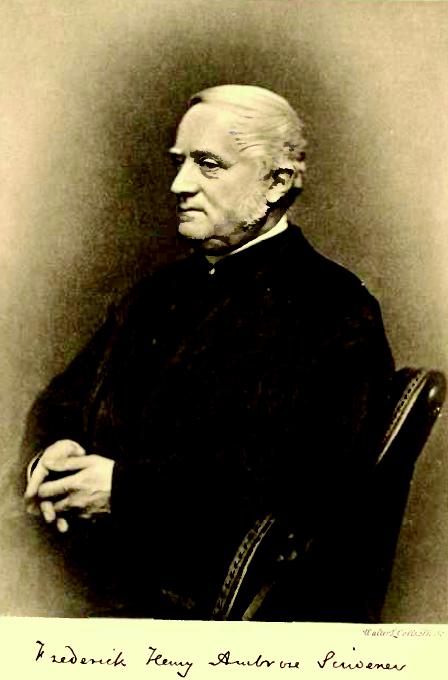

Frederick Henry Ambrose Scrivener (1813-1891), a Cambridge-trained scholar and Anglican clergyman, spent his life on the text of the New Testament. He edited Codex Bezae, collated Codex Sinaiticus against the Received Text, and compared the editions of Stephanus (1550), Beza (1565) and the Elzevirs (1633), listing every difference; he was the first to distinguish the Textus Receptus from the Byzantine text, and he favoured the Byzantine text for translation. His magnum opus, the Cambridge Paragraph Bible of 1873, revised the King James text by collating its early editions and became the basis of most later English printings. In 1894 his Greek New Testament was published giving the readings the KJV translators followed, drawn from Erasmus, Stephanus, Beza and others. Honesty: he sat on the committee for the Revised Version, where he was often outvoted, and he doubted a few passages found in the Received Text. “But the word of the Lord endureth for ever” (1 Peter 1:25, KJV).
Source en.wikipedia.org: Wikipedia, “Frederick Henry Ambrose Scrivener” (1813-1891; Codex Bezae; Sinaiticus collation; TR vs Stephanus/Beza/Elzevir; Byzantine advocate; Cambridge Paragraph Bible 1873; RV committee; doubted some passages) + “Textus Receptus” (Scrivener 1894 edition of the KJV translators’ readings). Plate: frontispiece, Plain Introduction (1894). 1 Pet 1:25 KJV verified.