Baptist Militia A library & museum of the Whole Armour of God Visit
Find

Hall III · The Timeline

The Early Middle Ages

Page 4 of 5 · 850 to 960

“But the word of the Lord endureth for ever. And this is the word which by the gospel is preached unto you.”1 Peter 1:25, KJV

How the Scriptures were received, carried into the English tongue, and confessed by the Baptist churches. Each date is linked to its source, so that you may test every word.

  • Scripture & Canon (75)
  • The English Bible (9)
  1. The Early Middle Ages6th-10th centuries

    Scripture & Canon

    Codex Cyprius: a complete Gospel book brought from Cyprus to Paris
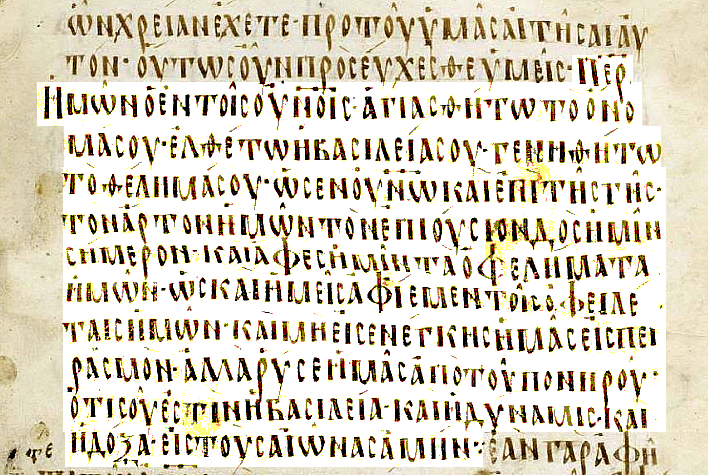
    Codex Cyprius (K): the page with the Lord’s Prayer. Bibliothèque nationale de France; photograph by the Center for the Study of New Testament Manuscripts (CSNTM), via Wikimedia Commons
    Codex Cyprius (K): the page with the Lord’s Prayer. Bibliothèque nationale de France; photograph by the Center for the Study of New Testament Manuscripts (CSNTM), via Wikimedia Commons · CC BY-SA 4.0

    Codex Cyprius, marked K, is one of the few Greek manuscripts in capital letters that holds the complete text of all four Gospels, on 267 parchment leaves. Its history before the 17th century is unknown; in 1673 it was brought from Cyprus to the Colbert library in Paris, and it is now in the Bibliothèque nationale de France. Its date is disputed. Tischendorf, Gregory and Tregelles placed it in the 9th century, which is the date most often given; Frederic Kenyon and Silva Lake argued for the 11th. It is laid out for use in church, with a calendar of readings, Eusebius’s canon tables and lesson markings in the margins. Its text is mainly Byzantine, with a good many readings of its own; William Hatch called it one of the more important of the later uncial manuscripts of the Gospels. Richard Simon made extracts from it for John Mill, who used its readings in his edition of the Greek New Testament, and Tischendorf and Tregelles each collated it and compared their results at Leipzig in 1850. “After this manner therefore pray ye: Our Father which art in heaven, Hallowed be thy name” (Matthew 6:9, KJV).

    Source en.wikipedia.org: Wikipedia, “Codex Cyprius” (K/017; complete Gospels, 267 leaves; Cyprus → Colbert library 1673 → BnF; 9th c. per Tischendorf/Gregory/Tregelles, 11th per Kenyon/Lake; Synaxarion, Menologion, canons; mainly Byzantine; Hatch; Simon’s extracts used by Mill; collations 1842/1849, compared 1850). Matt 6:9 KJV verified.

  2. Scripture & Canon

    Codex Augiensis: Paul’s letters in Greek and Latin, side by side, from Reichenau

    Codex Augiensis (F, 9th century): Ephesians 1:12-19, Greek and Latin in parallel columns. Trinity College, Cambridge, B.17.1, via Wikimedia Commons
    Codex Augiensis (F, 9th century): Ephesians 1:12-19, Greek and Latin in parallel columns. Trinity College, Cambridge, B.17.1, via Wikimedia Commons · Public domain

    Codex Augiensis, marked F, is a 9th-century manuscript of the letters of Paul written in two parallel columns, Greek beside Latin, on 136 parchment leaves. It is named after the monastery of Augia Dives, Reichenau, on Lake Constance. The Greek lacks the opening of Romans and a few other passages, and the Epistle to the Hebrews is given in Latin only. Its Greek text is almost the same as that of Codex Boernerianus, copied at St Gall, though the Latin differs; Tischendorf held that both were copied from the same manuscript, and scholars tend to prefer the readings of Augiensis. Its Greek text is of the Western type. In 1718 the Cambridge scholar Richard Bentley owned it, and it is now in the library of Trinity College, Cambridge. F. H. A. Scrivener edited its Greek text in 1859, and Tischendorf examined and collated it. The page shown here holds Ephesians 1:12-19, Paul’s prayer that the saints might know “the exceeding greatness of his power.” “In whom ye also trusted, after that ye heard the word of truth, the gospel of your salvation” (Ephesians 1:13, KJV).

    Source en.wikipedia.org: Wikipedia, “Codex Augiensis” (F/010; 9th c.; Greek-Latin Paul in parallel columns; 136 leaves; Greek gaps incl. Rom 1:1-3:19; Hebrews Latin only; Western text; Greek almost the same as Boernerianus, Tischendorf: common exemplar, Augiensis preferred; named for Augia Dives; Bentley 1718; Trinity College B.17.1; Scrivener 1859; Tischendorf). Eph 1:13 and 1:19 KJV verified.

  3. Scripture & Canon

    Codex Boernerianus: an Irish monk at St Gall reads Paul in Greek

    Codex Boernerianus (G, 9th century): folio 1, Greek with interlinear Latin, as digitised by the Saxon State and University Library (SLUB), Dresden, 2008, via Wikimedia Commons
    Codex Boernerianus (G, 9th century): folio 1, Greek with interlinear Latin, as digitised by the Saxon State and University Library (SLUB), Dresden, 2008, via Wikimedia Commons · Public domain

    Codex Boernerianus, marked G, holds the letters of Paul (without Hebrews) on 99 small vellum leaves, in Greek with a word-for-word Latin translation written above each line. It was probably written between 850 and 900 by an Irish monk at the abbey of St Gall in Switzerland: the Latin letters are of Anglo-Saxon form, and the same kind of interlinear layout is found in the St Gall Gospels, Codex Sangallensis 48, which some scholars think was once part of the same book. Its Greek text is of the Western type, close to Codex Augiensis. At the foot of one page a verse in Old Irish reflects on pilgrimage to Rome, and it concludes, in Whitley Stokes and John Strachan’s translation of 1903, that “the King whom thou seekest here, unless thou bring him with thee, thou findest him not.” The codex was at Leiden by 1670 and takes its name from the Leipzig professor Christian Frederick Boerner, who bought it in 1705. It was badly damaged by water during the Second World War, so the facsimile of 1909 is now its most legible text. It is kept in the Saxon State Library in Dresden. “For whatsoever things were written aforetime were written for our learning, that we through patience and comfort of the scriptures might have hope” (Romans 15:4, KJV).

    Source en.wikipedia.org: Wikipedia, “Codex Boernerianus” (G/012; Pauline epistles without Hebrews; 99 leaves; Greek + interlinear Latin; Irish monk, St Gall, 850-900; Anglo-Saxon letter forms; linked to Δ 037; Western text; Old Irish verse, trans. Stokes & Strachan 1903; Junius, Leiden 1670; Boerner 1705; WWII water damage; 1909 facsimile; SLUB A 145b). Rom 15:4 KJV verified.

  4. Scripture & Canon

    Cyril and Methodius: the Gospels in Slavonic

    Codex Zographensis, fol. 77r: the Gospels in Glagolitic Old Church Slavonic, late 10th or early 11th century. National Library of Russia, via Wikimedia Commons
    Codex Zographensis, fol. 77r: the Gospels in Glagolitic Old Church Slavonic, late 10th or early 11th century. National Library of Russia, via Wikimedia Commons · Public domain

    In 862 Prince Rastislav of Great Moravia asked Constantinople for teachers for his Slavic people. The brothers Constantine (later called Cyril) and Methodius of Thessalonica were sent. In 863 they began translating the Gospels and the essential service books into the language now called Old Church Slavonic. For this they devised the Glagolitic alphabet, the first used for Slavonic writing, whose successor, Cyrillic, is still used by many languages today. German clergy opposed a Slavic liturgy, but Pope Adrian II authorised it. How much the brothers translated cannot be known exactly: the New Testament and the Psalms seem to have come first, followed by Old Testament lessons. One of the classic early Old Church Slavonic manuscripts is the Codex Zographensis, a Glagolitic book of the four Gospels from the end of the tenth or beginning of the eleventh century. “And how hear we every man in our own tongue, wherein we were born?” (Acts 2:8, KJV).

    Source en.wikipedia.org: Wikipedia, “Cyril and Methodius” (Rastislav’s request 862; translation of the Gospels begun 863; Glagolitic; German opposition; Adrian II’s authorisation; extent of translation uncertain), and “Codex Zographensis” (Glagolitic Tetraevangelium, late 10th/early 11th c.). Acts 2:8 KJV verified.

  5. Scripture & Canon

    Otfrid of Weissenburg puts the Gospel into German verse

    Otfrid’s Evangelienbuch, Manuscript P, fol. 19v: the song of Mary, c. 870. Universitätsbibliothek Heidelberg, Cod. Pal. lat. 52, via Wikimedia Commons
    Otfrid’s Evangelienbuch, Manuscript P, fol. 19v: the song of Mary, c. 870. Universitätsbibliothek Heidelberg, Cod. Pal. lat. 52, via Wikimedia Commons · Public domain

    Otfrid, a monk of Weissenburg in Alsace who had studied at Fulda under Hrabanus Maurus, spent most of his life teaching novices and copying commentaries on the books of the Bible. As an old man he wrote the Evangelienbuch, a harmony of the four Gospels in 7,104 rhymed couplets of Old High German, finished between about 863 and 871. It is the first substantial literary work in German and the first German poem in rhyme, and Otfrid is the first German poet known by name. He opened it with a chapter explaining why he had written the book in his own tongue rather than in Latin, so that his people might have the Gospel story in the words they spoke. The plate shows the chapter on the song of Mary, with the Latin cues of the Magnificat in the margin beside the German lines. “And Mary said, My soul doth magnify the Lord” (Luke 1:46, KJV).

    Source en.wikipedia.org: Wikipedia, “Otfrid of Weissenburg” (c. 800-after 870; Weissenburg; Fulda under Hrabanus Maurus; Evangelienbuch, 7,104 couplets, 863-871; first rhyme in German; first named German poet; chapter “Cur scriptor hunc librum theotisce dictaverit”). Plate: Heidelberg, Cod. Pal. lat. 52, fol. 19v (read this run). Luke 1:46 KJV verified.

  6. Scripture & Canon

    Codex Sangallensis 48: the four Gospels in Greek, with the Latin above each word

    Codex Sangallensis 48 (Δ, 9th century): folio 3r, the opening of Jerome’s letter to Damasus. Abbey Library of St Gall, Cod. Sang. 48, via Wikimedia Commons
    Codex Sangallensis 48 (Δ, 9th century): folio 3r, the opening of Jerome’s letter to Damasus. Abbey Library of St Gall, Cod. Sang. 48, via Wikimedia Commons · Public domain

    Codex Sangallensis 48, marked Δ, holds the four Gospels on 198 parchment leaves, lacking only John 19:17-35. The Greek is written in large letters with every word marked off by a dot, and a Latin translation is written above it word by word, often offering two Latin words for one Greek, as “wife or spouse.” It was probably written in the 9th century by an Irish monk at St Gall, and it cannot be earlier than 868, since its margins refer to the teachings of Gottschalk of Orbais, who died that year. It carries Jerome’s letter to Pope Damasus about his translation of the Gospels (the page shown here), the Eusebian canon tables, and tables of contents in Greek and Latin before each Gospel. Its Greek text is mixed: close to the Alexandrian type in Mark, Byzantine in the other Gospels. Some scholars have thought it was once part of the same book as Codex Boernerianus. It is kept in the Abbey Library of St Gall, where its shelf number is 48. “And beginning at Moses and all the prophets, he expounded unto them in all the scriptures the things concerning himself” (Luke 24:27, KJV).

    Source en.wikipedia.org: Wikipedia, “Codex Sangallensis 48” (Δ/037; 198 leaves, lacks Jn 19:17-35; Latin interlinear, alternative renderings e.g. uxorem vel coniugem; Irish monk at St Gall, 9th c.; not before 868 (Gottschalk notes); Jerome to Damasus, canons, kephalaia; Alexandrian in Mark, Byzantine elsewhere; Rettig: same book as G; St Gall Cod. Sang. 48). Luke 24:27 KJV verified.

  7. Scripture & Canon

    The Codex Aureus of St Emmeram: the four Gospels in gold, under a cover bearing John 14:6

    Codex Aureus of St Emmeram, 870: the jewelled upper cover with Christ enthroned. Early 20th-century lantern slide (Franz Stoedtner, Berlin), KU Leuven collection, via Wikimedia Commons
    Codex Aureus of St Emmeram, 870: the jewelled upper cover with Christ enthroned. Early 20th-century lantern slide (Franz Stoedtner, Berlin), KU Leuven collection, via Wikimedia Commons · Public domain

    The Codex Aureus of St Emmeram, now in the Bavarian State Library at Munich (Clm 14000), is a book of the four Gospels made in 870 for the Carolingian ruler Charles the Bald at his Palace School. The monks Liuthard and Beringer wrote it out in gold uncial letters, with every page framed; it has twelve canon tables (see the Eusebian tables, above on this timeline), ten illuminated initials, and seven full-page pictures, among them the four evangelists and Christ in Majesty. Its cover of gold, set with sapphires, emeralds and pearls, can be dated to 870 and is one of the very few treasure bindings of that age to survive. At its centre Christ is seated in majesty, holding on His knee a book inscribed with His own words from John 14:6. The book takes its name from the abbey of St Emmeram at Regensburg in Bavaria, where it was kept for most of its history. “Jesus saith unto him, I am the way, the truth, and the life: no man cometh unto the Father, but by me” (John 14:6, KJV).

    Source en.wikipedia.org: Wikipedia, “Codex Aureus of Saint Emmeram” (BSB Clm 14000; Gospel Book for Charles the Bald, 870, Palace School; Liuthard and Beringer; gold uncials; 12 canon tables, 10 initials, 7 full-page miniatures; cover dated 870, gems, Christ in Majesty with book inscribed John 14:6; St Emmeram’s Abbey, Regensburg). John 14:6 KJV verified.

  8. Scripture & Canon

    Codex S1 (Sassoon 1053): an almost complete Hebrew Bible a century older than Leningrad

    A page of Codex S1 (Sassoon 1053), Hebrew Bible, late 9th or 10th century (photograph Ardon Bar-Hama; National Library of Israel), via Wikimedia Commons
    A page of Codex S1 (Sassoon 1053), Hebrew Bible, late 9th or 10th century (photograph Ardon Bar-Hama; National Library of Israel), via Wikimedia Commons · Public domain

    Codex S1, long known as Codex Sassoon 1053 after its owner David Solomon Sassoon, is an almost complete Masoretic codex of all twenty-four books of the Hebrew Bible. It is written in three columns to the page, and only twelve of its leaves are wholly missing, though hundreds more are partly lost. It is dated to the 10th century, or perhaps the late 9th; carbon dating points to the late 9th or early 10th. That makes it about as old as the Aleppo Codex and a century older than the Leningrad Codex (both already on this timeline); and where Aleppo lost some 40 per cent of its leaves, S1 lost few. Its notes of ownership show it passing from hand to hand in the Middle East, and in the 13th century it was dedicated to a synagogue at Makisin, in today’s north-eastern Syria. Sassoon bought it in 1929. Since 2023 it has belonged to ANU Museum of the Jewish People in Tel Aviv, and the National Library of Israel publishes it in colour online. Honesty: its scribe was “unusually sloppy,” often leaving out vowels and accents, and where the Masoretic traditions differ it agrees with Ben Asher only 40 per cent of the time. “The grass withereth, the flower fadeth: but the word of our God shall stand for ever” (Isaiah 40:8, KJV).

    Source en.wikipedia.org: Wikipedia, “Codex Sassoon 1053” / Codex S1 (almost complete, 24 books, 12 leaves missing; 10th c. or late 9th, carbon-dated late 9th-early 10th; vs Aleppo 40% missing and Leningrad 1008; 3 cols; “unusually sloppy” scribe; Ben Asher 40%, Ben Naphtali 20%; Makisin synagogue 13th c.; Sassoon 1929; sold 2023 to American Friends of ANU; NLI images). Isa 40:8 KJV verified.

  9. Scripture & Canon

    Saadia Gaon puts the Torah into Arabic for readers in the Arabic-speaking world

    Saadia ben Joseph, called Saadia Gaon, was born in the Faiyum in Egypt in 892, studied at Tiberias, and in 928 became head of the Jewish academy of Sura in Babylonia; he died in 942. He was the first important rabbinic figure to write extensively in Judeo-Arabic, Arabic written in Hebrew letters. He translated the five books of Moses (and some other books of the Hebrew Bible, among them the Psalms) into Judeo-Arabic, adding a commentary. His translation, the Tafsir, set the Scriptures before the unlearned in clear and consistent language. For centuries it served Jews living in Arabic-speaking lands, and the Jews of Yemen copied it into nearly all their handwritten Bibles. He also laid foundations for the study of Hebrew grammar and made an early Hebrew dictionary. Honesty: his identifications of places, animals and the stones of the high priest’s breastplate were disputed, and Abraham ibn Ezra criticised them sharply. “The entrance of thy words giveth light; it giveth understanding unto the simple” (Psalm 119:130, KJV).

    Source en.wikipedia.org: Wikipedia, “Saadia Gaon” (892-942; born Dilaz, Faiyum; Tiberias 915; gaon of Sura; first important rabbinic figure to write extensively in Judeo-Arabic; Tafsir of the Pentateuch + other books incl. Psalms, with commentary; copied by Yemenite Jews in nearly all codices; Scriptures for the unlearned; grammar, Agron; ibn Ezra’s criticism). No licensed plate found. Ps 119:130 KJV verified.

  10. The English Bible

    King Alfred sets the Ten Commandments before his laws

    The Alfred Jewel, inscribed “AELFRED MEC HEHT GEWYRCAN” (Alfred ordered me made), late 9th century; believed to be the handle of an æstel, a reading pointer like those Alfred sent out with his English Pastoral Care. Ashmolean Museum, Oxford
    The Alfred Jewel, inscribed “AELFRED MEC HEHT GEWYRCAN” (Alfred ordered me made), late 9th century; believed to be the handle of an æstel, a reading pointer like those Alfred sent out with his English Pastoral Care. Ashmolean Museum, Oxford. Photo: Giles Watson, via Wikimedia Commons · CC BY-SA 2.0

    Alfred, king of the West Saxons (849-899), gathered the older law codes of Kent, Wessex and Mercia into one book of “dooms,” or judgments, about 893. Before the laws he set a long prologue in English: a version of the Ten Commandments and passages from the law of Moses in Exodus, followed by the Christian teaching of mercy, so that the laws of the realm stood upon Scripture. In this way Alfred circulated passages of the Ten Commandments and the books of Moses in the English tongue. Alfred is also said to have had the Psalms translated, though scholars are divided on whether the prose version of the first fifty Psalms in the Paris Psalter is his own work.

    Source en.wikipedia.org: Wikipedia, “Doom book” (c. 893; the three prior codes; the Mosaic prologue; Treschow on mercy), and “Old English Bible translations” (Ten Commandments and Pentateuch passages prefixed to the laws; Paris Psalter debate).

  11. Scripture & Canon

    Codex Cairensis: the Hebrew Prophets with their vowels and Masorah

    Codex Cairensis, p. 12: the opening of Joshua (reproduction from the facsimile)
    Codex Cairensis, p. 12: the opening of Joshua (reproduction from the facsimile). Via Wikimedia Commons · Public domain

    Codex Cairensis, the Cairo Codex of the Prophets, holds the complete Hebrew text of the Former Prophets (Joshua, Judges, Samuel and Kings) and the Latter Prophets (Isaiah, Jeremiah, Ezekiel and the Twelve) in 575 pages, with vowel points and the notes of the Masoretes. Its colophon says it was written and pointed by Moses ben Asher in Tiberias in the year that answers to AD 895, and for generations it was described as the oldest dated Hebrew codex of the Bible. It was long kept by the Karaite community in Cairo, which deposited it in 1983 at the Hebrew University of Jerusalem. A team of Spanish scholars published its text and Masorah in full between 1979 and 1992. Honesty: modern study, including radiocarbon testing, points to the 11th century rather than 895, and finds that the scribe and the one who added the vowels were different people; in its pointing it stands nearer to ben Naphtali than to Aaron ben Asher of the Aleppo Codex (already on this timeline). The plate shows its first page of Joshua. “This book of the law shall not depart out of thy mouth; but thou shalt meditate therein day and night” (Joshua 1:8, KJV).

    Source en.wikipedia.org: Wikipedia, “Codex Cairensis” (complete Nevi’im; 575 pp.; colophon: Moses ben Asher, Tiberias, 895; “oldest dated Hebrew Codex” claim; Karaites of Cairo, deposited 1983 at Hebrew University; radiocarbon → 11th c., scribe ≠ vocaliser; nearer ben Naphtali; Pérez Castro ed. 1979-92). Plate: p. 12, Joshua 1. Josh 1:8 KJV verified.

  12. Scripture & Canon

    The Adishi Gospels: the four Gospels in Georgian

    The Adishi Gospels (897): two openings with Mark 7:11-8:2, plate 15 of the 1916 facsimile edition, photographed by Dmitri Yermakov
    The Adishi Gospels (897): two openings with Mark 7:11-8:2, plate 15 of the 1916 facsimile edition, photographed by Dmitri Yermakov. Via Wikimedia Commons · Public domain

    The Bible was first translated into Georgian as early as the fifth century. The oldest dated manuscript of the Georgian Gospels is the Adishi Gospels, written in 897 by a scribe named Mikaeli at the Shatberdi monastery in Klarjeti, in the south-west of medieval Georgia (now in north-eastern Turkey). It was later taken for safekeeping to the remote village of Adishi, high in the mountains of Svaneti. Its first five leaves are illuminated. The Georgian scholar Ekvtime Takaishvili published it in 1916, and it has been studied by Georgian and Western scholars, among them Robert Pierpont Blake of Harvard. It is kept today in the Mestia Ethnographic Museum in Georgia. “And he said unto them, Go ye into all the world, and preach the gospel to every creature” (Mark 16:15, KJV).

    Source en.wikipedia.org: Wikipedia, “Adysh Gospels” (897; Mikaeli; Shatberdi, Klarjeti; Adishi, Svaneti; five illuminated folios; Takaishvili 1916; Blake; Mestia museum) and “Bible translations into Georgian” (as early as the 5th c.). Mark 16:15 KJV verified.

  13. Scripture & Canon

    The Damascus Pentateuch: the Five Books of Moses with the Masorah, a thousand years old

    Damascus Pentateuch (NLI Ms. Heb. 24°5702), a page in three columns with Masoretic notes. National Library of Israel, via Wikimedia Commons
    Damascus Pentateuch (NLI Ms. Heb. 24°5702), a page in three columns with Masoretic notes. National Library of Israel, via Wikimedia Commons · Public domain

    The Damascus Pentateuch (Codex Sassoon 507) is a tenth-century Hebrew codex of almost the whole Torah, written in three columns in a large square script and surrounded by the Masorah, the scribal notes that guarded the text letter by letter: the large Masorah above and below, the small Masorah between the columns. It is counted among the oldest Bible codices in existence, with the Aleppo and Leningrad codices (both already on this timeline). The collector David Solomon Sassoon bought it in Damascus early in the 20th century, and the National Library of Israel acquired it in 1975. Honesty: it begins at Genesis 9:26 and lacks Exodus 18:1-23; its text agrees with Aaron ben Asher’s readings only about half the time, and Sassoon judged that its notes follow ben Asher while its vowels follow ben Naphtali. It is not the 13th-century Spanish “Damascus Crown”, a different manuscript. “Ye shall not add unto the word which I command you, neither shall ye diminish ought from it” (Deuteronomy 4:2, KJV).

    Source en.wikipedia.org: Wikipedia, “Damascus Pentateuch” (Codex Sassoon 507; 10th c.; almost complete Torah; begins Gen 9:26, lacks Exod 18:1-23; NLI 1975; facsimile 1978; not the Damascus Keter; bought by D. S. Sassoon in Damascus; ranks with Aleppo and Leningrad; ben Asher agreement up to 52%; three columns, Masora magna/parva; Sassoon: Masora ben Asher, text ben Naphtali). Deut 4:2 KJV verified.

  14. Scripture & Canon

    The Mac Durnan Gospels: an Armagh Gospel book dedicated to God, then carried to Canterbury

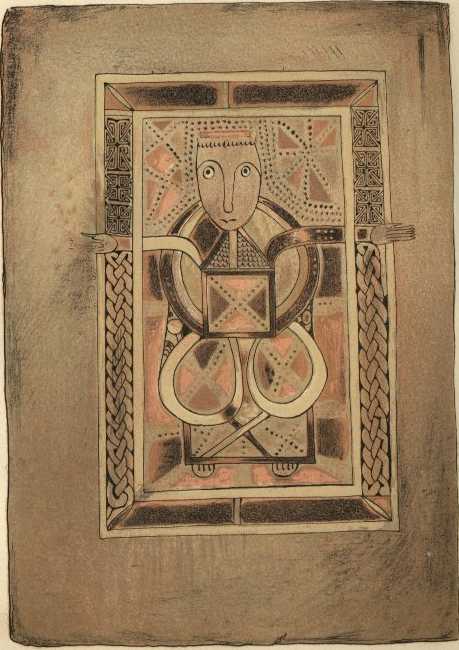
    Mac Durnan Gospels, fol. 170v: St John. Lambeth Palace Library (MS 1370), via Wikimedia Commons
    Mac Durnan Gospels, fol. 170v: St John. Lambeth Palace Library (MS 1370), via Wikimedia Commons · Public domain

    The Mac Durnan Gospels is an illuminated Gospel Book made in Ireland in the ninth or tenth century and now in Lambeth Palace Library, London. It holds the four Gospels of the Latin Vulgate in Irish minuscule, without the usual prologues, in a text very close to the Echternach Gospels and the Book of Armagh (both already on this timeline). It opens with a cross framing the symbols of the four Evangelists, and each Gospel begins with a full-page portrait of its writer. A Latin verse inscription added later in the 10th century, possibly by Koenwald, afterwards bishop of Worcester, says the book was written or commissioned by Máel Brigte mac Tornáin, abbot of Armagh (died 927), who dedicated it to God, and that the English king Æthelstan later gave it to Christ Church, Canterbury. In the 16th century it belonged to Archbishop Matthew Parker. Honesty: its later history is patchy, and it does not appear in the Lambeth catalogues until 1932. “The words of the LORD are pure words: as silver tried in a furnace of earth, purified seven times” (Psalm 12:6, KJV).

    Source en.wikipedia.org: Wikipedia, “Mac Durnan Gospels” (Lambeth Palace MS 1370; Ireland, 9th or 10th c.; four Gospels, Vulgate, Irish minuscule, no prologues; text close to Echternach and Armagh; cross with Evangelist symbols; four portraits; f. 3v inscription: Máel Brigte mac Tornáin, abbot of Armagh from 888, d. 927, dedicated it to God; Æthelstan gave it to Christ Church, Canterbury; Parker by 1574; Lambeth catalogues 1932). Ps 12:6 KJV verified.

  15. Scripture & Canon

    The Aleppo Codex: the Masoretic Hebrew Bible in one volume

    Joshua 1:1 in the Aleppo Codex, 10th century, scanned by aleppocodex.org, via Wikimedia Commons
    Joshua 1:1 in the Aleppo Codex, 10th century, scanned by aleppocodex.org, via Wikimedia Commons · Public domain

    For centuries Jewish scholars called Masoretes guarded the Hebrew text, adding vowel signs, accents and marginal notes that fixed how every word was to be read. About 920, at Tiberias, the scribe Shlomo ben Buya’a copied the consonants of the whole Hebrew Bible into one codex. The text was then checked, pointed and given its Masoretic notes in the tradition of Aaron ben Moses ben Asher, the most prominent of the Tiberian Masoretes, and ben Asher’s tradition became the accepted one for the Hebrew Bible. Maimonides consulted the codex in Egypt and relied on it when he set down the rules for writing Torah scrolls, describing it as trusted by all. It was later kept for five centuries in the synagogue at Aleppo. After the synagogue was burned in 1947 the codex went missing, and when it reached Jerusalem in 1958 about forty per cent was lost, including most of the Torah. Umberto Cassuto doubted in 1943 that it was the codex Maimonides used, but Moshe Goshen-Gottstein’s later study of the surviving Torah pages seems to have confirmed it. It is kept today in the Shrine of the Book. “The words of the LORD are pure words: as silver tried in a furnace of earth, purified seven times” (Psalm 12:6, KJV).

    Source en.wikipedia.org: Wikipedia, “Aleppo Codex” (Tiberias c. 920; consonants by Shlomo ben Buya’a; verified, vocalized and annotated in the ben Asher tradition; Maimonides’ use for Hilkhot Sefer Torah; Aleppo five centuries; 1947 fire; c. 40% missing on arrival 1958; Cassuto 1943; Goshen-Gottstein; Shrine of the Book). Riots, Crusader ransom and lawsuit deliberately omitted. Ps 12:6 KJV verified.

  16. Scripture & Canon

    Codex Vaticanus 354: the only dated Gospel book in capital letters

    Codex Vaticanus 354 (S, AD 949): Luke 17:34-18:8, beginning the parable of the unjust judge. Vatican Library, Vat. gr. 354, via Wikimedia Commons
    Codex Vaticanus 354 (S, AD 949): Luke 17:34-18:8, beginning the parable of the unjust judge. Vatican Library, Vat. gr. 354, via Wikimedia Commons · Public domain

    Codex Vaticanus 354, known to scholars as S, holds the four Gospels on 235 large leaves in two columns of the older capital (uncial) script. A note by its scribe gives the very day it was finished: a monk named Michael completed it on the fifth day of March, at the sixth hour, in the year 6457 from the creation by the Byzantine reckoning, that is, AD 949. It is one of the four oldest New Testament manuscripts dated in this way, and the only uncial so dated, It opens with Eusebius’s letter to Carpianus and his canon tables, gives each Gospel a table of contents and a closing note, and carries neumes, signs for chanting the text, which make it one of the oldest manuscripts to have them. Its text is of the Byzantine type, standing close to Codex Mosquensis II and to Codex Washingtonianus. Constantin von Tischendorf corrected its earlier collation in 1866. It is kept in the Vatican Library. “And he spake a parable unto them to this end, that men ought always to pray, and not to faint” (Luke 18:1, KJV).

    Source en.wikipedia.org: Wikipedia, “Codex Vaticanus 354” (S/028; 235 leaves, 2 cols; colophon: the monk Michael, 5 March, 6th hour, AM 6457 = 949; one of 4 oldest dated NT MSS, only dated uncial; Epistle to Carpianus, kephalaia, neumes; Byzantine, close to V and W; Birch 1781-83, Tischendorf 1866; Vat. gr. 354). Luke 18:1 KJV verified.

  17. Scripture & Canon

    The Book of Deer: a pocket Gospel book whose margins hold Scotland’s oldest Gaelic writing

    Book of Deer, fol. 29v: the evangelist Luke. Cambridge University Library (MS Ii.6.32), via Wikimedia Commons
    Book of Deer, fol. 29v: the evangelist Luke. Cambridge University Library (MS Ii.6.32), via Wikimedia Commons · Public domain

    The Book of Deer is a small tenth-century Latin Gospel Book, 86 leaves of about six inches by four, of the Irish “pocket Gospel” kind made for private reading rather than church services. It holds the whole Gospel of John and parts of Matthew, Mark and Luke in a Vulgate text with Irish peculiarities, together with part of an office for visiting the sick and the Apostles’ Creed, written by a single scribe in Irish minuscule. It may be the oldest surviving manuscript made in Scotland. Honesty: its origin is uncertain; most scholars argue for Scotland, though its scribe was certainly Irish. The Gaelic notes in its blank spaces, which tell of the founding of the monastery at Deer in Aberdeenshire and record gifts of land to it, were added in the early 12th century; they are the earliest Gaelic writing to survive from Scotland. Cambridge University Library has held the book since 1715. “But these are written, that ye might believe that Jesus is the Christ, the Son of God” (John 20:31, KJV).

    Source en.wikipedia.org: Wikipedia, “Book of Deer” (CUL MS Ii.6.32; 10th-c. Latin Gospel Book; additions early 12th c.; earliest surviving Gaelic from Scotland; Irish pocket gospel for private use; 86 ff., 157×108 mm; John complete, parts of Mt, Mk, Lk; Visitation of the Sick; Apostles’ Creed; Vulgate with Irish peculiarities; one scribe; Scottish origin argued; Cambridge since 1715). John 20:31 KJV verified.

  18. Scripture & Canon

    The Gero Codex: an early Ottonian Gospel book from Reichenau

    Gero Codex, fol. 4v: the evangelist John. Universitäts- und Landesbibliothek Darmstadt, Cod. 1948, via Wikimedia Commons
    Gero Codex, fol. 4v: the evangelist John. Universitäts- und Landesbibliothek Darmstadt, Cod. 1948, via Wikimedia Commons · Public domain

    The Gero Codex is a Gospel book probably made at the island abbey of Reichenau, on Lake Constance, between about 950 and 970. It is one of the first and finest of the early Ottonian illuminated books. It has portraits of the four evangelists, and two dedication pictures: the monk-scribe Anno giving the book to Gero, probably Gero of Cologne, and Gero offering it to the apostle Peter. Its paintings resemble those of the 9th-century Lorsch Gospels, a book already on this timeline, above all its Christ in majesty, which was copied from a Carolingian model. It is kept today in the University and State Library at Darmstadt (Cod. 1948). The plate is the portrait of St John, at the head of his Gospel. “In the beginning was the Word, and the Word was with God, and the Word was God” (John 1:1, KJV).

    Source en.wikipedia.org: Wikipedia, “Gero Codex” (probably Reichenau, 950-970; among the first and finest of the Eburnant group; four evangelists; Anno → Gero (probably of Cologne) → St Peter; Christ in Majesty copied from a Carolingian model, cf. Lorsch Gospels; Darmstadt Cod. 1948). John 1:1 KJV verified.

  19. The English Bible

    The Junius manuscript: Genesis, Exodus and Daniel in Old English verse

    Junius manuscript, page 1: the opening of the Old English Genesis. Bodleian Library, MS Junius 11, via Digital Bodleian and Wikimedia Commons
    Junius manuscript, page 1: the opening of the Old English Genesis. Bodleian Library, MS Junius 11, via Digital Bodleian and Wikimedia Commons · Public domain

    The Junius manuscript is one of the four great books of Old English poetry, and its subject is the Bible. It holds four long poems in the English of the Anglo-Saxons. Modern editors call them Genesis, Exodus, Daniel, and Christ and Satan; the manuscript itself gives them no titles. Genesis retells the book from the Creation to the test of Abraham’s faith in chapter 22. Exodus tells of Israel’s flight from Egypt and the crossing of the Red Sea. Daniel follows the first five chapters of that book, dwelling on the three young men in the fiery furnace. The poets are unknown. It was long called the Cædmon manuscript, after the belief that Cædmon wrote the poems, but that view is no longer held. It is dated to c. 960-1000. It was illustrated with line drawings in the Winchester style, a scheme that was never finished, and that scheme suggests the book was meant for devotion or teaching. The scholar Franciscus Junius published it in 1655 and bequeathed it to Oxford, where it remains in the Bodleian Library (MS Junius 11). The page shown is the opening of Genesis. “In the beginning God created the heaven and the earth.” (Genesis 1:1, KJV).

    Source en.wikipedia.org: Wikipedia, “Junius manuscript” (Bodleian MS Junius 11; poems Genesis, Exodus, Daniel, Christ and Satan (modern titles); anonymous; Cædmon attribution discarded; c. 1000 by palaeography, 960-1000 for Liber I per recent work (Lockett 2002); Winchester-style drawings, unfinished; Junius ed. 1655, bequeathed to Oxford). Gen 1:1 KJV verified.

  20. The English Bible

    The Vercelli Book: English sermons and the Dream of the Rood

    Vercelli Book, fol. 80v: the opening of Homily XV, on the Day of Judgement. Biblioteca Capitolare, Vercelli, via the Digital Vercelli Book and Wikimedia Commons
    Vercelli Book, fol. 80v: the opening of Homily XV, on the Day of Judgement. Biblioteca Capitolare, Vercelli, via the Digital Vercelli Book and Wikimedia Commons · Public domain

    The Vercelli Book is one of the oldest of the four great books of Old English poetry. It was copied in the late 10th century in a careful Anglo-Saxon hand, and it is an anthology of religious writing in the people’s own tongue. Its 135 leaves hold twenty-three prose homilies, sermons for teaching and warning, and a life of Saint Guthlac. Six poems are set among them, including the Dream of the Rood, in which the cross itself tells of the crucifixion of Christ. Elaine Treharne suggests it was gathered by someone in a monastery for private devotion, with a special interest in repentance and the last things. How it came to northern Italy is not known for certain. One explanation is a hospice for English pilgrims founded by Guala Bicchieri, bishop of Vercelli, who had been papal legate in England in 1216-18. Friedrich Blume found it in 1822 in the Chapter Library of Vercelli, where it is still kept. The page shown opens Homily XV, on the Day of Judgement (fol. 80v). “But God forbid that I should glory, save in the cross of our Lord Jesus Christ, by whom the world is crucified unto me, and I unto the world.” (Galatians 6:14, KJV).

    Source en.wikipedia.org: Wikipedia, “Vercelli Book” (Biblioteca Capitolare, Vercelli; late 10th c.; 135 ff.; 23 homilies, prose Guthlac, six poems incl. Dream of the Rood; Anglo-Saxon square minuscule; compiled for private inspiration, penitential/eschatological themes (Treharne); Guala Bicchieri hospice; found by Blume 1822). Gal 6:14 KJV verified.

Plates are hung only where a genuine image of the subject could be found under a public-domain or open licence. Each carries its credit and links to its licence record. Entries without a plate are awaiting one that meets that standard. More entries are being prepared, and each will be added only with its citation.

Provenance

Every entry in this hall was checked, when it was added, against the source linked beneath it; notes name the underlying scholarship where the source cites it. Where historians disagree (for example, over John Wycliffe’s own share in the Bible that bears his name), the entry says so. Scripture is quoted verbatim from the King James Version. Plates are reproduced almost entirely from Wikimedia Commons: public-domain works, works dedicated to the public domain (CC0), or photographs under Creative Commons Attribution (CC BY 2.0-3.0) or Attribution-ShareAlike (CC BY-SA 2.0-4.0) licences. Each plate’s licence is stated beneath it, with a link to the record where it was confirmed.