
Scripture & Canon
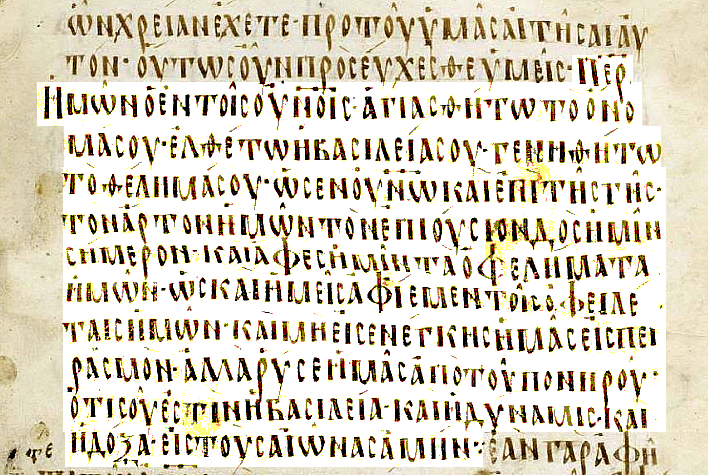

Codex Cyprius, marked K, is one of the few Greek manuscripts in capital letters that holds the complete text of all four Gospels, on 267 parchment leaves. Its history before the 17th century is unknown; in 1673 it was brought from Cyprus to the Colbert library in Paris, and it is now in the Bibliothèque nationale de France. Its date is disputed. Tischendorf, Gregory and Tregelles placed it in the 9th century, which is the date most often given; Frederic Kenyon and Silva Lake argued for the 11th. It is laid out for use in church, with a calendar of readings, Eusebius’s canon tables and lesson markings in the margins. Its text is mainly Byzantine, with a good many readings of its own; William Hatch called it one of the more important of the later uncial manuscripts of the Gospels. Richard Simon made extracts from it for John Mill, who used its readings in his edition of the Greek New Testament, and Tischendorf and Tregelles each collated it and compared their results at Leipzig in 1850. “After this manner therefore pray ye: Our Father which art in heaven, Hallowed be thy name” (Matthew 6:9, KJV).
Source en.wikipedia.org: Wikipedia, “Codex Cyprius” (K/017; complete Gospels, 267 leaves; Cyprus → Colbert library 1673 → BnF; 9th c. per Tischendorf/Gregory/Tregelles, 11th per Kenyon/Lake; Synaxarion, Menologion, canons; mainly Byzantine; Hatch; Simon’s extracts used by Mill; collations 1842/1849, compared 1850). Matt 6:9 KJV verified.