Baptist Militia A library & museum of the Whole Armour of God Visit
Find

Hall III · The Timeline

The Early Church

Page 2 of 5 · 80 to 175

“But the word of the Lord endureth for ever. And this is the word which by the gospel is preached unto you.”1 Peter 1:25, KJV

How the Scriptures were received, carried into the English tongue, and confessed by the Baptist churches. Each date is linked to its source, so that you may test every word.

  • Scripture & Canon (83)
  1. The Early Church1st-5th centuries

    Scripture & Canon

    The Acts of the Apostles: the Bereans “searched the scriptures daily”

    Papyrus 91 (P. Mil. Vogl. inv. 1224 + Macquarie inv. 360), mid-3rd century: Acts 2:30-37 and 2:46-3:2 in Greek. University of Milan, via Wikimedia Commons
    Papyrus 91 (P. Mil. Vogl. inv. 1224 + Macquarie inv. 360), mid-3rd century: Acts 2:30-37 and 2:46-3:2 in Greek. University of Milan, via Wikimedia Commons · Public domain

    The Acts of the Apostles is the second volume of Luke’s work. It begins with the ascension of Jesus and the coming of the Holy Spirit at Pentecost, tells of the first believers’ shared life, the church at Antioch, and the gospel carried from Jerusalem into the wider Mediterranean world, and follows Paul until it closes with him at Rome, preaching while he awaits trial. The name “Acts of the Apostles” is first found in Irenaeus, in the late 2nd century. As with Luke, church tradition names Luke, Paul’s companion, as the writer; scholars are divided on that, though most hold the writer knew Paul, and the “we” passages are most often read as resting on an eyewitness. Honesty on date: the earliest possible date is around AD 62, when its story ends with Paul imprisoned in Rome; most scholars date it to 80-90. Its text survives in two main forms, the Alexandrian and the longer Western. Papyrus 91 (mid-3rd century), shown in the plate, holds part of Peter’s sermon at Pentecost (2:30-37) and the life of the first church (2:46-3:2). “These were more noble than those in Thessalonica, in that they received the word with all readiness of mind, and searched the scriptures daily, whether those things were so” (Acts 17:11, KJV).

    Source en.wikipedia.org: Wikipedia, “Acts of the Apostles” (second part of Luke-Acts; ascension, Pentecost, Antioch, Paul to Rome; title first in Irenaeus; authorship divided, most hold author met Paul; “we” passages; earliest possible c. 62, most 80-90; Alexandrian vs Western text) and “Papyrus 91” (mid-3rd c.). Acts 17:11 KJV verified.

  2. Scripture & Canon

    The Epistle of Jude: “earnestly contend for the faith which was once delivered unto the saints”

    Papyrus 78 (P. Oxy. XXXIV 2684), 3rd-4th century: Jude 4-5 and 7-8 in Greek. Sackler Library, Oxford, via Wikimedia Commons
    Papyrus 78 (P. Oxy. XXXIV 2684), 3rd-4th century: Jude 4-5 and 7-8 in Greek. Sackler Library, Oxford, via Wikimedia Commons · Public domain

    The Epistle of Jude is a short letter of 25 verses from “Jude, the servant of Jesus Christ, and brother of James” (1:1). James is generally taken to be James the brother of the Lord, and so, by tradition, Jude was a brother of the Lord too; Clement of Alexandria said so. Jude meant to write of “the common salvation”, but instead urged his readers to contend earnestly for the faith once delivered to the saints: to hold fast the truth of the gospel against ungodly men who had crept in among them, a contending by faith and doctrine, not by force. It closes with one of the great doxologies of Scripture: “Now unto him that is able to keep you from falling.” Honesty: it quotes the Book of Enoch, which is not in the Bible, and Jerome wrote in 392 that for this reason it was rejected by many; Eusebius counted it among the disputed books. Yet the Muratorian fragment, Clement and Tertullian received it, and the Council of Carthage (397) listed it. It was most likely written in the late first century; many scholars think 2 Peter borrowed from it, and some consider it written in Jude’s name. The plate is Papyrus 78 (Sackler Library, Oxford), 3rd-4th century, with Jude 4-5 and 7-8. “Beloved, when I gave all diligence to write unto you of the common salvation, it was needful for me to write unto you, and exhort you that ye should earnestly contend for the faith which was once delivered unto the saints” (Jude 3, KJV).

    Source en.wikipedia.org: Wikipedia, “Epistle of Jude” (25 verses; brother of James; Clement of Alexandria; quotes Enoch; Jerome 392 “rejected by many”; Eusebius antilegomena; Muratorian, Clement, Tertullian, Carthage 397; most likely late 1st c.; most favour Jude before 2 Peter; doxology) and “Papyrus 78” (3rd/4th c.). Jude 3 KJV verified; Jude 24 checked.

  3. Scripture & Canon

    The Gospel according to John is written: the last of the four, “that ye might believe”

    Papyrus 90 (P. Oxy. 3523), late 2nd century: John 18:36-19:1, “my kingdom is not of this world” and Pilate’s question. Sackler Library, Oxford, via Wikimedia Commons
    Papyrus 90 (P. Oxy. 3523), late 2nd century: John 18:36-19:1, “my kingdom is not of this world” and Pilate’s question. Sackler Library, Oxford, via Wikimedia Commons · Public domain

    The fourth Gospel sets out seven signs of Jesus, rising to the raising of Lazarus, and then the last week of His life: the farewell discourse, His passion and His resurrection. It names as its witness “the disciple whom Jesus loved,” and says of him, “this is the disciple which testifieth of these things, and wrote these things” (21:24). Irenaeus of Lyons, writing about 180, gives the church’s earliest account of it: “John, the disciple of the Lord, who also had leaned upon His breast, did himself publish a Gospel during his residence at Ephesus in Asia.” Most scholars today agree that the Gospel was completed between AD 90 and 100. Honesty: many modern scholars continue to hold the traditional authorship by John the apostle, but most reject it, while still treating the beloved disciple as a real person and the source of much of the Gospel. Within a century or less of its writing it was being copied in Egypt, as Papyrus 52 (already on this timeline) and the plate here show. “To this end was I born, and for this cause came I into the world, that I should bear witness unto the truth. Every one that is of the truth heareth my voice” (John 18:37, KJV).

    Source en.wikipedia.org: Wikipedia, “Gospel of John” (seven signs to Lazarus; final week, farewell discourse; beloved disciple; most scholars: completed 90-100; traditional attribution first in Irenaeus, many affirm, most reject). Irenaeus, Against Heresies III.1.1 (ANF, newadvent.org/fathers/0103301.htm), quoted verbatim. Plate: P90, late 2nd c. John 18:37, 21:24 KJV verified.

  4. Scripture & Canon

    John on Patmos writes the Revelation to the seven churches of Asia: the last book of the Bible

    Papyrus 98, dated c. 150-250: Revelation 1:13-2:1, John’s vision of Christ among the seven candlesticks and the start of the letter to Ephesus. French Institute of Oriental Archaeology, Cairo (P. IFAO inv. 237b), via Wikimedia Commons
    Papyrus 98, dated c. 150-250: Revelation 1:13-2:1, John’s vision of Christ among the seven candlesticks and the start of the letter to Ephesus. French Institute of Oriental Archaeology, Cairo (P. IFAO inv. 237b), via Wikimedia Commons · Public domain

    The last book of the New Testament opens with its writer naming himself simply John, a servant of Jesus Christ, who was “in the isle that is called Patmos, for the word of God, and for the testimony of Jesus Christ” (1:9). It begins as a letter to seven churches of the province of Asia, cities close together near the coast across from Patmos, each given words of commendation, warning and promise from Christ (chapters 2-3), and it goes on to prophetic visions of the things to come before the Lord’s return. Irenaeus, about 180, says the vision “was seen … towards the end of Domitian’s reign,” and the book is commonly dated to about AD 95, the reign of Domitian (81-96). Some of its images have been read as pointing to Nero (reigned 54-68), which the cited scholarship notes does not require a date in the 60s. Honesty: Irenaeus names John the apostle as its author, and the church long received it so; modern scholars debate who this John was, and no consensus exists. “Blessed is he that readeth, and they that hear the words of this prophecy, and keep those things which are written therein: for the time is at hand” (Revelation 1:3, KJV).

    Source en.wikipedia.org: Wikipedia, “Book of Revelation” (author names himself John, on Patmos, 1:9; letters to the Seven Churches of Asia, close together near Patmos; commonly dated c. 95 under Domitian; Nero allusions do not imply 60s; Irenaeus tradition = John the apostle; no consensus). Irenaeus AH V.30.3 (ANF, newadvent 0103530), date phrase quoted. Plate: P98, 150-250. Rev 1:3, 1:9 KJV verified.

  5. Scripture & Canon

    The First Epistle of John: “that ye may know that ye have eternal life”

    Papyrus 9 (P. Oxy. III 402), 3rd century: 1 John 4:11-12, 14-17 in Greek. Houghton Library, Harvard University, via Wikimedia Commons
    Papyrus 9 (P. Oxy. III 402), 3rd century: 1 John 4:11-12, 14-17 in Greek. Houghton Library, Harvard University, via Wikimedia Commons · Public domain

    The First Epistle of John has no greeting or signature; it speaks to its readers as “little children” and teaches them how to know that their fellowship with God is real: by walking in the light, keeping His commandments, loving the brethren, and confessing that Jesus Christ is come in the flesh. It is traditionally held to have been written by John, the writer of the fourth Gospel, at Ephesus in his old age, and its thought and language are very close to that Gospel. Honesty: there is no scholarly consensus on its authorship; most scholars think the three letters of John share one author, but not all agree that he also wrote the Gospel. It is usually dated after the Gospel, probably between AD 95 and 110, though some, such as I. Howard Marshall, allow a date between the 60s and 90s. It was known early: the Muratorian fragment cites its opening verses, and Polycarp and Papias quote from the letters of John. The plate is Papyrus 9 (Houghton Library, Harvard), 3rd century, with 1 John 4:11-12, where John writes, “if God so loved us, we ought also to love one another.” “These things have I written unto you that believe on the name of the Son of God; that ye may know that ye have eternal life, and that ye may believe on the name of the Son of God” (1 John 5:13, KJV).

    Source en.wikipedia.org: Wikipedia, “First Epistle of John” (no epistolary opening; “little children”; traditionally John the Evangelist at Ephesus in old age; no consensus; probably Ephesus 95-110; Muratorian cites 1:1-3; P9 3rd c.) and “Third Epistle of John” (Marshall 60s-90s; Polycarp and Papias quote 1-2 John). 1 John 4:11 and 5:13 KJV verified.

  6. Scripture & Canon

    The Elder writes 2 and 3 John: “I have no greater joy than to hear that my children walk in truth”

    The Second and Third Epistles of John are the two shortest books of the Bible (3 John by words, 2 John by verses), each from a writer who calls himself only “the elder”. 2 John is written “unto the elect lady and her children”, which many read as a church and its members and others as a particular Christian woman; it urges them to walk in truth and love, and warns against deceivers “who confess not that Jesus Christ is come in the flesh.” 3 John is a personal letter to Gaius, commending his hospitality to travelling preachers of the gospel, commending Demetrius, and rebuking Diotrephes, “who loveth to have the preeminence”. 3 John is the only book of the New Testament in which the names “Jesus” and “Christ” do not appear, though it speaks of those who went forth “for his name’s sake.” By tradition both were written by the apostle John at Ephesus, near the end of the first century and soon after 1 John. Honesty: many modern scholars do not identify the elder with the apostle, and dates proposed run from the 60s (J. A. T. Robinson) to about 110. Being so brief, 3 John is not clearly mentioned until the 3rd century, and both letters were doubted by some before they were received with 1 John. “I have no greater joy than to hear that my children walk in truth” (3 John 4, KJV).

    Source en.wikipedia.org: Wikipedia, “Third Epistle of John” (the elder; Gaius, Demetrius, Diotrephes; hospitality; no “Jesus”/“Christ”; first reference mid-3rd c.; accepted by early 5th c.; Robinson c. 60-65, Dodd 96-110, Brown 100-110; Ephesus by tradition) and “Second Epistle of John” (elect lady: church or person; deceivers who deny Christ come in the flesh; most modern scholars not the apostle). 3 John 4 KJV verified; 2 John 1, 7 and 3 John 7, 9 checked.

  7. Scripture & Canon

    Clement of Rome: “Take up the epistle of the blessed Apostle Paul”

    A page of the Epistle of Clement as preserved at the end of the Codex Alexandrinus (5th century), from Roger Fenton’s photographic facsimile of 1856. Metropolitan Museum of Art, via Wikimedia Commons
    A page of the Epistle of Clement as preserved at the end of the Codex Alexandrinus (5th century), from Roger Fenton’s photographic facsimile of 1856. Metropolitan Museum of Art, via Wikimedia Commons · CC0

    Near the end of the first century the church at Rome wrote a long letter to the church at Corinth, where the congregation had put out its elders. The letter does not name its author, but it has always been attributed to Clement, a leader of the Roman church, and most scholars accept this. Most date it to about 96, at the end of the reign of Domitian, though some place it earlier. It is full of the Old Testament, and it sends the Corinthians back to the letter the apostle had written them a generation before: “Take up the epistle of the blessed Apostle Paul. What did he write to you at the time when the gospel first began to be preached? Truly, under the inspiration of the Spirit, he wrote to you concerning himself, and Cephas, and Apollos.” That is the quarrel of 1 Corinthians 1:12, “I am of Paul; and I of Apollos; and I of Cephas” (KJV). Within about forty years of its writing, Paul’s letter was being read at Corinth and known at Rome, and it was appealed to as written under the Spirit.

    Source newadvent.org: 1 Clement 47 (Ante-Nicene Fathers vol. 9, trans. John Keith, 1896, public domain; text at newadvent.org), quoted verbatim. Authorship and date: Wikipedia, “First Epistle of Clement” (internally anonymous; attributed to Clement, accepted by most scholars; most commonly c. 96 under Domitian, range to before 70). 1 Cor 1:12 KJV verified.

  8. Scripture & Canon

    The Chester Beatty papyri: the Law and the Prophets in early Christian books

    P. Chester Beatty VI: fragments of Deuteronomy, 2nd century (P. Mich. inv. 5554, recto). University of Michigan Library, via Wikimedia Commons
    P. Chester Beatty VI: fragments of Deuteronomy, 2nd century (P. Mich. inv. 5554, recto). University of Michigan Library, via Wikimedia Commons · Public domain

    The Chester Beatty biblical papyri are eleven Greek manuscripts of Christian origin, first announced on 19 November 1931 and published by Sir Frederic Kenyon between 1933 and 1958. Seven hold parts of the Old Testament in the Septuagint Greek: two copies of Genesis, Numbers with Deuteronomy, Isaiah, Jeremiah, and one book of Ezekiel, Daniel and Esther (Papyrus 967, already on this timeline). The oldest, P. Chester Beatty VI (Numbers and Deuteronomy), is dated to the first half of the 2nd century; about fifty of its 108 leaves survive in part. Every one of these books is a codex, a book with pages, which surprised the first scholars, who had thought Christians took up the papyrus codex widely only in the 4th century. In P. VI even the name Joshua is written as a sacred abbreviation, because it is the same name as Jesus. All but two come from before the Diocletian persecution, when Christian books are said to have been destroyed (already on this timeline). Honesty: the find was probably handled by dealers in illegal antiquities, so its exact place is unknown; the leaves are divided between Dublin, the University of Michigan and other holders. The plate shows Deuteronomy fragments of P. VI now in Michigan. “And these words, which I command thee this day, shall be in thine heart” (Deuteronomy 6:6, KJV).

    Source en.wikipedia.org: Wikipedia, “Chester Beatty Papyri” (11 MSS, Greek, Christian origin; announced 19 Nov 1931; Kenyon 1933-58; 7 OT MSS in the LXX; P. VI Numbers-Deuteronomy, first half 2nd c., c. 50 of 108 leaves; all codices; Joshua as nomen sacrum; pre-Diocletian; dealers; Dublin + Michigan). Plate: P. Mich. inv. 5554. Deut 6:6 KJV verified.

  9. Scripture & Canon

    Ignatius of Antioch writes to the Ephesians and names Paul’s letters

    Ignatius “Theophoros” holding a Gospel book: Byzantine glazed tile, 10th century. Walters Art Museum, Baltimore, via Wikimedia Commons
    Ignatius “Theophoros” holding a Gospel book: Byzantine glazed tile, 10th century. Walters Art Museum, Baltimore, via Wikimedia Commons · Public domain

    Ignatius, overseer of the church at Antioch, was condemned for his faith and taken under guard to Rome, where he died about 108. On the way he wrote a series of letters to churches, among them one to the church at Ephesus, the very congregation Paul had written to. Ignatius modelled his letters on the epistles of Paul, Peter and John, quoting and paraphrasing them freely; to the Ephesians he quotes 1 Corinthians 1:18 on the cross. Writing within living memory of the apostles, he honours Paul, who “in all his Epistles makes mention of you in Christ Jesus” (To the Ephesians 12, Ante-Nicene Fathers translation). Honesty requires two notes. Scholars have long debated which of the letters under his name are genuine: seven are commonly accepted, and some argue for fewer. His letters also press a high view of the bishop’s office, which Baptists, holding to Scripture alone, do not follow. Here he is a witness only to how early Paul’s letters were read and valued. “Paul, an apostle of Jesus Christ by the will of God, to the saints which are at Ephesus, and to the faithful in Christ Jesus” (Ephesians 1:1, KJV).

    Source en.wikipedia.org: Wikipedia, “Ignatius of Antioch” (bishop of Antioch; died c. 108 en route to Rome; seven letters incl. Ephesians; modelled on the epistles of Paul, Peter and John, “quoting or paraphrasing these apostles’ works freely”; quotes 1 Cor 1:18; authenticity debated, Ruis-Camps argues for four; role of bishops). Quotation from To the Ephesians 12, ANF trans., https://www.newadvent.org/fathers/0104.htm. Eph 1:1 KJV verified.

  10. Scripture & Canon

    Polycarp of Smyrna quotes Ephesians as “these Scriptures”

    Polycarp in the procession of saints: mosaic, Sant’Apollinare Nuovo, Ravenna, completed by c. 526, via Wikimedia Commons
    Polycarp in the procession of saints: mosaic, Sant’Apollinare Nuovo, Ravenna, completed by c. 526, via Wikimedia Commons · Public domain

    Polycarp, bishop of Smyrna, died about 155-167. His letter to the church at Philippi is his only writing to survive. Scholars generally accept it as genuine, and many think it joins two letters written at different times in the first half of the second century. It is woven through with phrases from the writings that became the New Testament. In one place Polycarp goes further than allusion. Writing “I trust that you are well versed in the Sacred Scriptures,” he goes on: “It is declared then in these Scriptures, Be angry, and sin not, and, Let not the sun go down upon your wrath.” The second phrase is Ephesians 4:26: “Be ye angry, and sin not: let not the sun go down upon your wrath” (KJV). So less than a century after Paul wrote it, the epistle of the whole armour of God was being quoted as Scripture.

    Source newadvent.org: Polycarp, Epistle to the Philippians 12 (Ante-Nicene Fathers vol. 1, trans. Roberts & Donaldson, 1885, public domain; text at newadvent.org), quoted verbatim. Authenticity, Harrison’s two-letter theory, dating and Polycarp’s death c. 155-167: Wikipedia, “Epistle of Polycarp to the Philippians”. Eph 4:26 KJV verified. No plate: no licensed manuscript image was found.

  11. Scripture & Canon

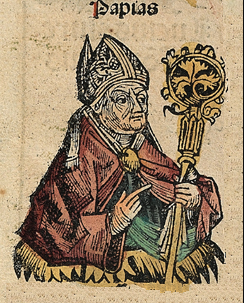
    Papias of Hierapolis: the earliest word on how Mark and Matthew came to be written

    Papias, an imagined portrait: hand-coloured woodcut by Michael Wolgemut and Wilhelm Pleydenwurff, Nuremberg Chronicle, 1493, via Wikimedia Commons
    Papias, an imagined portrait: hand-coloured woodcut by Michael Wolgemut and Wilhelm Pleydenwurff, Nuremberg Chronicle, 1493, via Wikimedia Commons · Public domain

    Papias, bishop of Hierapolis in Asia Minor, gathered what he could learn from men who had heard the apostles, and wrote it down in five books called the Exposition of the Sayings of the Lord, usually dated about 110. The books themselves are lost; only quotations survive in Irenaeus and Eusebius. Eusebius preserves his report of what “the presbyter” taught: “Mark, having become the interpreter of Peter, wrote down accurately, though not in order, whatsoever he remembered of the things said or done by Christ”, and he adds that Papias also wrote of Matthew’s Gospel and used testimonies from 1 John and 1 Peter. Honesty: Eusebius, who disliked Papias’s millennial views, thought little of him as an interpreter, and scholars still debate what Papias meant by some of his words. But within living memory of the apostles, the Gospels were already being received as faithful written witness. “Even as they delivered them unto us, which from the beginning were eyewitnesses, and ministers of the word” (Luke 1:2, KJV).

    Source en.wikipedia.org: Wikipedia, “Papias of Hierapolis” (c. 60-c. 130; five books; consensus date c. 110, range 100-120/130; known only from Irenaeus and Eusebius; Eusebius’s view of his millennialism). Quotation: Eusebius, Church History III.39.15-16, NPNF2 vol. 1, newadvent.org/fathers/250103.htm. No licensed likeness exists. Luke 1:2 KJV verified.

  12. Scripture & Canon

    Papyrus 52: the St John fragment, the earliest surviving piece of the New Testament

    Rylands Papyrus P52, recto (John 18:31-33). John Rylands Library, University of Manchester, via Wikimedia Commons
    Rylands Papyrus P52, recto (John 18:31-33). John Rylands Library, University of Manchester, via Wikimedia Commons · Public domain

    A scrap of papyrus about the size of a credit card, now in the John Rylands Library, Manchester, is generally accepted as the earliest surviving copy of any part of the New Testament. One side holds parts of John 18:31-33; the other, verses 37-38: Christ before Pilate. Because it is written on both sides it came from a codex, a bound book, not a scroll, and its large, careful letters suggest it may have been made for reading aloud in a congregation. It was bought in Egypt in 1920 by Bernard Grenfell and first published by C. H. Roberts in 1935. Honesty about the date: Roberts proposed the first half of the 2nd century (100-150); a recent re-dating proposes 125-175; a few scholars allow later still. Either way, John’s Gospel was being copied and carried far from where it was written within a few generations. “To this end was I born, and for this cause came I into the world, that I should bear witness unto the truth” (John 18:37, KJV).

    Source en.wikipedia.org: Wikipedia, “Rylands Library Papyrus P52” (P. Ryl. Gr. 457; John 18:31-33, 37-38; codex; 100-150 per Roberts, 125-175 per Orsini & Clarysse, later dates allowed by some; acquired 1920 by Grenfell; published 1935; possibly for congregational reading). Plate also hangs in the Gallery. John 18:37 KJV verified.

  13. Scripture & Canon

    Aquila of Sinope makes a word-for-word Greek translation of the Hebrew Bible

    Aquila’s column beside Symmachus and the Septuagint: specimen of the Hexapla at Psalm 45:1-4 (Greek numbering 44), after Klostermann’s Milan fragments. Dictionnaire de la Bible, via Wikimedia Commons
    Aquila’s column beside Symmachus and the Septuagint: specimen of the Hexapla at Psalm 45:1-4 (Greek numbering 44), after Klostermann’s Milan fragments. Dictionnaire de la Bible, via Wikimedia Commons · Public domain

    Aquila, a native of Sinope on the Black Sea and a convert to Judaism, flourished about the year 130 and is remembered as a disciple of Rabbi Akiva. He translated the Hebrew Bible into Greek so closely that his version came to be used in place of the Septuagint in Greek-speaking synagogues. Christians generally disliked it, saying that it rendered the Messianic passages incorrectly; yet both Origen and Jerome spoke in its praise for its faithfulness to the Hebrew, and Origen set it in a column of his Hexapla (already on this timeline). For centuries it was known only from the Hexapla excerpts copied into the margins of Greek manuscripts, until 1897, when palimpsest leaves from the Cairo Genizah reached Cambridge with parts of Kings and the Psalms in Aquila’s own words. Today an international Hexapla Project, one of whose directors, Peter J. Gentry, teaches at the Southern Baptist Theological Seminary, is re-editing these fragments. Honesty: the tradition that Aquila was once a Christian and a kinsman of Hadrian rests on the late account of Epiphanius and is left aside here. “The words of the LORD are pure words: as silver tried in a furnace of earth, purified seven times” (Psalm 12:6, KJV).

    Source en.wikipedia.org: Wikipedia, “Aquila of Sinope” (fl. 130; proselyte, disciple of Akiva; used in place of the LXX in Greek-speaking synagogues; Christians alleged Messianic passages mistranslated; praised by Origen and Jerome; in the Hexapla; Genizah fragments 1897, Burkitt 1897 / Taylor 1899; Hexapla Project, Gentry of SBTS). No licensed plate found. Ps 12:6 KJV verified.

  14. Scripture & Canon

    Marcion cuts down the Scriptures, and the churches hold to the whole

    St John with a figure identified by R. Eisler (1938) as Marcion. Italian manuscript, 11th century, Morgan Library MS M.748, fol. 150v
    St John with a figure identified by R. Eisler (1938) as Marcion. Italian manuscript, 11th century, Morgan Library MS M.748, fol. 150v. Via Wikimedia Commons · Public domain

    Marcion of Sinope, a shipowner from Pontus, came to Rome in the late 130s and taught that the God of the Old Testament was a different, lesser god from the Father of Jesus Christ. He was put out of the church at Rome about 144. He then published his own list of sacred books. It held no book of the Old Testament, only one Gospel that ancient writers describe as an edited Luke, and ten letters of Paul, without the letters to Timothy and Titus. It is the earliest record of a New Testament canon that survives, and it forced the churches to say plainly which books they had received. Justin Martyr, Irenaeus and Tertullian denounced his teaching, and the churches went on reading the Law and the Prophets together with the apostolic writings. Honesty: a few modern scholars have argued that Marcion’s Gospel came before Luke, a view that is contested. The plate, from an 11th-century Italian manuscript, shows St John with a second figure whom R. Eisler (1938) identified as Marcion; the identification is not certain. “And if any man shall take away from the words of the book of this prophecy, God shall take away his part out of the book of life” (Revelation 22:19, KJV).

    Source en.wikipedia.org: Wikipedia, “Marcion of Sinope” (c. 85-c. 160; distinct “vengeful” creator god; excommunicated at Rome c. 144; canon of ten Pauline epistles without the Pastorals + Gospel of Marcion, claimed edited Luke; earliest record of a NT canon; catalyst for the canon; Justin, Irenaeus, Tertullian; Klinghardt view contested). Plate: Morgan MS M.748 fol. 150v, ID per Eisler 1938. Rev 22:19 KJV verified.

  15. Scripture & Canon

    The Peshitta: the Scriptures in Syriac

    A parchment manuscript of the Peshitta, 9th century, displayed at the National Library of Israel, Jerusalem. Photograph by JHistory, via Wikimedia Commons
    A parchment manuscript of the Peshitta, 9th century, displayed at the National Library of Israel, Jerusalem. Photograph by JHistory, via Wikimedia Commons · CC BY-SA 4.0

    Syriac, a dialect of Aramaic centred on Edessa, became the language of the churches of the East. The general consensus of scholars is that the Old Testament was translated into Syriac, largely from the Hebrew, by or before the second century, and that the New Testament was translated from the Greek and had become a standard by the early fifth century. The name Peshitta is usually rendered “simple” or “common,” that is, the version for everyone. At first its New Testament left out five books that many churches then counted as disputed (2 Peter, 2 and 3 John, Jude and the Revelation). They were supplied in the Harklean version of 616. Its New Testament often reflects the Byzantine text-type, the family of Greek manuscripts that underlies the Received Text. From the fifth century it circulated widely across Asia, and by the eighth century the Syriac Scriptures had reached China.

    Source en.wikipedia.org: Wikipedia, “Peshitta” (consensus dating of OT and NT; the name; the five omitted books and the Harklean version of 616; Byzantine character of the NT; spread to China by the 8th c.), and “Byzantine text-type” (it underlies the Textus Receptus). Year filed as c. 150 for ordering only.

  16. Scripture & Canon

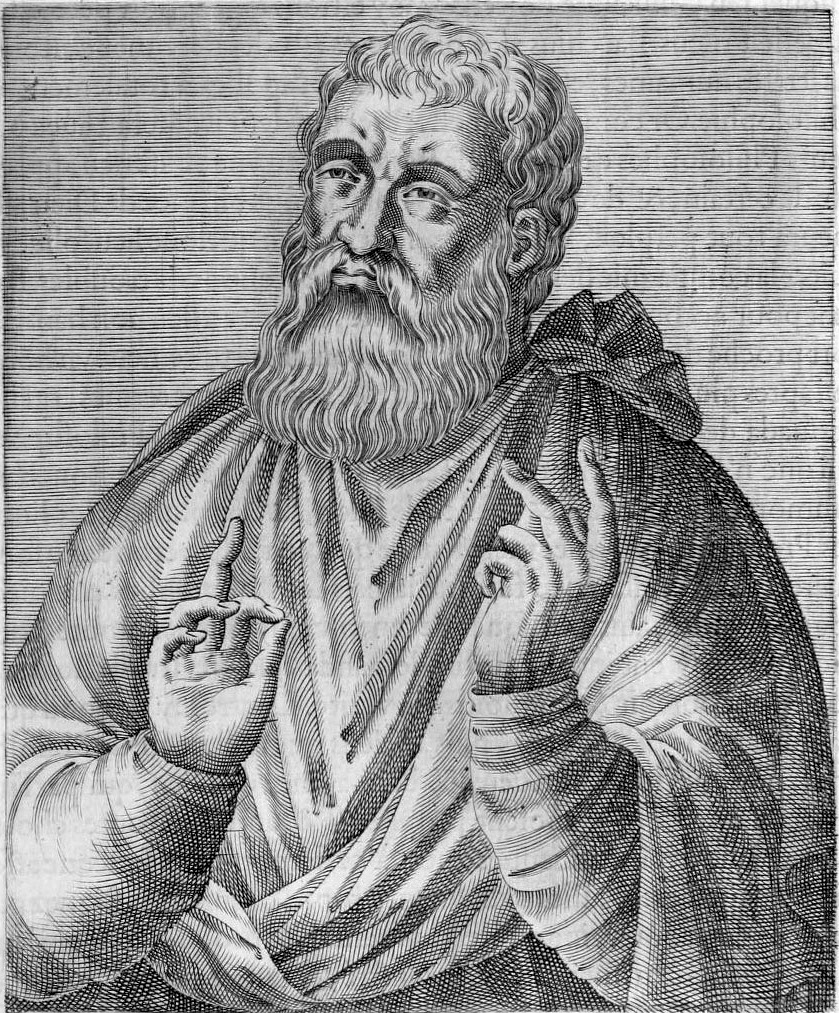
    Justin Martyr: the apostles and the prophets read aloud on the Lord’s day

    Justin Martyr, an imagined portrait: engraving from André Thevet, Les vrais pourtraits et vies des hommes illustres (1584), via Wikimedia Commons
    Justin Martyr, an imagined portrait: engraving from André Thevet, Les vrais pourtraits et vies des hommes illustres (1584), via Wikimedia Commons · Public domain

    Justin, born at Flavia Neapolis (Nablus) in Samaria, came to Christ after a search through the schools of the philosophers. About 155-157 he addressed a defence of the Christians to the Emperor Antoninus Pius, dated by its mention of a recent prefect of Egypt. Near its close he describes how the churches met: “on the day called Sunday, all who live in cities or in the country gather together to one place, and the memoirs of the apostles or the writings of the prophets are read, as long as time permits; then, when the reader has ceased, the president verbally instructs, and exhorts to the imitation of these good things.” In the chapter before, he says these memoirs “are called Gospels.” Here, in the middle of the second century, the apostolic writings stand beside the prophets as the Scriptures read and preached to the gathered church. “Till I come, give attendance to reading, to exhortation, to doctrine” (1 Timothy 4:13, KJV).

    Source newadvent.org: Justin Martyr, First Apology 67 (Ante-Nicene Fathers vol. 1, trans. Dods & Reith, 1885, public domain; text at newadvent.org), quoted verbatim. Justin’s own term “called Gospels” is from First Apology 66, same source. Life and date (155-157, from the reference to Lucius Munatius Felix): Wikipedia, “First Apology of Justin Martyr”. 1 Tim 4:13 KJV verified. No plate.

  17. Scripture & Canon

    Tatian’s Diatessaron: the four Gospels woven into one

    Ephrem the Syrian’s Commentary on the Diatessaron, Syriac on parchment, Egypt, late 5th or early 6th century. Chester Beatty Library, Dublin (CBL Syc 709), via Wikimedia Commons
    Ephrem the Syrian’s Commentary on the Diatessaron, Syriac on parchment, Egypt, late 5th or early 6th century. Chester Beatty Library, Dublin (CBL Syc 709), via Wikimedia Commons · Public domain

    Tatian, born in “the land of the Assyrians”, became a Christian at Rome and a pupil of Justin Martyr. About 166-169 he composed the Diatessaron (Greek, “out of four”), the most prominent early harmony of the Gospels. It combined the material of the four Gospels, Matthew, Mark, Luke and John, into a single narrative, adding no significant words of its own. For three centuries it served as the standard Gospel text in parts of the Syriac-speaking church, and Ephrem the Syrian wrote a commentary on it. Honesty requires a note. Irenaeus reports that after Justin’s death Tatian was expelled from the church for Encratite (extreme ascetic) views. In the fifth century, Rabbula of Edessa ordered that every church have the four separate Gospels, and Theodoret removed more than two hundred copies of the harmony from his churches. The original text is lost and is known through later translations and Ephrem’s commentary. “But these are written, that ye might believe that Jesus is the Christ, the Son of God; and that believing ye might have life through his name” (John 20:31, KJV).

    Source en.wikipedia.org: Wikipedia, “Diatessaron” (c. 166-169; four gospels into one narrative; no significant added wording; standard in some Syriac churches for three centuries; Ephrem’s commentary, Chester Beatty Syriac MS 709; Theodoret; original lost); “Tatian” (Assyria; Rome; pupil of Justin; expelled after 165 per Irenaeus for Encratite views; Rabbula ordered separate Gospels). John 20:31 KJV verified.

  18. Scripture & Canon

    The Muratorian fragment: an early list of New Testament books

    The Muratorian fragment, 8th-century copy. Biblioteca Ambrosiana, Milan, Cod. J 101 sup., via Wikimedia Commons
    The Muratorian fragment, 8th-century copy. Biblioteca Ambrosiana, Milan, Cod. J 101 sup., via Wikimedia Commons · Public domain

    In 1740 the Italian historian Ludovico Antonio Muratori published eighty-five lines of Latin that he had found in the Ambrosian Library at Milan, in a manuscript bound about the eighth century at the abbey of Bobbio. They are a copy of perhaps the oldest known list of most of the books of the New Testament. The beginning is lost and the end breaks off, and the Latin is poor, apparently translated from a Greek original. Because it speaks of Hermas writing The Shepherd “most recently in our time,” while Pius (bishop c. 140-155) led the church at Rome, it is traditionally dated to the late second century. Some scholars argue for the fourth century instead, though that is not the consensus. The list receives four Gospels (the names of the first two are lost, though Luke and John are named third and fourth), the Acts, thirteen letters of Paul, Jude, two letters of John and the Revelation. It rejects letters “forged in Paul’s name” to further Marcion’s heresy, and says The Shepherd may be read but not publicly in church. It does not mention Hebrews, James or the letters of Peter, and it also names the Wisdom of Solomon and an Apocalypse of Peter, which some of its churches would not allow to be read. It shows that, long before any council, the churches were already distinguishing the apostolic writings from all others.

    Source en.wikipedia.org: Wikipedia, “Muratorian fragment” (discovery, manuscript, contents, dating debate: Metzger and Hill for the 2nd century, Sundberg 1973 for the 4th). Words in quotation marks are from the fragment as translated there.

  19. Scripture & Canon

    Melito of Sardis: the earliest Christian list of the Old Testament books

    Melito, bishop of Sardis, teaching the Christian faith: an imagined likeness in a Dutch book illustration of 1698. Rijksmuseum, Amsterdam (RP-P-1896-A-19368-1267), via Wikimedia Commons
    Melito, bishop of Sardis, teaching the Christian faith: an imagined likeness in a Dutch book illustration of 1698. Rijksmuseum, Amsterdam (RP-P-1896-A-19368-1267), via Wikimedia Commons · CC0

    Melito, bishop of Sardis in Asia Minor (died c. 180), wrote to a brother named Onesimus who had asked for “an accurate statement” of the ancient books “as regards their number and their order.” Melito answered that he had gone “East” to “the place where these things were preached and done” and had there “learned accurately the books of the Old Testament.” His list, preserved by Eusebius in his Church History (IV.26), is the earliest Christian list of the Old Testament canon known. It names the books of Moses, the histories, the Psalms, the writings of Solomon, Job, and the prophets. Honesty requires two notes: Esther is not named, and scholars debate whether the words “Wisdom also” are another name for Proverbs or a separate book. From these books Melito made six volumes of extracts “concerning the Saviour.” “And beginning at Moses and all the prophets, he expounded unto them in all the scriptures the things concerning himself” (Luke 24:27, KJV).

    Source newadvent.org: Eusebius, Church History IV.26.13-14, tr. A. C. McGiffert, NPNF 2nd ser. vol. 1 (1890), via New Advent (letter to Onesimus quoted). Wikipedia, “Melito of Sardis” (died c. 180; first Christian OT canon list; Esther absent; Wisdom/Proverbs debate). Plate: Rijksmuseum RP-P-1896-A-19368-1267, 1698 print, an imagined likeness. Luke 24:27 KJV verified.

  20. Scripture & Canon

    Papyrus 46: the earliest book of Paul’s letters, Ephesians 6 included

    Papyrus 46, folio 157 verso (Ephesians 6:8-18). University of Michigan Papyrology Collection, via Wikimedia Commons
    Papyrus 46, folio 157 verso (Ephesians 6:8-18). University of Michigan Papyrology Collection, via Wikimedia Commons · Public domain

    Papyrus 46, part of the Chester Beatty Papyri (with some leaves at the University of Michigan), is a single-quire papyrus codex of Paul’s epistles, dated by its handwriting to about 175-225. It holds, in this order, the last eight chapters of Romans, Hebrews, 1 and 2 Corinthians, Ephesians, Galatians, Philippians, Colossians and part of 1 Thessalonians, and among them the armour passage of Ephesians 6, which this museum is built around. Unusually, every page is numbered, and a later reader added small marks to divide the text for reading, perhaps in worship. Honesty requires two notes: the last seven leaves are lost, and scholars still debate whether the codex ever held the pastoral epistles; and textual scholars class its text as Alexandrian. “And take the helmet of salvation, and the sword of the Spirit, which is the word of God” (Ephesians 6:17, KJV).

    Source en.wikipedia.org: Wikipedia, “Papyrus 46” (P. Chester Beatty II + Michigan leaves; 175-225 or early 3rd c.; contents and order; numbered pages; reader’s marks; seven lost leaves and the Kenyon/Duff debate on the pastorals). Plate: fol. 157v, Eph 6:8-18, also in the Gallery. Eph 6:17 KJV verified.

Plates are hung only where a genuine image of the subject could be found under a public-domain or open licence. Each carries its credit and links to its licence record. Entries without a plate are awaiting one that meets that standard. More entries are being prepared, and each will be added only with its citation.

Provenance

Every entry in this hall was checked, when it was added, against the source linked beneath it; notes name the underlying scholarship where the source cites it. Where historians disagree (for example, over John Wycliffe’s own share in the Bible that bears his name), the entry says so. Scripture is quoted verbatim from the King James Version. Plates are reproduced almost entirely from Wikimedia Commons: public-domain works, works dedicated to the public domain (CC0), or photographs under Creative Commons Attribution (CC BY 2.0-3.0) or Attribution-ShareAlike (CC BY-SA 2.0-4.0) licences. Each plate’s licence is stated beneath it, with a link to the record where it was confirmed.