
Scripture & Canon
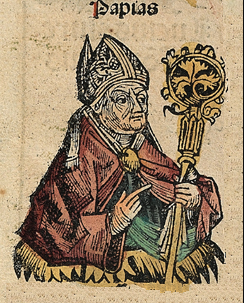

Papias, bishop of Hierapolis in Asia Minor, gathered what he could learn from men who had heard the apostles, and wrote it down in five books called the Exposition of the Sayings of the Lord, usually dated about 110. The books themselves are lost; only quotations survive in Irenaeus and Eusebius. Eusebius preserves his report of what “the presbyter” taught: “Mark, having become the interpreter of Peter, wrote down accurately, though not in order, whatsoever he remembered of the things said or done by Christ”, and he adds that Papias also wrote of Matthew’s Gospel and used testimonies from 1 John and 1 Peter. Honesty: Eusebius, who disliked Papias’s millennial views, thought little of him as an interpreter, and scholars still debate what Papias meant by some of his words. But within living memory of the apostles, the Gospels were already being received as faithful written witness. “Even as they delivered them unto us, which from the beginning were eyewitnesses, and ministers of the word” (Luke 1:2, KJV).
Source en.wikipedia.org: Wikipedia, “Papias of Hierapolis” (c. 60-c. 130; five books; consensus date c. 110, range 100-120/130; known only from Irenaeus and Eusebius; Eusebius’s view of his millennialism). Quotation: Eusebius, Church History III.39.15-16, NPNF2 vol. 1, newadvent.org/fathers/250103.htm. No licensed likeness exists. Luke 1:2 KJV verified.