
The English Bible
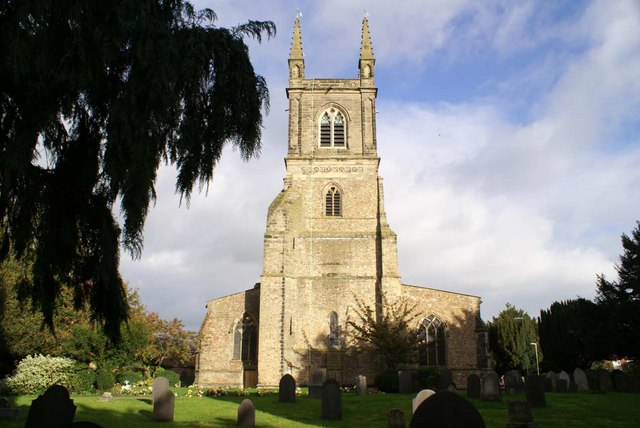

John Wycliffe held the living of St Mary’s, Lutterworth, in Leicestershire from 1374. In his last years he argued ever more strongly that the Scriptures are the authoritative centre of the Christian faith. He suffered a stroke while saying Mass there on 28 December 1384, died a few days later, and was buried at Lutterworth. On 4 May 1415 the Council of Constance declared him a heretic and banned his writings. It ordered his books burned and his bones removed from consecrated ground. Pope Martin V confirmed the order, and Richard Fleming, bishop of Lincoln, was charged with carrying it out, though he delayed it for more than a decade. In 1428 the grave was opened. The body taken up was Wycliffe’s, or perhaps a neighbour’s, and unusually, on the bishop’s orders, the remains were burned and the ashes thrown into the River Swift, which flows through Lutterworth. “The grass withereth, the flower fadeth: but the word of our God shall stand for ever” (Isaiah 40:8, KJV).
Source en.wikipedia.org: Wikipedia, “John Wycliffe” (Lutterworth living 1374; Scripture as authoritative centre; stroke 28 Dec 1384; Constance 4 May 1415, Martin V, exhumation 1428, “Wycliffe’s corpse, or a neighbour’s”, ashes in the Swift); “Richard Fleming (bishop)” (entrusted with the decree, delayed over a decade). Isa 40:8 KJV verified.