
Scripture & Canon
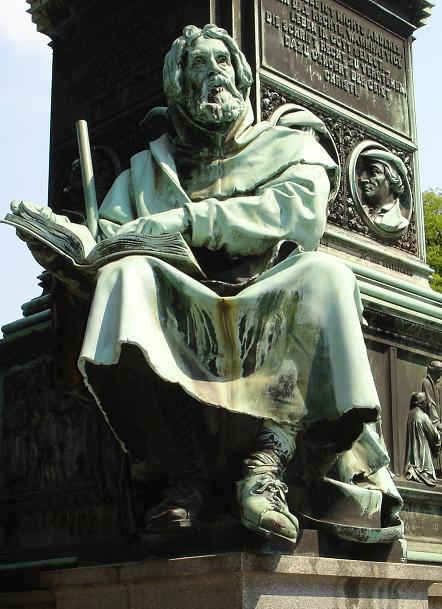

Valdes, remembered as Peter Waldo, was a wealthy merchant of Lyon. About 1173 he gave away his property to follow Christ in poverty. He had clerics of Lyon translate the Gospels and other parts of the New Testament into the Franco-Provençal tongue of the people, one of the first translations of Scripture into a modern European language. His followers, the Poor of Lyon, went about preaching from the Scriptures as laymen. In 1179 Waldo went to Rome, where Pope Alexander III approved his vow of poverty but forbade him and his followers to preach, because they were laymen. They kept preaching, and in 1184, at Verona, Pope Lucius III excommunicated them. The Waldenses survived centuries of persecution in the Alpine valleys; in 1532 they joined the Reformed churches, and their vernacular New Testament fed into Olivétan’s French Bible of 1535. Some Baptist writers of the nineteenth century claimed an unbroken succession through the Waldenses from the apostles; modern scholars have largely rejected that claim, and this museum does not make it. What Baptists do share with Valdes is the conviction, in the words of their 1689 Confession, that the Scriptures are “to be translated into the vulgar language of every nation unto which they come.”
Source en.wikipedia.org: Wikipedia, “Waldensians” (c. 1173; translation 1175-1185; 1179 Rome and Third Lateran; 1184 Verona; Chanforan 1532; Olivétan 1535; Baptist successionism “largely rejected”), and “Peter Waldo.” Britannica, “Waldenses,” agrees on 1173, the clerics’ translation and the 1184 ban. Confession: 2LCF ch. 1 §8.