
Scripture & Canon
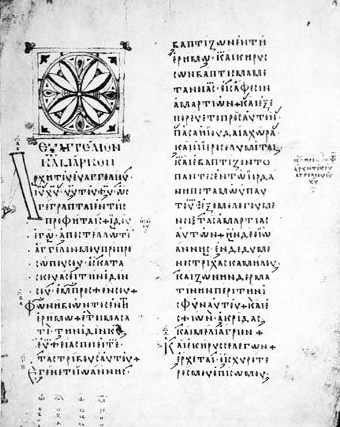

Codex Campianus, known as M (021), holds the complete text of all four Gospels on 257 parchment leaves, in two columns of what Scrivener called a “very elegant and minute uncial” script, in brown ink, with accents and reading marks added in red. It was made for reading aloud in church: the beginnings and endings of the lessons are marked in the text, and a harmony of the Gospels runs along the foot of each page, pointing the reader to the same event in the other Gospels. Before each Gospel stands a small picture of its evangelist. Its early history is unknown. It takes its name from the Abbé François de Camps, who gave it to King Louis XIV of France (the year is given as 1706 or 1707), and it is now in the National Library of France in Paris (Gr. 48). Its text is Byzantine. Kuster used it in 1710 in his reprint of John Mill’s Greek New Testament, and 19th-century editors praised it (Tregelles found in it “many good readings”), though 20th-century critical editions came to set it aside. “The beginning of the gospel of Jesus Christ, the Son of God;” (Mark 1:1, KJV).
Source en.wikipedia.org: Wikipedia, “Codex Campianus” (M/021; 9th c. per INTF; 257 leaves, 2 cols; Scrivener’s description quoted; lection marks; harmony at foot of pages; evangelist miniatures; Abbé de Camps to Louis XIV, 1706/1707; Kuster 1710 for Mill; Tregelles quoted; later neglect; BnF Gr. 48). Mark 1:1 KJV verified.