
Baptist Witness
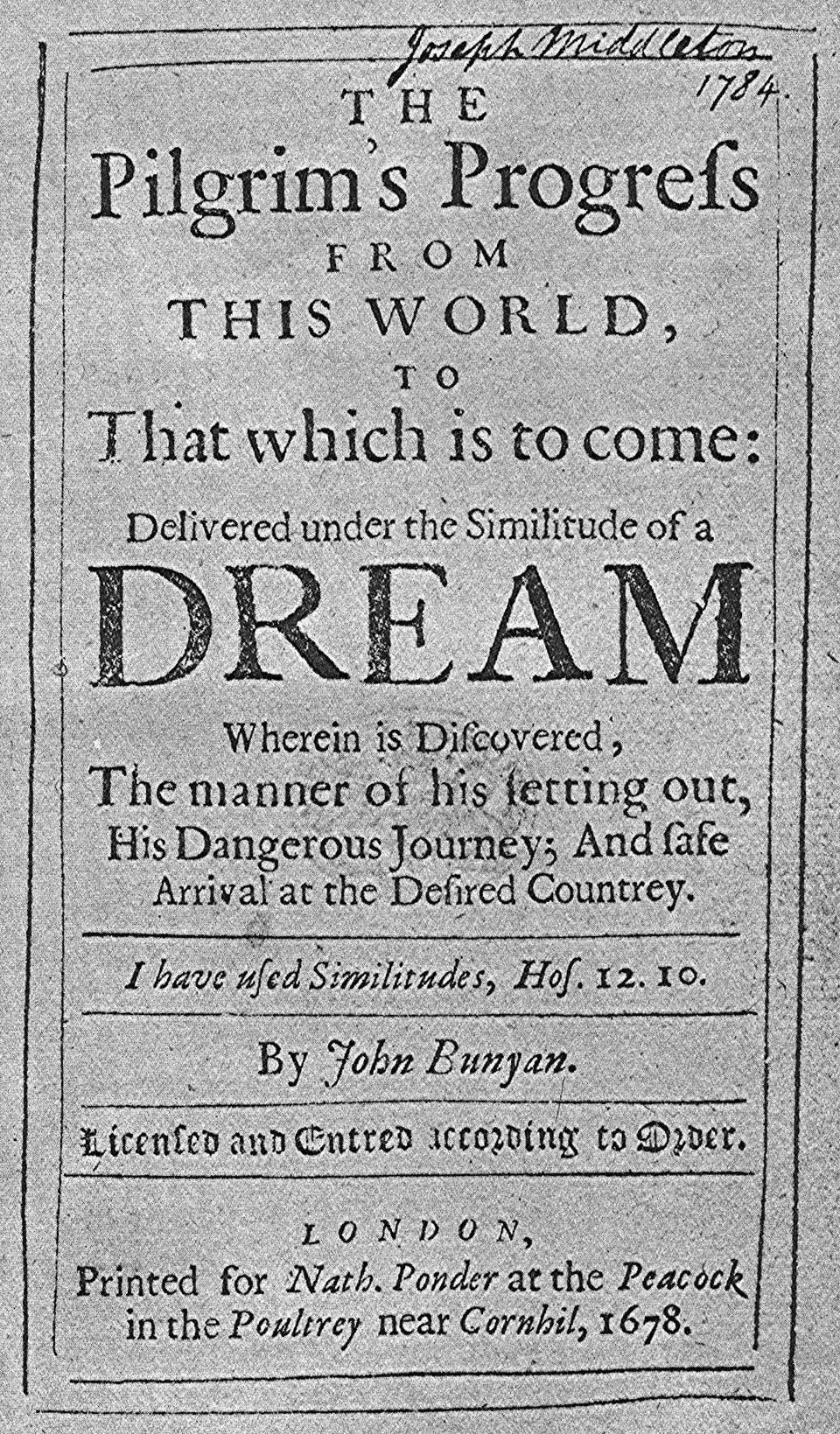

John Bunyan (1628-1688), a brasier or tinker of Elstow near Bedford, was awakened, the Dictionary of National Biography records, by the talk of a few poor women at Bedford, “sitting at a door in the sun and talking about the things of God.” In 1653 he joined their nonconformist congregation, the Bedford meeting under “holy Mr. Gifford”; in 1657 he was set apart to preach “after solemn prayer and fasting”, and people came “by hundreds, and that from all parts” to hear him. After the Restoration, preaching outside the established church was again forbidden. On 12 November 1660 he was arrested at Lower Samsell, near Harlington, while about to hold a service in a private house; he could have escaped the warrant but would not. He refused to give up public preaching, answering that the law “had provided two ways of obeying”: to obey actively, or else to suffer its penalty. The county gaol at Bedford was his “close and uncomfortable” home for twelve years (with a brief release in 1666). There he made long tagged laces to support his family, preached to fellow prisoners, at one time as many as sixty, and wrote, among much else, Grace Abounding to the Chief of Sinners (1666). Freed in 1672, he had already been called (21 January) as pastor of the Bedford congregation and received a licence to preach dated 9 May. In 1673 he published Difference of Judgment about Water Baptism no Bar to Communion, arguing, as its title says, that a difference over water baptism need not divide believers at the Lord’s table; that is why he is described here, as elsewhere in this museum, as a nonconformist pastor commonly counted among the Baptists. The Pilgrim’s Progress followed in 1678; Bunyan himself says it was dreamed in “the gaol”, though whether in the long imprisonment or a shorter one about 1675 is debated (the DNB weighs both). He died in London on 31 August 1688 and was buried in Bunhill Fields. Paul’s own request at the close of the armour passage: “For which I am an ambassador in bonds: that therein I may speak boldly, as I ought to speak.” (Ephesians 6:20, KJV).
Source en.wikisource.org: Dictionary of National Biography, vol. 7 (1886), “Bunyan, John” by Edmund Venables (public domain, Wikisource), read in full; quoted phrases verbatim. Cross-checked: Wikipedia “John Bunyan” (Lower Samsell near Harlington, twelve years, freed May 1672, Pilgrim’s Progress 1678, 31 Aug 1688, Bunhill Fields). KJV: Eph. 6:20.