
Scripture & Canon
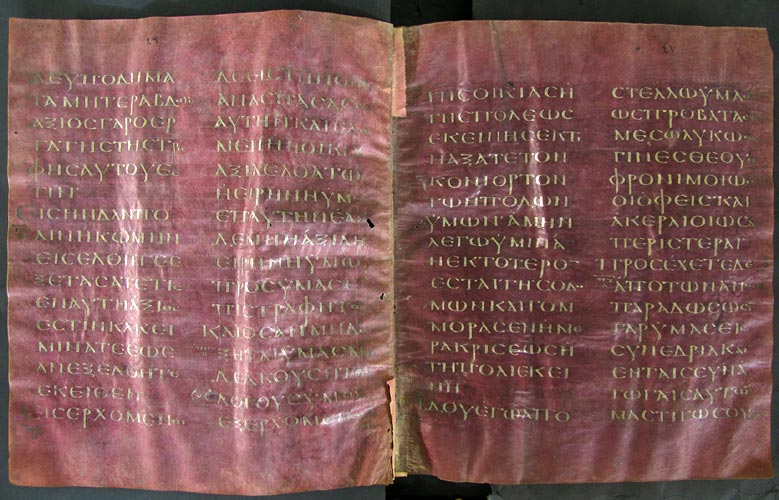

Codex Petropolitanus Purpureus (N) is a 6th-century Greek book of the four Gospels, written in large uncial letters in silver ink on parchment dyed purple, with gold ink for the sacred names of Jesus, God, Lord, Son and Saviour. It is one of the group known as the Purple Uncials, alongside the Rossano Gospels, and is thought to have come from the imperial workshop at Constantinople. The book, which once had about 462 leaves, was later broken up and its leaves scattered; in 1896 the greater part of it was bought for the Imperial Public Library in St Petersburg, and other leaves are kept elsewhere. Its text is counted a representative of the Byzantine text, the family from which the Received Text descends, with a number of earlier readings; Kurt Aland placed it in his Category V. Honesty requires a note: the copyist often confused like-sounding letters, and the surviving book has many gaps. “But these are written, that ye might believe that Jesus is the Christ, the Son of God; and that believing ye might have life through his name” (John 20:31, KJV).
Source en.wikipedia.org: Wikipedia, “Codex Petropolitanus Purpureus” (N/022; 6th c. by palaeography; silver ink on purple vellum, gold nomina sacra; Purple Uncials with Rossano, Sinope, Beratinus; imperial scriptorium of Constantinople; c. 462 leaves originally, 231 in St Petersburg; bought 1896 for the Imperial Public Library; Byzantine with pre-Byzantine readings, Aland Category V; iotacisms; many gaps). John 20:31 KJV verified.